

Note: This article contains affiliate links. If you click on these links and make a purchase, I may earn a small commission at no extra cost to you. This helps support my research and content. Read my full affiliate disclosure here.
If you drive a 1996-2000 Honda Civic, choosing the right suspension kit matters for safety, ride comfort, and handling. Whether you want firmer cornering for spirited driving or a smoother daily ride, the wrong components can worsen noise, wear, or steering feel. This guide focuses on the chassis used in 1996-2000 Civics (EJ, EK, and EM), and it covers the top shortlisted suspension kits tailored to that platform.We evaluated options that replace multiple components at once so you get consistent geometry and predictable behavior. The picks below were assessed for fitment, durability, ride quality, and ease of installation. Read on to find the style of kit that matches how you use your Civic, then check the product blocks for detailed specs and fit notes.
Looking for other parts? See all Honda Civic parts & accessories.
Top Picks at a Glance
| Best Overall The best all-around choice for most situations | Metrix Premium Chassis Parts Front Suspension Kit (10‑Piece) for 1996–2000 Honda Civic |  |
| Best Quality Built to a higher standard if you want something more solid | TRQ Front Steering and Suspension 12‑Piece Kit for 1996–2000 Honda Civic |  |
| Best Value The sweet spot between price and what you get | Detroit Axle 12‑Piece Front Suspension Kit for 1996–2000 Honda Civic |  |
| Best Budget The cheapest option that still gets the job done reliably | SCITOO Front Suspension Kit for 1996–2000 Honda Civic (10‑piece) |  |
| Highest Rated A top-rated pick with lots of positive feedback | Detroit Axle 10pc Front End Control Arms Suspension Kit for 1996–2000 Honda Civic |  |
| Most Popular A crowd favorite that many people choose with confidence | Detroit Axle 12pc Front Suspension Kit for 1996–2000 Honda Civic (Complete Struts, Ball Joints, Tie Rods, Sway Links) |  |
1. Metrix Premium Chassis Parts Front Suspension Kit (10‑Piece) for 1996–2000 Honda Civic

| Fit Type | Vehicle Specific Fit |
|---|---|
| Auto Part Position | Front |
| Material Type | Alloy Steel |
| Unit Count | 10.0 Count |
This Metrix front suspension kit bundles the common wear items you need to rebuild a Civic front end: upper control arms with ball joints, lower ball joints, inner and outer tie rod ends, stabilizer links, and required hardware. It is designed as a vehicle-specific replacement for 1996–2000 Honda Civics and aims to provide a precision fit that simplifies installation for DIYers and shops. Notable features include greasable components for on-vehicle maintenance, cataphoresis coating for corrosion resistance, and parts manufactured to IATF 16949 and ISO 9001 standards. In practice the kit firms up steering response and smooths out wandering or uneven tire wear when worn parts are removed, and several reviewers report improved stability after installation. Expect straightforward bolt-on work if you have basic tools and alignment afterward. A few users noted premature bushing play on some control arms in heavy-use cases, so professional installation and an alignment check help avoid early issues. The kit is a cost-effective way to refresh multiple suspension points at once, especially when compared to buying individual components separately.
Best for: Buyers who want a balanced, all-in-one repair that restores steering and handling without hunting down individual parts, suitable for DIY mechanics or budget-conscious shops.
Less Ideal for: People seeking high-performance or heavy-duty suspension upgrades or those who prefer individual premium-brand components for each wear item.
- Comprehensive 10-piece kit replaces all common front-end wear parts for the Civic, simplifying a full front-end refresh
- Greasable components allow periodic maintenance to extend service life
- Cataphoresis coating and alloy steel construction improve corrosion resistance
- Manufactured to IATF 16949 and ISO 9001 standards for consistent quality and fit
- Some users reported early bushing or control arm play under heavy or prolonged use
Verdict: A cost-effective, vehicle-specific 10-piece front suspension kit that refreshes steering and handling on 1996–2000 Honda Civics with factory-style fit and corrosion protection.
2. TRQ Front Steering and Suspension 12‑Piece Kit for 1996–2000 Honda Civic
| Included Components | 12 Piece Steering & Suspension Kit |
|---|---|
| Auto Part Position | Front |
| Material Type | Cast Iron |
| Fit Type | Vehicle Specific Fit |
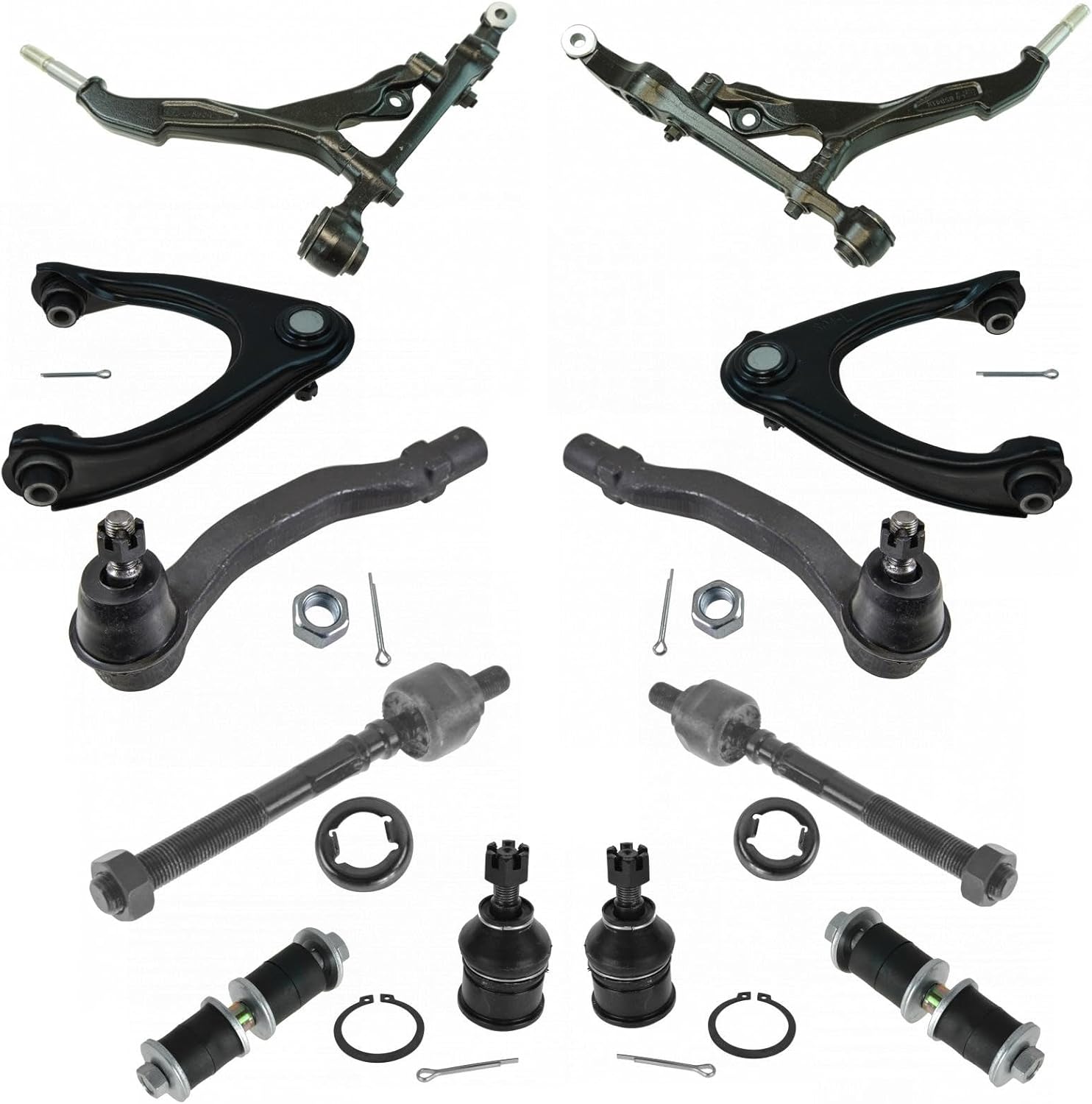
This TRQ kit bundles the parts you need to restore front-end steering and suspension on a 1996–2000 Honda Civic. It includes inner and outer tie rods, lower and upper control arms with ball joints, lower ball joints, and sway bar links supplied as a matched set intended for direct replacement. Parts arrive pre-greased and treated with an anti-corrosion coating to reduce prep work and extend surface life. For a DIYer focused on sharper handling, the kit tightens steering feel and improves road feedback compared with worn components, and TRQ provides installation videos to guide the job. The kit is vehicle-specific so no modifications should be necessary, but some buyers reported missing hardware and mixed durability under hard impacts; if you expect heavy duty use or frequent curb impacts, a reinforced aftermarket arm may be preferable. Fit confirmation before purchase is recommended to ensure all pieces match your Civic’s submodel and year.
Best for: Buyers who want to restore steering precision and handling on a 1996–2000 Civic with a single, do-it-yourself friendly kit and prioritize improved road feel over heavy-duty reinforcement.
Less Ideal for: Drivers who need heavy-duty, impact-resistant suspension components for frequent offroad or aggressive curb impacts should consider reinforced or performance-specific arms instead.
- Comprehensive 12-piece kit replaces key front steering and suspension components in one purchase
- Pre-greased components and anti-corrosion coating reduce prep and maintenance
- Vehicle-specific direct-fit design simplifies installation and aims to match factory geometry
- TRQ supplies extensive DIY videos to help guide homeowners through installation
- Some buyers reported missing or nonincluded bolts for certain ball joints requiring sourcing hardware separately
- Several reviews note control arms can bend under severe impact, so durability may lag heavier reinforced parts
Verdict: If you want a single, DIY-friendly kit to tighten steering and restore handling on a 1996–2000 Honda Civic, this TRQ 12-piece front suspension kit delivers the most direct value.
3. Detroit Axle 12‑Piece Front Suspension Kit for 1996–2000 Honda Civic

| Fitment | 1996–2000 Honda Civic (listed trims) |
|---|---|
| Kit count | 12 pieces |
| Positions covered | Front upper and lower control components, tie rods, sway links, rack boots |
| Manufacturer | Detroit Axle |
This Detroit Axle 12‑piece front suspension kit supplies the main wear items needed when overhauling the Civic front end: two upper control arms with ball joints, two lower ball joints, four inner/outer tie rod ends, two sway bar links and two rack bellows. It is designed as a vehicle‑specific direct fit for 1996–2000 Honda Civic variants listed, so installation is straightforward for a DIYer or shop and most pieces arrive preassembled or greased where applicable. The parts are made from premium alloy with reinforced structures intended to resist wear and corrosion and match factory fit and function. Buyers will appreciate getting all common front components in one package rather than sourcing parts individually, which saves time and simplifies alignment and teardown. Some customers report occasional missing small hardware and a few lower quality complaints on individual pieces, so verify the kit contents on arrival and be prepared to reuse or source small fasteners or clamps if needed. For routine suspension refreshes this kit offers strong value compared with buying OEM items separately.
Best for: Buyers who want a practical, time‑saving way to refresh all front suspension wear items on a 1996–2000 Civic and prefer a budget‑minded, DIY‑friendly kit that aims for factory fit and function.
Less Ideal for: Those who require strictly OEM parts for warranty or fleet service, or installers who need every new fastener and clamp included with the kit.
- Comprehensive kit includes control arms, ball joints, tie rods, sway links and rack boots for a full front refresh
- Vehicle‑specific direct‑fit design simplifies installation and reduces trial fitting
- Parts use premium alloy and reinforced structure aimed at corrosion resistance and longevity
- Many components arrive prefilled or preassembled to speed bench work and installation
- Some orders have missing small hardware like clamps or mounting bolts requiring reuse of old fasteners or separate purchase
- A minority of users report inconsistent quality on individual pieces, so inspect each part before installation
Verdict: If you want a cost‑efficient, all‑in‑one front suspension refresh for a 1996–2000 Civic that prioritizes direct fit and ease of installation, this kit is a practical choice.
4. SCITOO Front Suspension Kit for 1996–2000 Honda Civic (10‑piece)

| Fit Type | Vehicle Specific Fit |
|---|---|
| Auto Part Position | Front |
| Automotive Fit Type | Vehicle Specific Fit |
This SCITOO 10-piece front suspension kit is a budget-friendly way to refresh the steering and front-end underpinnings on a 1996–2000 Honda Civic. The set includes both upper control arms with ball joints, lower ball joints, inner and outer tie rod ends, and sway bar end links so you can replace worn components at once rather than piecemeal. In practice this simplifies installation and helps restore more precise steering, reduce play, and improve handling compared with leaving aging parts in place. The parts are vehicle-specific fitment for Civic front-end assemblies and are intended for use with standard factory-style suspension. Expect straightforward installation with basic tools, though a professional alignment after fitment is recommended. Compared with OEM parts this kit is positioned toward value buyers, so while it covers all the common wear items it may not match factory metal quality or longevity in heavy-duty driving. For shoppers aiming to repair steering feel and suspension performance on a budget this kit offers a practical all-in-one option.
Best for: Buyers looking to restore steering response and front suspension function on an older Civic without spending on OEM-level parts, and who prefer replacing all worn front components in one job.
Less Ideal for: Drivers seeking heavy-duty, performance, or extended-longevity components should consider higher-end or OEM replacement parts instead.
- Complete front-end set replaces multiple wear items at once for a coordinated repair
- Vehicle-specific fit for 1996–2000 Honda Civic front suspension simplifies parts matching
- Includes both control arms with ball joints and tie rod ends to restore steering precision
- Sway bar end links included to address front-end stability and reduce body roll
- Designed as a value replacement so materials and long-term durability may be lower than factory-quality parts
Verdict: A cost-effective, all-in-one front suspension kit to restore steering and handling on 1996–2000 Honda Civics without buying separate parts.
5. Detroit Axle 10pc Front End Control Arms Suspension Kit for 1996–2000 Honda Civic

| Fit Type | Vehicle Specific Fit |
|---|---|
| Auto Part Position | Front |
| Includes | Upper control arms, lower ball joints, sway bar links, inner and outer tie rod ends |
This Detroit Axle 10-piece front end suspension kit supplies the common wear items needed when overhauling the front end of a 1996–2000 Honda Civic. The kit includes both front upper control arms with pressed-in ball joints, lower ball joints, inner and outer tie rod ends, and sway bar links so you can replace all front steering and primary suspension joints at once. Parts are described as premium alloy with enhanced structural strength and a direct-fit design intended to match factory mounting points for straightforward installation. For reliability-oriented owners this kit reduces the chance of premature failures by replacing multiple wear parts at the same time, restoring steering response and suspension stability. Expect the most practical benefit when doing a full front-end job or addressing excessive play, uneven tire wear, or knocking noises. Limitations: this is a vehicle-specific replacement for the listed Civic years and trims only, and it does not include control-arm bushings separate from the assemblies or detailed hardware like alignment service, so an alignment after installation is required.
Best for: Buyers who prioritize long-term dependability and want a single kit to renew all front-end wear components on a 1996–2000 Civic, minimizing repeat trips to the shop.
Less Ideal for: If you only need one small part or are replacing individual bushings, this full kit is more than necessary and a single-part replacement would be more economical.
- Complete kit replaces upper and lower front wear items together to save time on repairs
- Direct-fit design to match factory mounting points for easier installation
- Premium alloy construction and reinforced structure aimed at improved durability
- Includes both inner and outer tie rod ends plus sway bar links for comprehensive front-end coverage
- Fitment limited to specified 1996–2000 Civic applications so not universal across other vehicles
Verdict: A reliability-focused, full front-end replacement kit that refreshes all primary steering and suspension wear components on 1996–2000 Honda Civics in one go.
6. Detroit Axle 12pc Front Suspension Kit for 1996–2000 Honda Civic (Complete Struts, Ball Joints, Tie Rods, Sway Links)

| Auto Part Position | Front |
|---|---|
| Compatible with Vehicle Type | Car |
| Automotive Fit Type | Vehicle Specific Fit |
| Material Type | Hardened Steel |
This Detroit Axle 12-piece front suspension kit bundles two complete front strut and coil spring assemblies with upper and lower ball joints, sway bar links, and four inner and outer tie rod ends to refresh the entire front suspension on 1996–2000 Honda Civics. The struts come preassembled with mounts and springs so installation is straightforward for a competent DIYer or an independent shop without additional spring compressing or parts matching. Hardened steel components and vehicle-specific fit reduce fitment hassle, and the kit addresses common wear items in one purchase so you avoid buying parts piecemeal. Practical benefits include restored ride height and steering response, fewer trips to the parts store, and simpler labor when replacing multiple front-end components at once. Limitations are that the kit is focused only on the front suspension, so rear shocks or other chassis components are not included, and professional alignment is still required after installation. Buyers seeking premium damping or performance-tuned behavior should consider aftermarket performance struts instead of this factory-style replacement kit.
Best for: Buyers who want a single, vehicle-specific kit to overhaul worn front suspension components with minimal parts sourcing and straightforward installation, and who value social proof and risk reduction when selecting replacement parts.
Less Ideal for: Drivers seeking tuned performance damping, coilovers, or a full chassis refresh including rear shocks should look at specialized or multi-axle solutions instead.
- Complete, ready-to-install strut assemblies eliminate separate spring/compressor work
- Includes all common front wear items (ball joints, tie rods, sway links) for one-stop repair
- Vehicle-specific fit reduces fitment guessing and speeds installation
- Only covers front suspension components so additional rear or related parts may still be needed
Verdict: A convenient, vehicle-specific front suspension overhaul kit that lets you replace all common front-end wear parts in one purchase with ready-to-install struts.
Choosing the Right 1996-2000 Honda Civic Suspension Kit: Key Factors to Consider
Fitment and Chassis Code Compatibility
Accurate fitment matters because mounting points, strut lengths, and brake clearance differ across submodels of the Civic produced between 1996 and 2000. Confirming compatibility with EJ, EK, and EM, or EM chassis codes ensures the kit lines up with factory locations and avoids unexpected modification. Mismatched parts can create alignment issues and stress fasteners, which increases wear on steering and suspension joints.
Beyond basic fit, check whether the kit accommodates common factory variations like ABS hardware, sway bar links, or trim-level differences. A kit designed specifically for the EJ, EK, and EM range will typically include the correct top mounts, sleeves, and hardware adapters needed for a bolt-in installation, saving time and reducing the need for aftermarket modifications.
Intended Use and Spring/Damper Rates
Decide what you want from the suspension before choosing a kit. Lower-rated springs and firmer dampers suit track or aggressive canyon driving and reduce body roll, but they may transmit more road vibration on uneven surfaces. Conversely, more compliant spring and damper combinations favor daily comfort and longer component life when road conditions are rough.
Spring rates and damper characteristics should match your weight, driving style, and typical roads. Some kits offer multiple valving or progressive springs that try to balance comfort and control. When possible, reference quoted spring rates and damping adjustability so you can predict how the car will respond after installation.
Adjustability and Ride Height Options
Adjustable features let you tailor handling or stance without swapping components. Coilover-type kits provide per-corner height adjustment and often camber or damping tuning, which is valuable for owners who track the car or frequently change loads. Non-coilover strut and spring kits typically offer a fixed ride height and are simpler to install.
Consider whether you need height adjustment for clearance, aesthetics, or performance. Lowering improves center of gravity and reduces body roll, but excessive drop can create bump steer, interfere with suspension travel, or cause tire rub. Some kits include top hats or adjustable mounts to correct camber changes caused by lowered ride height.
Durability and Corrosion Protection
Civic owners should expect long service intervals from suspension components because replacement labor and alignment costs add up. Look for kits that use corrosion-resistant coatings, stainless steel hardware, or zinc-plated fasteners to withstand road salt and moisture. Durable bushings and mounts reduce noise and maintain alignment over time.
Check for warranties or stated material specifications that indicate how the manufacturer protects parts from rust and wear. Components that resist corrosion preserve function and reduce the need for periodic rebuilding or premature replacement, especially in climates with seasonal road treatments.
Included Hardware and Ease of Installation
Complete kits that include necessary top mounts, bearings, nuts, and washers simplify installation and lower the chance of missing or mismatched parts. Kits should come with clear instructions and all required bushings or sleeves so you do not need to source additional components. For EJ, EK, and EM Civics, look for kits that reference model-specific torque specs and alignment tolerances.
Evaluate how much mechanical skill is required. Some assemblies are straightforward for a competent DIYer with a spring compressor and alignment tools, while others recommend professional installation and alignment. If you plan to install the kit yourself, confirm whether alignment settings such as toe and camber are adjustable with stock components or if extra plates or control arms are needed.
Ride Quality Tradeoffs and Noise Levels
Modifying suspension changes vibration transmission and cabin noise. Firmer dampers and stiffer springs reduce body motion but may introduce more noise and harsher feedback over bumps. Bushings and mounts also affect NVH; urethane parts transfer more feel and can squeak, while high-quality rubber components tend to isolate noise better.
Consider the balance you want between connected handling and comfort. If daily driving and low cabin noise are priorities, choose kits that emphasize tuned damping and progressive spring rates. If track responsiveness is primary, expect some increase in noise and harsher feedback as a tradeoff for improved control.
Types of Suspension Kits for the 1996-2000 Civic
Suspension upgrade kits for EJ, EK, and EM Civics generally fall into a few categories based on adjustability and component coverage. Strut-and-spring kits are straightforward replacements that keep factory geometry and are often the easiest bolt-in option for restoring proper ride and handling.
Coilover kits combine a threaded shock body with adjustable spring perch for height and sometimes damping adjustment, offering the most tunability for stance and performance. Full component kits replace multiple pieces at once—struts, springs, control arms, and bushings—to deliver consistent behavior across the entire suspension.
Some kits focus on lowering while others are designed to add lift for special applications, though lift kits are less common for compact Civics. Choosing between these types depends on how much adjustment you want and whether you prefer simplicity or tunability.
- Strut-and-spring kits: simple replacement, predictable behavior
- Coilover kits: adjustable height and sometimes damping
- Full component kits: coordinated geometry, fewer mixed-part issues
- Lowering kits: reduced center of gravity, may require camber correction
- Lift kits: rare for this platform, typically for clearance in modified builds
Installation Considerations for EJ, EK, and EM Chassis
Installing a suspension components kit on a 1996-2000 Civic requires attention to a few Civic-specific details. The top mounts and bearing assemblies on these chassis can wear, so replacing or refurbishing them when changing suspension is prudent. Use correct torque values to avoid bothersome noises and to ensure fastener integrity.
If the kit alters ride height or camber, a professional alignment is recommended after installation. Check brake line and ABS sensor routing when replacing struts, as improper installation can stress those lines. Also inspect sway bar end links and control arm bushings during the job; worn ancillary parts can mask the benefits of a new kit.
- Replace strut mounts and bearings when possible to prevent premature wear
- Always perform a full wheel alignment after installation
- Inspect brake line and ABS sensor clearances during assembly
- Check and refresh sway bar links and control arm bushings
Common Upgrades That Complement a Suspension Kit
Upgrading supporting components improves overall handling and longevity. Stronger sway bar end links and refreshed control arm bushings reduce deflection and keep alignment stable under load. Replacing worn ball joints and tie rod ends ensures predictable steering response after installing new suspension.
Wheel and tire selection also affects how a suspension kit feels. Wider tires with lower-profile sidewalls increase responsiveness but can amplify harshness from stiffer springs. Ensure wheel offset and tire clearance are compatible with the chosen ride height to avoid rubbing.
- Refresh bushings and end links to reduce deflection
- Check ball joints and tie rods before and after installation
- Choose tires and wheels that match the intended ride and clearance
Tuning and Adjustment Tips Post-Installation
After fitting a new suspension kit, start with conservative damping and ride height settings if the kit is adjustable. Drive familiar roads to evaluate body control, rebound, and bump compliance. Make small incremental changes and test each adjustment separately so you can attribute handling changes accurately.
When adjusting camber or toe to compensate for lowering, seek alignment settings compatible with street driving rather than extreme track figures. Keep a log of settings and their effects so you can revert if a change does not suit your driving style.
- Begin with softer damping and raise or lower in small increments
- Adjust one variable at a time and test thoroughly
- Record alignment and damping settings for repeatable results
Common Mistakes to Avoid
One common error is mixing new components with severely worn old parts. For example, installing new struts on a subframe with sagging bushings can produce vague handling and uneven tire wear. Replace the most worn ancillary parts to allow the new suspension to perform as intended.
Another frequent issue is excessive lowering without correcting camber or bump steer. Too-low ride height can lead to poor ride quality, scraping on big bumps, and accelerated suspension wear. Finally, skipping a professional alignment after a full kit install often negates any expected handling improvements.
- Do not mix new shocks with old, worn control arms or bushings
- Avoid extreme lowering without camber correction
- Ensure a professional alignment after installation
Still looking for the perfect fit?
Select your Honda Civic configuration to see the most relevant Suspension Kits recommendations
How We Chose the Best 1996-2000 Honda Civic Suspension Kit
Our selection process emphasized items that provide complete, vehicle-specific solutions for the 1996-2000 Honda Civic platform. We prioritized kits that replace matched components rather than mixing old and new parts, because coordinated parts preserve suspension geometry and reduce premature wear. Key evaluation criteria included fitment accuracy to EJ, EK, and EM chassis codes, component durability under daily and spirited driving, and the range of adjustable settings where applicable.We also judged ride quality from reported user experience, looking for predictable damping and spring rates that suit common Civic uses like commuting and occasional track or canyon driving. Corrosion resistance and materials quality were included to estimate long-term value. Installation complexity and availability of bolt-on hardware were reviewed so owners know whether a basic home lift and hand tools are sufficient or if professional alignment is recommended.Excluded from consideration were one-off or custom-fabricated kits that require extensive modification, products that lack clear vehicle-specific fitment information, and any assemblies missing critical mounting hardware. The result is a curated set of complete suspension kits that balance performance, longevity, and practical installability for EJ, EK, and EM Civics.
Our full evaluation process is outlined in our review methodology.
FAQ
Will a suspension kit for 1996-2000 Civic require an alignment?
Yes. Any kit that changes ride height, replaces struts, or alters suspension components will affect alignment. A full four-wheel alignment is recommended to restore proper camber, caster, and toe settings.
Can I install a strut and spring kit at home on an EJ, EK, and EM Civic?
Many competent DIYers can install a strut-and-spring kit with appropriate tools like a spring compressor and torque wrench. However, handling compressed springs carries risk, and a professional alignment is still necessary afterward.
How does lowering the Civic affect tire wear?
Lowering can change camber and toe, which may increase inside tire wear if not corrected. Proper camber adjustment and alignment settings tailored to the lowered height will mitigate uneven wear.
Do coilover kits need more maintenance than strut-and-spring kits?
Coilovers can require periodic checks for perch corrosion, lock ring security, and damper seal condition. They offer adjustability but demand slightly more attention to maintain settings and function over time.
Is it necessary to replace mounts and bushings when upgrading suspension?
Not always, but replacing worn mounts and bushings is wise because they influence ride quality and alignment. New suspension on old, degraded mounts often reduces the effectiveness of the upgrade.
Will adding adjustable camber plates help after lowering?
Adjustable camber plates allow you to correct negative camber introduced by lowering. They help recover tire contact patch and allow safer lowered setups while preserving handling balance.
Final Verdict
Choose a suspension kit for your 1996-2000 Honda Civic by first defining how you drive the car: daily commuting, occasional spirited driving, or track use. Prioritize correct EJ, EK, and EM fitment, matched components that preserve geometry, and durability features like corrosion protection. Be mindful of tradeoffs between comfort and firmness and plan for a professional alignment after installation.If you value simplicity and predictable behavior, a strut-and-spring or full component kit that mirrors factory geometry is a solid choice. If you need adjustability for stance or track days, select an adjustable kit but budget for setup time and ongoing tuning. Either way, focusing on fitment, installation completeness, and tuneability will help you get the best results for your Civic.
Explore More:
- Check out all Honda Civic parts & accessories
- Explore Suspension Kits Maintenance & Repair Guides
- Explore Suspension & Steering
- Browse all Auto Parts
