

Note: This article contains affiliate links. If you click on these links and make a purchase, I may earn a small commission at no extra cost to you. This helps support my research and content. Read my full affiliate disclosure here.
If you drive a 1996-2000 Honda Civic, maintaining tight steering and safe suspension geometry depends heavily on healthy ball joints. Worn or loose joints cause steering play, premature tire wear, and can lead to handling problems that affect everyday driving. This guide focuses on the Civic 1996-2000 (EJ, EK, and EM) models and covers the top shortlisted ball joint options suited to that chassis.We evaluated candidate parts for correct fitment, longevity, and their effect on steering feel and alignment retention. Below you will find the best picks for front lower and upper locations, plus notes on installation and tools. The list highlights options that balance durability and serviceability for owners planning repairs or maintenance.
Looking for other parts? See all Honda Civic parts & accessories.
Top Picks at a Glance
| Best Overall The best all-around choice for most situations | MOOG K9802 Front Lower Suspension Ball Joint |  |
| Best Quality Built to a higher standard if you want something more solid | Metrix Premium Chassis Parts Front Lower Ball Joint Kit (2 pcs) |  |
| Best Value The sweet spot between price and what you get | Metrix Premium Chassis Parts Front Lower Ball Joint (34600MT) |  |
| Best Budget The cheapest option that still gets the job done reliably | TAUTOY Front Lower Ball Joints Kit K9802 (2 pcs) |  |
| Highest Rated A top-rated pick with lots of positive feedback | Detroit Axle Front Lower Ball Joint Pair (K9802) for 1992–2001 Honda/Acura Applications |  |
| Most Popular A crowd favorite that many people choose with confidence | Detroit Axle Front Suspension 12‑Piece Kit for 1996–2000 Honda Civic |  |
| Best Seller A high-volume bestseller chosen again and again | A-Premium Front Lower Ball Joint Pair for Honda Civic and Compatible Models |  |
1. MOOG K9802 Front Lower Suspension Ball Joint

| Position | Lower |
|---|---|
| Model | BALL JOINT |
| Manufacturer | MOOG Chassis Products |
The MOOG K9802 is a front lower suspension ball joint engineered to replace a worn factory unit and restore stable steering and suspension movement on compatible Civics and similar models. It installs in the control arm to provide the ball-and-socket pivot that keeps the steering knuckle aligned and responsive. MOOG highlights heat-treated studs for fatigue resistance, a pressed cover plate to keep out debris, and a greasable design where applicable to allow servicing and extend life. In everyday driving this translates to reduced steering looseness, fewer front-end vibrations, and improved tire wear when replacing failing joints. Installation is straightforward for a competent DIYer or mechanic because the part is built to fit like the factory component. The product focuses on durability and serviceability rather than performance upgrades, so it is best for restoring original handling rather than increasing performance. If your primary need is longevity and a near-factory feel after replacement, this is a practical choice.
Best for: Buyers who want a reliable, long-lasting replacement to restore steering stability and reduce front-end looseness on a daily-driven Civic without seeking performance upgrades.
Less Ideal for: Drivers looking for high-performance suspension parts or upgraded handling components should consider performance-specific ball joints or suspension kits instead.
- Heat-treated stud construction aimed at improved fatigue strength and longer life
- Press-in cover plate seals out debris to reduce bearing wear
- Greasable design on applicable units allows periodic lubrication to extend service life
- Designed for a direct fit to restore factory steering feel and alignment
- Intended as a factory-style replacement so it does not offer performance enhancements over stock
Verdict: Choose the MOOG K9802 when you need a durable, serviceable front lower ball joint that restores factory steering feel on a 1996–2000 Civic.
2. Metrix Premium Chassis Parts Front Lower Ball Joint Kit (2 pcs)

| Compatible models | 1997–2000 Acura EL; 1994–2001 Acura Integra; 1992–2000 Honda Civic; 1997–2001 Honda CR-V; 1995–1997 Civic del Sol |
|---|---|
| Quantity | 2 front lower ball joints |
| Material | Steel |
| Design | Greasable |
This Metrix front lower ball joint kit replaces the OEM lower ball joints to restore steering precision and suspension stability. It is sold as a two-piece kit intended for front-lower mounting and includes cotter pins for proper securing. The joints are steel construction with a greasable design so you can service them during routine maintenance, which helps extend service life compared with sealed, non-serviceable joints. Metrix emphasizes corrosion protection and factory-quality fit, so installation is straightforward for someone doing a DIY suspension job or for a shop performing a lower control arm service. The parts meet IATF 16949 and ISO 9001 manufacturing standards and come with a limited warranty. Limitations to note are that this is a direct replacement component only for the specified Civic years and related models and it does not include control arms or alignment hardware, so a wheel alignment after installation is still required for best steering and tire wear results.
Best for: Drivers focused on restoring or sharpening front-end feel on 1996–2000 Honda Civic models who want a serviceable, factory-style replacement that can be maintained over time.
Less Ideal for: Anyone looking for a full front suspension refresh or an upgraded performance control arm package should consider a complete kit rather than standalone ball joints.
- Designed to match factory fit and function for listed Civic/Integra/CR-V applications
- Greasable design allows periodic lubrication to extend service life
- Steel construction with corrosion-resistant coating for durability
- Includes cotter pins for secure installation and easier reassembly
- Kit only contains the two lower ball joints and not associated control arms or alignment parts
Verdict: If you want a serviceable, factory-fit front lower ball joint to restore crisp steering on late-90s Civics, this Metrix two-piece kit is a practical performance-minded replacement.
3. Metrix Premium Chassis Parts Front Lower Ball Joint (34600MT)

| Model | 34600MT |
|---|---|
| Position | Front Lower |
| Material | Steel |
| Manufacturer Part Number | 34600MT |
| OEM Part Number | 51220S04003, 51220SO4003, 51220SR0A01 |
This Metrix front lower ball joint replaces the factory unit on compatible 1992–2001 Hondas and Acuras and is intended as a direct-fit replacement for worn suspension joints. It installs like a standard bolt-in lower ball joint and ships with necessary hardware and a cotter pin, which simplifies a DIY swap when the lower control arm uses bolts rather than rivets. The joint is greasable, allowing routine lubrication to extend service life, and Metrix says parts are heat-treated and machined for durability with corrosion-resistant coatings. Real-world feedback shows good fit and solid build quality for Civic-era applications, and many users report quieting steering noise after installation. Some owners have reported cracked boots over time and occasional fitment mismatch on certain control arms, so confirm control arm configuration and inspect the boot after installation. This is a practical, value-oriented choice for owners looking to restore steering feel and remove play without upgrading to performance-specific components.
Best for: A practical DIYer or independent mechanic who wants a factory-quality, cost-effective replacement to restore steering stability and eliminate play on 1996–2000 Civic front suspension.
Less Ideal for: If you want performance or heavy-duty off-road upgrades, or if your vehicle uses a riveted lower control arm you cannot or will not convert, choose a different suspension upgrade or a matched control arm kit.
- Direct-fit replacement for late-1990s Honda/Acura front lower applications
- Greasable design for periodic maintenance and longer service life
- Includes cotter pin and hardware for standard bolt-in installations
- Machined, heat-treated construction with corrosion-resistant coating
- Some users report premature boot cracking under high-mileage or harsh conditions
- Not compatible with riveted lower control arms without changing the control arm
Verdict: A practical, factory-quality front lower ball joint that restores steering feel on 1996–2000 Civics while letting owners service the joint with grease fittings.
4. TAUTOY Front Lower Ball Joints Kit K9802 (2 pcs)

| Fitment | Acura EL 1997-2000; Integra 1994-2001; Honda Civic 1992-2000; Civic Del Sol 1993-1997; CR-V 1997-2001 |
|---|---|
| Quantity | 2 pieces |
| Model | K9802 |
| Manufacturer | TAUTOY |
These TAUTOY front lower ball joints come as a two-piece kit intended to replace worn lower ball joints on compatible Honda and Acura models. Installation is typical for a lower ball joint swap: press out the old joint, press in the new unit, and secure with the supplied fastener style. The kit is marketed as precision machined, TS16949-made, and 100 percent function tested, which suggests consistent fit and basic durability for everyday driving. The listing notes two fastener styles may be shipped depending on production batch which can affect whether a cotter pin is used or a locking nut is supplied. That means you should check the hardware on arrival and have the correct tools for either fastener. For drivers on a tight budget this kit offers a direct replacement that restores steering stability and front-end control without paying for an OEM-priced part. It is a straightforward choice for routine street use but may not match heavy-duty or performance-grade joints for aggressive driving or high-mileage vehicles.
Best for: Buyers looking for an affordable, direct-replacement ball joint to restore steering feel and basic front suspension function on older Hondas and Acuras.
Less Ideal for: Drivers who need heavy-duty or performance-grade suspension components for track use, towing, or vehicles with very high mileage should consider higher-spec alternatives.
- Sold as a two-piece kit suitable for replacing both front lower ball joints
- Manufactured in TS16949 certified facilities with 100% function testing
- Precision machined components designed for a factory-quality fit
- Includes different fastener options to match older vehicle designs
- Not marketed as performance or heavy-duty; may wear sooner under aggressive use
Verdict: A cost-conscious, factory-fit replacement kit that restores front-end stability on older Honda and Acura models without the premium price of branded parts.
5. Detroit Axle Front Lower Ball Joint Pair (K9802) for 1992–2001 Honda/Acura Applications

| Position | Front |
|---|---|
| Manufacturer | Detroit Axle |
| Manufacturer Part Number | K9802 x2 |
| OEM Part Number | K9802 533-381 |
These Detroit Axle front lower ball joints replace the two lower front joints on compatible 1992–2001 Honda and Acura models and are sold as a driver and passenger pair. They are made from premium alloy and engineered for a direct-fit installation so you can swap them into the lower control arms without modification. Typical use is routine suspension repair or preventive replacement when ball joint wear or play is detected. Owners report straightforward installation, included hardware, and solid fitment on the intended Civic and CR-V applications. The joints are manufactured to meet factory-style fit and function and the construction aims for corrosion resistance and strength under repeated loads. Limitations to keep in mind are mixed long-term durability reports and a few units arriving with marginal grease levels or slightly loose press-fit diameters, which may require additional greasing or careful inspection during install. For a buyer prioritizing reliable fit and predictable road feel on a mid-90s Civic, these deliver good value but expect to follow basic installation checks and lubrication practices.
Best for: Buyers who want a dependable, factory-style replacement for routine suspension repairs on mid-90s Honda and Acura models and prioritize correct fit and predictable driving feel.
Less Ideal for: Shoppers seeking OEM original parts with long-term proven lifespan under heavy use or those unwilling to inspect and re-grease parts during installation should consider alternatives.
- Direct-fit design for listed Honda and Acura lower control arms simplifies installation
- Premium alloy construction aimed at corrosion resistance and structural strength
- Sold as a matched pair with included installation hardware
- Designed and tested to meet factory-style fit, form, and function
- Some users reported low grease fill or no service fitting requiring additional lubrication
- Occasional reports of slightly undersized press-fit diameter that may need attention during installation
Verdict: A practical, factory-style replacement pair that balances fit and value for reliability-focused Civic owners willing to perform a quick installation check and lubrication.
6. Detroit Axle Front Suspension 12‑Piece Kit for 1996–2000 Honda Civic

| Fit Type | Vehicle Specific Fit |
|---|---|
| Auto Part Position | Front |
| Auto Part Orientation | Drivers Side |
| Material Type | Metal |
This Detroit Axle 12‑piece front suspension kit bundles the parts you most often replace when front-end wear causes looseness or steering wander on a 1996–2000 Honda Civic. It includes two front upper control arms with press‑in ball joints, two lower ball joints, inner and outer tie rod ends, sway bar links, and tie rod boots, so you can refresh both steering and basic suspension components in one job. The control arms are alloy and advertised as engineered for direct-fit replacement, which simplifies installation and helps restore factory steering geometry without extensive modification. For a DIYer or independent shop replacing multiple worn parts at once, the kit saves time versus sourcing each piece separately and reduces fitment risk. Limitations are that this is a value aftermarket kit rather than an upgraded performance set; if you need heavy-duty or performance-spec components you will want specialized parts, and some buyers report variation in finish and hardware quality that may require cleaning or minor adjustments during install.
Best for: Buyers who want a single, vehicle‑specific kit to renew worn steering and front suspension parts on a 1996–2000 Civic and prefer the convenience of replacing multiple components at once.
Less Ideal for: Drivers seeking heavy-duty, performance, or motorsport suspension components should look for purpose-built aftermarket parts instead.
- Comprehensive kit includes upper control arms, lower ball joints, inner and outer tie rod ends, sway bar links, and boots for a full front-end refresh
- Designed as vehicle-specific direct-fit replacements to simplify installation and restore steering geometry
- Control arms made from premium alloy for improved rigidity and corrosion resistance compared with standard stamped parts
- Good social proof with strong customer ratings for fit and value on this generation of Civic
- Value aftermarket finish and hardware can vary, possibly requiring minor prep or replacement during installation
- Not a performance or heavy-duty upgrade for aggressive driving or track use
Verdict: If you need a convenient, vehicle‑specific way to replace worn ball joints and related front-end parts on a 1996–2000 Civic, this all-in-one Detroit Axle kit is a practical value choice.
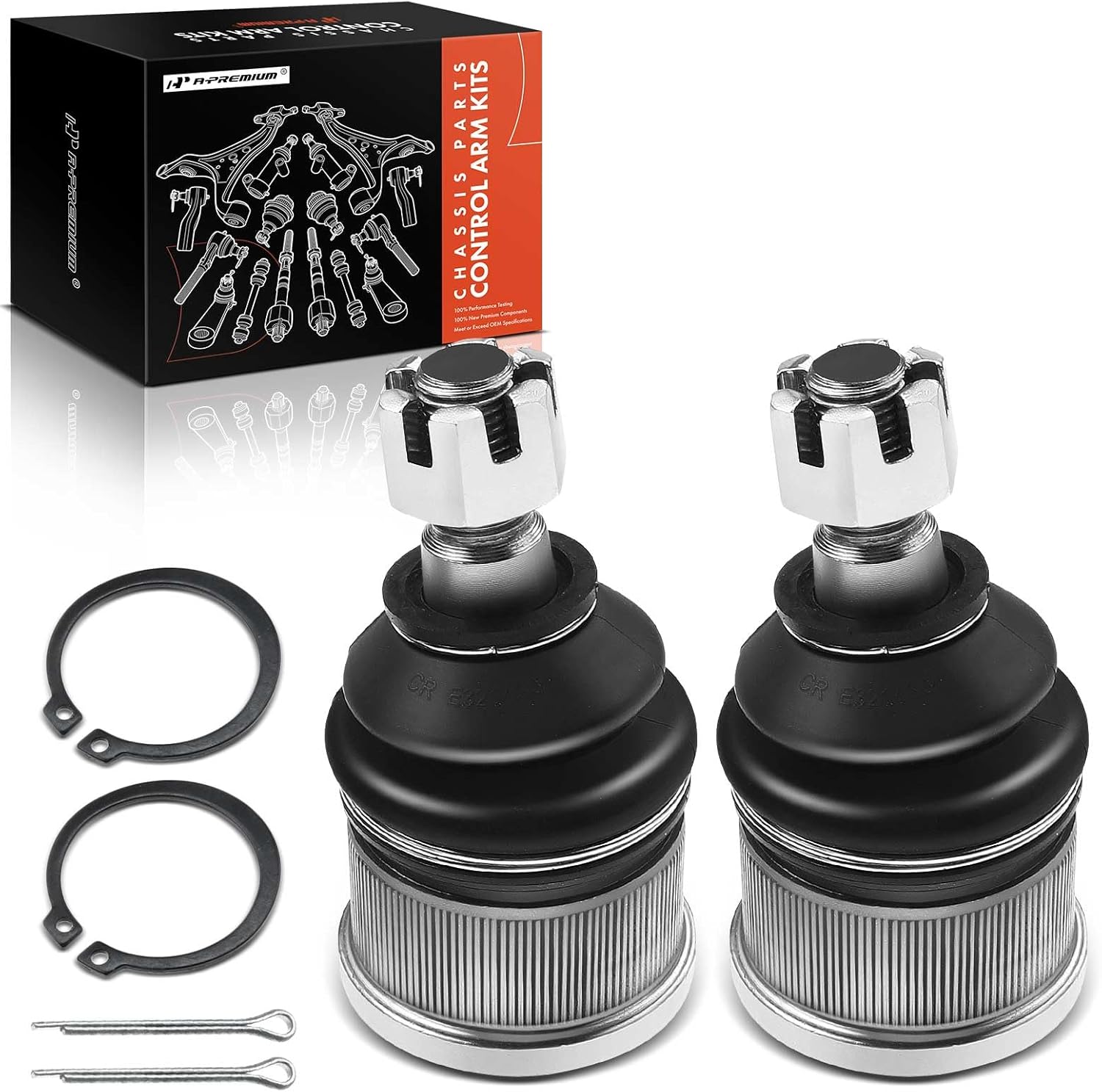
7. A-Premium Front Lower Ball Joint Pair for Honda Civic and Compatible Models
| Fit Type | Vehicle Specific Fit |
|---|---|
| Auto Part Position | Front Lower |
| Material Type | Alloy Steel |
| Pre-Greased | Yes |
This A-Premium front lower ball joint pair is a direct replacement intended for 1992–2000 Honda Civic platforms and several compatible Honda/Acura models from the same era. It replaces worn lower ball joints to reduce steering play, stop clunks or squeaks from the front suspension, and address uneven tire wear. The parts are alloy steel with a rubber bushing to damp vibration and help reduce noise, and the kit includes castle nuts, cotter pins, and a retaining ring to secure the bearing. The joints arrive pre-greased but do not include a grease fitting, so service procedures assume replacement rather than routine greasing. For everyday drivers this provides a cost-effective, ready-to-install option that restores tighter steering feel and smoother ride quality compared with worn components. Buyers should note this is an aftermarket replacement with a one-year parts guarantee and may show differences from factory parts in finish and long-term durability, so careful installation and inspection after initial miles is recommended.
Best for: A practical buyer who wants a direct replacement to restore steering precision and eliminate front-end noise on a 1996–2000 Civic without paying for dealer parts, and who prefers a ready-to-install aftermarket kit.
Less Ideal for: Those seeking a lifetime warranty, frequent off-road use, or a performance-oriented upgrade should consider heavier-duty or premium-brand options instead.
- Vehicle-specific fit for late 1990s Honda and compatible Acura models
- Alloy steel construction with rubber bushing to reduce noise and vibration
- Includes hardware: castle nuts, cotter pins, and retaining ring for secure installation
- Pre-greased out of the box so parts are ready to install
- No grease fitting included, limiting post-installation lubrication without disassembly
- Covered by a one-year parts-only guarantee rather than a long-term durability warranty
Verdict: A straightforward, vehicle-specific replacement that brings back steering tightness and quiets front suspension for everyday 1996–2000 Civic drivers.
Choosing the Right 1996-2000 Honda Civic Ball Joint: Key Factors to Consider
Correct Fitment for the EJ, EK, and EM Chassis
Accurate fitment is the starting point for any ball joint purchase on a 1996-2000 Civic. The EJ, EK, and EM variants have specific ball stud tapers, mounting hole patterns, and control arm interfaces. Choosing a part with verified compatibility prevents issues like improper taper engagement, fastener interference, or the need for extra adapters.
Fitment affects installation time and reliability. A part that matches OE mounting geometry reduces the chance of binding or uneven loading, which in turn limits premature wear. Always confirm the part references the 1996-2000 Civic and the relevant front location, since lower and upper ball joints are not interchangeable and can differ in size and attachment method.
Durability and Seal Design
Ball joints are exposed to road grime, water, and salt, so seal design and material quality directly influence longevity. Look for robust dust boots and corrosion-resistant finishes on the housing and stud. Boots that resist cracking and hold grease help maintain consistent lubrication and reduce the frequency of future replacements.
Metallurgical quality matters as well. Hardened studs and properly heat-treated housings resist deformation under load. For daily-driven Civics, prioritizing a durable seal and treated metal helps prevent early failure from the typical stresses of city and highway driving.
Serviceability and Installation Method
How a ball joint is installed affects whether you can perform the job at home or need specialized shop equipment. Press-fit ball joints require a ball joint press tool and sometimes control arm removal, while bolt-in designs can simplify field replacement. Consider whether you plan to replace only the ball joint or the entire control arm assembly; that decision changes labor time and required tools.
Parts that allow reuse of existing hardware or that include service-friendly features like grease fittings reduce long-term maintenance time. For owners without a hydraulic press, choosing a kit or assembly suited to bolt-in installation can save money and reduce risk of installation damage.
Effect on Steering Feel and Alignment Retention
Worn ball joints introduce play that shows up as loose steering, vagueness, or wandering down the road. New ball joints should restore crisp steering input and help maintain correct camber and toe settings. The construction stiffness and internal tolerances of the joint influence how much steering feel is preserved or improved after replacement.
Some aftermarket options slightly alter steering feedback versus original parts, which may be desirable for those seeking a firmer feel. However, excessive stiffness can transmit more road noise and vibration. Prioritize parts that maintain alignment specifications and deliver predictable steering response for the Civic's suspension geometry.
Compatibility With Alignment and Suspension Upgrades
If the Civic has modified suspension components, such as lowered ride height or different control arms, verify the ball joint selection supports those changes. Offset or nonstandard control arms can impose different loading angles and stresses, so you need a joint rated for the altered geometry.
For primarily stock vehicles, standard-spec ball joints are usually sufficient. For cars with alignment or handling upgrades, check load ratings and articulation range so the new joint does not bind or wear prematurely under altered suspension kinematics.
Availability of Replacement Parts and Kits
Ease of sourcing replacement boots, grease fittings, or complete ball joint kits matters for long-term ownership. Some ball joints are serviced with replaceable boots and grease fittings, extending service life. Others are sealed assemblies meant to be replaced as a single unit.
Consider how often you plan to service suspension components. If you prefer periodic greasing, choose a fitment that provides a grease fitting or a replaceable boot. If you want a low-maintenance option, sealed assemblies reduce regular upkeep but may require more frequent full-part replacement when they fail.
Upper Vs Lower Ball Joints: What Civic Owners Should Know
The front suspension on 1996-2000 Civics uses both upper and lower pivot points that can wear differently. Upper ball joints often see different loads and may be smaller; lower joints typically carry more vertical and lateral forces. Recognizing which location is failing helps you source the correct part and plan the repair.
When diagnosing, look for distinct symptoms. Excessive play at the steering wheel or clunking on compression suggests one issue, while uneven tire wear or poor toe stability can indicate another. Confirm the specific location before ordering parts or starting work.
- Upper ball joints: often accessed with less disassembly but can be smaller and less robust.
- Lower ball joints: handle greater loads and may require a press tool for removal.
- Always match the part to the front location specified for the EJ, EK, and EM chassis.
Signs You Need to Replace Ball Joints on a 1996-2000 Civic
Pay attention to steering and suspension behavior. Early warning signs include looseness in the steering, clunks over bumps, or a feeling that the car wanders at highway speeds. Tire wear patterns that show inner or outer edge cupping can also point to joint wear.
Some symptoms overlap with other suspension issues, so use a hands-on inspection method: safely raise the vehicle, grasp the tire at 12 and 6 o'clock and check for vertical play, and inspect the boots for tears or grease leakage. These checks narrow down whether the ball joint or another component needs attention.
- Wheel vibration or shimmy at specific speeds that does not resolve with balancing may indicate joint wear.
- Visible boot damage, corrosion, or grease loss is a direct sign to plan replacement.
- Clunking on braking or turning often accompanies advanced wear.
Tools and Prep Work for a Successful Job
Plan the repair based on the joint type. A ball joint press tool is often required for press-fit lower joints, while some upper joints or complete control arm assemblies can be swapped with standard hand tools and a torque wrench. Have a service manual or repair guide for torque specs and removal sequence specific to the EJ, EK, and EM chassis.
Gather safety gear, jack stands, and alignment tools. After replacement, a professional wheel alignment is recommended to restore proper toe and camber. If you intend to do the alignment yourself, ensure you have accurate measuring tools and a clear workspace to adjust tie rods and camber shims if applicable.
- Essential: ball joint press tool, torque wrench, breaker bars, and pry bars.
- Helpful: pickle forks or pullers for separating joints, replacement cotter pins, and grease gun if the new joint has a zerk fitting.
- Always use fresh fasteners where the service manual calls for one-time-use hardware.
How Replacement Choices Affect Long-Term Maintenance
Choosing between sealed assemblies and serviceable joints changes your maintenance cadence. Sealed joints typically require less routine attention but mean a full replacement when they wear out. Serviceable joints with grease fittings let you replenish lubrication and potentially double service intervals if maintained properly.
Think about your maintenance habits and environment. Civic owners in wet or salted-road areas may prefer sealed, corrosion-resistant assemblies, while owners who perform regular undercarriage greasing might favor joints that accept a grease gun and have replaceable boots.
- Sealed assembly: lower day-to-day maintenance, straightforward swap when needed.
- Serviceable joint: requires periodic greasing but can extend service life with proper care.
- Replace boots promptly to avoid dirt ingress that accelerates wear.
Preparing for an Alignment After Ball Joint Service
Ball joint replacement can change suspension geometry enough that toe and camber go out of spec. For the Civic EJ, EK, and EM, small offsets have noticeable effects on tire wear and steering responsiveness. After installing new joints, measure and correct alignment to factory specifications or to the settings you prefer if you use a performance setup.
If you replace only one side, the asymmetry can shift alignment more than you expect. Even when both sides are changed, settle-in torque and bushing seating can alter initial readings. Plan to verify alignment after a short break-in drive if you cannot get an immediate alignment appointment.
- Avoid long drives before aligning if possible; perform a short break-in drive and re-torque fasteners first.
- Document pre-repair alignment settings if available to help restore the original geometry.
- Use alignment specs for the 1996-2000 Civic when making corrections.
Still looking for the perfect fit?
Select your Honda Civic configuration to see the most relevant Ball Joints recommendations
How We Chose the Best 1996-2000 Honda Civic Ball Joint
We applied a focused editorial filter designed for the 1996-2000 Honda Civic (EJ, EK, and EM) to ensure each pick meets real-world owner needs. Selection began with fitment verification against the specified model years and common Civic subframes. We prioritized mechanical compatibility, ensuring correct ball stud taper, bushing type, and mounting patterns for both front lower and upper positions.Durability was assessed by looking at materials and sealing methods that resist contamination and corrosion under typical driving conditions. Serviceability mattered too: parts that allow reuse of original hardware or that simplify press-in/bolt-in installation scored higher. Ride and steering impact were considered by evaluating construction stiffness and how the component helps preserve alignment settings.We excluded options that required extensive fabrication, adapters, or unverified modifications. Also excluded were items lacking clear fitment data for the EJ, EK, and EM chassis or with inconsistent construction details. The final list balances ride quality, longevity, and installation practicality for DIYers and independent shops alike.
Our full evaluation process is outlined in our review methodology.
FAQ
How do I tell if a ball joint is bad on my 1996-2000 Civic?
Common signs include steering play, clunking noises over bumps, and uneven tire wear. Safely lifting the front end and checking for vertical play at the wheel or inspecting torn boots and grease loss will help confirm a worn joint.
Can I replace a ball joint myself without a press on a Civic EJ, EK, and EM?
It depends on the joint type. Some upper joints or bolt-in assemblies can be swapped with hand tools, but many lower joints are press-fit and require a ball joint press tool or removal of the control arm for safe extraction and installation.
Should I replace both sides at once or just the worn one?
Replacing both sides at the same time is often recommended to preserve symmetric steering response and even wear. If only one side is replaced, expect possible alignment shifts and uneven material aging.
Do new ball joints affect wheel alignment on the Civic?
Yes. Installing new joints can change suspension geometry and affect toe and camber. A wheel alignment is usually necessary after replacement to ensure correct tire wear and handling.
Are there maintenance steps to extend ball joint life?
Regular inspection for boot damage, keeping joints clean, and greasing serviceable fittings per schedule will extend life. Promptly replacing torn boots prevents contamination that accelerates wear.
Will worn ball joints cause wheel vibration on my Civic?
Worn ball joints can contribute to wheel vibration, especially at specific speeds, but vibration has several potential causes. Use a physical play check and boot inspection to determine whether the ball joint is a likely culprit.
Final Verdict
When replacing ball joints on a 1996-2000 Honda Civic (EJ, EK, and EM), prioritize exact fitment, durable sealing, and the installation method that matches your tools and skill level. Think about whether you value a low-maintenance sealed unit or a serviceable joint you can grease periodically, and plan for a post-repair alignment to preserve tire life and steering precision.Balancing durability, serviceability, and correct chassis compatibility will help you choose a ball joint that restores steering control and reduces the need for early rework. Focus on the factors discussed here to select the right option with confidence.
Explore More:
- Check out all Honda Civic parts & accessories
- Explore Ball Joints Maintenance & Repair Guides
- Explore Suspension & Steering
- Browse all Auto Parts
