

Note: This article contains affiliate links. If you click on these links and make a purchase, I may earn a small commission at no extra cost to you. This helps support my research and content. Read my full affiliate disclosure here.
Choosing the right Honda Civic ball joint affects steering feel, alignment stability, and overall safety during daily driving. Faulty or worn ball joints can lead to loose steering, uneven tire wear, and vibration that makes the car harder to control.This guide highlights seven shortlisted options that meet common fitment and durability standards for the Honda Civic. The selections were evaluated for fit accuracy, build quality, and ease of installation, with notes on compatibility and typical use cases. Read on to see which choices best match your repair or maintenance needs.
Looking for other parts? See all Honda Civic parts & accessories.
Top Picks at a Glance


1. HHCM Front Lower Ball Joint Kit (K500069 K500070) for Honda Civic 2006–2011 / Acura CSX 2006–2011

| Manufacturer | HHCM |
|---|---|
| Model | K500069 K500070 |
| Mounting Type | 3 Bolt |
| Position | Front |
The HHCM Front Lower Ball Joint Kit replaces both left and right lower ball joints on 2006–2011 Honda Civic and Acura CSX front suspension assemblies. Each joint is built to meet factory-quality tolerances, ships with mounting hardware and comes prefinished to resist corrosion. In practice these install like a direct replacement on compatible factory control arms and are intended to restore steering precision and suspension stability after worn joints cause looseness or uneven tire wear. Notable features include a 3-bolt mounting pattern, grease fitting on at least one joint according to user reports, and precision tolerances that make pressing and alignment straightforward for a shop with a ball-joint press. Trade-offs are that fitment depends on matching factory-style control arms so they may not seat correctly on aftermarket arms, and installation requires a press or professional installation if you lack the right tools. For a balanced buyer seeking a reliable, ready-to-install repair that closely matches factory performance, this kit is a practical choice.
Best for: A balanced all-round buyer who wants a direct replacement to restore steering feel and suspension stability on a 2006–2011 Honda Civic or Acura CSX without seeking performance upgrades or specialty parts.
Less Ideal for: Not a good choice for owners who use aftermarket control arms with nonstandard joints or DIYers without a ball-joint press and installation experience.
- Designed to match factory-style fitment for 2006–2011 Honda Civic and Acura CSX front lower suspension
- Comes as a two-piece kit with both left and right lower ball joints included
- Manufactured with corrosion-resistant finish for longer service life
- Precision tolerances simplify pressing and alignment for professional installers
- May not fit non-factory or aftermarket control arms that use different seat dimensions
- Installation requires a ball-joint press or professional service for safe, correct installation
Verdict: A factory-style two-piece front lower ball joint kit that restores steering precision and durability for 2006–2011 Honda Civic and Acura CSX owners.
2. Aeagle Front Lower Control Arms Suspension Kit with Ball Joints and Sway Links for Honda Civic 2006–2011 1.8L

| Fitment | Honda Civic 2006–2011 1.8L |
|---|---|
| Kit contents | Front lower left/right control arms, 2 lower ball joints, 2 sway bar end links |
| Exterior finish | Electrophoretic Coating |
| Special features | Pre-greased |
| Manufacturer | AEagle |
This Aeagle kit supplies both front lower control arms, two lower ball joints, and matching sway bar end links so you can replace the worn front lower suspension on a 2006–2011 Honda Civic 1.8L in one job. The control arms are finished with an electrophoretic coating for improved corrosion resistance and the parts arrive pre-greased to simplify installation and initial use. For a performance-oriented buyer the kit brings firmer steering response and reduced road feedback compared with aging rubber-mounted components, and installing matched components at once helps restore correct geometry and alignment behavior. Expect routine use: bolt-on replacement during a front suspension service, alignment required after installation. Limitations are that this is an aftermarket kit rather than factory-sourced hardware and longevity depends on installation and local driving conditions, and the package does not include upper control arms or other suspension items you might replace at the same time.
Best for: Performance-oriented owners who prioritize restoring precise steering feel and suspension control on a 2006–2011 Honda Civic 1.8L and want a single kit to address worn front lower components.
Less Ideal for: Owners looking for an exact factory-sourced replacement or those who want a full suspension overhaul including upper arms and other related hardware in one purchase.
- Complete front lower kit replaces both control arms, lower ball joints, and sway bar end links for one-side-to-side service.
- Electrophoretic coating improves corrosion resistance for longer service life in wet or salted conditions.
- Parts arrive pre-greased which reduces prep time and eases initial break-in.
- Vehicle-specific fit for Honda Civic 2006–2011 1.8L improves likelihood of correct fitment and simpler installation.
- Aftermarket part set rather than factory replacement which may differ slightly in fit or finish from factory-quality components.
- Does not include upper suspension components or hardware that some technicians recommend replacing at the same time.
Verdict: A convenient, vehicle-specific front lower suspension kit that restores steering precision for a 2006–2011 Civic 1.8L, with corrosion-resistant finish and pre-greased parts but not a factory-sourced full suspension overhaul.
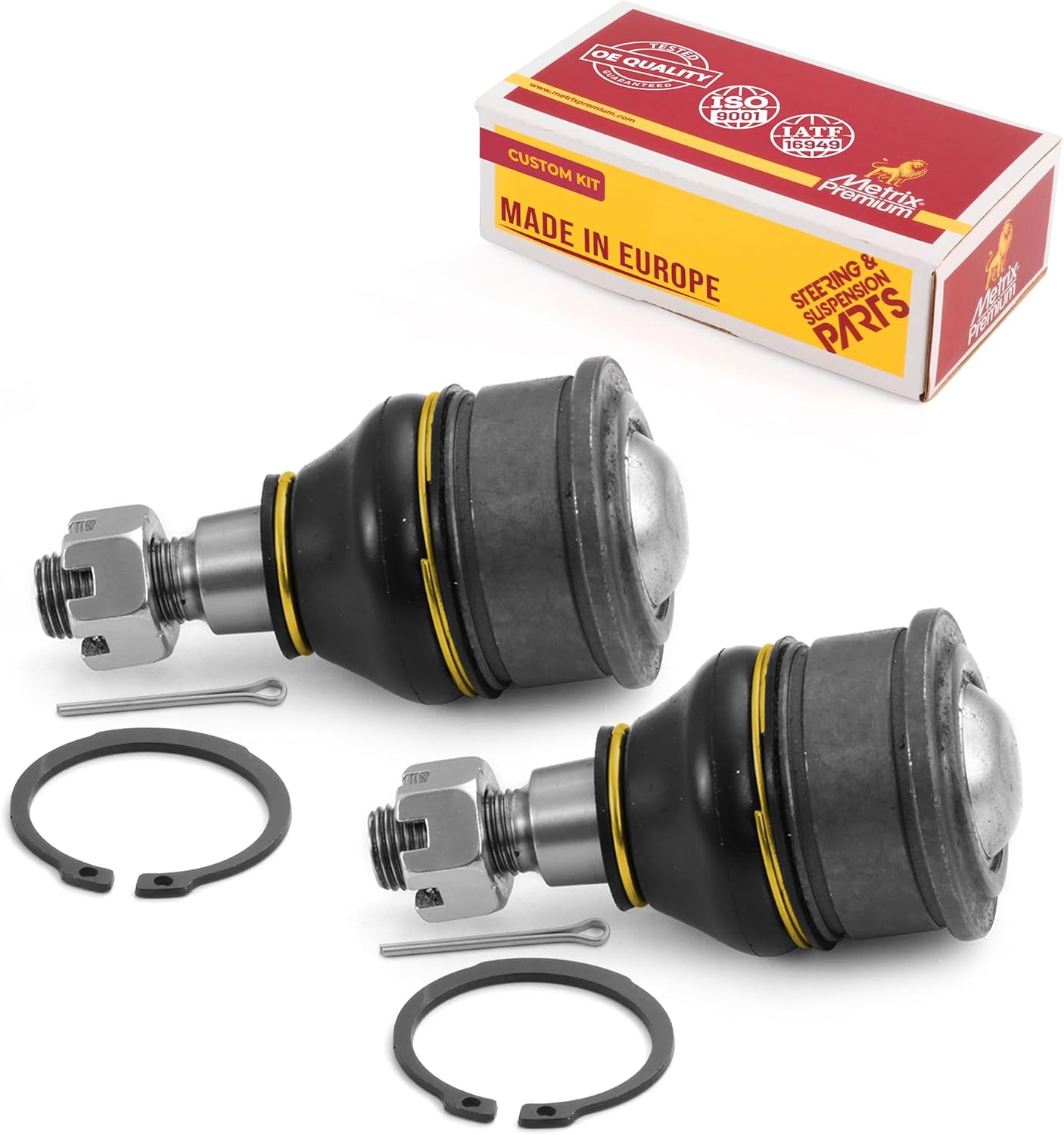
3. Metrix Premium Chassis Parts Front Lower Ball Joint Kit (2 pc)
| Model | 99222MT |
|---|---|
| Manufacturer | METRIX PREMIUM CHASSIS PARTS |
| Position | Front Lower |
| OEM Part Number | 46D2310A, 51210S5AJ20, 51210S5AJ30, 51210S6M000, K90332 |
This Metrix two-piece front lower ball joint kit replaces the worn lower ball joints on compatible Honda Civic and Acura EL models. It is a direct-fit, steel construction joint that installs where the control arm meets the steering knuckle and restores proper steering feel and suspension movement. The parts are described as machined and greasable, which makes post-installation maintenance straightforward and can extend service life. Metrix emphasizes certification to IATF 16949 and ISO 9001 and a factory-quality fit for routine DIY or professional swaps. Practical benefits are solid fitment on specified Civics, a maintenance-friendly zerk fitting, and corrosion resistance measures intended to improve longevity. Limitations are that this is a vehicle-specific replacement for the front lower position only and does not include related suspension components or alignment service, so buyers should budget time and parts for a full front-end refresh and an alignment after installation.
Best for: Practical owners who prioritize getting reliable, factory-quality replacement parts at a sensible cost and are willing to perform basic suspension maintenance or use a local shop for installation.
Less Ideal for: Buyers looking for a full front suspension overhaul kit or those who want an all-in-one solution with control arms, tie rods, and alignment included should consider a comprehensive kit instead.
- Direct-fit design for compatible early 2000s Honda Civic and Acura EL applications
- Steel, machined construction intended for stable steering and suspension operation
- Greasable design with zerk fitting allows periodic maintenance to extend life
- Manufacturer quality certifications indicating production to recognized standards
- Covers only the front lower ball joint position so other worn suspension parts are not addressed
- Requires a press or appropriate tools for removal and installation if replacing pressed-in joints
Verdict: A practical, greasable front lower ball joint kit that delivers factory-quality fitment and maintainable durability for early 2000s Honda Civic and Acura EL models.
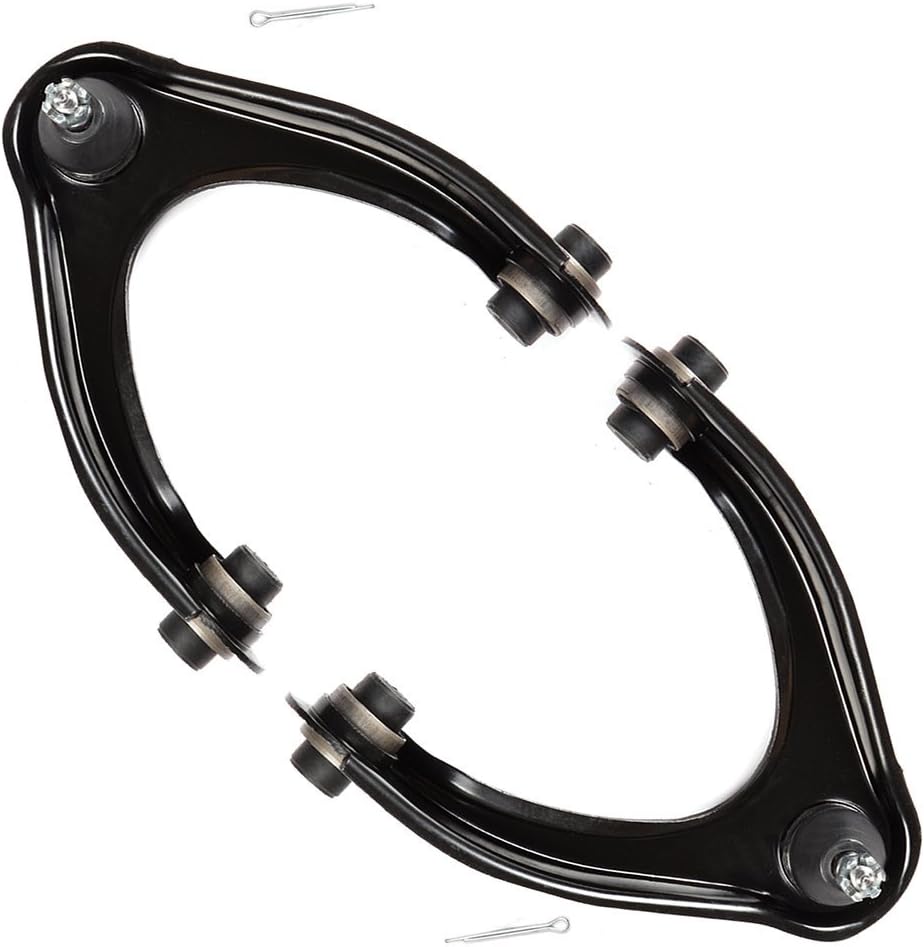
4. SCITOO Front Upper Control Arm and Ball Joint Kit (pair) for 1996–2000 Honda Civic / 1997–2000 Acura EL
| Fit Type | Vehicle Specific Fit |
|---|---|
| Auto Part Position | Front Upper |
| Manufacturer | SCITOO |
| OEM Part Number | 51450S01023, 51450SO1023, 51450SO4023, K90450; 51460S01023, 51460S04023, 51460SO1A02, 51460SO4010, K90451 |
This SCITOO kit supplies both left and right front upper control arms with integrated ball joints to restore steering geometry and wheel location on 1996–2000 Honda Civic and 1997–2000 Acura EL models. Designed as a vehicle-specific replacement, the parts install where the upper arm links the wheel hub to the chassis and transmits cornering and braking loads. Buyers report straightforward bolt-on installation for DIYers and shops, and the kit is presented as a budget alternative to factory replacement parts. Practical benefits include replacing worn joints and bushings in a single purchase and returning a loose or wandering steering feel to normal. Limitations are variable quality control between units and occasional reports of mismatched bushings or weak threads on the ball joint stud, so professional installation and immediate inspection at install are recommended. For a low-cost repair this kit can work well, but drivers who need long-term durability or an exact factory match may prefer a higher-end or OEM replacement.
Best for: Budget-conscious owners who value an inexpensive, ready-made replacement to fix worn front upper suspension components and who are comfortable verifying fit and condition at installation.
Less Ideal for: Drivers seeking a factory-identical, long-term durable solution or those without access to professional installation and inspection should consider higher-grade or OEM replacements instead.
- Vehicle-specific kit includes both driver and passenger front upper control arms with ball joints for a complete side-to-side repair
- Affordable option compared with dealer or premium aftermarket parts
- Reportedly straightforward to install for mechanically competent DIYers and independent shops
- Quality control can be inconsistent with occasional mismatched bushings or differing joint dimensions between arms
- There are reports of ball joint stud or thread failures under installation torque on some units
Verdict: A low-cost, full front upper control arm and ball joint pair that can restore steering feel on late 90s Civics but requires careful inspection at installation due to mixed quality reports.
5. ILONPA Front Lower Control Arms with Ball Joints Suspension Kit (4-piece) for 2001–2005 Honda Civic Sedan/Coupe

| Fit Type | Vehicle Specific Fit |
|---|---|
| Auto Part Position | Front |
| Material | Alloy Steel |
| Exterior | Milled |
| Kit Contents | 2 control arms and 2 lower ball joints |
This ILONPA suspension kit supplies both left and right front lower control arms plus two lower ball joints to restore steering and suspension geometry on 2001–2005 Honda Civic sedans and coupes. Built from high-strength alloy steel with milled exterior surfaces, the kit is intended as a direct replacement for factory front lower arms and is used to address worn bushings, loose steering, or uneven tire wear. The parts include precision tolerances to simplify installation and steering alignment, and many owners report improved ride smoothness and a secure steering feel after installation. Some users noted fitment issues around bushing holes and incompatibility of supplied zerk fittings with the ABS tone ring on a few builds, so you may need minor rework or alternative ball joints in those cases. Overall this kit is practical for reliability-driven repairs that restore factory handling without major modification, but expect to check fitment carefully and be prepared for small adjustments during installation.
Best for: Reliability-focused buyers who want a complete front lower control arm replacement to restore original steering feel and resolve worn-suspension symptoms on a 2001–2005 Honda Civic sedan or coupe.
Less Ideal for: Drivers looking for an upgraded performance arm or a universal fit kit should look elsewhere, and those unwilling to make minor fitment adjustments should consider dealer or OEM parts.
- Vehicle-specific fit for 2001–2005 Honda Civic sedan and coupe models
- High-strength alloy steel construction intended to restore factory steering feel
- Includes both control arms and two lower ball joints for a complete front lower replacement
- Precision tolerances to simplify installation and aid steering alignment
- Some users reported bushing hole clearances that required modification or different bolts
- Supplied zerk fittings on ball joints can interfere with the ABS tone ring on certain cars
Verdict: A practical, vehicle-specific replacement kit that restores factory steering feel for 2001–2005 Honda Civic sedans and coupes but may need minor fitment tweaks during installation.
6. Detroit Axle Pair Front Lower Ball Joints for 2006–2011 Honda Civic / 2007–2010 Acura CSX

| Vehicle fit | 2006–2011 Honda Civic; 2007–2010 Acura CSX |
|---|---|
| Kit includes | 2x Front Lower Ball Joints |
| Brand | Detroit Axle |
| Item weight | 4 pounds |
These Detroit Axle lower ball joints replace the two front lower ball joints on 2006–2011 Honda Civic and 2007–2010 Acura CSX models. They are used when worn or noisy joints cause steering play, clunks, or failed inspection and are installed by pressing into the lower control arm and bolting the stud into place. The parts are marketed as factory-quality aftermarket replacements that undergo durability testing and include grease fittings for routine lubrication. In practice they provide a tight fit and restored steering feel for many users and several reports note long service life at highway miles. Fitment accuracy can vary between production batches so double-check fit before installation and have a press or professional available for removal and installation. The concrete benefit is a budget-friendly way to renew front suspension geometry and eliminate noise. The parts are not a direct substitute for every vehicle without confirming fit and some installers reported interference or loose press-fit on a minority of units, which can require replacement or shop work to seat correctly.
Best for: Convenience-driven buyers who want an affordable, ready-to-install replacement that restores steering feel and reduces noise without hunting specialty parts.
Less Ideal for: Drivers who need guaranteed exact-fit, plug-and-play factory parts for every vehicle or who prefer premium OEM-brand components and professional installation included.
- Sold as a pair to replace both front lower joints at once for balanced steering response
- Grease fittings allow periodic lubrication to extend service life
- Multiple users report factory-quality fit and long mileage durability
- Durability testing and a long warranty backing from the brand provide confidence
- Some reported fitment variability between batches that can require returns or shop modification
- Installation typically requires a ball-joint press or professional tools, not a simple bolt-on job
Verdict: A cost-conscious, convenience-focused replacement that restores steering feel on compatible Civics but check fit and be prepared for press-fit installation.
7. SCITOO Front Suspension Kit (8‑pc) for Honda Civic 2006–2011

| Fitment | 2006–2011 Honda Civic 1.8L |
|---|---|
| Kit contents | Lower control arms w/ ball joints, inner and outer tie rod ends, sway bar end links |
| Material | Alloy steel, stainless steel |
| Coating | Electrophoretic coating |
This SCITOO front suspension kit bundles the parts most commonly replaced when a Civic’s front end shows wear. It includes driver and passenger lower control arms with ball joints, inner and outer tie rod ends, and front sway bar end links so you can replace multiple worn components in one job. The parts arrive pregreased and use stamped alloy and stainless components with electrophoretic coating to resist corrosion. For routine suspension repairs the kit simplifies ordering and helps ensure matched components and consistent fitment to the 2006–2011 Civic 1.8L. Buyers report the pieces install like factory replacements and feel tight out of the box, which reduces shop time and alignment hassles. Limitations are that this is an aftermarket kit rather than a factory part set and long-term durability depends on driving conditions and installation quality. Professional installation is recommended to ensure correct torque and alignment when swapping multiple steering and suspension parts at once.
Best for: A risk-averse mainstream buyer looking to restore safe, factory-quality steering and suspension on a 2006–2011 Honda Civic without sourcing individual components separately.
Less Ideal for: Drivers who want OEM-branded parts or who prefer to replace only a single worn component rather than a full multi-piece kit.
- Complete 8-piece kit replaces multiple front suspension components in one purchase
- Parts come pregreased to reduce initial prep and ease installation
- Components use alloy and stainless materials with electrophoretic coating for corrosion resistance
- Designed specifically to fit 2006–2011 Honda Civic 1.8L for simpler compatibility
- Aftermarket parts can vary in long-term durability compared with factory parts
- Requires professional installation for best alignment and safety
Verdict: A convenient, vehicle-specific eight-piece suspension kit that simplifies front-end repairs on 2006–2011 Honda Civics while offering corrosion-resistant aftermarket components.
Looking for the perfect fit?
Select your Honda Civic configuration to see the most relevant Ball Joints recommendations
Choosing the Right Honda Civic Ball Joint: Key Factors to Consider
Fitment and Vehicle Specificity
Correct fitment is essential because a ball joint that does not match the Honda Civic's control arm geometry can cause alignment issues and uneven tire wear. Confirming that the part is manufactured to the Civic's mounting pattern and shaft diameter helps ensure a proper, secure connection.
A vehicle-specific component reduces the likelihood of modification during installation and shortens shop time. Fitment also affects whether additional hardware or adapters are required, which influences total labor and complexity.
Durability and Materials
Ball joints endure constant load, friction, and exposure to moisture and road salt, so materials and protective finishes matter. Look for hardened bearing surfaces, robust stud materials, and corrosion-resistant coatings to extend service life under normal driving conditions.
Long-lasting seals and grease retention features also reduce the frequency of replacement. Durability impacts safety and the long-term cost of ownership because a more durable joint resists play and maintains alignment longer.
Mounting Style and Installation Method
Ball joints come in press-fit and bolt-in designs, and the mounting style affects installation time and required tools. Bolt-in units typically simplify DIY swaps because they avoid the need for a hydraulic press, while press-fit joints may require specialized removal and installation tools.
Understanding the installation method ahead of time helps you plan for labor, expect potential additional parts, and determine whether the job is suitable as a DIY project or best left to a shop.
Seal Design and Lubrication
A reliable seal keeps contaminants out and lubrication in, preserving smooth motion and preventing premature wear. Some ball joints are greasable and accept periodic servicing, while others are sealed for life; each approach has tradeoffs in maintenance and longevity.
For vehicles driven in harsh conditions, a greasable joint with a durable boot can extend service intervals. For lower-maintenance applications, sealed units reduce maintenance tasks but may require replacement sooner if the seal fails.
Load Capacity and Wear Tolerance
The ball joint must handle lateral and vertical loads from normal driving and occasional road impacts. Components rated for appropriate load capacity resist deformation and maintain tightness under stress, which preserves steering responsiveness.
Wear tolerance also affects how quickly play develops in the joint. Choosing a part with suitable load ratings and tight manufacturing tolerances helps keep steering geometry stable and reduces the chance of sudden handling deterioration.
Compatibility With Alignment and Suspension Settings
After replacing a ball joint, alignment adjustments are often necessary to restore correct camber and toe. Selecting a part that retains factory suspension geometry makes it easier to achieve alignment within standard specifications.
Some replacement parts alter ride height or arm length slightly, which can complicate alignment. Confirming geometric compatibility minimizes follow-up adjustments and ensures predictable handling after installation.
How We Chose the Best Honda Civic Ball Joint
We focused on components that match the Honda Civic's factory fit and load requirements and filtered for parts designed specifically for the vehicle's front suspension geometry. Our evaluation prioritized solid construction, corrosion resistance, and compliance with OEM-style tolerances to ensure stable steering and alignment.We also considered mounting options and whether the design supports standard alignment procedures after installation, plus the availability of replacement hardware such as press-fit or bolt-in configurations. Ease of installation and compatibility with common shop tools were weighed to reflect real-world repair scenarios.Excluded from consideration were generic universal joints and parts lacking clear fitment data for the Honda Civic. We did not include items intended only for racing or modified suspension setups. The final list balances durability, correct fit, and practical serviceability for typical Civic owners.
Our full evaluation process is outlined in our review methodology.
FAQ
What are common ball joint symptoms on a Honda Civic?
Common signs include clunking or popping noises when turning or going over bumps, uneven tire wear, and a loose or wander-prone steering feel. You may also notice vibration through the steering wheel at certain speeds. These symptoms often progress gradually and can vary with load and road conditions.
How do I know if I need to replace a ball joint or just lubricate it?
If the joint shows visible play, torn seals, or metal-to-metal noise, replacement is usually required. Greasing can help if the joint is designed to be serviceable and the issue is dryness rather than wear. A mechanic can check for axial and radial play to determine whether service or replacement is appropriate.
Can I replace a Honda Civic ball joint myself?
DIY replacement is possible for experienced home mechanics with the right tools and space. Bolt-in designs are generally easier, while press-fit joints often require a ball joint press and removal tools. If you are uncomfortable with suspension disassembly or alignment checks, professional service is advisable.
Will replacing a ball joint affect my wheel alignment?
Yes, replacing a ball joint can affect camber and toe settings, so an alignment check is usually recommended after installation. Proper alignment ensures even tire wear and predictable handling, and some replacements can require minor adjustments to return to factory specifications.
How long do ball joints typically last on a Honda Civic?
Lifespan varies depending on driving conditions, maintenance, and quality, but ball joints often last many tens of thousands of miles under normal use. Exposure to salt, heavy loads, and rough roads can shorten life, while greasable designs that are periodically serviced may extend service intervals.
Conclusion
When choosing a Honda Civic ball joint, prioritize correct fitment and robust construction to maintain steering precision and alignment stability. Consider the mounting style and whether a greasable or sealed unit better matches your maintenance preferences and tool availability.Balance durability and ease of installation against the likely driving conditions. After installation, plan for an alignment check to ensure handling and tire wear remain predictable.
Explore More:
- Check out all Honda Civic parts & accessories
- Explore Ball Joints Maintenance & Repair Guides
- Explore Suspension & Steering
- Browse all Auto Parts
