

Note: This article contains affiliate links. If you click on these links and make a purchase, I may earn a small commission at no extra cost to you. This helps support my research and content. Read my full affiliate disclosure here.
If you own a 2007-2018 Jeep Wrangler, a properly functioning radiator is vital to prevent overheating, protect the engine, and keep your off-road adventures trouble-free. Whether you drive a JK or JKU chassis, choosing the right radiator affects cooling capacity, long-term durability, and how simple repairs or replacements will be in the field. This guide presents seven shortlisted radiators chosen for this generation span and explains the criteria behind each pick, including cooling performance, fitment accuracy, and corrosion resistance. You will also find practical buying considerations and installation notes to help you decide which radiator best matches your driving style and maintenance plans.
Looking for other parts? See all Jeep Wrangler parts & accessories.
Top Picks at a Glance
| Best Overall The best all-around choice for most situations | DWVO Complete Radiator for Jeep Wrangler (fits select 2007–2018 V6 models) |  |
| Best Quality Built to a higher standard if you want something more solid | Mishimoto Performance Aluminum Radiator for Jeep Wrangler JK (2007–2018) |  |
| Best Value The sweet spot between price and what you get | RAYTEN Rad-2957 Radiator for Jeep Wrangler V6 3.6L / 3.8L (2007–2018) |  |
| Best Budget The cheapest option that still gets the job done reliably | ECCPP Replacement Radiator for 2007–2018 Jeep Wrangler (3.6L / 3.8L) |  |
| Highest Rated A top-rated pick with lots of positive feedback | OCPTY CU2957 Replacement Engine Radiator for Jeep Wrangler 3.6L/3.8L |  |
| Most Popular A crowd favorite that many people choose with confidence | SCITOO Aluminum Radiator Assembly for 2007–2018 Jeep Wrangler |  |
| Best Seller A high-volume bestseller chosen again and again | SPELAB CU2957 Radiator Replacement for 2007–2018 Jeep Wrangler (3.6L/3.8L) |  |
1. DWVO Complete Radiator for Jeep Wrangler (fits select 2007–2018 V6 models)

| Fits | 2007-2011 Wrangler 3.8L and 2012-2018 Wrangler 3.6L |
|---|---|
| Core material | Aluminum |
| End tanks | TIG-welded PA66 GF30 |
| Transmission cooler | Brass, integrated |
| OEM part number | 55056633AB |
This DWVO complete radiator replaces the factory unit on compatible Wrangler 3.6L and 3.8L V6 models and is built as a direct-fit replacement. It uses a high-density multi-louvered aluminum core with TIG-welded end tanks and a brass transmission oil cooler to restore cooling capacity and help prevent overheating. Typical use is a like-for-like swap during routine cooling system service or after a leak or core failure; the assembly ships with foam padding and a user manual but does not include a radiator cap. Installers report the fit is generally good though some vehicles may require careful trimming or extra shims for perfect alignment, and professional installation is recommended if you are not experienced. Practical benefits include improved heat dissipation over old, clogged cores and a built-in trans cooler for automatic transmission cooling. Some buyers have reported occasional leaking transmission ports or early failures, so expect to pressure-test the unit at install and be prepared to seal or tighten the cooler fittings if needed.
Best for: Jeep owners looking for an affordable, OEM-style replacement radiator to restore cooling performance and transmission cooling on V6 Wranglers, prioritizing value and practical repairability.
Less Ideal for: Those who want a lifetime-performance or heavy-duty aftermarket cooling upgrade for extreme offroad or towing use should consider purpose-built performance radiators instead.
- Direct-fit design for specified 2007–2018 Wrangler V6 applications
- High-density multi-louvered aluminum core for strong heat dissipation
- TIG-welded end tanks and brass transmission oil cooler included
- Shipped with protective foam and user manual to reduce installation damage
- Radiator cap is not included
- Some units have reported transmission cooler port leaks or fitment adjustments required
Verdict: A cost-effective, direct-fit aluminum replacement that restores factory-style cooling and adds an integrated transmission cooler for compatible Wrangler V6s.
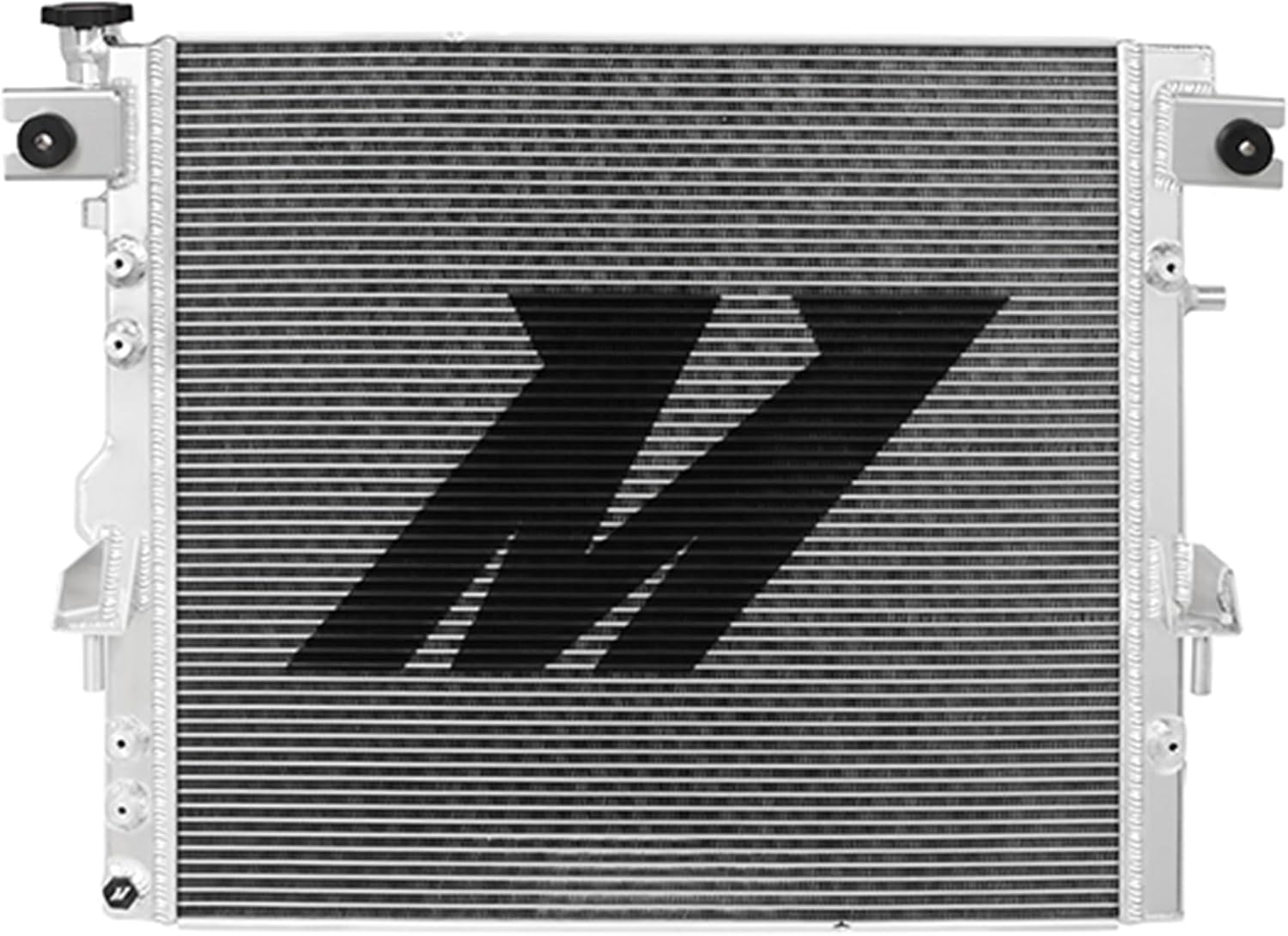
2. Mishimoto Performance Aluminum Radiator for Jeep Wrangler JK (2007–2018)
| Fitment | Jeep Wrangler JK 2007-2018 |
|---|---|
| Core design | 37-row stacked-plate |
| Construction | Brazed aluminum core with TIG-welded end tanks |
| Includes | Installation hardware, magnetic drain plug, high-pressure cap |
This Mishimoto radiator upgrades the stock cooling system with a 37-row stacked-plate core that increases core volume and coolant capacity, helping the Wrangler run cooler under towing, heavy load, and hot-weather driving. Constructed from aircraft-grade aluminum with a 100% brazed core and TIG-welded end tanks, it aims to be more durable than common plastic-end OEM replacements. The unit includes a high-pressure cap, magnetic drain plug, and an installation hardware kit for a largely drop-in fit that most DIYers can handle in an afternoon. In practice the larger core noticeably reduces engine and transmission temperatures on demanding drives, and many users report better high-temperature stability after installation. Expect some fitment fiddling around condenser mounting points and top trim because the thicker core and slightly different weld locations can require minor adjustments during install. The radiator comes polished and finished to a high standard, but the cap sizing and a slightly different profile versus factory parts are small annoyances to be aware of.
Best for: Buyers focused on improved cooling performance and long-term durability for their Wrangler JK who want a largely direct-fit upgrade that handles towing, off-road use, and hotter climates with confidence.
Less Ideal for: If you prioritize a guaranteed bolt‑in cosmetic match to every factory plastic trim piece or need an exact factory-profile radiator for show builds, this upgrade may require small modifications that you should avoid.
- Significantly increased core volume and coolant capacity for better cooling under load
- All-aluminum construction with brazed core and TIG-welded end tanks for durability
- Direct-fit design with included hardware and instructions for mostly straightforward installation
- Magnetic drain plug and high-pressure cap add practical protection and improved boiling-point control
- Polished finish and strong weld quality for a factory-quality look and longevity
- Thicker core and altered weld locations can require minor trimming or adjustments to AC condenser mounting and top trim fitment
Verdict: If you want a durable, higher-capacity cooling upgrade to keep a 2007–2018 Wrangler JK running cool under heavy use, this Mishimoto radiator is the performance-focused choice.
3. RAYTEN Rad-2957 Radiator for Jeep Wrangler V6 3.6L / 3.8L (2007–2018)

| Compatible engines | V6 3.6L and 3.8L |
|---|---|
| Core height | 21-9/10 inch |
| Core width | 20 inch |
| Core thickness | 9/10 inch |
| Inlet/Outlet diameter | 1-1/2 inch |
The RAYTEN Rad-2957 is a direct-replacement radiator designed for Jeep Wrangler V6 engines across 2007–2018 model years. It uses a high-density aluminum core with multi-layer cooling fins to improve heat dissipation and keep operating temperatures stable under highway and towing conditions. The unit is manufactured to match factory mounting points so installation typically requires no modifications; transmission or engine oil coolers are not included so check your vehicle application before purchasing. Buyers report generally good fit and packaging, and the inlet/outlet diameters match common factory hoses, though a few users noted fitment issues with transmission cooler lines, drain plug sealing, or radiator cap compatibility on some vehicles. RAYTEN backs the assembly with a two-year guarantee and offers customer support. For someone swapping an old or damaged radiator on a Wrangler, this offers a cost-effective, higher-density aluminum option, but double-check whether your specific vehicle needs an integrated transmission cooler or a particular cap to avoid post-install tweaks.
Best for: Buyers who want a practical, budget-conscious direct replacement that improves cooling performance while keeping installation simple on a 2007–2018 Wrangler V6.
Less Ideal for: Owners who need an integrated transmission oil cooler or who prefer a radiator preconfigured with a specific cap and hose fittings should look for a different part or confirm fitment details before buying.
- High-density aluminum core and multi-layer fins for improved heat dissipation
- Made to factory mounting points for straightforward installation on specified Wrangler V6 years
- Inlet and outlet sizes match common factory hose diameters for easier hose connections
- Packaged well and generally reported to fit correctly by multiple buyers
- Two-year guarantee and vendor customer support available
- Does not include transmission or engine oil cooler cores so may not fit applications that require them
- Some users reported issues with radiator cap fit, transmission cooler line length, or a leaking drain plug on certain units
Verdict: A cost-effective, higher-density aluminum direct-fit radiator for 2007–2018 Wrangler V6 owners who want better cooling with minimal installation hassle.
4. ECCPP Replacement Radiator for 2007–2018 Jeep Wrangler (3.6L / 3.8L)

| Compatible engines | 3.6L and 3.8L |
|---|---|
| Vehicle years | 2007-2018 Jeep Wrangler |
| Construction | Aluminum core with plastic tanks |
| Leak inspection | Units leak-tested |
This ECCPP radiator is a budget-friendly replacement aimed at restoring cooling performance on compatible 2007–2018 Jeep Wranglers with 3.6L or 3.8L engines. It uses a full aluminum core with molded plastic tanks and is made to match factory fit and mounting points for a relatively straightforward drop-in install. The aluminum construction increases cooling capacity compared with older damaged cores and each unit is leak-tested before shipping. In practice it suits owners repairing a leaking, clogged, or damaged radiator who want a functional, lower-cost swap without modifying hoses or brackets. Trade-offs are typical for aftermarket radiators at this price point: finish and tank details are utilitarian rather than premium, and long-term durability can vary compared with higher-end branded units. Expect to check hose clamps, cooling fan clearance, and coolant type during installation and consider professional installation if you lack experience working on the Wrangler cooling system.
Best for: Wrangler owners looking for an affordable, functional replacement to restore cooling after a failure who prioritize cost and straightforward fitment over premium finish or long-term OEM-level longevity.
Less Ideal for: Buyers wanting the longest possible lifespan, factory-level finish, or performance upgrades should consider higher-end or performance radiators instead.
- Full aluminum core improves heat dissipation compared with many older radiators
- Designed as a direct-fit replacement for 2007–2018 Wrangler 3.6L and 3.8L models for straightforward installation
- Leak-tested units out of the box reduce the chance of immediate failures
- Lower-cost aftermarket option for owners repairing a failed radiator on a budget
- Plastic tanks and budget construction may not match the longevity or finish of higher-end factory-quality radiators
Verdict: A cost-conscious, direct-fit radiator replacement that restores cooling on 2007–2018 Wrangler 3.6L and 3.8L models without a big investment.
5. OCPTY CU2957 Replacement Engine Radiator for Jeep Wrangler 3.6L/3.8L

| Compatible engines | 3.6L and 3.8L Jeep Wrangler (2007–2018 models listed) |
|---|---|
| Core material | Aluminum core |
| Included testing | Leak inspection performed |
| Manufacturer | OCPTY |
This OCPTY CU2957 radiator is a factory-style replacement intended to drop into compatible 2007–2018 Jeep Wranglers without modification. It uses an aluminum core with multi-louvered fins and high-grade plastic tanks, and the listing emphasizes leak testing and thermal-shocked gaskets and rings to resist extreme temperatures. In practice this means the unit should restore proper engine cooling after a failed or leaking original radiator and fit using the same mounting points and hose connections. Buyers report straightforward installation and fitment that matches the factory piece, and the radiator's high-density fins aim to improve heat dissipation compared with a deteriorated original. Limitations are typical of aftermarket radiators: plastic tanks are durable but not as robust as full-metal designs, and long-term durability depends on proper coolant maintenance and correct installation. Expect a practical, cost-effective replacement that prioritizes compatibility and cooling performance rather than premium materials or upgraded heavy-duty construction.
Best for: A Jeep owner who needs a reliable, like-for-like radiator replacement to restore cooling performance quickly and keep the vehicle operational with minimal fuss.
Less Ideal for: Not the best choice for someone building a heavy-duty off-road or high-horsepower Wrangler where a reinforced all-metal or high-capacity cooling upgrade is preferred.
- Direct-fit design for specified 2007–2018 Jeep Wrangler 3.6L and 3.8L applications for easy drop-in installation
- Aluminum core with high-density fins for effective heat dissipation and restored cooling performance
- Leak-checked assembly and thermal-shocked gaskets aimed at improving reliability in temperature swings
- Plastic end tanks rather than full-metal construction, which can be less durable under severe prolonged stress
Verdict: A practical, direct-fit replacement radiator that restores factory cooling performance for 2007–2018 Jeep Wrangler 3.6L/3.8L models.
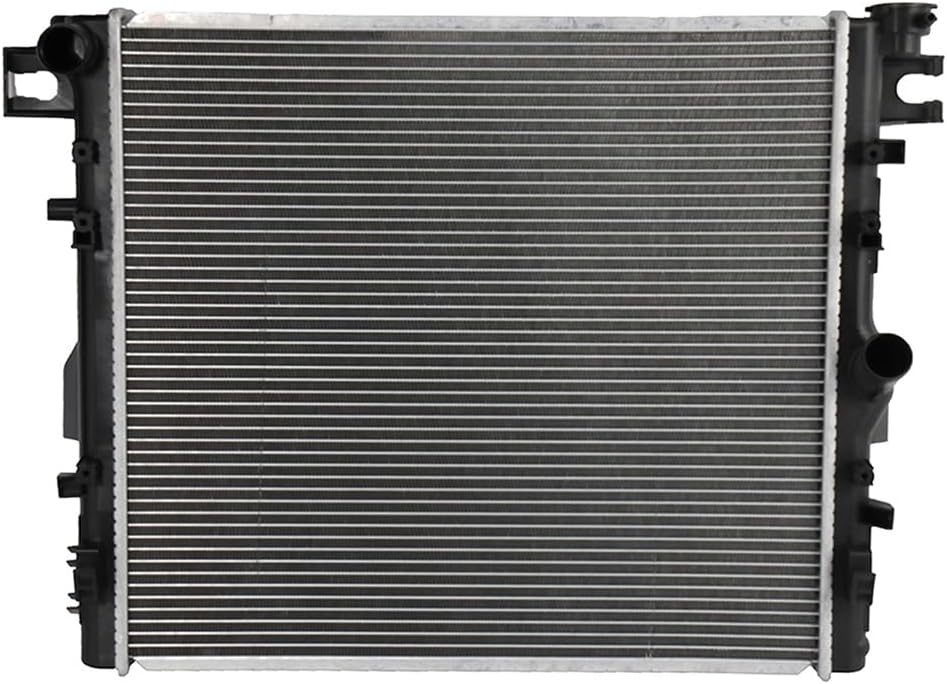
6. SCITOO Aluminum Radiator Assembly for 2007–2018 Jeep Wrangler
| Fitment | 2007–2011 Wrangler 3.8L; 2012–2018 Wrangler 3.6L |
|---|---|
| Material | Aluminum |
| Transmission Oil Cooler Included | No |
| Engine Oil Cooler Included | No |
| Manufacturer Part Number | 125622-5206-1355114135 |
This SCITOO aluminum radiator is a vehicle-specific replacement for Jeep Wrangler models from 2007 through 2018 with the listed 3.6L and 3.8L engines. It is a full assembly engineered to swap in where the original radiator sits and restore engine cooling after a leak or failure. Typical use is direct replacement during a cooling-system repair; buyers report straightforward fitment and simple installation when the correct year and engine are selected. The all-aluminum construction improves heat transfer versus plastic-tank designs and should resist corrosion better over time. SCITOO lists common reference numbers to help confirm fitment and the unit does not include transmission or engine oil coolers. Practical benefits include factory-style mounting points and a price point that makes it an economical alternative to dealership parts. Expect to verify vehicle trim and mounting details before purchase because some users noted missing brackets on certain installs and this radiator excludes integrated oil coolers, so additional components or brackets may be needed in a few setups.
Best for: Buyers who value proven fitment and social proof from other Wrangler owners and want an affordable, long-lasting replacement radiator that installs like a factory unit.
Less Ideal for: Drivers who need a radiator with an integrated transmission or engine oil cooler or who require a complete mounting kit supplied in-box should look for a different assembly or a dealer option.
- Full-aluminum core and tanks for improved heat dissipation and corrosion resistance
- Made to fit specified 2007–2018 Jeep Wrangler 3.6L and 3.8L applications for easier installation
- Factory-style mounting points simplify direct replacement
- Affordable alternative to dealer radiators with solid user feedback on fit and performance
- Does not include transmission or engine oil coolers so vehicles that require them need separate components
- Some customers reported missing brackets or hardware in certain fitments requiring extra parts
Verdict: A budget-friendly, full-aluminum direct-replacement radiator that most 2007–2018 Wrangler owners can trust for reliable cooling and easy installation.
7. SPELAB CU2957 Radiator Replacement for 2007–2018 Jeep Wrangler (3.6L/3.8L)

| Fitment years | 2007-2018 |
|---|---|
| Engine compatibility | 3.6L and 3.8L V6 |
| Drive | 4WD and RWD |
| Model number | CU2957 |
The SPELAB CU2957 is a full replacement radiator intended to restore engine cooling on 2007–2018 Jeep Wrangler models with 3.6L or 3.8L V6 engines. It installs like a factory unit and is used as a one-for-one swap when the original radiator is leaking, clogged, or damaged. Notable features include thicker tube walls and machined exterior surfaces aimed at improved durability, and the design includes the passenger-side boss for transmission oil cooler lines found on some Wrangler variants. Real-world benefits are straightforward: it brings cooling capacity back to spec, resists corrosion and wear better than thin-stock units, and in many reported installs it lines up with factory mounts with minimal modification. Limitations to keep in mind are fitment variances between production runs that may require minor trimming or tapping of mounting holes, and some users reported hose or line connection issues when fittings were not tightened correctly. Expect to verify fan assembly clearance and take care with transmission and coolant hose connections during installation.
Best for: A buyer who wants a cost-conscious, factory-style replacement that restores reliable cooling and prefers a part with stronger construction and documented real-world fitment on Jeep Wranglers.
Less Ideal for: Not the best choice for someone seeking an upgraded high-performance or heavy-duty racing radiator or for buyers unwilling to make small installation adjustments if needed.
- Made as a complete direct-replacement radiator for 2007–2018 Jeep Wrangler 3.6L/3.8L, simplifying swap-in installs
- Thicker tube walls and machined exterior intended to improve durability and resistance to corrosion
- Includes passenger-side boss for automatic transmission oil cooler on applicable models
- Multiple customer reports of correct fit and restored cooling performance after installation
- Some units require minor adjustments such as grinding radiator hook edges or tapping non-threaded holes to achieve perfect fit
- A few reports of coolant or transmission line connections failing when not installed carefully
Verdict: Choose the SPELAB CU2957 when you need an affordable, stronger-than-stock direct replacement to reliably restore cooling on 2007–2018 Jeep Wrangler V6 models.
Choosing the Right 2007-2018 Jeep Wrangler Radiator: Key Factors to Consider
Cooling Capacity and Core Design
Cooling capacity determines how effectively the radiator dissipates heat during normal driving, towing, or off-road use. Look at core thickness, height, and fin density because a larger core or more efficient fin layout increases heat transfer and reduces peak operating temperature. A multi-row core can offer better cooling but may be slightly more restrictive to airflow. For the 2007-2018 Wrangler, prioritize cores that balance enhanced surface area with sufficient airflow through the front grille. Core design also affects responsiveness to sudden loads such as steep climbs or heavy towing. Radiators with optimized flow paths reduce hotspots and promote even coolant temperatures across the block. This lowers the risk of thermostat cycling and reduces strain on the water pump. Choosing the right core design helps prevent common overheating symptoms and improves long-term engine reliability.
Fitment and Mounting Compatibility
Precise fitment is essential to avoid extra work during installation. A radiator that matches factory mounting points, hose locations, sensor bosses, and shroud clearances minimizes the need for modifications. For the JK and JKU variants within 2007-2018, small differences in mounting brackets and fan shroud geometry can affect how easily the replacement drops into place. Poor fitment can lead to misaligned hoses, stress on connections, or interference with ancillary components like AC condensers and transmission oil coolers. Ensuring compatibility up front saves time and reduces the chance of leaks or vibration-related failures after installation.
Material and Corrosion Resistance
Radiator materials influence durability, weight, and resistance to corrosion. Common constructions include aluminum cores with plastic tanks or fully aluminum brazed cores. Aluminum offers good heat transfer and lighter weight, while plastic tanks can be susceptible to cracking over time, especially under heat cycles common in off-road use. Protective finishes, such as anti-corrosion coatings or anodizing, extend service life where road salt or moisture is frequent. For Wranglers driven in harsh conditions, prioritize radiators with proven corrosion resistance and robust tank designs to avoid premature failure and leakage.
Compatibility with Cooling System Accessories
Your radiator must work with the vehicle's existing fans, shrouds, sensors, and, if equipped, auxiliary coolers. Confirm whether the radiator retains sensor bosses for temperature switches, accommodates the factory fan clutch or electric fan mounts, and integrates with transmission oil coolers where applicable. Incorrect compatibility can prevent proper fan operation or require additional adapters. Consider how the replacement affects coolant routing and whether any hoses or clamps need replacement. A radiator that supports existing accessories simplifies installation and helps maintain factory-level performance without extra parts.
Durability Under Off-Road Conditions
Wranglers commonly see gravel, mud, and trail impacts that can stress a radiator. Reinforced cores, dual-pass designs that resist flex, and protective fins all help the unit survive rock chips and vibration. Evaluate how the radiator's construction copes with debris strikes and sustained vibration over rough surfaces. Mounting robustness and the shape of tanks play a role in preventing stress fractures. Owners who regularly take their Wrangler off-road should prioritize units with thicker headers, stronger inlet/outlet connections, and proven structural integrity to avoid field failures.
Serviceability and Long-Term Maintenance
Consider how easy it is to service the radiator and related components. Features like replaceable fan shrouds, accessible drain plugs, and standard hose connections make coolant changes and repairs simpler. Also evaluate whether the radiator allows the reuse of existing brackets and fittings to avoid additional parts. Long-term maintenance includes the ability to perform a radiator coolant flush without removing the unit, and whether replacement parts such as fan mounts or caps are standard sizes. Choosing a radiator that minimizes future maintenance time and cost benefits owners who prefer to perform their own service.
How to Identify Radiator Symptoms on a Jeep Wrangler JK and JKU
Early detection of radiator problems prevents engine damage. Typical signs include rising temperature gauge readings during idle or slow-speed driving, visible coolant leaks under the vehicle, and persistent puddles after parking. For Wranglers, watch for overheating after off-road climbs or when towing, since extra load exposes weak cooling components.
Other indicators are frequent need to top up coolant, steam or sweet smell from under the hood, and a heater that stops providing warm air when the engine is hot. A pressure leak or a damaged hose connection often produces small drips near the radiator seams or around hose clamps. Addressing these symptoms promptly reduces the chance of head gasket or engine damage.
- Rising temperature gauge at idle or in traffic
- Visible coolant leaks or puddles beneath the front of the vehicle
- Steam or sweet coolant smell from engine bay
- Intermittent heater performance indicating air pockets or low coolant
Planning a Radiator Replacement for 2007-2018 Wranglers
Preparation reduces installation time and frustration. Start by confirming your Wrangler's chassis generation — JK or JKU — since it helps match mounting and hose details. Gather basic tools, drain pans, new coolant, replacement clamps if needed, and any gaskets or O-rings recommended by the radiator manufacturer.
When replacing the radiator, inspect adjacent components such as the overflow bottle, hoses, and fan assembly. Replace brittle hoses and worn clamps to prevent future leaks. Have a torque wrench for critical fasteners and follow a controlled bleed procedure after refilling to remove trapped air from the cooling circuit.
- Confirm chassis generation for fitment clarity
- Inspect and replace worn hoses and clamps
- Use a proper coolant bleed procedure after installation
When to Choose OEM-Style Vs Upgraded Radiators
OEM-style radiators match factory dimensions and performance characteristics. They are often the easiest drop-in replacements and maintain original cooling balance. Choose an OEM-style unit if you keep the engine stock and prioritize straightforward installation and factory fitment.
Upgraded radiators increase core size, add finishes for corrosion resistance, or use more robust materials to handle increased thermal loads. If you tow frequently, run heavy accessories, or do serious off-roading, an upgraded radiator can offer better temperature control and longer service life. Balance the need for extra capacity with fitment and fan compatibility.
- OEM-style: best for stock engines and simple swaps
- Upgraded: better for heavy-duty use, towing, and off-road demands
Basic Steps in a Radiator Coolant Flush
A coolant flush refreshes the system and can help diagnose radiator condition. Start by letting the engine cool completely, then drain the coolant from the radiator petcock or lower hose into an appropriate container. Flush the block and radiator with clean water until the outflow runs clear, then refill with the manufacturer-recommended coolant mixture.
Bleed trapped air by running the engine with the heater set to hot and the radiator cap off or following a vehicle-specific bleed procedure. Monitor temperatures during a short test drive and recheck coolant level after the engine cools. Regular flushing reduces corrosion and sediment buildup that can diminish radiator performance.
- Drain coolant with engine cool
- Flush until clear, then refill with recommended coolant
- Bleed air and recheck levels after a test drive
Common Small Repairs and Leakage Fixes
Minor leaks from hose connections often require only new clamps or replacement hoses. Inspect clamp condition and hose ends for cracking. Tightening or replacing a leaking clamp and cutting off a small damaged hose section can stop many common drips.
For small pinhole leaks in radiator fins or tanks, temporary stop-leak compounds exist but are short-term measures. A more reliable repair is to replace the radiator or have it professionally assessed. For Wranglers used off-road, addressing the root cause such as bent fins or punctures provides the best long-term outcome.
- Replace clamps and hoses for connection leaks
- Temporary sealants are short-term; consider replacement for structural leaks
- Inspect for impact damage after off-road trips
Still looking for the perfect fit?
Select your Jeep Wrangler configuration to see the most relevant Radiators recommendations
How We Chose the Best 2007-2018 Jeep Wrangler Radiator
We prioritized selection criteria that matter for Jeep Wrangler owners driving any model within the 2007-2018 span, including JK and JKU chassis codes. Primary evaluation focused on cooling efficiency under load and tow, measured by design features such as core volume, fin density, and flow path. Fitment accuracy and mounting compatibility were critical, so we favored radiators engineered to match factory mounting points and hose locations for straightforward replacement. Corrosion resistance and material choices were next: we considered construction materials, coating or plating, and the likelihood of surviving road salt and off-road exposure. Durability under vibration and impact mattered for trail use, so core strength and tank reinforcement were assessed. Serviceability and installation ease were evaluated by examining whether the radiator allowed reuse of stock hoses, sensors, and shrouds or required minor modifications. We excluded any radiators lacking clear fitment details for the 2007-2018 Wrangler range or those with unverified claims about core size or cooling capacity. Radiators intended only for heavily modified engines outside normal OEM cooling expectations were also filtered out. The remaining picks meet practical needs for longevity, on-vehicle compatibility, and consistent cooling performance.
Our full evaluation process is outlined in our review methodology.
FAQ
How often should I flush the cooling system on a 2007-2018 Jeep Wrangler?
It usually depends on coolant type and driving conditions, but a common recommendation is every 3 to 5 years. More frequent flushing may be wise if you do heavy towing, frequent short trips, or off-road driving that introduces contaminants.
Can I replace the radiator myself on my Wrangler JK and JKU?
Many owners can perform a radiator replacement with basic tools and mechanical knowledge. Key steps include draining coolant, disconnecting hoses and fans, and properly bleeding the system. Ensure you confirm fitment for your specific chassis and follow safety steps to avoid burns.
What causes a radiator to leak on a Jeep Wrangler?
Leaks often result from corrosion, impact damage from debris, failed hose connections, or cracking of plastic tank components over time. Vibration and repeated heat cycling also contribute to material fatigue and eventual leakage.
How do I know if my radiator is causing overheating rather than the thermostat or water pump?
Symptoms that point to the radiator include coolant loss, visible leaks, or inconsistent temperature drops after driving. If the thermostat or water pump fails, you may see poor coolant circulation or rapid overheating without external leaks. A pressure test and inspection will help isolate the faulty part.
Is an upgraded radiator necessary if I tow occasionally with my Wrangler?
Upgraded radiators help when regular towing increases thermal load. If you tow heavy trailers frequently or face steep climbs, a radiator with greater core capacity or improved flow characteristics reduces the risk of sustained high temperatures.
Will replacing the radiator fix coolant smell or steam from the engine bay?
If the smell or steam originates from a leaking or failing radiator, replacement will resolve those symptoms. However, other sources like hose leaks, the heater core, or head gasket issues can produce similar signs, so inspect the entire cooling system before assuming the radiator is the sole cause.
Final Verdict
When choosing a radiator for a 2007-2018 Jeep Wrangler, prioritize fitment accuracy, cooling capacity, and durable construction that withstands off-road use and exposure to the elements. Balance the benefits of an upgraded core against the convenience of OEM-style replacements, and consider serviceability and compatibility with existing fans and accessories. Focus on the cooling needs driven by your typical use—daily driving, towing, or trail work—and select a radiator that addresses those conditions. With the right priorities you can avoid common overheating and leakage issues and enjoy reliable engine temperatures on every drive.
Explore More:
- Check out all Jeep Wrangler parts & accessories
- Explore Radiators Maintenance & Repair Guides
- Explore Cooling System
- Browse all Auto Parts
