

Note: This article contains affiliate links. If you click on these links and make a purchase, I may earn a small commission at no extra cost to you. This helps support my research and content. Read my full affiliate disclosure here.
If you drive a Jeep Wrangler, the quality of your front brake pads has a big effect on safety, pedal feel, and how often you need rotor service. The right front pads balance initial bite, resistance to fade, and acceptable dust and noise for the way you use the vehicle. This guide looks at a curated shortlist of top options for Wrangler owners, covering material types, expected wear behavior, and typical noise characteristics. We evaluated candidates for braking consistency and long-term durability so you can pick pads that suit daily driving, towing, or light off-road use.Read on for the top front brake pads and the key criteria to weigh when choosing replacements for a Jeep Wrangler.
Looking for other parts? See all Jeep Wrangler parts & accessories.
Top Picks at a Glance
| Best Overall The best all-around choice for most situations | Bendix Premium SBC1327 Ceramic Front Brake Pads |  |
| Best Quality Built to a higher standard if you want something more solid | PowerStop Z36 Front Truck & Tow Brake Kit (Pads + Drilled/Slotted Rotors) |  |
| Best Value The sweet spot between price and what you get | ECCPP D1273 Front Ceramic Brake Pad Kit |  |
| Best Budget The cheapest option that still gets the job done reliably | SCITOO Front Ceramic Brake Pad Kit (4 pcs) |  |
| Highest Rated A top-rated pick with lots of positive feedback | Detroit Axle Front Brake Kit with 11.89" Rotors and Ceramic Pads |  |
| Most Popular A crowd favorite that many people choose with confidence | Detroit Axle Front Brake Kit with Drilled & Slotted Rotors and Ceramic Pads |  |
| Best Seller A high-volume bestseller chosen again and again | PowerStop Front Brake Kit with Z17 Ceramic Pads and OE Replacement Rotors |  |
1. Bendix Premium SBC1327 Ceramic Front Brake Pads

| Material | Ceramic |
|---|---|
| Auto Part Position | Front |
| Specification Met | OEM |
| Automotive Fit Type | Vehicle Specific Fit |
These Bendix Premium ceramic front pads are a vehicle-specific replacement designed to match factory fit and function for Wrangler and other compatible models that use single-piston calipers and 302mm front rotors. In everyday use they deliver smooth, quiet stops with reduced brake fade compared with older organic pads, making them well suited to daily driving and light towing. The kit is painted and comes with shims and hardware clips, so installation is straightforward for a DIYer or technician and yields a near-factory feel. Because they are ceramic, you can expect lower dusting and quieter operation, though ceramic compounds typically run slightly warmer and can be less aggressive than semi-metallic pads under heavy repeated hard braking. Fitment is specific — this part is only for non-heavy-duty brake configurations, so verifying rotor size and caliper type is essential before purchase.
Best for: Drivers who want a quiet, low-dust front pad that restores factory braking feel on Wranglers with single-piston calipers and 302mm rotors and prioritize everyday comfort and predictable stopping.
Less Ideal for: Those who frequently do heavy towing, off-road descents, or aggressive driving should consider more aggressive semi-metallic or heavy-duty brake options built for repeated high-heat stops.
- Factory-style fit and form for compatible single-piston caliper Wrangler front brakes
- Ceramic compound reduces dust and delivers quiet, smooth braking for daily driving
- Includes hardware clips and shims to simplify installation
- Engineered to reduce brake fade for consistent performance under normal use
- Only compatible with non-heavy-duty brake setups that use 302mm front rotors
- Ceramic pads are generally less aggressive than semi-metallic options for heavy-duty or track use
Verdict: A quiet, low-dust ceramic front pad that restores factory-style braking for Wranglers with single-piston calipers and 302mm rotors, ideal for daily driving.
2. PowerStop Z36 Front Truck & Tow Brake Kit (Pads + Drilled/Slotted Rotors)

| Position | Front |
|---|---|
| Model | K3097-36 |
| Exterior | Zinc Plated |
| Automotive Fit Type | Vehicle Specific Fit |
| Special Features | Drilled & slotted rotors; Carbon-Fiber Ceramic pads |
The PowerStop Z36 front Truck & Tow kit replaces the factory front pads and rotors with carbon-fiber reinforced ceramic pads, drilled and slotted rotors, and stainless installation hardware. It is a direct-fit, bolt-on upgrade for Jeep Wrangler front brakes intended to improve stopping power during towing, hauling, or when running larger tires. The ceramic Z36 pads are formulated for lower dust and include stainless shims to reduce noise while delivering stronger initial bite than many stock compounds. The rotors use G3000 metallurgy with precision drilling and slots to speed heat dissipation and keep the pad-to-rotor contact clean on long descents, and silver zinc plating helps resist surface rust. Installation is straightforward and includes hardware, though some installers note the provided lubricant may be minimal. Expect noticeably firmer, fade-resistant braking under load and minimal dust, with the usual drilled/ slotted rotor caveat that aggressive track use could wear differently than plain rotors.
Best for: Drivers who prioritize stronger, fade-resistant front braking for towing, hauling, or running larger tires and want a bolt-on upgrade that reduces dust and noise while improving performance.
Less Ideal for: Drivers who only do light daily commuting with no towing or extra load demands and those who prioritize maximum rotor longevity for aggressive track use may prefer a different rotor style.
- Matched pads and rotors engineered to work together for improved stopping under load
- Carbon-fiber ceramic pads produce lower dust and reduced noise with stainless shims
- Drilled and slotted rotors increase cooling and help clear gas and debris for consistent performance
- Zinc plating on rotors offers corrosion resistance and a cleaner appearance
- Includes stainless-steel installation hardware for a straightforward bolt-on replacement
- Lubricant packet may be small so additional brake grease is often needed for caliper slides
Verdict: Choose this kit if you want a direct-fit front brake upgrade that boosts stopping power and heat resistance for towing, hauling, or larger-wheel Jeep Wranglers.
3. ECCPP D1273 Front Ceramic Brake Pad Kit

| Auto Part Position | Front |
|---|---|
| Manufacturer | ECCPP |
| OEM Equivalent Part Number | 68003701AA D1273-8389 |
| Number of Items | 4 |
These ECCPP D1273 ceramic front brake pads are a vehicle-specific replacement intended for everyday driving on compatible Jeep Wrangler model years listed in the fitment. They use a ceramic friction compound with chamfers and vibration-damping shims to reduce noise and brake dust, and a slotted profile to help heat dissipation and shorten break-in time. In normal use the pads deliver quiet, clean operation with predictable pedal feel suited to city and highway driving. Installation is straightforward for mechanically confident owners and the kit meets OEM-equivalent specifications, but some buyers report having to reuse existing hardware such as retainer clips and that the kit does not include lubricant. If your rotors are worn you may need to resurface or replace them to get the best initial performance and bedding. For a cost-conscious owner who wants quieter, low-dust braking on a Wrangler used primarily for daily driving, these pads strike a solid balance of performance and value.
Best for: Practical owners who prioritize quiet, low-dust braking and a cost-effective, factory-style replacement for routine street use on a Wrangler.
Less Ideal for: Drivers who do frequent heavy towing, aggressive off-road use, or need maximum high-temperature fade resistance should consider a semi-metallic or performance-focused pad instead.
- Ceramic compound reduces brake dust and is gentle on rotors
- Vibration-damping shims and chamfers lower noise and vibration
- Slotted design aids heat dissipation and shortens break-in
- Vehicle-specific fitment for compatible Wrangler applications
- Some hardware like retainer clips or brake grease may not be included with the kit
Verdict: A practical, quiet ceramic front pad kit that gives Wrangler owners a low-dust, factory-style replacement ideal for daily driving.
4. SCITOO Front Ceramic Brake Pad Kit (4 pcs)

| Auto Part Position | Front |
|---|---|
| Compatible with Vehicle Type | Jeep Wrangler 2007-2018 (and listed Chrysler/Dodge/Ram/Routan models) |
| Material Type | Ceramic |
| Unit Count | 4.0 Count |
These SCITOO ceramic front pads provide a direct-fit, factory-replacement style option for compatible Jeep Wrangler and similar vehicles. They are marketed as ceramic material with pre-applied noise-dampening shims and chamfered edges to reduce squeal and help ensure quiet operation after bedding in. For everyday driving they deliver steady stopping power, lower visible dust compared with semi-metallic pads, and the manufacturer recommends a gentle 200-mile break-in for consistent performance. Installation is straightforward because the kit is vehicle specific and comes as four pads for one axle. Limitations to expect are variation in dust levels between vehicles and the usual variation in fitment across different factory brake options, so verifying fit with your VIN or part number is important. These pads aim to balance quiet operation and reasonable longevity at a value-oriented price, making them a practical replacement for daily-driven Wranglers that need a budget-friendly yet competent front pad solution.
Best for: Buyers looking for an affordable, ready-to-install front pad that restores quiet, competent braking for daily-driven Jeep Wranglers and similar vehicles and who prioritize value over premium aftermarket features.
Less Ideal for: Drivers seeking high-performance or heavy-duty off-road braking upgrades or those who need complete sensor harnesses and specialized friction compounds should consider performance or OEM-part alternatives.
- Ceramic compound offers quiet operation and reduced squeal with noise-dampening shims
- Direct vehicle-specific fit for straightforward bolt-on installation
- Pre-treated with a scorch process to shorten break-in time and stabilize performance
- Lower visible dust than typical semi-metallic pads for cleaner wheels
- Fit can vary if the vehicle has different factory brake options so VIN/part verification is required
- Does not include wear sensor wire when some vehicles require it
Verdict: A budget-friendly, vehicle-specific ceramic front pad kit that delivers quiet, reliable braking for daily-driven Jeep Wranglers.
5. Detroit Axle Front Brake Kit with 11.89" Rotors and Ceramic Pads
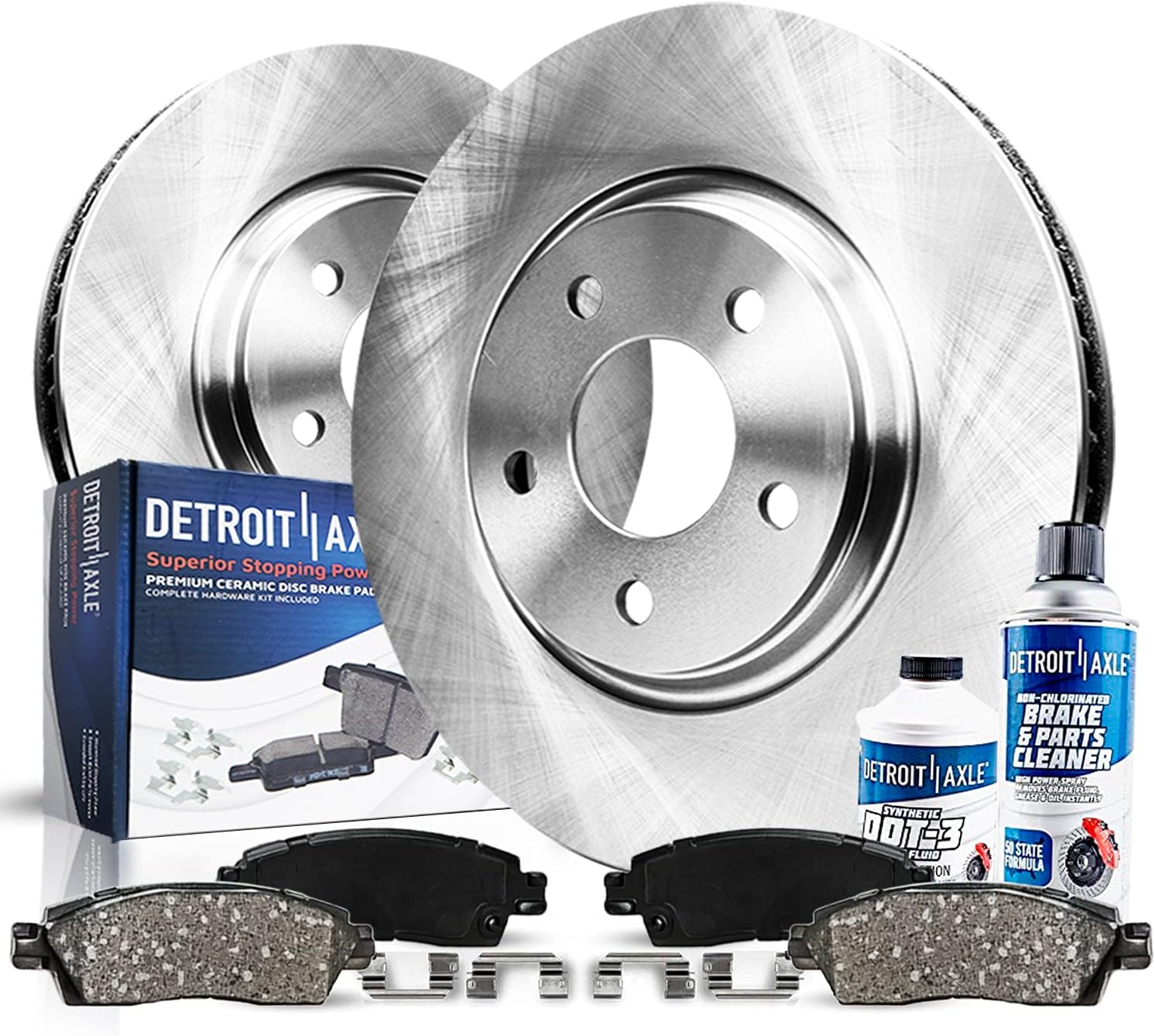
| Fitment | 2007–2017 Jeep Wrangler, 2018 Wrangler JK |
|---|---|
| Rotor diameter | 11.89 inch (302 mm) |
| Pad type | Ceramic |
| Orientation | Front |
| Warranty | 10 Year |
This Detroit Axle front brake kit replaces the factory front rotors and pads on 2007–2017 Jeep Wrangler and 2018 Wrangler JK models. It bundles two ventilated 11.89" rotors, two ceramic front pads with hardware, a can of brake cleaner, and a bottle of brake fluid so you have what you need for a typical DIY brake service. The rotors are zinc plated to resist corrosion and feature ventilation slots for faster cooling, while the ceramic pads are quieter and produce less dust than many semi-metallic options. Fitment is machined to match factory locating holes so installation should be straightforward on compatible Wranglers. The kit carries a 10-year warranty and is a practical value option for owners who want a complete front-end brake refresh without sourcing parts separately. Keep in mind that ceramic pads prioritize low noise and cleanliness over maximum initial bite, so drivers wanting aggressive track performance may prefer a different pad compound.
Best for: Buyers looking for a dependable, factory-quality front brake refresh for their Wrangler who prioritize long-term reliability, low noise, and straightforward DIY installation.
Less Ideal for: Drivers who regularly push their Jeep on track days or heavy towing routes and need aggressive initial bite or a high-friction racing compound should consider performance-focused brake pads instead.
- Complete kit includes rotors, ceramic pads, hardware, brake cleaner, and brake fluid for one convenient service.
- Ventilated, zinc-plated rotors help with heat dissipation and corrosion resistance for longer service life.
- Ceramic pads run quieter and produce less brake dust compared with many semi-metallic pads.
- Machined locating holes and included hardware simplify installation and improve fitment accuracy.
- Ceramic pad compound delivers gentler initial bite compared with performance or heavy-duty pads, so stopping feel may be softer for aggressive driving.
Verdict: A complete, reliability-oriented front brake kit that replaces rotors and pads with quieter, corrosion-resistant components and everything needed for a DIY service.
6. Detroit Axle Front Brake Kit with Drilled & Slotted Rotors and Ceramic Pads
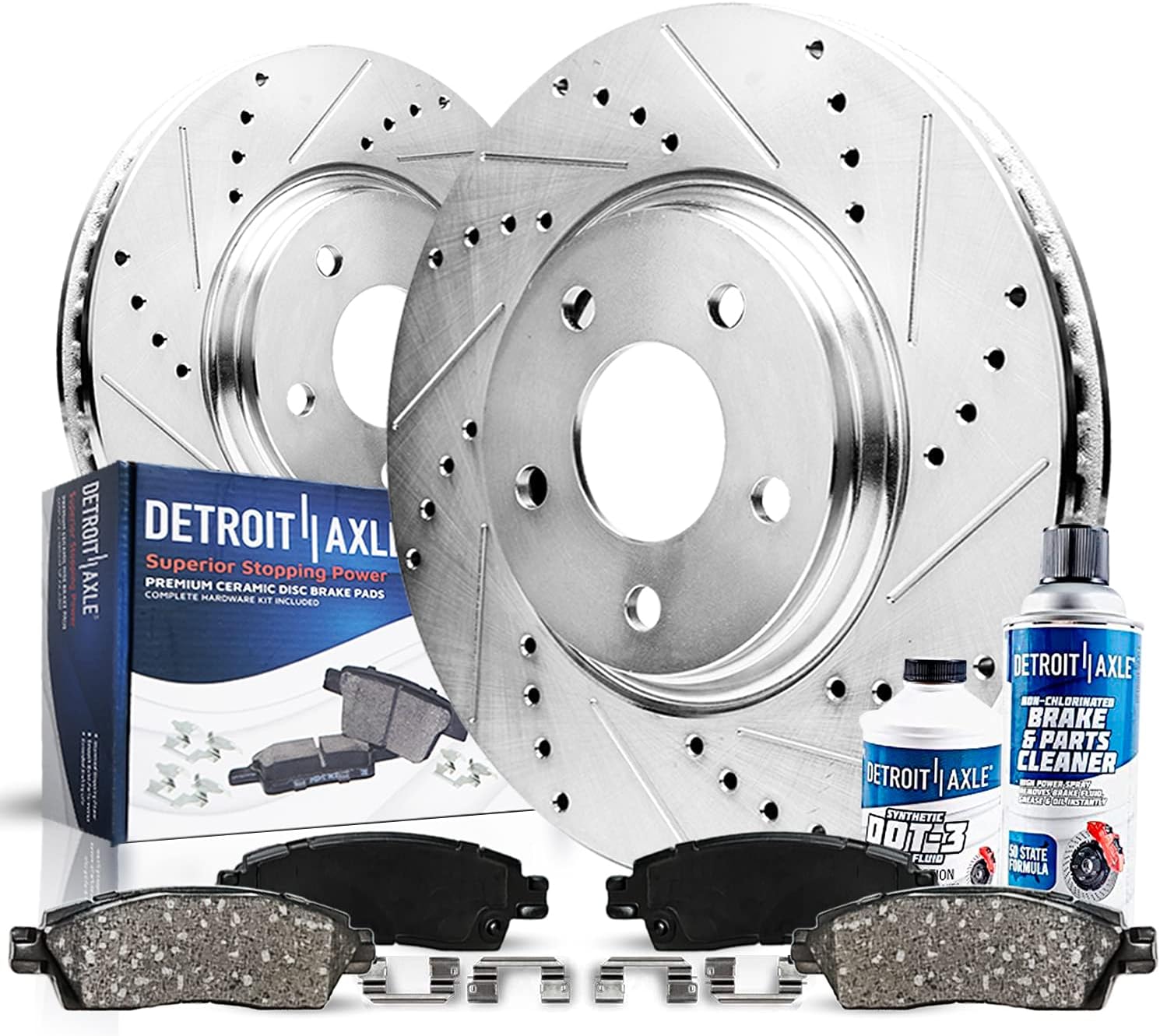
| Fitment | 1999-2006 Jeep Wrangler TJ; 1999-2001 Cherokee XJ |
|---|---|
| Kit contents | 2 front drilled & slotted rotors, 2 front ceramic pads, hardware, 10 oz brake cleaner, 12 oz brake fluid |
| Orientation | Front |
| Manufacturer warranty | 10 Year Warranty |
This Detroit Axle front brake kit supplies two drilled-and-slotted front rotors plus a pair of ceramic pads and basic install extras, making it a one-box swap for the specified Jeep Wrangler TJ and Cherokee XJ fitments. The rotors are zinc plated to resist corrosion and the drilled/slotted design helps dissipate heat for steadier stopping under repeated braking. Ceramic pads are quieter and produce less brake dust than metallic pads, and Detroit Axle includes pad hardware, brake cleaner, and a small bottle of brake fluid so you have the essentials for a DIY replacement. Several buyers report straightforward fitment and strong stopping power, though drilled and slotted rotors can be a bit louder during bedding in and some users noted a break-in period before noise settled. The kit aims to match factory locating holes for hassle-free installation, but confirm wheel stud length and rotor height against your vehicle before ordering. For shoppers who value a complete, tested kit with visible performance gains, this covers most bases; those needing high-performance or specific fluid specs should verify compatibility first.
Best for: Buyers who want a single-purchase, DIY-ready front brake replacement that balances quiet everyday performance with improved heat dissipation and clear user feedback on fitment and stopping power.
Less Ideal for: Drivers seeking track-oriented high-friction compounds or those unwilling to verify fluid type and rotor dimensions before installation should consider a different, performance-focused kit or consult a professional.
- Complete kit includes rotors, ceramic pads, hardware, brake cleaner and brake fluid for a single front-axle job
- Drilled and slotted rotors improve cooling and resistance to brake fade during repeated stops
- Zinc plating helps resist corrosion and keeps rotor appearance cleaner over time
- Ceramic pads reduce dust and are generally quieter than metallic pads
- Brake fluid included may not match every vehicle's DOT specification so check your vehicle requirements
- Drilled and slotted rotors and new pads can be louder during the initial bedding-in period
Verdict: A convenient, well-reviewed complete front brake kit that delivers quieter ceramic pads with drilled and slotted rotors for better cooling and reliable fitment on the listed Jeep Wrangler and Cherokee models.
7. PowerStop Front Brake Kit with Z17 Ceramic Pads and OE Replacement Rotors

| Included components | Brake Rotors and Brake Pads |
|---|---|
| Manufacturer warranty | 24 Month / 24,000 Mile Warranty |
| Pad type | Z17 Ceramic Brake Pads |
| Fit type | Vehicle Specific Fit |
This PowerStop front brake kit provides a complete, vehicle-specific replacement for the front brakes on compatible Jeep Wranglers. It combines Z17 ceramic pads designed for low dust and quiet operation with precision-milled, mill-balanced rotors and stainless-steel installation hardware so you get everything needed for a standard bolt-on swap. The Z17 pads are chamfered, slotted, and thermal scorched to speed break-in and reduce noise while the rotors retain factory vane configuration and weight to preserve ride feel. In practice the kit suits daily driving: expect quieter stops, less wheel dust, and an easy install if you have basic tools. The rotors are non-coated, so they deliver smooth performance but may show surface rust over time if you live in wet or salty climates. The package includes hardware to simplify installation, but heavy-duty or performance braking needs would call for a different compound or coated rotors.
Best for: Buyers seeking a straightforward, factory-style front brake replacement for everyday driving who prioritize quiet operation, low dust, and an easy bolt-on installation.
Less Ideal for: Drivers looking for heavy towing, aggressive off-road braking, or a corrosion-resistant cosmetic finish should consider higher-performance or coated rotor options instead.
- Complete kit with pads, rotors, and stainless-steel installation hardware for a single purchase and bolt-on install.
- Z17 ceramic pads are low-dust and engineered for quiet, stock-like braking suited to daily driving.
- Mill-balanced, precision-machined rotors designed to match factory vane configuration for smooth braking.
- Chamfered, slotted, and thermal-scorched pads speed break-in and help prevent squeal.
- Rotors are non-coated and can develop visible surface rust relatively quickly in wet or salty environments.
Verdict: A convenient, low-dust ceramic pad and mill-balanced rotor kit that delivers quiet, factory-style stopping and an easy bolt-on replacement for everyday Jeep Wrangler use.
Choosing the Right Jeep Wrangler Front Brake Pads: Key Factors to Consider
Material Composition and Friction Characteristics
The pad material determines initial bite, fade resistance, dust generation, and noise. Organic compounds typically offer quieter operation and low rotor wear but may lack high-temperature stability for towing or repeated downhill stops. Semi-metallic pads increase heat tolerance and braking force but can produce more rotor wear and dust. Ceramic formulations aim to balance quiet operation with moderate wear and good modulation.
For a Jeep Wrangler, choose a material that matches how you use the vehicle. If you tow, frequently carry heavy loads, or do sustained downhill drives, prioritize higher heat tolerance. If the vehicle is used mostly for commuting and light trail runs, quieter, lower-dust materials may be preferable.
Pad Thickness and Wear Life
Starting thickness and the rate at which a pad wears determine replacement intervals and service cost. Thicker pads offer more usable life but may require bedding-in and can influence caliper piston travel. Confirm the pad thickness spec against the Wrangler's rotor and caliper clearance to avoid installation issues.
Consider expected annual miles and driving style when judging wear life. Aggressive driving or frequent towing reduces pad life. Also plan for inspection intervals, and remember that uneven wear often points to caliper or rotor issues rather than pad compound alone.
Noise, Vibration, and Harshness (NVH)
Brake noise is a common complaint that affects driver confidence. NVH is influenced by pad compound, backing plate design, shims, and the quality of anti-rattle hardware. Some pads include chamfers, slots, or bonded shims to reduce vibration and squeal. Others rely on added shims or adhesive layers.
On a Jeep Wrangler, the susceptibility to road and trail vibration can make NVH more noticeable. If you regularly drive on rough surfaces, prioritize pads with proven anti-squeal features and robust shims to reduce annoying noise while still delivering reliable stopping.
Heat Management and Fade Resistance
Heat builds up during repeated or heavy braking and leads to fade when the pad or brake fluid reaches limiting temperatures. Materials with better thermal stability maintain consistent friction and pedal feel. Rotor ventilation, pad thickness, and bedding procedure all influence heat management.
Wranglers used for towing, off-road descents, or frequent heavy braking should use pads rated for higher operating temperatures. Proper bedding and checking brake fluid condition are also important to preserve fade resistance over time.
Compatibility and Fitment
Correct fitment is essential to avoid installation headaches and poor performance. Verify that the pads match the Wrangler's caliper shape, include the right backing plate, and offer the correct wear sensor or indicator provisions if applicable. Some aftermarket pads ship with required hardware and shims, while others do not.
Always cross-reference pad part numbers with the Jeep Wrangler's model and any specific caliper options on the vehicle. Improper fitment can cause uneven wear, noise, and reduced braking efficiency.
Installation, Bedding, and Maintenance Requirements
Ease of installation and clear bedding instructions affect both initial performance and long-term behavior. Some pads need a specific bedding procedure to reach intended friction levels and to reduce noise and uneven glazing. Consider whether you will install the pads yourself or have a shop do it, and whether the kit includes shims, hardware, and instructions.
Also think about maintenance access on the Wrangler. The front pads are the primary wear items and should be easy to inspect during routine service. Choosing pads with straightforward bedding and accessible wear indicators simplifies upkeep.
Understanding Brake Pad Materials for the Wrangler
Brake pad materials influence how the brakes behave under different driving conditions. On the Jeep Wrangler, material choice affects dust production, noise, and how the pads handle heat during demanding use. Semi-metallic pads tend to offer strong bite and heat tolerance for towing or repeated stops, while ceramic pads are often quieter and produce less dust for daily driving.
Select the material that best aligns with your typical driving. If you do occasional off-road runs followed by highway driving, a balanced compound that resists fade but remains relatively quiet is usually the best compromise.
- Semi-metallic: higher heat tolerance, more dust
- Ceramic: lower dust, quieter, moderate heat handling
- Organic: quiet and gentle on rotors, less durable under heavy loads
Signs Your Front Pads Need Immediate Attention
Brake pad wear symptoms on the Wrangler can include increased stopping distances, grinding noises, and a pulsating pedal. Grinding usually indicates the friction material is gone and the backing plate is contacting the rotor. Squeal or chirp at light braking often points to glazing, improper shims, or minor vibration rather than complete wear.
Regular visual checks of pad thickness through the wheel openings or during service can catch wear before it causes rotor damage. Pay attention to changes in pedal feel or the appearance of metallic noises during braking.
- Reduced pad thickness when inspected
- Grinding or metallic scraping indicates severe wear
- Consistent squeal at low speeds may require shim or compound change
Front Vs Rear Brake Pad Roles on the Wrangler
Front pads handle a larger share of braking force and therefore typically wear faster than rear pads. This front bias is due to weight transfer to the front wheels under braking. Choosing appropriate front pads is crucial because they most directly affect stopping distance and pedal feel.
When replacing front pads, also inspect the rear pads and the overall balance of the braking system. Mismatched compounds front-to-rear can change pedal modulation and ABS behavior, so aim for compatible friction characteristics between axles.
- Front pads absorb the majority of braking energy
- Ensure front and rear compatibility for consistent pedal feel
- Inspect rotors and calipers when changing front pads
Installation Tips and Bedding Procedures
Proper installation and bedding ensure pads reach intended performance and reduce noise. Clean the rotor contact surface, lubricate caliper slide points with appropriate high-temperature grease, and replace any worn hardware. Follow the pad manufacturer or general bedding steps: gradual warm-up stops from moderate speeds, avoiding hard stops until pads and rotors are heated.
After installation, monitor for unusual vibration or noise during the first few hundred miles and re-torque wheel lug nuts after initial road use if applicable.
- Clean rotor and caliper contact points before installation
- Use correct high-temperature lubricant on slides only
- Perform gradual bedding: repeated moderate stops to transfer pad material
Managing Dust, Rotor Wear, and Longevity
Pad compound and driving habits determine dust levels and rotor wear. Aggressive compounds and heavier usage increase rotor scoring and can shorten rotor life. Ceramic compounds generally produce finer, lighter-colored dust that is easier to clean, while semi-metallic dust may be darker and stickier.
To extend rotor life, avoid prolonged heavy braking without cooling periods and inspect rotors when pads are changed. Resurfacing or replacing rotors at appropriate thicknesses keeps braking consistent and helps new pads perform as intended.
- Ceramic pads tend to generate less noticeable dust
- Heavy towing accelerates pad and rotor wear
- Inspect rotor thickness against spec before installing new pads
Aftermarket Options and What to Expect
Aftermarket brake pads can offer a wide range of performance and comfort levels. Quality aftermarket pads will provide clear fitment information, proper backing plates, and often improved shim or slot features. However, not all aftermarket options are equal; verify the pad thickness spec and read installation details to ensure a smooth fit on the Wrangler.
Expect some variation in dust, noise, and bedding behavior across different aftermarket compounds. Choose options with documented friction materials and consider vendor return policies if you encounter fitment or NVH issues.
- Check for included hardware and clear fitment listings
- Look for pads with chamfers or slots to reduce noise
- Confirm pad thickness and backing plate shape before purchase
Still looking for the perfect fit?
Select your Jeep Wrangler configuration to see the most relevant Brake Pads recommendations
How We Chose the Best Jeep Wrangler Front Brake Pads
We focused on practical, vehicle-specific criteria that matter most to Jeep Wrangler owners. Primary evaluation factors included braking consistency under repeated stops to reflect highway and towing demands, pad material and its expected effect on dust and noise, and heat tolerance to reduce fade during heavy use. We also considered pad wear characteristics and compatibility with common Wrangler rotor thicknesses and caliper designs. Fitment clarity and availability of vehicle-specific backing plates and shims were required to avoid fitment issues at installation.Excluded from consideration were pads intended strictly for track use or racing that sacrifice everyday modulation, and any options lacking clear fitment data for the Wrangler. We prioritized parts with documented friction materials and clear specifications for thickness and bedding procedure. Final choices balanced on-road modulation, longevity, and acceptable NVH rather than extreme performance metrics that reduce comfort or dramatically increase rotor wear.
Our full evaluation process is outlined in our review methodology.
FAQ
How often should I check my Jeep Wrangler front brake pads?
Check front pads at least every 6 months or whenever you change tires. More frequent inspection is wise if you tow, carry heavy loads, or do off-road driving because those conditions accelerate wear.
What are common brake pad wear symptoms to watch for?
Common signs include reduced pad thickness, grinding or metallic noises, a change in pedal feel, and longer stopping distances. Squealing at light braking can signal glazing or minor vibration rather than complete wear.
Can I replace only the front pads on the Wrangler?
You can replace front pads alone, but inspect the rear pads and rotors for matched wear and compatible friction. Mismatched compounds or heavily worn rotors can change pedal feel and ABS response.
Do ceramic pads work well on a Wrangler used off-road?
Ceramic pads are quiet and produce less dust, which is beneficial for daily driving, but they may have lower fade resistance under sustained heavy braking. For regular off-road use followed by steep descents, consider a compound with better heat tolerance.
What causes a grinding noise after installing new front pads?
Grinding can result from missing or improperly installed hardware, a rough rotor surface, or failure to replace anti-rattle clips. If grinding appears, recheck installation and rotor condition promptly to avoid rotor damage.
How important is the pad thickness spec when choosing new front pads?
Pad thickness is important for wear life and caliper piston travel. Confirm the thickness spec matches the Wrangler's caliper clearance to avoid installation issues and ensure adequate service life.
Final Verdict
Choosing the right front brake pads for a Jeep Wrangler means balancing bite, heat tolerance, and NVH based on how you drive. Prioritize compounds with sufficient heat resistance for towing or repeated heavy stops, and opt for quieter, lower-dust formulations if your use is primarily daily driving and light trails. Always verify fitment, check rotor condition, and follow correct bedding procedures.Focus on the performance attributes most relevant to your driving: stopping consistency and fade resistance for heavy use, or low dust and quiet operation for street-driven Wranglers. That approach will help you pick pads that deliver reliable braking and predictable service intervals.
Explore More:
- Check out all Jeep Wrangler parts & accessories
- Explore Brake Pads Maintenance & Repair Guides
- Explore Brake System
- Browse all Auto Parts
