

Note: This article contains affiliate links. If you click on these links and make a purchase, I may earn a small commission at no extra cost to you. This helps support my research and content. Read my full affiliate disclosure here.
If your GMC Sierra 1500 5.3L is throwing codes, running rough, or failing emissions checks, the catalytic converter is a common culprit. Choosing the right catalytic converter matters because fitment, emissions effectiveness, and long-term durability directly affect drivability, check-engine light behavior, and whether the truck will pass state inspections.This guide shortlists seven top options for the Sierra 1500 5.3L and evaluates them against the real-world criteria that matter to owners: how well they control exhaust emissions, how they fit into the factory exhaust layout, and how they stand up to road conditions. Read on for what to expect from each type and what to prioritize when replacing your catalytic converter.
Looking for other parts? See all GMC Sierra 1500 parts & accessories.
Top Picks at a Glance


1. SPEEDFusion Catalytic Converter Compatible with 2014–2018 Silverado/Sierra 4.3L & 5.3L (50497)

| Vehicle fitment | 2014–2018 Silverado/Sierra 4.3L & 5.3L |
|---|---|
| EPA status | Federal EPA compliant |
| Substrate | 400-hole ceramic with Pt/Rh/Pd coating |
| Shell material | 409L stainless steel |
| Reference part | 50497 |
This SPEEDFusion catalytic converter is a direct-fit replacement for 2014–2018 Silverado and Sierra 4.3L/5.3L applications that aims to restore emissions control while keeping the check-engine light from triggering. It uses a stainless steel shell and a 400-hole ceramic substrate plated with platinum, rhodium, and palladium to increase conversion efficiency. Installation is intended to be straightforward because it is shaped to match factory connections and comes with hardware in many listings, so a professional or an experienced DIYer can bolt it in without major modifications. The unit is EPA compliant for federal emission states and includes structural and emissions performance warranties. Practical downsides include some customer reports of fitment or flange alignment issues and occasional hardware problems, so confirm sensor locations and mating flanges before installing. Also it is not legal for sale or use in certain states with stricter rules. For buyers who want a cost-effective, OEM-style replacement that restores emission performance, this is a solid option when fit is verified first.
Best for: A practical owner who needs a reliable, factory-style replacement to restore emissions control on a 2014–2018 Sierra 1500 5.3L and values straightforward installation and EPA compliance.
Less Ideal for: Drivers in states with their own stricter emissions regulations or anyone seeking a universal or high-performance aftermarket converter should look elsewhere.
- Direct-fit design for specified 2014–2018 Silverado/Sierra 4.3L and 5.3L applications for easier installation.
- EPA compliant for vehicles meeting federal emission standards.
- Stainless steel construction and OEM-grade 400-hole ceramic substrate with precious-metal coating to improve catalytic conversion.
- Backed by a structural warranty and an emissions performance warranty for added buyer protection.
- Not legal for sale or installation in several states with stricter emissions rules.
- Some reviewers report flange alignment, sensor boss orientation, or hardware fit issues on certain vehicles.
Verdict: Choose this SPEEDFusion unit if you want an EPA-compliant, factory-style replacement to restore emissions performance on a 2014–2018 Sierra 1500 5.3L when fitment is confirmed.
2. FortunaFlow Catalytic Converter Compatible with Chevrolet Silverado/GMC Sierra 5.3L (2014–2018)

| Manufacturer | FortunaFlow |
|---|---|
| Model | LJ-CHSD012C |
| Compatible Engines | 5.3L V8 |
| Applicable Years | 2014-2018 |
This FortunaFlow catalytic converter is a direct-fit replacement for 5.3L Silverado and Sierra trucks in the 2014–2018 model years and is built to resolve P0420/P0430 codes and meet OBD-II emissions checks. It installs using a machined flange and included gaskets and hardware so you can bolt it in without major modifications on most stock exhaust systems. Buyers will appreciate the converter’s claimed compatibility with factory mounting points and the vendor support for fitment questions. In real-world use it should quiet an exhausted engine, restore catalytic function, and get a truck back to passing emissions tests at a fraction of dealer cost. Some installers reported minor oxygen sensor bung alignment issues that required welding or repositioning, so expect occasional adjustment on custom or nonstandard exhausts. This unit is best for owners seeking a cost-effective replacement that closely matches factory fitment while avoiding dealer markups, but those wanting guaranteed plug-and-play perfection on heavily modified exhausts may need final fitment tweaks.
Best for: Drivers who want a performance-minded, budget-friendly factory-style replacement to restore emissions function and eliminate CEL codes on a 5.3L Sierra or Silverado without buying dealer parts.
Less Ideal for: Owners with heavily modified exhaust systems or custom headers who need a guaranteed plug-and-play solution should consider vehicles-specific or custom-fitted options instead.
- Direct-fit design with machined flange and included gaskets and hardware for straightforward installation on compatible 5.3L trucks
- Intended to clear P0420 and P0430 codes and pass OBD-II emissions tests
- Lower cost alternative to dealer replacement while matching factory-style functionality
- Manufacturer offers in-house production and technical support for fitment questions
- Oxygen sensor bung location may require repositioning or welding on some vehicles or nonstandard exhaust setups
Verdict: A cost-effective, factory-style replacement that restores emissions performance on 5.3L Sierra and Silverado trucks while avoiding dealer prices.
3. PHILTOP Catalytic Converter for Silverado/Sierra 5.3L/4.3L (EPA Compliant)

| Compatible engines | 5.3L/4.3L |
|---|---|
| Position | Front |
| Manufacturer part number | 2945EXP3039US |
| OEM part numbers referenced | 50497, 645159, 50563, 20757674, 23486656, 52642, 9574 |
| EPA compliance | EPA-compliant (not CARB) |
This PHILTOP catalytic converter is a replacement unit built to fit front exhaust locations on select 2014–2018 Silverado and Sierra 5.3L/4.3L models and similar vehicles. It uses a high-flow honeycomb ceramic substrate to reduce backpressure and help clear common catalyst efficiency codes while the stainless steel outer shell and welded seams aim to resist corrosion and heat. The kit includes OE-style gaskets and hardware for a mostly bolt-on installation where the listed fitment matches your truck, and the part is EPA-compliant for most states. Real-world reports show it can restore drivability and quiet rattling from a failed converter, though fitment varies between vehicles and some installations have required welding or fabrication when flange or clamp sizes did not match perfectly. Expect typical shop labor of a few hours if cutting or welding is needed. This unit is best for owners who want a durable, higher-flow replacement without stepping up to a dealer part, but confirm compatibility and local emissions rules before buying.
Best for: Buyers who prioritize a cost-effective, durable replacement that balances improved flow and emissions performance with practical installation for a working pickup truck.
Less Ideal for: Drivers who need a guaranteed bolt-on, factory-identical part or those in states that require California emissions certification should look for a model specifically rated for those requirements.
- High-flow ceramic substrate that can improve exhaust flow and help clear catalyst efficiency codes
- Stainless steel outer shell and firm welds for better corrosion and heat resistance
- Includes OE-style gaskets and hardware to simplify installation when fitment is correct
- EPA-compliant design for use in most states outside CARB jurisdictions
- Some users report mismatched flanges or clamp sizes that require welding or fabrication
- Not CARB-approved and therefore not legal for states that require California emission standards
Verdict: A practical, higher-flow stainless steel replacement that restores emissions function and durability for Sierra/Silverado 5.3L trucks when fitment is confirmed.
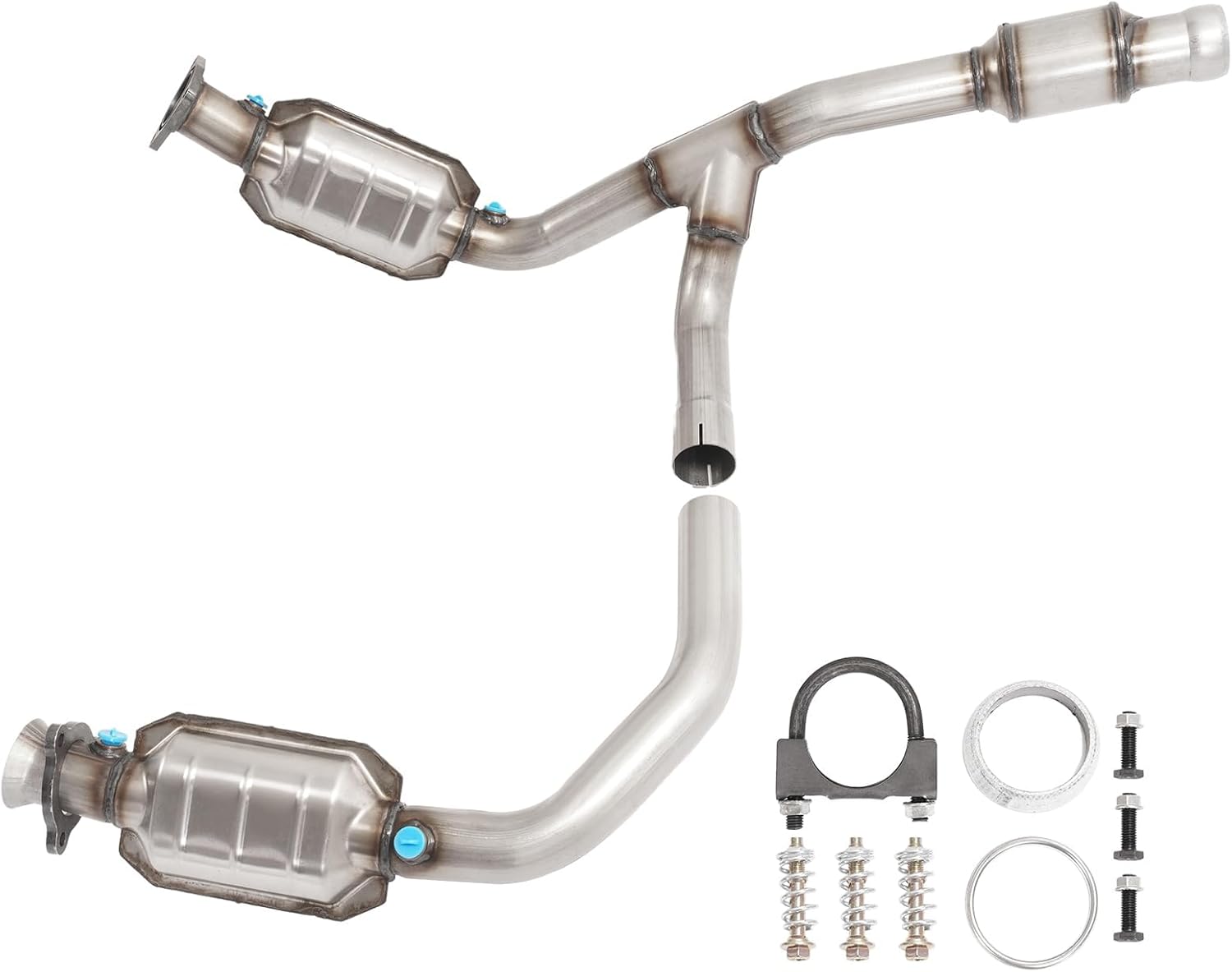
4. BALOCEO Catalytic Converter Replacement RI-401 for 4.3L/5.3L Trucks
| Brand | BALOCEO |
|---|---|
| Manufacturer | RITAMETALAUTO |
| Model | RI-401 |
| Fitment | 2014-2018 Silverado/Sierra 4.3L/5.3L; 2015-2019 Suburban/Tahoe/Yukon 5.3L |
This BALOCEO RI-401 catalytic converter is a budget-minded direct replacement aimed at restoring exhaust flow and drivability on compatible 4.3L and 5.3L trucks. It mounts in place of the factory unit using the included installation accessories and is constructed from 409 stainless steel for corrosion resistance in typical road conditions. In daily use it can eliminate cold-start rattles and improve exhaust smoothness, making the truck more pleasant to drive. However, several buyers report it may not resolve emissions-related check engine codes such as P0420, and there are mixed reports about long-term durability. Installation is straightforward for a competent DIYer or shop since it is a direct-fit unit, but instructions are not provided. If you need a low-cost replacement to stop rattles or replace a physically damaged converter, this model can do the job, but expect possible limits on catalytic efficiency and longevity compared with higher-end, vehicle-specific emissions converters.
Best for: Buyers looking for an inexpensive, direct-fit converter to replace a damaged or noisy unit and restore everyday drivability on compatible 4.3L/5.3L trucks rather than to correct emissions faults.
Less Ideal for: Drivers who need a guaranteed emissions fix, long-term OEM-equivalent durability, or who must meet strict emissions testing should consider higher-tier or vehicle-specific catalytic options.
- Direct-replacement design that fits the listed 4.3L and 5.3L truck applications
- 409 stainless steel construction for basic corrosion resistance
- Includes installation accessories for a quicker swap
- Can reduce cold-start rattle and improve exhaust smoothness
- May not clear emissions codes like P0420 or meet strict emissions performance
- Mixed user reports on long-term durability and early failure
Verdict: A low-cost, direct-fit replacement that restores drivability and eliminates rattles on compatible 4.3L/5.3L trucks when you need an affordable fix rather than an emissions-grade solution.
5. CAT CLEAN Catalytic Converter for 2014–2018 Silverado/Sierra 1500 and 2015–2019 Suburban/Tahoe/Yukon (5.3L/6.2L compatible)

| Vehicle fitment | Select Silverado/Sierra 2014–2018 and Suburban/Tahoe/Yukon 2015–2019 5.3L/6.2L |
|---|---|
| Material | 409L stainless steel |
| Catalyst | High-density honeycomb with Pt/Rh/Pd |
| Installation | Direct bolt connection |
| Warranty | 6 years / 50,000 miles |
This CAT CLEAN catalytic converter replaces the factory unit on the listed Silverado/Sierra and Suburban/Tahoe/Yukon applications and is designed for direct bolt-on installation without welding or modification. It uses a high-density honeycomb ceramic substrate loaded with platinum, rhodium, and palladium to meet EPA-compliant emission standards and to help resolve low-efficiency codes like P0420/P0430. The shell is made from 409L stainless steel and includes a high-temperature pad to protect the carrier, which improves corrosion resistance and service life compared with cheaper units. Buyers should appreciate the simpler installation and quieter operation that comes from a complete catalytic body rather than piecemeal repairs. Limitations: it is not legal for sale or use in certain states with stricter rules, and a few users reported missing or insufficient hardware and occasional fitment gaps on specific assemblies, so inspect mounting points before installation.
Best for: Buyers who prioritize a durable, factory-style replacement that restores emission performance and avoids extra exhaust work will appreciate this unit for routine emissions repairs and to clear catalytic efficiency fault codes.
Less Ideal for: Do not choose this if you need a CARB-compliant unit for states with stricter rules or if you require guaranteed hardware fitment without pre-inspection by a mechanic.
- Direct bolt-on design reduces installation time and avoids welding.
- High-density ceramic substrate with Pt/Rh/Pd loading for improved catalytic efficiency.
- 409L stainless steel body offers better corrosion and heat resistance than low-grade steel.
- Designed to address common check-engine codes caused by low catalyst efficiency.
- Comes with a 6-year/50,000 mile performance warranty.
- Not legal for sale or use in states with stricter emission laws such as California and several others.
- Some customers reported missing or insufficient installation hardware and occasional fitment alignment issues.
Verdict: A rugged, EPA-compliant bolt-on replacement that restores emission performance and longevity for owners focused on reliable, factory-style repairs.
6. SPEEDFusion Catalytic Converter Compatible with 2014–2018 Silverado/Sierra 1500 4.3L/5.3L (EPA Compliant)
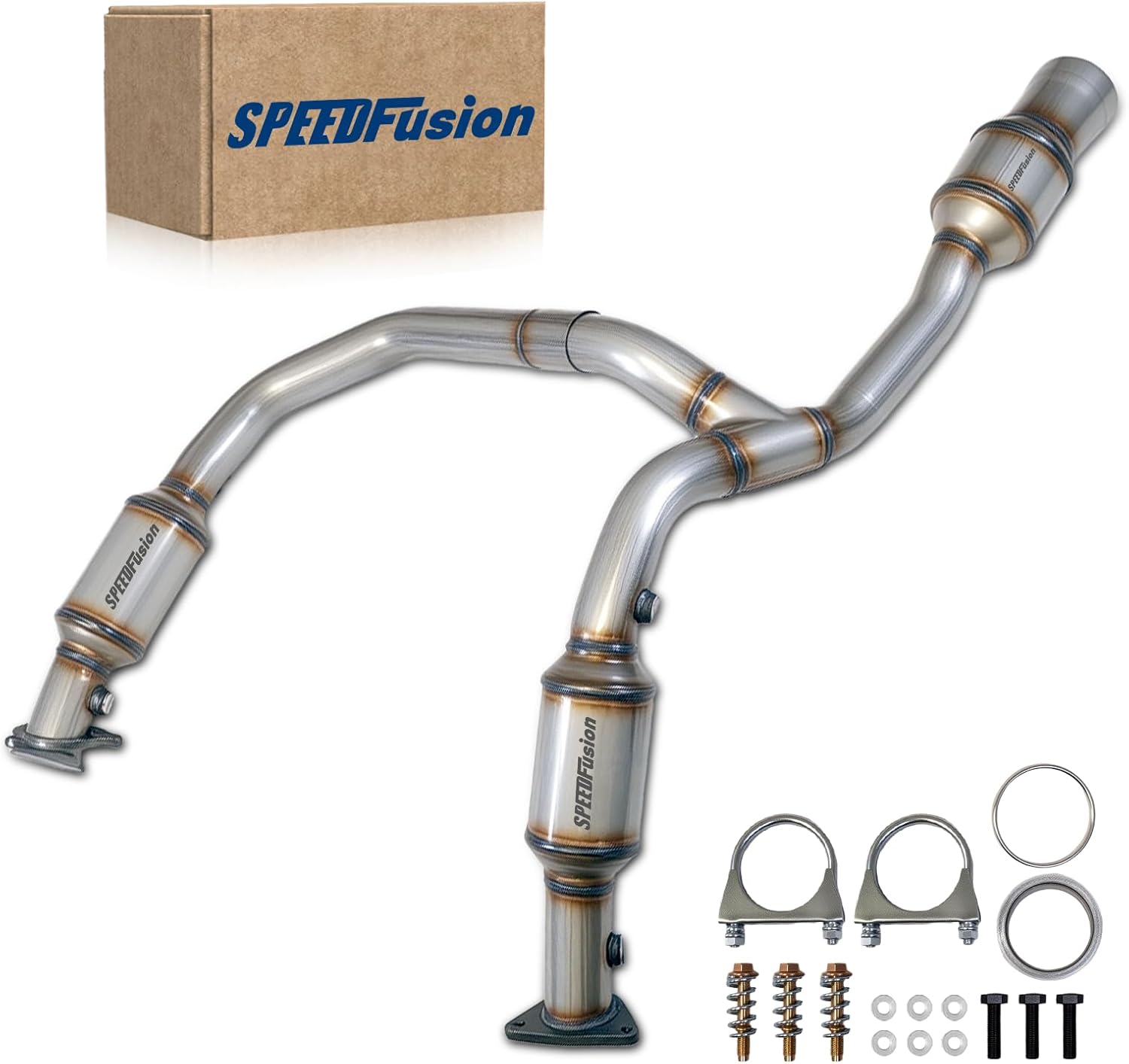
| Vehicle fitment | 2014–2018 Silverado/Sierra 1500 4.3L/5.3L; 2015–2019 Tahoe/Suburban/Yukon 5.3L |
|---|---|
| Certification | EPA compliant (federal) |
| Material | Stainless steel body with ceramic substrate |
| Reference part number | 50497 |
This SPEEDFusion catalytic converter replaces the front catalytic unit on compatible 2014–2018 Silverado and Sierra 1500 trucks and several 2015–2019 full-size GM SUVs. It uses a stainless steel housing and a ceramic substrate coated with platinum, rhodium, and palladium to reduce exhaust pollutants and restore emissions-system performance. Installation is intended as a bolt-in connection between the manifold and downstream pipe; many buyers report a straightforward fit while others needed minor modifications or welding, so careful fit verification is important before installation. The unit carries EPA certification for federal vehicles and is intended for vehicles that meet federal emission standards only. In real-world use it can clear a check-engine light caused by a failed converter and bring emissions back within limits, but buyers should expect occasional fitment variation and plan for professional installation if precise alignment or flange modifications are required.
Best for: Buyers who want a federal-compliant replacement catalytic converter for 2014–2018 Sierra/Silverado 1500 or related GM 5.3L/4.3L applications and who value EPA certification and factory-style construction, with preference for parts backed by multiple user reports of working installs.
Less Ideal for: If you need a state-certified converter for California or other states with their own approvals, or if you cannot accommodate potential minor welding or modifications during installation, look for a different option.
- Built with stainless steel body and ceramic substrate using platinum, rhodium and palladium for effective emissions reduction
- EPA certified for federal-compliant vehicles
- Designed to match OEM specifications for the listed GM 4.3L and 5.3L applications
- Polished exterior and solid welds that many buyers report as high quality
- Not legal for sale or installation in certain states that require their own emissions approvals, such as California and New York
- Some buyers encountered fitment differences that required cutting or welding rather than a perfect bolt-on replacement
Verdict: A federal‑compliant, factory‑style replacement catalytic converter for 4.3L and 5.3L GM trucks that delivers OEM-spec emissions performance when fitment is confirmed.
7. JT High-Flow Catalytic Converter for 1999–2007 Chevy/GMC 4.3L–5.3L (EPA Compliant)

| Manufacturer | JT |
|---|---|
| Model | CHSD011 |
| Applicable engines | 4.3L, 4.8L, 5.3L |
| OEM part interchange | 10395212, 19418928 |
| Compliance | EPA OBDII |
This JT catalytic converter is a direct-fit replacement intended for 1999–2006 Silverado/Sierra and related trucks and SUVs with 4.3L, 4.8L, or 5.3L engines, plus the 2007 Silverado/Sierra 1500 Classic 4.3L–5.3L. It uses a factory-style honeycomb ceramic substrate with additional precious metal catalyst to improve conversion efficiency and meet EPA OBDII emission requirements. Typical use is bolt-on replacement of a failed or clogged converter to clear emissions codes and pass inspections; the listing and customer feedback indicate it includes multiple gaskets and fits without major modification in most cases. Benefits include improved exhaust flow compared with a plugged unit, materials that aim to match factory durability, and claimed emissions compliance. Limitations to expect are occasional fitment variability on older trucks depending on previous repairs or exhaust routing, and the need to verify fit with your vehicle's OEM part numbers before ordering. Buyers seeking a conservative replacement will appreciate the emphasis on EPA compliance and direct-fit design, while those wanting performance tuning should look elsewhere.
Best for: Drivers who want a conservative, emission-compliant replacement that restores proper catalytic function and helps clear emissions codes without custom fabrication.
Less Ideal for: Owners looking for a high-performance or race-oriented converter or those who prefer custom-fit fabricated exhaust solutions.
- Direct-fit design intended to match factory mounting for straightforward installation
- EPA OBDII compliant with extra precious metal catalyst to improve conversion efficiency
- Factory-grade ceramic substrate and stainless steel shell for improved durability
- Includes gaskets and hardware options according to customer reports
- Some buyers report fitment mismatch on specific older 4×4 applications, so confirmation against OEM part numbers is recommended
Verdict: Choose this JT direct-fit catalytic converter if you want an EPA-compliant, factory-style replacement to reliably restore emissions function on 4.3L–5.3L Sierra/Silverado trucks.
Choosing the Right GMC Sierra 1500 5.3L Catalytic Converter: Key Factors to Consider
Fitment And Sensor Compatibility
Proper fitment is the foundation of a successful catalytic converter replacement. For the GMC Sierra 1500 5.3L, pipe diameter, flange type, and the presence and placement of oxygen sensor ports determine whether the new converter mounts without modification.
Incorrect fitment can cause exhaust leaks, false sensor readings, and persistent check-engine lights. Confirming sensor bungs match the factory locations prevents wiring length issues and ensures the vehicle's engine control module receives accurate upstream and downstream readings. Also consider whether the unit is a direct bolt-on or requires welding; bolt-on units reduce installation time while welded converters can provide a cleaner installation when properly done.
Emissions Conversion Efficiency
The catalytic substrate and washcoat formulation affect how effectively the converter reduces hydrocarbons, carbon monoxide, and nitrogen oxides. For a Sierra 1500 5.3L, an efficient converter helps the truck meet emissions requirements and reduces the chance of failing an inspection.
Higher cell density and optimized precious metal loadings typically improve conversion but can affect flow and longevity. Look for converters with substrates and coatings specified for gasoline V8 engines and that cite conversion efficiency or targeted emission reductions. This factor matters for owners who need to pass state testing or who want to restore proper exhaust chemistry after a failed converter.
Durability And Corrosion Resistance
Catalytic converters are exposed to high temperatures and road salt, so construction quality matters. Materials like stainless steel housings, reinforced welds, and robust thermal insulation extend service life on a truck that sees long drives, towing, or harsh climates.
Poorly constructed units can fail from thermal shock, rust-through, or mesh detachment. For the Sierra 5.3L, where the converter is often low on the chassis, prioritize corrosion-resistant finishes and durable mounting brackets to avoid premature replacement and to maintain exhaust integrity under load.
Backpressure And Exhaust Flow
A catalytic converter must reduce emissions without creating excessive backpressure that harms engine performance. The 5.3L V8 has specific flow requirements; a converter with too restrictive a substrate may reduce horsepower, trigger fuel-trim issues, or cause the engine to run hotter.
Balance is key: a substrate designed for gasoline V8 flow characteristics will minimize horsepower losses while still providing adequate conversion. Consider whether the unit is a high-flow performance-style converter or an OE-equivalent. For everyday driving and towing, OE-equivalent flow with proven conversion tends to offer the best overall balance.
Installation Complexity And Serviceability
Installation effort affects overall repair cost and downtime. Direct-fit converters that match factory flanges and sensor locations reduce labor and the risk of exhaust leaks. Some units come with included gaskets, hardware, or pre-attached hangers to simplify installation.
If welding is required, factor in shop time and whether surrounding exhaust components need relocation. Also evaluate access to replacement parts and whether the converter allows for future servicing of oxygen sensors without removing the entire assembly. For Sierra owners who prefer DIY work, clear installation instructions and hardware compatibility matter.
Warranty And Regulatory Compliance
A warranty provides confidence in a replacement converter's durability and manufacturing quality. For emissions-related parts, confirm whether the unit is warranted against premature failure and whether it meets local or federal emissions standards where applicable.
Products that explicitly state compliance with relevant emissions regulations reduce the risk of inspection failure. Warranties vary in coverage and duration, so assess what is included and whether it covers substrate failure, clogging, or corrosion. For Sierra 1500 5.3L owners in regulated regions, regulatory compliance is often a decisive factor.
Common Catalytic Converter Symptoms On A Sierra 1500 5.3L
Recognizing the signs of a failing catalytic converter helps you decide whether repair or replacement is necessary. Typical symptoms include a persistent check-engine light that stores codes related to catalyst efficiency, a noticeable drop in fuel economy, or rough idle and hesitation under load when the converter is clogged or damaged.
- Check-engine light with P0420 or related catalyst efficiency codes
- Reduced throttle response or stalling at low speeds
- Strong sulfur or rotten-egg smell coming from the exhaust
- Rattling noises from the converter housing indicating internal damage
How A Converter Affects Engine Management And Emissions
The catalytic converter alters exhaust chemistry and works with upstream and downstream oxygen sensors to help the engine control module maintain proper air-fuel ratios. If the converter degrades, downstream sensor readings change and the ECU may adjust fuel delivery, which can lead to drivability and emissions problems.
Improper conversion increases tailpipe hydrocarbons and carbon monoxide, which can cause failed emissions tests. Maintaining proper catalyst function is therefore central to both performance and legal compliance.
- Downstream oxygen sensor readings indicate catalyst efficiency
- ECU adjusts trims based on sensor feedback
- Failing converters can trigger emissions inspection failures
Fitment Tips For A Smooth Replacement
Before purchasing a replacement, document the converter's physical connections: measure inlet and outlet pipe diameters, note flange styles, and confirm the number and locations of oxygen sensor fittings. These measurements prevent surprises during installation and reduce the chance of needing additional adapters or pipe work.
If you plan to perform the replacement yourself, prepare the necessary tools for cutting or unbolting the old unit and have replacement gaskets and anti-seize compound for sensor threads. For welded installations, consider professional welding to ensure structural integrity and leak-free joints.
- Measure pipe diameters and flange bolt patterns
- Verify sensor bung locations and thread sizes
- Gather gaskets, anti-seize, and proper mounting hardware before starting
Emissions Testing And Legal Considerations
Regulations for catalytic converters vary by jurisdiction; some areas require aftermarket units to meet specific emissions standards or be CARB-compliant. For owners in regulated regions, choose a converter with documented compliance to avoid inspection failure or legal issues.
Retain documentation of the replacement and any certification statements provided by the manufacturer or vendor. If your truck must meet fleet or state testing, confirm the unit's stated emissions performance aligns with local requirements.
- Confirm local emissions requirements before replacement
- Keep compliance documentation with vehicle records
- Replace only with units that explicitly state their emissions certification when required
When To Repair Versus Replace
Minor exhaust leaks or damaged heat shields can mimic catalytic converter problems, so inspect surrounding components first. If the converter is physically damaged, rattling, or confirmed to fail efficiency tests, replacement is usually the most reliable fix.
In some cases, temporary repair or cleaning can restore short-term performance, but these are often stopgap measures. For a Sierra 1500 5.3L used for towing or frequent heavy loads, replacing a compromised converter is usually the better long-term choice.
- Inspect exhaust pipes, hangers, and heat shields for related issues
- Use diagnostic data and sensor readings to verify catalyst efficiency
- Prioritize replacement for persistent efficiency failures or physical damage
Still looking for the perfect fit?
Select your GMC Sierra 1500 configuration to see the most relevant Catalytic Converters recommendations
How We Chose the Best GMC Sierra 1500 5.3L Catalytic Converter
We prioritized items that address the specific needs of GMC Sierra 1500 5.3L owners and that meet common repair and emissions goals. Our selection filtered for correct flange and pipe dimensions, OE-equivalent oxygen sensor ports, and backpressure characteristics that maintain engine calibration. We also favored converters with construction materials and substrate designs known to balance durability and catalytic efficiency.Evaluation criteria included emissions conversion efficiency and whether the unit supports required sensor locations, physical fitment and weld or bolt-on compatibility with the Sierra 5.3L exhaust geometry, thermal and corrosion resistance for long service life, and ease of installation to limit labor time. Noise and flow characteristics were considered to avoid drivability regressions. We excluded universal or highly modified units that require extensive fabrication or rerouting, and items lacking clear specifications for sensor bungs or pipe diameters. The result is a focused list of options that match the Sierra 1500 5.3L platform and typical repair scenarios.
Our full evaluation process is outlined in our review methodology.
FAQ
How can I tell if the catalytic converter on my Sierra 1500 5.3L is failing?
Often you will see a check-engine light with related codes, reduced fuel economy, a sulfur smell, or rattling from the converter housing. Diagnosis usually involves reading OBD-II codes and comparing upstream and downstream sensor data.
Will a clogged catalytic converter cause low power on my 5.3L engine?
Yes, a severely clogged converter increases backpressure and can reduce power and throttle response. The effect depends on clog severity and driving conditions, and symptoms are usually most apparent under load or during acceleration.
Can I replace the catalytic converter myself on a Sierra 1500 5.3L?
Many owners can perform a direct-fit bolt-on replacement with basic tools if the unit matches flange and sensor locations. Welding or cutting may be required for some installations, which is better handled by a shop unless you have welding experience.
Do I need to replace oxygen sensors when I replace the catalytic converter?
Not always. If the sensors are within their service life and reading correctly, they can be reused. However, replacing sensors at the same time can prevent confounding issues and simplify troubleshooting after installation.
How long does a catalytic converter typically last on a GMC Sierra 1500 5.3L?
Lifespan varies with driving conditions, exposure to road salt, and engine health. Converters often last many years under normal driving, but repeated overheating, physical damage, or contamination from oil and coolant can shorten life expectancy.
What should I do if my truck fails an emissions test after replacing the converter?
First verify sensor readings and ensure the replacement unit is correctly installed with no exhaust leaks. Confirm the unit meets local emissions requirements and review ECU readiness monitors; some systems need a certain number of drive cycles to register proper catalyst performance.
Final Verdict
Prioritize a replacement that matches the GMC Sierra 1500 5.3L's factory fitment and oxygen sensor locations while delivering reliable emissions conversion. Balance durability and flow characteristics so the truck maintains drivability under daily use and towing.Focus on correct fit, conversion efficiency, and corrosion-resistant construction when choosing a catalytic converter to ensure long-term compliance and dependable performance; that tradeoff will guide most owners to a confident selection.
Explore More:
- Check out all GMC Sierra 1500 parts & accessories
- Explore Catalytic Converters Maintenance & Repair Guides
- Explore Exhaust & Emissions
- Browse all Auto Parts
