

Note: This article contains affiliate links. If you click on these links and make a purchase, I may earn a small commission at no extra cost to you. This helps support my research and content. Read my full affiliate disclosure here.
If you own a 2007-2013 GMC Sierra 1500 and need to replace the catalytic converter, picking the right unit matters for emissions, drivability, and check-engine light behavior. The 2007-2013 model years have specific exhaust routing and oxygen sensor placements that affect which converters fit and perform correctly.This guide covers six shortlisted catalytic converters chosen for fitment and emissions performance on the 2007-2013 GMC Sierra 1500. We explain the decision factors we used, common symptoms that indicate converter problems, and practical installation and maintenance considerations to help you choose the most appropriate option for your truck.
Looking for other parts? See all GMC Sierra 1500 parts & accessories.
Top Picks at a Glance
| Best Overall The best all-around choice for most situations | NutsCata Catalytic Converter — Direct-Fit for 2009–2013 Silverado/Sierra 4.3L–6.0L |  |
| Best Quality Built to a higher standard if you want something more solid | MagnaFlow 51578 OEM-Grade Direct-Fit Catalytic Converter |  |
| Best Value The sweet spot between price and what you get | KAX Catalytic Converter Kit 50490 Direct-Fit for 2009–2013 Silverado/Sierra/Yukon/Suburban/Tahoe |  |
| Best Budget The cheapest option that still gets the job done reliably | BALOCEO Catalytic Converter for 2007-2008 Silverado/Sierra/Tahoe/Yukon 4.3–6.0L (409 Stainless) |  |
| Highest Rated A top-rated pick with lots of positive feedback | CIRconvert Catalytic Converter Compatible with 2007–2008 Chevy/GMC 4.3–6.0L (EPA Compliant) |  |
| Most Popular A crowd favorite that many people choose with confidence | DNA MOTORING Factory-Style Direct-Fit Catalytic Converter (OEM-CONV-082) |  |
1. NutsCata Catalytic Converter — Direct-Fit for 2009–2013 Silverado/Sierra 4.3L–6.0L

| Vehicle fitment | 2009–2013 Silverado/Sierra 4.3L–6.0L |
|---|---|
| Material | 409L stainless steel |
| Substrate | Precious-metal loaded ceramic honeycomb |
| Compliance | EPA-compliant (federal); not for sale/use in select states |
| Manufacturer | NutsCata |
This NutsCata catalytic converter is a direct-bolt-on replacement intended for Silverado/Sierra models in the 2009–2013 range with compatible 4.3L–6.0L engines. It uses a high-concentration precious-metal loaded ceramic honeycomb substrate to convert exhaust gases and is built with 409L stainless steel for heat and corrosion resistance. Installation is simplified by the direct-fit design so most owners or a local shop can swap it in without welding or major modification. The unit is marketed as EPA-compliant for federal standards and includes the necessary flanges and hardware for a plug-and-play replacement. Practical benefits include improved catalyst efficiency over some aftermarket cores and a long service-life construction backed by the seller’s stated coverage. Important limitations: it is not legal for sale or use in certain states with stricter rules and you must confirm exact engine and year compatibility before purchasing to avoid a mismatch with your Sierra’s exhaust routing or sensors.
Best for: A buyer who wants a practical, factory-like replacement for a 2009–2013 Sierra 1500 that balances emissions performance, durability, and ease of installation without chasing premium performance parts.
Less Ideal for: If you need a converter certified for California or other strict state programs or are looking for a custom performance exhaust solution, this unit is not the right choice.
- Direct bolt-on design that avoids welding or additional fabrication
- Ceramic honeycomb substrate loaded with platinum, rhodium and palladium for effective emission conversion
- 409L stainless steel construction for high-temperature resistance and durability
- Includes hardware for straightforward installation
- Prohibited for sale or use in states with more stringent emission laws such as California and others listed in the product details
Verdict: A practical, direct-fit replacement that delivers factory-quality emissions performance and easy installation for 2009–2013 Sierra 1500 owners seeking balanced value.
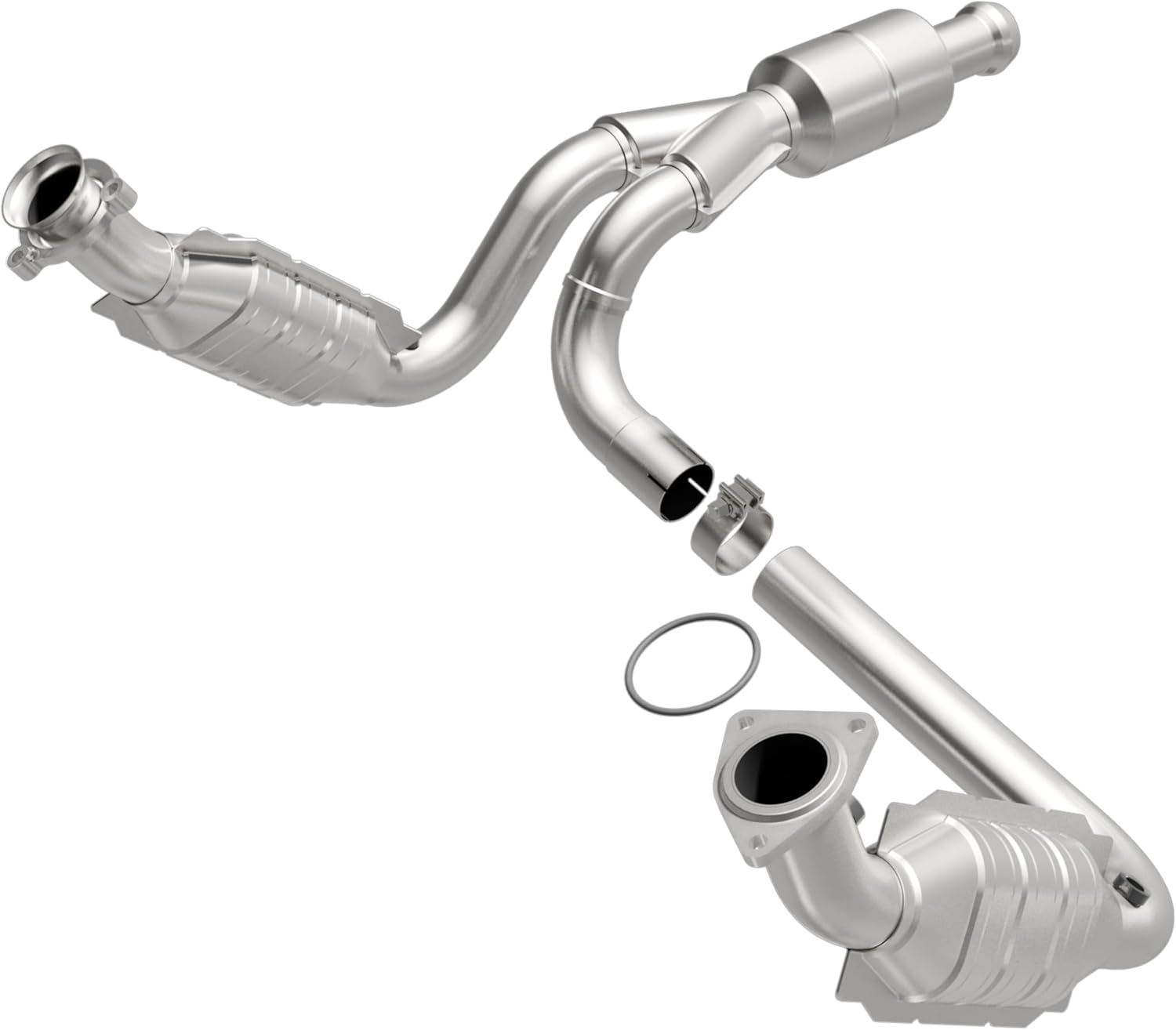
2. MagnaFlow 51578 OEM-Grade Direct-Fit Catalytic Converter
| Type | Direct-Fit Federal/EPA Compliant |
|---|---|
| Body Material | Stainless Steel |
| Main Piping Diameter | 2.5" |
| Oxygen Sensor Location | Pre-and-Post Converter |
| Clamp Included | Yes |
The MagnaFlow 51578 is a direct-fit catalytic converter engineered to replace the factory unit on 2009–2013 Silverado/Sierra 1500 trucks. It uses a spun stainless-steel body, mandrel-bent piping, and pre- and post-converter O2 sensor locations to make installation straightforward with the included gaskets and hardware. For a performance-minded buyer this part aims to preserve exhaust flow while meeting Federal/EPA emissions requirements and keeping the check-engine light from triggering on compliant systems. The compact, low-mass spun design helps thermal efficiency and resists corrosion better than mild-steel replacements. Limitations to note are legal restrictions on sale or use in certain states and mixed user reports about early failures on isolated units, so proper inspection and correct fitment verification are important before installation. Overall it suits owners who want a factory-quality replacement that balances emissions compliance with reasonable flow characteristics for stock or mildly modified trucks.
Best for: Buyers who want a factory-quality, bolt-on replacement that maintains emissions compliance while preserving exhaust flow for stock or mildly modified 2009–2013 Sierra/ Silverado 1500 trucks.
Less Ideal for: Drivers in states where this converter is restricted or owners seeking a high-flow, race-oriented noncompliant catalytic solution.
- Direct-fit design with included gaskets and hardware for bolt-on installation
- Stainless-steel spun body and mandrel-bent piping improve corrosion resistance and exhaust flow
- Pre- and post-converter O2 sensor ports match factory sensor locations to avoid CEL issues
- Built to Federal/EPA emissions standards for compliant operation in allowed regions
- Manufacturer provides mounting hardware to reduce need to reuse corroded factory parts
- Not legal for sale or use in California, Colorado, and New York
Verdict: Choose the MagnaFlow 51578 when you need a durable, factory-style catalytic replacement that preserves emissions compliance and bolt-on fitment for 2009–2013 Sierra/Silverado 1500 trucks.
3. KAX Catalytic Converter Kit 50490 Direct-Fit for 2009–2013 Silverado/Sierra/Yukon/Suburban/Tahoe

| Manufacturer | KAX |
|---|---|
| Model | 50490 |
| Exterior | Polished, Rust Protected |
| Manufacturer Part Number | 5521EXP264AUS |
This KAX catalytic converter kit replaces the factory unit on compatible 1500-series GM trucks and SUVs and is intended to restore emissions performance and drivability. It is a direct-fit assembly built from 409L stainless steel with a ceramic honeycomb substrate and precision welds, so installation is straightforward for a mechanic and usually requires no modification to the exhaust. The high conversion efficiency design aims to reduce CO, HC, and NOx, which can clear P0420/P0430 codes and improve throttle response and fuel economy when the original converter has degraded. Practical benefits include corrosion-resistant exterior and a lower backpressure honeycomb for preserved engine power. Limitations to consider are that fitment must be checked against the exact engine and year combinations listed and a few customer reports cite fitment confusion or shipping errors, so verify part numbers before ordering. Professional installation is recommended where O2 sensor locations or exhaust hangers differ.
Best for: Buyers who prioritize restoring emissions function and drivability with a factory-style replacement for covered GM 1500-series trucks and SUVs and who prefer a direct-fit part to minimize shop labor and modifications.
Less Ideal for: If you need a universal or performance-oriented converter or your vehicle falls outside the listed years and engines, look for alternatives designed specifically for that application or for performance upgrades.
- Direct-fit design engineered for specific 2009–2014 GM 1500-series applications to avoid exhaust modifications
- Constructed from high-grade 409L stainless steel for corrosion resistance
- Ceramic honeycomb substrate with high conversion efficiency to reduce emissions and help clear P0420/P0430 codes
- Lower backpressure design that helps preserve engine power and can improve fuel economy
- Must match exact engine and model year combination listed or it may not fit
- Some customer reports indicate receiving incorrect parts or fitment issues from shipping or listing errors
Verdict: A factory-style direct-fit converter to reliably restore emission control and drivability on supported 2009–2014 GM 1500-series trucks and SUVs.
4. BALOCEO Catalytic Converter for 2007-2008 Silverado/Sierra/Tahoe/Yukon 4.3–6.0L (409 Stainless)

| Compatibility | 2007–2008 1500-series GM trucks and SUVs with 4.3L–6.0L V8 |
|---|---|
| Material | 409 stainless steel |
| Package | 1 catalytic converter |
| Manufacturer | RITAMETALAUTO |
This BALOCEO catalytic converter is a budget-focused replacement intended to restore power and clear emissions faults on compatible 2007–2008 1500-series GM trucks and SUVs. It installs in place of a clogged or failed converter to recover exhaust flow and help the vehicle meet functional emissions requirements. The unit is constructed from 409 stainless steel for corrosion resistance in typical road conditions and ships as a single complete converter. In practice it can get a sidelined truck back on the road without the cost of a premium OEM unit, but buyers should expect some fitment work on some models; several users report trimming or welding the factory flange or modifying exhaust hangers to achieve a secure fit. It is most useful when you need an affordable, durable replacement rather than an exact factory match. Do not expect factory-perfect fitment or the higher longevity of top-tier stainless alloys, but it offers a reasonable, lower-cost repair option for budget repairs.
Best for: Buyers looking for an affordable replacement to get a 2007–2008 GMC Sierra 1500 back on the road who prioritize cost and basic durability over flawless factory fitment.
Less Ideal for: Someone seeking a drop-in, factory-identical converter or the longest-lasting premium alloy should consider OEM or higher-grade aftermarket options instead.
- Constructed from 409 stainless steel for corrosion resistance and durability
- Sold as a complete single-unit replacement to restore exhaust flow and clear CEL related to converter failure
- Covers common 4.3L–6.0L V8 fitments for 2007–2008 GM 1500-series trucks and SUVs, simplifying part selection
- Lower-cost alternative to higher-end factory-quality converters for budget repairs
- Fitment is not always exact and may require cutting, welding, or hanger adjustments during installation
- 409 stainless is durable but not as long-lasting as higher-grade stainless used in premium converters
Verdict: A cost-effective 409-stainless catalytic converter that restores emissions function and power on 2007–2008 GMC Sierra 1500 trucks when you need an affordable repair rather than a perfect factory match.
5. CIRconvert Catalytic Converter Compatible with 2007–2008 Chevy/GMC 4.3–6.0L (EPA Compliant)

| Vehicle fitment | 2007–2008 Silverado/Sierra 1500 and related models 4.3L–6.0L |
|---|---|
| Material | High-strength stainless steel |
| Certification | EPA compliant (46 states) |
| Manufacturer part number | CS1500070816 |
This CIRconvert catalytic converter is a direct-fit replacement intended to restore emissions compliance and keep a 2007–2008 Sierra 1500 running smoothly. It is manufactured from high-strength stainless steel with laser-cut flanges and welded seams, so installation is typically a straightforward bolt-on job for a competent DIYer or muffler shop. The unit is EPA certified for 46 states and contains the catalytic materials needed to reduce exhaust pollutants, which helps the vehicle pass emissions tests and stop check-engine codes tied to a failed converter. Reviewers report reliable fit, quiet operation, and a factory-like sound after install. Limitations: it cannot be used in California, Colorado, New York, or Maine, and long-term durability beyond a few years is still an open question for some buyers compared with dealer parts. The product comes with a one-year unlimited mileage warranty and is sized specifically for the listed model years and engines, so confirm interchange numbers before ordering.
Best for: Buyers prioritizing a reliable, factory-style replacement that restores emissions compliance and minimizes downtime; good for owners who want a durable direct-fit unit they can install or have installed without custom work.
Less Ideal for: Drivers living in states with stricter emissions rules or buyers who need a converter explicitly certified for California-level standards should look elsewhere.
- Direct-fit design for 2007–2008 Silverado/Sierra 1500 families simplifies installation
- Constructed from high-strength stainless steel and laser-welded seams for heat resistance
- EPA certified for 46 states so it restores emissions compliance and prevents related check-engine lights
- Multiple customer reports of quiet, factory-like operation and straightforward fit
- Not legal for use in California, Colorado, New York, or Maine due to state emissions rules
Verdict: Choose this CIRconvert unit if you need a dependable, direct-fit catalytic converter to restore emissions compliance and get a 2007–2008 Sierra 1500 back to factory-like operation.
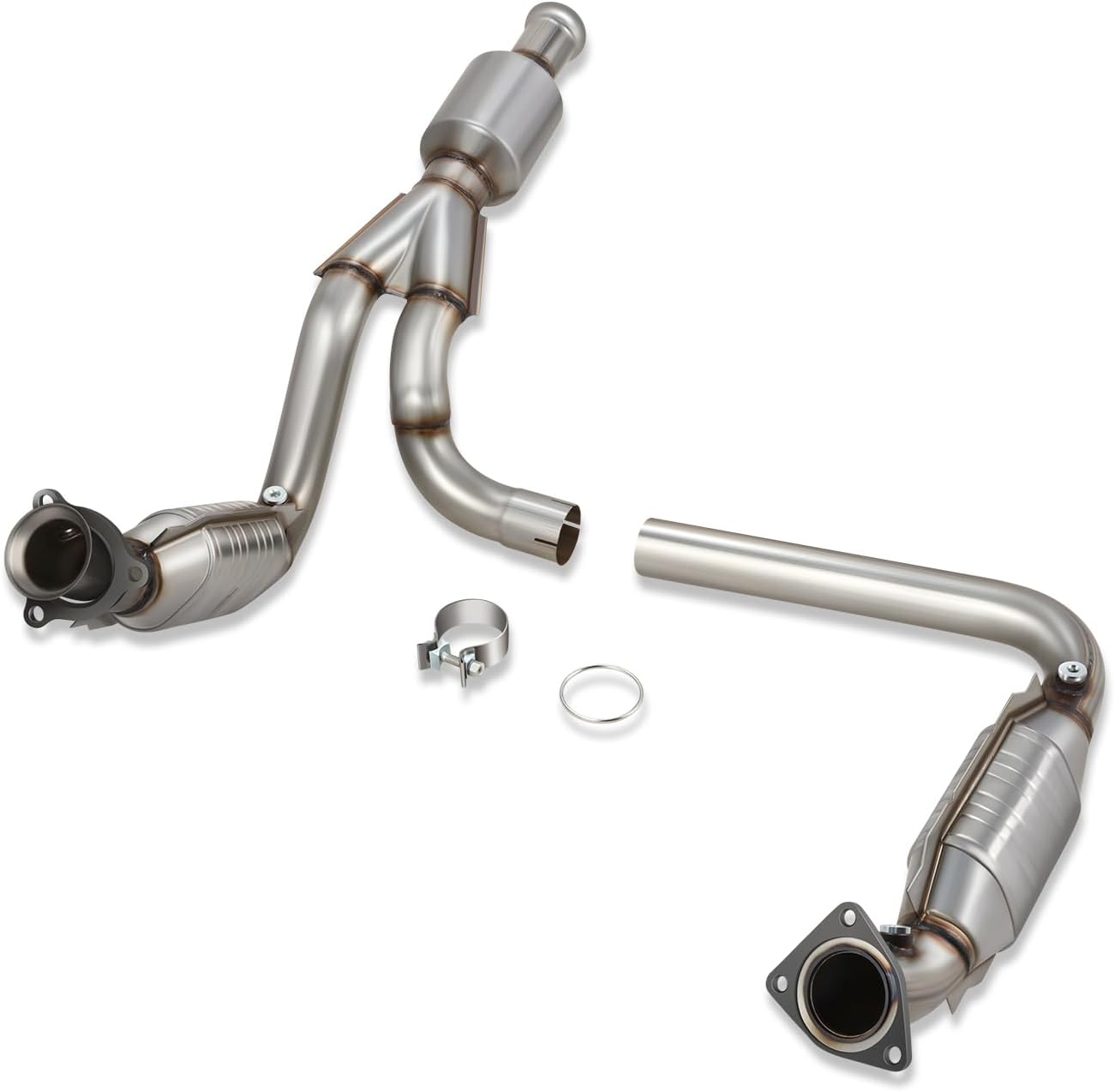
6. DNA MOTORING Factory-Style Direct-Fit Catalytic Converter (OEM-CONV-082)
| Fitment | Compatible with 2009–2013 Silverado/Sierra 1500 and related models (4.3L–6.0L) |
|---|---|
| Material Type | Stainless Steel |
| Includes | 1 catalytic converter and hardware as shown |
| Compliance | Federal/EPA compliant (not legal in CA, ME, NY) |
This DNA MOTORING converter is a bolt-on, direct-fit replacement intended for 2009–2013 Silverado/Sierra 1500 and related GM trucks with 4.3L–6.0L engines. It replaces the factory unit and includes gaskets and basic hardware to streamline installation for a DIYer or shop. The stainless-steel body and mandrel-bent tubing aim to resist corrosion and provide reasonable durability compared with cheaper sheet-metal pipes. Users report it fits the factory flanges and O2 sensor locations on many trucks, though some eyeballing and minor bracket bending or temporary transmission crossmember lowering may be required during install. Several reviews warn about inconsistent long-term performance and lower catalytic substrate efficiency compared with an original long-lasting unit, so this is best as an affordable factory-style replacement to clear emissions faults or get a vehicle back on the road. Note that it is not legal for sale in some states and professional installation is recommended.
Best for: Buyers who prioritize a budget-friendly, factory-style replacement to clear emissions faults and get a 2007–2013 Sierra back on the road without sourcing dealer parts.
Less Ideal for: Drivers seeking a long-term, high-efficiency catalytic solution for strict state inspections or those who prefer a lifetime-backed OEM-level part should consider higher-end or dealer options.
- Direct-fit design with factory-style flanges and O2 bung placements for straightforward installation
- Stainless steel construction and aluminized mandrel-bends for improved corrosion resistance and strength
- Includes gaskets and basic hardware to simplify replacement
- Priced lower than dealer units, offering a budget-friendly option to restore emissions function
- Reported variability in long-term substrate efficiency leading to possible check-engine lights after months
- Some installers needed additional bolts, clamps, or minor exhaust bracket adjustments for a sealed fit
- Not legal for sale or use in certain states
Verdict: A cost-effective, factory-style direct-fit replacement that gets a 2007–2013 Sierra running and emissions-compliant again without the dealer price.
Choosing the Right 2007-2013 GMC Sierra 1500 Catalytic Converter: Key Factors to Consider
Fitment and Flange Type
Correct mechanical fit is the first priority because the 2007-2013 GMC Sierra 1500 has specific pipe diameters, bend geometry, and flange styles. A converter that does not match the original flange or requires cutting and re-welding can add cost and introduce potential leak points.
Check whether the replacement lists the same inlet and outlet diameters and the same flange bolt pattern. Verify sensor bung locations match the existing oxygen sensor placements. Proper fit reduces installation time and preserves exhaust routing, heat shielding, and hanger positions, which matters for avoiding vibrations and premature mount failures.
Substrate and Conversion Efficiency
The internal substrate and catalyst coating determine how effectively the converter reduces hydrocarbons, carbon monoxide, and oxides of nitrogen under real-world driving. Higher cell density and quality coatings generally provide better conversion at operating temperatures, which helps the truck meet emissions standards and lowers the chance of ongoing check-engine alerts.
Consider documented conversion efficiencies or references to substrate material. For a working pickup, a robust substrate also tolerates occasional rich conditions and thermal cycling without rapid degradation, helping the unit last longer under towing or heavy-load use.
Oxygen Sensor Compatibility
The Sierra 1500 uses upstream and downstream oxygen sensors to monitor catalyst performance. A replacement converter must have properly placed sensor bungs that match the truck's sensor spacing and thread size. Incorrect bung placement can lead to false diagnostics, CEL illumination, and improper fuel trim adjustments.
Confirm whether the unit accommodates the same number and position of sensors as the original equipment. Plug-and-play sensor compatibility reduces troubleshooting and ensures the vehicle's emissions monitoring continues to function as intended.
Durability and Construction Quality
Pickup trucks are exposed to road debris, moisture, and salt that accelerate corrosion. Shell thickness, quality of welds, and the use of corrosion-resistant materials all affect how long a converter will last on a Sierra 1500. Robust construction also helps resist damage from minor impacts or vibration during towing and everyday use.
Look for converters with reinforced flanges, sturdy hangers or mounting options, and stainless or aluminized steel where appropriate. Better construction reduces the likelihood of leaks, cracking, or premature replacement, which is especially important for an older vehicle where exhaust system longevity matters.
Backpressure and Engine Performance
Catalytic converters introduce some restriction to exhaust flow. For the 2007-2013 Sierra 1500, excessive backpressure can reduce throttle response, lower fuel efficiency, and affect towing capability. Choosing a converter that balances conversion efficiency with reasonable flow is important to maintain drivability.
Look for specifications or design notes on flow characteristics, and consider the typical use of your truck. If you frequently tow or carry heavy loads, prioritize converters designed to maintain lower restriction under higher exhaust volumes, while still providing required emissions control.
Legal and Emissions Compliance
Emissions equipment is regulated, and replacements should meet applicable requirements for the vehicle's registration jurisdiction. For the 2007-2013 Sierra 1500, confirm whether the converter is intended to meet federal or state emissions standards and whether it is sold as a direct emissions-equivalent replacement.
Using a unit that lacks necessary compliance can lead to failed inspections or emissions tests. Check documentation on emissions certification and ensure the converter supports the vehicle's emission control strategy to avoid inspection issues.
Common Catalytic Converter Symptoms on the Sierra 1500
Several signs point to catalytic converter problems on a 2007-2013 Sierra 1500. A persistent check engine light with codes related to oxygen sensors or catalyst efficiency often appears first. Reduced acceleration, poor fuel economy, or a noticeably rotten-egg smell from the exhaust can also indicate that the catalyst is not functioning properly.
Occasionally you may hear rattling from under the truck if the internal substrate has broken apart. Addressing symptoms early can prevent collateral damage to oxygen sensors or downstream exhaust components and makes repairs simpler and less expensive.
- Illuminated check engine light with P0420/P0430 style codes
- Reduced throttle response or poor acceleration
- Stronger-than-normal exhaust odor
- Rattling noises from under the vehicle during acceleration
Checking Fitment Before You Buy
Measure the existing converter inlet and outlet diameters, flange bolt pattern, and note the location of any oxygen sensor bungs. Compare those measurements to the replacement listing. If the listing includes a fitment chart that explicitly references the 2007-2013 GMC Sierra 1500, that increases the likelihood of a plug-and-play installation.
If you need to adapt the exhaust, plan for welding and potential heat shield or hanger adjustments. Factor in labor and the condition of surrounding exhaust components that might also need replacement to ensure a reliable long-term repair.
- Record pipe diameter and flange type
- Confirm sensor bung thread and location
- Check hanger alignment and heat shield clearance
Installation Options and Typical Labor Considerations
Installation can range from a straightforward bolt-on swap to a job requiring cutting and welding, depending on the converter design and how well it matches existing flanges. Many Sierra 1500 owners prefer direct-fit units to avoid fabrication and minimize time in the shop.
Expect labor to vary based on rust and accessibility. If the exhaust or hanger hardware is corroded, additional parts or labor to cut out the old converter and clean mounting surfaces may be necessary. Using proper anti-seize on bolts and checking sensor wiring during installation helps prevent future issues.
- Direct-fit units typically require less labor
- Rusty bolts and hangers add time to the job
- Verify oxygen sensor wiring and connectors during installation
Maintenance Tips to Extend Converter Life
Keeping engine tune and fuel system components in good condition helps prevent premature catalyst failure. An engine running rich or misfiring can overheat or contaminate the substrate. Regularly addressing spark plug, ignition coil, and fuel injector issues reduces stress on the converter.
Avoid prolonged idling and short, frequent trips that do not bring the exhaust system to normal operating temperature. Inspect the underbody for physical damage after off-road use and promptly repair exhaust leaks that can introduce oxygen and upset catalyst chemistry.
- Resolve ignition and fuel system faults quickly
- Limit idling and short-trip operation when possible
- Inspect underbody and heat shields after heavy use
How OBD-II Codes Relate to Converter Health
On the Sierra 1500, downstream oxygen sensor readings are compared to upstream readings to gauge catalyst efficiency. Codes indicating catalyst efficiency below threshold or discrepancies between sensors suggest the converter may not be performing as intended. However, codes alone do not confirm a bad converter; sensor faults, wiring issues, or exhaust leaks can produce similar symptoms.
Use live data scans to compare upstream and downstream O2 behavior and monitor fuel trim. A sudden change in downstream sensor response or a near-identical upstream/downstream pattern at operating temperature is a stronger indicator that the catalyst is compromised.
- P0420-style codes can indicate low catalyst efficiency
- Check sensor wiring and exhaust leaks before replacing the converter
- Use live data to compare O2 sensor behavior upstream vs downstream
Still looking for the perfect fit?
Select your GMC Sierra 1500 configuration to see the most relevant Catalytic Converters recommendations
How We Chose the Best 2007-2013 GMC Sierra 1500 Catalytic Converter
We focused on criteria that matter specifically for the 2007-2013 GMC Sierra 1500 exhaust system and emissions controls. Primary evaluation points included mechanical fitment and flange type to match the Sierra 1500 exhaust routing and oxygen sensor locations; conversion efficiency and substrate type to ensure the unit can reliably reduce hydrocarbons, CO, and NOx under typical truck loads; and legal compliance where applicable for emissions equipment in this vehicle class.We also weighed backpressure and flow characteristics to avoid negatively affecting engine performance or fuel economy, and construction quality including shell thickness, welds, and mounting provisions for long-term durability on a pickup exposed to road debris and salt. Sensor bung placement and compatibility with the Sierra 1500's O2 sensor locations were counted as essential specs.Excluded from consideration were units with unclear fitment specifications, converters that required major exhaust system modification, and items lacking clear substrate or emissions performance data. The result is a short list of six converters that meet fitment, emissions function, and durability needs for the 2007-2013 GMC Sierra 1500.
Our full evaluation process is outlined in our review methodology.
FAQ
How long does a catalytic converter typically last on a 2007-2013 Sierra 1500?
It often lasts many years, but lifespan depends on driving habits, engine condition, and exposure to road salt or damage. Proper engine maintenance and avoiding persistent rich conditions help extend life.
Will replacing the catalytic converter turn off the check engine light immediately?
Sometimes the light clears after a drive cycle once the ECU detects normal catalyst performance. In other cases you may need to clear stored codes and drive the truck through a few warm-up cycles for monitors to reset.
Can a faulty oxygen sensor mimic catalytic converter failure on the Sierra 1500?
Yes. A failing upstream or downstream O2 sensor or damaged wiring can trigger the same diagnostic codes and symptoms. Diagnose sensors and wiring before assuming the converter itself is bad.
Is a universal converter a good option for this truck?
Universal converters can work but often require welding and fabrication to match the Sierra 1500 exhaust layout. For minimal labor and reliable alignment, direct-fit units that match the truck's flange and sensor locations are usually preferable.
What role does towing or heavy loading play in converter lifespan?
Frequent towing or heavy loads increase exhaust temperatures and stress the catalyst, which can accelerate substrate wear. If you tow often, prioritize converters designed for higher flow and thermal durability.
Can a clogged catalytic converter cause engine overheating?
A severely restricted converter can raise exhaust backpressure and increase engine load, which may indirectly raise operating temperatures. Address symptoms like power loss and elevated exhaust backpressure promptly to avoid broader issues.
Final Verdict
When selecting a catalytic converter for a 2007-2013 GMC Sierra 1500, prioritize proper fitment, correct oxygen sensor placement, and a substrate designed to handle the thermal and duty demands of a pickup truck. Balance conversion efficiency with flow characteristics so the unit cleans emissions without creating excessive backpressure that harms drivability.Consider build quality and corrosion resistance to maximize service life, and confirm any emissions compliance documentation required in your jurisdiction. Focusing on these tradeoffs will help you choose a reliable replacement that restores emissions control and maintains the Sierra 1500's performance.
Explore More:
- Check out all GMC Sierra 1500 parts & accessories
- Explore Catalytic Converters Maintenance & Repair Guides
- Explore Exhaust & Emissions
- Browse all Auto Parts
