

Note: This article contains affiliate links. If you click on these links and make a purchase, I may earn a small commission at no extra cost to you. This helps support my research and content. Read my full affiliate disclosure here.
A functioning catalytic converter is essential for emissions compliance, acceptable fuel economy, and consistent engine performance on a 2014-2018 GMC Sierra 1500. Whether your truck shows a check engine light, fails an emissions test, or suffers reduced throttle response, choosing the right catalytic converter restores exhaust flow and control of harmful gases.This guide covers six shortlisted catalytic converters chosen for fitment to the 2014-2018 Sierra 1500 chassis, and it explains the practical differences that matter to owners. We evaluated candidates for correct fitment, emissions performance, durability, and installation practicality to help you make a confident replacement choice.
Looking for other parts? See all GMC Sierra 1500 parts & accessories.
Top Picks at a Glance
| Best Overall The best all-around choice for most situations | CatFlowFixer Catalytic Converter for 2014–2018 GMC Sierra 1500 (4.3L/5.3L) |  |
| Best Quality Built to a higher standard if you want something more solid | Walker Ultra 50497 Direct-Fit Catalytic Converter |  |
| Best Value The sweet spot between price and what you get | FortunaFlow Catalytic Converter Compatible with Chevrolet Silverado/GMC Sierra 5.3L (2014–2018) |  |
| Best Budget The cheapest option that still gets the job done reliably | BALOCEO Catalytic Converter Replacement (RI-401) for 2014–2018 Chevrolet Silverado / GMC Sierra 1500 4.3L/5.3L |  |
| Highest Rated A top-rated pick with lots of positive feedback | SPEEDFusion Catalytic Converter Compatible with 2014–2018 Silverado/Sierra 1500 (50497, EPA Compliant) |  |
| Most Popular A crowd favorite that many people choose with confidence | DNA MOTORING Factory-Style Bolt-On Catalytic Converter (OEM-CONV-083) |  |
1. CatFlowFixer Catalytic Converter for 2014–2018 GMC Sierra 1500 (4.3L/5.3L)

| Vehicle fitment | 2014–2018 GMC Sierra 1500 4.3L/5.3L |
|---|---|
| Substrate cell count | 400-cell ceramic |
| Emissions compliance | EPA compliant (federal only) |
| Precious metals | Platinum, rhodium, palladium coatings |
| Warranty | 5-year structural; 2.5-year/25,000-mile emissions performance |
This CatFlowFixer catalytic converter is a direct-fit replacement designed for 2014–2018 GMC Sierra 1500 with 4.3L V6 and 5.3L V8 engines. It uses a 400-cell ceramic substrate with platinum, rhodium, and palladium coating to improve catalytic conversion and help reduce backpressure for smoother exhaust flow. The unit is marketed as EPA-compliant and reportedly passed the 25,000-mile emissions durability test for federal standards, so it is intended to clear emissions-related fault codes and restore proper tailpipe performance when matched correctly. Installation is typically done at a shop because correct fit and welding are important; several users report good fits and resolved check-engine lights while some report fitment or build-quality inconsistencies that may require modification. The converter comes with a multi-year structural and emissions warranty from the maker, but note it is not legal for sale or use in states with their own stricter rules. For a balanced buyer seeking a factory-style replacement, this unit aims to offer OEM-like function at a lower cost with the caveat to verify fitment and inspect weld quality at delivery.
Best for: A practical owner who wants a factory-style replacement to clear emissions faults and restore exhaust flow on a 2014–2018 GMC Sierra 1500 while prioritizing EPA-compliant performance and value.
Less Ideal for: Drivers who must meet state-specific emissions programs or who want a guaranteed bolt-on direct fit without any potential adjustments should consider other certified options or dealer parts.
- Vehicle-specific fitment for 2014–2018 Sierra 1500 4.3L and 5.3L engines
- 400-cell ceramic substrate with precious-metal coating for effective catalytic conversion
- EPA-compliant for federal emissions standards and passed a 25,000-mile durability test
- Includes multi-year structural and emissions warranties
- Not legal for sale or use in states with their own emissions rules such as California
- Some buyers report fitment or fabrication defects that may require modification or professional rework
Verdict: A cost-conscious, EPA-compliant factory-style replacement that restores emissions function and exhaust flow for 2014–2018 GMC Sierra 1500 when fitment is confirmed.
2. Walker Ultra 50497 Direct-Fit Catalytic Converter

| Manufacturer | Walker Exhaust |
|---|---|
| Model | 50497 |
| Application | Direct-fit for select 2014–2019 Chevy/GMC full-size trucks and SUVs |
| EPA compliance | Designed for OBDII vehicles (1996+) |
The Walker Ultra 50497 is a direct-fit catalytic converter intended as a factory-quality replacement for 2014–2018 GMC Sierra 1500 and similar trucks. It installs without cutting or welding on properly specified vehicles thanks to OE-style flanges, hangers and heat shields, making it a practical shop or DIY replacement for emissions failures. The converter is built from stainless-steel components and uses a high-technology washcoat with a calibrated precious metal load to restore emissions control and clear P0420/P0430-style codes on OBDII systems. Buyers can expect solid durability and an installation experience close to factory repair, though some users report occasional fitment quirks with adjacent flex pipes or clamps that may require different clamps or minor adjustments. This unit aims for regulatory compliance and dependable exhaust flow rather than performance tuning, so it preserves stock backpressure and driveability instead of increasing power.
Best for: Buyers who need a reliable, emissions-compliant replacement that restores factory emissions function and clears diagnostic codes on stock trucks, and who prioritize fit-and-forget durability over performance gains.
Less Ideal for: Not the right choice for people chasing increased exhaust flow or power gains or for builds that require custom exhaust geometry or high-flow performance parts.
- Direct-fit design with OE-style flanges, hangers and heat shields for bolt-on installation
- Engineered to meet EPA OBDII emissions standards and reduce check-engine codes
- Stainless-steel construction for corrosion resistance and long-term durability
- Factory-style washcoat and precious metal load for reliable emissions control
- Occasional fitment mismatch reported with some flex pipe or clamp interfaces that can require adapter or welding work
Verdict: Choose the Walker Ultra 50497 when you want a factory-style, emissions-compliant direct-fit replacement that reliably clears codes and restores stock exhaust performance on affected Sierra 1500 trucks.
3. FortunaFlow Catalytic Converter Compatible with Chevrolet Silverado/GMC Sierra 5.3L (2014–2018)

| Brand | FortunaFlow |
|---|---|
| Model | LJ-CHSD012C |
| Compatible Engines | 4.3L, 5.3L (listed applications include 5.3L Silverado/Sierra) |
| Manufacturer Part Number | LJ-CHSD012C |
| Item Weight | 32.3 pounds |
This FortunaFlow catalytic converter is an aftermarket direct-fit replacement aimed at restoring emissions performance on 2014–2018 5.3L Silverado/Sierra trucks. It installs using the supplied gaskets and hardware and the flange is built to match factory-style bolt patterns so most installs require no modification. In use it is intended to clear P0420 and P0430 codes and stabilize OBD-II readiness monitors, which makes it useful after a failed factory converter. Buyers report generally good fit and noise reduction once installed, though some installations may need minor adjustment for oxygen sensor bung location or to align with non-factory exhaust parts. The unit offers a lower-cost alternative to dealer-priced assemblies while keeping emissions control functionality. Note that precise fit can vary depending on existing exhaust components and some mechanical skill or shop help may be required to finalize sensor placement or welding if holes do not line up perfectly.
Best for: Buyers who want a practical, budget-conscious replacement that restores emissions function and clears diagnostic trouble codes on 2014–2018 5.3L Sierra/Silverado trucks without paying dealer prices.
Less Ideal for: Drivers seeking a no-modification swap on heavily modified or custom exhaust systems or those who need a factory-sourced part with guaranteed exact sensor locations.
- Direct-fit flange and included gaskets/hardware simplify installation for compatible 2014–2018 5.3L trucks
- Designed to resolve P0420/P0430 codes and stabilize OBD-II readiness monitors
- Lower-cost alternative to dealer replacement parts while aiming to preserve emissions functionality
- Multiple positive user reports of improved engine quietness and restored performance after installation
- Oxygen sensor bung or lower sensor location may require minor adjustment or welding on some installs
- Fitment can be tight with aftermarket or modified exhaust components, potentially needing shop alignment
Verdict: A cost-effective, direct-fit aftermarket converter that restores emissions control and clears P0420/P0430 faults for 2014–2018 5.3L Sierra/Silverado trucks.
4. BALOCEO Catalytic Converter Replacement (RI-401) for 2014–2018 Chevrolet Silverado / GMC Sierra 1500 4.3L/5.3L
| Brand | BALOCEO |
|---|---|
| Manufacturer | RITAMETALAUTO |
| Model | RI-401 |
| Compatible engines | 4.3L, 5.3L |
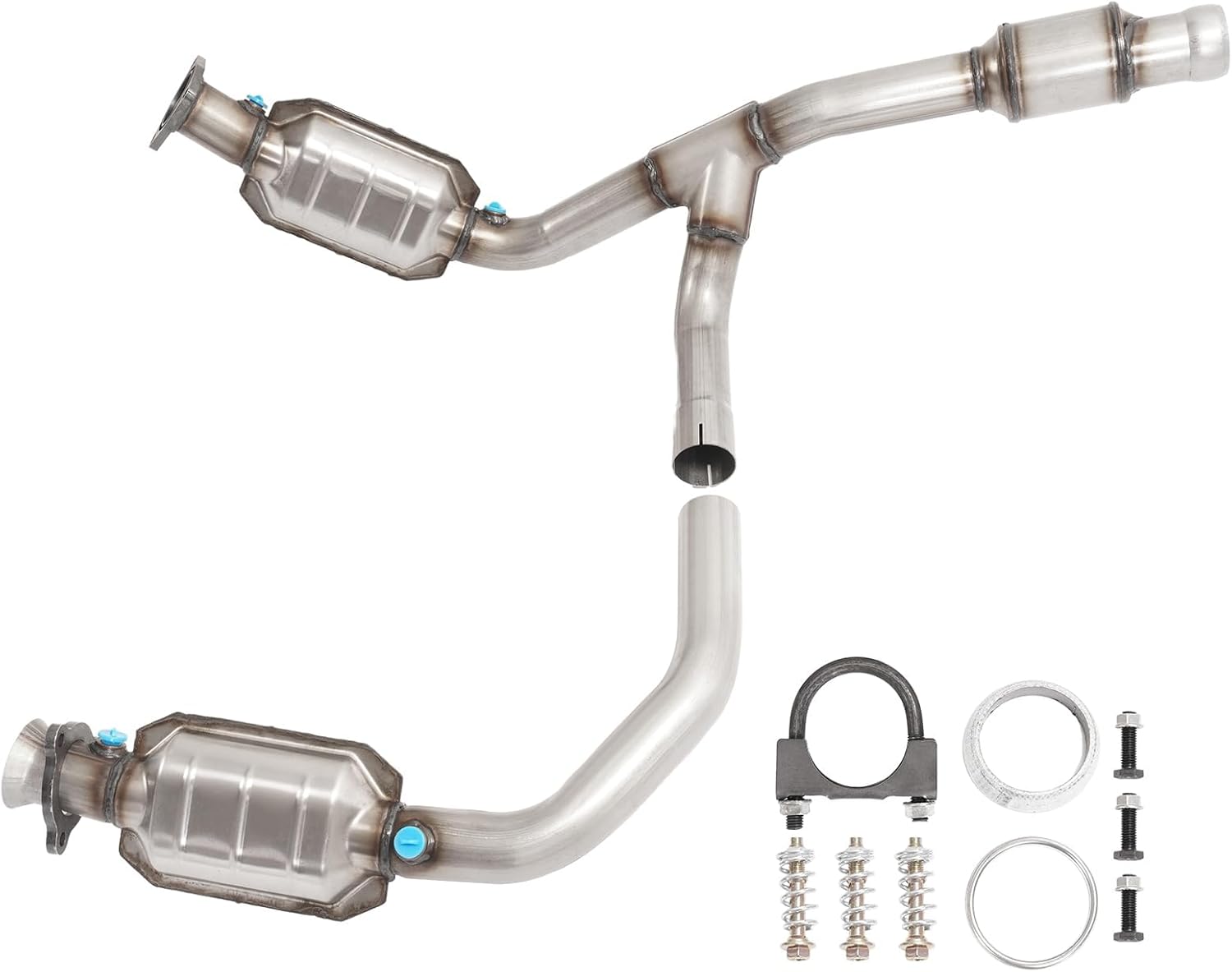
This BALOCEO RI-401 catalytic converter is a direct-replacement unit designed for 2014–2018 Silverado/Sierra 1500 trucks with 4.3L and 5.3L engines and similar GM full-size models listed in the fitment. It is built from 409 stainless steel and ships with basic installation accessories, so a mechanic can bolt it in as a like-for-like repair. In real-world use it aims to smooth exhaust flow and reduce backpressure, which can improve drivability and eliminate cold-start rattles some owners experience. The unit is a straightforward option for restoring a worn or rusted factory converter without modifying the exhaust system. Limitations seen in customer feedback include inconsistent longevity and the likelihood it will not clear a P0420 catalyst efficiency code if the upstream problem is unrelated to the physical converter, so it may not solve all check-engine light issues. Installation instructions are not included, so nonprofessionals should plan for shop fitment or have installation experience.
Best for: Buyers prioritizing a low-cost, direct-replacement fix to restore exhaust flow and reduce rattles on older Silverado/Sierra 1500 trucks who want a quick serviceable part rather than a factory-performance upgrade.
Less Ideal for: Drivers seeking a guaranteed fix for emission-related trouble codes or long-term performance parity with factory catalytic converters should consider higher-spec or dealer-grade options and professional diagnostics first.
- Constructed from 409 stainless steel for corrosion resistance
- Direct-replacement fit for specified 2014–2018 Silverado/Sierra 1500 applications
- Includes necessary installation accessories for straightforward swap
- Designed to reduce exhaust backpressure and smooth cold-start rattles
- Customer reports show inconsistent durability and some premature failures
- May not resolve a P0420 check-engine code if the issue is not the physical converter
Verdict: A budget-friendly, bolt-in catalytic converter for 2014–2018 Silverado/Sierra 1500s that restores exhaust flow and quiets rattles without major modifications.
5. SPEEDFusion Catalytic Converter Compatible with 2014–2018 Silverado/Sierra 1500 (50497, EPA Compliant)
| Vehicle fitment | 2014–2018 Silverado/Sierra 1500 4.3L V6/5.3L V8 |
|---|---|
| Reference number | 50497 |
| Material | Stainless steel body; ceramic substrate |
| Certification | U.S. EPA federal compliant |
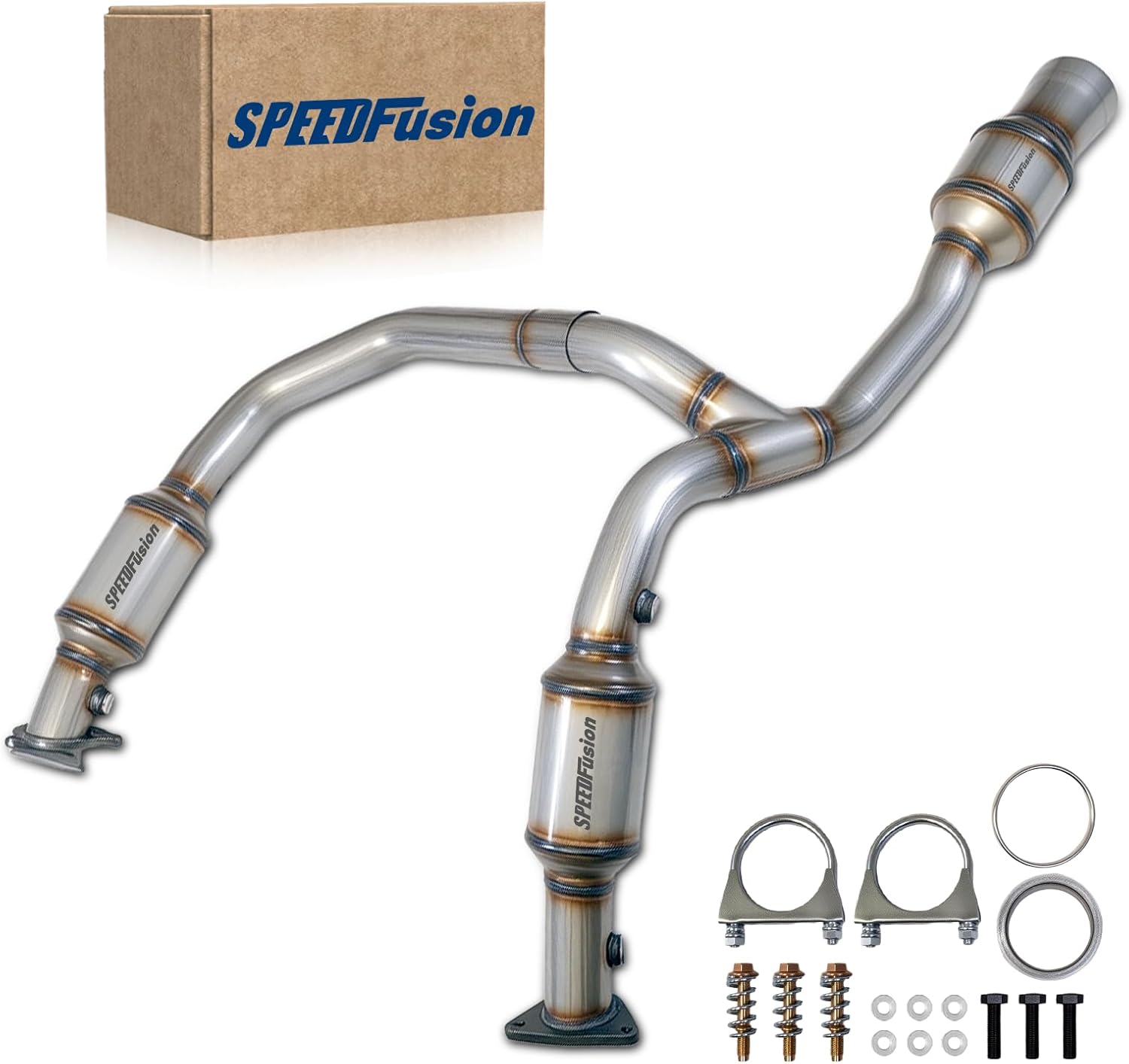
This SPEEDFusion catalytic converter is designed as a factory-style replacement for 2014–2018 Silverado and Sierra 1500 trucks with 4.3L V6 or 5.3L V8 engines and carries EPA federal certification. It uses a stainless steel shell and a ceramic monolith coated with platinum, rhodium and palladium to reduce emissions to required levels. Installation is typical for an underbody exhaust component: bolt to the exhaust manifold and the downstream pipe, with sealing and torquing recommended to avoid leaks; many buyers report a straightforward fit but a few needed minor modifications or welding. The unit is intended for federal-emission vehicles only and is not legal for sale or installation in certain states with separate regulations. Practically, it offers a cost-effective path to clear a check-engine lamp or replace a failed converter while retaining compliant emissions performance, though exact pipe outlet sizes should be confirmed before purchase to avoid post-delivery fit adjustments.
Best for: Buyers who prioritize a reliable, emissions-compliant replacement to restore proper catalytic function on 2014–2018 Silverado/Sierra 1500 trucks and want a unit built to factory-style specifications.
Less Ideal for: Drivers in states with stricter local emissions regulations or anyone unwilling to verify pipe outlet dimensions before ordering should consider other, explicitly state-approved options or confirm fitment with a shop.
- EPA federal certification for compliance on qualifying vehicles
- Stainless steel body and ceramic substrate with noble metal coating for effective catalytic conversion
- Built to match OEM specifications for designated Silverado/Sierra 1500 applications
- Generally straightforward to install using standard exhaust connections
- Not legal for sale or installation in states with separate emissions rules such as California
- Some buyers reported outlet pipe size or alignment differences requiring cutting or welding
Verdict: Choose this EPA-certified, factory-style replacement if you need a dependable catalytic converter to restore emissions control on a 2014–2018 Silverado or Sierra 1500.
6. DNA MOTORING Factory-Style Bolt-On Catalytic Converter (OEM-CONV-083)

| Compatible Models | 2014–2018 Silverado/Sierra 1500; 2015–2019 Suburban/Tahoe/Yukon XL |
|---|---|
| Engine Fitment | 4.3L and 5.3L |
| Installation Type | Bolt-On |
| Material Type | Stainless Steel |
| EPA Status | Federal/EPA compliant (not legal in certain states) |
This DNA MOTORING catalytic converter is a bolt-on, direct-fit replacement built from stainless steel with mandrel-bent tubing and supplied hardware for a mostly do-it-yourself swap. It installs where the factory unit sits and includes O2 bung locations so the original sensors can be re-used, which helps restore emissions function and clear check-engine codes in many installs. Practical benefits include factory-style fitment that reduces fabrication, a two-piece design that helps route the exhaust during installation, and materials that resist corrosion better than basic mild steel. Common real-world limitations are mixed quality control and occasional fitment or welding seam issues reported by buyers, which can require extra clamps, bolts, or minor fabrication and sometimes professional attention. The unit is not legal for sale or use in certain states, so check local regulations, and expect varying longevity compared with an original long-life converter.
Best for: Buyers seeking a budget-friendly, factory-style replacement to return emissions hardware to working order and willing to accept some risk of variable build quality in exchange for lower cost.
Less Ideal for: Those who need guaranteed long-term durability or full state-compliant parts for restricted states should consider higher-end or dealer-sourced replacements and professional installation.
- Direct-fit bolt-on design that matches factory mounting points to minimize fabrication
- Stainless steel body with mandrel-bent tubing for improved corrosion resistance and smoother flow
- Includes required gaskets and most hardware to simplify DIY installation
- O2 sensor bungs positioned for reuse of stock sensors to help with emissions diagnostics
- Reported variability in weld and build quality leading to occasional leaks or early failures
- Not legal for sale or use in some states, limiting options for compliant repairs
Verdict: A budget-friendly direct-fit replacement for getting 2014–2018 Sierra 1500 emissions hardware back in service when you prioritize cost and factory-style fitment.
Choosing the Right 2014-2018 GMC Sierra 1500 Catalytic Converter: Key Factors to Consider
Correct Fitment and Flange Alignment
Correct physical fitment is the single most important factor when replacing a catalytic converter on a 2014-2018 GMC Sierra 1500. The converter must match the vehicle's inlet and outlet diameters, flange type, and sensor port locations so oxygen sensors and mounting points align without modification. Poor alignment increases the chance of exhaust leaks, check engine lights, and premature component stress.
A converter designed for the Sierra 1500 will minimize exhaust work during installation, reduce labor time, and maintain factory exhaust routing. Consider whether the unit requires additional gaskets, adapters, or welding, and plan for how those needs affect both cost and installation complexity.
Emissions Performance and Substrate Efficiency
Emissions control is the converter's primary job, so look for units with a catalyst substrate engineered to reduce hydrocarbons, carbon monoxide, and nitrogen oxides at the temperatures your truck typically produces. Substrate cell density and washcoat formulation affect conversion efficiency, warm-up behavior, and long-term performance.
For a Sierra 1500 that sees frequent towing or heavy loads, substrate durability under high-temperature cycling matters more because thermal stress can degrade conversion efficiency. Choose a converter that balances rapid light-off with sustained catalytic activity across the vehicle's normal operating range.
Durability and Housing Construction
The converter housing protects the internal catalyst and resists rust and impact damage. Vehicles in regions with road salt or high humidity need housings with thicker steel, corrosion-resistant coatings, or aluminized finishes. Robust internal mounting and insulation also reduce rattle and catalyst breakage from vibration or road shock.
Consider the life expectancy of the housing and whether the unit uses reinforced end caps and quality welds. A more durable housing reduces the likelihood of leaks or internal failure in years of service, lowering the risk of repeat replacements.
Oxygen Sensor Compatibility and Port Placement
Modern Sierra 1500s rely on upstream and downstream oxygen sensors to manage fuel trim and monitor catalyst effectiveness. The converter must include correctly positioned sensor ports that match the truck's factory sensor spacing and thread size. Misplaced ports can alter sensor readings, prolong check engine lights, or necessitate sensor extenders.
Confirm whether the replacement includes welded-in bungs or requires reusing factory sensor assemblies. Proper sensor placement ensures accurate feedback to the engine control module and helps prevent drivability issues tied to incorrect air-fuel diagnostics.
Backpressure and Flow Characteristics
Catalytic converters introduce resistance to exhaust flow, and the right balance depends on your Sierra 1500's engine and typical use. Too much backpressure can reduce power and fuel economy, especially under load. Too little conversion volume can reduce emissions control efficiency.
Select a converter whose internal flow design maintains adequate exhaust velocity while providing sufficient catalyst surface area. Consider how towing, payload, and driving habits affect flow needs, and choose a design that matches those demands to preserve performance and emissions control.
Installation Practicality and Serviceability
Ease of installation affects both cost and the likelihood of a successful, leak-free replacement. Look for converters that match factory bolt patterns, include necessary gaskets or hardware, and provide clear instructions. Units that require cutting, welding, or custom adapters add complexity and may increase labor time.
Also weigh long-term serviceability factors such as the ability to replace downstream sensors without removing the entire assembly and whether mounting points permit straightforward access. A converter that simplifies future inspections and repairs reduces ownership hassle.
Why the 2014-2018 Sierra 1500 Needs the Right Converter
The 2014-2018 GMC Sierra 1500 shares common exhaust routing and sensor placement across its model years, so a correctly matched catalytic converter restores emissions control and prevents drivability issues like rough idle or limp mode. Problems with the converter often surface as a check engine light, failed emissions tests, or noticeable changes in throttle response under load.
- Direct-fit units minimize exhaust leaks by matching flanges and sensor ports
- Durable converters resist road salt and high-temperature cycles common in towing use
- Proper converter choice avoids unnecessary exhaust modifications
Common Symptoms of Catalytic Converter Problems
Recognizing failure signs helps determine whether replacement is necessary or if another part is at fault. Catalytic converter issues rarely occur in isolation and often accompany other exhaust or engine system symptoms.
- Check engine light catalytic converter codes such as P0420 indicate reduced efficiency
- Rattling noises under the truck suggest internal catalyst breakage
- Reduced acceleration or decreased fuel economy can indicate clogged or failing catalyst
- Rotten egg smell points to unprocessed fuel entering the converter
Assessing Fitment: What to Verify Before You Buy
Before ordering a replacement, confirm exact fitment details for the 2014-2018 Sierra 1500. Measure flange types, inlet/outlet diameters, overall length, and the location of oxygen sensor ports relative to mounting flanges. Verify whether your truck uses a single-piece or multi-section exhaust layout because that affects whether a front or mid-pipe style converter is required.
- Match sensor bung thread size and position to avoid adaptors
- Check if the unit requires new gaskets or bolts
- Confirm mounting bracket positions for ease of installation
Maintenance Tips to Extend Converter Life
Regular engine tune-ups and addressing misfires promptly reduce the risk of unburned fuel entering the converter and damaging the substrate. Keep the exhaust and underbody clean of corrosive residues, and inspect heat shielding and hangers periodically to prevent unnecessary stress on the converter housing.
A quick diagnostic check on the oxygen sensors and fuel trim can catch early signs of catalyst inefficiency, allowing repair before a full converter failure occurs.
- Repair ignition and fuel system faults immediately to avoid catalyst overheating
- Inspect hangers and shields to prevent physical damage
- Monitor sensor readings for gradual declines in conversion efficiency
Installation Considerations for DIYers and Shops
Some Sierra 1500 owners with moderate mechanical skills can handle direct-fit catalytic converter swaps using basic tools and a hoist or ramps. For California-equivalent emissions or specialized sensor placements, professional installation ensures correct torque on flanges and clean sensor connections. Weld-in or universal converters usually require shop welding and alignment to avoid leaks.
If you plan to replace downstream oxygen sensors during the job, verify the sensor types and thread sizes so you can source compatible replacements in advance.
- Use anti-seize on sensor threads to ease future removal
- Torque bolts to factory specs to prevent leaks and studs snapping
- Have replacement gaskets on hand to avoid delays during installation
Still looking for the perfect fit?
Select your GMC Sierra 1500 configuration to see the most relevant Catalytic Converters recommendations
How We Chose the Best 2014-2018 GMC Sierra 1500 Catalytic Converter
We applied a focused editorial process to narrow a broad field of catalytic converters down to the six options featured here. First, fitment accuracy for the 2014-2018 GMC Sierra 1500 chassis was mandatory; any unit that lacked direct compatibility or required extensive fabrication was excluded. We prioritized converters designed to meet or exceed emissions control for the vehicle's factory engine types and exhaust routing.Key evaluation criteria included: durability of catalyst substrate and housing against corrosion and heat, compliance with emissions standards and effective reduction of NOx/CO/HC, inlet/outlet flange and sensor port alignment for correct installation, and thermal and flow characteristics that balance backpressure with converter efficiency. We also considered real-world installation factors such as bolt locations, required gaskets or sensors, and typical mounting hardware.We excluded units that required major exhaust modification, lacked required oxygen sensor ports, or presented obvious fitment risks. The result is a list focused on practical, reliable replacements tailored to the Sierra 1500's factory exhaust layout, emphasizing long-term emissions control and straightforward installation.
Our full evaluation process is outlined in our review methodology.
FAQ
How do I know if the catalytic converter is causing my check engine light?
A diagnostic scan that returns codes related to catalyst efficiency, typically P0420 or similar, points to the converter as a likely cause. However, sensor faults, exhaust leaks, or engine misfires can produce similar codes, so confirm with live sensor data and visual inspection before replacing the converter.
Can I reuse my factory oxygen sensors with a replacement catalytic converter?
Often you can reuse factory oxygen sensors if the replacement has matching sensor bung locations and thread size. When bungs are welded in different positions or damaged, replacing or relocating sensors may be necessary to get accurate readings.
Will replacing the catalytic converter fix a rotten egg smell?
If the smell is caused by a failing converter that cannot process sulfur compounds effectively, replacement should resolve it. But similar odors can come from fuel system issues or contaminated fuel, so diagnose the fuel and ignition systems if the smell persists after installing a new converter.
Is a direct-fit converter always better than a universal unit for this Sierra 1500?
Direct-fit converters are usually preferable because they match flange geometry and sensor ports, reducing installation complexity and leak risk. Universal units can work but generally require cutting, welding, or adapters, which increases installation time and potential fitment errors.
How long does a catalytic converter typically last on a Sierra 1500?
Converter life depends on driving habits, exposure to contaminants, and engine health. With normal use and proper maintenance, many converters last many years, but repeated misfires, coolant leaks, or road salt exposure can shorten their lifespan by damaging the substrate or housing.
Are there symptoms that mimic converter failure but are caused by other parts?
Yes. Engine misfires, failing oxygen sensors, exhaust leaks, and fuel system problems can produce similar symptoms such as poor performance, check engine lights, or failed emissions tests. A thorough diagnostic that includes checking fuel trims and sensor data helps isolate the true cause.
Final Verdict
Prioritize correct fitment, sensor compatibility, and a converter design that balances flow with effective emissions reduction when replacing the catalytic converter on a 2014-2018 GMC Sierra 1500. Think about how you use the truck—towing, long highway runs, or stop-and-go driving—as that will influence the ideal substrate and housing durability.Balance installation practicality against long-term durability and emissions performance. Choosing a direct-fit unit with proper sensor ports and corrosion-resistant construction gives the best chance of restoring reliable performance and avoiding repeat repairs.
Explore More:
- Check out all GMC Sierra 1500 parts & accessories
- Explore Catalytic Converters Maintenance & Repair Guides
- Explore Exhaust & Emissions
- Browse all Auto Parts
