

Note: This article contains affiliate links. If you click on these links and make a purchase, I may earn a small commission at no extra cost to you. This helps support my research and content. Read my full affiliate disclosure here.
A clean, properly fitted air filter matters for a Ford F-150 EcoBoost because it controls airflow, protects the turbocharged engine from contaminants, and influences throttle response. Choosing the right Ford F-150 EcoBoost air filter affects everyday drivability, long-term engine health, and intake system maintenance intervals.This guide summarizes six shortlisted air filters selected for fitment and filtration performance on the Ford F-150 EcoBoost. We evaluate each option for filtration efficiency, airflow, and build quality, and explain how those attributes matter for typical F-150 use. Read on to see which filter characteristics match your priorities and driving conditions.
Looking for other parts? See all Ford F-150 parts & accessories.
Top Picks at a Glance
| Best Overall The best all-around choice for most situations | AEM DryFlow Performance Air Filter (28-20385) |  |
| Best Quality Built to a higher standard if you want something more solid | K&N High-Flow Lifetime Engine Air Filter (33-2385) |  |
| Best Value The sweet spot between price and what you get | EPAuto GP883 Engine Air Filter (FP-026-1) |  |
| Best Budget The cheapest option that still gets the job done reliably | Carory AF262 Engine Air Filter (replacement) |  |
| Highest Rated A top-rated pick with lots of positive feedback | Motorcraft FA-1883 Engine Air Filter |  |
| Best Seller A high-volume bestseller chosen again and again | K&N Advantage Plus Engine Air Filter (18,000 Mile) |  |
AEM DryFlow Performance Air Filter (28-20385)

| Product Grade | Performance Part |
|---|---|
| Fit Type | Vehicle Specific Fit |
| Included Components | 1 Air Filter |
| Manufacturer | AEM |
The AEM DryFlow 28-20385 replaces the factory disposable filter with a reusable synthetic element that aims to improve airflow and maintain strong filtration. It installs like a drop-in, is washable, and does not require oiling, so cleaning is straightforward and mess free. AEM claims the media captures up to 99 percent of harmful contaminants while offering less airflow restriction than a stock paper element, which can translate to slightly sharper throttle response and a modest fuel economy benefit in everyday driving. The filter is built as a vehicle-specific fit and is durable enough for repeated cleanings, making it a long-term replacement rather than a recurring consumable. Limitations to consider are that gains are typically modest on an otherwise stock EcoBoost and check-engine lights or the vehicle running adaptations can appear on some modern trucks until the ECU relearns the new airflow behavior. Buyers should also plan periodic maintenance for peak performance since filtration effectiveness depends on regular cleaning.
Best for: Buyers who want a low-maintenance, reusable replacement that improves engine breathing and reduces ongoing filter purchases while keeping maintenance simple.
Less Ideal for: Drivers seeking large performance increases without an intake tune or other supporting mods or those who prefer one-time disposable filters for minimal upkeep.
- Washable synthetic media that cleans easily and removes the need for disposable filters
- Oil-free design avoids messy re-oiling and reduces risk of over-oiling MAF sensors
- Vehicle-specific drop-in fit simplifies installation with no modifications
- Durable construction intended for long-term reuse
- High claimed filtration efficiency suitable for dusty conditions
- Performance gains are usually modest on stock engines without further tuning
- May trigger temporary ECU adjustments or fault codes on some modern trucks until the system relearns
Verdict: AEM DryFlow provides a durable, oil-free, washable upgrade that improves airflow and cuts recurring filter costs for F-150 EcoBoost drivers seeking balanced, long-term value.
K&N High-Flow Lifetime Engine Air Filter (33-2385)

| Model | High-Flow Engine Air Filter |
|---|---|
| Manufacturer Part Number | 33-2385 |
| Automotive Fit Type | Vehicle Specific Fit |
| Shape | Panel |
| Manufacturer | K&N Engineering |
This K&N High-Flow engine air filter replaces a disposable panel filter with a multilayer cotton gauze element that is pre-oiled and ready to install in the vehicle's factory air box. It is designed to boost airflow and can improve throttle response and low-end power for performance-focused driving. The filter is washable and reusable so you clean it instead of replacing it, with K&N recommending cleaning intervals under typical highway use roughly every 75,000 miles. Construction uses multiple layers of treated cotton media and a machined exterior that should hold up under normal service and repeated cleanings. Installation is simple and takes only minutes for anyone comfortable accessing the air box. Buyers should expect potential for a small increase in intake noise and must follow the cleaning/oiling procedure to avoid over-oiling that can affect sensors. This product is a long-term, eco-friendly alternative to disposable filters for drivers wanting modest performance gains without modifying the intake system.
Best for: Drivers who prioritize incremental performance and throttle response improvements and prefer a reusable, long-term filtration solution for their Ford F-150 EcoBoost.
Less Ideal for: Drivers who prefer a completely maintenance-free, disposable filter or who do not want any change in intake noise or servicing routine.
- Increases airflow and can improve horsepower and throttle response under real-world driving
- Washable and reusable design reduces waste and long-term replacement cost
- Pre-oiled, multilayer cotton gauze media engineered for high flow and particle trapping
- Easy drop-in installation into the factory air box for quick upgrade
- Requires periodic cleaning and correct re-oiling to maintain performance and avoid sensor issues
- May produce slightly more intake noise compared with stock paper filters
Verdict: Choose this K&N filter to get washable, higher-flow filtration that delivers noticeable throttle response and modest power gains while fitting the factory air box of the F-150 EcoBoost.
EPAuto GP883 Engine Air Filter (FP-026-1)
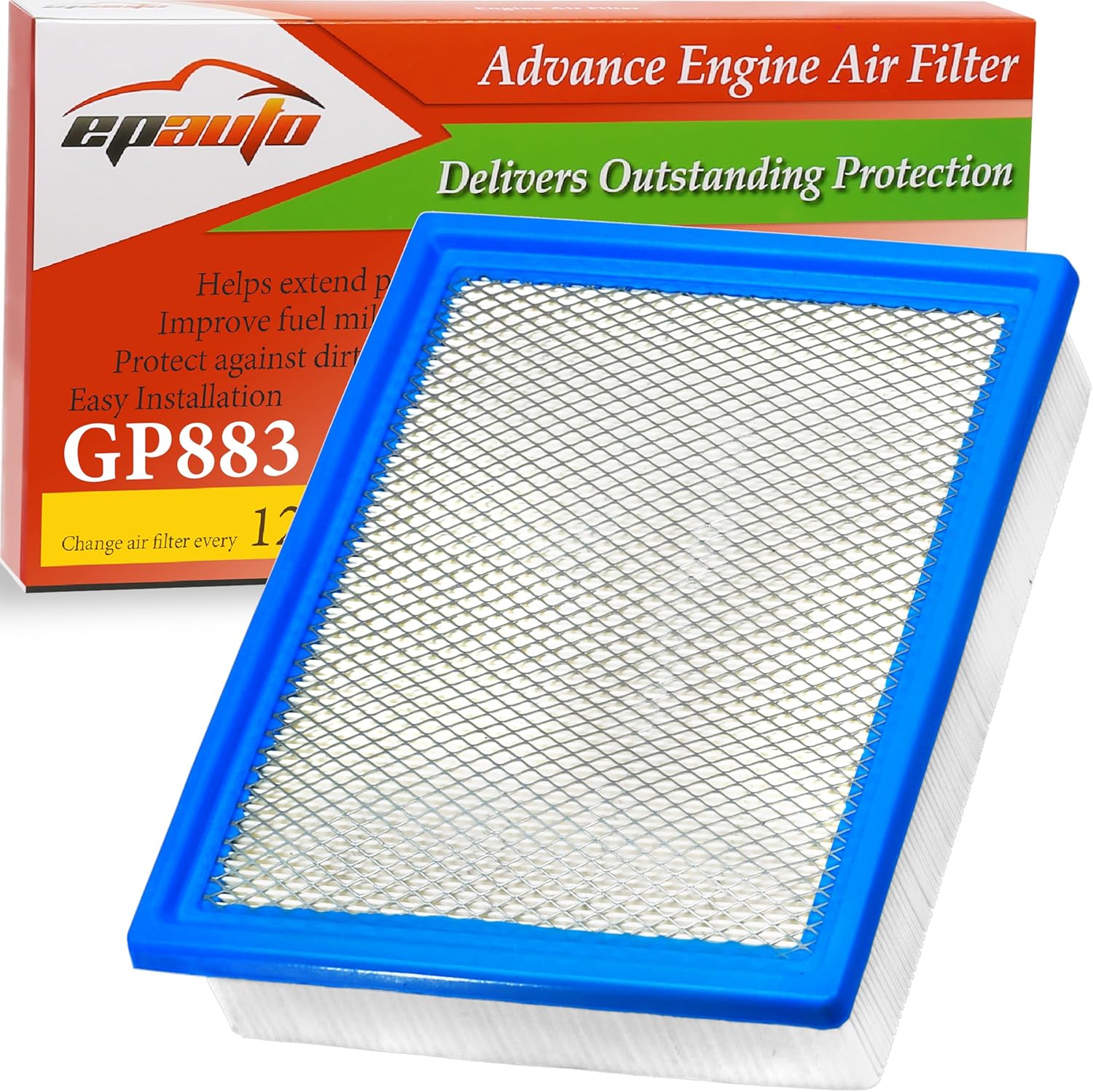
| Compatible Vehicles | Select Ford and Lincoln gasoline models (see fitment list) |
|---|---|
| Engine Type | Gasoline/Flex Fuel only |
| Part Numbers | Replaces CA10262, 7C3Z-9601-A, AL3Z-9601B |
The EPAuto GP883 is a factory-style panel engine air filter made to drop into the stock air box on compatible Ford and Lincoln gasoline models. It captures dust and road debris with a rigid pleated element and molded frame so the filter holds shape under airflow without tools or modification. Installation is simple: open the airbox, remove the old element and seat this filter in the housing. The design emphasizes OEM fit and filtration rather than performance gains, so drivers should expect consistent engine protection and stable intake airflow that helps throttle response and fuel economy under normal driving. It is not intended for diesel variants and fitment is limited to specific model years and engines, so verify compatibility before buying. For someone replacing a worn factory filter or maintaining regular service intervals, this offers solid value and straightforward fit; enthusiasts seeking maximum airflow or reused washable media should look elsewhere.
Best for: Buyers who prioritize straightforward, maintenance-focused replacements and want a low-cost, factory-quality filter that installs quickly and keeps the engine protected during normal driving.
Less Ideal for: Drivers chasing higher airflow or performance tuning, or those who prefer reusable or specialized high-flow filter media.
- Vehicle-specific fit for many Ford and Lincoln gasoline models for easy installation
- Rigid panel and cross bracing help the element keep shape under airflow
- OEM-grade filtration captures common dirt and debris to protect engine components
- Tool-free drop-in installation into the factory air box
- Not compatible with diesel engine variants so wrong engine selection will not fit
Verdict: A practical, drop-in replacement that delivers factory-style filtration and easy, tool-free installation for routine maintenance on compatible Ford and Lincoln gasoline models.
Carory AF262 Engine Air Filter (replacement)

| Model Number | AF262 |
|---|---|
| OEM Equivalent Part Number | AL3Z-9601B |
| Product Grade | Replacement Part |
| Fit Type | Vehicle Specific Fit |
The Carory AF262 is a straightforward replacement engine air filter that installs like the factory part and is intended to restore clean airflow to the intake. It is vehicle-specific, so you get a direct fit for compatible Ford and Lincoln applications without modification. Typical use is a routine service item during scheduled maintenance to protect the engine and maintain combustion efficiency. Customers report the seal, construction, and dimensions closely mirror factory filters and that installation takes only a minute with no tools required. The product description highlights steady airflow to support fuel combustion, which in practice helps avoid rough idling and can preserve performance between service intervals. Limitations: this is a standard paper-style replacement, not a high-flow performance or reusable element, so it will not increase horsepower or extend service intervals beyond normal recommendations. For routine maintenance on a turbocharged EcoBoost engine you should follow the manufacturer interval rather than expect performance gains.
Best for: Buyers looking to keep an EcoBoost truck running reliably on a tight budget and who prioritize correct fit and straightforward, no-fuss maintenance.
Less Ideal for: Drivers seeking increased airflow, reusable media, or tuning-focused parts should choose a performance aftermarket filter instead.
- Vehicle-specific design for direct fit and easy installation
- Construction and seal similar to factory filters for reliable filtration
- Restores steady intake airflow to support normal engine combustion
- Low-cost replacement option compared with dealer parts
- Not a high-flow or reusable performance filter
- No extended life or advanced filtration claims provided
Verdict: If you want an affordable, factory-fit replacement filter that restores proper airflow for routine maintenance on your EcoBoost F-150, the Carory AF262 is a sensible budget pick.
Motorcraft FA-1883 Engine Air Filter
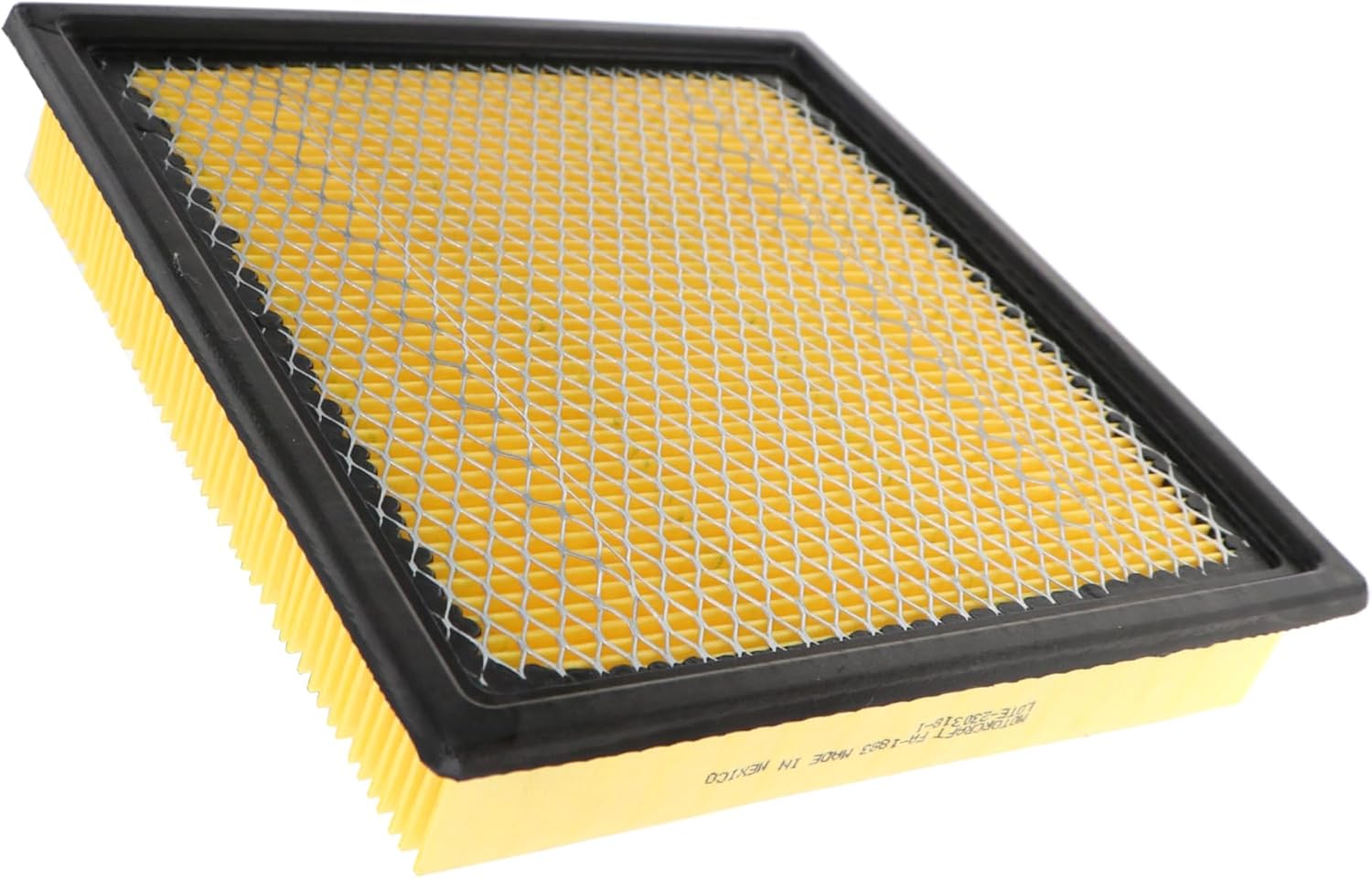
| Model | FA-1883 |
|---|---|
| OEM Part Number | 7C3Z-9601-A |
| Automotive Fit Type | Vehicle Specific Fit |
| Position | Front |
The Motorcraft FA-1883 is a direct factory-quality replacement engine air filter for a range of Ford and Lincoln trucks and SUVs, designed to drop into the stock airbox and protect the engine from dust and contaminants. It uses multi-fiber high-density media with a phenolic resin treatment and a surfactant coating to maintain pleat shape, resist oil and moisture, and deliver consistent filtration efficiency over the life of the filter. A polyurethane sealing flange helps ensure a tight, leak-proof fit across temperature swings so unfiltered air is kept out. Installation is straightforward and usually requires no special tools, making it a practical DIY maintenance item. Compared with some high-capacity aftermarket options this filter may load up sooner, so interval-conscious owners should check it more often under very dusty conditions. For buyers after dependable fit, tested construction, and factory-spec performance on supported Ford EcoBoost F-150 engines, this Motorcraft filter is a sensible choice.
Best for: Drivers who prioritize reliable, factory-quality replacements and want a drop-in air filter that preserves engine protection and fitment on supported Ford EcoBoost F-150 models.
Less Ideal for: People seeking maximum dust capacity for heavy off-road or extremely dusty work who prefer high-flow or high-capacity aftermarket performance filters.
- Factory-quality design and fit tailored for specific Ford and Lincoln applications
- High-density multi-fiber media with resin treatment preserves pleat shape and filtering efficiency
- Polyurethane seal provides a tight, leak-resistant fit across temperature extremes
- Resistant to oil and moisture due to surfactant coating
- Lower dirt-holding capacity than some high-capacity aftermarket filters, so may require more frequent checks in dusty use
Verdict: Choose the Motorcraft FA-1883 when you want a dependable factory-spec air filter that guarantees fit and consistent engine protection for supported F-150 EcoBoost applications.
K&N Advantage Plus Engine Air Filter (18,000 Mile)

| Brand | K&N |
|---|---|
| Model | KNA-2385 |
| Service life | 18,000 miles |
| Filtration efficiency | Up to 99% |
The K&N Advantage Plus is a direct-replacement engine air filter built for longer service intervals than standard disposable filters. It installs in the factory air box and uses a premium synthetic or cellulose blend media designed to meet or exceed factory-quality filtration while lasting up to 18,000 miles under normal highway driving. For everyday use on an F-150 EcoBoost this means fewer filter changes and consistent engine protection—K&N states up to 99% filtration efficiency depending on application. The filter is manufactured to fit directly without modification and customers report straightforward installation and good fitment. Expect reliable construction and a product positioned for drivers who prefer lower-maintenance maintenance items. Limitations are that the life rating assumes normal driving conditions and periodic inspection; heavy off-road or dusty use will require earlier replacement, and this product does not change vehicle emissions or require special tuning.
Best for: Drivers who prioritize low maintenance and reliable factory-fit filtration for routine driving and want fewer scheduled air filter replacements.
Less Ideal for: Drivers who frequently operate in heavy dust, off-road conditions, or extreme environments where filters need much more frequent replacement or specialized protection.
- Long 18,000 mile service interval reduces frequency of replacements
- Premium filter media advertised to provide up to 99% engine protection
- Direct-fit design installs in the factory air box with no modification
- Durable construction suited to repeated handling and routine service
- Lifespan and performance depend on driving conditions so dirty or off-road use needs earlier changes
Verdict: Choose this filter if you want a factory-fit, longer-life replacement that cuts how often you change the air filter on an F-150 EcoBoost.
Choosing the Right Ford F-150 EcoBoost Air Filter: Key Factors to Consider
Filtration Efficiency
Filtration efficiency determines how well the air filter captures harmful particles before they reach the turbocharger and engine internals. For a turbocharged F-150 EcoBoost, fine particles can accelerate wear on compressor blades and contaminate intake valves, so media that balances particle capture with breathability is important.
Higher-efficiency media often traps more submicron dust but can increase intake restriction if not well engineered. Consider filters that specify particle capture rates or use pleated, multi-layer media designed to maximize usable surface area. Effective filtration reduces maintenance downstream and preserves engine performance over time.
Airflow and Engine Response
Airflow characteristics affect throttle response, turbo spooling, and power delivery in the EcoBoost engine. A highly restrictive filter can slow boost build and dull throttle feel, while an overly porous media risks letting contaminants pass through.
Look for filters engineered to minimize pressure drop across the intake at typical operating flows for the F-150 EcoBoost. Vendors that provide airflow curves or emphasize low restriction media help you balance immediate performance with long-term protection. For drivers who tow or frequently haul loads, preserving turbo responsiveness by choosing a low-restriction, high-surface-area filter is especially valuable.
Fitment and Seal Integrity
Correct fit and a reliable seal are essential to prevent unfiltered air from bypassing the media. The Ford F-150 EcoBoost airbox has specific flange dimensions and intake routing; a filter that does not match those contours can allow dirt to enter at the edges.
Assess whether the filter uses a molded rubber flange, an integrated gasket, or a keyed design to lock into the airbox. A tight, resilient seal prevents leaks even under vibration and thermal cycling. Installation simplicity also matters because improper seating during a routine engine air filter replacement is a common source of failure.
Media Type and Longevity
Filter media choices include paper, synthetic blends, and oiled cotton gauze, each with tradeoffs in lifespan, maintenance, and filtration properties. Paper elements are typically disposable and offer consistent performance until replaced, while synthetic or oiled media can be serviceable and potentially last longer with proper cleaning.
For the EcoBoost, consider media that resists moisture and maintains shape under boost and temperature changes. Maintenance intervals differ by media type, so choose a material that suits how often you are willing to inspect or service the filter. Durability of the media impacts both real-world lifespan and long-term value.
Environmental and Driving Conditions
Where and how you drive a Ford F-150 EcoBoost affects which air filter attributes you should prioritize. Regular highway driving in clean air favors filters optimized for airflow and longevity, while dusty or off-road conditions require higher-efficiency media and tighter seals to prevent abrasive particles from entering the intake.
Drivers in wet climates should also favor media and frames that resist moisture absorption and retain filtration properties when damp. Consider seasonal and regional factors when deciding between serviceable versus disposable filters and when planning engine air filter replacement intervals.
Maintenance and Serviceability
How easy the filter is to access, remove, and reinstall affects whether it will be serviced at recommended intervals. The Ford F-150 EcoBoost airbox is designed for straightforward service, so filters that align with that accessibility reduce the chance of improper installation.
Serviceable media require cleaning and re-oiling procedures that, if done incorrectly, can reduce filtration performance or harm sensors. Disposable options remove that variable but increase waste. Consider whether you prefer a low-effort replacement schedule or a reusable element you are comfortable maintaining.
When To Replace Your Engine Air Filter
Replacement frequency depends on driving conditions and the filter media. Under normal highway and city driving, many filters can go longer between changes, but heavy dust, towing, or frequent off-road use accelerates clogging and necessitates earlier replacement.
As a practical guideline for the Ford F-150 EcoBoost, visually inspect the air filter during routine oil changes and replace it if the pleats are visibly loaded with debris, compressed, or if airflow seems impeded. A clogged filter can reduce turbo efficiency and increase intake temperatures.
- Inspect the filter every 12 months or 12,000 miles under normal conditions.
- In dusty environments check every 6 months or 6,000 miles.
- Replace sooner if you notice reduced throttle response, loss of fuel efficiency, or visible contamination.
Installation Tips for Proper Fitment
Ensure the airbox mating surfaces are clean before seating the new filter to maintain an effective seal. Remove any debris from the housing and check the flange for cracks or deformities that could allow bypass.
When installing, press evenly around the perimeter so the gasket seats uniformly. Avoid forcing the filter into place at an angle, and confirm the intake snorkel clips or bolts align correctly before reassembly.
- Use manufacturer torque specs for any fasteners securing the airbox.
- Double-check that clamps or latches are fully engaged after installation.
- If a filter requires a reusable clamp or retainer, ensure it is tensioned but not over-tightened to avoid distortion.
Effect of Air Filters on Fuel Economy and Emissions
A properly functioning air filter supports efficient combustion by supplying clean, adequately metered air to the intake. Excessive restriction can cause the engine to run richer under load, which may marginally affect fuel economy in a turbocharged pickup.
While the filter alone does not directly alter certified emissions, a clogged or damaged element can lead to compensating fuel trims and reduced catalytic converter efficiency over time. Keeping the filter in good condition helps maintain intended engine calibration and emission control performance.
- Low restriction, high-surface-area filters help preserve turbo responsiveness and fuel efficiency.
- Avoid filters that allow bypass or shedding of fibers into the intake system.
- Regular inspection prevents subtle efficiency losses that accumulate with a neglected intake.
Serviceable Vs Disposable Filters: Pros and Cons
Serviceable filters can be cleaned and reused, lowering waste and, over time, cost. They often use durable frames and media designed to withstand repeated cleaning cycles. However, cleaning and re-oiling require care to avoid altering filtration properties or contaminating the intake with excess oil.
Disposable paper or non-oiled synthetics remove maintenance steps and reduce the risk of user error, but they need replacement at regular intervals. For many Ford F-150 EcoBoost owners, the choice comes down to willingness to perform maintenance and the specific driving environment.
- Choose serviceable filters if you are comfortable with cleaning procedures and want reduced long-term purchases.
- Choose disposable filters if you prefer set-and-forget maintenance and consistent, predictable service intervals.
- Consider availability of replacement elements and ease of disposal in your decision.
Checking Filter Size and Compatibility
Confirming the correct air filter dimensions and orientation is essential; incorrect size or shape will compromise fit and sealing. The Ford F-150 EcoBoost airbox accepts specific element dimensions and a keyed orientation, so always verify part references against your truck's configuration.
If using an alternative element or a performance-oriented design, ensure the overall height and flange interface match the factory recess. Mismatched elements can fold under boost or leave gaps where unfiltered air can enter.
- Measure the old filter if unsure about published dimensions before purchasing a replacement.
- Check the filter's stated vehicle fitment for the EcoBoost configuration specifically.
- Avoid adapting filters with makeshift seals or shims, as they can fail under vibration and heat.
Still looking for the perfect fit?
Select your Ford F-150 configuration to see the most relevant Air Filters recommendations
How We Chose the Best Ford F-150 EcoBoost Air Filter
We narrowed the field by focusing on parts that meet strict fitment and performance expectations for the Ford F-150 EcoBoost. Primary evaluation criteria included filtration efficiency under dust and road grime, airflow characteristics important for turbocharged engines, and construction quality such as media type and frame rigidity. We also considered serviceability factors like ease of installation and access to the factory airbox, plus durability factors including moisture resistance and retention of shape under boost.Additional filters were evaluated for compatibility with stock intake geometry and common EcoBoost intake routing to avoid fitment issues. We excluded products that did not list clear vehicle compatibility, those lacking repeated positive fitment reports for the EcoBoost configuration, or filters with unclear media specifications. The shortlist balances efficient particle capture with low restriction to support turbo response and fuel efficiency, while favoring filters that maintain consistent sealing at the airbox flange.
Our full evaluation process is outlined in our review methodology.
FAQ
How often should I change the engine air filter on a Ford F-150 EcoBoost?
It depends on driving conditions. Under normal driving inspect every 12 months or 12,000 miles; in dusty or off-road conditions check every 6 months or 6,000 miles and replace sooner if noticeably dirty.
Can I use a reusable serviceable filter in my F-150 EcoBoost?
Yes, reusable filters are an option if properly maintained. They offer longer service life but require correct cleaning and, if applicable, re-oiling to retain filtration performance without contaminating sensors.
Will a high-flow air filter improve turbo response on the EcoBoost?
A lower-restriction filter can help maintain turbo response by reducing intake pressure drop, especially under load. The benefit depends on the filter's actual airflow characteristics and the truck's typical operating demands.
Does changing the air filter affect fuel economy in the F-150 EcoBoost?
A clean filter helps the engine breathe efficiently, which can prevent small losses in fuel economy caused by excessive intake restriction. The effect is usually modest unless the existing filter is heavily clogged.
How do I know if the air filter is installed correctly?
After installation, check that the filter gasket seats evenly around the airbox flange, all clips or fasteners are engaged, and there are no visible gaps. Run the engine briefly and listen for unusual intake noises that could indicate leaks.
Should I be concerned about moisture when choosing an air filter?
Moisture can affect some media types; choose media and frame constructions that resist water absorption if you frequently drive in wet conditions. Avoid filters that sag or deform when damp to preserve seal integrity and filtration.
Final Verdict
For the Ford F-150 EcoBoost, prioritize a balance of effective particle capture and low intake restriction to protect the turbocharged engine while preserving throttle response. Fitment and seal integrity are non-negotiable because even small bypasses let abrasive particles reach sensitive components. Choose media and a service plan that match your driving environment and maintenance preferences. By focusing on filtration efficiency, airflow characteristics, and proper installation you can select an air filter that supports reliability and performance for your EcoBoost truck.
Explore More:
- Check out all Ford F-150 parts & accessories
- Explore Air Filters Maintenance & Repair Guides
- Explore Engine
- Browse all Auto Parts
