

Note: This article contains affiliate links. If you click on these links and make a purchase, I may earn a small commission at no extra cost to you. This helps support my research and content. Read my full affiliate disclosure here.
If you own a 2009-2014 Ford F-150 you already know braking performance matters for towing, hauling, and everyday driving. Picking the right brake pads affects pedal feel, stopping distance, noise, and how often you need to service the system. This guide focuses on top options that fit the 2009-2014 F-150 range and explains the tradeoffs between longevity, noise control, and heat resistance. The shortlist includes the seven best-matched pads for common F-150 use cases, and we evaluate them across braking performance and long-term durability. Read on to understand what to prioritize for your driving style and intended loads before you pick pads.
Looking for other parts? See all Ford F-150 parts & accessories.
Top Picks at a Glance
| Best Overall The best all-around choice for most situations | Bendix Priority1 CFM1012 Semi‑Metallic Rear Brake Pads |  |
| Best Quality Built to a higher standard if you want something more solid | PowerStop Z36 Truck & Tow Front Carbon-Fiber Ceramic Brake Pads with Hardware |  |
| Best Value The sweet spot between price and what you get | cciyu Front & Rear Ceramic Brake Pad Kit (8 pcs) |  |
| Best Budget The cheapest option that still gets the job done reliably | Auto Shack Rear Ceramic Brake Pad Set (Rear) for Ford F-150 and Lincoln Mark LT |  |
| Highest Rated A top-rated pick with lots of positive feedback | Bendix Premium SBC1770 Ceramic Rear Brake Pads |  |
| Most Popular A crowd favorite that many people choose with confidence | Bendix Priority1 CFC1770 Ceramic Front Brake Pads |  |
| Best Seller A high-volume bestseller chosen again and again | PowerStop Z36 Truck & Tow Rear Carbon-Fiber Ceramic Brake Pads (fits 2012-20 Ford F-150) |  |
Bendix Priority1 CFM1012 Semi‑Metallic Rear Brake Pads

| Auto Part Position | Rear |
|---|---|
| Compatible with Vehicle Type | CAR, SUV, Truck |
| Material Type | Semi‑Metallic |
| Included Components | Brake pad set with installation hardware |
| Model Number | CFM1012 |
The Bendix Priority1 CFM1012 rear brake pad kit is a vehicle‑specific, semi‑metallic replacement designed to deliver dependable stopping power for Ford F-150 model years listed. It installs like a factory‑quality pad and ships with the necessary hardware and brake lube, so a DIY install or quick shop swap is straightforward. The semi‑metallic compound gives strong bite and high temperature resistance, which helps reduce fade under heavier braking and in towing or highway use. Bendix includes shims, slots, and chamfers intended to minimize noise and vibration, and many users report quiet operation and low dust. These pads aim for consistent, everyday braking performance rather than performance racing characteristics, so they balance durability and pedal feel for daily driving. One limitation is they are a specific fitment so you must confirm correct part for your axle and year; also semi‑metallic pads can produce a bit more rotor wear than ceramic options for some drivers.
Best for: Buyers who want a reliable, factory‑matching rear pad for regular driving and occasional heavier use like highway trips or light towing and prioritize consistent braking and quiet operation.
Less Ideal for: Drivers seeking ultra‑low dust and the softest possible rotor wear who prefer ceramic compounds or those needing track/performance‑oriented pads should consider alternatives.
- Vehicle‑specific fit with included installation hardware for straightforward replacement
- Semi‑metallic material offers strong stopping power and good high‑temperature resistance
- Shims, slots, and chamfers reduce noise and help deliver quiet, vibration‑free braking
- Includes brake lube and hardware so fewer additional parts are needed for installation
- Semi‑metallic compound may cause slightly higher rotor wear compared with ceramic pads
Verdict: A factory‑fitting, semi‑metallic rear pad set that delivers quiet, consistent stopping for everyday and heavier highway use on the specified F-150 models.
PowerStop Z36 Truck & Tow Front Carbon-Fiber Ceramic Brake Pads with Hardware

| Auto Part Position | Front |
|---|---|
| Material | Stainless Steel |
| Specification Met | OEM |
| Exterior | Carbon-Fiber Ceramic |
| Automotive Fit Type | Vehicle Specific Fit |
These PowerStop Z36 Truck & Tow front pads are built for heavier-duty duty on F-150s and similar trucks: the carbon-fiber ceramic compound focuses on stronger stopping power and reduced dust compared with standard ceramic pads. They arrive as an application-specific kit with stainless-steel shims, powder-coated backing plates and the required hardware to simplify a front pad replacement. In normal driving they deliver quieter, near-noise-free braking and solid pedal feel; several owners report smooth break-in and reliable performance while towing or carrying loads. The stainless shims and coated backing plate help with heat dissipation and corrosion resistance when you do heavier work or live in harsher climates. Expect slightly firmer feel under hard, repeated stops than a comfort-oriented pad and know that ultimate rotor life depends on rotor condition and driving style; some users have noted pad life can outlast rotors in heavy use. These are a strong choice if you want better stopping and lower dust without moving to track-oriented compounds, but confirm exact fit for your F-150 year and brake configuration before ordering.
Best for: Buyers who want stronger, confidence-inspiring braking for hauling, towing, or performance-minded daily driving on a 2009–2014 F-150 and prioritize stopping power and low dust over ultra-soft pedal feel.
Less Ideal for: Drivers whose priority is the softest possible pedal or maximum rotor longevity under light commuting should consider more comfort-focused or OEM-style replacement pads instead.
- Carbon-fiber ceramic compound increases stopping power over stock pads.
- Low-dust formula keeps wheels cleaner during everyday and towing use.
- Includes stainless-steel shims and installation hardware for a straightforward swap.
- Powder-coated backing plate resists rust and improves longevity.
- Vehicle-specific fitment designed for front brakes of supported Ford trucks and SUVs.
- Firmer pedal feel under repeated hard stops compared with comfort-focused pads.
- May accelerate rotor wear if used with worn or thin rotors during heavy towing.
Verdict: Choose these Z36 pads for noticeably stronger, low-dust braking on a 2009–2014 Ford F-150 when towing or carrying heavier loads.
cciyu Front & Rear Ceramic Brake Pad Kit (8 pcs)

| Material Type | Ceramic |
|---|---|
| Unit Count | 8.0 Count |
| Auto Part Position | Front |
| Specification Met | OEM |
This cciyu kit supplies four front and four rear ceramic brake pads intended as a direct replacement for compatible Ford F-150 applications. The pads use ceramic friction material with chamfers and slots to reduce noise, improve initial bite, and extend pad life compared with basic semi-metallic compounds. Typical use is a do-it-yourself or shop replacement when the original pads are worn; the kit comes with the quantity needed for a full axle set and is sized to match factory mounting points for the listed fitment. Buyers can expect quieter stopping, modest dust reduction, and predictable pedal feel in everyday driving and light towing. Important limitations are that these are ceramic street pads, so they are not formulated for heavy track use or repeated high-temperature braking, and fitment must be confirmed against the vehicle-specific listing before purchase. Installation may require basic brake tools and standard bedding procedure to reach peak performance.
Best for: Buyers who want a cost effective, quieter replacement that restores everyday stopping performance and reduces dust while keeping installation simple. Ideal for owners who prefer a balance of comfort, longevity, and value over specialized performance braking.
Less Ideal for: Drivers who frequently do track days, heavy towing, or require pads designed for sustained high heat should choose a performance or heavy‑duty friction compound instead.
- Ceramic compound for quieter braking and reduced dust compared with many semi-metallic pads
- Slotted and chamfered design to improve initial bite and reduce squeal
- Includes eight pads so you can replace an axle set without buying multiple SKUs
- Packaged as a brake kit intended for direct replacement fit to the listed vehicles
- Rated to meet OEM specification according to the seller
- Not intended for high‑temperature track or heavy performance use
- Listing requires careful fitment check to confirm compatibility with the exact year and configuration
Verdict: A practical, quieter ceramic pad kit that restores factory-style braking and lowers dust for everyday F-150 use.
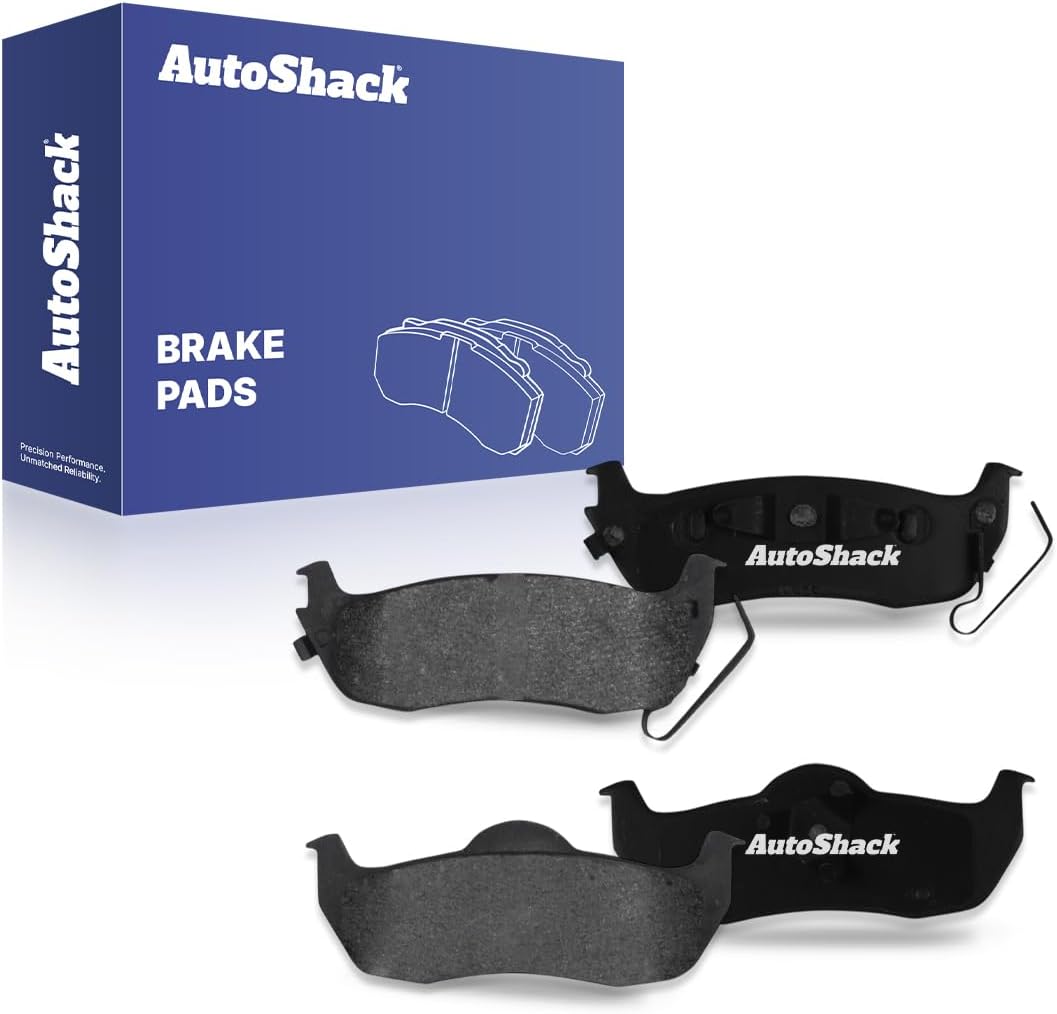
Auto Shack Rear Ceramic Brake Pad Set (Rear) for Ford F-150 and Lincoln Mark LT
| Fitment | Ford F-150 2004-2011, Lincoln Mark LT 2006-2008 |
|---|---|
| Position | Rear |
| Material Type | Ceramic |
| Unit Count | 4.0 Count |
| Manufacturer Part Number | SCD1012 |
These Auto Shack rear ceramic pads are a budget-friendly, vehicle-specific replacement intended for Ford F-150s (2004-2011) and Lincoln Mark LT (2006-2008). They are sold as a rear set of four pads and are engineered to prioritize quiet operation and low brake dust, which helps keep wheels cleaner between services. The ceramic material also aims to reduce rotor wear compared with more aggressive compounds, making them a good choice if you want dependable daily-street braking without harsh noise. Installation is the same as a standard rear pad swap and they ship without mounting clips, so expect to reuse factory hardware or purchase clips separately if yours are worn. Limitations include a focus on everyday street use rather than heavy towing or performance driving, and the set carries a short six-month part-only warranty. For owners replacing rear pads on an F-150 who value low dust and quiet stopping on a tight budget, these pads deliver solid value; those needing heavy-load stopping or extended warranty coverage should consider other options.
Best for: Buyers who need an affordable, quiet rear pad replacement for everyday street driving and prefer low brake dust and gentle rotor wear over high-performance stopping.
Less Ideal for: Not suitable for drivers who frequently tow heavy loads, do a lot of highway braking, or need performance-oriented compound or extended warranty coverage.
- Vehicle-specific fit for compatible Ford F-150 and Lincoln Mark LT models
- Ceramic compound provides quiet braking and low dust
- Designed to be rotor-friendly for longer rotor life
- Includes a full rear set of four pads for a complete axle replacement
- Does not include mounting clips so hardware replacement may be needed separately
- Six-month warranty covers only the part and not labor or related costs
Verdict: A cost-conscious rear ceramic pad set that delivers quiet, low-dust stopping and protects rotors for everyday F-150 street use.
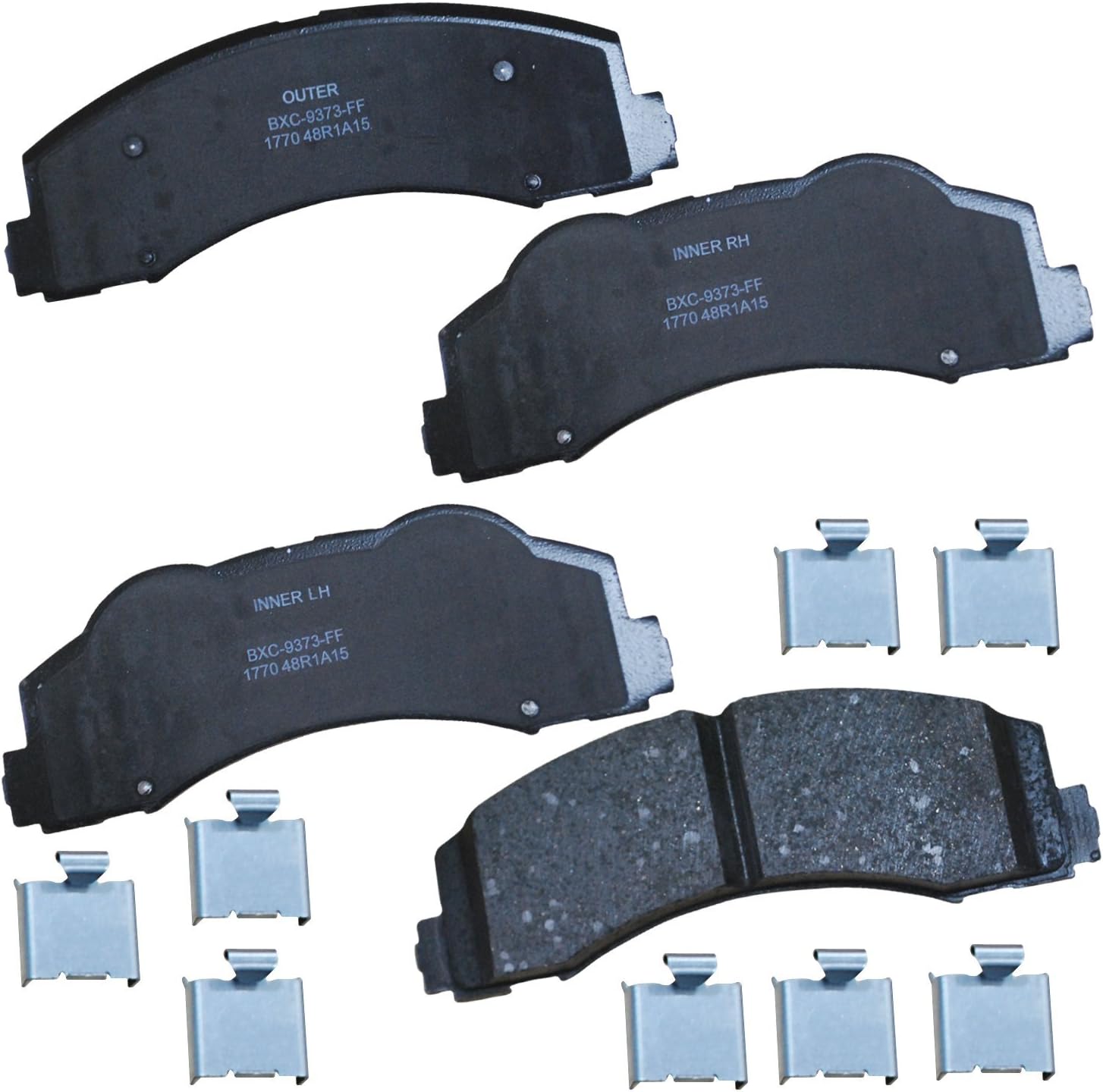
Bendix Premium SBC1770 Ceramic Rear Brake Pads
| Material | Ceramic |
|---|---|
| Auto Part Position | Rear |
| Specification Met | OEM |
| Automotive Fit Type | Vehicle Specific Fit |
The Bendix Premium SBC1770 are ceramic rear replacement brake pads built to match factory fit, form, and function for select Ford trucks and SUVs from the listed years. They are intended for everyday driving and commuting where smooth, quiet braking and predictable pedal feel matter. The ceramic material resists wear and corrosion and is formulated to reduce brake fade, which helps maintain consistent stopping power over repeated braking events. Buyers will appreciate that the kit is vehicle specific so installation is straightforward and many users report a quiet, solid fit after bedding in. Some kits include hardware while others may require reusing existing clips and applying brake grease during installation. These pads are not a performance racing compound so they prioritize comfort, low dust, and longevity over extreme fade resistance under track use. If you want a reliable, factory-style replacement that restores everyday braking feel on the covered F-150 model years, these pads deliver a durable, quiet solution with sensible real-world performance.
Best for: Buyers who put reliability and consistent, quiet daily braking above aggressive or track-oriented performance and want a direct factory-quality replacement for covered Ford trucks.
Less Ideal for: Drivers who need heavy-duty, high-temperature brake compounds for frequent towing, hauling, or track use should consider heavy-duty or performance-specific pads instead.
- Designed to match factory fit, simplifying installation and alignment
- Ceramic formulation reduces brake dust and runs quietly after bedding
- Resistant to wear and corrosion for longer service life
- Engineered to minimize brake fade for consistent everyday stopping
- Not intended for heavy track or towing use where high-temperature performance is required
Verdict: A dependable, factory-style ceramic rear pad that restores smooth, quiet, and consistent daily braking for the specified Ford F-150 model years.
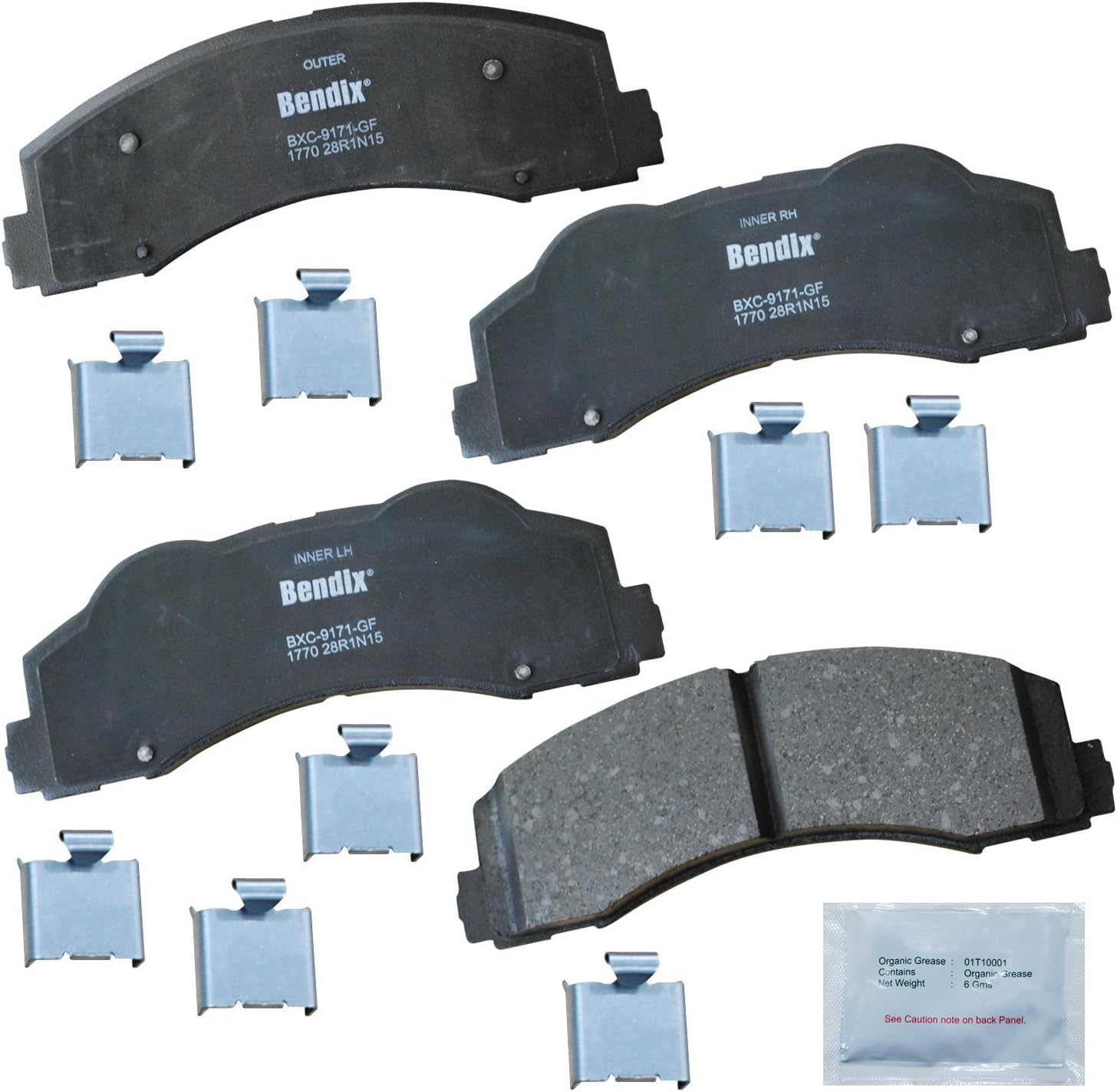
Bendix Priority1 CFC1770 Ceramic Front Brake Pads
| Material | Ceramic |
|---|---|
| Auto Part Position | Front |
| Specification Met | OEM |
| Automotive Fit Type | Vehicle Specific Fit |
These Bendix Priority1 ceramic front pads are a vehicle-specific replacement designed to match factory fit, form, and function for applicable Ford trucks and SUVs. They use advanced friction materials and include shims, slots, and chamfers to reduce noise and deliver strong initial bite and repeatable stopping under daily driving and heavier loads. Typical use is as a direct front-pad replacement during routine brake service; the set ships with installation hardware and is sized to the listed applications for a straightforward swap. Practical benefits seen in owner reports include quiet operation, good fitment, and improved braking feel compared with worn originals. Because they are ceramic and copper-free, they tend to produce less brake dust than older metallic formulas. Limitations to consider are that longevity will depend on driving style and that a few users noted occasional squeak and mismatched clips in the kit, so keep your original retaining clips handy when installing.
Best for: Buyers who prioritize proven, low-risk replacements backed by many positive user experiences and want a near-factory braking feel for routine driving and towing on compatible Ford trucks.
Less Ideal for: Drivers seeking extreme performance or track-oriented pads should choose a performance compound designed for high-temperature racing conditions.
- Designed to factory specifications for fit and function
- Ceramic friction material offers strong initial bite and consistent stopping
- Shims, slots, and chamfers reduce noise and vibration
- Copper-free formulation reduces visible brake dust
- Includes installation hardware for a simpler replacement process
- Some buyers reported occasional squeak under certain conditions
- A few reports of supplied clips not matching the vehicle requiring reuse of original clips
Verdict: A reliable, factory-matched ceramic front pad that delivers quiet, consistent stopping and low dust for compatible Ford trucks.
PowerStop Z36 Truck & Tow Rear Carbon-Fiber Ceramic Brake Pads (fits 2012-20 Ford F-150)

| Auto Part Position | Rear |
|---|---|
| Compatible with Vehicle Type | Truck |
| Material Type | Ceramic |
| Included Components | Brake pads and installation hardware |
| Manufacturer Warranty Description | 12-Month / 12,000-Mile Limited Warranty |
The PowerStop Z36 Truck & Tow rear brake pads are a direct-fit replacement designed for Ford F-150 rear braking systems from 2012 through 2020 (manual parking brake fitment noted for 2015–20). These carbon-fiber reinforced ceramic pads are aimed at drivers who tow or haul and need stronger, fade-resistant stopping power than standard factory replacements. The kit includes stainless-steel installation hardware for a straightforward bolt-on install and stainless shims to reduce noise and vibration. In real-world use the pads deliver more consistent pedal feel under load and produce much less dust than many semi-metallic options, while staying quiet during normal driving. They are built to resist fade on long descents and during towing, but riders should expect ceramic compounds to be less aggressive than race-oriented materials under extreme high-heat abuse. Fitment is vehicle specific so installation is typically quick for a DIYer or a shop. A 12-month/12,000-mile limited warranty is included for added reassurance, but drivers seeking maximum bite for track use should consider a different compound.
Best for: Buyers who prioritize quiet, low-dust braking and reliable performance while towing or hauling and who prefer a straightforward, factory-style upgrade with minimal installation hassle.
Less Ideal for: Drivers seeking aggressive race-level friction or maximum high-temperature bite for track use should choose a competition-focused pad material instead.
- Direct-fit, vehicle-specific design for straightforward installation
- Carbon-fiber reinforced ceramic formulation reduces dust while improving stopping power under load
- Includes stainless-steel installation hardware and shims to cut noise and simplify installation
- Engineered for towing and hauling with improved resistance to brake fade
- Less aggressive initial bite compared with track or race-oriented friction compounds
Verdict: A quiet, low-dust, heavy-duty rear pad upgrade tailored for F-150 owners who tow or haul and want a reliable, bolt-on improvement to stopping power.
Choosing the Right 2009-2014 Ford F-150 Brake Pads: Key Factors to Consider
Material Composition
Pad material determines stopping characteristics, heat tolerance, and wear patterns. Ceramic formulations usually offer quieter operation and less dust, which helps preserve wheel finish, but can sacrifice some initial bite compared with semi-metallic pads under heavy-load braking. Semi-metallic pads handle higher temperatures and often provide stronger initial bite, which is beneficial for towing or repeated heavy braking.
For the 2009-2014 F-150, consider how you use the truck. If you tow frequently or carry heavy loads, a formulation with greater thermal capacity will resist fade on long descents. If you primarily do city driving and want low noise and low dust, ceramic-based pads are often a better match. Material also affects rotor wear; harder formulations can shorten rotor life, which matters if you plan to reuse existing rotors.
Fitment and Compatibility
Accurate fitment to the 2009-2014 Ford F-150 calipers and hardware is essential to avoid installation issues and ensure proper braking function. Pads that match factory dimensions and include the correct shim and chamfer options reduce the risk of piston fitment problems and uneven wear. Some aftermarket pads are sold with multiple hardware options or require transferring clips from the old pads; know which approach the product uses.
Also confirm front versus rear fitment and whether the pad set covers vehicles with specific axle configurations or factory brake packages. A pad that fits the F-150 physically but does not match the caliper piston geometry or parking brake interface can cause noise, premature wear, or reduced braking efficiency.
Stopping Performance and Pedal Feel
Stopping distance and pedal modulation are the most immediate measures of pad performance. Different compounds and pad designs produce varied bite characteristics: some give strong initial bite with a firm pedal response, while others build progressive engagement that feels softer to the driver.
For F-150 owners who tow or carry heavy loads, prioritize pads that maintain consistent bite as surface temperature rises. For city drivers who value comfort, look for pads tuned for smooth engagement and minimal grab. Consider how the pad's friction profile changes with temperature and wear, since inconsistent feel can affect driver confidence when braking under load.
Noise, Vibration, and Harshness (NVH)
Brake noise is a common complaint, and NVH behavior can vary widely between pad formulations and backing plate designs. Features that reduce noise include chamfered edges, bonded or multi-layer shims, and damping materials on the backing plate. Pads designed with attention to NVH are less likely to squeal during light stops or produce vibration under moderate braking.
If you frequently park your F-150 in residential areas or prefer a quieter ride, choose pads with proven noise-mitigation features. Keep in mind that initial bedding-in can affect noise, and poor rotor condition will amplify any NVH tendencies.
Wear Rate and Rotor Friendliness
Pad longevity affects long-term ownership cost and service intervals. Some compounds wear quickly but are gentle on rotors, while harder formulations may last longer at the expense of increased rotor wear. Consider whether you plan to resurface rotors when changing pads or prefer pads that protect expensive rotors.
For the 2009-2014 F-150, which may see heavy use or towing, factor in expected mileage per year. A pad with moderate wear and predictable, even scoring will reduce the chance of vibration and the need for early rotor replacement. Inspect rotor condition before installation since uneven or glazed rotors will accelerate pad wear regardless of compound.
Heat Management and Fade Resistance
Repeated hard stops or long descents can raise pad and rotor temperatures, causing fade and reduced braking effectiveness. Good heat management comes from material choice, pad thickness, and backing plate construction. Pads with higher thermal capacity or additives that reduce fade perform better under sustained braking.
If you tow trailers or regularly descend steep grades in the F-150, prioritize pads rated for higher temperatures and lower fade. Also consider pad thickness and the presence of slots or vents in rotors if you plan to pair new pads with upgraded rotors to improve overall thermal handling.
Front Versus Rear Brake Considerations
Front and rear pads serve different roles on the F-150. The front pads carry the majority of braking load and typically wear faster, so choosing a front pad with strong heat resistance and consistent bite is important for stopping performance. Rear pads contribute more to vehicle stability and parking brake function, so their friction characteristics should complement the front pads without causing premature locking or imbalance.
When replacing pads, consider doing both axles if wear is uneven or if you notice changes in pedal feel. Matching friction profiles front to rear helps maintain predictable brake proportioning and reduces the chance of ABS intervention during emergency stops.
- Front pads: prioritize thermal stability and initial bite.
- Rear pads: prioritize modulation and parking brake compatibility.
- Replace both axles if wear is inconsistent or pads are older than a typical service interval.
Bedding and Break-In Best Practices
Proper bedding establishes an even transfer layer of friction material on the rotor surface, which improves stopping consistency and reduces noise. For the 2009-2014 F-150, follow a progressive bedding routine that alternates moderate deceleration with cooling periods rather than hard, repeated stops from highway speeds.
Avoid parking on fresh bedding surfaces until the transfer layer settles, and inspect for uneven deposits or scoring. If you experience noise or rough engagement after initial installation, allow a few hundred miles for bedding before assuming the pads are defective.
- Perform 8 to 10 progressive stops from 30 to 40 mph with cooling intervals.
- Avoid hard stops that overheat the pads during initial bedding.
- Inspect rotors after bedding for even transfer and smooth surface.
Signs You Need Brake Pads Replacement
Several practical symptoms indicate when the F-150 needs new pads. Squealing or squeaking at light braking often signals the wear indicators are contacting the rotor or pads are glazed. A grinding sound means the friction material is likely worn down to the backing plate and immediate replacement is required to prevent rotor damage.
Other indicators include a softer or spongy pedal, increased stopping distances, or a visual check showing pad material below the manufacturer thickness specification. Regular inspections will catch wear before it affects safety or leads to more expensive rotor repairs.
- High-pitched squeal during light braking: inspect for wear indicators.
- Grinding noise: immediate replacement to avoid rotor damage.
- Spongy pedal or increased stopping distance: check fluid and pad thickness.
Choosing Pads Based on Driving and Towing Loads
Tailor pad selection to how you use your F-150. If you tow heavy trailers or frequently operate in hilly terrain, prioritize compounds with higher fade resistance and consistent bite at elevated temperatures. For light-duty daily driving and city use, pads that reduce noise and dust while providing smooth modulation are often preferable.
Think about service intervals and maintenance habits. Owners who inspect brakes frequently may opt for higher-performance compounds that require occasional rotor attention, while those seeking low-maintenance options will favor pads that offer long, even wear and low dust.
- Frequent towing: choose higher thermal capacity and fade-resistant pads.
- Daily commuting: prioritize low-noise, low-dust formulations.
- Mixed use: balance durability with acceptable NVH characteristics.
Rotor Condition and When To Resurface
Pad performance is closely tied to rotor condition. Warped, scored, or excessively thin rotors will degrade braking feel and accelerate pad wear. Before installing new pads, measure rotor thickness against the factory minimum specification and inspect for runout or heavy scoring.
Resurfacing rotors can restore a smooth mating surface, but only if the rotor remains above minimum thickness after machining. If rotors are below spec or heavily damaged, replacement is the safer option to ensure consistent braking with new pads.
- Check rotor thickness against factory minimum before pad installation.
- Inspect for lateral runout and scoring that can cause vibration.
- Resurface only if the rotor remains above the minimum thickness spec.
Still looking for the perfect fit?
Select your Ford F-150 configuration to see the most relevant Brake Pads recommendations
How We Chose the Best 2009-2014 Ford F-150 Brake Pads
We used a practical, vehicle-focused framework to narrow candidates to the seven options presented. Primary evaluation criteria were stopping performance under typical F-150 loads, pad longevity and wear rates when towing or hauling, and thermal resistance for repeated stops. Secondary criteria included noise and vibration characteristics, dust generation and rotor friendliness, and fitment accuracy specific to 2009-2014 Ford F-150 calipers and axle configurations. We also considered material type tradeoffs such as ceramic versus semi-metallic formulations for real-world durability and NVH. Exclusions: we excluded pads that lack documented fitment for the 2009-2014 F-150 chassis code range or that are explicitly designed only for racing use. The final selection favors options that balance confident stopping, predictable wear, and acceptable noise for owners who use their F-150 for mixed commuting, towing, and light off-road use.
Our full evaluation process is outlined in our review methodology.
FAQ
How often should I replace brake pads on a 2009-2014 F-150?
It depends on driving habits and load. Typical replacement intervals range from 30,000 to 70,000 miles. Towing and heavy use shorten pad life, while light commuting can extend it. Regular inspections help determine the right timing.
Can I replace only the front or rear pads on the F-150?
You can replace only the axle that needs service, but matching friction characteristics across axles is important for balanced braking. If wear is uneven or pads are old, replacing both front and rear sets together ensures consistent performance.
Are ceramic brake pads a good choice for this F-150 range?
Ceramic pads offer quiet operation and low dust, which suits city and light-duty use. For frequent towing or heavy-duty stops, consider compounds with greater thermal capacity because ceramic formulations can be less resistant to fade under repeated heavy braking.
What does a grinding noise from the brakes mean?
Grinding usually means the friction material is worn down to the backing plate and metal-on-metal contact is occurring. This requires immediate inspection and replacement to prevent rotor damage.
How can I tell if my rotors need resurfacing when changing pads?
Measure rotor thickness against the factory minimum and check for deep scoring, grooves, or lateral runout. If machining the rotor would drop it below minimum thickness or if runout is excessive, replacement is the safer choice.
Do aftermarket brake pads fit the 2009-2014 F-150 as well as OEM parts?
Many aftermarket pads are designed to match the 2009-2014 F-150 caliper dimensions and function, but fitment can vary. Verify that the pad set lists explicit fitment for your model year range and axle configuration before purchasing.
Final Verdict
When selecting brake pads for a 2009-2014 Ford F-150, prioritize the features that match how you use the truck. For towing and heavy loads, focus on compounds with higher heat resistance and consistent bite. For daily driving, NVH, low dust, and even wear are often more important. Balance expected service intervals, rotor condition, and desired pedal feel to make a confident choice. Picking pads that align with your load profile and maintenance habits will deliver safer, more predictable stopping performance.
Explore More:
- Check out all Ford F-150 parts & accessories
- Explore Brake Pads Maintenance & Repair Guides
- Explore Brake System
- Browse all Auto Parts
