

Note: This article contains affiliate links. If you click on these links and make a purchase, I may earn a small commission at no extra cost to you. This helps support my research and content. Read my full affiliate disclosure here.
If you own a 2004-2008 Ford F-150 you rely on dependable braking for daily driving and occasional towing. Choosing the right brake pads affects stopping distance, noise levels, and how often you need to replace pads. This guide covers seven shortlisted options selected for the F-150s built in the 2004–2008 model years, evaluated for stopping performance, durability, and NVH characteristics. Below you will find the top picks for different uses plus the criteria we used to evaluate them and the maintenance considerations to keep your F-150 stopping safely. Read on to match a pad type to your driving habits and load demands.
Looking for other parts? See all Ford F-150 parts & accessories.
Top Picks at a Glance
| Best Overall The best all-around choice for most situations | PowerStop Z36 Rear Carbon-Fiber Ceramic Brake Pads (Truck & Tow) |  |
| Best Quality Built to a higher standard if you want something more solid | PowerStop Z36 Truck & Tow Front Carbon-Fiber Ceramic Brake Pads with Hardware | |
| Best Value The sweet spot between price and what you get | SCITOO Front Ceramic Brake Pads Kit (4 pcs) for 2004-2009 Ford F-150 |  |
| Best Budget The cheapest option that still gets the job done reliably | Auto Shack Front Ceramic Brake Pad Set for Ford F-150/Mark LT (Front) |  |
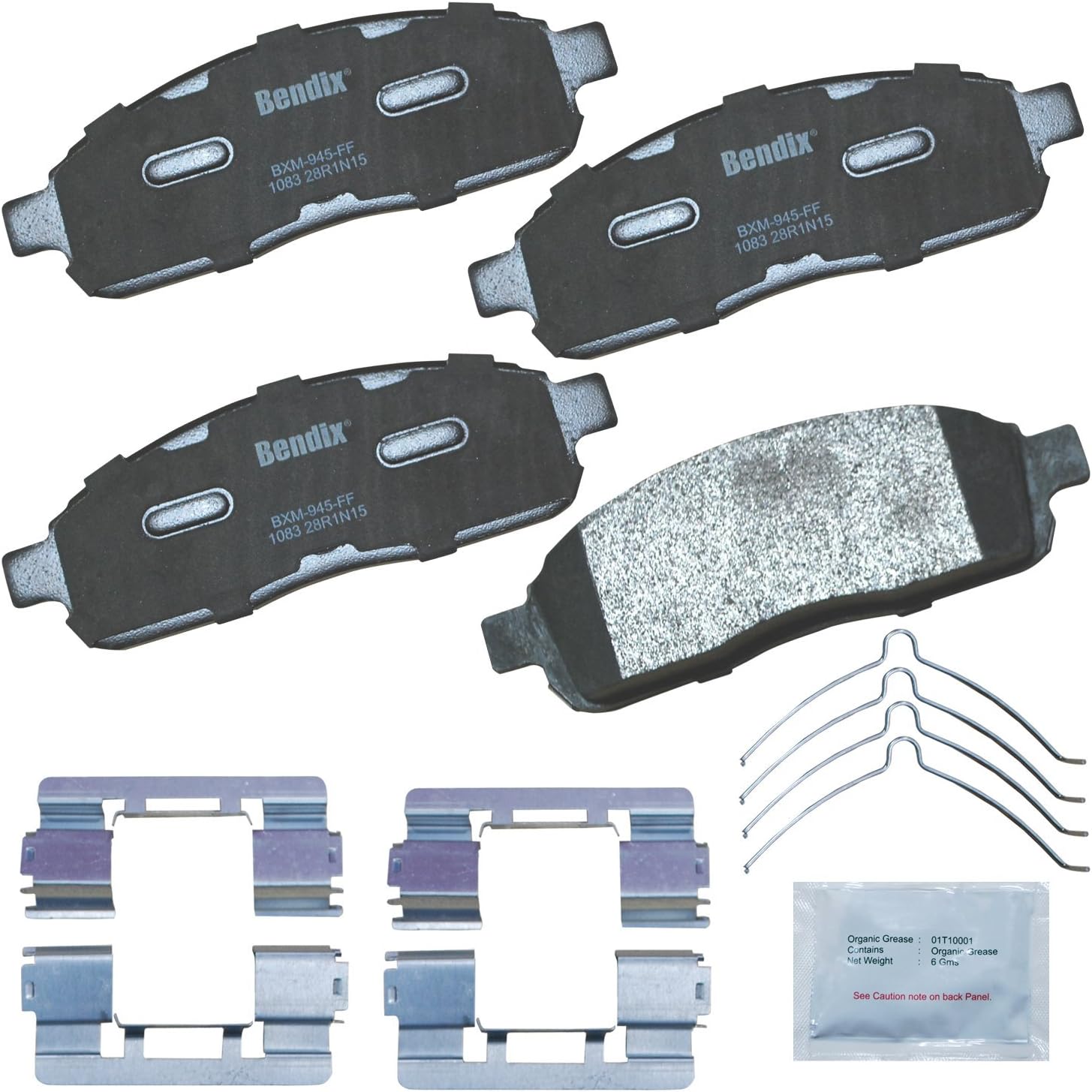
| Highest Rated A top-rated pick with lots of positive feedback | Bendix Priority1 CFM1083 Semi‑Metallic Front Brake Pads (Front) |  |
| Most Popular A crowd favorite that many people choose with confidence | ECCPP Rear Ceramic Brake Pads Kit for 2004–2011 Ford F-150 (Rear, 4 pcs) |  |
| Best Seller A high-volume bestseller chosen again and again | Bendix Priority1 CFM1012 Semi-Metallic Rear Brake Pads |  |
PowerStop Z36 Rear Carbon-Fiber Ceramic Brake Pads (Truck & Tow)

| Auto Part Position | Rear |
|---|---|
| Compatible with Vehicle Type | Truck |
| Material Type | Ceramic |
| Model Number | Z36-1012 |
| Manufacturer Warranty Description | 90 Day / 3,000 Mile Warranty |
The PowerStop Z36 rear Truck & Tow pads are a direct-fit upgrade for 2004–11 Ford F-150 rear brakes designed to give heavier trucks more consistent stopping power under stress. They use a carbon-fiber ceramic compound that boosts friction compared with standard replacement pads while remaining relatively quiet and low-dust, so wheels stay cleaner. The kit includes stainless-steel shims and premium hardware for an easier DIY swap and a powder-coated backing plate that resists rust. Chamfered and slotted faces help reduce noise and promote smooth initial bite, which is useful for towing, hauling, or mountain driving where brake fade is a concern. Expect stronger braking performance and longer life than basic replacement pads, but remember these are targeted at heavier-duty use rather than race applications. Fitment is vehicle-specific so confirm compatibility with your F-150 rear application before installing.
Best for: Drivers who want a durable, low-dust rear pad that improves braking confidence when towing, hauling, or driving in hilly terrain and prefer a straightforward bolt-on upgrade they can install themselves.
Less Ideal for: Drivers focused on track or aggressive high-temperature racing should choose a dedicated performance or race pad tuned for sustained extreme heat.
- Carbon-fiber ceramic compound for higher friction and improved stopping power
- Low-dust formula keeps wheels cleaner compared with many metallic pads
- Includes stainless-steel shims and premium hardware for straightforward installation
- Powder-coated backing plate resists rust and corrosion for longer life
- Designed specifically for truck and tow use so benefits are optimized for heavy loads rather than sport driving
Verdict: If you tow, haul, or drive in hilly terrain and want stronger, low-dust rear braking for your F-150 with an easy bolt-on install, these Z36 pads are a practical upgrade.
PowerStop Z36 Truck & Tow Front Carbon-Fiber Ceramic Brake Pads with Hardware
| Auto Part Position | Front |
|---|---|
| Compatible with Vehicle Type | Truck |
| Material Type | Ceramic, Stainless Steel |
| Model Number | Z36-1011 |
PowerStop Z36 Truck & Tow front brake pads are a bolt-on ceramic upgrade aimed at trucks and SUVs that tow, haul, or run larger wheels. They use a carbon-fiber ceramic formula that raises the coefficient of friction over factory pads while keeping noise and dust low. The kit includes stainless-steel shims and installation hardware for a straightforward swap, and the powder-coated backing plate helps resist corrosion. In real-world use these pads give noticeably firmer initial bite and better resistance to brake fade during long descents or when towing a trailer, so they suit drivers who demand consistent stopping power under load. Expect reduced wheel soiling compared with many high-performance semi-metallic pads. Limitations are typical of higher-friction compounds: you may notice slightly different pedal feel during bedding and they are a front-pad only kit, so matching rear braking behavior may require complementary rear pads or a full kit if you want balanced feel across the axle.
Best for: Drivers who prioritize improved braking performance and fade resistance when towing, hauling, or driving in hilly terrain and want a quiet, low-dust upgrade they can install themselves.
Less Ideal for: Buyers seeking a direct stock-like replacement with identical pedal feel and wear characteristics or those who only need rear pads should consider other options.
- Carbon-fiber ceramic compound for stronger stopping power than standard pads
- Low-dust formulation helps keep wheels cleaner
- Includes stainless-steel shims and premium stainless hardware for easier installation
- Powder-coated backing plate resists rust and improves longevity
- Front-only pad set so rear braking may not match without replacing rear pads as well
- Slightly different pedal feel during initial bedding compared with stock pads
Verdict: Choose these pads if you want a quiet, low-dust front upgrade that delivers stronger, fade-resistant braking for towing and heavy-duty Ford F-150 use.
SCITOO Front Ceramic Brake Pads Kit (4 pcs) for 2004-2009 Ford F-150

| Auto Part Position | Front |
|---|---|
| Compatible with Vehicle Type | Cars & Trucks |
| Material Type | Ceramic |
| Unit Count | 4.0 Count |
| Manufacturer Warranty Description | 1 Year |
These SCITOO front ceramic brake pads are a vehicle-specific replacement kit intended for 2004 to 2009 Ford F-150 applications. They install as a direct factory-style replacement and include treated friction material and noise-dampening shims and chamfers to reduce squeal during normal driving. In everyday use they aim to provide quieter operation and lower visible dust than semi-metallic pads, making them a good fit for daily commuting and light towing. The pads are packaged in a set of four and come with the usual retention hardware many users report matching factory clips. Expect a recommended gentle break-in for the first 200 miles to seat the material and consistent stopping feel thereafter. Limitations to consider are typical of ceramic compounds: slightly different wear characteristics versus heavy-duty metallic pads and potentially reduced performance under extreme high-heat towing or track use. For standard street driving on F-150 trucks these pads offer a practical balance of quiet operation, reduced dust, and simple installation.
Best for: Buyers who want a quiet, low-dust, factory-style replacement for everyday driving on a 2004–2009 F-150 and prioritize easy direct-fit installation and consistent street braking.
Less Ideal for: Drivers who frequently tow heavy loads, drive in extreme conditions, or require high-temperature fade resistance should consider heavy-duty metallic or performance-oriented pads instead.
- Vehicle-specific fit for 2004–2009 Ford F-150 front brakes simplifies installation
- Ceramic friction material produces lower visible brake dust compared with semi-metallic pads
- Pre-treated friction and chamfered edges with shims help reduce initial noise and squeal
- Includes full set of four pads and matching hardware for a ready-to-install kit
- Ceramic formulation may not sustain peak braking performance under continuous high-heat towing or heavy-duty use
Verdict: A practical, quiet, low-dust ceramic front pad kit that fits 2004–2009 F-150 trucks and makes a straightforward factory-style replacement for everyday driving.
Auto Shack Front Ceramic Brake Pad Set for Ford F-150/Mark LT (Front)

| Auto Part Position | Front |
|---|---|
| Compatible with Vehicle Type | Truck |
| Material Type | Ceramic |
| Included Components | Ceramic Brake Pad Set |
These Auto Shack front ceramic pads are a straightforward replacement for 2004–2008 F-150 owners who want quiet, low-dust braking without spending on premium aftermarket brands. The pads are delivered as a complete front set and are designed to offer consistent friction and extended rotor life, which helps reduce rotor wear and the cost of rotor resurfacing or replacement. Installation is typical for a front-pad swap and several buyers report a good fit and included small accessories like lube or clips in some packages, though availability of hardware can vary. Performance is tuned toward everyday driving and towing moderate loads rather than aggressive track use, so expect reliable street stopping and minimal brake dust but not race-level bite or fade resistance. The product is vehicle-specific so fitment verification is important before purchase, and the set carries a short 6 month parts warranty that covers defects but not labor or installation costs.
Best for: Buyers replacing front pads on an F-150 who want a budget-friendly, low-dust ceramic option that keeps rotors lasting longer and provides quiet, everyday braking.
Less Ideal for: Drivers who need high-performance or heavy-duty commercial brake materials for track use, heavy towing, or severe duty cycles should choose performance-oriented pads instead.
- Ceramic formulation delivers quiet operation and low brake dust
- Designed to reduce rotor wear for longer rotor life
- Vehicle-specific fit for 2004–2009 Ford F-150 and 2006–2008 Mark LT
- Includes a full front set so both sides are renewed at once
- Hardware inclusion is inconsistent so new clips or shims may be needed
- 6 month warranty covers only the part and not installation or related costs
Verdict: A cost-conscious ceramic front pad set that gives quiet, low-dust street braking and helps extend rotor life on 2004–2008 F-150s.
Bendix Priority1 CFM1083 Semi‑Metallic Front Brake Pads (Front)
| Auto Part Position | Front |
|---|---|
| Compatible with Vehicle Type | SUV, Truck |
| Model Number | CFM1083 |
| Included Components | Pad set with installation hardware |
| Material Type | Copper |
These Bendix Priority1 CFM1083 pads are a vehicle‑specific semi‑metallic front pad set designed to replace factory front pads on compatible F-150, Lobo, and Mark LT models. They arrive as a complete pad set with installation hardware, shims, slots, and chamfers intended to simplify installation and minimize noise. In real use they deliver strong, repeatable stopping and good high‑temperature resistance for everyday driving and light towing, while the built‑in shims and supplied grease help keep braking quiet and reduce initial vibration. Buyers report low dust and OEM‑style fit that drops into the caliper without filing or modification. As a semi‑metallic compound these pads balance bite and heat management but can produce more dust and slightly firmer pedal feel than ceramic options. If you prioritize factory‑matching fit and dependable, fade‑resistant performance for a used F-150, these pads are a practical, reliable replacement; those seeking the lowest dust or the softest initial pedal feel may prefer a ceramic alternative.
Best for: Buyers who prioritize dependable, factory‑matching braking and consistent, fade‑resistant performance for daily driving or light towing on a 2004–2009 F‑150/Lobo/Mark LT and want an easy, OEM‑style replacement.
Less Ideal for: Drivers whose top priorities are minimal wheel dust or the softest initial pedal bite should consider ceramic or specialty low‑dust pads instead.
- Vehicle‑specific fit with included installation hardware for a straightforward swap
- Semi‑metallic material offers strong stopping power and good high‑temperature resistance
- Shims, slots, and chamfers reduce noise and improve bedding in for quiet operation
- Includes grease and hardware to simplify installation and help prevent rattles
- Semi‑metallic compound can produce more brake dust and a firmer pedal feel compared with ceramics
- Not positioned as an ultra‑performance or low‑dust ceramic option
Verdict: A factory‑matching, semi‑metallic front pad set that delivers reliable, fade‑resistant braking and an easy OEM‑style swap for 2004–2009 Ford F‑150/Lobo/Mark LT models.
ECCPP Rear Ceramic Brake Pads Kit for 2004–2011 Ford F-150 (Rear, 4 pcs)

| Auto Part Position | Rear |
|---|---|
| Compatible Years | 2004-2011 (Ford F-150), 2006-2008 (Lincoln Mark LT) |
| Number of Items | 4 |
| OEM Equivalent Part Number | ATD1012C,D1012-7916 |
These ECCPP rear ceramic pads are a direct-fit replacement for compatible 2004–2011 Ford F-150 rear applications and are sold as a four-piece kit. They use a ceramic formulation with chamfers and vibration-dampening shims to reduce dust and minimize squeal, so they work well for daily driving where low noise and cleaner wheels matter. Installation is straightforward for a DIYer or technician because the pads are designed to match factory mounting points; some customers report using existing hardware if retainers differ. The pads recommend a standard bedding procedure to ensure even transfer to the rotors and predictable pedal feel. Compared with semi-metallic options these prioritize quiet operation and low dust over extreme heat tolerance, so they are best for street use rather than heavy towing or track duty. A few buyers noted missing grease in the package and occasional fitment variance with retainer clips, so confirm fitment and have basic hardware on hand before starting the job.
Best for: Buyers who prioritize quiet, low-dust daily driving upgrades and want a reasonably priced, DIY-friendly rear pad set for the specified F-150 models; they value social proof and want a product with strong positive reviews.
Less Ideal for: Drivers who frequently tow heavy loads, drive aggressively, or need maximum fade resistance should choose a semi-metallic or performance-oriented pad instead.
- Ceramic formulation reduces brake dust and keeps wheels cleaner.
- Anti-vibration shims and chamfering help cut down noise and harshness.
- Vehicle-specific design for direct-fit installation on listed Ford F-150 rear applications.
- ISO/IATF-certified manufacturing claims aiming for factory-level specification.
- Less heat tolerance than semi-metallic pads, so not ideal for heavy towing or track use.
- Some kits may not include lubricant or replacement clips, requiring extra parts for installation.
Verdict: A low-dust, quiet ceramic rear pad kit that fits the listed F-150 rear applications and is a solid choice for everyday street driving.
Bendix Priority1 CFM1012 Semi-Metallic Rear Brake Pads

| Auto Part Position | Rear |
|---|---|
| Material Type | Semi-Metallic |
| Automotive Fit Type | Vehicle Specific Fit |
| Included Components | Pad set with installation hardware |
These Bendix Priority1 CFM1012 rear brake pads are a vehicle-specific replacement designed to match factory fit, form, and function for compatible Ford F-150 and related models. Constructed from a semi-metallic formulation, they deliver strong stopping power and high-temperature resistance, which helps reduce fade during repeated braking. The kit includes shims, slots, chamfers, installation hardware, and brake lube to simplify installation and minimize noise and vibration. In everyday use the pads provide predictable, firm braking for city and highway driving and they tend to produce moderate dust compared with ceramic options. Because they are designed to meet factory specifications, fitment is generally straightforward for the listed vehicles, though checking your caliper hardware against the images is advised before purchase. The main practical compromise is that semi-metallic material can be a bit noisier and produce more dust than premium ceramic pads, but it offers better heat handling for heavier use. For drivers prioritizing reliable, OEM-style braking on a 2004–2008 F-150 rear axle, this pad set is a solid, easy-to-install option.
Best for: A buyer who wants a dependable, factory-fit rear brake replacement for routine driving and occasional heavy use on a 2004–2008 Ford F-150 and values consistent stopping performance and straightforward installation.
Less Ideal for: Drivers whose top priorities are lowest dust and absolute quietest operation should consider ceramic-style pads instead.
- Vehicle-specific fit that matches factory fit, form, and function
- Semi-metallic compound offers strong stopping power and good high-temperature resistance
- Includes shims, slots, chamfers and installation hardware for easier, quieter installation
- Designed to reduce brake fade and provide consistent braking under repeated use
- Semi-metallic material produces more dust and can be slightly noisier than ceramic pads
Verdict: Choose these Bendix rear semi-metallic pads when you want a factory-fit, heat-resistant replacement that delivers consistent, reliable stopping for a 2004–2008 Ford F-150.
Choosing the Right 2004-2008 Ford F-150 Brake Pads: Key Factors to Consider
Pad Material and Compound
The pad compound determines initial bite, fade resistance, dust levels, and lifespan. Organic and ceramic-style compounds tend to be quieter and produce less dust, which helps keep wheels cleaner and reduces rotor surface wear. Semi-metallic or metallic compounds generally deliver stronger initial bite and better heat tolerance when towing or hauling heavy loads, but they can increase rotor wear and noise.
For a 2004–2008 F-150, consider how you use the truck. Daily commuting and occasional light towing will benefit from ceramic-style compounds for comfort and low dust. Frequent heavy towing or repeated braking on grades favors sturdier compounds that resist fade and maintain friction under higher temperatures. Also consider seasonal temperature extremes since some compounds perform poorly when cold.
Stopping Performance and Fade Resistance
Stopping power is the most critical factor for safety. Look for pads formulated to maintain friction as temperatures rise during repeated stops. Fade resistance matters more for drivers who tow, haul, or drive in hilly areas, where repeated braking can heat pads and rotors.
Manufacturers communicate expected performance differently, so assess the pad compound, backing plate design, and any claims about thermal stability. For the F-150, stopping performance should be evaluated against the truck's typical curb weight and any payload or trailer loads you expect to carry.
Noise, Vibration, and Harshness (NVH)
Brake noise and vibration affect everyday comfort and can indicate fitment or material issues. Properly designed pads include features such as chamfers, slots, and bonded or multi-layer shims to reduce squeal and vibration. Some compounds are inherently noisier even with anti-squeal features.
On a 2004–2008 F-150, uneven pad wear or poor backing plate finish can introduce vibration under braking. If you prioritize quiet operation, choose pads intended for low NVH and verify installation details such as whether anti-rattle hardware or shims are included to ensure a quiet, secure fit.
Rotor Compatibility and Wear
Pad material affects rotor life. Harder, more metallic compounds can accelerate rotor wear or cause scoring if not matched to compatible rotors. Conversely, very soft compounds may glaze rotors and reduce stopping performance. Consider whether your F-150 has OEM rotors in good condition or if rotor replacement or resurfacing is planned when fitting new pads.
If your truck is used for towing, choose pads that balance friction and rotor friendliness to reduce the frequency of rotor replacement. For drivers keeping stock rotors, favor compounds that minimize aggressive wear while still providing adequate stopping power.
Fitment, Backing Plate Quality, and Installation
Secure fitment prevents uneven wear and caliper issues. Pads with consistent backing plate thickness, durable bonding of the friction material, and correct slot/chamfer geometry install more reliably and last longer. Vehicle-specific fitment information for 2004–2008 F-150 calipers ensures the pad sits flush and the wear sensor or hardware aligns properly.
Check whether necessary hardware is included or if you need to reuse or replace existing clips, pins, and shims. Also verify any pad design changes that affect piston retraction or caliper function, especially for F-150 trucks with higher mileage or aftermarket brake components.
Maintenance Intervals and Service Considerations
Different compounds and driving styles lead to wide variation in service intervals. Some pads emphasize long life and lower dust at the expense of initial bite; others prioritize performance with shorter lifespan. Consider how often you are willing to inspect and replace pads and whether you prefer easily available aftermarket options.
Owners should also factor in pad wear indicators, whether sensors are used on the 2004–2008 F-150, and local driving conditions. Proper bedding-in procedures and periodic rotor inspections will extend pad life and maintain consistent braking behavior.
Understanding Brake Pad Types for the F-150
Brake pad constructions vary in friction material and intended use. For the 2004–2008 F-150, you will typically encounter ceramic-style compounds, organic blends, and more metallic formulations. Each has tradeoffs between noise, dust, and heat management. Choose the compound that matches how you drive and what loads you haul.
Consider the expected operating temperature range of your driving. Daily city and highway driving favors low-dust, quiet compounds, while towing and repeated braking on grades need pads that resist fade. Also note that pad bedding and break-in practices influence initial performance and long-term behavior.
- Ceramic-style: quieter, less dust, good for everyday driving
- Semi-metallic: stronger bite, better heat tolerance, more dust
- Organic: softer feel, often quieter, shorter service life
Front Vs Rear Pads on the 2004–2008 F-150
Front and rear pads experience different loads. The front pads handle the majority of braking force on the F-150, so they often wear faster and need a compound that resists higher temperatures. Rear pads contribute to stability and parking brake function, and they can be a different material to balance overall braking performance.
When replacing pads, assess wear on both axles. Replacing only the front or rear can change pedal feel and braking balance. If one axle shows uneven wear or scoring, inspect rotors and calipers before fitting new pads.
- Replace front pads more frequently than rear on most F-150s
- Rear pads may include integrated parking brake considerations
- Maintain matched friction characteristics to preserve brake bias
Signs You Need Brake Pad Replacement
Common brake pad wear symptoms include reduced stopping power, a persistent squeal or grinding noise, and visible thinning of the pad material when inspected through the wheel. Vibrations under braking or a longer pedal travel can also indicate worn pads or rotor issues.
Regular inspection is essential for the 2004–2008 F-150, especially if you tow or drive in stop-and-go conditions. Measure pad thickness against manufacturer specifications and watch for metal-on-metal sounds that signal urgent replacement.
- Squeal that does not go away after warm-up
- Grinding noise indicates pad material is likely gone
- Less than recommended pad thickness requires immediate service
Bedding In New Pads For Reliable Performance
Proper bedding transfers a thin layer of friction material to the rotor surface and stabilizes pad performance. For the F-150, follow a process of progressive stops from moderate speeds without heavy braking until the pad and rotor reach operating temperature. Avoid prolonged or repeated hard stops during initial miles.
Skipping bedding can lead to uneven performance, glazing, and reduced stopping power. Different compounds have specific break-in steps, so follow the manufacturer's instructions for best results.
- Start with several moderate stops to 20 mph from 40 mph
- Avoid parking immediately after intense braking to let rotors cool
- Re-check torque and hardware after the first short drive
When to Resurface or Replace Rotors
Rotor condition directly affects pad life and braking performance. Resurface if the rotor thickness and runout are within safe limits and surface scoring is minor. Replace rotors when they are below minimum thickness, warped, or heavily scored. For a 2004–2008 F-150 that regularly tows, rotors can reach service limits sooner.
Installing new pads on worn rotors can cause uneven bedding and accelerated pad wear. Check rotor specs and measure thickness and runout during pad replacement to determine if machining or replacement is needed.
- Measure rotor thickness against factory minimums
- Look for blueing or heavy scoring as signs of overheating
- Consider rotor replacement when pads and rotors have matched high mileage
Brake Hardware and Accessories Worth Replacing
Hardware such as caliper pins, anti-rattle clips, and shims influence pad fitment and noise. Corroded or worn hardware can cause uneven pad retraction and premature wear. For the 2004–2008 F-150, ensure the hardware fits the caliper design and is free of binding.
Brake grease formulated for slide pins and contact surfaces improves operation and reduces noise. Replace or clean hardware during pad service to ensure long-term performance and consistent pad wear.
- Replace corroded pins and clips when installing new pads
- Use high-temperature grease on slide pins and contact points
- Verify parking brake components if rear pads are serviced
Still looking for the perfect fit?
Select your Ford F-150 configuration to see the most relevant Brake Pads recommendations
How We Chose the Best 2004-2008 Ford F-150 Brake Pads
We focused our selection on pads that meet the specific demands of the 2004–2008 Ford F-150 platform, prioritizing real-world performance and longevity. Evaluation criteria included stopping performance under typical and loaded conditions, measured by expected fade resistance and initial bite; pad longevity and wear consistency, based on compound hardness and heat tolerance; noise and vibration control, covering shims, chamfers, and compound formulation; rotor compatibility to avoid accelerated wear or glazing; dust generation and ease of cleanup; and fitment precision for secure installation on the F-150 calipers from 2004–2008. We excluded any pads lacking explicit fitment for the 2004–2008 F-150 or that use ambiguous material descriptions. Products with known installation fit issues, missing safety compliance information, or nonstandard backing plate designs that risk caliper damage were not considered. The final list emphasizes pads that balance stopping power and longevity while minimizing noise and rotor wear, and that provide clear, vehicle-specific fitment information.
Our full evaluation process is outlined in our review methodology.
FAQ
How often should I replace brake pads on a 2004–2008 F-150?
It depends on driving style and load. Light commuting may let pads last 40,000 miles or more, while heavy towing or frequent stop-and-go driving can require replacement much sooner. Inspect pad thickness regularly and follow manufacturer thickness specs.
Can I mix different pad compounds front and rear?
Mixing is possible but not ideal. Maintaining compatible friction characteristics front to rear preserves pedal feel and brake bias. If you must mix, match based on similar performance and consult vehicle fitment guidance for the F-150.
What does a grinding noise from the brakes usually mean?
Grinding often indicates the friction material is worn down to the backing plate and metal-on-metal contact is occurring. Stop driving if you hear grinding and inspect pads and rotors; continued use can damage rotors severely.
Are ceramic-style pads a good choice for an F-150 that tows occasionally?
Ceramic-style pads offer quiet operation and low dust, which is attractive for everyday driving. For occasional towing they can be acceptable, but if you routinely tow heavy loads you may prefer a compound with higher heat tolerance to reduce fade.
How thick should brake pads be on the F-150 before replacement?
Factory specifications vary, but a common guideline is to replace pads when friction material is 3 millimeters or less. Check the service manual or measure available pad thickness through the wheel to determine when to service.
Do I need to resurface rotors when changing pads?
Not always. If rotors are within thickness limits, free of heavy scoring, and not warped, new pads can be installed without resurfacing. However, machining or replacing rotors is advisable whenever surface issues or heat damage are present to ensure proper bedding and performance.
Final Verdict
For the 2004–2008 Ford F-150, prioritize pad choices that match your typical load and driving style. If quiet operation and low dust are most important, choose a ceramic-style compound. If you tow frequently or encounter steep descents, favor pads with higher heat tolerance and fade resistance. Balance stopping performance, rotor compatibility, and NVH when making your selection, and inspect hardware and rotor condition during installation. Selecting pads with clear fitment information and following proper bedding and service practices will keep your F-150 stopping reliably and help you choose with confidence.
Explore More:
- Check out all Ford F-150 parts & accessories
- Explore Brake Pads Maintenance & Repair Guides
- Explore Brake System
- Browse all Auto Parts
