

Note: This article contains affiliate links. If you click on these links and make a purchase, I may earn a small commission at no extra cost to you. This helps support my research and content. Read my full affiliate disclosure here.
If your 1999-2004 Jeep Grand Cherokee is showing heavier pedal travel or inconsistent braking, the brake booster is a common source of the problem. For WJ chassis owners, choosing the right brake booster matters because an incorrect booster can affect pedal feel, sealing against vacuum leaks, and installation complexity.This guide covers six shortlisted brake boosters that fit the 1999-2004 Grand Cherokee, with a focus on fitment, vacuum sealing, and long-term durability. We evaluate each option for ease of installation, compatibility with the stock master cylinder, and likely service life. Read on for the practical considerations that will help you pick the right replacement for your Grand Cherokee and a clear roadmap for installation and testing.
Looking for other parts? See all Jeep Grand Cherokee parts & accessories.
Top Picks at a Glance
| Best Overall The best all-around choice for most situations | IRONTEK Vacuum Power Brake Booster for 1999-2004 Jeep Grand Cherokee |  |
| Best Quality Built to a higher standard if you want something more solid | A-Premium Vacuum Power Brake Booster for Jeep Grand Cherokee 1999-2004 (Without Master Cylinder) |  |
| Best Value The sweet spot between price and what you get | UnayKolb Vacuum Power Brake Booster for Jeep Grand Cherokee 4.7L V8 (1999–2004) |  |
| Best Budget The cheapest option that still gets the job done reliably | DRIVESTAR Power Brake Booster PBV8044 for 1999–2004 Jeep Grand Cherokee |  |
| Highest Rated A top-rated pick with lots of positive feedback | TOM Power Brake Booster Compatible with Jeep Grand Cherokee 1999–2004 |  |
| Most Popular A crowd favorite that many people choose with confidence | PartsFlow Vacuum Power Brake Booster 54-73163 for Jeep Grand Cherokee 1999–2004 (without master cylinder) |  |
IRONTEK Vacuum Power Brake Booster for 1999-2004 Jeep Grand Cherokee

| Manufacturer | IRONTEK |
|---|---|
| Manufacturer Part Number | PBV8044 |
| Compatible Vehicles | 1999-2004 Jeep Grand Cherokee |
| Replace Part Number | 5473163, 05011261AA, 5011261AA, 5011261AB |
This IRONTEK vacuum power brake booster is built to replace the factory booster on 1999–2004 Jeep Grand Cherokee vehicles and restore power-assisted braking feel. It installs in the stock location and is intended as a direct replacement for the listed part numbers, so typical use is straightforward: remove the old booster, transfer any mounting hardware and the master cylinder connections, then fit the new unit. The listing notes factory-quality manufacturing and quality control tests for fit and corrosion resistance, which suggests reliable basic performance and long-term durability under normal driving. Notable features include claimed exact fitment, compact structure for easier installation, and a three-year warranty. Some buyers report fitment issues on unrelated vehicles, so double-check vehicle compatibility and stud alignment before ordering. The unit provides the practical benefit of restoring firm pedal feel and brake assist without custom modification, but professional installation is recommended if you are not experienced with brake system work because proper bench bleeding and torque specifications matter for safe operation.
Best for: Buyers who want a reliable, factory-replacement style brake booster to restore power braking on a 1999–2004 Jeep Grand Cherokee and prioritize straightforward fitment and durability.
Less Ideal for: Drivers seeking performance upgrades or custom brake solutions should look elsewhere; this unit is intended as a like-for-like replacement rather than a high-performance modification.
- Made to match factory fitment for 1999–2004 Jeep Grand Cherokee, minimizing modification
- Manufactured and tested to vehicle fit and corrosion standards according to the listing
- Compact structure designed to ease installation in the engine bay
- Includes a three-year warranty for added buyer confidence
- Some customer reports indicate stud alignment or pedal fit issues on different vehicle applications
- Requires proper installation and brake system service procedures to ensure safe operation
Verdict: A practical, factory-style replacement brake booster that restores power-assisted braking on 1999–2004 Jeep Grand Cherokee with minimal fuss.
A-Premium Vacuum Power Brake Booster for Jeep Grand Cherokee 1999-2004 (Without Master Cylinder)

| Compatible vehicles | Jeep Grand Cherokee 1999-2004 (except 1999 5.9L) |
|---|---|
| Diaphragm style | Dual |
| Diaphragm diameter | 8.65 in (219.71 mm) |
| Master cylinder stud thread | M8x1.25 |
This A-Premium vacuum power brake booster is a direct replacement unit intended for 1999–2004 Jeep Grand Cherokee models (except 1999 5.9L) and ships without a master cylinder. It uses a dual-diaphragm design and a stamped steel body with anti-rust coating to provide enhanced durability over time. Installation is typical for brake booster swaps: mount to the firewall, connect the pushrod to the brake pedal and attach the master cylinder using the specified M8x1.25 studs. In use the booster restores vacuum assist to the braking system and can noticeably reduce pedal effort compared with a failed unit. Some buyers report less assist than aftermarket alternatives, so expect real-world stopping feel to depend on master cylinder pairing and system condition. The unit includes commonly referenced OEM part numbers for fitment and comes with a one-year unlimited-mileage guarantee from the maker. If you want a straightforward replacement that focuses on corrosion resistance and OEM-style fit, this handles that role, but those seeking stronger or performance-tuned boost characteristics should verify compatibility with their chosen master cylinder and pedal geometry.
Best for: Buyers looking for a factory-style replacement booster for a 1999–2004 Grand Cherokee who prioritize correct fitment and corrosion resistance over enhanced or modified boost characteristics.
Less Ideal for: Drivers seeking a stronger performance-oriented brake boost or a tuned pedal feel should consider performance-specific boosters or matched master cylinder upgrades instead.
- Made for 1999–2004 Jeep Grand Cherokee fitment with listed OEM reference numbers
- Dual diaphragm design intended to provide consistent vacuum assist
- Steel construction with anti-rust coating for improved corrosion resistance
- Includes M8x1.25 master cylinder stud thread matching common factory studs
- Ships without a master cylinder, so additional purchase or transfer of the old unit is required
- Some users report weaker assist compared with other aftermarket boosters, affecting pedal feel
Verdict: A practical, corrosion-resistant factory-style replacement for 1999–2004 Grand Cherokee owners who need reliable vacuum assist restored to their braking system.
UnayKolb Vacuum Power Brake Booster for Jeep Grand Cherokee 4.7L V8 (1999–2004)

| Manufacturer | UnayKolb |
|---|---|
| Manufacturer Part Number | UK912-029 |
| OEM Part Numbers | 05011261AA, 5011261AA, 5011261AB, 54-73163 |
| Compatibility | Jeep Grand Cherokee 1999-2004 4.7L V8 |
This UnayKolb vacuum power brake booster is built as a direct replacement for the 4.7L V8 Grand Cherokee from 1999 to 2004 and restores the vacuum assist that makes the brake pedal feel lighter and more consistent. It installs in place of the factory unit and is intended to match original mounting and vacuum port locations so it can be swapped with standard hand tools. The unit is described as corrosion resistant and each booster is leak and pressure-cycle tested, which should help with longevity and dependable vacuum assist in daily driving and towing situations. The practical benefits are straightforward: you regain proper pedal effort and predictable stopping behavior without modifying the braking system. Limitations are typical of aftermarket boosters at this price point — you should verify fitment against the referenced part numbers and expect a basic finish compared with higher-end aftermarket or remanufactured options. For a budget-focused repair that returns factory-style brake assist, this is a sensible replacement option.
Best for: Buyers who need an affordable, factory-style replacement to restore brake pedal assist on a 1999–2004 Grand Cherokee and prioritize reliable everyday performance over premium cosmetics.
Less Ideal for: Those seeking a high-end or performance brake booster upgrade or a polished appearance should consider remanufactured or performance-specific alternatives.
- Direct replacement fitment for 1999–2004 Jeep Grand Cherokee 4.7L V8, designed to match factory mounting and vacuum ports
- Corrosion resistant coating intended to resist surface degradation in harsh conditions
- Units undergo leak and pressure-cycle testing to verify airtight seals and consistent vacuum assist
- Restores proper brake pedal assist for lighter, more consistent pedal feel and predictable stopping
- Aftermarket finish and fit may be more basic than higher-end or remanufactured boosters
- Fitment must be double-checked against vehicle part numbers before purchase
Verdict: A cost-conscious, direct-fit replacement that restores factory-style vacuum assist for 1999–2004 Grand Cherokee 4.7L V8 owners who want dependable everyday braking performance.
DRIVESTAR Power Brake Booster PBV8044 for 1999–2004 Jeep Grand Cherokee

| Manufacturer | DRIVESTAR |
|---|---|
| Manufacturer Part Number | PBV8044 |
| OEM Part Number | 54-73163, 5473163, 05011261AA, 5011261AA, 5011261AB |
| Compatible Years | 1999-2004 Jeep Grand Cherokee |
This DRIVESTAR power brake booster is a budget-focused replacement part intended to restore power-assisted braking on 1999–2004 Jeep Grand Cherokee vehicles. It installs in place of the listed OEM numbers and includes a galvanized 45# steel push rod and EPDM sealing ring designed for temperature resilience and long wear. In practical use it returns pedal assist and braking responsiveness to a factory-like feel when paired with a compatible master cylinder, and the EPDM seal helps resist vacuum loss and aging in varied climates. Buyers should expect a basic, no-frills unit that aims for durability rather than premium fitment refinements; a couple of users reported minor drilling or alignment work was needed at installation. The product comes with a stated 36-month warranty from the seller, and the construction details indicate reasonable corrosion and temperature resistance, but professional installation or careful test-fitting is recommended to avoid alignment issues.
Best for: Buyers looking for an affordable, functional replacement booster to restore power brake assist on a 1999–2004 Jeep Grand Cherokee who prioritize cost and basic durability over factory-perfect fitment.
Less Ideal for: Shoppers seeking a premium, exact-fit factory-quality unit or those who want a plug-and-play installation without any possibility of adjustment should consider higher-end or OEM options.
- Designed to directly replace the listed OEM part numbers for 1999–2004 Jeep Grand Cherokee
- Galvanized 45# steel push rod for improved wear resistance
- EPDM sealing ring rated for extreme temperatures to reduce vacuum leaks
- Stated 36-month seller warranty for buyer reassurance
- May require minor drilling or alignment adjustments during installation on some vehicles
Verdict: A cost-conscious replacement that restores power braking for 1999–2004 Jeep Grand Cherokee owners who want durable components without paying for premium fitment.
TOM Power Brake Booster Compatible with Jeep Grand Cherokee 1999–2004

| Compatibility | Jeep Grand Cherokee 1999-2004 4.0L 4.7L |
|---|---|
| Material | Steel |
| Brake Booster Diaphragm Style | Dual |
| Master Cylinder Included | No |
| Master Cylinder Stud Thread Size | M8x1.25 |
This TOM power brake booster is a straightforward replacement unit for 1999–2004 Jeep Grand Cherokee 4.0L and 4.7L applications. It mounts in the same position as the factory booster and ships without a master cylinder, so installation requires reusing your existing master or purchasing a matched unit. The steel construction and dual-diaphragm design aim to restore proper brake assist and pedal feel after a failed booster. In practice the unit is intended for bolt-in replacement and comes with six mounting nuts to simplify installation; a replacement buyer reported clean finish and well-cut threads that made alignment and fastening easier. Because the actuator pin and pedal cone can be exposed in transit, check those parts on arrival and keep any included fasteners. This part is best for owners who want a dependable, budget-friendly replacement that restores braking function, but you should verify fitment and be prepared to transfer the master cylinder and any small brackets during installation.
Best for: Buyers who prioritize restoring reliable braking performance on a 1999–2004 Jeep Grand Cherokee and want a ready-to-install replacement that matches factory fitment while keeping repair costs reasonable.
Less Ideal for: Drivers looking for a complete drop-in solution with a new master cylinder included or those who prefer a premium branded OEM-sourced booster with extended aftermarket support.
- Made of steel with a dual-diaphragm design intended to restore brake assist and pedal feel
- Ships with six mounting nuts to match the booster to the vehicle and simplify installation
- Appears finished with clean threads and fitment that aligns to factory mounting points
- Direct compatibility listed specifically for 1999–2004 Jeep Grand Cherokee 4.0L and 4.7L
- Master cylinder is not included so buyer must reuse the existing unit or purchase one separately
- Actuator pin and pedal cone may arrive exposed and require inspection or careful handling after shipping
Verdict: A practical, factory-fit replacement booster that reliably restores brake assist on 1999–2004 Jeep Grand Cherokee models without adding unnecessary cost.
PartsFlow Vacuum Power Brake Booster 54-73163 for Jeep Grand Cherokee 1999–2004 (without master cylinder)
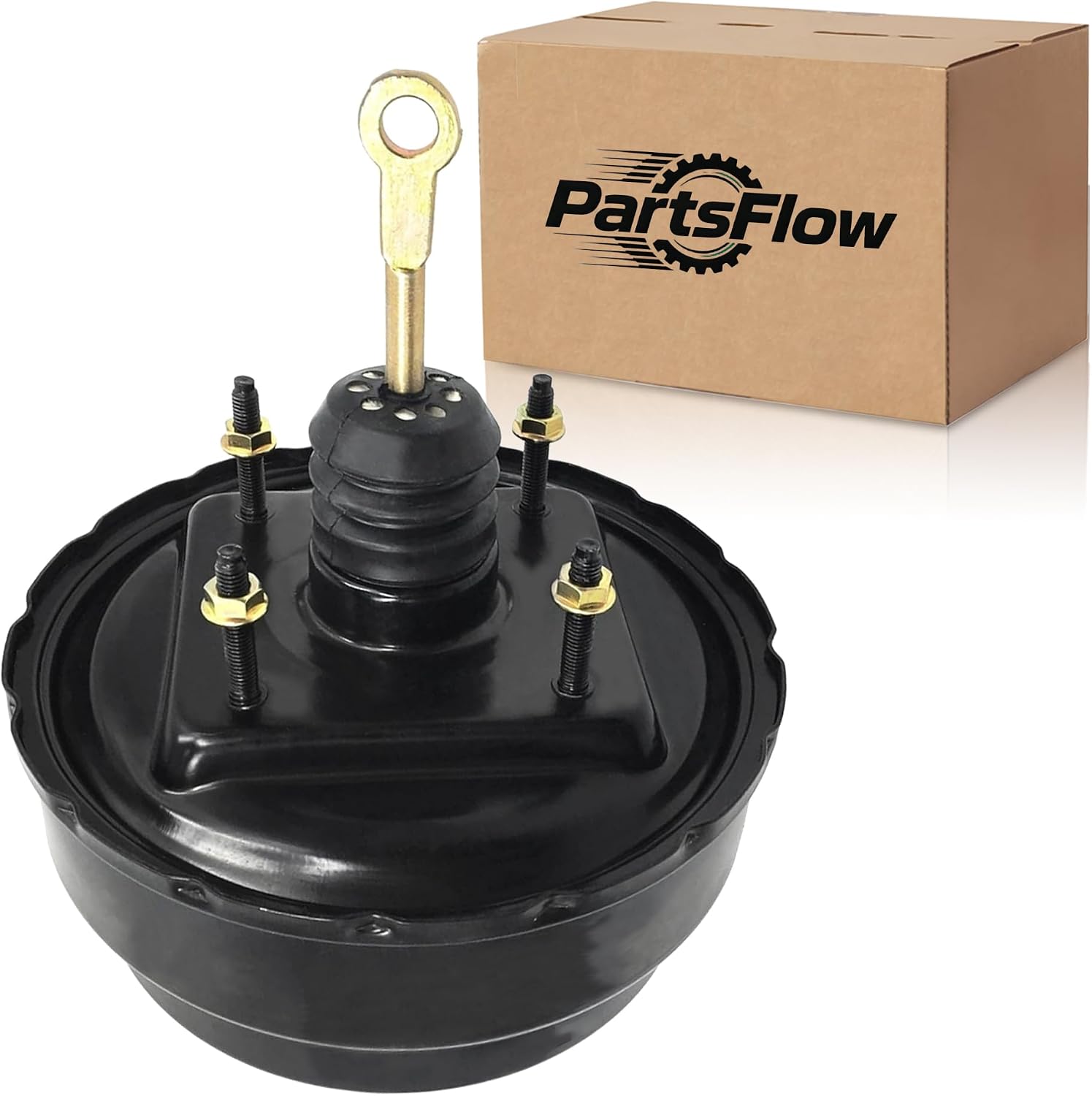
| Vehicle fit | Jeep Grand Cherokee 1999–2004 4.7L and 4.0L (excludes 1999 5.9L) |
|---|---|
| Reference numbers | 05011261AA, 5011261AA, 5011261AB, 54-73163 |
| Master cylinder stud thread | M8x1.25 |
| Diaphragm style | Dual |
| Package contents | Power Brake Booster (master cylinder not included) |
This PartsFlow vacuum power brake booster is a replacement unit intended to restore power-assisted braking on 1999–2004 Jeep Grand Cherokee 4.7L and 4.0L models (excludes 1999 5.9L) when the original booster is worn or leaking. It installs in place of the factory booster and is used without the master cylinder included, so the existing master cylinder and mounting hardware are typically reused. The unit features a dual diaphragm design and M8x1.25 master cylinder stud threads to match factory connections. In practice it brings back the reduced pedal effort expected from a functioning booster and includes basic installation tips in the listing. Buyer reports are mixed: many users fitted it successfully and found it functional, while others experienced fitment issues such as shaft length, vacuum leaks, or brake light switch misalignment that required modification or additional adjustments. If you install it, check shaft clearance and brake light switch travel during test fitting before final assembly. The product comes with a 12-month guarantee but some customers reported receiving damaged or incomplete shipments, so inspect the unit on arrival.
Best for: Buyers who prioritize restoring safe, power-assisted braking on a 1999–2004 Grand Cherokee and who will verify fitment carefully before final installation; good for DIY mechanically comfortable owners or independent shops.
Less Ideal for: Shoppers who want a guaranteed drop-in, no-adjustment replacement or who cannot tolerate any risk of fitment modification should consider a vendor-tested OEM-quality unit or professional supply with confirmed vehicle-specific fit.
- Compatible with many 1999–2004 Jeep Grand Cherokee 4.7L and 4.0L applications
- Dual diaphragm design provides standard vacuum assist similar to factory boosters
- Uses factory master cylinder stud thread size (M8x1.25) for straightforward connection
- 12-month guarantee offers basic post-purchase protection
- Master cylinder and mounting hardware are not included so additional parts reuse is required
- Some customers reported fitment problems such as incorrect pushrod length and vacuum leaks requiring modification
- Reports of damaged or incomplete shipments indicate variable quality control and packaging
Verdict: A cost-effective replacement to restore power braking on 1999–2004 Grand Cherokees when you are prepared to verify fitment and make minor adjustments if needed.
Choosing the Right 1999-2004 Jeep Grand Cherokee Brake Booster: Key Factors to Consider
Fitment and Mounting Geometry
Correct fitment is the first priority for the 1999-2004 Grand Cherokee (WJ). The booster must match the firewall bolt pattern, pushrod length, and master cylinder flange so the pedal height and travel remain within factory tolerances. An incorrect pushrod length can make the pedal sit too high or too low, which affects brake bias and driver confidence.
Consider whether the replacement is a direct-fit unit or requires an adapter. Direct-fit boosters minimize modifications, reduce installation time, and lower the chance of an improper seal at the master cylinder. Also verify that the vacuum port location aligns with existing vacuum lines to avoid stretching or rerouting hoses that could introduce leaks.
Vacuum Sealing and Check-Valve Quality
A robust diaphragm and a properly installed check valve are essential for consistent booster operation. For older Grand Cherokees, vacuum leaks are a common failure mode that produces hard pedal feel and poor vacuum retention. Inspect whether the replacement booster includes a high-quality check valve and whether the diaphragm material is specified as resistant to heat and oil exposure.
Good sealing extends service life and prevents intermittent braking issues that can be hard to diagnose. If the new booster does not include a check valve or uses a generic valve, plan to replace the valve during installation to ensure reliable vacuum hold.
Compatibility With Master Cylinder and Brake Proportioning
The booster and master cylinder form a matched assembly. When replacing the booster on a WJ Grand Cherokee, ensure the mating face aligns with the master cylinder bore and mounting studs. Some boosters are sold as booster-only while others come pre-drilled to accept the original master cylinder; know which you need before starting the job.
An improper seal or misalignment can lead to fluid leaks or altered pedal travel. Also consider whether the booster maintains the original brake proportioning behavior. While the booster itself does not change hydraulic ratios, incorrect pushrod preload can shift pedal engagement and perceived braking balance.
Durability and Materials
Durability matters because boosters operate in a heat and vibration-prone environment. Look for units with corrosion-resistant shells and sturdy internal components. For a vehicle in the 1999-2004 model years, aging wiring, vacuum lines, and mounting hardware compound wear; using a replacement built from higher-grade materials reduces the chance of early failure.
Examine the pushrod and clevis materials. Hardened steel pushrods and secure clevis retainers are less likely to deform under repeated load, preserving pedal feel over time. Consider whether replacement units provide a protective coating or finish to resist surface corrosion for longer service life.
Ease of Installation and Included Hardware
Installation complexity affects the total cost and the likelihood of a correct repair. For the WJ Grand Cherokee, check whether the booster comes with new mounting nuts, a pre-installed check valve, and clear instructions. Units that include the necessary hardware and match the factory mounting orientation will speed up the job and reduce errors.
If you plan a DIY replacement, factor in the need to bench-bleed the master cylinder and torque the mounting studs to factory specifications. Also consider whether the replacement allows you to retain existing lines and sensors without additional brackets or fittings.
Serviceability and Warranty Coverage
Serviceability relates to whether components like the check valve or pushrod are replaceable and whether the design allows for straightforward troubleshooting. While many boosters are sealed assemblies, some are offered with replaceable fittings or valves that extend usable life.
Warranty terms and documented support indicate manufacturer confidence. For older vehicles, choosing a booster with clear warranty coverage reduces long-term risk. Also check for available support documentation such as dimensional drawings and torque specs to ease installation and future maintenance.
Common Brake Booster Symptoms on a WJ Grand Cherokee
Recognizing symptoms quickly helps avoid unsafe situations. Typical signs include a hard brake pedal that requires much more force to stop the vehicle, a change in pedal height or travel, and a hissing noise from the firewall area during braking. These symptoms often point to diaphragm failure or a vacuum leak inside the booster.
Other indicators are long engine crank times when the booster check valve is stuck open or uneven brake response that appears more pronounced at low engine RPM. Understanding the symptom profile helps you decide whether the booster is the likely cause or if additional inspection of vacuum lines and the master cylinder is needed.
- Hard or stiff brake pedal
- Hissing sound near the firewall
- Longer pedal travel or pedal sitting lower than normal
- Inconsistent braking at idle or low RPM
Diagnosing Vacuum Leaks and How to Test the Booster
Start with a visual inspection of vacuum hoses and the check valve for cracks, brittleness, or loose fittings. If hoses look sound, perform a simple functional test: with the engine off, pump the brake pedal several times to deplete vacuum, then hold the pedal and start the engine. A properly working booster will show a noticeable drop in pedal effort once the engine creates vacuum.
For more precise checks use a handheld vacuum gauge to confirm vacuum levels at idle and under load. Measuring vacuum at the booster port helps isolate whether the issue is upstream in the hose or within the booster itself. If vacuum readings are stable at the engine but the pedal remains hard, the booster diaphragm or internal seals are likely failing.
- Perform the engine start pedal relief test
- Inspect vacuum hoses and check valve
- Use a vacuum gauge to check port vacuum
- Listen for hissing during pedal application to detect leaks
DIY Replacement: What You Need to Know
Replacing a brake booster on the 1999-2004 Grand Cherokee is a manageable task for a competent DIYer with basic tools and a clear workspace. Key steps include disconnecting the vacuum line, removing the master cylinder or supporting it while unbolting the booster, detaching the pushrod at the pedal, and transferring any required sensors or fittings. Retain or replace mounting nuts and ensure the pushrod engagement is correct when installing the new unit.
Bench-bleeding the master cylinder and verifying there are no air pockets in the hydraulic system are critical after installation. Follow factory torque specs for mounting hardware and double-check vacuum hose routing to prevent kinks or stress. If you are unsure about matching pushrod length or aligning the master cylinder face, consult dimensional data or a shop manual before starting.
- Support or remove the master cylinder to access booster mounting nuts
- Disconnect vacuum line and check valve carefully
- Ensure pushrod engages pedal clevis at correct preload
- Bench-bleed master cylinder and verify brake system for leaks
Preventing Future Failures
Regular inspection of vacuum lines and the check valve prevents many booster-related failures. Replace brittle or cracked hoses proactively and ensure clamps are secure to maintain vacuum integrity. Keeping engine bay fluids like brake fluid and oil from contaminating the booster area will extend diaphragm life.
When servicing brakes, take the opportunity to check mounting hardware for corrosion and replace any degraded components. If your Grand Cherokee is used in severe conditions, consider more frequent inspections or choosing a replacement booster with upgraded sealing materials to resist harsher environments.
- Inspect and replace vacuum lines at scheduled intervals
- Replace check valve when installing a new booster
- Avoid contaminating booster area with brake fluid
- Check mounting studs and nuts for corrosion and replace if needed
Tools and Parts Checklist for WJ Owners
Having the right tools avoids delays. Recommended items include a metric socket set, torque wrench, line wrench for brake fittings, a vacuum gauge for testing, and a bench bleeding kit for the master cylinder. Also prepare replacement mounting nuts and a new check valve if not included with the booster.
Keep a clean container for brake fluid and shop rags for cleanup. If the replacement booster does not come with a pushrod clevis or retainer, have those parts on hand to prevent installation pauses. Finally, review torque specifications and procedures specific to the 1999-2004 Grand Cherokee WJ to ensure a safe and correct installation.
- Metric socket and ratchet set
- Torque wrench with appropriate range
- Vacuum gauge and bench bleed kit
- Replacement check valve and mounting hardware
Still looking for the perfect fit?
Select your Jeep Grand Cherokee configuration to see the most relevant Brake Boosters recommendations
How We Chose the Best 1999-2004 Jeep Grand Cherokee Brake Booster
We prioritized parts that match the 1999-2004 Jeep Grand Cherokee WJ chassis mounting points, pushrod geometry, and vacuum port configuration to ensure direct-fit replacements. Fitment accuracy was a primary filter because mismatched boosters can cause improper pedal height, binding, or difficulty mating to the master cylinder. We evaluated sealing and diaphragm design as a proxy for resistance to vacuum leaks and long-term reliability.Build quality criteria included materials used in the booster shell and the consistency of the pushrod and clevis assembly, since these components influence pedal feel and longevity. We also considered ease of installation: correct mounting bolt pattern, pre-installed check valves, and retained hardware reduce install time and error.Additional evaluation dimensions were vacuum check-valve quality, compatibility with existing vacuum lines, and whether the unit supports the stock brake proportioning and sensor fittings. We excluded units that required major modifications, non-standard mounting adapters, or those lacking clear dimensional data. Units without a clear return policy or factory-style warranty information were also filtered out. The final list emphasizes direct-fit, serviceable, and well-documented brake boosters suited to the WJ Grand Cherokee.
Our full evaluation process is outlined in our review methodology.
FAQ
How do I tell if my Grand Cherokee's booster is failing versus the master cylinder?
Often a hard brake pedal and hissing noises point to booster issues, while spongy pedal travel and visible fluid leaks suggest the master cylinder. You can test by depleting vacuum with the engine off, holding the pedal, and starting the engine. If pedal effort drops after the engine starts, the booster is likely OK and the master cylinder or lines merit inspection.
Can I replace the booster myself on a 1999-2004 Grand Cherokee?
Yes, a competent DIYer can handle the replacement with basic tools and a torque wrench. Key tasks include supporting or removing the master cylinder, disconnecting the vacuum line and pushrod, and bench-bleeding the master cylinder after install. If you are unsure about pushrod preload or sealing interfaces, consult a shop manual.
What causes a brake booster vacuum leak on a WJ Grand Cherokee?
Vacuum leaks commonly stem from deteriorated vacuum hoses, a failing check valve, or diaphragm degradation inside the booster. Age and exposure to heat and engine fluids accelerate hose and seal deterioration. Regularly inspect hoses and the check valve to catch failures early.
Do I need to replace the master cylinder when I replace the booster?
Not always. If the master cylinder shows no signs of leaks, corrosion, or degraded seals, it can usually be retained. However, if the master cylinder is old, contaminated with moisture, or damaged, replacing both together reduces the chance of introducing air or mismatched mating surfaces during reassembly.
How can I test the brake booster with basic tools?
Perform the engine-start pedal relief test and inspect vacuum hoses visually. For more accuracy, use a handheld vacuum gauge at the booster port to verify sustained vacuum at idle and under load. Listening for hissing during pedal application can also reveal internal leaks.
Will a different booster change my brake pedal height or feel?
Yes. A booster with incorrect pushrod length or different mounting geometry can alter pedal height and engagement. That is why matching mounting geometry and pushrod specification is important for maintaining expected pedal feel and safe braking balance.
What should I budget for when planning a booster replacement?
Budget for the replacement booster, any required new hardware or check valve, and the time or labor to perform the job. If you plan to DIY, include the cost of a bench-bleeding kit and a vacuum gauge. Labor time can vary, so factor in potential shop time if you choose professional installation.
Final Verdict
For the 1999-2004 Jeep Grand Cherokee WJ, prioritize direct-fit boosters that match firewall mounting, pushrod length, and vacuum-port orientation to preserve pedal feel and braking balance. Address vacuum hoses and the check valve during the job to prevent repeat failures and bench-bleed the master cylinder to avoid air in the system.Weigh ease of installation and documented fitment against long-term sealing quality when choosing a replacement. That approach helps you restore reliable braking performance with minimal fuss and lower the risk of follow-up repairs.
Explore More:
- Check out all Jeep Grand Cherokee parts & accessories
- Explore Brake Boosters Maintenance & Repair Guides
- Explore Brake System
- Browse all Auto Parts
