
Note: This article contains affiliate links. If you click on these links and make a purchase, I may earn a small commission at no extra cost to you. This helps support my research and content. Read my full affiliate disclosure here.
When your 1999-2004 Jeep Grand Cherokee needs new brake rotors, choosing the right parts matters for safety, pedal feel, and long-term durability. The WJ-generation Grand Cherokee has specific hub dimensions and cooling demands that affect rotor choice, so you want options that match factory fitment and handle the real-world driving you do. This guide presents seven shortlisted brake rotors selected for direct fit and proven heat-management characteristics for the WJ chassis.Read on to see how we evaluated fitment, material and thermal performance, and durability so you can pick rotors that restore braking confidence. The product list below contains the top-rated, road-ready options for this vehicle scope.
Looking for other parts? See all Jeep Grand Cherokee parts & accessories.
Top Picks at a Glance


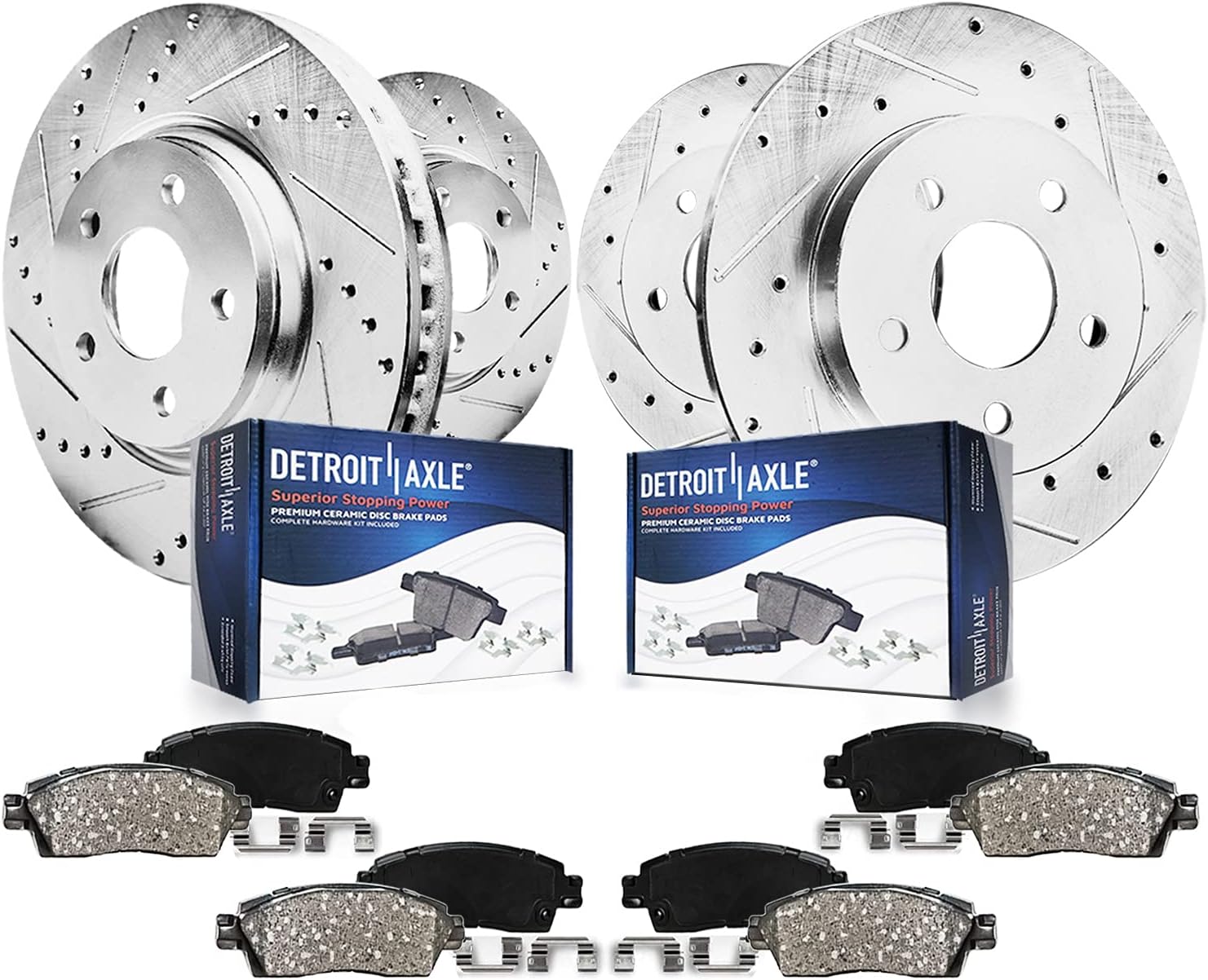
Detroit Axle Brake Kit for 1999-2004 Jeep Grand Cherokee (Drilled & Slotted Rotors, Ceramic Pads)
| Fitment | 1999-2004 Jeep Grand Cherokee (Akebono front calipers for some 1999-2002 builds) |
|---|---|
| Kit contents | 2 front rotors, 2 rear rotors, front and rear ceramic pads, hardware |
| Rotor type | Drilled and slotted, zinc plated |
| Pad material | Ceramic |
| Warranty | 10 Year Warranty |
This Detroit Axle brake kit supplies everything needed to refresh the front and rear brakes on a 1999-2004 Jeep Grand Cherokee (note specific Akebono front caliper fitment for early 1999-2002 builds). The kit includes two front and two rear drilled and slotted rotors plus front and rear ceramic pads with hardware, so it covers a full service without sourcing extra parts. Drilled and slotted rotors help dissipate heat and water, while silver zinc plating resists corrosion and reduces visible brake dust. Ceramic pads are quieter and produce less dust than many semi-metallic compounds, making them well suited for daily driving. Installation is straightforward for a competent DIYer or a shop, and locating holes are machined for direct fit without modification. Limitations: drilled/slotted rotors can be slightly grabby during bedding-in and are not the top choice for aggressive track use compared with high-performance rotors, and long-term wear rates will vary with driving and towing. For routine street driving and light towing on the specified Grand Cherokee years, this kit offers a practical, all-around balance of performance, corrosion resistance, and value.
Best for: Drivers who want a single purchase to replace both rotors and pads on a 1999-2004 Grand Cherokee and value quieter ceramic pads, corrosion resistance, and straightforward fitment.
Less Ideal for: Drivers seeking track-focused brake components or the highest possible fade resistance under extreme repeated heavy braking should consider dedicated performance rotors and pads instead.
- Complete kit includes front and rear drilled and slotted rotors plus front and rear ceramic pads and hardware
- Zinc plating on rotors resists corrosion and reduces visible brake dust
- Drilled and slotted design improves heat dissipation and wet-weather performance
- Machined locating holes for direct fitment to the vehicle without modifications
- Drilled and slotted rotors can feel slightly grabby during initial bedding-in
- Not optimized for aggressive track use compared with dedicated performance rotors
Verdict: A complete, road-oriented brake kit that balances quieter ceramic pads, corrosion-resistant drilled and slotted rotors, and direct fitment for 1999-2004 Jeep Grand Cherokee owners who want a reliable all-around replacement.
Bendix Premium PRT5253 Rear Brake Rotor

| Material Type | Cast Iron |
|---|---|
| Exterior Finish | Machined |
| Automotive Fit Type | Vehicle Specific Fit |
| Compatible with Vehicle Type | Cars, Sport-Utility-Vehicles, Trucks |
The Bendix Premium PRT5253 is a vehicle-specific rear brake rotor aimed at restoring factory braking feel on 1999–2004 Jeep Grand Cherokee models. Built from high-grade cast iron with a machined exterior finish and dynamic balancing, this rotor delivers consistent stopping power and reduced vibration for everyday and spirited driving. Its design emphasizes heat dissipation through venting, which helps resist brake fade during repeated heavy stops. Installation is straightforward for a mechanic or competent DIYer because the rotor is marketed as a direct replacement with factory-quality fit. Practical benefits include quiet operation and dependable pedal response once bedding is completed. Limitations worth noting are material susceptibility to surface rust over time if exposed and that measured thickness and exact dimensions should be confirmed against the vehicle’s factory rotor to avoid fit or clearance issues on atypical brake assemblies. For performance drivers expecting track-level durability or specialized coatings, this standard cast-iron rotor may be less ideal than heavier-duty or coated performance options.
Best for: Drivers who prioritize restoring or maintaining crisp, factory-quality braking on a 1999–2004 Jeep Grand Cherokee and want predictable performance for spirited street use.
Less Ideal for: Drivers planning frequent track days or who need corrosion-resistant coated rotors and higher thermal capacity should consider dedicated performance or coated replacements instead.
- Vehicle-specific design for direct fit on 1999–2004 Jeep Grand Cherokee applications
- High-grade cast iron construction for consistent braking performance
- Machined finish and dynamic balancing reduce vibration and noise
- Vented design promotes heat dissipation to limit brake fade under repeated heavy stops
- Cast iron surface can show surface rust if not coated or protected
- Not a coated or upgraded performance rotor for track-focused use
Verdict: Choose the Bendix Premium PRT5253 if you want a factory-quality, vehicle-specific cast-iron rear rotor that restores reliable stopping and low-vibration braking for a 1999–2004 Jeep Grand Cherokee.
TRQ Front Vented Brake Rotor Set for 1999–2004 Jeep Grand Cherokee

| Included Components | 1 Front Driver Side Brake Rotor, 1 Front Passenger Side Brake Rotor |
|---|---|
| Manufacturer Part Number | BRA77182 |
| Exterior Finish | Machined |
| Automotive Fit Type | Vehicle Specific Fit |
| Compatible with Vehicle Type | Sport-Utility-Vehicles |
These TRQ front vented rotors are built as direct-fit replacements for 1999–2004 Jeep Grand Cherokee front brakes. They use a G3000 casting alloy and a machined, non-directional surface finish intended to reduce noise and vibrations while restoring stopping power. Installation is aimed at DIYers and shops alike since the rotors are pre-machined and meant to fit without modifications. In real use they deliver smooth, quiet stops for many buyers, and TRQ provides installation videos to simplify the job. Reported benefits include improved pedal feel and longer life compared with worn originals, though a small number of customers received warped units or fitment mistakes from sellers, so inspect parts before installation. The rotors come as a driver and passenger rotor pair and are targeted at standard driving and towing loads for the Grand Cherokee rather than heavy-duty motorsport use. If you want a straightforward, factory-quality replacement that reduces vibration and restores braking performance, these rotors do the job when the correct fitment is verified.
Best for: Buyers who want a practical, no-frills factory-quality replacement to restore braking performance on a 1999–2004 Jeep Grand Cherokee and prefer parts that install with minimal fuss.
Less Ideal for: Drivers who need upgraded rotors for performance driving, heavy track use, or higher heat tolerance should choose performance-specific rotors instead.
- Direct vehicle-specific fit for 1999–2004 Jeep Grand Cherokee for easier installation
- Machined finish and non-directional surface to reduce vibration and noise
- G3000 casting alloy for improved durability compared with generic castings
- Includes both front driver and passenger rotors so no separate purchase required
- A minority of buyers reported warped rotors on arrival requiring resurfacing or replacement
Verdict: A practical, factory-style front rotor pair that restores smooth, quiet braking on 1999–2004 Jeep Grand Cherokee models with straightforward bolt-on installation.
Detroit Axle Rear Disc Brake Rotors Replacement Kit (2 pcs) for 1999–2004 Jeep Grand Cherokee

| Fitment | 1999-2004 Jeep Grand Cherokee |
|---|---|
| Quantity | 2x rear rotors |
| Exterior finish | Zinc |
| Material type | Ceramic |
These Detroit Axle rear rotors are a straightforward direct-replacement set for 1999–2004 Jeep Grand Cherokee rear brakes. The kit includes two zinc-plated vented rotors with machined locating holes so they mount to the hub without modification. Vented design and claimed heat resistance help with cooling during repeated stops while the zinc finish reduces visible corrosion and wheel dust. In practice these rotors are aimed at drivers who want a budget-friendly, OEM-style swap that restores smooth stopping and reduces vibration from warped rotors. They are typically installed with basic tools during a brake job and pair with standard replacement pads. Limitations are that they are a plain drilled/slotted alternative is not included and they do not target high-performance or heavy towing use; drivers who need upgraded fade resistance or motorsport features should consider performance rotors. For everyday driving and restoring factory braking feel on an older Grand Cherokee these provide a sensible, cost-conscious replacement.
Best for: Owners replacing worn or warped rear rotors on a 1999–2004 Grand Cherokee who prioritize an affordable, factory-style replacement that restores smooth stopping.
Less Ideal for: Drivers who demand track-capable components, aggressive cooling/drilled and slotted performance, or who frequently tow heavy loads should look at performance-grade rotors instead.
- Direct-fit design with machined locating holes for bolt-on installation
- Zinc plating resists surface corrosion and reduces visible wheel dust
- Vented construction improves cooling compared with solid rotors
- Kit includes both rear rotors needed for a single axle replacement
- Not designed for heavy-duty towing or high-performance braking demands
Verdict: A budget-friendly, direct-fit rear rotor kit that restores factory-style braking for 1999–2004 Jeep Grand Cherokee owners.
Auto Shack Front Drilled & Slotted Brake Rotors, E-Coated (Front Pair)

| Compatible Vehicle | Jeep Grand Cherokee 1999-2004 (front) |
|---|---|
| Rotor Construction | Vented |
| Face Type | Drilled & Slotted |
| Exterior Finish | Black Electrolysis Coated |
| Wheel Bolt Holes | 5 |
These Auto Shack front rotors are a vehicle-specific replacement designed to restore predictable braking on 1999–2004 Grand Cherokee front hubs. They are vented, drilled and slotted for improved heat dissipation and debris clearing, and the black electrolysis e-coating helps resist surface rust during storage and on-road use. Typical installation replaces worn or warped rotors when paired with compatible pads and hardware; packaging indicates the pair is labeled for left and right which speeds installation. The drilled and slotted face can reduce fade under heavy use compared with plain rotors, though drilled designs can be slightly noisier and may wear pads a bit faster under aggressive driving. Material is alloy steel and construction is vented to aid cooling for everyday towing and commuting. Verify fitment for lug count and rotor diameter before ordering since these are vehicle-specific parts. For buyers prioritizing reliable stopping and corrosion protection at a budget-friendly price, these rotors offer a practical factory-replacement option.
Best for: Buyers who want a dependable, vehicle-specific front rotor that prioritizes consistent stopping and corrosion resistance for daily driving and light towing on a Grand Cherokee.
Less Ideal for: Drivers seeking ultimate track performance or ultra-quiet, low-wear rotors should consider specialty high-performance or solid-surface options instead.
- Vehicle-specific fit for 1999–2004 Grand Cherokee front applications simplifies replacement.
- Drilled and slotted, vented design improves heat dissipation and helps reduce brake fade.
- E-coating provides visible corrosion resistance for longer shelf life and road exposure.
- Sold as a labeled left/right pair to speed installation and reduce fitment confusion.
- Drilled rotors can produce slightly more brake noise and may accelerate pad wear under aggressive use.
Verdict: A budget-friendly, vehicle-specific front rotor pair that delivers reliable stopping and corrosion resistance for 1999–2004 Grand Cherokee drivers.
Detroit Axle Brake Kit for 1999-2004 Jeep Grand Cherokee — Front and Rear Rotors with Ceramic Pads
| Fitment | 1999–2004 Jeep Grand Cherokee (Akebono front calipers; built before 5/11/2002 for specific models) |
|---|---|
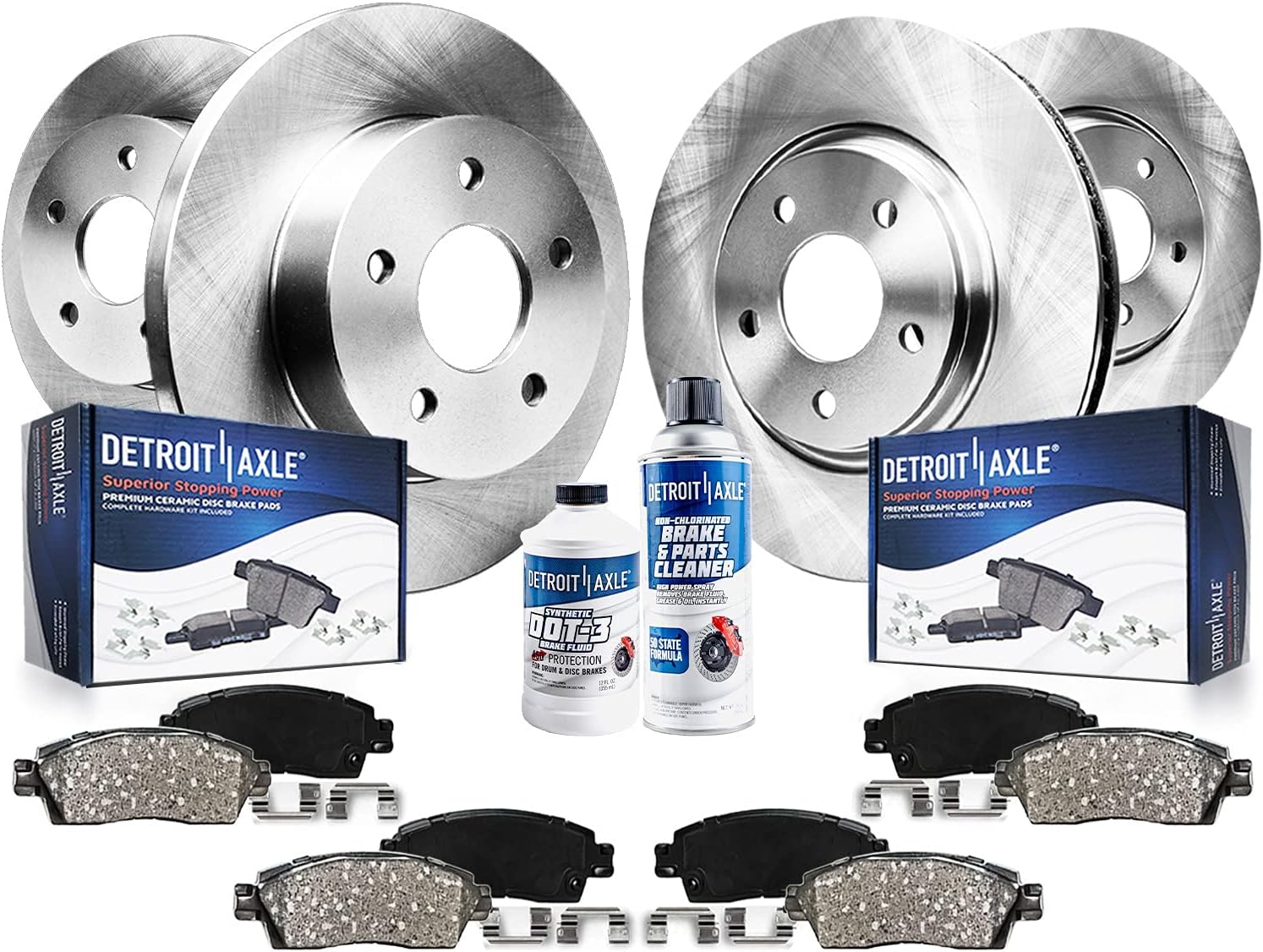
| Kit contents | Front and rear rotors, front and rear pads, hardware, brake cleaner, brake fluid |
| Pad type | Ceramic |
| Rotor feature | Vented with slots |
| Finish | Zinc plated |
This Detroit Axle kit supplies everything needed to refresh the braking system on a 1999–2004 Jeep Grand Cherokee: two front and two rear vented rotors, front and rear ceramic pads with hardware, a can of brake cleaner and a bottle of brake fluid. The rotors are zinc plated and machined with accurate locating holes so they install without modification, while the ventilation slots help dissipate heat and reduce moisture buildup. Ceramic pads aim for quieter operation and the kit includes basic clips and tiny anti-seize packets for installation. In practice the set is tailored for DIY or home-garage installers who want a full replacement in one purchase and reviewers report good fit and solid stopping performance after bedding in. Expect a mostly factory-quality fit and lower initial noise, but note the hardware quality varies by batch; a few buyers reported tight or undersized clips and the small grease packets are minimal. Also the kit does not include rotor mounting screws, so plan accordingly if your vehicle uses them.
Best for: Buyers who value documented real-world fit and want a single kit that replaces both rotors and pads for their Grand Cherokee while keeping installation simple and reasonably low risk.
Less Ideal for: Drivers seeking high-performance or track-oriented braking upgrades should consider performance-specific rotors and pads instead, and buyers wanting a plug-and-play kit that includes every small fastener and accessories may prefer a premium package.
- Complete kit covering both front and rear rotors and pads so you can replace all four corners at once
- Vented, slotted rotors and zinc plating improve cooling and resist surface corrosion
- Machined locating holes for a close fit that usually installs without modifications
- Includes brake cleaner and brake fluid so you have essentials for installation and bleeding
- Hardware quality and clip fitment can vary; some users reported front clips rubbing or being undersized
- Anti-seize grease is provided in very small packets and may not be sufficient for multiple fasteners
Verdict: If you want a single, DIY-friendly kit that renews all four corners on a 1999–2004 Grand Cherokee with generally reliable factory-quality fit, this Detroit Axle set is a strong, evidence-backed choice.
Detroit Axle Brake Kit for 1999–2004 Jeep Grand Cherokee — Drilled & Slotted Rotors with Ceramic Pads

| Fitment | 1999–2004 Jeep Grand Cherokee (see fit notes) |
|---|---|
| Rotors | Drilled and slotted, zinc plated |
| Brake pads | 100% ceramic, hardware included |
| Includes | Brake cleaner spray and DOT3 brake fluid |
| Warranty | 10 Year Warranty |
This Detroit Axle kit supplies everything needed to replace front and rear brakes on 1999–2004 Jeep Grand Cherokee models covered by the fitment notes. The kit includes two drilled and slotted rotors for both axles, front and rear ceramic brake pads with hardware, a can of brake cleaner and a small bottle of DOT3 fluid so you can complete a full service without sourcing extra consumables. Drilled and slotted rotors aid heat dissipation and help keep braking consistent under repeated stops, while the ceramic pads are quiet and generate less brake dust than metallic compounds. Parts are machined with locating holes to match factory fitment which reduces installation adjustments for DIYers or shops. Expect a solid factory-replacement feel and noticeably improved stopping compared with worn parts, but be prepared for a basic kit experience: instructions are minimal in some packages and a small number of buyers reported fitment issues with accessory clips that required reusing original hardware. This kit is best paired with standard installation tools and basic brake bedding procedure to get the advertised performance.
Best for: Buyers who want a full, factory-quality replacement brake set for a 1999–2004 Jeep Grand Cherokee and value quiet operation, improved heat control, and the convenience of a single kit.
Less Ideal for: Drivers looking for high-performance racing pads or oversized brake upgrades should consider performance-specific rotors and pads instead.
- Complete set covering front and rear rotors and pads so you can do a full brake service at once
- Drilled and slotted rotors improve cooling and help maintain consistent stopping under repeated use
- 100% ceramic pads offer low noise and reduced brake dust compared with metallic pads
- Includes brake cleaner and fluid so you have the basic consumables for installation
- Machined locating holes and zinc plating help with fit and corrosion resistance
- Some accessory clips or hardware in the kit have been reported as poor fit and may need replacement or reuse of old parts
- Packaging does not always include detailed installation instructions so beginners will need to consult external guides
Verdict: A complete, factory-style brake replacement kit for 1999–2004 Jeep Grand Cherokee owners who want quieter ceramic pads and drilled/slotted rotors in one convenient package.
Choosing the Right 1999-2004 Jeep Grand Cherokee Brake Rotors: Key Factors to Consider
Fitment and Hub Compatibility
Correct fitment is the first priority for a WJ Grand Cherokee. Rotors must match the hub pilot diameter, bolt pattern, and hat height so they sit true without forcing. Incorrect pilot bore or hat thickness can cause runout, wheel vibration, or uneven pad contact.
Confirming rotor center bore, mounting surface finish, and whether an application is intended for front or rear installation on the WJ reduces the chance of rework during installation. Some rotors specify whether they accept hub-centric or lug-centric fitment; for the Grand Cherokee WJ it is important to pick rotors that align to the hub to maintain consistent rotor runout and braking feel.
Material and Casting Quality
Rotor metallurgy determines wear rate, heat capacity, and susceptibility to cracking. High-quality cast iron with controlled porosity resists rapid wear and retains heat capacity, which helps maintain consistent braking performance under repeated stops.
Pay attention to tolerances on thickness and flatness. Poor casting can result in uneven wear and premature vibration. Surface finishing and protective coatings also matter to limit corrosion at the hat and friction surface edges on vehicles that see road salt or moisture.
Thermal Design and Venting
The WJ Grand Cherokee weighs more than smaller SUVs and can generate substantial heat during prolonged braking or towing. Rotor venting style, vane count, and overall thermal mass influence how quickly a rotor sheds heat and how resistant it is to warping.
A rotor with efficient internal vanes and adequate mass will maintain braking performance longer under heat. Consider rotors designed with directional vanes or improved coolant flow if you frequently drive in hilly terrain or tow, as those conditions increase thermal load.
Thickness, Minimum Thickness, and Resurfacing Limits
Initial rotor thickness and the manufacturer-specified minimum thickness determine how many safe resurface cycles you can expect. Thicker rotors can often be resurfaced once or twice, while thin rotors may require replacement sooner.
Check the stamped or printed minimum thickness and compare it to the rotor's nominal thickness. If you plan to resurface, ensure the rotor has enough material to remain within tolerance after machining. For many WJ owners, replacement rather than resurfacing is preferable if runout or uneven wear is present.
Design Features That Affect NVH
Noise, vibration, and harshness are influenced by rotor balance, hat rigidity, and slot or drill patterns. Rotors with balanced venting and uniform mass distribution reduce the risk of brake judder and squeal on the Grand Cherokee chassis.
Slotting and chamfers can help evacuate gas and reduce glazing, but aggressive patterns may increase pad wear and noise. Consider the trade-off between braking bite and NVH when choosing a design intended for street use versus heavy-duty or track usage.
Corrosion Protection and Surface Treatments
Road salt and moisture accelerate rust on rotors, which can affect appearance and the mating surface between rotor and hat. Protective coatings on the hat and non-friction surfaces extend service life and ease installation later on.
Surface treatments should not interfere with braking surfaces. Look for rotors with coated hats or cross-drilled passthroughs that isolate the friction zone from corrosion-prone areas. Proper coatings may reduce surface rust during storage and in seasonal climates.
When to Replace Rotors on a WJ Grand Cherokee
Brake rotors show wear in predictable ways on the 1999-2004 Grand Cherokee. Common indicators include a pulsating brake pedal, increased stopping distance, visible scoring, or vibration under braking. Regular inspection of rotor thickness and runout helps catch problems before they affect safety.
Runout and thickness measurements reveal whether resurfacing is possible. If the rotor is below the manufacturer-specified minimum thickness or exhibits radial runout beyond tolerance, replacement is the recommended action for consistent braking performance.
- Pedal pulsation at certain speeds suggests uneven rotor thickness or runout.
- Deep grooves or heat spots mean the friction surface has been compromised.
- Rust build-up at the hat can affect centering and induce vibration.
Single-Piece Versus Two-Piece Rotors for the Grand Cherokee
Single-piece cast rotors are the common direct-fit choice for WJ Grand Cherokees and offer simplicity and cost-effectiveness. They are durable for most street and towing use and do not require additional hardware during installation.
Two-piece rotors separate the friction ring from the hat and can reduce unsprung weight or improve heat dissipation in some designs. For routine ownership and highway driving, single-piece rotors are usually sufficient. Two-piece designs may be overkill unless you have specific weight or cooling requirements.
- Single-piece: straightforward, typically lower cost, reliable for daily driving.
- Two-piece: potential weight and thermal advantages, more complex installation and hardware requirements.
Slotting, Drilling, and Surface Treatments Explained
Slotted and drilled patterns each have benefits and trade-offs. Slotted rotors can help clear pad deposits and maintain a fresher friction surface, while drilled rotors promote heat escape but can concentrate stress and risk cracking under heavy load.
For street-driven WJ Grand Cherokees, moderate slotting or plain rotors with a chamfer often provide the best balance of consistent bite and longevity. Avoid overly aggressive drilling if you do a lot of towing or repeated heavy stops.
- Slotted: better pad cleaning, modest impact on pad wear.
- Drilled: aids venting but may reduce structural integrity under extreme heat.
- Coated surfaces: improve corrosion resistance on non-friction areas.
Measuring Rotor Thickness and Inspecting Wear
Use a micrometer or caliper to measure rotor thickness at multiple points around the friction surface. Compare readings to the rotor's nominal and minimum thickness specification. Measure before and after resurfacing attempts to ensure you remain above the safe limit.
Inspect the rotor face for heat spotting, outward warping, or deep scoring. If measurements vary significantly around the circumference, it indicates runout or uneven wear that may require replacement rather than machining.
- Measure at four or more locations evenly spaced around the rotor.
- Record the thinnest reading and compare with the stamped minimum thickness.
- Look for blue discoloration or raised heat spots that indicate thermal overload.
Installation Tips Specific to the WJ Chassis
When installing new rotors on a 1999-2004 Grand Cherokee, clean the hub flange and ensure any rust or debris is removed so the rotor seats evenly. Use thread locker where specified by factory procedures on fasteners and torque lug nuts in a star pattern to seat the rotor uniformly.
If reusing calipers and pads, check pad backing plates and guide pins for smooth operation. Measure rotor runout with a dial indicator after mounting to verify correct installation and to catch any hub-related issues before road testing.
- Clean hub mating surface for true centering.
- Torque lug nuts to factory specification in a star pattern.
- Verify runout after mounting and before final road test.
Maintaining Rotors to Maximize Service Life
Routine inspections and timely pad replacement help extend rotor life. Replace pads in pairs and avoid driving extensively with severely worn pads which can cut into the rotor face. Keep caliper slide pins lubricated and ensure the brake system is free of seized components.
If you resurface rotors, balance the work by checking thickness and runout across both sides of the vehicle to maintain consistent pedal feel. For corrosion-prone climates, periodic cleaning and protective coatings on non-friction areas reduce long-term deterioration.
- Change pads before they reach the metal backing to avoid scoring.
- Inspect caliper function during every brake service.
- Store replacement rotors in dry conditions to prevent surface rust prior to installation.
Still looking for the perfect fit?
Select your Jeep Grand Cherokee configuration to see the most relevant Brake Rotors recommendations
How We Chose the Best 1999-2004 Jeep Grand Cherokee Brake Rotors
We focused on selection criteria that matter for the 1999-2004 Jeep Grand Cherokee WJ chassis and on-road use. Primary evaluation factors included precise fitment to WJ hub specifications and bolt pattern, rotor material and casting quality, and surface treatments that affect corrosion resistance and break-in. We also checked thermal performance indicators such as venting design and mass to assess resistance to warping under repeated heavy stops. Mounting and installation compatibility, including hat height and pilot bore dimensions, were verified to avoid common fitment issues.Durability was judged by expected wear rates under mixed driving conditions and by manufacturer tolerances on thickness and runout. Noise and vibration potential were considered through design features like directional vanes and balanced venting. We excluded any rotors that required significant modification to the hub, adapters, or other brake components. Also excluded were rotors lacking clear specifications for thickness, minimum thickness, or vehicle-specific fitment for the WJ years. The remaining candidates were prioritized for dependable fit, predictable thermal behavior, and longevity for typical Grand Cherokee usage.
Our full evaluation process is outlined in our review methodology.
FAQ
How do I know if my WJ Grand Cherokee rotors can be resurfaced?
Measure rotor thickness at several points and compare the thinnest reading to the stamped minimum thickness. If the post-machine thickness would fall below the minimum or if there is severe heat damage or cracking, replacement is the safer option.
Are slotted or drilled rotors better for everyday driving on a Grand Cherokee?
For typical street and light towing use, moderate slotting or plain rotors with chamfers provide a good balance of performance and longevity. Drilled rotors may offer cooling benefits but can be more prone to stress-related issues under repeated heavy braking.
What thickness specification should I record when replacing rotors?
Record the rotor's nominal thickness and the manufacturer minimum thickness. Keep the thinnest measured reading before installation for future reference and to determine whether resurfacing is permissible.
Can I replace only one rotor on an axle of my Grand Cherokee?
It is generally recommended to replace rotors in pairs on the same axle to maintain consistent thermal and wear characteristics. Mismatched rotors can lead to uneven braking feel and unexpected pedal behavior.
What are common brake rotor wear symptoms on a WJ Grand Cherokee?
Typical symptoms include pedal pulsation at certain speeds, grinding noises from deep grooves, decreased braking responsiveness, and visible scoring or heat spots. These often indicate the need for measurement and likely replacement.
How should I measure rotor runout after installation?
Mount a dial indicator with its tip against the rotor surface near the hat and rotate the wheel hub slowly. Compare the maximum variation to factory runout tolerances. Excessive runout indicates seating or hub surface problems that should be corrected before driving.
Final Verdict
For the 1999-2004 (WJ) Jeep Grand Cherokee, prioritize rotors that match hub dimensions and offer sufficient thermal capacity for your driving and towing habits. Balance choices between straightforward single-piece cast designs for reliable everyday service and higher-performance designs only if your usage demands them.Focus on correct fitment, adequate thickness, and venting to avoid premature warping or uneven wear. Replace rotors in balanced pairs and verify runout at installation to preserve pedal feel and braking safety.
Explore More:
- Check out all Jeep Grand Cherokee parts & accessories
- Explore Brake Rotors Maintenance & Repair Guides
- Explore Brake System
- Browse all Auto Parts
