

Note: This article contains affiliate links. If you click on these links and make a purchase, I may earn a small commission at no extra cost to you. This helps support my research and content. Read my full affiliate disclosure here.
If your 2018–2024 Toyota Camry is showing hesitation, poor idle, or reduced fuel economy, the mass air flow sensor is a common place to start. Replacing a failing sensor can return smooth throttle response and correct engine fueling without other, more invasive repairs. This guide covers six carefully shortlisted options that fit the Camry's intake and wiring harness, and focuses on how each choice addresses signal accuracy, durability, and fitment.Below you will find the top picks for this vehicle scope plus practical buying guidance on diagnostics, installation, and maintenance so you can pick the right replacement confidently.
Looking for other parts? See all Toyota Camry parts & accessories.
Top Picks at a Glance
| Best Overall The best all-around choice for most situations | AISIN MAFT-00277 Mass Air Flow (MAF) Sensor |  |
| Best Quality Built to a higher standard if you want something more solid | Denso 197-7020 Mass Air Flow Sensor |  |
| Best Value The sweet spot between price and what you get | ENA Mass Air Flow Sensor (Replacement for MAS0447) |  |
| Best Budget The cheapest option that still gets the job done reliably | Powerlord PLC05 Mass Air Flow Sensor (replacement) |  |
| Highest Rated A top-rated pick with lots of positive feedback | AIUSLN Mass Air Flow (MAF) Sensor 22204-75040 |  |
| Most Popular A crowd favorite that many people choose with confidence | keriolee Mass Air Flow Sensor 22204-75040 (Replacement MAF) |  |
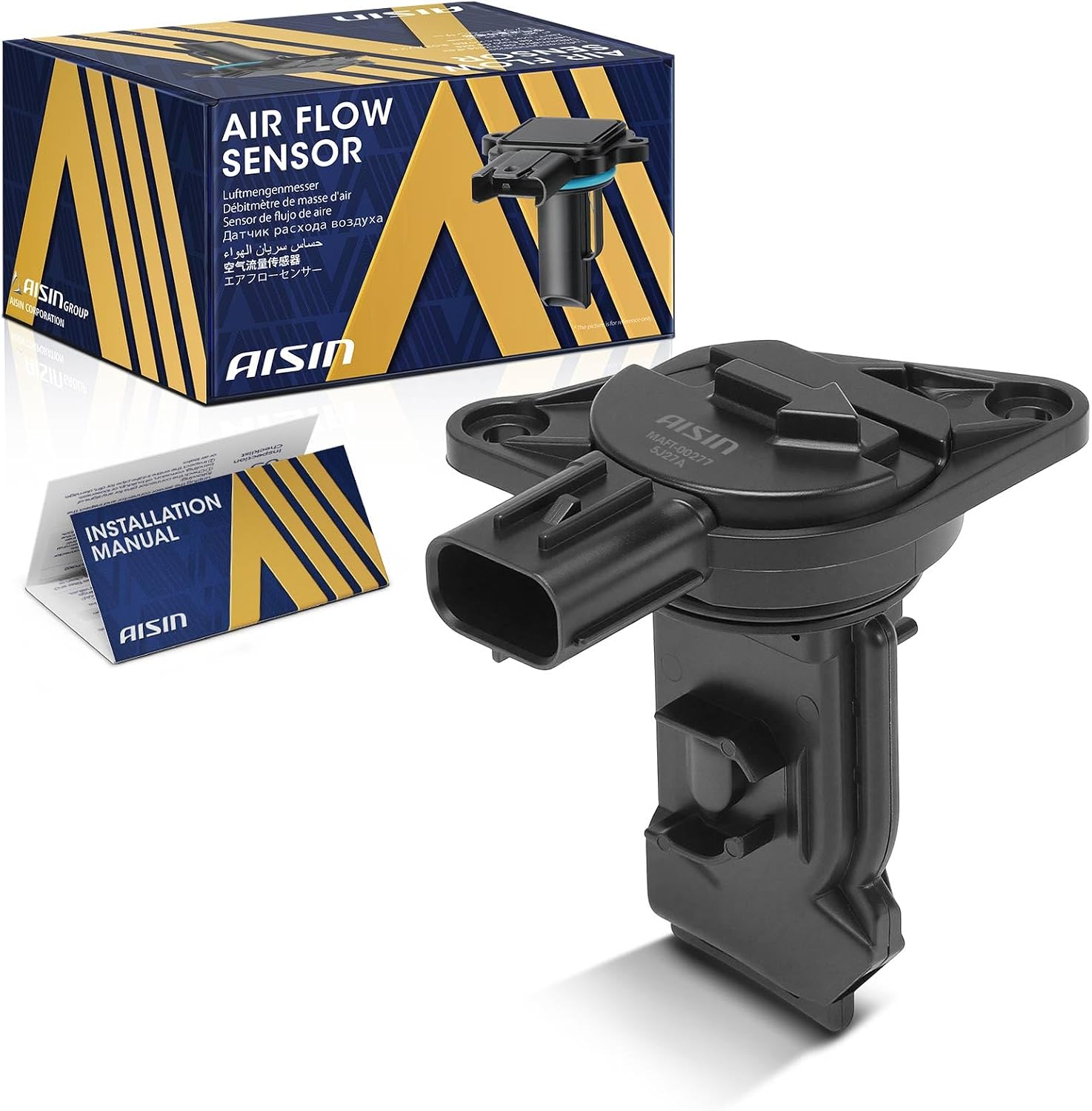
AISIN MAFT-00277 Mass Air Flow (MAF) Sensor
| Manufacturer | AISIN |
|---|---|
| Manufacturer Part Number | MAFT-00277 |
| OEM Part Number | 2220475040 |
| Terminal Quantity | 4 |
The AISIN MAFT-00277 is an aftermarket MAF sensor intended as a direct replacement for factory units on compatible Toyota Camry model years in the specified range. It measures incoming air to the engine and sends that signal to the engine control module so fuel delivery and idle control stay correct. Installation is straightforward for a tech or competent DIYer: the sensor uses a four-pin connector and is shaped for a secure, rattle-free fit in the intake tract, so no modifications should be required. Practical benefits include a manufacturer with OEM heritage and an emphasis on matching factory fit and electrical interface, which helps avoid check-engine lights and drivability issues that follow from mismatched sensors. Limitations are typical of aftermarket parts: long-term durability depends on driving conditions and maintenance, and buyers should confirm connector and housing details against their vehicle before ordering. This unit is focused on restoring correct air metering rather than improving performance or fuel economy beyond factory levels.
Best for: Buyers who want a straightforward, factory-compatible replacement for their Camry to restore proper engine air metering and avoid drivability issues while keeping maintenance simple.
Less Ideal for: Drivers seeking performance upgrades or tuning components should look at purpose-built airflow solutions rather than a factory-style replacement sensor.
- Direct-fit design aimed at factory-style installation for compatible Camry models
- Four-pin electrical interface matching the referenced part number for straightforward replacement
- Manufactured by AISIN, a supplier with long-standing OEM experience
- Designed to sit securely in the intake to minimize rattles or poor sealing that can affect readings
- No performance gains over the original sensor since it is a factory-style replacement
- Long-term lifespan can vary with exposure to contaminants and is not specified in the listing
Verdict: Choose this AISIN MAF sensor to restore factory air metering on compatible Camry models with a direct-fit, manufacturer-backed replacement.
Denso 197-7020 Mass Air Flow Sensor

| Measurement Accuracy | ±3% |
|---|---|
| Mounting Type | Surface Mount |
| Output Type | Analog |
| Material Type | Platinum or Nickel |
The Denso 197-7020 is a direct-replacement style mass air flow sensor that measures intake air volume and sends an analog signal to the engine control unit for fuel and ignition adjustments. Typical use is as a factory-quality replacement when a failing MAF causes rough idle, poor throttle response, or decreased fuel economy. The sensor advertises ±3% measurement accuracy and a surface-mount installation that should match factory mounting points, which helps simplify swapping it into the intake tract on compatible vehicles. Its platinum or nickel sensing materials are intended to resist contamination and maintain stable readings. Because it is an analog unit, it integrates with stock engine management without the need for reprogramming, but buyers seeking motorsport calibrations or higher-flow aftermarket intakes may find the standard calibration limiting. Fitment must be confirmed for 2018–2024 Toyota Camry applications before purchase since compatibility varies by engine and intake design.
Best for: Buyers who prioritize maintaining or restoring factory driveability and emissions behavior on their Camry and want a straightforward, plug-in replacement without ECU changes.
Less Ideal for: Drivers planning significant induction or engine performance upgrades who need a higher-flow or tunable MAF designed for modified airflows.
- Factory-style analog output for straightforward integration with stock engine management
- Advertised ±3% measurement accuracy for reliable airflow readings under typical conditions
- Surface-mount design intended to match factory mounting points for easier installation
- Not tailored for high-performance or modified intake systems where a different calibration or higher flow sensor may be required
Verdict: Choose the Denso 197-7020 when you want a factory-style, accurate plug-in MAF replacement to restore stock drivability on a 2018–2024 Toyota Camry.
ENA Mass Air Flow Sensor (Replacement for MAS0447)

| Output Type | electrical signal |
|---|---|
| Included Components | Mass Air Flow Sensor |
| Unit Count | 1.0 Count |
This ENA mass air flow sensor is a replacement unit intended to measure incoming air and send an electrical signal to the engine control system on supported Camry engines. It is typically used to replace a failed or out-of-spec MAF to correct rough idle, poor fuel economy, or check engine lights tied to air metering. The part lists compatibility with Camry 2018-2024 L4 2.5L and V6 3.5L applications and references the MAS0447 number for cross-checking fit. ENA advertises a direct-fit design for straightforward installation and routine maintenance, so a competent DIYer or tech can install it without modifying intake plumbing. Benefits include restoring accurate airflow readings to improve drivability and fuel efficiency. Limitations are that compatibility must be confirmed for your exact engine code and connector, and this is an aftermarket replacement so long-term durability may differ from factory-quality parts.
Best for: Buyers who prioritize a practical, cost-effective repair to restore normal engine operation and fuel economy on a 2018–2024 Camry without needing dealer parts.
Less Ideal for: Drivers seeking a factory-branded replacement with manufacturer-backed longevity testing or those who cannot confirm exact connector and part-number fit before purchase.
- Lists direct compatibility with 2018-2024 Toyota Camry 2.5L and 3.5L engines
- Designed for straightforward installation as a drop-in replacement
- Restores accurate airflow measurement to improve idle and fuel economy
- Includes a single unit with a four-pin connector for common Camry harnesses
- Aftermarket unit so long-term durability versus factory replacement is not guaranteed
Verdict: A practical aftermarket replacement to get a 2018–2024 Camry's air metering and drivability back to normal without extensive installation work.
Powerlord PLC05 Mass Air Flow Sensor (replacement)

| Brand Name | Powerlord |
|---|---|
| Model | PLC05 |
| Included Components | Mass Airflow Sensor *1 |
| Part Number | 89564694 |
The Powerlord PLC05 is an economy replacement MAF sensor intended to restore correct airflow readings for affected Toyota engines. It installs in place of the factory unit and is used when a failing MAF causes rough idle, reduced fuel economy, or check-engine codes. The unit is sold as a single sensor and marketed for many Toyota and Lexus applications including Camry 2.5L from 2018–2024. As a budget option it focuses on basic function rather than premium materials or extended life; the product description lists a recommended lifespan around three years or 60,000 miles. Real-world benefits include cheaper parts cost and straightforward bolt-in replacement for owners who want an inexpensive repair without replacing other components. Limitations are predictable for economy parts: longevity may be shorter than higher-end replacements and long-term calibration consistency is not guaranteed, so buyers who need long service life or factory-matching performance may prefer an upgraded or OEM-quality sensor.
Best for: Owners looking to fix a failing MAF on a 2018–2024 Camry who prioritize low upfront cost and a straightforward replacement over long service life.
Less Ideal for: Drivers who need the longest-lasting, factory-matching sensor performance or who prefer parts with extended durability guarantees.
- Affordable replacement cost compared with higher-end sensors
- Direct-fit design for compatible Toyota Camry 2.5L 2018–2024 applications
- Sold as a single ready-to-install unit to simplify DIY repairs
- Clear compatibility listing for many Toyota and Lexus engine variants
- Recommended lifespan of about 3 years or 60,000 miles may be shorter than premium options
- Economy-focused construction may not match long-term calibration stability of higher-grade sensors
Verdict: A cost-conscious, direct-fit replacement MAF for Camry 2.5L owners who need a low-cost repair quickly.
AIUSLN Mass Air Flow (MAF) Sensor 22204-75040

| Measurement Accuracy | +/-1.0% |
|---|---|
| Response Time | 2 Microseconds |
| Upper Temperature Rating | 125 Degrees Celsius |
| Specific Uses For Product | Air Flow Measurement, Direct O-E-M Replacement, Engine Fuel Injection Control |
This AIUSLN MAF sensor replaces the factory unit and measures intake air volume to help the engine control module maintain correct air-fuel mixture. It is a plug-and-play, pre-calibrated assembly intended for straightforward DIY replacement on compatible Camry and select Toyota/Lexus models. Notable features include a claimed +/-1.0% measurement accuracy, a 2 microsecond response time, heat- and corrosion-resistant materials, and an integrated mounting design that simplifies installation. In practice that means quicker throttle response, smoother idle, and the potential for improved fuel economy once the ECU relearns. The sensor is marketed as thermally stable and pre-tested, which supports long-term reliability for everyday driving. Limitations are typical for aftermarket sensors: fitment must be verified against part numbers and vehicle application before purchase, and installation may require clearing fault codes and driving for an ECU relearn to restore normal operation. Also, replacing the sensor will not fix unrelated intake leaks or oxygen sensor faults that cause similar codes.
Best for: Buyers who prioritize a reliable, factory-style replacement to restore smooth throttle response and consistent drivability with minimal fuss and downtime.
Less Ideal for: Users who want a performance-enhancing or tuned airflow sensor for modified engines or who prefer parts with documented OEM warranty channels.
- Direct-fit, pre-calibrated assembly for fast plug-and-play replacement
- Fast electrical response time for timely airflow updates to the engine control system
- Built from heat and corrosion resistant materials for improved durability in under-hood conditions
- Manufacturer claims precise measurement accuracy to support consistent air-fuel control
- Fitment depends on matching listed part numbers and vehicle application so verification is required before install
- Does not address unrelated causes of check-engine codes such as vacuum leaks or faulty oxygen sensors
Verdict: A dependable, direct-fit MAF sensor choice for restoring factory-level airflow sensing and stable engine performance on supported Camry and Lexus engines.
keriolee Mass Air Flow Sensor 22204-75040 (Replacement MAF)

| Mounting Type | Surface Mount |
|---|---|
| Output Type | Push-Pull |
| Specific Uses For Product | automotive, engine compartment |
| Material Type | Plastic |
This keriolee MAF sensor is a direct-replacement aftermarket airflow meter designed to fit vehicles that use the 22204-75040-style sensor. It measures intake air and feeds that signal to the engine computer so fuel delivery and idle behavior return to normal after a failing sensor. Installation is straightforward and can usually be done in about 10 minutes with basic tools by disconnecting the electrical connector and removing two mounting screws. The product is plastic-bodied and marketed as a factory-fit alternative at a lower cost than dealer parts. In testing by users it often clears common error codes like P0101 and P0171 and can quickly eliminate rough idle, stalling, and poor throttle response. Reports in customer feedback are mixed, with many buyers seeing immediate improvement and others experiencing premature failure or recurring check-engine lights, so long-term reliability may vary. This unit is a useful budget option to try before committing to a dealer sensor, but expect to troubleshoot fitment or replace again if symptoms persist.
Best for: Buyers who want a low-cost, quick repair to clear MAF-related drivability issues and prefer solutions validated by other users before spending on dealer parts.
Less Ideal for: Drivers who need a guaranteed long-term replacement or prefer manufacturer-sourced parts for critical reliability should consider purchasing a dealer or OEM-quality sensor instead.
- Direct-fit design for vehicles using the 22204-75040 sensor pattern, enabling quick bolt-in replacement
- Easy to install with basic tools in roughly 10 minutes, which saves on labor costs
- Often resolves common MAF-related codes and immediately improves idle and throttle response for many users
- Lower cost than dealer parts while offering a factory-style mounting and connector
- Customer reports show inconsistent longevity with some units failing after a short period
- Constructed from plastic which may not match the durability of higher-end or dealer sensors
Verdict: A budget-friendly, direct-fit replacement MAF that often restores drivability quickly and is worth trying before buying a dealer sensor.
Choosing the Right 2018-2024 Toyota Camry Mass Air Flow Sensor: Key Factors to Consider
Fitment and Connector Compatibility
Correct physical fit matters because the sensor must seal to the intake tract and mate with the Camry's OEM wiring harness. A mismatch can lead to vacuum leaks, poor sealing, or the need for an adapter harness that adds failure points and installation complexity. Verify the flange dimensions, mounting hole pattern, and electrical connector type for the exact 2018–2024 Camry engine and intake arrangement.
Also consider whether the sensor requires any reprogramming or calibration with the engine control module. Most direct-fit replacements do not, but sensors that present a different signal range can trigger diagnostic trouble codes. Choosing a unit that matches factory pinout and output behavior reduces the risk of driveability symptoms after installation.
Signal Accuracy and Linearity
The mass air flow sensor informs the engine control unit how much air enters the engine, so output accuracy across idle to full-throttle conditions directly affects air-fuel ratio. Look for specifications or data showing linear response across airflow ranges. Better linearity helps the ECU make consistent fueling decisions and reduces the chance of lean or rich conditions under different loads.
Some replacement sensors include built-in signal conditioning to reduce electrical noise and transient errors. For a Camry, stable signals at typical operating temperatures and RPM ranges are especially important because inconsistent readings can cause rough idle, hesitation, or surging.
Durability and Contamination Resistance
MAF sensors sit in the intake stream and are exposed to oil vapor, dust, and particulates from air filters. Materials and coatings that resist contamination extend sensor life and reduce sensitivity drift. Consider housings with protective screens or sensors designed to withstand common intake contaminants found in lightly oiled aftermarket filters and normal driving environments.
Check whether the sensor's manufacturer provides cleaning guidance and whether the sensing element tolerates recommended cleaning methods. Some sensors are more fragile and can be damaged by aggressive cleaning, while others are designed for gentle cleaning cycles that restore performance without replacement.
Diagnostic Compatibility and Error Codes
A replacement should communicate correctly with the Camry's engine control module so it does not produce false diagnostic trouble codes. Know the most common MAF-related codes for this vehicle and ensure the sensor presents the expected voltage or frequency signatures. Units that cause unexpected code P0100-style readings or intermittent signals will complicate diagnostics and may mask other issues.
Also consider ease of testing post-installation. A sensor that provides predictable voltage or frequency ranges makes it easier to verify operation with a multimeter or OBD-II data stream, speeding up troubleshooting when problems arise.
Ease of Installation and Serviceability
For most owners, direct-fit replacements that use the factory mounting points and connector are preferable because they minimize labor and error. Evaluate how accessible the sensor is on the Camry's intake path, whether special tools are required for removal, and whether the replacement includes new mounting hardware or seals.
Serviceability also means cleanability. If the sensor can be safely cleaned, that reduces lifecycle cost and downtime. However, some replacements are intended as disposable modules; in those cases confirm that the exchange process is straightforward and that the sensor is well-protected during handling.
Warranty and Support
Although not a direct performance metric, warranty length and manufacturer support signal confidence in the component. Warranties covering premature electrical failure or housing defects reduce long-term risk. Also look for clear installation instructions, wiring diagrams, or technical support resources specific to the 2018–2024 Camry.
Consider how warranty handling would work if the part fails after installation. Better documentation and accessible support channels reduce time spent diagnosing problems and help ensure you can get a replacement or refund without undue hassle.
Common Symptoms of a Failing MAF Sensor on 2018–2024 Camry
A failing mass air flow sensor on these Camry model years often presents as rough idle, intermittent hesitation during acceleration, stalling at low speed, or reduced fuel economy. You may also notice a check engine light that corresponds to an airflow or sensor circuit code. Symptoms can vary with engine load and environmental conditions, so intermittent faults are common.
Dirty MAF symptoms can mimic other intake-related issues, so it is important to pair symptom observation with diagnostic checks before replacing parts.
- Rough or unstable idle
- Hesitation or stumble on acceleration
- Reduced fuel economy
- Check Engine Light with airflow-related codes
- Black smoke or rich-running behavior in severe cases
How to Diagnose Before You Replace
Start with a live-data scan to watch the MAF sensor readings at idle and during a quick throttle blip. Compare the readings against expected ranges for the Camry's engine; a very low or erratic reading at idle suggests contamination or wiring issues. Also check for related codes and freeze-frame data to see under what conditions the fault occurred.
Physical checks are also valuable. Inspect the intake tract for vacuum leaks, check the air filter condition, and verify the connector and wiring harness for corrosion or damage. If readings return to nominal after gently cleaning the intake or replacing a damaged hose, a full sensor replacement may not be necessary.
- Use live-data to monitor voltage/frequency changes with throttle input
- Inspect air filter and intake tract for leaks
- Check wiring and connector for corrosion or pin damage
- Perform a controlled cleaning if contamination is suspected
Cleaning and Maintaining the Camry's MAF Sensor
If contamination is light, safe cleaning can restore proper function. Use a cleaner designed for mass airflow sensors and follow gentle, manufacturer-recommended procedures. Avoid touching the sensing element. After cleaning, allow the sensor to dry completely before reinstalling. Regular air-filter maintenance helps prevent recontamination.
Cleaning is a maintenance step rather than a permanent fix if the sensing element is degraded or the internal circuitry is failing. Track post-cleaning performance by observing live-data and driveability.
- Always follow explicit cleaning instructions for MAF elements
- Replace filters on recommended schedules to reduce contamination
- Dry completely before reinstalling to avoid shorting the sensor
Basic How-To Test Steps for the Sensor
You can perform basic checks with a multimeter and a scan tool. With the ignition on, verify sensor reference voltage and ground at the connector. At idle and during a few blips of throttle, watch the live MAF value change smoothly. Sudden drops, erratic jumps, or no change indicate a problem with the sensor or wiring.
If you see a diagnostic code such as a P0100-type airflow issue, correlate it with live-data and physical inspections. Intermittent electrical faults often stem from wiring or connector corrosion rather than the sensor itself.
- Verify reference voltage and ground at the MAF connector
- Compare live-data MAF readings to expected behavior during throttle changes
- Check for diagnostic codes and freeze-frame data to narrow root causes
Installation Tips for Direct-Fit Replacements
Plan to work with a clean intake area to avoid introducing debris during installation. Use new gaskets or seals if the replacement includes them, and tighten mounting hardware to factory torque specs. Confirm that the wiring connector seats fully and that any retaining clips are engaged.
After installation, clear any related diagnostic codes and perform a drive cycle to confirm stable readings and correct idle behavior. If the ECU requires a relearn for idle or throttle adaptation, follow the vehicle manufacturer's recommended procedure.
- Use correct torque on mounting hardware and replace seals if supplied
- Ensure connector pins are straight and free of corrosion
- Clear codes and monitor live-data during an initial test drive
When to Replace Versus Repair
If diagnostics point to wiring or connector damage, repair those first because they are often less costly and will restore correct readings. If the sensing element shows physical damage, or if cleaning does not restore a stable, linear signal, replacement is the sensible choice. Consider expected remaining life, warranty coverage, and ease of access when deciding between repair and replacement.
In many cases the choice depends on whether the module is serviceable and whether replacement is straightforward for the 2018–2024 Camry. For sensors built into complex housings or with fragile elements, replacement minimizes the risk of recurring issues.
- Repair wiring and connectors before replacing the sensor
- Replace when cleaning does not restore stable readings
- Factor in warranty and ease of future service when deciding
Still looking for the perfect fit?
Select your Toyota Camry configuration to see the most relevant Mass Air Flow Sensors recommendations
How We Chose the Best 2018-2024 Toyota Camry Mass Air Flow Sensor
We prioritized components that match the factory connector and intake flange for 2018–2024 Toyota Camry applications to avoid modification and ensure plug-and-play installation. Signal fidelity was a key filter. We evaluated specifications and manufacturer documentation for sensor output range, linearity across airflow rates, and claimed tolerance to intake contamination. Reliability and longevity were assessed by looking for proven sensor housings, recommended cleaning procedures, and IP or environmental resistance ratings where available.Electrical compatibility was another decisive criterion. Items with proper wiring pinouts and built-in filtering or shielding scored higher because incorrect signal conditioning can trigger check engine codes or erratic idle. Thermal stability and calibration for the Camry's engine management expectations were also considered. We excluded any units that required adapter harnesses, extensive modification, or lacked clear fitment information for the 2018–2024 Camry. Finally, we flagged options with straightforward return policies or warranty coverage in alignment with typical replacement-part expectations.
Our full evaluation process is outlined in our review methodology.
FAQ
What are the most common MAF sensor symptoms on a 2018–2024 Camry?
Common symptoms include rough idle, hesitation during acceleration, a drop in fuel economy, and a check engine light that indicates airflow or sensor circuit issues. Symptoms can be intermittent and worsen with contamination or wiring deterioration.
Can I clean the mass air flow sensor instead of replacing it?
Often light contamination can be resolved with a safe cleaning procedure using a proper MAF cleaner. Cleaning helps when the sensing element is soiled, but if the element or circuitry is damaged, cleaning will not fix the issue and replacement is required.
How do I test the MAF sensor on my Camry?
Use a scan tool to view live MAF readings at idle and during throttle inputs and compare behavior to expected ranges. Also verify reference voltage and ground at the sensor connector with a multimeter. Erratic or non-responsive readings indicate a faulty sensor or wiring problem.
Will a failing MAF sensor trigger a diagnostic code?
Yes, faults in the sensor or its circuit commonly set airflow-related codes. Codes similar to P0100 indicate general MAF circuit issues, but you should correlate codes with live-data and freeze-frame information for an accurate diagnosis.
Is installing a replacement MAF sensor difficult on the 2018–2024 Camry?
Installation is usually straightforward for direct-fit units that use the factory mounting and connector. Accessibility of the intake may vary by engine configuration, so plan for basic hand tools and follow torque and sealing recommendations.
How long should a replacement MAF sensor last on this vehicle?
Lifespan depends on operating environment and maintenance. With proper air-filter care and minimal contamination, a replacement can last many years. Exposure to oil-laden filters or heavy particulate environments will shorten service life.
Final Verdict
Prioritize a direct-fit sensor that matches the Camry's connector and mounting pattern, and choose a unit with proven signal stability across idle and load conditions. Address wiring and intake leaks before replacing the module, because many issues attributed to the sensor stem from related components.Balance durability and serviceability: if cleaning restores stable readings, save the replacement for later, but if signals remain erratic or the sensing element is damaged, opt for a replacement that offers solid warranty support and clear installation instructions to ensure a reliable repair.
Explore More:
- Check out all Toyota Camry parts & accessories
- Explore Mass Air Flow Sensors Maintenance & Repair Guides
- Explore Engine
- Browse all Auto Parts
