

Note: This article contains affiliate links. If you click on these links and make a purchase, I may earn a small commission at no extra cost to you. This helps support my research and content. Read my full affiliate disclosure here.
If your 2002-2006 Toyota Camry is acting rough at idle, stalling, or throwing a codes related to intake metering, the mass air flow sensor can be a likely culprit. Choosing the right mass air flow sensor matters because this component directly influences fuel trim, idle quality, and overall drivability on these Camry engines.This guide covers seven carefully shortlisted mass air flow sensors that fit the 2002–2006 Camry scope. We evaluated each option for mechanical and electrical fitment, signal accuracy, and installation practicality to help you restore stable idle, correct fuel delivery, and reliable diagnostics. Read on for the buying factors to weigh and practical tips for installation and troubleshooting.
Looking for other parts? See all Toyota Camry parts & accessories.
Top Picks at a Glance
| Best Overall The best all-around choice for most situations | YZHIDIANF 22204-22010 Mass Airflow (MAF) Sensor |  |
| Best Quality Built to a higher standard if you want something more solid | DENSO Mass Air Flow Sensor for Toyota Camry 2.4L (2002–2006) |  |
| Best Value The sweet spot between price and what you get | A-Premium Mass Air Flow Sensor (5-Pin) for 2002–2006 Toyota Camry |  |
| Best Budget The cheapest option that still gets the job done reliably | CmeRto Mass Air Flow Sensor 22204-22010 Compatible with 2002–2006 Toyota Camry |  |
| Highest Rated A top-rated pick with lots of positive feedback | CARBBIA Mass Air Flow Sensor (Replaces 22204-22010) |  |
| Most Popular A crowd favorite that many people choose with confidence | OYEAUTO Mass Air Flow Sensor (fits select Toyota/Lexus 3.0L/3.4L/4.0L applications) |  |
| Best Seller A high-volume bestseller chosen again and again | Partschoice AF10029 Mass Air Flow Sensor (5-Prong) |  |
YZHIDIANF 22204-22010 Mass Airflow (MAF) Sensor
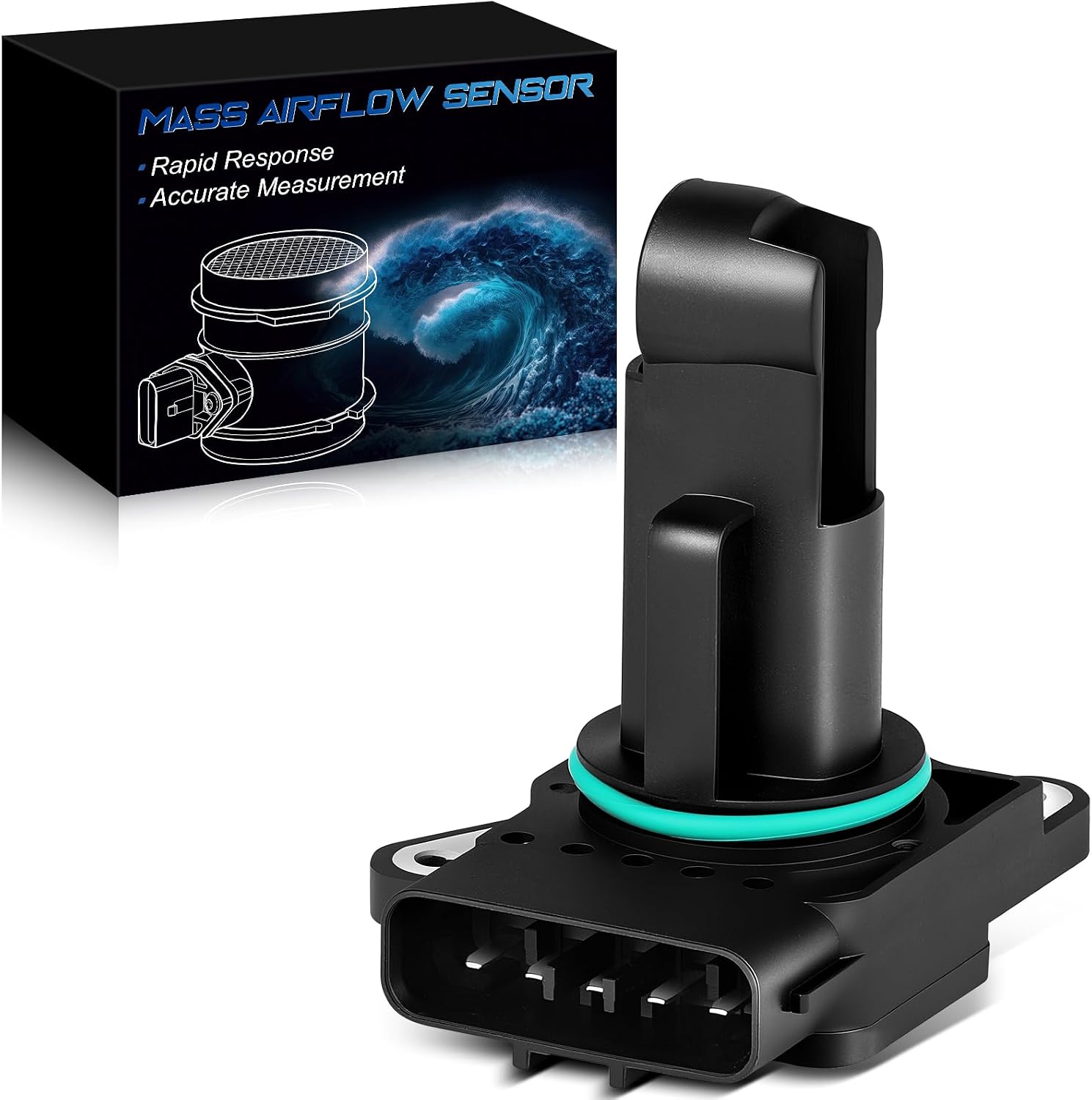
| Mounting Type | Flange Mount |
|---|---|
| Output Type | Digital |
| Response Time | 0.1 seconds |
| Model | 22204-22010 Mass Airflow Sensor |
| Warranty Description | 2-year Factory Warranty |
This YZHIDIANF 22204-22010 Mass Airflow Sensor replaces a failing MAF to restore correct air-fuel metering and clear common MAF-related fault codes. It is a flange-mount, digital-output sensor with a fast 0.1 second response, so it is suitable for DIY swapouts or shop installations on the listed Camry model years. In real-world use it corrects rough idle, poor acceleration, hard starting, and fuel-economy issues caused by a bad sensor and many buyers report straightforward installation and immediate improvement. The unit is marketed as a direct-fit factory-quality replacement and ships pretested from ISO-certified facilities with a two-year warranty. Limitations to consider are variable long-term reliability reported by some users and the usual need to confirm fitment with OE numbers or VIN before purchase; electrical system problems or intake leaks can mimic MAF failure and will not be fixed by replacing the sensor. For a balanced buyer this sensor offers an affordable path to fix drivability problems without specialty tools, provided you verify compatibility first.
Best for: Buyers wanting a cost-effective, direct-fit replacement to restore normal running and fuel economy on a mid-2000s Camry while prioritizing straightforward installation and reliable short-term performance.
Less Ideal for: If you want a lifetime upgrade or need a sensor guaranteed for heavy-duty track use, consider a higher-end or OEM-sourced option instead.
- Direct digital flange-mount replacement that fits listed Toyota/Lexus applications
- Fast 0.1 second response for prompt ECU feedback and smoother idle
- Pretested production from ISO-certified facilities with a 2-year warranty
- Many users report easy installation and immediate drivability improvement
- Some customers report inconsistent long-term durability on certain vehicles
Verdict: A practical, affordable direct-fit MAF replacement that quickly fixes common drivability and fuel-economy problems on 2002–2006 Toyota Camry models.
DENSO Mass Air Flow Sensor for Toyota Camry 2.4L (2002–2006)

| Measurement Accuracy | ±2% |
|---|---|
| Mounting Type | Flange Mount |
| Output Type | Push Button |
| Material Type | Glass |
This DENSO-branded mass air flow sensor is a direct replacement part intended for Toyota Camry 2.4L models from 2002 through 2006. It measures incoming air volume and sends that signal to the engine control unit so fuel delivery and ignition timing remain correct. Installation is typical for intake sensors: unplug the electrical connector, unbolt the sensor, swap in the new unit, and reconnect. Notable details include a flange-mount design and a quoted measurement accuracy of plus or minus 2 percent, which helps maintain consistent air/fuel ratios and can reduce hesitation or rough idle caused by a failing sensor. The sensor uses factory-style packaging and hardware for a straightforward replacement, and being a DENSO design means it follows the same supplier lineage as many Toyota original parts. Limitations are minimal for a replacement sensor of this type: it is specific to the listed Camry 2.4L application and will not improve power beyond restoring proper engine calibration, so buyers seeking performance gains should look elsewhere.
Best for: Buyers who want a reliable, factory-style replacement to return a 2002–2006 Camry 2.4L to correct engine calibration and driving feel rather than chasing performance gains.
Less Ideal for: Drivers seeking increased horsepower or tuning parts should look for performance intake components or aftermarket tuning solutions instead of a direct replacement sensor.
- Quoted measurement accuracy of ±2% helps maintain precise air/fuel control
- Flange-mount direct fit simplifies replacement using existing mounting points
- DENSO design matches the original supplier specification for Toyota engines
- Includes original-style packaging and hardware for an easy install
- Compatible only with the specified 2002–2006 Camry 2.4L application and not a universal upgrade
Verdict: Choose this DENSO mass air flow sensor to reliably restore correct airflow measurement and engine calibration on a 2002–2006 Camry 2.4L.
A-Premium Mass Air Flow Sensor (5-Pin) for 2002–2006 Toyota Camry

| Maximum Supply Voltage | 12 Volts |
|---|---|
| Measurement Accuracy | ±3% |
| Mounting Type | bolt on |
| Output Type | electrical signal |
| Terminal Quantity | 5 |
This A-Premium MAF sensor is a direct-replacement style part intended to restore correct air-measurement for affected Camry engines. It bolts into the intake tract, uses a five-pin electrical connector, and outputs an electrical signal the vehicle computer uses to set fuel injection. Typical use is straightforward: remove the failed unit, plug in the new sensor, and tighten the two mounting bolts. Notable features from the listing include a stated measurement accuracy of ±3% and a 12-volt supply rating, plus a plastic housing with aluminum alloy internal components. In practice that means it can return fuel trims and drivability to factory-like behavior when the original sensor is faulty, and several owners report easy installation and corrected idle or performance issues. Limitations are that this is an aftermarket component rather than a dealer part and occasional units have arrived defective according to some reviews, so expect to verify function after installation and have a backup plan if the part fails initial testing. The one-year parts guarantee covers the sensor itself but not installation or labor costs.
Best for: Buyers who prioritize a practical, cost-effective repair to restore proper fuel metering and drivability on a 2002–2006 Camry without paying dealer prices.
Less Ideal for: If you prefer factory-sourced parts with dealer backing or need guaranteed failure-free performance for a high-mileage restoration, consider OEM options or dealer replacement.
- Direct bolt-on replacement with two mounting points for simple swap-in installation
- Stated measurement accuracy of ±3% helps restore correct fuel metering and scan tool readings
- Five-pin electrical connector that matches factory wiring for plug-and-play fitment
- Plastic housing with aluminum alloy internals aimed at reasonable durability
- Multiple owners report successful fixes and improved drivability after replacement
- Some reported units arrived defective requiring return or replacement
- Aftermarket part quality can vary compared with dealer-sourced components
Verdict: A-Premium’s 5-pin MAF is a straightforward, budget-friendly replacement that can quickly restore correct air measurement and fix drivability issues on 2002–2006 Camrys.
CmeRto Mass Air Flow Sensor 22204-22010 Compatible with 2002–2006 Toyota Camry

| Measuring Range | 100 – 500 g/s |
|---|---|
| Measurement Accuracy | < 2% |
| Mounting Type | Flange Mount |
| Output Type | Digital |
| Response Time | 15 seconds |
This CmeRto mass air flow (MAF) sensor is a budget-focused direct-replacement option for 2002–2006 Toyota Camry and other compatible models. It measures airflow digitally across a 100–500 g/s range, reports a response time of about 15 seconds, and claims measurement accuracy under 2 percent, which helps the engine control unit get more stable airflow data. Typical use is drop-in replacement during a check-engine-light or idle/fuel-economy troubleshooting process. The unit is metal and plastic, mounts with a flange, and uses a 5-pin connector for plug-and-play installation on matching harnesses. Practical benefits include improved idle smoothness, reduced stumbling, and potential fuel-economy gains when replacing a failing sensor. Limitations are variability in quality typical of low-cost aftermarket sensors and a few reports of early failure, so buyers should be prepared to test or swap if problems arise and verify part-number compatibility before ordering. For owners who want a low-cost repair that often clears airflow-related fault codes, this sensor is a reasonable choice.
Best for: Value-minded owners who need a fast, low-cost replacement to clear airflow-related codes or restore smooth idle and fuel economy on a 2002–2006 Camry.
Less Ideal for: Buyers seeking long-term factory-level durability or those unwilling to accept occasional variability in aftermarket parts should consider higher-end or dealer-sourced sensors.
- Direct-replacement fitment for many Toyota Camry model years, enabling simple plug-and-play installation
- Digital output with claimed measurement accuracy under 2% for stable airflow readings
- Wide measuring range (100–500 g/s) suitable for typical Camry engine airflow conditions
- Lightweight construction with metal and plastic parts that resist corrosion and heat
- Some customers report early failures or dead-on-arrival units, reflecting variable quality control
- Aftermarket part may not match long-term durability of higher-priced factory-quality sensors
Verdict: A low-cost, plug-and-play MAF sensor that often restores idle and fuel economy for 2002–2006 Camry owners looking for an inexpensive repair.
CARBBIA Mass Air Flow Sensor (Replaces 22204-22010)

| Manufacturer | CARRBIA |
|---|---|
| Mounting Type | Flange Mount |
| Upper Temperature Rating | 250 Degrees Celsius |
| Material | Plastic |
This CARBBIA mass air flow sensor is a direct replacement designed to restore proper air measurement to Toyota Camry 2002–2006 engines. It installs in the intake tract and provides the engine control system with the airflow signal needed for fuel metering and idle control. The unit lists multiple compatible OEM part numbers and ships as a single sensor with a flange mount electrical connector that matches factory mounting points. In practice it is used to clear rough idle, poor fuel economy, and check-engine codes caused by a failing MAF. Buyers can expect a straightforward swap with no special programming on most compatible vehicles. The sensor is plastic-bodied and rated for high temperatures, which helps longevity under the hood, but it is an aftermarket part rather than a factory-made original so fit and long-term durability can vary between vehicles. Given that, this sensor is a practical, budget-conscious fix for restoring driveability on a Camry within the stated fitment years.
Best for: Buyers who prioritize restoring reliable, everyday driveability on a 2002–2006 Camry and want a straightforward, lower-cost replacement to clear MAF-related faults and improve idle and fuel performance.
Less Ideal for: Drivers seeking a factory-original sensor with OEM-backed warranty or those planning high-performance engine modifications should consider other options.
- Explicitly replaces common Toyota part numbers including 22204-22010 for direct-fit installation
- Single-piece flange mount design matches factory mounting style for an easy swap
- Plastic construction with an upper temperature rating of 250 degrees Celsius for under-hood conditions
- Ships as a complete unit ready to install without additional parts or wiring
- Aftermarket manufacture means long-term durability may not match factory-original sensors
Verdict: A practical, ready-to-install replacement MAF sensor for 2002–2006 Toyota Camry owners who need a reliable, budget-friendly fix.
OYEAUTO Mass Air Flow Sensor (fits select Toyota/Lexus 3.0L/3.4L/4.0L applications)

| Brand | OYEAUTO |
|---|---|
| Material | High-Performance Plastic |
| Measurement Accuracy | < 2% |
| Response Time | 15 Milliseconds |
| Mounting Type | Flange Mount |
This OYEAUTO mass air flow (MAF) sensor replaces the factory unit to provide accurate airflow information to the engine computer and help clear codes such as lean condition faults. It is sold as a plug-and-play replacement for the listed Toyota and Lexus 3.0L to 4.0L applications and is marketed as fully computer-tested with a fast 15 ms response and measurement accuracy under 2 percent. In real use the sensor is intended to fix stumbling, rough idle, poor acceleration, and emissions failures caused by a failing MAF; many owners report quick installs and restored performance. Practical benefits include straightforward installation in minutes and measured signal stability for smoother running and improved fuel economy when the original sensor was the issue. Limitations to expect are occasional fitment mismatches or O-ring sizing issues across older vehicles and the usual variability of aftermarket parts quality so confirm the part visually before installing.
Best for: Buyers who value social proof and want an affordable, widely reviewed replacement that commonly fixes check-engine light issues and drivability problems caused by a faulty MAF sensor.
Less Ideal for: Drivers who require guaranteed factory-brand parts or professional restorations where only OEM certified components are acceptable should consider dealer or OEM replacements instead.
- Designed as a direct replacement for specified Toyota and Lexus airflow sensors so wiring and connector orientation match common factory units
- Fast response time (15 ms) and advertised measurement accuracy below 2 percent for stable ECU airflow data
- 100% computer-tested units reduce the chance of obvious electrical failures out of the box
- Simple, quick install that most DIYers or independent shops can complete in minutes
- Occasional fitment issues reported such as oversized O-ring requiring reuse of the original seal or slight adjustments
- As an aftermarket part, unit-to-unit quality can vary so some buyers report receiving defective items
Verdict: A budget-friendly, plug-and-play replacement MAF that commonly clears lean codes and restores drivability on compatible Toyota and Lexus 3.0L–4.0L models.
Partschoice AF10029 Mass Air Flow Sensor (5-Prong)

| Model | AF10029 |
|---|---|
| Mounting Type | Flange Mount |
| Output Type | Digital |
| Measurement Accuracy | +/- 5% |
This Partschoice AF10029 is an aftermarket replacement MAF sensor intended to restore correct airflow readings to the engine computer on compatible Toyota Camry model years 2002–2006. It installs in place of the factory unit and uses a digital output and flange mount like the factory part. In everyday use it measures intake air and sends that signal to the ECU so fuel delivery and combustion return to normal, which can clear related check-engine lights and improve drivability and fuel economy. Buyers report quick, straightforward installation and many units work as expected for routine tune-up repairs. Because it is an aftermarket part made from plastic components, fit and long-term durability show more variation than a factory-quality sensor; some users needed an OEM replacement after intermittent faults. Expect a lower upfront cost than factory alternatives but accept that occasional compatibility or lifespan differences may require swapping to a factory-quality sensor if problems persist.
Best for: A cautious Camry owner looking for an affordable repair that likely restores normal running and fuel economy without paying for an expensive factory sensor.
Less Ideal for: Drivers who need guaranteed long-term reliability or who prefer dealer-installed factory parts for warranty or emissions certainty should consider a factory-quality sensor instead.
- Direct-fit replacement for many 2002–2006 Toyota Camry applications and similar models
- Digital output and flange mount mimic factory installation for straightforward swap-in
- Can clear related check-engine lights and restore fuel economy when original MAF is failing
- Aftermarket construction results in variable fit and longevity compared with factory-quality sensors
- Not guaranteed to match OEM airflow element size or calibration in every vehicle leading to intermittent codes for some users
Verdict: A budget-friendly direct-replacement MAF that often fixes drivability and fuel-economy issues on 2002–2006 Camry models without the cost of a factory sensor.
Choosing the Right 2002-2006 Toyota Camry Mass Air Flow Sensor: Key Factors to Consider
Electrical and Mechanical Fitment
Correct connector type and matching mounting flange are essential because an electrical mismatch prevents proper operation and a mechanical misfit can cause intake leaks.
On the 2002–2006 Toyota Camry, the MAF sensor must mate cleanly with the existing intake tube and wiring harness. Even small differences in pin assignment, sensor housing depth, or gasket thickness can affect air measurement or create vacuum leaks that change idle and fuel trims. Confirm that the replacement maintains the factory connector shape, pinout, and mounting bolt pattern to avoid splicing wires or modifying the intake plumbing.
Signal Accuracy and Output Characteristics
The sensor's voltage or frequency output must closely match the original equipment characteristics so the engine control unit interprets intake airflow correctly.
If the replacement produces a systematically higher or lower signal across airflow ranges, the ECU will compensate with incorrect fuel trims, leading to rough idle, hesitation, or higher emissions. Look for sensors that document output curves or state they're engineered to factory specifications. Accurate low-flow response matters for smooth cold starts and idle, while high-flow linearity affects throttle response and load sensing on acceleration.
Durability and Environmental Resistance
The intake environment exposes the sensor to heat, vibration, and occasional contamination, so robust construction matters for long-term reliability.
Seek sensors with solid internal mounting, good sealing surfaces, and protective meshes or housings that resist oil vapor and particulate intrusion. Thermal stability is important because signal drift with temperature changes can cause erratic fuel trims. Vibration-resistant components and corrosion-resistant terminals reduce the risk of intermittent signals, which commonly show up as sporadic stalling or check-engine lights on older Camrys.
Serviceability and Installation Ease
A sensor that installs without additional parts saves time and reduces the chance of installation error.
Consider whether the unit includes gaskets or O-rings, whether the connector is easily accessible with the Camry's intake layout, and if any alignment features simplify positioning. Clear instructions or straightforward mechanical fitment reduce the risk of leaks or pin damage during install. For DIYers, a plug-and-play replacement that does not require learning new wiring or intensive calibration is strongly preferable.
Diagnostic Compatibility
Sensors that produce predictable outputs simplify troubleshooting with a multimeter or scan tool and help isolate issues like the P0100 code.
When diagnosing a Camry showing MAF sensor symptoms or codes, being able to compare live airflow readings, sensor voltage at idle, and response to increased throttle makes repairs faster. Choose sensors whose expected voltage ranges or frequency outputs are documented so you can confirm if the unit is functioning before and after installation. Reliable diagnostic characteristics reduce warranty returns and unnecessary part swaps.
Contamination Resistance And Maintenance
How the sensor resists oil, dust, and moisture affects both its lifespan and whether cleaning is a viable maintenance option.
Some units have exposed sensing elements that respond well to careful mass airflow sensor cleaning, while others are sealed and meant to be replaced. For a 2002–2006 Camry driven in dusty or oily conditions, a sensor with a protective screen or better sealing can delay failure. Consider whether routine mass airflow sensor cleaning is possible and how easy it is to access the component for periodic maintenance.
Common MAF Sensor Symptoms On 2002–2006 Camry
Understanding the typical signs of a failing mass air flow sensor helps prioritize repair. On these Camry model years, poor sensor readings commonly manifest as rough idle, hesitation on acceleration, stalling, or an illuminated check-engine light with airflow-related codes.
You may also notice higher-than-normal fuel consumption or black exhaust smoke if the ECU is over-fueling due to low airflow readings. Intermittent faults can produce sporadic drivability issues that seem to come and go, which often points to a sensor that is marginal or suffering from intermittent electrical contact.
- Rough or fluctuating idle speed
- Hesitation or reduced throttle response
- Stalling at low speeds or when coming to a stop
- Poor fuel economy or rich running
- OBD-II codes related to airflow such as P0100-style airflow circuit faults
How To Test The MAF Sensor On A Camry
Basic checks with a scan tool and multimeter can determine if the MAF sensor is producing reasonable signals. Start by checking live airflow or airflow voltage at idle and while applying throttle; values should change smoothly with engine speed. Also inspect the connector for corrosion and test for consistent reference voltage and ground at the harness.
A step-by-step test typically includes: verifying proper connector voltage, watching live data for smooth response as RPM changes, and measuring sensor output with a multimeter per documented ranges for the vehicle. If readings are erratic or absent, wiring or sensor failure is likely. Where applicable, a controlled cleaning can be attempted before replacement, but confirm that the sensor design permits cleaning.
- Check harness voltage and ground before testing the sensor output
- Observe live airflow readings with a scan tool while revving the engine
- Measure sensor output voltage/frequency and compare to expected ranges
- Inspect and clean the intake and air filter to eliminate contamination causes
Mass Airflow Sensor Cleaning And When To Do It
Cleaning the sensor element can be a useful first step if contamination is suspected and the part is designed to be serviceable. For the 2002–2006 Camry, remove the sensor from the intake and inspect the sensing element for oil or heavy dust. If the element is visibly soiled and the construction allows it, carefully use a purpose-made cleaner to remove residue.
Do not proceed with cleaning if the sensing element or housing appears damaged or if the unit is explicitly sealed. Cleaning is a temporary fix for contamination-related symptoms and may restore proper readings for a time, but it will not resolve worn or electronically failed sensors. Always let the sensor dry fully before reinstalling and verify live readings after reinstallation.
- Only clean if the sensor design exposes a cleanable element
- Use a dedicated mass airflow sensor cleaner and allow full drying
- Avoid touching the sensing element with tools or fingers
- Confirm improved live readings before concluding the repair
Installation Tips Specific To The 2002–2006 Camry
When installing a replacement sensor on these Camrys, ensure the mating gasket or O-ring is positioned correctly and that the sensor flange seats flush to prevent intake leaks. Tighten mounting fasteners to manufacturer patterns to avoid distorting the housing.
Be careful with the wiring connector: align it squarely and avoid bending pins. After installation, clear any pending diagnostic codes and monitor live airflow or short-term fuel trim during a test drive to confirm the sensor is functioning as expected. If the ECU learned incorrect trims while the old sensor was faulty, allow the engine to complete a few drive cycles so the control system can re-adapt.
- Replace gaskets or seals if they appear compressed or damaged
- Avoid overtightening to prevent housing stress
- Check for intake leaks after installation with a visual and smoke test if available
- Monitor live data post-install to confirm normal operation
When A New Sensor Might Not Fix The Problem
If symptoms persist after a verified-good sensor installation, broaden the diagnostic focus. Intake leaks downstream of the sensor, clogged fuel injectors, a failing idle air control system, or issues with the intake air temperature sensor can produce similar symptoms on the 2002–2006 Camry.
Also consider wiring problems: damaged harnesses, poor grounds, or intermittent connector contact can mimic sensor failure. Use systematic testing to confirm the sensor output and ensure the rest of the intake metering and control systems are functioning properly before replacing multiple components unnecessarily.
- Inspect for vacuum or intake leaks that change airflow readings
- Check related sensors and actuators if drivability issues persist
- Verify wiring continuity and grounds to rule out electrical causes
Still looking for the perfect fit?
Select your Toyota Camry configuration to see the most relevant Mass Air Flow Sensors recommendations
How We Chose the Best 2002-2006 Toyota Camry Mass Air Flow Sensor
We prioritized criteria that directly affect fitment, drivability, and long-term reliability on 2002–2006 Toyota Camry engines. Key evaluation points included electrical connector and housing compatibility to ensure plug-and-play installation; sensor signal accuracy across common engine operating ranges so fuel trims remain within expected values; thermal and vibration durability to withstand under-hood conditions typical of this Camry generation; and factory-equivalent calibration or clearly documented output curves to avoid ECU adaptation issues.We also considered build quality, such as internal element protection and sealing against intake noise and contamination, plus practical factors like ease of installation and availability of replacement gaskets or seals. For diagnostics we checked whether sensor outputs are straightforward to verify with a multimeter or scan tool, and whether products are known to produce consistent readings that make OBD-II troubleshooting reliable.Exclusions: we excluded items that require extensive ECU recalibration, custom tuning, or nonstandard wiring harness modifications. We also filtered out units with unresolved reports of intermittent signal dropout or visible fitment mismatches for the 2002–2006 Camry. The resulting list focuses on sensors that balance compatibility, accurate signal behavior, and installation convenience for typical owners and independent shops.
Our full evaluation process is outlined in our review methodology.
FAQ
How long does a mass air flow sensor last on a 2002–2006 Camry?
Lifespan varies with driving conditions and maintenance. Under normal use it can last many years, but exposure to oil vapors or heavy dust can shorten life. Regular air filter maintenance and avoiding oil-soaked filters help extend service life.
Can I clean the MAF sensor instead of replacing it?
Often you can attempt cleaning if the sensor element is accessible and not physically damaged. Cleaning can remove contamination that causes poor readings, but it may only be a temporary fix if the element or electronics are degraded.
Will a bad MAF sensor cause a P0100-style code on my Camry?
Yes, sensor signal faults or circuit issues commonly trigger airflow circuit codes. However, the same code can result from wiring problems or intake leaks, so confirm the sensor output and related voltages before assuming sensor replacement is required.
How do I know if the replacement sensor is installed correctly?
After installation verify that the connector seats fully, the gasket is intact, and there are no intake leaks. Use a scan tool to check live airflow readings and short-term fuel trim while revving the engine; smooth, proportional response indicates proper installation.
Does mass airflow sensor cleaning require special products?
Yes. Use a cleaner designed specifically for mass airflow sensors. Other solvents can damage the sensing element and degrade the sensor's performance.
Can wiring issues mimic a failing MAF sensor on the Camry?
Absolutely. Corroded connectors, broken wires, or poor grounds can create intermittent or incorrect signals that present as MAF sensor symptoms. Always test the harness voltages and continuity during diagnosis.
Final Verdict
Prioritize a mass air flow sensor that matches the Camry's electrical and mechanical fitment and provides predictable signal behavior across idle and load. For the 2002–2006 Toyota Camry, fitment, signal accuracy, and contamination resistance are the key tradeoffs: choose a unit that minimizes wiring changes, resists intake contaminants, and is easy to test with basic tools.If you encounter ambiguous symptoms, verify wiring and intake integrity before replacing the sensor. When selecting among compatible options, favor the sensor that simplifies installation and diagnostics so you can restore stable idle and normal fuel trims with confidence.
Explore More:
- Check out all Toyota Camry parts & accessories
- Explore Mass Air Flow Sensors Maintenance & Repair Guides
- Explore Engine
- Browse all Auto Parts
