

Note: This article contains affiliate links. If you click on these links and make a purchase, I may earn a small commission at no extra cost to you. This helps support my research and content. Read my full affiliate disclosure here.
A coil spring compressor is one of the most important specialty tools for suspension work, especially when you are replacing struts, springs, mounts, or related hardware in a home garage. Because coil springs store a large amount of energy, the right tool is not just about convenience. It is about stability, control, fit, and safe operation during a job that leaves little room for mistakes. The best choice depends on the type of vehicles you work on, the spring sizes you expect to handle, and how often you plan to use the tool. Below, you will find our ranked picks, followed by practical guidance to help you compare designs, understand trade-offs, and choose a coil spring compressor that fits your DIY workflow.
Top Picks at a Glance
| Best Overall Coil Spring Compressor for DIY Mechanics | OEMTOOLS 25553 MacPherson Strut Coil Spring Compressor |  |
| Best Budget Coil Spring Compressor for DIY Mechanics | weyleity 14" Coil Spring Compressor Tool — Heavy-Duty Strut Compressor with Forged Steel Jaws |  |
| Best Heavy-Duty Coil Spring Compressor | OTC 7045B Front Coil Spring Compressor |  |
| Best Compact Coil Spring Compressor | JEGS Internal Coil Spring Compressor, 12 in. Rod, 8.25–14 in. Jaw Opening |  |
| Best Universal Coil Spring Compressor | Acymner MacPherson Strut Spring Compressor Kit (set of 2) |  |
| Best Single-Clamp Coil Spring Compressor | JEGS Internal Coil Spring Compressor, 12 in. Rod, 8.25–14 in. Jaw Opening | |
| Best Premium Coil Spring Compressor | Branick 7600 Heavy-Duty Strut Spring Compressor | 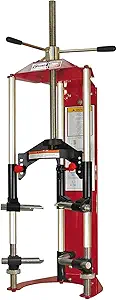 |
OEMTOOLS 25553 MacPherson Strut Coil Spring Compressor
Best Overall Coil Spring Compressor for DIY Mechanics

| Manufacturer | OEMTOOLS |
|---|---|
| Material | Steel |
| Included Components | MacPherson Strut Spring Compressor |
| Item Package Quantity | 1 |
The OEMTOOLS 25553 is a threaded, hand-operated compressor built for MacPherson strut springs; it compresses springs so you can remove or reassemble strut cartridges, replace shocks, or service suspension components. It uses broad contact hooks with built-in detent pins so the spring seats securely while you tighten the heat-treated forcing screw. Forged hooks and a hardened forcing mechanism give the tool the durability needed for repeated garage jobs, and the design is compact enough to work inside a typical strut assembly without specialty equipment. In practice you compress the spring incrementally, verify the detent engagement, then make the repair or swap the cartridge. Important limitations are that it is manually driven so compression takes time and physical effort, and it requires careful setup and routine lubrication of the threads to prevent binding and extend life. For DIYers who follow safe procedures this tool brings professional-grade clamping and longevity for common strut jobs.
- Broad spring-contact hooks and detent pins keep the coil seated during compression for safer operation
- Heat-treated forcing screw and forged hooks increase durability for repeated use
- Compact, single-piece design fits inside most MacPherson strut assemblies for typical DIY repairs
- Simple threaded mechanism requires no power source and is easy to control for precise compression
- Manual operation requires physical effort and is slower than hydraulic or pneumatic compressors
- Not intended for non-MacPherson spring arrangements or extremely large/oddly shaped springs
Verdict: The best all-around coil spring compressor for DIY mechanics that balances safety, ease of use, compatibility with common vehicle springs, and value.
weyleity 14" Coil Spring Compressor Tool — Heavy-Duty Strut Compressor with Forged Steel Jaws
Best Budget Coil Spring Compressor for DIY Mechanics

| Manufacturer | weyleity |
|---|---|
| Material | Forged Steel |
| Maximum jaw opening | 14" |
| Drive type | 1/2" (12.5mm) square drive |
| Item weight | 4.53 pounds |
This 14" coil spring compressor is a basic but sturdy tool intended for DIY suspension work on MacPherson struts. It uses two matched compressor legs with drop-forged steel jaws that hook the coils and a heat-treated, square-drive compression screw for controlled tightening with a 1/2" drive. Typical use is compressing the spring enough to remove or reinstall struts or replace shock absorbers; the paired legs and safety hooks help keep the spring centered while you work. The forged construction and black coating improve corrosion resistance and give the tool a solid, professional feel at a budget price. Limitations are that it is an external-style compressor, so it requires careful positioning and patience when working on tightly wound or weak springs, and it does not include a storage case or vehicle-specific adapters. For most home mechanics doing occasional strut or spring jobs this kit provides the functionality needed without the cost of a shop press or proprietary systems.
- Forged steel jaws and heat-treated screws for strong, reliable compression.
- Designed for MacPherson strut springs with a 14" maximum jaw opening to cover most common coil sizes.
- Square 1/2" drive compatible compression screw accepts standard ratchet or breaker bar for easier operation.
- Two-legged design with safety hook sets helps keep the spring stable during compression.
- Black coated finish resists rust and corrosion for longer service life.
- External-style compressors require cautious use on tightly wound springs and careful placement to avoid slippage.
- No storage case or vehicle-specific adapters included, so organization and fit-up are up to the user.
Verdict: The best low-cost coil spring compressor that provides safe, reliable spring compression for occasional home use without unnecessary premium features.
OTC 7045B Front Coil Spring Compressor
Best Heavy-Duty Coil Spring Compressor

| Auto Part Position | Front |
|---|---|
| Compatible with Vehicle Type | Car |
| Automotive Fit Type | Vehicle Specific Fit |
The OTC 7045B is a professional-style front coil spring compressor built to remove and install coil springs on many late-model rear-wheel-drive domestic cars where the spring sits between the upper and lower control arms. It uses four case-hardened self-aligning plates to distribute load under tension and includes two 3-3/8" ID plates and two 4" ID plates for different spring seats. In practice this tool gives a secure grip and predictable compression for DIYers who work on suspension components, reducing the chance of slippage when compared with basic hook-style compressors. It is vehicle-specific in fitment and will not work on Mercedes-Benz applications, so confirming compatibility is necessary before purchase. The unit is relatively heavy and intended for garage or workshop use rather than occasional roadside repairs. For hands-on mechanics replacing front springs on compatible domestic RWD cars, the OTC 7045B brings rugged construction and safer handling, but it requires a stable workspace and basic mechanical skill to use safely.
- Case-hardened self-aligning plates provide even load distribution under tension.
- Includes two 3-3/8" ID and two 4" ID plates for different spring seats.
- Built for heavy-duty, workshop use with sturdy construction.
- Not compatible with Mercedes-Benz vehicles.
- Designed for specific front RWD spring arrangements so fitment is limited.
Verdict: A robust, high-strength compressor built for frequent use and larger or stiffer springs, prioritizing durability and higher load ratings for demanding jobs.
Acymner MacPherson Strut Spring Compressor Kit (set of 2)
Best Universal Coil Spring Compressor

| Manufacturer | Acymner |
|---|---|
| Item model number | AM812-2 |
| Threaded length | 11” (stated) |
This Acymner MacPherson strut spring compressor kit is a set-of-two threaded-rod compressors designed to let a DIYer or shop safely compress coil springs to replace shocks, struts, or repair damaged strut tubes. Each unit uses a hardened center screw and forged hooks that clamp to the spring, with detent/safety pins that lock the hooks in place while you compress. You operate it with a 3/4" (19mm) or 1/2" square-drive tool depending on the configuration and compress both sides evenly by spacing the hooks 180 degrees apart. The construction and heat-treated screw give it the strength to handle typical passenger car and light truck MacPherson strut springs, and the safety pins reduce the risk of sudden slippage. Expect a learning curve if you have never done strut work and remember to lubricate threads for smoother operation and longer life. This kit is practical and cost-effective for regular DIY suspension work, though it requires careful setup and basic socket/ratchet or impact tools to use safely.
- Forged hooks and heat-treated screw provide heavy-duty strength for typical MacPherson strut springs
- Built-in detent/safety pins lock the hooks to the spring to reduce slippage during compression
- Threaded rod design allows precise, even compression using standard sockets or a 1/2" square drive
- Set of two compressors lets you compress both sides of the spring evenly for safer disassembly
- Requires proper setup and basic tools and technique to avoid safety hazards
- Threaded mechanism can be slower to operate compared with hydraulic alternatives
Verdict: A versatile compressor designed to work with a wide range of coil diameters and spring shapes, minimizing the need for multiple tools.
JEGS Internal Coil Spring Compressor, 12 in. Rod, 8.25–14 in. Jaw Opening
Best Single-Clamp Coil Spring Compressor

| Rod length | 12 in. |
|---|---|
| Jaw opening range | 8.250 in. to 14 in. |
| Material Type | Alloy Steel |
The JEGS internal coil spring compressor is a single-unit tool built to compress coil springs from roughly 8.25 to 14 inches for removal and installation. It uses a 12 inch threaded rod and alloy steel construction to grip and compress internal coils in a confined space, making it suited for strut disassembly on many passenger vehicles. In practice the tool is lightweight and straightforward to position inside the spring where space is limited; the alloy steel parts give the feel of a durable, shop-capable tool. The compact footprint helps when working in tight wheel wells or when you do not want to remove the entire strut assembly. Limitations are that this is one compressor per package, so reinstalling or balancing a spring may require an additional unit, and the single-rod design can be slower than larger two-arm compressors for heavy-duty springs. This is a practical, low-profile option for home mechanics who need a simple internal compressor for typical passenger car springs.
- Compact internal design fits into tight strut assemblies where external compressors cannot
- Alloy steel construction for strength and durability during repeated use
- Wide jaw opening range (8.25 to 14 inches) handles most passenger car springs
- Single-piece tool is lightweight and easy to maneuver in confined spaces
- Only one compressor included, so you may need a second unit for balanced compression
- Single-rod configuration can be slower and less stable on very stiff or large springs
Verdict: A single-clamp or strut-style compressor optimized for one-handed operation and quicker compression on strut assemblies.
JEGS Internal Coil Spring Compressor, 12 in. Rod, 8.25–14 in. Jaw Opening
Best Single-Clamp Coil Spring Compressor
| Rod length | 12 in. |
|---|---|
| Jaw opening range | 8.250 in. to 14 in. |
| Material Type | Alloy Steel |
The JEGS internal coil spring compressor is a single-unit tool built to compress coil springs from roughly 8.25 to 14 inches for removal and installation. It uses a 12 inch threaded rod and alloy steel construction to grip and compress internal coils in a confined space, making it suited for strut disassembly on many passenger vehicles. In practice the tool is lightweight and straightforward to position inside the spring where space is limited; the alloy steel parts give the feel of a durable, shop-capable tool. The compact footprint helps when working in tight wheel wells or when you do not want to remove the entire strut assembly. Limitations are that this is one compressor per package, so reinstalling or balancing a spring may require an additional unit, and the single-rod design can be slower than larger two-arm compressors for heavy-duty springs. This is a practical, low-profile option for home mechanics who need a simple internal compressor for typical passenger car springs.
- Compact internal design fits into tight strut assemblies where external compressors cannot
- Alloy steel construction for strength and durability during repeated use
- Wide jaw opening range (8.25 to 14 inches) handles most passenger car springs
- Single-piece tool is lightweight and easy to maneuver in confined spaces
- Only one compressor included, so you may need a second unit for balanced compression
- Single-rod configuration can be slower and less stable on very stiff or large springs
Verdict: A single-clamp or strut-style compressor optimized for one-handed operation and quicker compression on strut assemblies.
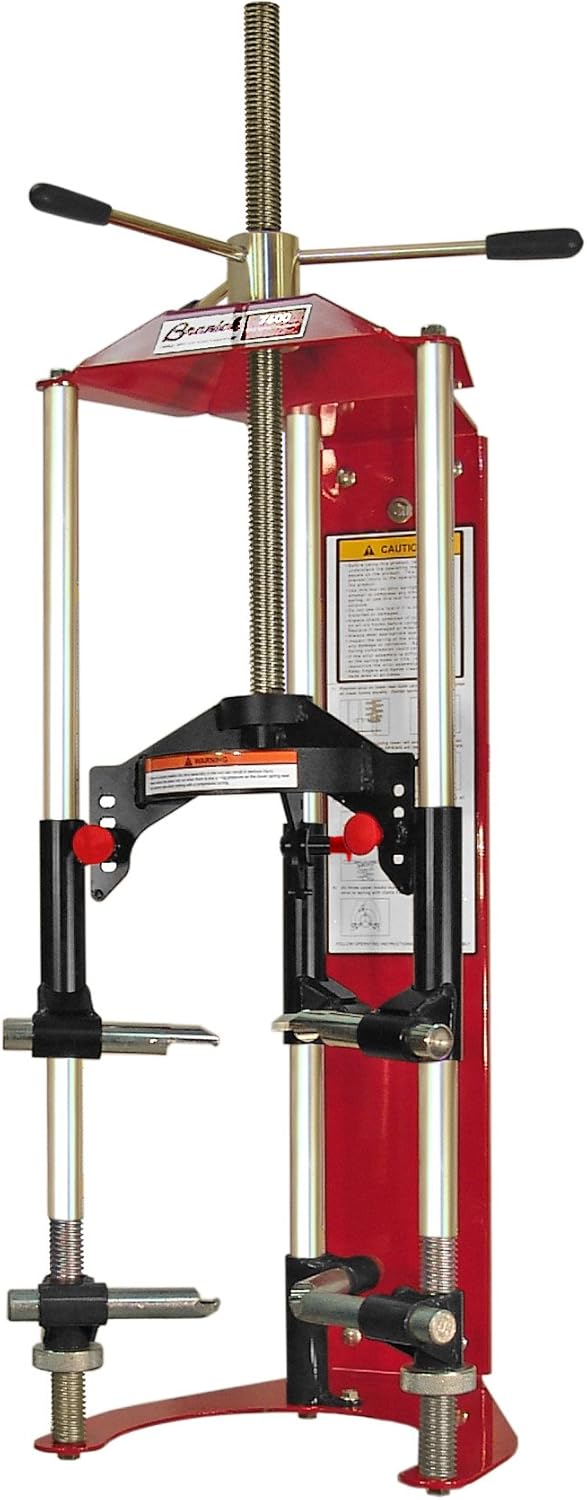
Branick 7600 Heavy-Duty Strut Spring Compressor
Best Premium Coil Spring Compressor
| Brand | Branick |
|---|---|
| Model | 7600 |
| Special Features | Heavy Duty |
| Made in | U.S.A. |
The Branick 7600 is a heavy-duty strut spring compressor built to tackle large coil-over shocks and difficult spring geometries found on light trucks and SUVs. It uses a robust acme thread drive, long handles for extra torque, and multi-position upper hooks so you can clamp long, short, narrow, or angled springs securely without adding adaptors. The longer compression stroke and integrated structural ring guard let it handle deep or high-clearance applications such as Jeep KX Cherokee Trailhawk setups. In practice this unit is used in a fixed shop environment where strength and stability matter: mount the strut in the frame, position the hooks, and wind down the threaded drive to safely compress the spring. The all-steel construction and U.S. manufacturing speak to durability, but the tool is large and heavy which makes it impractical for casual or mobile use and requires space and a solid bench or floor to operate safely.
- Handles heavy coil-over shocks and large springs without adaptors
- Multi-position upper hooks for flexible spring engagement
- Long handles and a heavy-duty acme thread provide strong, controllable torque
- Integrated structural ring guard adds protection during compression
- All-steel construction for shop-grade durability
- Very heavy and bulky which limits portability and requires a sturdy workspace
- Designed for professional or experienced users; there is a learning curve for safe operation
Verdict: A higher-end compressor offering superior materials, extra safety features, smoother operation, and longer warranties for serious DIYers.
How We Chose the Best Coil Spring Compressor
We selected these coil spring compressor options by focusing on the needs of DIY mechanics handling strut and spring service in a home garage. The strongest filters were clamp security, jaw shape, thread quality, operating clearance around tight spring assemblies, and compatibility with common passenger vehicle coils. We also looked closely at whether the tool design promotes even spring compression instead of creating awkward loading or shifting during use. Category-specific details mattered more than broad marketing claims. We prioritized designs with solid hook engagement, predictable tightening action, durable forged or hardened contact points, and enough reach for typical front and rear suspension jobs. Ease of positioning on the coil, working access with hand tools, and overall control during decompression were also important. We excluded tools with vague fit guidance, weak-looking hook geometry, poor alignment features, or designs better suited only to occasional light-duty use on very small springs. For this category, safe engagement, fit range, and controllable operation mattered most.
Our full evaluation process is outlined in our review methodology.
Why the Right Compressor Matters
A coil spring compressor is not a tool where minor design differences can be ignored. The shape of the hooks, the way the threaded rod turns under load, and the amount of working clearance around the spring all affect how confidently you can complete a repair. A better tool helps the spring compress evenly, reduces the chance of slippage, and makes it easier to move through the job without constantly repositioning the setup.
For DIY mechanics, that usually means looking beyond basic capacity claims. A compressor that fits your specific spring style and gives you room to work around the strut body is often more useful than one that simply advertises heavy-duty construction. The goal is controlled compression, predictable movement, and a tool that matches the space limits of real suspension assemblies.
- Stable hook engagement is more important than raw size alone
- Smooth thread action helps with even compression and safer control
- Vehicle fit and working clearance matter in tight wheel well assemblies
Internal Vs External Spring Compressor Designs
Most DIY buyers will compare external and internal spring compressor designs. External styles grip the spring from the outside and are common for general strut service. They are familiar, widely available, and often easier to understand for occasional users. Their biggest advantage is straightforward placement, but access can become limited on tightly wound or oddly shaped springs.
Internal designs work through the center of the spring and can be useful when outside access is restricted. They may suit certain suspension layouts better, but they also require careful attention to fit, contact points, and operating range. The better choice depends on the spring geometry you expect to encounter, not just the type that looks easiest on the bench.
- External compressors are common for standard strut assemblies
- Internal compressors can help when outside clearance is limited
- Always match the design to spring shape and vehicle layout
Key Features to Compare Before You Buy
Start with hook or jaw geometry. A secure contact shape that sits cleanly on the coil is essential because it affects how well the tool stays aligned as tension increases. Next, check the thread design and drive method. A smoother, more substantial threaded mechanism generally gives better control and less binding during compression and release.
Capacity should be read carefully. It is not only about how much load a tool can theoretically handle. You also need enough opening range, compressed range, and reach to fit the springs on the vehicles you actually service. Build quality, finish on load-bearing parts, and whether the tool includes useful retention or alignment features can also make a real difference during repeated jobs.
- Hook profile and depth
- Thread size and smoothness
- Minimum and maximum working range
- Access around the strut body and spring perch
- Overall alignment under load
Safety Habits Every DIY Mechanic Should Follow
Even a well-made coil spring compressor must be used with care. Before starting, inspect the spring for damage, heavy corrosion, or deformation that could affect how the tool seats on the coil. Position the compressor so both sides load as evenly as possible, then tighten in small alternating increments instead of pulling one side down too far at once.
Keep the assembly pointed away from your body and avoid rushing the final stages of compression or release. If the hooks begin to shift, the tool binds sharply, or the spring does not compress evenly, stop and reset the setup. Good tool choice improves safety, but proper setup and patient operation are just as important.
- Inspect spring condition before compression
- Seat the hooks fully and evenly
- Tighten side to side in small steps
- Never force a binding or misaligned setup
What Size and Vehicle Fit Really Mean
Many buyers assume any coil spring compressor will handle any passenger vehicle spring, but fit is more specific than that. Spring diameter, wire thickness, spacing between coils, and overall spring length can all affect compatibility. Front strut springs on heavier vehicles may need more reach and stronger hook engagement than compact car rear springs.
That is why it helps to think about your usual repair mix. If you mainly work on sedans and crossovers, a versatile general-purpose design may cover most jobs. If you regularly deal with larger assemblies or tighter modern packaging, clearance and contact design become even more important. A tool that fits broadly on paper can still be frustrating if it cannot seat properly on the springs you see most often.
- Coil spacing can limit hook placement
- Larger springs may demand more reach and better stability
- The best fit is based on your common vehicle types
When to Use Hand Tools Instead of Power Tools
Many DIY mechanics are tempted to speed up compression with an impact wrench, but that is not always the best approach. Hand tools offer slower, more predictable movement, which makes it easier to monitor alignment, hook position, and spring behavior as tension builds. For a tool category where control matters more than speed, that is often a major advantage.
Some compressors may allow powered operation within their design limits, but slower manual tightening is typically the safer choice for careful garage work. It gives you time to catch shifting components, uneven loading, or limited clearance before they become larger problems. If you do use power assistance, it should only be done with full awareness of the tool maker's guidance and the specific setup in front of you.
- Manual tightening improves feedback and control
- Fast operation can hide shifting or misalignment
- Slower decompression is just as important as slower compression
Maintenance and Storage for Longer Tool Life
A coil spring compressor should be inspected after every job. Clean dirt and metal debris from the threads, check the hooks or jaws for wear, and look for any signs of bending, cracking, or damaged contact surfaces. A small problem on a load-bearing tool should never be ignored for the next suspension repair.
Light lubrication on the threaded sections can help preserve smooth operation, but excess grease that attracts grime should be avoided. Store the tool in a dry place where the hooks and threaded components are protected from impact and corrosion. Consistent inspection and storage habits help the tool stay reliable when you need it for the next strut or spring job.
- Clean threads after use
- Inspect hooks for wear or deformation
- Replace the tool if critical parts show damage
- Store dry and protected from rust
FAQ
Is a coil spring compressor safe for home garage use?
It can be, but only when the tool matches the spring and is used correctly. Safe use depends on proper hook engagement, even compression, careful inspection, and slow controlled operation. If the setup looks unstable or the spring shape does not suit the tool, it is better to stop than force the job.
What is the difference between an internal and external spring compressor?
An external spring compressor grabs the spring from the outside, while an internal spring compressor works through the center of the coil. External designs are common for general strut work, but internal designs can help when outside clearance is limited. The right choice depends on the spring layout and how much access you have around the assembly.
Can I use an impact wrench on a coil spring compressor?
Many DIY mechanics are better off using hand tools for slower, more controlled movement. An impact wrench can speed up the process, but it can also make it harder to notice binding, shifting, or uneven loading. If power is used at all, it should only be within the tool's guidance and with close attention to alignment.
How do I know if a spring compressor will fit my vehicle?
Check more than the basic capacity listing. You need to consider spring diameter, coil spacing, spring length, and how much room exists around the strut body and spring perch. A compressor may be strong enough in theory but still awkward or unsuitable for your specific suspension design.
Do I need a coil spring compressor for quick strut assemblies?
Usually no, if you are installing a complete preassembled unit that already includes the spring and mount. A coil spring compressor is mainly needed when you are disassembling and reusing or replacing individual strut and spring components. Always confirm what parts are included before starting the repair.
How often should I inspect or replace a spring compressor?
Inspect it before and after every use. Look closely at the threaded sections, hooks, contact points, and any areas that show wear, bending, or cracking. If a load-bearing part is damaged or the tool no longer operates smoothly, it should be replaced rather than repaired casually.
Final Verdict
Choosing the right coil spring compressor comes down to fit, control, and confidence. The best option for one garage may not be the best for another, because spring size, vehicle type, and available working space all affect which design feels stable and practical during suspension work. Focus on secure hook engagement, smooth operation, realistic compatibility, and a setup that supports careful side-to-side compression. If you buy with those priorities in mind, you will be better prepared to handle strut and spring jobs safely and choose a tool that matches your DIY mechanic needs.
