

Note: This article contains affiliate links. If you click on these links and make a purchase, I may earn a small commission at no extra cost to you. This helps support my research and content. Read my full affiliate disclosure here.
A good breaker bar is one of the simplest ways to make automotive repair easier. When bolts are rusted, over-torqued, or tightened in cramped areas, the extra leverage from a solid breaker bar can mean the difference between steady control and a frustrating fight with stuck hardware. It is especially useful for suspension work, brake service, axle jobs, and loosening lug nuts that a standard ratchet should not handle. The challenge is picking one that matches the jobs you actually do. Length, drive size, head design, and overall strength all affect how well a breaker bar performs in the garage. The picks that follow focus on tools suited to real automotive use, and the guide below will help you understand what features matter most before you choose.
Top Picks at a Glance
| Best Overall Breaker Bar for DIY Mechanics A versatile, balanced breaker bar suitable for most routine automotive repairs | DURATECH 1/2" Drive 24" Breaker Bar with 240° Flex Head |  |
| Best Budget Breaker Bar for DIY Mechanics An affordable, dependable breaker bar for occasional DIY repair jobs | Leorossy 16" Dual-Drive Breaker Bar with 360° Rotatable Head |  |
| Best 1/2-Inch Drive Breaker Bar Standard 1/2-inch drive bar offering strong torque and socket compatibility | NEIKO 1/2"-Drive 24" Breaker Bar with 180° Flex Head |  |
| Best Long-Reach Breaker Bar Extended-length breaker bar that maximizes leverage for stubborn fasteners | Titan 1-Inch Drive 40-Inch Heavy-Duty Breaker Bar with 180° Swivel Head |  |
| Best Compact Breaker Bar Short, portable breaker bar for tight spaces and easy storage | VÄRMA 1/4" Drive 5" Flex Head Breaker Bar |  |
| Best Heavy-Duty Breaker Bar Reinforced, high-torque breaker bar built for frequent heavy shop use | Titan 12047 1/2" Drive 30" Heavy-Duty Breaker Bar with 180° Swivel Head | 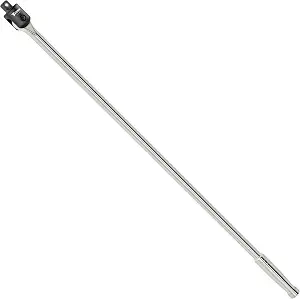 |
| Best Premium Breaker Bar High-end breaker bar featuring superior materials, precision, and long-term durability | SK Tools 1/2" Drive 30" Flex-Head Breaker Bar |  |
DURATECH 1/2" Drive 24" Breaker Bar with 240° Flex Head
Best Overall Breaker Bar for DIY Mechanics

| Drive Size | 1/2 inch |
|---|---|
| Handle Length | 24 Inches |
| Head Feature | 240° flex head |
| Material | Chromium Molybdenum Steel |
This DURATECH breaker bar is built to give extra leverage when loosening stubborn bolts and lug nuts during automotive repair. The 24-inch handle extends reach and torque, while the 240° rotatable head helps access fasteners at awkward angles without repositioning your body. A spring-loaded detent ball secures sockets to the square drive for quick changes and to reduce dropped sockets in tight wheel wells. Made from chromium molybdenum steel with a black phosphate finish and a CR-MO head, the bar is engineered for durability and improved rust resistance for regular garage use. The round-profile handle is comfortable for repeated breaks and the tool claims a high maximum torque at various angles, which makes tough bolts easier to attack. It is not a torque-limiting tool so care is needed to avoid overstressing fasteners or breaker bars when using cheater pipes or impact-style force. Also, the long handle and fixed construction make it less convenient for compact storage or very confined engine-bay work.
Best for: DIY mechanics seeking a durable, high-leverage breaker bar for routine car and motorcycle repairs who value comfortable grip, flexible head access, and reliable socket retention.
Less Ideal for: Professional technicians who require torque-controlled tools or users needing a compact breaker bar for extremely confined spaces should consider alternate options.
- 240° flex head improves access to angled or hard-to-reach fasteners
- Spring-loaded detent ball holds sockets securely for quicker socket changes
- Chromium molybdenum steel and CR-MO head for high strength and corrosion resistance
- 24-inch handle provides substantial leverage for loosening tight nuts and bolts
- Not designed to limit or measure torque so user must avoid over-torquing
- Long length reduces maneuverability in very cramped engine compartments
Verdict: A well-balanced breaker bar that offers the best combination of torque, durability, comfort, and value for most DIY mechanics working on routine automotive repairs.
Leorossy 16" Dual-Drive Breaker Bar with 360° Rotatable Head
Best Budget Breaker Bar for DIY Mechanics

| Drive System | Dual Drive |
|---|---|
| Material Type | 40CR |
| Finish Types | Powder Coated |
| Number of Pieces | 1 |
The Leorossy 16" dual-drive breaker bar is a straightforward torque tool for loosening seized nuts and bolts during automotive and light equipment work. It pairs 3/8" and 1/2" drives in one tool so you can switch between common socket sizes without swapping bars, and the long handle increases leverage for stuck fasteners. The 360° rotatable head lets you approach bolts at awkward angles and the spring-loaded detent ball keeps sockets securely attached under load. Built from 40CR steel with a black powder coat, the bar is aimed at occasional to frequent DIY use where corrosion resistance and impact resistance matter. Limitations include a fixed 16" length that may be too long for very tight engine bays and no torque rating or hardened tip callout for heavy commercial use. For backyard mechanics the tool balances versatility and value, but professionals who need certified torque specs or shorter lengths for confined spaces should consider other options.
Best for: Practical DIYers and weekend mechanics who need an affordable, dependable breaker bar for occasional automotive and light machinery jobs and value a simple, durable tool that multiplies hand torque without fuss.
Less Ideal for: Technicians who require certified torque specifications, hardened commercial-grade tools, or a range of bar lengths for tightly confined engine bays should look elsewhere.
- Dual-drive ends (3/8" and 1/2") eliminate the need to carry two separate breaker bars.
- 16-inch handle provides strong leverage for loosening stubborn fasteners.
- 360° rotatable head improves access to bolts at awkward angles.
- Spring-loaded detent ball secures sockets during high-torque use.
- 40CR steel with powder-coated finish offers abrasion and corrosion resistance.
- Fixed 16" length may be cumbersome in very tight engine compartments.
- No published torque rating or certification for high-demand professional use.
Verdict: A low-cost breaker bar that delivers reliable torque and acceptable build quality for occasional DIY automotive tasks without breaking the bank.
NEIKO 1/2"-Drive 24" Breaker Bar with 180° Flex Head
Best 1/2-Inch Drive Breaker Bar

| Drive Size | 1/2" |
|---|---|
| Length | 24 Inches |
| Head | 180° Flex Chrome-Moly |
| Material | Chrome Vanadium Steel |
| Ball Detent | Spring-loaded |
The NEIKO 1/2"-drive 24" breaker bar is a long-handled torque tool built to loosen seized or rusted lug nuts and other stubborn fasteners. In use it functions like a classic cheater bar: the long shaft amplifies applied force while the hardened chrome-moly flex head and spring-loaded ball detent hold sockets securely during high torque breaks. The drop-forged, heat-treated chrome vanadium shaft and polished, grooved handle make it comfortable to grip and resistant to corrosion for garage or roadside work. The 180-degree rotating head adds access in tight or awkward angles where a fixed bar would be cumbersome. Practical benefits include strong leverage for truck and car lug nuts, a secure socket connection, and a finish that wipes clean after use. Limitations are that it is a single-purpose hand tool with no torque measurement and its long length can be awkward to store or use in very confined engine bays where a shorter tool or breaker bar set would be more convenient.
Best for: Drivers and home mechanics who need a strong, easy-to-use tool to loosen stubborn lug nuts and other seized fasteners on passenger vehicles, preferring a 1/2-inch drive for broad socket compatibility and reliable leverage during routine tire changes and light repair work.
Less Ideal for: Users who need precise torque readings, compact multi-tool solutions, or who mostly work in extremely tight engine compartments where shorter tools are required.
- 24-inch length provides substantial leverage for stubborn lug nuts and bolts
- 180-degree chrome-moly flex head increases access in tight or awkward angles
- Drop-forged, heat-treated construction offers durable strength under high torque
- Spring-loaded ball detent holds 1/2" sockets securely during use
- No integrated torque indicator so precise torque control requires a separate torque wrench
- Single-size 1/2" drive limits use to sockets and adapters for that drive
Verdict: A 1/2-inch drive breaker bar that provides the typical balance of strength and socket compatibility preferred for most passenger-vehicle lug nuts and stubborn fasteners.
Titan 1-Inch Drive 40-Inch Heavy-Duty Breaker Bar with 180° Swivel Head
Best Long-Reach Breaker Bar

| Drive size | 1 inch |
|---|---|
| Length | 40-Inch |
| Head swivel | 180 degrees |
| Material | Chrome vanadium steel |
This Titan breaker bar is a long-reach tool designed to deliver high torque for stubborn fasteners during automotive repair. The 40-inch length gives significant leverage for loosening tight bolts and nuts, while the 1-inch drive accepts large impact sockets and extensions commonly used on heavy trucks and drivetrain work. The 180-degree swivel head lets you angle the socket to fit limited-access fasteners and helps when space prevents a straight pull. Constructed from chrome vanadium steel with a chrome-plated bar and black oxide head, it is built to resist wear and corrosion for shop use. It is best used for infrequent, high-torque jobs rather than as a substitute for a torque wrench for final tightening. The weight and size make it less convenient for quick, small tasks or confined engine bays, but for breaking loose frozen fasteners on axles, suspension, or lug nuts it provides reliable leverage and durability.
Best for: Drivers and home mechanics who need maximum leverage to break free stubborn, over-torqued fasteners during automotive repair and prefer a long, stiff, professional-grade tool for jobs like seized lug nuts, suspension bolts, and engine fasteners.
Less Ideal for: If you need a compact breaker bar for confined spaces or a tool for accurate torque control, a shorter bar or a torque wrench is a better choice.
- Long 40-inch length provides strong leverage for loosening seized or high-torque fasteners
- 1-inch drive fits large sockets used on heavy-duty automotive and truck work
- 180-degree swivel head improves access to off-angle or hard-to-reach fasteners
- Chrome vanadium construction with chrome plating and black oxide head resists corrosion and wear
- Large size and weight make it cumbersome in tight engine bays or for quick jobs
- Not intended for precision torque applications or final tightening
Verdict: A longer-length breaker bar that gives extra leverage for freeing extremely tight fasteners while remaining stiff and well-made for automotive use.
VÄRMA 1/4" Drive 5" Flex Head Breaker Bar
Best Compact Breaker Bar

| Drive Size | 1/4" |
|---|---|
| Head Style | Flex |
| Item Torque | 58 Foot Pounds |
| Material Type | Chrome Vanadium Steel |
This VÄRMA 1/4" drive 5-inch breaker bar is a short, purpose-built tool for breaking loose small fasteners where clearance is limited. Its 180° flex head and spring-loaded detent ball let you angle sockets into tight spots and hold them securely while you apply hand torque. The knurled handle improves grip for wet or oily hands and the mirror-finish, heat-treated chrome vanadium construction feels robust for its size. With a listed torque of about 58 ft-lbs it is best for light automotive and electronics fasteners rather than heavy lug nuts. The compact length and hang-hole make it easy to store in a toolbox or hang on a pegboard, but that same short length limits leverage compared with longer breaker bars and it lacks a ratcheting mechanism for repeated fastener turns. For jobs under the hood or cramped suspension work where reach and precision matter, this bar performs well; for high-torque loosening you will need a longer, heavier-duty tool.
Best for: Drivers and DIY mechanics who need a true compact breaker bar for tight engine bays and small toolboxes, prioritizing reach and control for light-duty automotive jobs where a short, strong lever is more practical than a full-length bar.
Less Ideal for: Users who frequently need high torque for large fasteners or lug nuts should choose a longer, heavier-duty breaker bar or larger drive size instead.
- 180° flex head provides access to tight or awkward angles.
- Spring-loaded detent ball secures sockets and reduces accidental slip-off.
- Knurled handle offers a secure grip even when oily or wet.
- Forged chrome vanadium construction with mirror finish for durability and corrosion resistance.
- Short 5-inch length limits leverage so it cannot handle high-torque loosening tasks.
- 1/4" drive size restricts use to smaller sockets and light-duty fasteners.
Verdict: A shorter, more compact breaker bar designed to fit in tight spaces and toolboxes while still delivering usable torque for lighter automotive jobs.
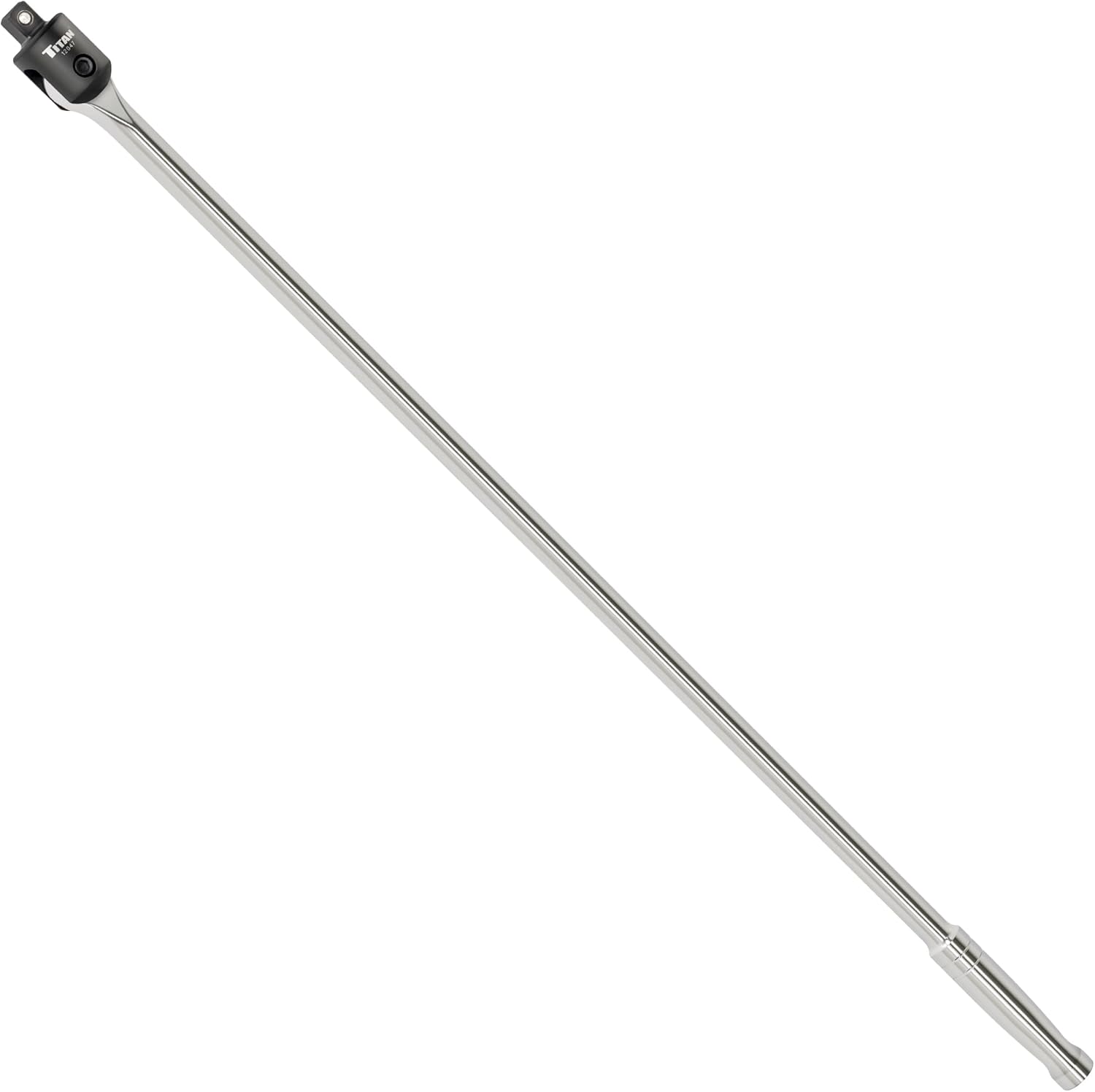
Titan 12047 1/2" Drive 30" Heavy-Duty Breaker Bar with 180° Swivel Head
Best Heavy-Duty Breaker Bar
| Drive size | 1/2-Inch |
|---|---|
| Length | 30 Inches |
| Material Type | Chrome Vanadium Steel |
| Maximum torque | 335 ft/lb |
The Titan 12047 is a long, heavy-duty breaker bar intended to help free stubborn fasteners during automotive repair. Its 30-inch length and sturdy chrome vanadium construction let you apply substantial torque without flex, and the 180-degree swiveling 1/2-inch drive head provides better access on awkward angles. The bar is chrome plated and the head has a black oxide finish to resist corrosion, and the manufacturer publishes a maximum torque rating of 335 ft·lb, which gives a realistic expectation for heavy-duty use. In practice the extra reach and solid feel make it easier to break loose seized lug nuts and suspension fasteners compared with shorter bars, and the detent ball helps retain sockets during rough positioning. The unit is simple and purpose-built, but its size reduces suitability for tight engine bays and it lacks integrated torque-limiting features, so care is needed to avoid overloading smaller fasteners or tools. If you need straightforward leverage for workshop or roadside jobs, this bar does the job reliably.
Best for: Professional mechanics and serious DIYers who need a stout breaker bar for frequent high-torque jobs in a busy garage or shop, especially when loosening stubborn fasteners under heavy load; buyers prioritizing durability and serviceability will appreciate its reinforced construction and replaceable head option.
Less Ideal for: Technicians who need compact tools for confined engine compartments or users who require torque-controlled tightening tools should consider other options.
- Heavy-duty chrome vanadium steel construction for strength and reduced flex under load
- 180-degree swivel 1/2" drive head for improved access in tight or awkward positions
- 30-inch length provides strong mechanical advantage for breaking loose seized fasteners
- Chrome plating and black oxide head finish for basic corrosion resistance
- Detent ball retention helps keep sockets secure during use
- Large length makes it awkward to use in very cramped engine bays or tight workspace
- No built-in torque limiting or indication so it is possible to exceed fastener or tool limits if not careful
Verdict: A heavy-duty breaker bar built with thicker steel, reinforced joints, and a high torque rating for frequent, demanding garage and shop use.
SK Tools 1/2" Drive 30" Flex-Head Breaker Bar
Best Premium Breaker Bar

| Drive size | 1/2 inch |
|---|---|
| Head style | Flex |
| Material type | Chromium Molybdenum Steel |
| Finish type | Matte |
This SK Tools 1/2" drive breaker bar is built for loosening stubborn fasteners in automotive repair where extra leverage is needed. The 30-inch shaft and flex head let you reach awkward angles and apply torque without binding, while the diamond knurled handle helps keep a secure grip during heavy use. Made from chromium-molybdenum steel with a high-polish finish, it resists corrosion and stands up to shop environments. Practical benefits include improved access on tight engine bays and the ability to generate steady, high torque for seized bolts. The flex head adds versatility compared with fixed bars, but the longer length makes it less convenient for tight, enclosed spaces and increases swing radius. It is a single-piece breaker bar without a torque-limiting feature, so care is required to avoid over-torquing or sudden release when a bolt breaks free.
Best for: Skilled technicians and serious DIYers who want a premium, long-lasting breaker bar built from high-grade steel and precision finished for frequent automotive use where reach and dependable torque delivery matter.
Less Ideal for: Those needing a compact or torque-limiting solution for delicate fasteners or for routine work in very confined engine compartments should consider shorter or torque-regulated tools.
- Long 30-inch length provides strong leverage for stuck fasteners
- Flex head improves access to angled or obstructed fasteners
- Chromium-molybdenum construction with polished finish resists corrosion and is shop-durable
- Diamond knurled handle offers secure grip under torque
- Length limits use in very tight or confined spaces
- No built-in torque control or click mechanism to prevent over-torquing
Verdict: A higher-end breaker bar that prioritizes top-tier materials, precision machining, superior finish, and long-term durability for users willing to pay more.
How We Chose the Best Breaker Bar
We focused on breaker bars that make sense for automotive repair rather than general household use. To narrow the field, we looked at the dimensions and construction details that directly affect leverage, control, and durability when dealing with seized fasteners, suspension bolts, and wheel hardware. The goal was to identify tools that fit real garage work, from compact access jobs to higher-torque tasks. Our evaluation centered on five core criteria: drive size for common automotive sockets, handle length for usable leverage, steel construction and overall rigidity, head design and swing range for access in tight spaces, and retention fit so sockets stay secure under load. We also considered grip shape and finish, since a breaker bar should stay controllable with oily hands and be easy to wipe down after use. Tools that were too short for meaningful leverage, too bulky around the head, or unclear about material quality were filtered out. We also excluded options aimed more at light-duty use, specialty non-automotive tasks, or designs that blurred the line with torque multipliers rather than a straightforward breaker bar.
Our full evaluation process is outlined in our review methodology.
What a Breaker Bar Does Better than a Ratchet
A breaker bar is built for loosening stubborn fasteners with controlled leverage. Unlike a ratchet, it has no internal gear mechanism to protect, so it is better suited for the initial breakaway force needed on tight bolts and nuts. In automotive repair, that matters when working on lug nuts, suspension hardware, crank bolts, and other fasteners that may have seen rust, thread locking compound, or years of heat cycles.
Using a breaker bar for the first movement and switching to a ratchet afterward is often the smartest approach. That workflow reduces stress on finer tools and gives you more confidence when a fastener needs serious force before it will turn.
- Best used for initial loosening, not fast spinning
- Helps protect ratchets from overload
- Commonly useful for wheel, brake, exhaust, and suspension work
Choosing the Right Drive Size for Your Garage
Drive size is one of the most important choices because it determines what sockets you can use safely and what kind of work the tool is best at. For lighter automotive tasks and tighter spaces, a smaller drive can be easier to position, but it will not be the ideal choice for heavy breakaway torque on large fasteners. For general garage use, many people want a size that balances strength with practical socket availability.
If you regularly work on wheels, steering, suspension, and driveline components, a larger drive size usually makes more sense because it pairs better with impact-rated or heavy-duty sockets. If your repairs lean toward engine bay work and smaller hardware, a medium size may be more versatile. Matching the breaker bar to the socket sets you already own can also prevent unnecessary duplication.
- Smaller drive sizes suit tighter spaces and lighter fasteners
- Medium drive sizes often cover broad DIY automotive work
- Larger drive sizes are better for high-torque wheel and suspension jobs
How Much Length Do You Really Need
Handle length determines leverage, but longer is not automatically better. A longer breaker bar reduces the effort needed to loosen tight fasteners, yet it also requires more room to swing and can make it easier to overapply force on smaller hardware. In automotive repair, the best length depends on whether you mostly work around wheel wells and underbody components or in tighter engine and interior spaces.
A shorter tool can be easier to control and store, while a longer one shines on lug nuts and suspension bolts. Some DIY mechanics eventually keep more than one length for different jobs, but if you are starting with one tool, choose a size that fits the repairs you do most often. Think about your workspace too. A long handle is only useful if you can position it without fighting walls, lifts, or jack stands.
- Longer handles provide more leverage on stubborn fasteners
- Shorter handles improve access and control
- Garage space and vehicle height affect how useful extra length will be
Head Design, Flex, and Access in Tight Spaces
Not all breaker bar heads feel the same in use. A good head design should give you enough movement to find a workable angle without feeling loose or unstable under load. In automotive repair, access is often limited by control arms, splash shields, brake components, and frame rails, so the ability to approach a fastener cleanly matters almost as much as raw strength.
The trade-off is that more head movement can sometimes feel less direct during high-torque use. A tighter, more confidence-inspiring pivot may be better for heavy jobs, while a freer-moving head can help in awkward positions. What matters most is smooth movement, secure socket retention, and a design that lets the tool sit squarely on the fastener instead of twisting off-axis.
- A stable pivot improves confidence on high-torque fasteners
- A wider swing range can help in cramped areas
- Secure socket retention matters when working overhead or under the vehicle
Build Quality Signs That Actually Matter
Breaker bars are simple tools, which makes build quality easier to judge if you know what to look for. Strong steel construction, a straight handle, a cleanly machined drive end, and a head that moves without binding are all good signs. Excess flex in the handle or rough machining around the square drive can point to lower long-term durability, especially if the tool will see regular wheel and suspension work.
Surface finish is less important than structural confidence, but it still affects everyday use. A finish that resists corrosion and wipes clean easily is helpful in a garage environment where tools encounter moisture, dirt, and chemicals. The handle shape also matters. Even without padded grips, a well-formed handle can feel more secure when you are applying steady force with gloved or oily hands.
- Look for rigid construction and a precisely machined drive end
- Check for smooth head movement without excessive looseness
- Prioritize structural strength over cosmetic features
Safe Technique when Using a Breaker Bar
Proper technique protects both the tool and the fastener. Always seat the socket fully, keep the tool aligned with the fastener, and apply steady pressure instead of jerking the handle. If the socket starts to tilt or the tool shifts off center, reset before continuing. Controlled force is safer and usually more effective than sudden movement.
It also helps to think about what happens if the fastener breaks loose suddenly. Keep your body balanced and your hands clear of sharp nearby parts. Avoid using damaged sockets or adding questionable extensions that increase flex. If a fastener refuses to move, penetrating oil, heat where appropriate, or a different access angle may work better than simply applying more force.
- Use steady pressure rather than impact-like yanks
- Stay square to the fastener to reduce slipping
- Reassess seized hardware before forcing it further
When a Breaker Bar Is the Wrong Tool
Even a strong breaker bar is not the answer to every problem. If a fastener must be tightened to an exact specification, use a torque wrench for final assembly, not a breaker bar. If speed is the priority after the fastener is already loose, a ratchet or power tool will be more efficient. And if corrosion has heavily damaged the fastener, removing it may require penetrant, heat, extraction tools, or replacement hardware rather than more leverage alone.
Knowing when to stop matters. Excessive force can round fasteners, snap studs, or damage surrounding components. A breaker bar is best viewed as a controlled leverage tool, not a universal solution. Used in the right situations, it is one of the most valuable hand tools in an automotive kit.
- Do not use it for final torque specification work
- Switch to a ratchet once the fastener breaks free
- Severely corroded hardware may need additional removal methods
FAQ
What size breaker bar is best for automotive repair?
The best size depends on the kind of work you do most often. For general garage jobs, many DIY mechanics want a drive size that can handle wheel and suspension hardware without being too bulky. If your work is mostly on smaller fasteners in tighter spaces, a smaller option may be more practical.
Can I use a breaker bar to loosen lug nuts?
Yes, a breaker bar is commonly used to loosen lug nuts because it provides more leverage than a standard ratchet. Make sure the socket fits properly and the tool is aligned squarely with the nut. Once the nut breaks free, switching to a faster tool is usually easier.
Is a longer breaker bar always better?
No. A longer handle gives you more leverage, but it also needs more clearance and can make it easier to apply too much force on smaller fasteners. The right length is the one that matches your typical repairs and the space you have to work in.
Should I use impact sockets with a breaker bar?
For high-torque automotive work, impact-rated sockets are often a safer choice because they are designed for heavy loads and tend to be more durable. Standard sockets may still work in some situations, but the important point is using a quality socket that fits the fastener correctly. Avoid worn or damaged sockets regardless of type.
Can a breaker bar replace a torque wrench?
No. A breaker bar is for loosening tight fasteners and occasionally for snugging hardware before final tightening, but it is not a precision measuring tool. For reassembly where torque matters, always finish with a proper torque wrench.
Why does the head style matter on a breaker bar?
Head style affects access and control. In automotive repair, a head with useful movement can help you reach around suspension parts, frame sections, or engine bay obstructions. At the same time, it should still feel secure under load so the socket stays planted on the fastener.
Final Verdict
The right breaker bar comes down to a few simple decisions: choose a drive size that matches your socket set and the type of automotive work you actually do, pick a handle length that gives enough leverage without creating access problems, and prioritize solid construction over unnecessary extras. If you focus on fit, strength, and control, you will end up with a tool that handles stubborn fasteners more safely and efficiently. For most garage users, the best choice is the one that covers your common repair jobs confidently without being too large, too weak, or awkward to use in real working conditions.
