

Looking for the perfect fit?
Select your Ford F-150 configuration to see the most relevant Brake Pads recommendations
Note: This article contains affiliate links. If you click on these links and make a purchase, I may earn a small commission at no extra cost to you. This helps support my research and content. Read my full affiliate disclosure here.
Choosing the right brake pads for your Ford F-150 affects safety, comfort, and long-term maintenance. The wrong pads can increase stopping distance, create noise, or wear out quickly under heavy loads. This guide highlights seven shortlisted options that performed well across the practical criteria that matter for pickup use. We evaluated braking performance, longevity, and noise and dust characteristics to surface pads suited for commuting, heavy loads, and varied weather. Read on for a concise breakdown of what to prioritize when selecting pads for your truck.
Looking for other parts? See all Ford F-150 parts & accessories.
Top Picks at a Glance
| Best Overall The best all-around choice for most situations | PowerStop Z36 Truck & Tow Front Brake Pads with Hardware |  |
| Best Quality Built to a higher standard if you want something more solid | TRQ Front and Rear Ceramic Brake Pad Set (Vehicle-Specific Fit) |  |
| Best Value The sweet spot between price and what you get | evkingauto Ceramic Front and Rear Brake Pads (8-piece) for Ford F-150 |  |
| Best Budget The cheapest option that still gets the job done reliably | Wagner QS ZX360 Front Disc Brake Pad Set |  |
| Highest Rated A top-rated pick with lots of positive feedback | PowerStop Z36 Rear Carbon-Fiber Ceramic Brake Pads with Hardware | |
| Most Popular A crowd favorite that many people choose with confidence | SCITOO Front Brake Pad Kit (ceramic, 8-piece) for 2004–2008 Ford F-150 / 2006–2008 Lincoln Mark LT |  |
| Best Seller A high-volume bestseller chosen again and again | Bendix Premium SBC1770 Ceramic Rear Brake Pads |  |
PowerStop Z36 Truck & Tow Front Brake Pads with Hardware

| Auto Part Position | Front |
|---|---|
| Vehicle Service Type | Truck |
| Specification Met | OEM |
| Exterior | Carbon-Fiber Ceramic |
These PowerStop Z36 front brake pads are a vehicle-specific replacement for the Ford F-150 front brakes and are built for heavier duty use like towing, hauling, and larger-wheel setups. They install like a direct factory replacement and include stainless-steel hardware and shims to simplify a brake-pad-only job. The carbon-fiber ceramic compound is formulated to increase stopping power and reduce wheel dust compared with many standard pads, while powder-coated backing plates resist corrosion for longer service life. In everyday use on an F-150 you should notice stronger, smoother stops under load and minimal squeal thanks to the shims and supplied noise-reduction paste. These pads are not a performance racing compound, so expect modest additional bedding time and that extreme repeated heavy use will still generate heat like any pad. Also remember rotors need to be in good condition for best results; slotted or drilled aftermarket rotors may limit long-term serviceability if they cannot be resurfaced.
Best for: A balanced all-round buyer who wants a durable, low-dust front pad that improves stopping confidence on an F-150 used for daily driving plus occasional towing or heavier loads.
Less Ideal for: Drivers who primarily need track-focused extreme friction compounds or those who plan heavy commercial continuous duty without upgraded cooling or rotors should consider specialized alternatives.
- Vehicle-specific fit for Ford F-150 front application for simplified installation.
- Carbon-fiber ceramic compound increases stopping power and reduces brake dust.
- Includes stainless-steel shims and premium hardware for quieter operation and easier installation.
- Powder-coated backing plates resist corrosion to help pad longevity.
- Not intended for track or extreme racing use where a high-friction racing pad is required.
- Performance depends on rotor condition so worn or non-serviceable rotors may limit benefits.
Verdict: A practical front pad upgrade for Ford F-150 owners seeking stronger, lower-dust braking for towing and everyday driving without moving to track-focused compounds.
TRQ Front and Rear Ceramic Brake Pad Set (Vehicle-Specific Fit)
| Material | Ceramic |
|---|---|
| Auto Part Position | Rear and Front |
| Specification Met | OEM |
| Automotive Fit Type | Vehicle Specific Fit |
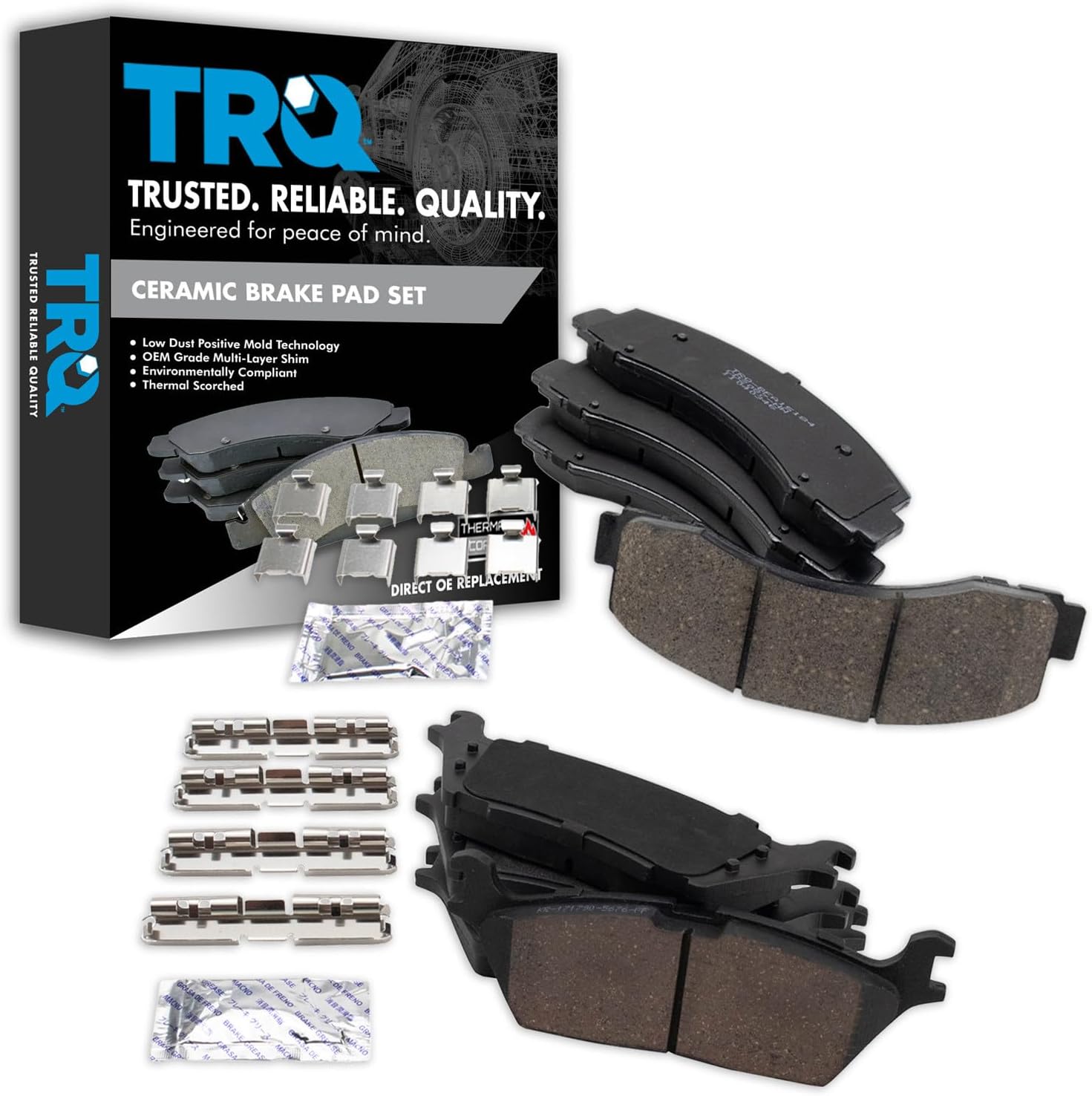
This TRQ brake pad kit supplies front and rear ceramic pads engineered as direct-fit replacements for compatible Ford F-150 applications. It is typically used by owners who want quieter, lower-dust braking without changing rotors or hardware. The ceramic material and thermal scorching process aim to deliver smooth stopping power and reduced brake dust that keeps wheels cleaner. TRQ also markets these as pre-assembled with machined exteriors and includes installation guidance and DIY videos to simplify swapping pads at home. In practice you can expect a quieter pedal feel and less wheel cleanup compared with many semi-metallic pads, and several user reports cite confident stopping even under heavy loads. Limitations to consider are that ceramic pads can perform slightly differently under extreme high-temperature towing or track use compared with heavy-duty metallic compounds, and correct fitment is essential since some customers reported compatibility mix-ups when fitment information was ignored. For a performance-oriented F-150 driver seeking a refined daily driving and towing balance, these pads are a strong factory-replacement option.
Best for: Performance-oriented buyers who prioritize quieter, low-dust braking and confident everyday stopping for their Ford F-150, and who prefer a factory-replacement feel with easy DIY installation.
Less Ideal for: Drivers who frequently do extreme-duty towing, towing at sustained high temperatures, or track driving should consider heavy-duty metallic compounds instead.
- Ceramic construction reduces brake dust for cleaner wheels.
- Thermal scouring and molded design intended to improve initial bite and stopping performance.
- Pre-assembled, vehicle-specific fit simplifies DIY installation.
- Machined exterior finish and included fit guidance support consistent, factory-quality fit.
- Ceramic pads may heat up differently than metallic pads under extreme heavy towing or track conditions.
- Fitment must be confirmed carefully to avoid receiving incorrect front or rear pieces.
Verdict: A high-quality ceramic direct-fit kit that balances quiet, low-dust daily performance with straightforward installation for Ford F-150 owners looking for an upgrade from stock pads.
evkingauto Ceramic Front and Rear Brake Pads (8-piece) for Ford F-150

| Material | Ceramic |
|---|---|
| Fitment | Ford F-150 2010-2011 |
| Package | 8 pieces with clips |
| Pad Position | Front, Rear |
These evkingauto brake pads provide a direct-fit ceramic replacement for 2010–2011 Ford F-150s, packaged as an eight-piece kit with retaining clips for front and rear fitment. They are intended for routine brake service and are billed as low-dust and quiet thanks to a dust-minimizing compound and noise-dampening features. Chamfered edges and gas slots improve heat dissipation and reduce glazing, which helps maintain consistent stopping power during normal driving and light towing. Installation uses factory-style dimensions so a home mechanic or shop can swap them in without rotor modification. Limitations to note are that heavy-duty or performance-focused use may push ceramic material harder than semi-metallic pads, and the included hardware is basic compared with higher-end kits, so you might want upgraded shims or quieting compound if noise becomes an issue. For everyday street use on an F-150 these pads aim to balance clean rotors, predictable braking, and straightforward installation.
Best for: Practical optimizers who prioritize a clean, quiet everyday driving experience and want a ready-to-install brake pad kit that balances cost and functionality.
Less Ideal for: Drivers who regularly tow heavy loads, do aggressive driving, or require track-capable braking should consider heavier-duty or performance-oriented pad options.
- Vehicle-specific fit for 2010–2011 Ford F-150 models for straightforward installation
- Ceramic formulation designed to produce low brake dust for cleaner wheels
- Noise-dampening design and chamfered edges to reduce squeal and improve bedding
- Includes front and rear pads plus clips so you get a complete pad service kit
- Included hardware is basic and may not include premium shims or anti-squeal compound
- Ceramic material may not be ideal for heavy commercial or high-performance braking demands
Verdict: A budget-friendly ceramic replacement that keeps dust and noise down while offering an easy, vehicle-specific fit for 2010–2011 Ford F-150 owners.
Wagner QS ZX360 Front Disc Brake Pad Set

| Auto Part Position | Front |
|---|---|
| Material | Stainless Steel |
| Specification Met | OEM |
| Model | Brake Pad |
The Wagner QS ZX360 front brake pads are a budget-focused replacement designed to fit older Ford F-150 front applications. These semi-metallic pads are engineered to match factory friction characteristics and undergo a post-cure process to promote even, predictable braking through the pad life. They include application-specific shims and stainless-steel hardware in many kits to reduce squeal and vibration, so installation typically results in quieter, more comfortable stops. Intended for street use, the pads balance durability and everyday stopping power rather than aggressive track performance. Expect straightforward installation for a direct-fit front pad swap and a recommended break-in cycle to seat the material against rotors. Limitations are that these are targeted at routine driving conditions on the specified F-150 years and are not optimized for heavy towing, racing, or higher thermal loads; a more performance-oriented compound would suit those needs better.
Best for: Budget-conscious owners looking for an affordable, factory-replacement style front pad for routine street driving and reliable stopping on their Ford F-150.
Less Ideal for: Drivers who regularly tow heavy loads, carry commercial payloads, or require high-temperature track braking should choose a heavy-duty or performance compound instead.
- Vehicle-specific fit for front brakes on older Ford F-150 models ensures straightforward installation
- Semi-metallic construction offers durable, consistent street braking performance
- Application-specific shims and stainless-steel hardware help reduce noise and vibration
- 100% post-cure processing promotes uniform friction throughout pad life
- Formulation is tuned for street use and may fade under heavy towing or track-level heat
Verdict: A cost-effective, direct-fit front brake pad that delivers quiet, consistent street braking for budget-minded Ford F-150 owners.
PowerStop Z36 Rear Carbon-Fiber Ceramic Brake Pads with Hardware
| Material | Ceramic |
|---|---|
| Auto Part Position | Rear |
| Specification Met | OEM |
| Automotive Fit Type | Vehicle Specific Fit |
The PowerStop Z36 rear brake pads are a truck-and-tow upgrade built to replace factory rear pads on compatible Ford F-150 models. They use a low-dust ceramic compound infused with carbon fiber to improve stopping power under load while reducing brake dust and noise. The kit ships with stainless-steel hardware and ceramic lubricant to simplify installation and help with heat dissipation and squeal resistance. In real-world use these pads are aimed at drivers who tow, haul, or run larger wheels and find stock pads overheating or leaving excessive dust. Installation is straightforward for a DIYer familiar with brake work and the parts fit as vehicle-specific replacements. Limitations to consider are that they are an upgrade targeted at rear braking duties only and performance gains depend on rotor condition and overall brake system health; heavier towing may still require rotor upgrades or higher-capacity pads up front. Expect quieter, cleaner braking and better fade resistance compared with many stock rear pads when used on the specified F-150 models.
Best for: Reliability-focused buyers who prioritize quiet, low-dust, and durable rear braking performance when towing or hauling and prefer a straightforward, vehicle-specific upgrade.
Less Ideal for: Drivers seeking a full high-performance braking overhaul or those who need front-pad upgrades or upgraded rotors should consider a more comprehensive kit instead.
- Low-dust ceramic compound reduces wheel contamination and cleanup.
- Carbon-fiber infusion and stainless-steel shims improve heat resistance and reduce noise.
- Includes stainless-steel hardware and ceramic lubricant for a complete rear pad replacement.
- Vehicle-specific fitment for a direct drop-in replacement on listed Ford F-150 rear applications.
- This listing covers rear pads only so full braking improvements may require front pad or rotor upgrades.
- Performance depends on rotor condition and proper bedding in for optimal life and smoothness.
Verdict: A practical rear brake upgrade for F-150 owners who tow or haul and want quieter, lower-dust braking without extensive system changes.
SCITOO Front Brake Pad Kit (ceramic, 8-piece) for 2004–2008 Ford F-150 / 2006–2008 Lincoln Mark LT

| Compatible vehicles | 2004–2008 Ford F-150; 2006–2008 Lincoln Mark LT |
|---|---|
| Material | Ceramic |
| Position | Front |
| Number of items | 1 (8pcs brake pads per package) |
This SCITOO kit supplies eight front brake pads and the necessary hardware for a direct, drop-in replacement on 2004–2008 Ford F-150 (and 2006–2008 Lincoln Mark LT) front disc brakes. The pads are ceramic-based, treated with a scorch friction process intended to speed bedding-in and stabilize friction over time. In practice the kit is aimed at DIY or quick-service installs: the parts are vehicle-specific, the hardware is included, and the seller notes the pads install without modification. Benefits you can expect are quiet operation thanks to the ceramic friction surface and included shims/gaskets that reduce vibration, plus consistent stopping feel after the initial break-in. Limitations are typical for aftermarket ceramic pads: they prioritize low noise and modest dust over maximum fade resistance under prolonged heavy towing or track use, and longevity will depend on driving and towing loads. Fitment accuracy matters here so confirm the F-150 model year and front pad part numbers before installation.
Best for: Convenience-driven buyers who want a straightforward, ready-to-install front pad kit for a 2004–2008 Ford F-150 with emphasis on quiet operation and quick replacement.
Less Ideal for: Drivers who regularly tow heavy loads, carry heavy payloads, or require extreme high-temperature fade resistance should consider heavy-duty or performance-focused brake pads instead.
- Vehicle-specific direct-fit design for 2004–2008 Ford F-150 front brakes reduces installation time.
- Ceramic friction material delivers quiet braking and lower pad-to-rotor noise.
- Includes hardware and shims to help prevent squeal and ensure correct alignment.
- Scorch friction treatment shortens bedding-in and helps stabilize initial pad performance.
- Ceramic formulation is not optimized for heavy-duty towing or extended high-temperature use compared with performance metallic pads.
- Durability and fade resistance depend on driving and towing habits and may lag premium OEM-grade materials.
Verdict: A convenient, vehicle-specific ceramic front pad kit for 2004–2008 Ford F-150 that prioritizes quiet, easy installation over heavy-duty performance.
Bendix Premium SBC1770 Ceramic Rear Brake Pads
| Material | Ceramic |
|---|---|
| Auto Part Position | Rear |
| Specification Met | OEM |
| Automotive Fit Type | Vehicle Specific Fit |
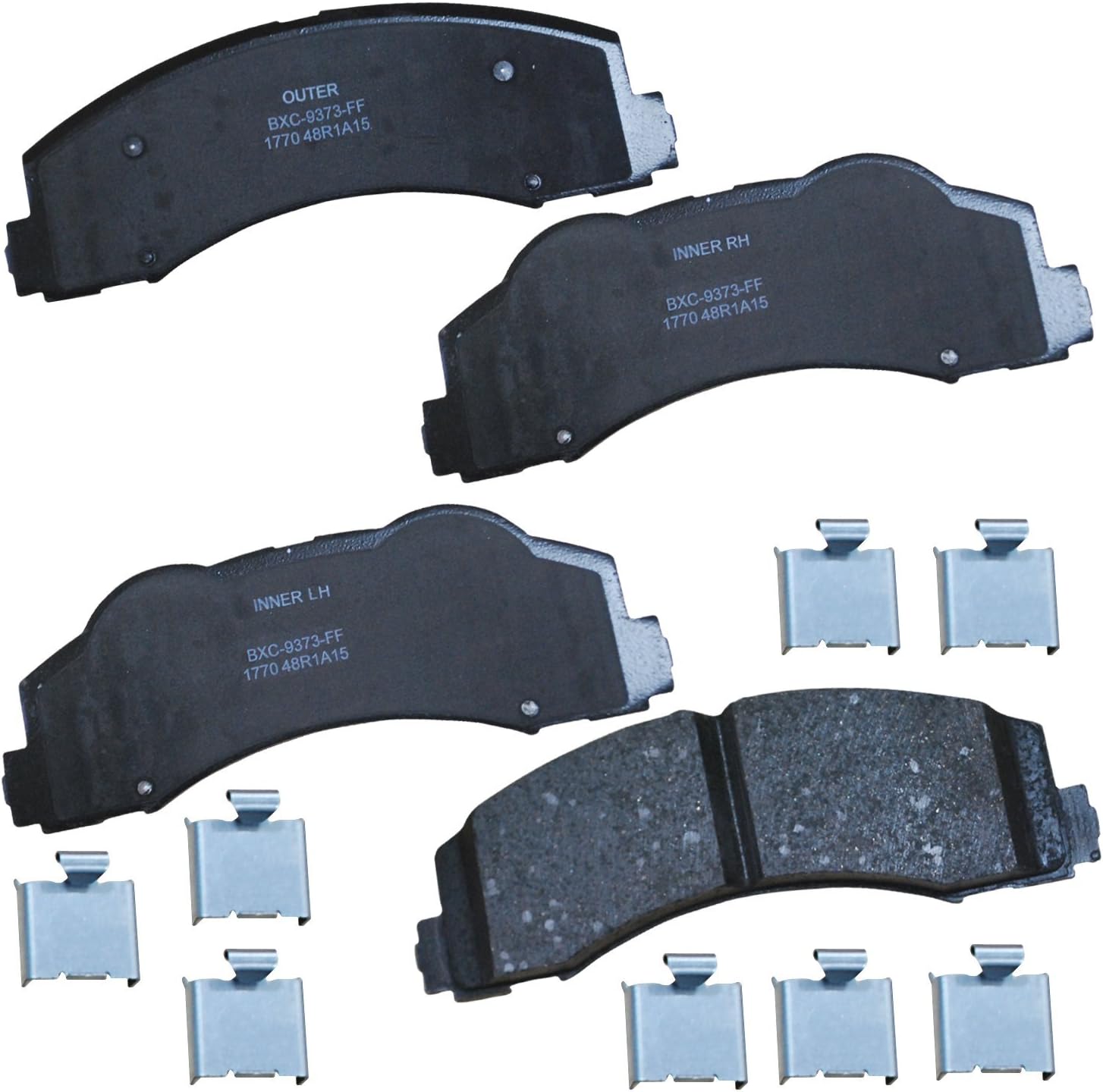
The Bendix Premium SBC1770 are ceramic rear brake pads designed to replace factory-spec pads on compatible Ford F-150 models from the listed fitment years. They provide a quiet, smooth stop thanks to a ceramic formulation that resists brake fade and reduces dust compared with semi-metallic options. Typical use is everyday driving and commuting where predictable pedal feel and low noise are priorities. The pads are manufactured to match fit, form, and function of the original parts, which simplifies installation and reduces the need for modification. Buyers report easy installs and consistent stopping power after bedding in, and kits often include the necessary hardware though some packs may omit a small tube of brake grease. Limitations include the inherent softness of ceramic compounds under very heavy towing or sustained high-load braking where a semi-metallic pad might retain bite better, and occasional reports of missing retaining clips in some packages.
Best for: Risk-averse mainstream buyers who prioritize dependable, low-noise daily braking and want a factory-quality, straightforward replacement for their Ford F-150.
Less Ideal for: Drivers who regularly tow heavy loads, haul trailers, or require maximum fade resistance under extreme braking should consider higher-performance semi-metallic or heavy-duty brake pads instead.
- Factory-style fit for direct replacement on listed F-150 models
- Ceramic material reduces dust and tends to be quieter than semi-metallic pads
- Built to resist wear and designed to limit brake fade for consistent daily braking
- Ceramic formulation can be less aggressive than semi-metallic pads during heavy towing or repeated high-load stops
- Some packages may not include grease or every small hardware piece shown on packaging
Verdict: A quiet, factory-fit ceramic rear pad for F-150 owners seeking reliable, low-dust daily braking, though not the best choice for heavy towing or track use.
Choosing the Right Ford F-150 Brake Pads: Key Factors to Consider
Material Composition
The material used in the pad determines how it performs under different conditions and how long it lasts. Organic, ceramic, and semi metallic compositions each have different friction characteristics, heat tolerance, noise levels, and dust production. Ceramic brake pads are often quieter and produce less dust, which is useful if you want cleaner wheels and reduced cabin noise. Semi metallic brake pads typically handle high heat better and provide strong stopping power for heavy loads or towing, but they may be louder and wear rotors faster.
Considering material composition helps you match the pads to your driving style and needs. If you regularly tow, carry heavy loads, or drive in mountainous terrain, a heat-resistant formulation matters. For daily commuting and urban driving, low-noise and low-dust options are more practical. Understanding how materials trade off longevity, comfort, and performance makes it easier to choose pads that meet your priorities.
Intended Use and Driving Conditions
How you use the truck should directly influence which pads you select. Heavy towing, frequent highway miles, stop-and-go city driving, and occasional off-road use impose different demands on pads. Pads designed for heavy-duty use prioritize fade resistance and consistent braking at high temperatures, while commuter-focused pads prioritize smooth, quiet operation and low dust.
Think about typical loads, average trip length, and terrain. If most trips are short and unloaded, prioritize comfort and low dust. If you haul heavy loads or tow regularly, choose pads that sustain braking performance under higher stress. Matching intended use to pad characteristics reduces premature wear and improves safety and driver confidence.
Fitment: Front or Rear Specifics
Braking systems often have different requirements for front and rear positions, so choosing pads rated for the correct axle matters. Front brake pads handle more braking force and may need different compounds than rear pads, which often manage stability and less intense stopping loads. Ensuring the pads are specified for the front or rear axle preserves braking balance and prevents uneven wear or compromised stopping distances.
When planning a replacement, confirm whether you need front brake pads, rear brake pads, or both. Replacing only one axle can be acceptable in some situations, but matching pad type and condition across axles supports predictable, evenly distributed braking performance. Paying attention to axle-specific recommendations reduces the risk of noise, vibration, and uneven rotor wear.
Pad Wear Life and Maintenance Interval
Estimated wear life affects how often you will need brake pads replacement and the total ownership cost. Some compounds prioritize long service life, while others trade longevity for better initial bite or heat resistance. Consider how often you are willing to perform maintenance and how accessible the brakes are for inspection and replacement.
Check manufacturer guidance on expected mileage intervals and service practices. Longer-lasting pads may be worth a higher upfront investment if you prefer fewer maintenance events, while shorter-life pads might be acceptable if you prioritize peak performance or aggressive stopping power. Regular inspection and timely replacement based on wear indicators maintain safe braking performance.
Noise, Vibration, and Harshness (NVH)
Comfort factors such as squeal, vibration, and pedal feel can differ significantly between pad types and formulations. Some compounds and backing plate designs reduce noise and vibration, while others can transmit more harshness into the pedal and cabin. Excessive NVH can be annoying and sometimes indicates installation or compatibility issues.
If quiet operation is important, look for pads and hardware engineered to minimize noise and vibration. Proper shims, chamfers, and bedding-in procedures also influence NVH outcomes. Considering these elements helps ensure the driving experience remains comfortable without sacrificing braking performance.
Compatibility with Rotors and Brake System Hardware
Pads do not operate in isolation; they interact with rotors, calipers, and other hardware. Some pad compounds are more abrasive and can accelerate rotor wear, while others are gentler. Matching pad type to rotor condition and material helps avoid premature rotor resurfacing or replacement. Additionally, correct pad thickness and backing plate design ensure proper fit and caliper operation.
When selecting pads, consider the condition and type of your rotors and whether you will also need new hardware like shims or caliper slides. Ensuring compatibility reduces the risk of uneven wear, pulling during braking, and component failure. Properly matched pads and rotors contribute to consistent braking performance and lower overall maintenance costs.
DIY Brake Pads Replacement on a Ford F-150: a Practical Walk-through
If you plan to handle a Ford F-150 brake pads replacement yourself, a methodical approach reduces mistakes and saves time. Start by parking on a level surface, engaging the parking brake, and chocking the opposite wheels. Work on one wheel at a time so you can use the other side as a reference. Loosen lug nuts before lifting the truck, then safely support the vehicle with quality jack stands. Remove the wheel to access the caliper and pads.
With the wheel off, inspect the caliper mounting bolts and the condition of the caliper slide pins. Compress the piston carefully using a piston retraction tool or a C-clamp to make room for the new pads. Remove the old pads and any anti-rattle clips, clean the pad abutment surfaces, and apply thin brake grease where the pad backing plate contacts the caliper bracket if the service manual allows. Install the new pads, reinstall hardware, torque fasteners to the vehicle specification, and repeat on other corners as needed.
- Work one corner at a time and keep removed hardware in order.
- Use a piston tool to avoid damaging dust boots.
- Inspect brake hoses, caliper boots, and hardware while the wheel is off.
- After reassembly, pump the brake pedal before driving to restore pedal firmness.
Front and Rear Pad Considerations for the F-150
Front brake components on a Ford F-150 typically handle a higher share of braking load, so front brake pads wear faster than rear pads. When replacing front brake pads, check the condition of the rotors and caliper pistons closely. If the front rotors show deep scores or uneven thickness, plan for resurfacing or replacement at the same time as the pads. For rear brake pads, evaluate parking brake function and the mechanical components that engage the rear brakes.
Some owners choose to replace both front and rear pads together for balanced feel and predictable performance, while others stagger replacements based on measured wear. If you are only replacing one axle, follow the vehicle service recommendations for bedding in only the changed axle and monitor pedal feel during the first few driving cycles.
- Measure pad thickness and rotor runout to guide whether to resurface rotors.
- Check parking brake adjustment when servicing rear brake pads.
- Replacing pads on one axle may change pedal feel until bedding is complete.
Bedding-in Procedures to Get Consistent Stopping on a Ford F-150
A proper break-in or bedding procedure helps transfer a thin, even layer of friction material to the rotor surface. That transfer layer is what gives predictable initial pedal feel, consistent stopping distance, and reduced noise. For Ford F-150 brake pads, a general bedding routine consists of a series of progressively firm stops from moderate speeds in a safe area, avoiding hard stops from very high speed during the initial cycles.
Allow a period of cooling between repeated stops and avoid heavy loads while the transfer layer forms. After the initial bedding routine, drive normally for several hundred miles and recheck pad seating and torque on fasteners. Taking the time to bed new pads pays off in improved modulation and reduced glazing or uneven wear later on.
- Complete 8 to 12 controlled stops, increasing firm pressure gradually.
- Let brakes cool for a few minutes after each set of stops to avoid overheating.
- Recheck wheel lug torque after the first few heat cycles.
Noise, Vibration, and What to Do when Brakes Don't Feel Right
Noise and vibration after a pad change can come from several sources: uneven pad wear, missing or damaged hardware, glazed pad surfaces, or rotor surface irregularities. If you hear squeal or chattering, first inspect for properly installed anti-rattle clips and shims. Ensure the pad backing plates are clean and free of debris where they seat against the caliper bracket.
Vibration or pulsation at the pedal often indicates rotor thickness variation or hotspots. If pedal pulsation appears after a fresh pad installation, measure for rotor runout and consider resurfacing or replacing rotors if they are out of specification. Addressing the root cause promptly will prevent accelerated pad wear and restore a solid, predictable pedal feel.
- Check that all clips and shims are installed and in good condition.
- Glazed pads may need light sanding or replacement depending on severity.
- Pedal pulsation usually points to rotor issues rather than the pads themselves.
Maintenance and Inspection Schedule Recommendations for F-150 Owners
Regular inspections extend the life of braking components and catch issues early. Inspect pad thickness visually or with a quick thickness gauge every oil change or at least every 6 months for typical driving. Look for uneven wear across the pad face, contamination from grease or brake fluid, and any cracking of the friction material. Also verify that caliper slide pins move freely and that hardware is not corroded or broken.
Document pad life and mileage to establish a replacement cadence that reflects your actual driving. For trucks that see towing, hauling, or frequent city driving, check brake components more frequently and record any changes in pedal feel or stopping performance so you can act before pads become dangerously thin.
- Visual check every 6 months; more often if towing or heavy use.
- Lubricate slide pins and inspect boots at each pad service.
- Replace pads before the wear indicators contact the rotor to avoid rotor damage.
Environmental and Use-case Tips: Salt, Towing, and Off-road Impacts
Ford F-150 owners in areas with road salt or frequent off-road use should take extra steps to protect braking components. Salt and mud accelerate corrosion of calipers, hardware, and rotor surfaces. After winter driving or off-road trips, rinse the brake assemblies with fresh water while avoiding direct pressure to seals. Corrosion can seize slide pins or cause uneven pad retraction that leads to premature wear.
If you tow or frequently carry heavy loads, monitoring pad wear and rotor condition becomes more important. Heavy-duty use increases heat cycles and can accelerate glazing or cracking in some friction materials. Consider more frequent inspections and pick pads with proven performance for high-heat conditions when operating the truck under sustained load. When swapping materials or moving from standard to higher performance pads, expect a change in pedal feel and plan a controlled bedding sequence.
- Rinse brake areas after exposure to salt or mud to reduce corrosion.
- Inspect for stuck calipers or dragging pads after extended off-road use.
- Anticipate shorter pad life under regular towing and increase inspection frequency accordingly.
How We Chose the Best Ford F-150 Brake Pads
We focused on criteria that directly affect how brake pads perform on a Ford F-150 in everyday and heavy-use scenarios. Primary filters included braking performance under load, thermal stability for towing or repeated stops, and wear resistance to ensure reasonable service intervals. We also evaluated noise and vibration characteristics, dust generation that affects wheel cleanliness, and compatibility with common rotor types used on this truck. Items excluded from consideration were pads designed solely for race use, products with unclear material specifications, and any options lacking documented fitment for the Ford F-150. Our shortlist favors balanced choices that offer predictable stopping, acceptable lifespan, and manageable noise and dust tradeoffs for light- to heavy-duty pickup use.
Our full evaluation process is outlined in our review methodology.
FAQ
How do I choose the right Ford F-150 brake pads for my driving style?
Choosing brake pads for a Ford F-150 depends on how you use the truck. For daily commuting and light towing, pads with a focus on comfort, low dust, and quiet operation are often preferable. If you do heavier towing or more aggressive driving, look for pads designed to handle higher heat and greater friction. Consider whether you need pads optimized for front brake pads or rear brake pads based on where most wear appears.
When should I replace the brake pads on my Ford F-150?
Brake pad replacement usually depends on mileage, driving habits, and inspection results. Many drivers notice replacement needs between regular service intervals when pad thickness is low, braking becomes noisy, or stopping performance changes. A mechanic can measure pad thickness and check rotor condition to determine whether replacement is due. Regular visual checks help catch wear before it affects safety.
What are the differences between ceramic brake pads and semi metallic brake pads for a Ford F-150?
Ceramic brake pads tend to produce less dust and run quieter, which can be beneficial for everyday driving and those wanting cleaner wheels. Semi metallic brake pads often offer stronger initial bite and better heat dissipation, which can suit heavier loads and more demanding conditions. Each type involves tradeoffs in noise, dust, and performance, so choose based on your typical use and priorities.
Are OEM brake pads necessary for the Ford F-150 or can I use alternatives?
OEM brake pads are made to the vehicle maker's specifications and often ensure predictable fit and performance, but many aftermarket options meet or exceed those standards. The best choice depends on your priorities for longevity, feel, and noise. When selecting alternatives, confirm compatibility specifically for the Ford F-150 and consider manufacturer warranties and quality certifications.
Can I replace only the front brake pads on my Ford F-150 and leave the rear pads alone?
It is common to replace only the front brake pads when they wear faster, since front brakes handle more braking force. However, overall system balance matters, so inspect rear brake pads and components before deciding. If rear pads are in good condition and rotors are serviceable, front-only replacement is usually acceptable, but a full inspection helps ensure consistent stopping performance.
What should I inspect or replace when changing brake pads on a Ford F-150?
When replacing brake pads, check rotor thickness and surface condition, caliper function, pad hardware, and brake fluid level. Resurfacing or replacing rotors may be necessary if they are scored or warped. Also inspect brake lines and mounting hardware for corrosion or wear to help ensure the new pads perform as expected and deliver reliable braking.
Final Verdict
When selecting brake pads for a Ford F-150, prioritize the factors that match how you use the truck. If you tow or haul frequently, emphasize heat resistance and fade control. For daily driving and lower maintenance, noise, dust production, and moderate longevity may be more important. Expect tradeoffs between stopping bite, lifespan, and dust or noise, and choose pads that balance those traits to suit your driving conditions and maintenance tolerance.
Explore More:
- Check out all Ford F-150 parts & accessories
- Explore Brake Pads Maintenance & Repair Guides
- Explore Brake System
- Browse all Auto Parts
