

Note: This article contains affiliate links. If you click on these links and make a purchase, I may earn a small commission at no extra cost to you. This helps support my research and content. Read my full affiliate disclaimer here.
Choosing the right Dodge Challenger lower control arm matters because these components influence handling precision, ride comfort, and long-term suspension health. A properly selected arm maintains correct suspension geometry, reduces uneven tire wear, and can eliminate annoying clunks or vibrations that affect everyday driving. This guide highlights the top seven shortlisted lower control arms for the Dodge Challenger. We evaluated each option against fitment accuracy, material quality, and expected longevity so you can pick an arm that suits your driving style and maintenance goals. Read on for the factors we used and what to watch for when assessing replacements.
Looking for other parts? See all Dodge Challenger parts & accessories.
Top Picks at a Glance
| Best Reviewed A top-rated pick with lots of positive feedback | Detroit Axle Front Lower Control Arms 4‑Piece Kit for Dodge Challenger (RWD, non‑SRT) |  |
| Most Popular A crowd favorite that many people choose with confidence | TRQ Front Lower Control Arm and Ball Joint Set (2‑Piece) |  |
| Best Quality Built to a higher standard if you want something more solid | Detroit Axle AWD Front 6‑Piece Control Arms Kit with Sway Bar End Links |  |
| Best Budget The cheapest option that still gets the job done reliably | Metrix Premium Chassis Parts Rear Lower Rearward Control Arm Kit (Left & Right) |  |
| Most Sold A high-volume bestseller chosen again and again | BRTEC Front Lower Control Arm Kit (4-piece) for Dodge Challenger |  |
| Best Value for Money The sweet spot between price and what you get | TRQ Front Lower Control Arm Set (2-piece) |  |
| Best Overall The best all-around choice for most situations | TadaMark Front Upper and Lower Control Arms Suspension Kit with Tie Rods and Ball Joints |  |
1. Detroit Axle Front Lower Control Arms 4‑Piece Kit for Dodge Challenger (RWD, non‑SRT)

| Fitment | 2011–2019 Dodge Challenger (RWD) without High Performance suspension |
|---|---|
| Kit contents | 2 rearward lower arms + 2 forward lower arms with ball joints |
| Manufacturer | Detroit Axle |
| Manufacturer Part Number | 80346-4E |
| Warranty | 10-Year Warranty |
This Detroit Axle kit supplies two rearward and two forward front lower control arms, with the forward arms including ball joint assemblies and grease zerks for mid‑life servicing. It is intended as a vehicle-specific, direct-fit replacement for RWD Dodge Challenger models that do not have the High Performance suspension or SRT variants. Installation is typical of suspension work: the parts bolt in to restore proper geometry and steering feel, and the boxed kit reduces parts-sourcing time compared with buying arms individually. Notable attributes include a premium alloy construction aimed at rust resistance and rigidity, reinforced structure for impact resistance, and serviceable ball joints. Buyers should expect factory‑style fit and handling restoration rather than performance gains. Also, these arms are not compatible with High Performance or SRT suspension packages, and installation may require common shop tools and some suspension disassembly and alignment afterward. For a reliability-focused replacement that matches factory fit and allows future greasing of the ball joints, this kit is a practical choice.
Best for: Reliability-focused Challenger owners who want a factory‑style replacement that restores original handling and reduces future maintenance through serviceable ball joints.
Less Ideal for: Drivers seeking performance upgrades, track‑use parts, or fitment for High Performance/SRT Challenger variants should look at dedicated performance suspension components.
- Complete 4‑piece kit includes forward arms with preassembled ball joints for faster replacement
- Direct-fit, vehicle-specific design simplifies installation and restores steering geometry
- Ball joints have grease zerks for periodic service instead of being sealed
- Premium alloy construction claims improved corrosion resistance and structural rigidity
- Designed to withstand repeated impact loads for improved durability
- Not compatible with High Performance suspension or SRT Challenger models
- Requires professional installation or at least suspension experience and a post‑installation alignment
Verdict A practical, reliability‑focused direct‑fit control arm kit that restores factory handling for RWD Dodge Challenger models without High Performance suspension.
2. TRQ Front Lower Control Arm and Ball Joint Set (2‑Piece)

| Fit Type | Vehicle Specific Fit |
|---|---|
| Auto Part Position | Front Lower |
| Material | Alloy Steel |
| Quantity | 2 Piece |
This TRQ kit supplies both front lower control arms with pre-assembled ball joints as a direct-fit replacement for AWD Dodge Challenger models listed. It is used to restore front-end geometry, tighten steering response, and eliminate play or clunks from worn arms. Notable features include machined alloy-steel construction, factory-style compatibility numbers, and TRQ’s library of DIY installation videos to aid home mechanics. In practice the parts bolt into the stock mounting points and save time versus rebuilding individual components since the ball joints come installed. Buyers should expect a budget-friendly, readily available replacement that improves handling compared with worn originals. The main limitations are mixed long-term durability reports from some users and non-greasable ball joints, which can affect serviceability and lifespan for high-mileage or harsh-weather use. For most convenience-minded Challenger owners doing a routine front-end refresh, this kit balances fit and ease of installation, but those wanting the highest longevity or serviceable joints may prefer an alternative with grease fittings.
Best for: Convenience-driven owners who want a ready-to-install, vehicle-specific replacement to quickly refresh front-end feel without heavy modification or part sourcing.
Less Ideal for: Drivers who prioritize maximum long-term durability or who need serviceable ball joints for frequent grease maintenance should consider higher-end or greasable options.
- Direct-fit vehicle-specific design for front lower positions simplifies installation
- Pre-assembled ball joints reduce labor compared with separate parts
- Alloy-steel, machined exterior for consistent fit and alignment
- Includes both driver and passenger side arms so you replace the pair at once
- Lower ball joints are non-greasable which limits long-term serviceability
- Some reviews report premature wear or inconsistent longevity
Verdict A convenient, direct-fit lower control arm and ball joint pair that restores front-end stability quickly but lacks greasable joints for long-term serviceability.
3. Detroit Axle AWD Front 6‑Piece Control Arms Kit with Sway Bar End Links
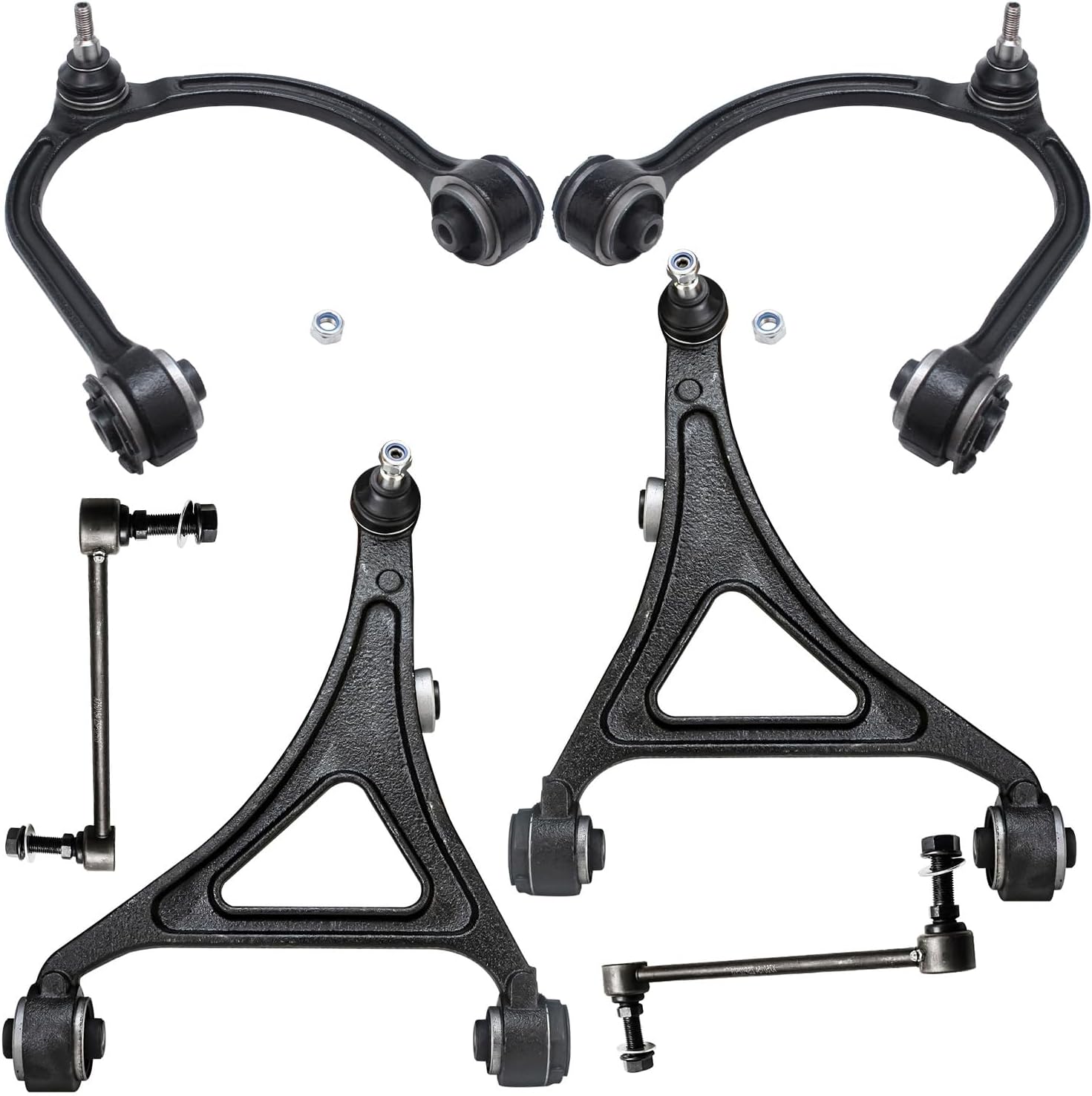
| Fitment | 2017-2019 Dodge Challenger AWD |
|---|---|
| Kit contents | 4 control arms with ball joints + 2 sway bar end links |
| Position | Front |
This Detroit Axle front suspension kit replaces the two lower and two upper control arms with integrated ball joints and includes two front sway bar end links for AWD Dodge Challenger models from 2017 to 2019. It is intended as a direct-fit, vehicle-specific replacement to restore steering geometry and front-end stability after worn or damaged arms. The components are tested for impact, wear, and fatigue and come with factory-quality claims that aim to match OEM fit and function. In practice this kit is useful when multiple front suspension pieces need replacement at once because the ball joints are preinstalled, which saves assembly time and reduces parts mismatch. Install typically requires a shop alignment afterward. Limitations: a small number of buyers report early failures, so meticulous pre-install inspection and correct installation torque are important, and one review noted missing inner tie rod replacement if needed separately. The kit suits a performance-minded owner wanting to recover tight steering and predictable handling without sourcing individual parts separately.
Best for: Performance-oriented Challenger owners who prioritize restoring tight, predictable front-end handling and prefer a single matched kit for a complete front suspension refresh.
Less Ideal for: Drivers who only need a single isolated part or are seeking an uprated aftermarket performance arm with adjustable geometry should consider alternatives.
- Complete front set replaces both upper and lower control arms plus sway bar end links for one cohesive repair
- Ball joints preinstalled so less assembly and consistent fitment during installation
- Vehicle-specific design intended to match factory mounting points and steering geometry
- Components undergo impact, wear, and fatigue testing to support durability claims
- Some user reports of short service life on a minority of units
- Does not include inner tie rods or other steering components that may also need replacement during a front-end job
Verdict A convenient, vehicle-specific complete front control arm kit for AWD Dodge Challenger owners who want to restore factory handling quickly, but inspect for quality and plan for alignment after installation.
4. Metrix Premium Chassis Parts Rear Lower Rearward Control Arm Kit (Left & Right)

| Fit Type | Vehicle Specific Fit |
|---|---|
| Auto Part Position | Rear Lower |
| Material | Carbon Steel |
| Quantity | 2 (left and right) |
These Metrix rear lower rearward control arms replace the factory parts on compatible Dodge Challenger models and are sold as a left and right pair. They are steel, pre-greased, and shipped as vehicle-specific fit components intended for rear suspension repair or refresh. In use they restore proper toe and alignment at the rear, improving stability and tire wear after the worn factory arms are removed. Notable features include pre-greased joints for immediate, quieter operation and manufacturing to IATF 16949 and ISO 9001 standards which suggests consistent build quality. Practical benefits are straightforward: you get both sides in one kit, parts that match factory fitment for direct installation, and a three year/36,000 mile limited warranty for peace of mind. Limitations are that installation requires mechanical skill or a shop and some buyers reported fitment issues on certain vehicles, so confirm model-year compatibility before ordering. These are a value-oriented alternative to factory replacements for Challenger owners who want a cost-effective repair that restores rear suspension function.
Best for: Budget-conscious Challenger owners who need an affordable, direct-replacement rear control arm kit to restore rear alignment and handling without paying OEM prices.
Less Ideal for: Owners looking for performance upgrades, adjustable geometry, or a lifetime part should consider aftermarket performance arms or OEM-quality replacements instead.
- Sold as a matched left and right pair for a complete rear-side repair
- Pre-greased joints reduce initial break-in noise and wear
- Manufactured to IATF 16949 and ISO 9001 standards indicating consistent quality
- Three year/36,000 mile limited warranty provides additional assurance
- Installation requires moderate mechanical skill or professional installation
- Some buyers reported fitment interference on specific vehicles so double-check fitment before purchase
Verdict A cost-effective, factory-fit replacement pair that restores rear suspension function on Dodge Challenger models for buyers prioritizing value over performance upgrades.
5. BRTEC Front Lower Control Arm Kit (4-piece) for Dodge Challenger

| Fit Type | Vehicle Specific Fit |
|---|---|
| Auto Part Position | Front Lower |
| Unit Count | 4.0 Count |
| Manufacturer | BRTEC |
This BRTEC kit supplies the two rearward and two forward front lower control arms needed when replacing worn lower arms on a Dodge Challenger (RWD) that does not have the high performance suspension. The parts arrive painted and include factory-replacement style interchange numbers so they bolt in to the factory mounting points and restore steering geometry and wheel alignment when installed. Typical use is as a complete front-lower arm refresh during suspension service or after worn bushings cause noise, uneven tire wear, or play in the front end. Reported strengths are straightforward: it is a complete four-piece kit, designed for specific Challenger years and engine options, and carries claims of durability testing. Limitations to note are mixed customer experiences with longevity and noise for some units and the listing does not detail bushings or ball joint brand or specs, which matters for long-term performance. Expect to verify fit and have a post-install alignment performed; professional installation is recommended if you lack suspension experience.
Best for: Risk-averse mainstream buyers who prioritize restoring factory handling and eliminating front-end noise on a Dodge Challenger and prefer a vehicle-specific, complete kit to simplify repairs.
Less Ideal for: Drivers seeking performance-oriented upgrades, aftermarket performance bushings, or those with high performance suspension should look at purpose-built control arms designed for upgraded handling rather than direct replacements.
- Complete four-piece kit covers both forward and rearward front lower arms so you replace all lower arms at once.
- Vehicle-specific fitment for 2011–2019 Dodge Challenger RWD models without high performance suspension reduces guesswork during selection.
- Painted finish and manufacturer testing claims aim to resist corrosion and provide reasonable durability.
- Includes manufacturer interchange numbers for straightforward replacement and reference during installation.
- Some buyers report early noise and failure on a portion of units which suggests variable quality control.
- The product description does not specify bushing type or ball joint supplier, so long-term wear characteristics are unclear.
Verdict A convenient, vehicle-specific four-piece replacement kit for Challenger owners wanting a straightforward front lower arm refresh, but expect variable long-term results and verify bushing/ball joint details.
6. TRQ Front Lower Control Arm Set (2-piece)
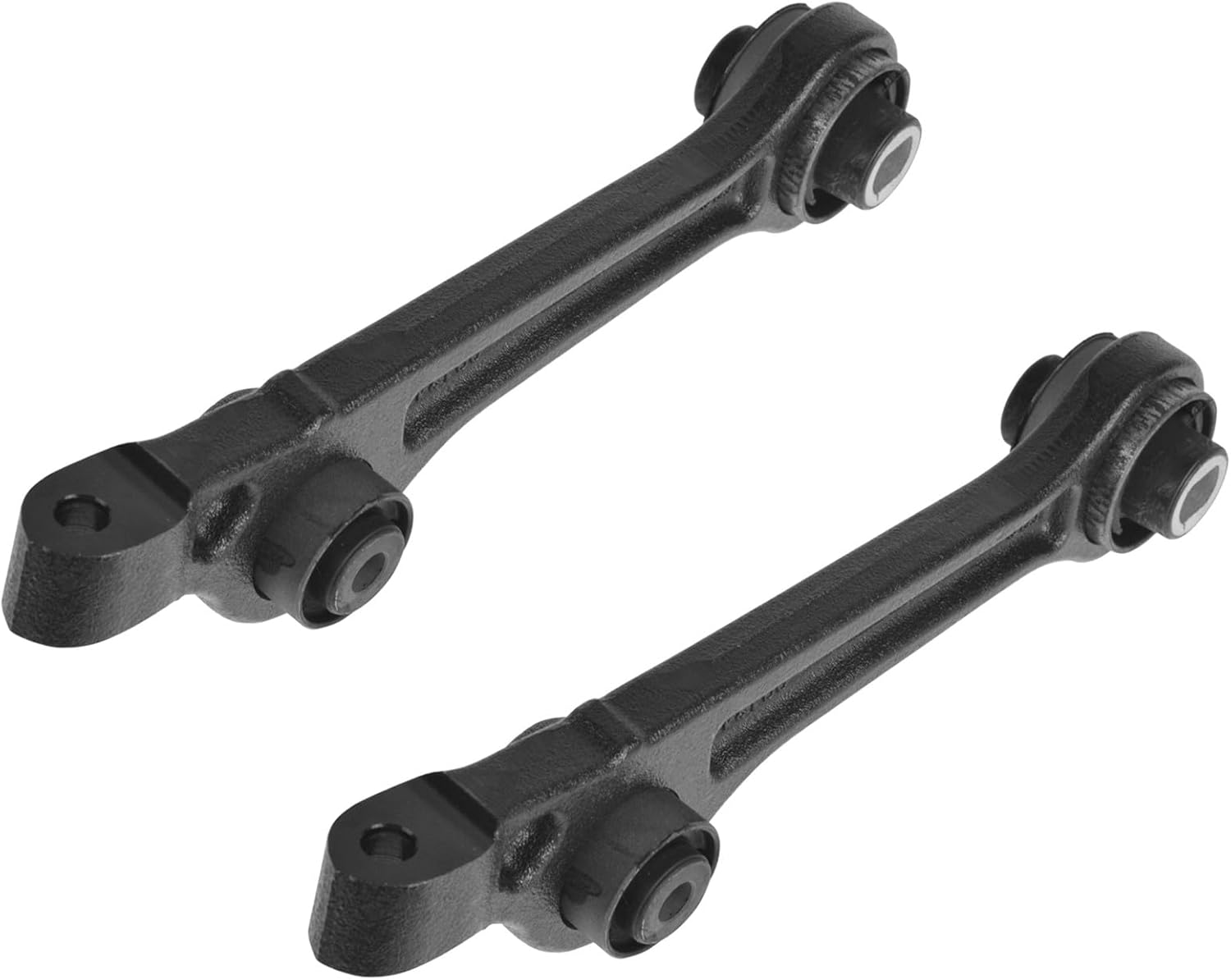
| Fitment | Dodge Challenger 2011–2018 (and listed later RWD years) |
|---|---|
| Quantity | 2 Piece Control Arm Set |
| Material | Alloy Steel |
| Manufacturer | TRQ |
| Exterior | Machined |
This TRQ front lower control arm set replaces the driver and passenger side rearward lower arms and arrives pre-assembled to simplify installation. Designed for Dodge Challenger applications listed in the fitment chart, the kit is used to restore front suspension geometry, reduce play, and improve steering feel after worn arms cause looseness or uneven tire wear. The arms are alloy steel with machined exterior surfaces and come with ball joints installed, which saves time during a DIY swap. Practical benefits include factory-style fitment that lines up with factory mounting points, a noticeable tightening of the front end, and broad compatibility across Challenger model years and trims called out by the manufacturer. Limitations to consider are mixed long-term durability reports from some users and occasional fitment quirks requiring reuse of original hardware for proper cotter pin alignment. Expect this set to be a cost-effective replacement that improves handling immediately but plan for a post-installation inspection and standard alignment to ensure lasting performance.
Best for: Practical optimizers who want a budget-conscious, direct-fit control arm set that restores handling and is suitable for DIY installation and routine shop repairs on a Dodge Challenger.
Less Ideal for: Buyers seeking a lifetime, high-mileage performance upgrade or a heavy-duty racing component should consider premium or specialty suspension parts instead.
- Direct-fit, vehicle-specific design reduces modification and installation time
- Arms ship with ball joints pre-installed to simplify DIY replacement
- Alloy steel construction and machined exterior for a strong, factory-quality feel
- Includes both driver and passenger rearward lower control arms for a complete side-to-side repair
- Some users reported premature wear or ball joint failures on long-term use
- Occasional hardware fitment issue requiring use of original nut for proper cotter pin alignment
Verdict A practical, cost-effective direct-fit replacement that tightens front-end handling on compatible Dodge Challengers, with good immediate value but mixed long-term durability reports.
7. TadaMark Front Upper and Lower Control Arms Suspension Kit with Tie Rods and Ball Joints
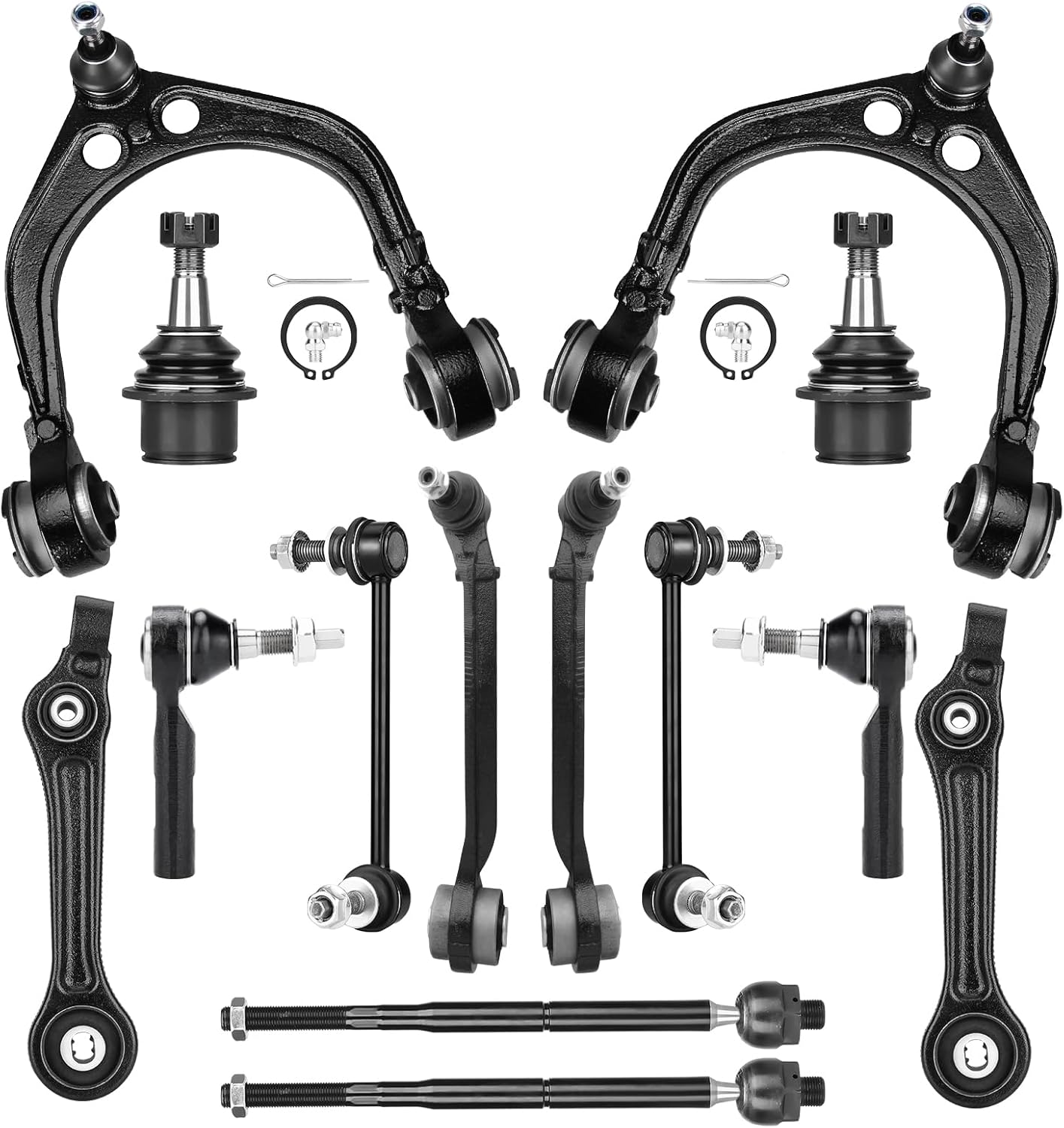
| Fitment | 2011–2017 Dodge Charger RWD |
|---|---|
| Material | Alloy Steel |
| Orientation | Front & Rear |
| Includes | Upper and lower control arms, tie rod ends, sway bar end links, ball joints |
This TadaMark suspension kit supplies the main front control-arm components needed when rebuilding the Charger’s front suspension on rear-wheel-drive models from 2011 to 2017. It includes upper and lower control arms, pre-assembled lower ball joints, inner and outer tie rod ends, sway bar end links, and replacement suspension ball joints so a workshop can swap multiple worn items in a single job. Buyers report the kit restores steering feel and reduces clunking and brake shudder when the worn parts are replaced, and the steel construction and painted finish aim for durability. Fitment issues have been reported on a few tie-rod pieces and some ball joints, so careful inspection at install and a shop alignment afterward are recommended. The kit is a comprehensive option for Cherry-picking a one-stop replacement when you want to refresh the Charger’s front end, but expect an all-day install and plan to add grease to zerk fittings for best longevity.
Best for: A risk-averse mainstream Charger owner wanting a single, comprehensive kit to restore factory-like steering and eliminate front-end noise without sourcing individual parts.
Less Ideal for: Drivers who prefer buying only individual OEM parts or who need guaranteed exact-fit factory replacements without any possibility of fitment adjustment should consider single-part alternatives.
- Complete front-end kit that replaces upper and lower control arms plus tie rod ends and sway bar links so multiple worn parts are addressed at once
- Pre-assembled lower ball joints reduce prep work during installation
- Made from high-strength alloy steel with a painted exterior for corrosion resistance and stability
- Includes zerk-fitted components so parts can be greased after install to extend life
- Some customers reported tie-rod head sizes or ball joints that did not match their vehicle and required replacement or modification
- Not all components are perfect fit right out of the box so professional inspection and minor adjustments may be needed
Verdict A convenient, full front suspension kit tailored to 2011–2017 Dodge Charger RWD that can restore steering feel quickly but may require inspection and occasional part swaps for perfect fit.
Choosing the Right Dodge Challenger Lower Control Arm: Key Factors to Consider
Fitment and Vehicle-Specific Design
Correct fitment is critical because the arm must match the Dodge Challenger chassis points and geometry to maintain alignment settings. An arm with exact mounting hole locations and compatible ball joint taper reduces installation time and avoids unintended steering or tire wear issues.
Choosing a vehicle-specific design also helps ensure the arm clears nearby suspension and brake components. Slight differences in length or mounting angle can alter camber and toe, so prioritize parts that explicitly list compatibility with your Challenger model year and trim.
Material and Construction Quality
The base material and manufacturing method determine strength and fatigue resistance. Forged or stamped steel often offers a good balance of rigidity and shock resistance, while cast or billet variants can provide higher precision or weight savings in some designs.
Pay attention to weld quality, gusseting, and where loads are concentrated. Better-constructed arms distribute stress across the component, reducing the chance of cracks or deformation under heavy loads or spirited driving.
Bushings and Ball Joint Specifications
Bushings and ball joints are the serviceable interfaces that control noise, compliance, and steering feedback. Polyurethane bushings offer firmer response and longer life in performance applications, while rubber bushings provide more compliance and quieter operation for street use.
Check whether bushings are replaceable and if the ball joint is serviceable. High-quality ball joints with thicker seals and appropriate preload reduce play and prolong life. The type and durometer of the bushing materially affect NVH and handling behavior.
Corrosion Resistance and Coatings
Corrosion protection matters for longevity, especially if the vehicle is driven in wet climates or where roads are salted. Zinc plating, powder coatings, and e-coatings all slow rust formation and preserve structural integrity over time.
Inspect coating coverage around welds and mounting points because these areas are prone to moisture intrusion. Better surface protection lowers the likelihood of early failure and reduces the need for replacement due to rust-related weakening.
Intended Use and Stiffness
The arm should match how you use the Challenger. Daily-driven cars benefit from arms tuned for comfort and quiet operation, while high-performance or track-driven cars often require stiffer components to maintain alignment under load and reduce compliance.
Stiffer arms can improve turn-in and responsiveness but may transmit more road noise and harshness. Consider the tradeoff between handling precision and ride quality when choosing arm stiffness and bushing type.
Serviceability and Maintenance
Parts that allow for easy replacement of worn bushings or ball joints can save time and money over the vehicle lifetime. Look for arms with readily available replacement parts and clear installation instructions.
Ease of access to mounting bolts and compatibility with standard service tools reduces labor time during installation. Consider whether the design requires special presses or alignment afterward, as that affects total maintenance effort.
FAQ
How do I tell if a Dodge Challenger lower control arm is failing?
Common indicators include uneven tire wear, pulling to one side, visible play at the wheel, clunking during acceleration or braking, and unusual vibrations. You may also notice alignment changes that require repeated adjustments. A visual inspection can reveal torn bushings or excessive rust, and a technician can check ball joint play to confirm failure.
Can I replace just the bushings instead of the whole lower control arm?
In many cases you can replace bushings independently if the arm design allows it. Rubber or polyurethane bushings are often serviceable, and swapping them can restore compliance and reduce noise. However, if the arm itself is bent, heavily corroded, or the ball joint is worn, replacing the whole arm is usually the more reliable option.
Will installing a stiffer lower control arm affect ride comfort?
Yes. Stiffer arms and firmer bushings typically improve handling precision and steering response but can increase road noise and transfer more vibration into the cabin. For casual daily driving, rubber bushings provide a quieter, more comfortable ride. Balance your desire for sharper handling with acceptable NVH when selecting stiffness.
How important is corrosion protection on suspension arms?
Very important. Corrosion weakens metal over time and can lead to structural failure or difficult-to-remove fasteners. Coatings like zinc plating or powder coat help prolong service life, especially in wet or salted environments. Inspect welds and mounting areas where coatings may be thinner, and consider parts with documented corrosion resistance.
Do I need an alignment after replacing a lower control arm?
Usually yes. Replacing a lower control arm can change camber and toe settings, so a professional alignment is recommended to restore proper tire contact and prevent uneven wear. Some installations may require minor adjustments, while others need a full alignment depending on how replacement affects suspension geometry.
How We Chose the Best Dodge Challenger Lower Control Arm
We focused on parts specifically designed for the Dodge Challenger and prioritized fitment accuracy to ensure correct suspension geometry. Material and construction quality were next, with emphasis on stamped steel versus forged or cast designs, and the presence and quality of bushings and ball joints. Corrosion resistance and protective coatings were included to reflect long-term durability, particularly for regions with road salt or moisture. We also considered intended use—street, performance driving, or restored stock application—because load capacity and stiffness affect handling and ride comfort. Ease of installation and the availability of replacement bushings or ball joints were factored in to reflect real-world maintenance. Excluded were universal or generic arms that do not specify Dodge Challenger fitment, components lacking clear material specs, and parts without documented warranty or manufacturer support.
Our full evaluation process is outlined in our review methodology.
Conclusion
Choosing the right lower control arm for a Dodge Challenger means balancing fitment accuracy, material quality, and bushing or ball joint characteristics against how you drive. Prioritize vehicle-specific parts with solid construction and corrosion protection if you want long service life, and select bushing types that match your comfort and handling goals. Remember that tradeoffs exist between stiffness and NVH, and that serviceability and availability of replacement components affect long-term ownership. Use the evaluation criteria above to match a lower control arm to your priorities and expected use.
Explore More:
- Check out all Dodge Challenger parts & accessories
- Explore Suspension & Steering
- Browse all Auto Parts
