

Note: This article contains affiliate links. If you click on these links and make a purchase, I may earn a small commission at no extra cost to you. This helps support my research and content. Read my full affiliate disclosure here.
If your Dodge Challenger feels loose in the front end or the steering pulls, the control arms are a likely place to check. Choosing the right control arm affects ride quality, steering precision, and long-term suspension health. This guide covers seven shortlisted control arms that fit the Dodge Challenger and explains the factors that matter for real-world driving.You will see the main evaluation criteria used to narrow the list and clear notes about fitment and installation considerations. Read on to find options suited to performance driving, daily use, or durable replacement needs.
Looking for other parts? See all Dodge Challenger parts & accessories.
Top Picks at a Glance
| Best Reviewed A top-rated pick with lots of positive feedback | ILONPA Front Upper Control Arm Kit with Ball Joints (2-piece) |  |
| Most Popular A crowd favorite that many people choose with confidence | Detroit Axle Front Lower Forward Control Arms with Ball Joints (pair) |  |
| Best Quality Built to a higher standard if you want something more solid | TRQ Front Lower Control Arm and Ball Joint 4‑Piece Set |  |
| Best Budget The cheapest option that still gets the job done reliably | KRGUOD Front Upper Control Arm Pair (K620177/K620178) with Ball Joints |  |
| Most Sold A high-volume bestseller chosen again and again | TadaMark Front Upper and Lower Control Arms Suspension Kit with Tie Rods and Ball Joints |  |
| Best Value for Money The sweet spot between price and what you get | TRQ Rear Upper Rearward Control Arm Set (Driver & Passenger) |  |
| Best Overall The best all-around choice for most situations | Detroit Axle 16‑Piece Front Suspension Kit for Dodge Challenger (2011–2014) |  |
1. ILONPA Front Upper Control Arm Kit with Ball Joints (2-piece)

| Fitment | Dodge Challenger RWD (compatible model years listed) |
|---|
This ILONPA front upper control arm kit replaces both left and right assemblies and includes preinstalled ball joints for direct swap-in installation on compatible Dodge Challenger RWD models. Built from high-strength alloy steel with solid plate mounting brackets, the arms are intended to restore steering geometry and front-end stability after wear or damage. Typical use is a like-for-like replacement during suspension repair or when correcting alignment issues caused by worn upper arms. Notable features are factory-style steering alignment tolerance and a two-piece matched set that helps keep both sides consistent. Practical benefits include straightforward installation for a mechanic, improved handling compared with worn originals, and parts that reviewers report fit similarly to factory-quality components. Limitations are that the kit is an aftermarket part rather than a factory-sourced unit and packaging protection has been called out as modest by some buyers, so inspect parts on arrival; final alignment is still required after installation.
Best for: Reliability-focused buyers who prioritize restoring factory steering feel and front-end stability on a Dodge Challenger and want a direct, mechanic-friendly replacement.
Less Ideal for: Do not choose this if you need an OEM-branded part for warranty reasons or if you plan significant performance suspension upgrades beyond stock geometry.
- Includes matched left and right upper control arms with preinstalled ball joints for one-step replacement
- Made from high-strength alloy steel with solid plate mounting brackets for durability
- Manufactured to vehicle-specific fit and steering alignment tolerances to simplify installation
- Aftermarket part rather than a factory-sourced unit
- Some customers noted minimal packaging protection on delivery
Verdict A budget-friendly, reliability-oriented replacement kit that restores steering geometry on Dodge Challenger RWD models with a matched left/right set and preinstalled ball joints.
2. Detroit Axle Front Lower Forward Control Arms with Ball Joints (pair)

| Fit Type | Vehicle Specific |
|---|---|
| Auto Part Position | Front |
| Material | Alloy Steel |
| Orientation | Drivers Side |
These Detroit Axle front lower forward control arms replace the factory parts on RWD Dodge Challenger models without high-performance suspension. Sold as a pair with ball joints already installed, they are meant for direct replacement during routine front suspension repair or when worn ball joints cause play, vibration, or uneven tire wear. The alloy steel construction and vehicle-specific fit aim to simplify installation for DIYers or shops by matching factory mounting points. Users report straightforward fitment and improved ride quality after swap, though one installer noted the rear mounting bracket can be stubborn to seat and may need a clamp or lubrication to position properly. The arms include sealed ball joints so no initial greasing is required, which speeds installation but means the ball joints are not serviceable. Expect a practical, budget-friendly factory-replacement option that restores correct geometry, with the convenience of preassembled components but limited long-term serviceability of the ball joints.
Best for: Buyers who prioritize convenience and straightforward repairs on a Dodge Challenger and want a ready-to-install, factory-replacement style part to get the car back on the road quickly.
Less Ideal for: Enthusiasts who expect to frequently service or grease suspension joints or those running high-performance suspension setups should look at serviceable or performance-oriented alternatives.
- Vehicle-specific fit for RWD Dodge Challenger models without high-performance suspension which simplifies replacement.
- Preinstalled ball joints reduce installation time and complexity.
- Alloy steel construction aims to match factory-strength for routine street use.
- Ball joints are sealed and not serviceable which could require replacement sooner than serviceable units.
- Rear mounting bracket may need extra force or a clamp to fully seat during install on some cars.
Verdict A convenient, ready-to-install factory-replacement pair of lower forward control arms for RWD Dodge Challengers that restores fit and function but uses sealed, non-serviceable ball joints.
3. TRQ Front Lower Control Arm and Ball Joint 4‑Piece Set

| Fit Type | Vehicle Specific Fit |
|---|---|
| Auto Part Position | Front Lower |
| Quantity | 4 Piece |
| Exterior | Machined |
This TRQ 4‑piece set replaces both forward and rearward front lower control arms and supplies ball joints on the forward arms for direct replacement on rear‑wheel‑drive Dodge Challengers from 2011 through 2023. It is intended for performance‑minded drivers who want to restore steering precision and suspension geometry after worn arms cause looseness or uneven tire wear. The parts arrive preassembled to simplify installation and TRQ provides installation videos to guide a DIY install or a shop. In practical use the kit tightens front-end response, reduces play in the steering, and helps maintain even tire contact during spirited driving. Buyers should be aware that fitment must be confirmed for specific Challenger trims and that installation can require suspension disassembly and an alignment afterwards. A few reviews report inconsistent ball joint longevity and occasional fitment issues, so expect to verify parts and consider replacing mounting fasteners during installation.
Best for: Performance-oriented Challenger owners who prioritize sharper steering response and restored suspension geometry after wear, and who are comfortable with a shop install or hands‑on DIY work.
Less Ideal for: Buyers who want a plug‑and‑play upgrade with guaranteed long‑term ball‑joint life or those unwilling to verify trim‑specific fitment before installation.
- Direct-fit replacement for front lower control arms on 2011–2023 rear‑wheel‑drive Dodge Challengers
- Includes ball joints on the forward arms so you replace worn joints and arms together
- Preassembled components and video instructions speed up installation and reduce garage guesswork
- Designed to restore steering precision and even tire wear for performance driving
- Some buyers report inconsistent ball‑joint durability compared with factory parts
- A small number of reviewers experienced fitment problems requiring returns or rework
Verdict A solid direct‑fit kit to bring back steering precision on RWD Dodge Challengers, but confirm fitment and be mindful of mixed reports on ball‑joint longevity.
4. KRGUOD Front Upper Control Arm Pair (K620177/K620178) with Ball Joints

| Fit Type | Vehicle Specific Fit |
|---|---|
| Auto Part Position | Front Upper |
| Material | Alloy Steel |
| Unit Count | 2.0 Count |
These front upper control arms replace the factory units on rear-wheel-drive Dodge Challenger models and similar Chrysler/Dodge RWD vehicles. Sold as a driver and passenger pair, each arm comes with a preinstalled ball joint so installation is straightforward for a competent DIYer or a shop. Constructed from alloy steel with a machined exterior, the arms aim to restore steering precision and front-end stability after worn or damaged stock parts. Buyers report the parts fit without modification and reduce vibration and steering play. Because these are replacement control arms from a third-party brand, they are a budget-friendly alternative to dealer parts but may not match long-term corrosion protection or the exact finish of higher-end aftermarket options. Installation can require specialty tools or a press for the ball joints depending on your setup, and alignment after installation is necessary to avoid uneven tire wear. For Challenger owners looking to replace worn upper arms economically, this kit delivers core function and fit at a low cost.
Best for: Budget-conscious Challenger owners who prioritize restoring steering precision and ride stability without paying dealer prices, and who are comfortable having a shop perform installation or doing the job themselves with basic tools.
Less Ideal for: Owners seeking premium corrosion protection, cosmetic finish, or a performance-tuned suspension upgrade should consider higher-end aftermarket options or OEM replacements instead.
- Vehicle-specific fit for Dodge Challenger RWD models in the covered years
- Includes both left and right arms with preinstalled ball joints for easier installation
- Alloy steel construction and machined exterior for solid fit and durability
- Positive user reports of restored steering feel and reduced front vibration
- Limited to rear-wheel-drive applications only
- May lack the long-term corrosion coating and finish of higher-end replacement arms
Verdict An affordable, vehicle-specific replacement pair that restores front-end stability on RWD Dodge Challengers while keeping costs low.
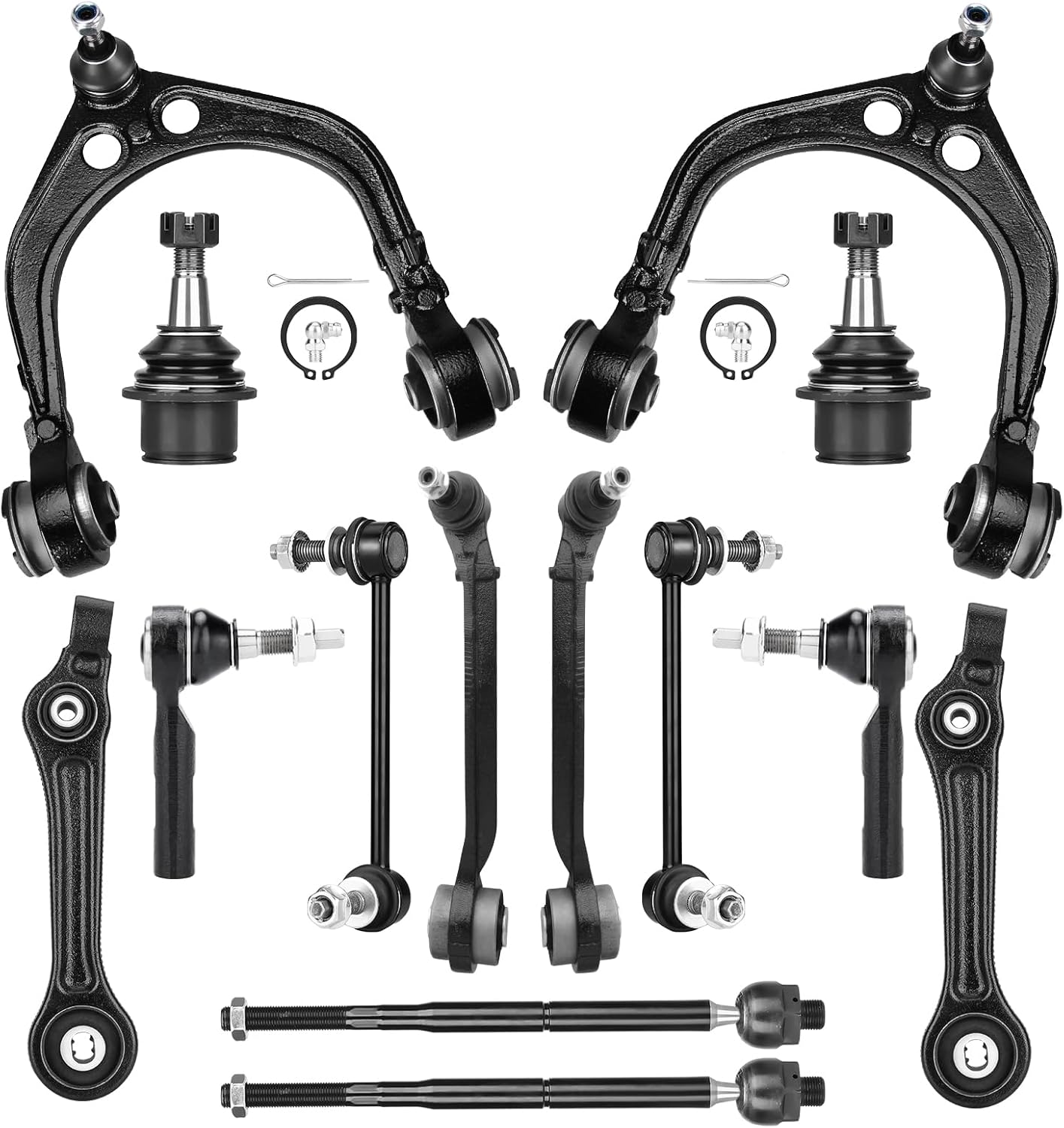
5. TadaMark Front Upper and Lower Control Arms Suspension Kit with Tie Rods and Ball Joints
| Fitment | 2011–2017 Dodge Charger RWD |
|---|---|
| Material | Alloy Steel |
| Orientation | Front & Rear |
| Includes | Upper and lower control arms, tie rod ends, sway bar end links, ball joints |
This TadaMark suspension kit supplies the main front control-arm components needed when rebuilding the Charger’s front suspension on rear-wheel-drive models from 2011 to 2017. It includes upper and lower control arms, pre-assembled lower ball joints, inner and outer tie rod ends, sway bar end links, and replacement suspension ball joints so a workshop can swap multiple worn items in a single job. Buyers report the kit restores steering feel and reduces clunking and brake shudder when the worn parts are replaced, and the steel construction and painted finish aim for durability. Fitment issues have been reported on a few tie-rod pieces and some ball joints, so careful inspection at install and a shop alignment afterward are recommended. The kit is a comprehensive option for Cherry-picking a one-stop replacement when you want to refresh the Charger’s front end, but expect an all-day install and plan to add grease to zerk fittings for best longevity.
Best for: A risk-averse mainstream Charger owner wanting a single, comprehensive kit to restore factory-like steering and eliminate front-end noise without sourcing individual parts.
Less Ideal for: Drivers who prefer buying only individual OEM parts or who need guaranteed exact-fit factory replacements without any possibility of fitment adjustment should consider single-part alternatives.
- Complete front-end kit that replaces upper and lower control arms plus tie rod ends and sway bar links so multiple worn parts are addressed at once
- Pre-assembled lower ball joints reduce prep work during installation
- Made from high-strength alloy steel with a painted exterior for corrosion resistance and stability
- Includes zerk-fitted components so parts can be greased after install to extend life
- Some customers reported tie-rod head sizes or ball joints that did not match their vehicle and required replacement or modification
- Not all components are perfect fit right out of the box so professional inspection and minor adjustments may be needed
Verdict A convenient, full front suspension kit tailored to 2011–2017 Dodge Charger RWD that can restore steering feel quickly but may require inspection and occasional part swaps for perfect fit.
6. TRQ Rear Upper Rearward Control Arm Set (Driver & Passenger)

| Fit Type | Vehicle Specific Fit |
|---|---|
| Auto Part Position | Rear |
| Material | Alloy Steel |
| Unit Count | 2.0 Count |
This TRQ two-piece kit replaces the rear upper rearward control arms on compatible Dodge Challenger models and is intended as a direct-fit factory-quality replacement. It ships with both driver and passenger arms pre-assembled for straightforward installation, which reduces shop time for routine rear suspension repairs. The machined alloy steel construction aims to restore rear alignment stability and even out tire wear compared with worn arms, and TRQ provides DIY installation videos to guide the process. Practical benefits include direct-fit compatibility across many Challenger model years and trims listed by the manufacturer, plus solid customer reports of durability and easy install. Limitations to note are that this is a suspension control arm set only and does not include bushings or related hardware beyond the arms themselves, so you may need additional parts for a complete rear suspension overhaul. Buyers should also double-check year and trim fitment carefully because there are year and serial-number fitment breaks that determine compatibility.
Best for: Buyers who want a practical, cost-conscious repair solution for a Dodge Challenger and prioritize direct-fit replacements that minimize shop time and DIY effort.
Less Ideal for: If you are restoring a Challenger with extensive suspension damage or upgrading to performance suspension components, this factory-replacement style kit is not the performance-oriented choice.
- Direct-fit replacement for listed Dodge Challenger model years and trims
- Pre-assembled driver and passenger arms for quicker installation
- Alloy steel, machined construction intended to restore rear stability and even tire wear
- Includes both left and right rear upper rearward control arms in one kit
- Does not include additional suspension hardware or separate replacement bushings
- Fitment varies by year and trim so you must verify compatibility before purchase
Verdict A budget-friendly, direct-fit rear upper control arm kit that restores rear stability on compatible Dodge Challengers while keeping installation simple.
7. Detroit Axle 16‑Piece Front Suspension Kit for Dodge Challenger (2011–2014)

| Fitment | 2011–2014 Dodge Challenger RWD/2WD |
|---|---|
| Kit contents | 16 pieces: control arms, tie rods, sway bars, ball joints, boots |
| Position | Front Upper/Lower |
| Manufacturer | Detroit Axle |
This Detroit Axle kit bundles the front upper and lower control arms (with ball joints), tie rods, sway bars, lower ball joints, and protective boots so you can refresh the entire front suspension and steering system on a 2011–2014 Dodge Challenger in one job. It is typically used when multiple suspension components are worn or after a collision and aims to restore steering response, reduce play, and stop clunks and uneven tire wear. Parts are manufactured to factory replacement tolerances and undergo impact and fatigue testing, so most buyers will find fitment and finish acceptable for daily driving and alignment. The kit includes serviceable grease fittings on several pieces and covers the major wear items, which simplifies installation compared with buying parts separately. Limitations shown in customer reports include occasional missing or incorrect hardware and some variability in tolerances that can require extra fitting or reused fasteners during installation, so expect to inspect parts and hardware before assembly and keep some common fasteners on hand.
Best for: A balanced all-round buyer who wants a one-stop solution to refresh multiple front suspension components on a 2011–2014 Dodge Challenger and values convenience and long-term drivability.
Less Ideal for: Drivers who need guaranteed OEM-identical tolerances for performance builds or those unwilling to pre-check and possibly source a few extra fasteners should consider alternative factory-quality parts or professional-sourced components.
- Comprehensive kit replaces most front suspension and steering wear items in one purchase
- Designed for direct fit on 2011–2014 Dodge Challenger RWD/2WD without high performance suspension
- Includes grease fittings and a mix of ready-to-install components to simplify maintenance
- Manufacturer states parts undergo impact and fatigue testing and are produced in ISO-certified facilities
- Some buyers reported missing or incorrect hardware in the box requiring extra parts or reused fasteners
- Reported variability in tolerances on a minority of parts that can need minor fitting during installation
Verdict A convenient, budget-friendly complete front suspension kit for 2011–2014 Dodge Challenger owners who want to replace multiple worn parts at once, provided you inspect hardware before installation.
Choosing the Right Dodge Challenger Control Arm: Key Factors to Consider
Fitment and Vehicle-Specific Design
Correct fitment is the foundation of any control arm purchase. A control arm designed for the Dodge Challenger will align mounting points, bushings, and ball joints to the factory geometry so you do not have to modify brackets or change suspension kinematics.
Improper fitment can cause persistent alignment drift, premature tire wear, and unpredictable handling. Look for parts labeled for your model year and submodel, and confirm mounting hole patterns and control arm orientation before installation.
Bushing Material and Construction
Bushings isolate noise and absorb shock while guiding suspension movement. The material and bonding method influence ride comfort, NVH, and longevity. Softer rubber bushings typically provide a quieter, more comfortable ride but may wear faster under spirited driving, while polyurethane or reinforced elastomers offer firmer control at the cost of increased noise and vibration.
Consider the expected usage: daily drivers often benefit from compliant bushings, while performance-focused drivers may prefer stiffer constructions that reduce deflection and maintain alignment under load.
Ball Joint Quality and Serviceability
If the control arm includes a ball joint, its design directly affects steering precision and safety. Look for ball joints with durable bearing surfaces, adequate lubrication, and protective boots to keep contaminants out. Serviceable or greasable ball joints can extend service life when regular maintenance is practical.
A worn or poorly constructed ball joint will produce looseness, uneven tire wear, and clunking noises, so prioritize robust joints for longevity and consistent steering feedback.
Materials, Corrosion Resistance, And Build Quality
Control arms endure road debris, moisture, and salt, so the base material and finish matter. Stamped steel, forged steel, and cast aluminum offer different tradeoffs in weight, strength, and cost. Protective coatings, zinc plating, or e-coating slow corrosion and preserve mounting surfaces.
Higher build quality reduces the chance of stress fractures and maintains geometric accuracy over time. Select parts with visible reinforcements in high-stress areas and consistent machining at bolt interfaces for predictable fit and performance.
Alignment Stability And Tolerance To Adjustment
A control arm must hold geometry under load to keep toe and camber stable. Parts that flex or have loose bushings will affect alignment, increasing the need for frequent adjustments. Some control arms provide alignment eccentric bolts or adjustable sleeves to fine-tune camber or toe during installation.
For most owners, a direct-fit control arm that maintains factory geometry is preferable. Drivers seeking handling adjustments should choose arms with controlled and robust adjustment mechanisms that lock securely once set.
Installation Considerations And Hardware
Ease of installation reduces labor time and the chance of installation errors. Control arms that include new mounting hardware, alignment sleeves, or prepressed bushings simplify the process. Also consider whether the design requires special tools or presses to remove and install bushings or ball joints.
Parts that fit without modification and use standard torque specifications are better for standard maintenance. If you plan to do the work yourself, prioritize control arms that explicitly state they include the necessary bolts and alignment aids.
FAQ
How can I tell if a Dodge Challenger control arm is bad?
Common signs include clunking or knocking noises from the front suspension, uneven tire wear, steering that wanders or pulls, and excessive vibration through the steering wheel. Visual inspection may reveal torn bushing boots, separated bushing material, or play at the ball joint. If you notice these symptoms, have the suspension inspected before damage worsens.
Is it better to replace just the control arm or the bushings separately?
It depends on condition and serviceability. If the control arm is structurally sound but has worn bushings, replacing the bushings can be cost effective. However, many modern control arms use pressed-in bushings that are difficult to service, and replacement arms with new bushings and ball joints often save time and provide more reliable long-term performance.
Will replacing control arms affect my alignment?
Replacing control arms can change toe and camber, so an alignment is usually recommended after installation. Some control arms arrive with alignment features to help set geometry, but a professional alignment ensures the suspension is within factory specifications and prevents premature tire wear.
How long do control arms typically last on a Dodge Challenger?
Lifespan varies with driving conditions, climate, and usage. Under normal road use, control arms often last many years, but exposure to road salt, heavy loads, or aggressive driving can accelerate wear. Regular inspections of bushings and ball joints help catch issues early and extend overall service life.
Can I install a replacement control arm myself?
A competent DIYer with the right tools can often install a control arm, but access to a torque wrench, jack stands, and sometimes a ball joint press or bushing press may be required. Because alignment changes are common after replacement, plan to have the vehicle aligned afterward or take careful measurements during reassembly.
What causes control arm bushing wear on a Dodge Challenger?
Bushing wear results from repeated flexing, exposure to contaminants like oil and road salt, and mechanical overload from potholes or curb strikes. Material fatigue over time and poor lubrication where applicable also contribute. Choosing appropriate bushing materials and addressing damaged boots can reduce premature wear.
How We Chose the Best Dodge Challenger Control Arm
We focused on components that restore proper suspension geometry and deliver durable service life for the Dodge Challenger. Selection criteria emphasized correct vehicle fitment, bushing material and construction, ball joint quality where applicable, and manufacturing tolerances that affect alignment stability. We also weighed corrosion resistance and the availability of direct-fit hardware to reduce installation complexity. Real-world durability indicators such as bushing hardness, reinforcement in load-bearing areas, and serviceable ball joint design were part of the assessment. Exclusions: we did not consider universal or generic multi-vehicle parts that require extensive modification, nor did we include options intended only for off-road conversions that alter stock ride height. The result is a group of control arms chosen for bolt-on compatibility, predictable alignment behavior, and long-term functional reliability.
Our full evaluation process is outlined in our review methodology.
Conclusion
When choosing a control arm for a Dodge Challenger, prioritize correct fitment, bushing construction, and ball joint integrity to preserve steering feel and alignment. Balance durability and NVH based on whether you need daily comfort or firmer performance handling.Also consider installation needs and whether included hardware or serviceable joints will reduce labor. A properly selected control arm keeps suspension geometry stable and reduces the need for repeated repairs.
Explore More:
- Check out all Dodge Challenger parts & accessories
- Explore Control Arms Maintenance & Repair Guides
- Explore Suspension & Steering
- Browse all Auto Parts
