

Note: This article contains affiliate links. If you click on these links and make a purchase, I may earn a small commission at no extra cost to you. This helps support my research and content. Read my full affiliate disclosure here.
If you drive a Dodge Challenger, worn ball joints can undermine steering precision, increase tire wear, and create unsafe handling. Choosing the right ball joint matters because fitment, durability, and correct articulation directly affect vehicle control and long-term reliability.This guide covers seven shortlisted ball joints selected for the Dodge Challenger. We evaluated each option against fitment accuracy and component durability so you can pick a replacement that restores safe steering and consistent alignment. Read on for what to prioritize before you replace a ball joint.
Looking for other parts? See all Dodge Challenger parts & accessories.
Top Picks at a Glance


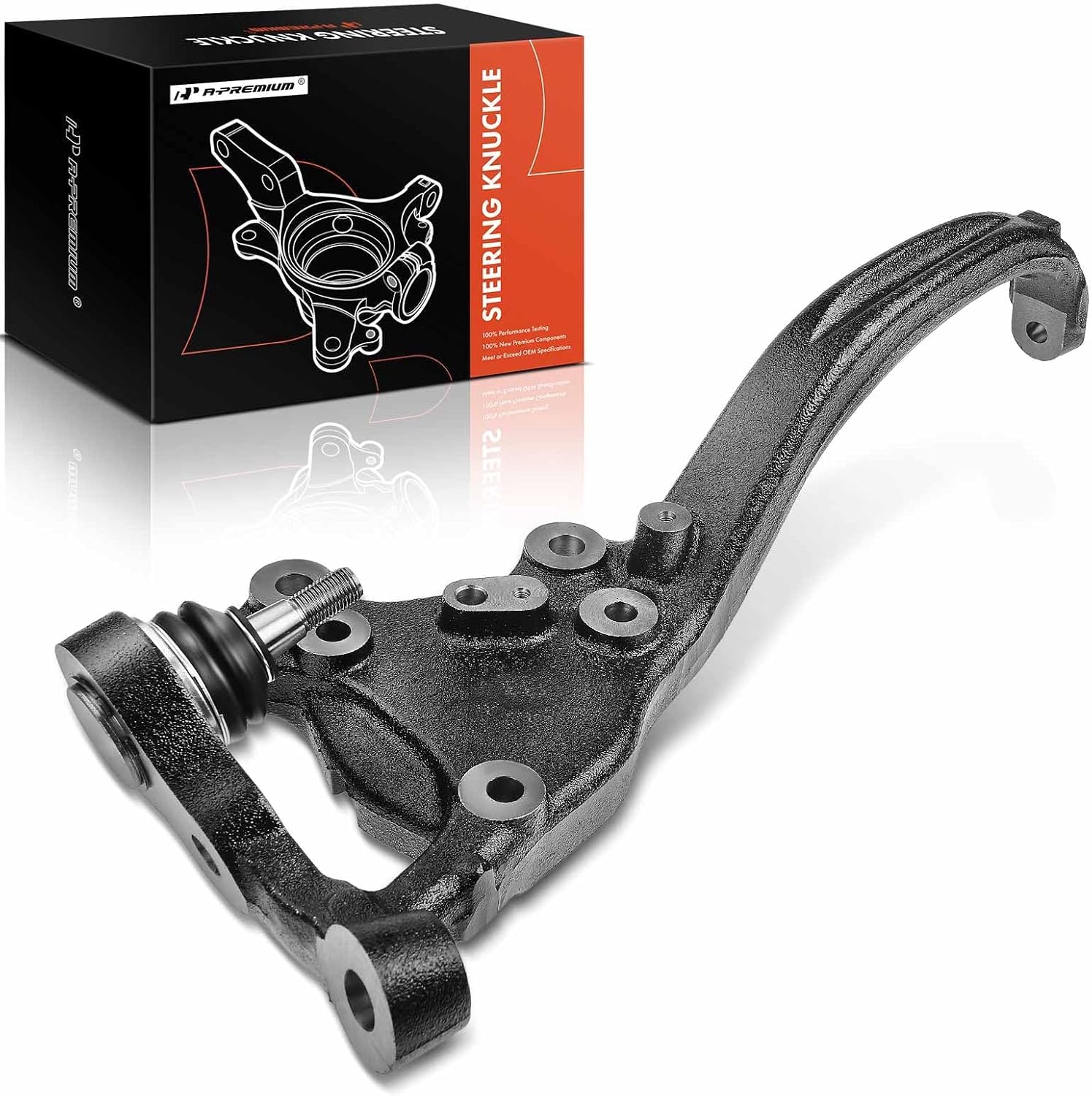
1. A-Premium Front Left Steering Knuckle with Ball Joint for Dodge Charger/Challenger/Chrysler 300 (Driver Side, RWD)
| Fitment | Dodge Charger/Challenger/Chrysler 300 2012-2023 (RWD, without Brembo) |
|---|---|
| Position | Front Left Driver Side |
| Material | Cast Iron |
| Ball Joint | Included, pre-pressed |
This A-Premium front left steering knuckle is a factory-style replacement that arrives with the ball joint already pressed in to simplify installation. It is intended for drivers who need to restore proper steering geometry and suspension function on compatible 2012–2023 Dodge Charger, Challenger, and Chrysler 300 models that use four-wheel ABS and do not have Brembo brakes. In use it replaces a worn or damaged knuckle to address symptoms such as hard braking, difficult steering, uneven tire wear, and vibration. The cast iron construction gives it a heavy-duty feel and buyers report good fitment and straightforward mounting. Note that the hub and axle are not included so additional components or wheel alignment may be required after fitting, and the part is specific to RWD applications without Brembo brakes. Installation is best handled by a mechanic if you do not have the tools to remove suspension components and perform a post-install alignment.
Best for: Reliability-focused buyers who prioritize a durable, factory-style suspension repair and want a ready-to-install knuckle that restores steering geometry on compatible Dodge Challenger/Charger/Chrysler 300 models.
Less Ideal for: Buyers planning a full hub or axle replacement, owners with Brembo-braked cars, or DIYers without suspension tools and alignment access should consider alternatives.
- Ball joint comes pre-pressed which reduces installation time and effort
- Cast iron construction suitable for heavy-duty street use
- Made to match factory fitment for the listed Dodge and Chrysler models
- Compatible with vehicles equipped with four-wheel ABS to preserve braking systems
- Does not include hub or axle so additional parts may be needed for a full repair
- Not compatible with vehicles fitted with Brembo brake packages
Verdict A practical, reliability-focused replacement knuckle with a pressed-in ball joint that restores steering function for compatible Dodge/Chrysler RWD models but requires separate hub/axle components and proper alignment.
2. Detroit Axle Front Lower Forward Control Arms with Ball Joints (pair)

| Fit Type | Vehicle Specific |
|---|---|
| Auto Part Position | Front |
| Material | Alloy Steel |
| Orientation | Drivers Side |
These Detroit Axle front lower forward control arms replace the factory parts on RWD Dodge Challenger models without high-performance suspension. Sold as a pair with ball joints already installed, they are meant for direct replacement during routine front suspension repair or when worn ball joints cause play, vibration, or uneven tire wear. The alloy steel construction and vehicle-specific fit aim to simplify installation for DIYers or shops by matching factory mounting points. Users report straightforward fitment and improved ride quality after swap, though one installer noted the rear mounting bracket can be stubborn to seat and may need a clamp or lubrication to position properly. The arms include sealed ball joints so no initial greasing is required, which speeds installation but means the ball joints are not serviceable. Expect a practical, budget-friendly factory-replacement option that restores correct geometry, with the convenience of preassembled components but limited long-term serviceability of the ball joints.
Best for: Buyers who prioritize convenience and straightforward repairs on a Dodge Challenger and want a ready-to-install, factory-replacement style part to get the car back on the road quickly.
Less Ideal for: Enthusiasts who expect to frequently service or grease suspension joints or those running high-performance suspension setups should look at serviceable or performance-oriented alternatives.
- Vehicle-specific fit for RWD Dodge Challenger models without high-performance suspension which simplifies replacement.
- Preinstalled ball joints reduce installation time and complexity.
- Alloy steel construction aims to match factory-strength for routine street use.
- Ball joints are sealed and not serviceable which could require replacement sooner than serviceable units.
- Rear mounting bracket may need extra force or a clamp to fully seat during install on some cars.
Verdict A convenient, ready-to-install factory-replacement pair of lower forward control arms for RWD Dodge Challengers that restores fit and function but uses sealed, non-serviceable ball joints.
3. Detroit Axle AWD Front 6‑Piece Control Arms Kit with Sway Bar End Links
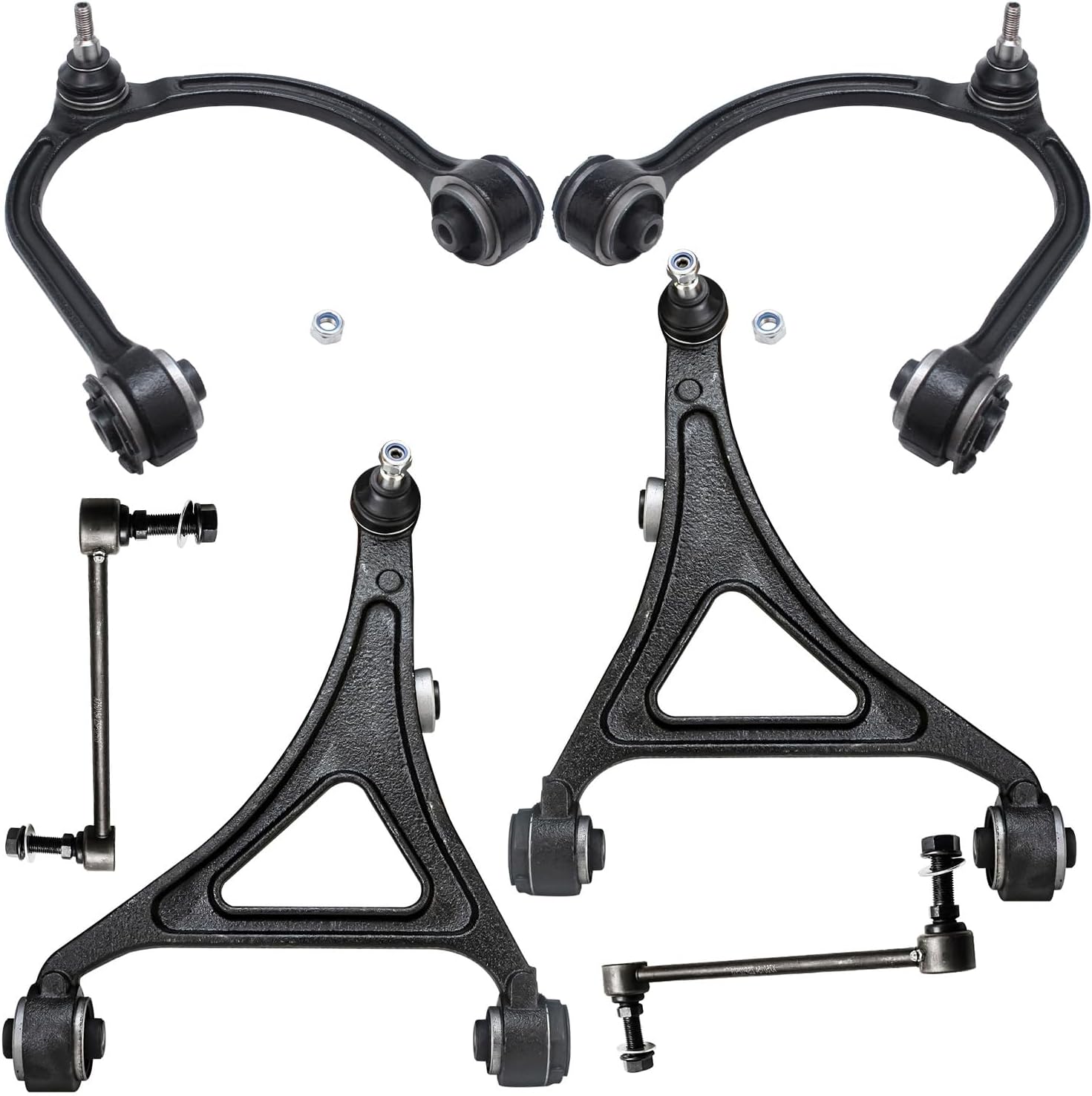
| Fitment | 2017-2019 Dodge Challenger AWD |
|---|---|
| Kit contents | 4 control arms with ball joints + 2 sway bar end links |
| Position | Front |
This Detroit Axle front suspension kit replaces the two lower and two upper control arms with integrated ball joints and includes two front sway bar end links for AWD Dodge Challenger models from 2017 to 2019. It is intended as a direct-fit, vehicle-specific replacement to restore steering geometry and front-end stability after worn or damaged arms. The components are tested for impact, wear, and fatigue and come with factory-quality claims that aim to match OEM fit and function. In practice this kit is useful when multiple front suspension pieces need replacement at once because the ball joints are preinstalled, which saves assembly time and reduces parts mismatch. Install typically requires a shop alignment afterward. Limitations: a small number of buyers report early failures, so meticulous pre-install inspection and correct installation torque are important, and one review noted missing inner tie rod replacement if needed separately. The kit suits a performance-minded owner wanting to recover tight steering and predictable handling without sourcing individual parts separately.
Best for: Performance-oriented Challenger owners who prioritize restoring tight, predictable front-end handling and prefer a single matched kit for a complete front suspension refresh.
Less Ideal for: Drivers who only need a single isolated part or are seeking an uprated aftermarket performance arm with adjustable geometry should consider alternatives.
- Complete front set replaces both upper and lower control arms plus sway bar end links for one cohesive repair
- Ball joints preinstalled so less assembly and consistent fitment during installation
- Vehicle-specific design intended to match factory mounting points and steering geometry
- Components undergo impact, wear, and fatigue testing to support durability claims
- Some user reports of short service life on a minority of units
- Does not include inner tie rods or other steering components that may also need replacement during a front-end job
Verdict A convenient, vehicle-specific complete front control arm kit for AWD Dodge Challenger owners who want to restore factory handling quickly, but inspect for quality and plan for alignment after installation.
4. LCWRGS Front Upper Control Arm with Ball Joint Kit (Driver and Passenger)

| Fit Type | Vehicle Specific Fit |
|---|---|
| Auto Part Position | Front Upper |
| Material | Alloy Steel |
| Manufacturer Part Number | K620177,K620178 |
This LCWRGS kit supplies two front upper control arms with preinstalled ball joints intended for RWD Chrysler 300, Dodge Charger, Dodge Magnum and Dodge Challenger applications within the listed model years. The parts are built from alloy steel with painted exterior plating and include mounting hardware, which makes them suitable for do‑it‑yourself replacement or a quick shop install. Features worth noting are the greasable ball joints and heat treated construction that aim to match factory fatigue strength and resist premature wear. In practice these arms restore steering feel and reduce uneven tire wear when original arms are worn, and several buyers report an OEM-like fit on compatible Challengers. Limitations are fitment sensitivity — accurate year and RWD confirmation is required — and the kit is a direct replacement rather than an upgraded performance arm, so it does not change suspension geometry or handling characteristics beyond restoring proper alignment and control. Installation can be moderately technical on some model years and may require specialty tools in tight spaces.
Best for: Budget-conscious Challenger owners who want a cost-effective factory‑style replacement to restore steering control and stop uneven tire wear without paying dealer rates.
Less Ideal for: Drivers looking for performance suspension upgrades, adjustable geometry, or parts for non‑RWD Challengers should look at aftermarket performance arms or model‑specific alternatives.
- Includes both driver and passenger front upper control arms with ball joints for a complete front‑end replacement
- Greasable ball joints allow periodic lubrication to extend service life
- Heat treated alloy steel construction intended to meet or exceed factory fatigue strength
- Mounting hardware included for a more straightforward installation
- Fitment is vehicle and RWD specific so incorrect year or drivetrain selection will cause fit issues
- This is a direct replacement rather than a performance upgrade and will not improve handling beyond restoring factory geometry
Verdict A wallet‑friendly, factory‑style pair of front upper control arms with greasable ball joints that restore steering and ride quality on compatible RWD Challengers.
5. ILONPA Front Suspension Control Arm Kit with Ball Joints for 2011–2017 Dodge Challenger RWD (14-piece)
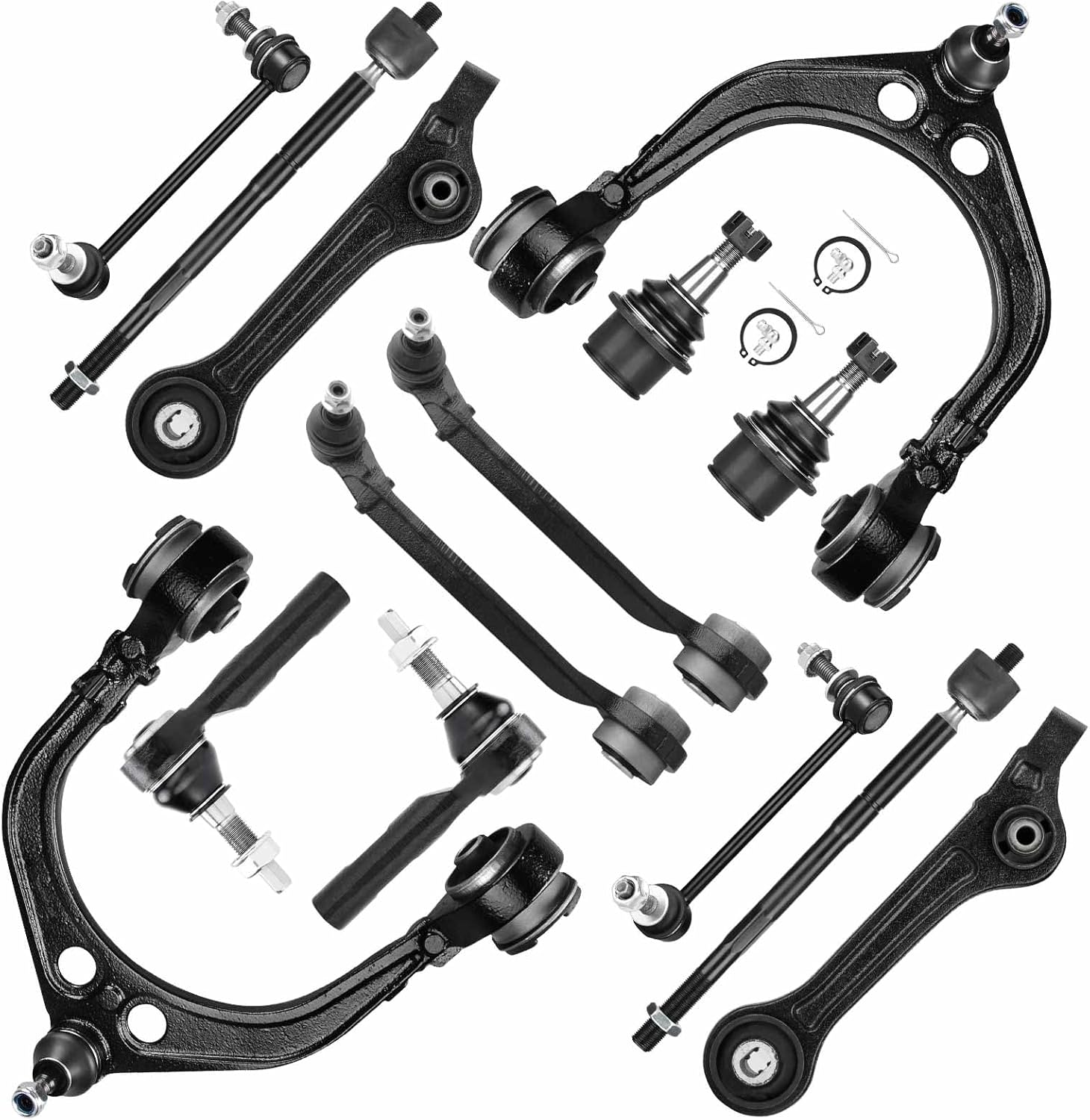
| Fitment | 2011–2017 Dodge Challenger RWD |
|---|---|
| Kit pieces | 14-piece front suspension kit |
| Material | Alloy Steel |
| Position | Front |
This ILONPA kit supplies all the major front suspension components you need when refurbishing a 2011–2017 Dodge Challenger RWD front end. It includes upper control arms with pressed ball joints, lower control arms, separate replacement ball joints, tie rod ends and sway bar end links so you can replace worn parts as a matched set rather than sourcing items individually. The parts are stamped from alloy steel with solid plate mounting brackets, which should provide adequate strength for street use and minor performance driving. Fitment is vehicle-specific for the Challenger range listed, and the manufacturer states precision tolerances to help with installation and alignment. Practical benefits include a full-front refresh in one purchase and compatibility with standard steering and suspension geometry on these Challengers. Limitations to bear in mind are variable quality control reported by some owners and instances of fitment mismatch on tie rods, so verify the exact model year and suspension variant before ordering and expect a professional alignment after installation.
Best for: Risk-averse mainstream buyers seeking a single-purchase solution to restore front suspension on a 2011–2017 Dodge Challenger RWD and avoid sourcing multiple components separately.
Less Ideal for: Performance-focused drivers who want premium, long-life aftermarket or upgraded performance components should consider higher-end control arms and ball joints instead.
- Complete 14-piece kit covers upper and lower control arms, ball joints, tie rod ends and sway links so you can replace the whole front assembly at once
- Vehicle-specific fitment for 2011–2017 Dodge Challenger RWD simplifies parts matching
- Alloy steel construction with solid plate mounts offers stronger-than-basic stamped components for street use
- Includes parts that help maintain factory steering geometry, easing alignment after install
- Some reviewers reported inconsistent quality and a few parts failing early
- Tie rod ends may not fit every suspension sub-variant despite the listed fitment, so verification is necessary
- Not a direct statement of long-term durability compared with higher-end OEM or performance parts
Verdict A convenient, vehicle-specific full-front suspension kit for 2011–2017 Dodge Challenger RWD buyers who want a single replacement package, but check exact fitment and be aware of mixed quality reports.
6. TRQ Front Upper Control Arm with Ball Joint Set (2-Piece)

| Fitment | Dodge Challenger compatible years listed (see fitment) |
|---|---|
| Quantity | 2 Piece kit (left and right) |
| Position | Front upper control arms with ball joints installed |
This TRQ two-piece front upper control arm kit replaces both left and right upper control arms and comes with ball joints preinstalled to simplify installation on compatible Dodge Challenger models. Intended as a direct-fit replacement, the arms are machined and arrive ready to bolt in, which reduces shop time and eliminates the need to press in ball joints. Typical use is front suspension repair to restore steering precision and reduce play from worn components. In practice the parts tighten the front end, improve steering feel, and can extend tire life compared with worn arms. TRQ provides installation videos and compatibility guidance that help DIYers complete the job confidently. Notable limitations are mixed long-term durability reports from some users and occasional fitment nuances where an original castle nut may be preferred during final assembly. Buyers should plan for alignment after installation and expect a professional torque sequence for safety.
Best for: Practical optimizers who value a cost-effective, ready-to-install replacement that restores ride quality and handling on a Dodge Challenger without costly shop labor.
Less Ideal for: Drivers seeking heavy-duty performance upgrades or motorsport use should consider performance-priced aftermarket arms designed for track loads instead.
- Preassembled ball joints save time and remove need for pressing operations.
- Vehicle-specific direct-fit design intended to match factory mounting points on compatible Challengers.
- Machined exterior and solid construction aimed at restoring steering tightness and ride quality.
- Includes both driver and passenger upper arms so both sides are replaced together for consistent handling.
- Some users report premature wear or noise on longer-term use.
- Included hardware may not always match factory fastener fitment leading to minor adjustments during install.
Verdict A budget-friendly, ready-to-install replacement for Dodge Challenger front upper control arms that restores steering feel but may show mixed long-term durability.
7. TadaMark Front Upper & Lower Control Arm Suspension Kit with Ball Joints and Tie Rods
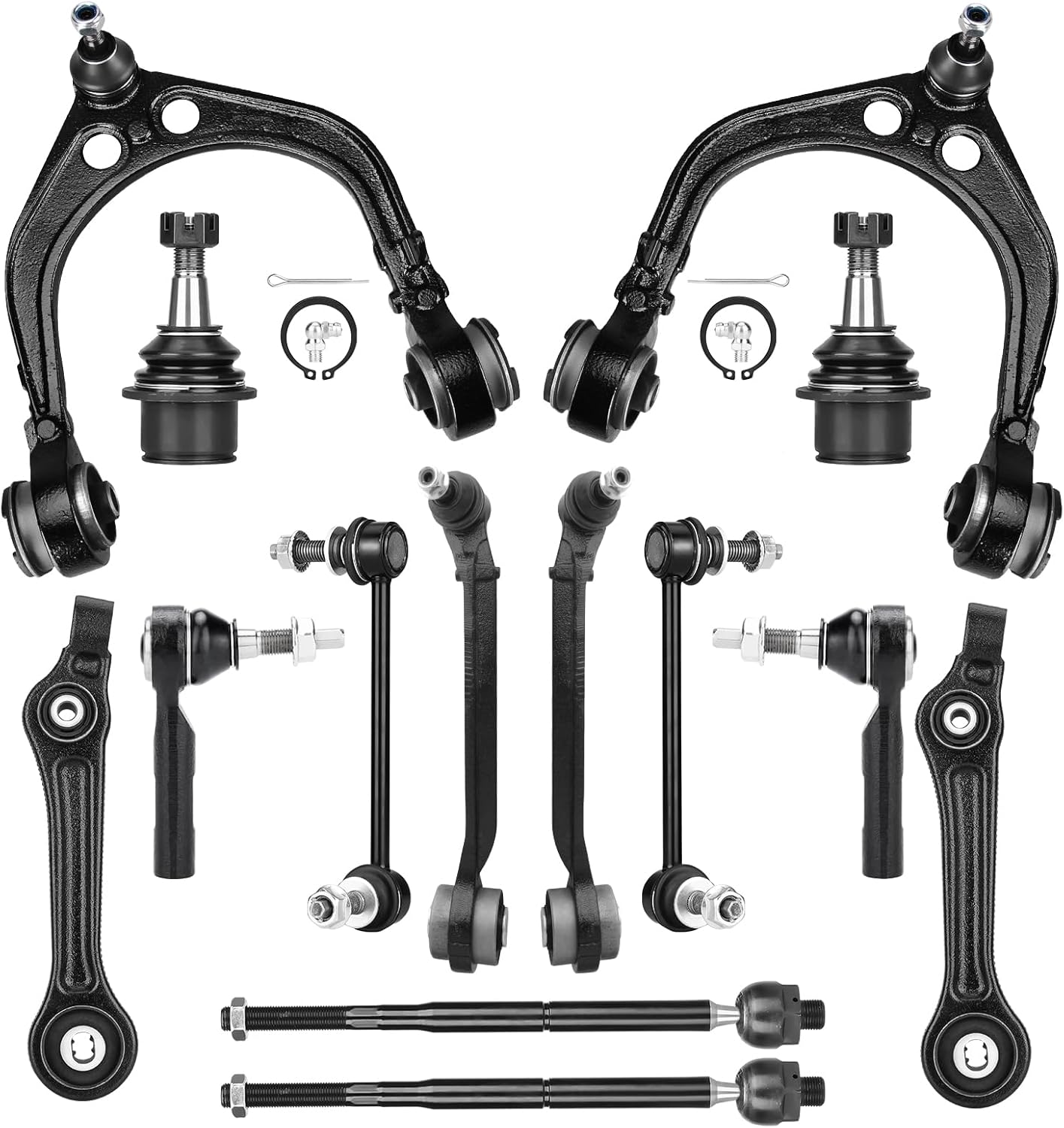
| Fitment | Dodge Challenger RWD 2011-2017, Charger, Chrysler 300 |
|---|---|
| Material | Alloy Steel |
| Orientation | Front & Rear (kit covers front assemblies) |
| Package contents | Upper/lower control arms, ball joints, inner/outer tie rod ends, sway bar end links, lower suspension ball joints |
This TadaMark kit supplies a full front suspension refresh for rear‑drive 2011–2017 Dodge Challenger owners by replacing upper and lower control arms, preassembled ball joints, inner and outer tie rod ends, sway bar end links, and lower suspension ball joints. It is intended for a one‑time rebuild of the front steering and suspension geometry to restore handling, reduce clunks, and correct uneven tire wear. Components are made from alloy steel with preassembled ball joints on the forward lower arms to speed installation. Buyers report improved ride quality and restored steering feel after alignment. Expect an involved install that typically requires shop tools and a professional alignment afterward. Some customers found fitment issues with specific tie rods or questioned the ball joint quality, so double‑check parts against your vehicle and be prepared to grease zerks during assembly. The kit is a practical, cost‑effective way to replace multiple worn parts at once, but occasional part fitment or durability variances mean a careful preinstall inspection is wise.
Best for: Balanced buyers who want a single, comprehensive kit to restore front suspension and steering feel on a Dodge Challenger RWD without mixing parts from multiple sources.
Less Ideal for: Do not choose this kit if you need guaranteed exact-match OE fitment for every small steering linkage component or if you want to replace only a single part rather than an entire front-end assembly.
- Complete front kit replaces upper and lower control arms, ball joints, tie rod ends and sway bar links in one purchase
- Preassembled ball joints on forward lower arms reduce assembly time
- Made from alloy steel for improved strength over worn originals
- Includes inner and outer tie rod ends so steering linkage is addressed along with suspension
- Some users reported inconsistent fitment on inner tie rods requiring replacement parts
- At least one review mentioned ball joints needing replacement after installation
- Installation is labor intensive and requires a professional alignment afterwards
Verdict A cost‑effective, all‑in‑one front suspension kit for RWD Dodge Challengers that restores handling quickly but requires careful fitment checks and a professional alignment.
Choosing the Right Dodge Challenger Ball Joint: Key Factors to Consider
Fitment and Vehicle-Specific Compatibility
Correct fitment is the single most important consideration because the ball joint must match the Challenger's control arm geometry and taper specifications. A properly fitting part ensures accurate wheel alignment, reliable steering response, and straightforward installation without fabrication.
Mismatched fitment can lead to premature wear, uneven tire wear, and safety issues. Always verify part numbers, mounting patterns, and taper angles against the Challenger's factory specifications to avoid installation complications or altered suspension geometry.
Construction Materials and Corrosion Resistance
Ball joint longevity depends heavily on material quality and surface protection. Hardened steel components, robust bearing surfaces, and plated or coated housings resist wear and corrosion in wet and salty conditions.
Good rust protection preserves sealing surfaces and fastener threads, reducing the chance of seizure during future servicing. Consider parts with proven coatings and durable metallurgy when you need a replacement that endures regular road exposure.
Sealing and Lubrication Retention
A reliable seal and effective grease retention are critical because contaminants and lost lubrication accelerate wear. Look for ball joints with high-integrity boots and sealed or serviceable grease fittings depending on your maintenance preference.
Sealed units reduce maintenance needs but must have durable boots that resist cracking. Serviceable designs allow periodic greasing, which can extend service life if maintained correctly. Both approaches are common; choose based on how you plan to maintain the vehicle.
Load Capacity and Durability
Ball joints bear significant vertical and lateral loads during cornering, braking, and impacts from road imperfections. Components designed with appropriate bearing surfaces and internal clearances will handle these loads without excessive play.
Durability translates to longer intervals between replacements and more consistent steering feel. Evaluate construction quality and any testing or load ratings provided to ensure the part suits the Challenger’s performance demands.
Installation Ease and Serviceability
Ease of installation affects labor time and the tools required. Some ball joints are drop-in replacements that align with factory mounting points, while others may need a press tool or additional hardware. Knowing what the job entails helps plan for shop time or DIY work.
Serviceability matters if you prefer greasable joints; those allow periodic maintenance. Also consider whether included hardware, alignment sleeves, or replacement fasteners are supplied, as missing items can add complexity to the job.
Alignment Stability and Driving Feel
Worn or improperly designed ball joints can change alignment under load, causing wandering, uneven tire wear, and vague steering. Choose parts that maintain consistent articulation and minimal play to preserve steering precision and predictability.
A stable joint supports crisp steering feedback and consistent tire contact patches. Pay attention to build tolerances and manufacturer guidance about preloading or torque settings to protect alignment settings after installation.
FAQ
How do I know if a Dodge Challenger ball joint needs replacing?
Common signs include uneven tire wear, looseness or play in the steering, clunking noises over bumps, or visible boot damage. You may also feel decreased steering precision or minor wandering at highway speeds. A qualified inspection can confirm wear by checking for vertical or lateral play at the joint.
Can I replace a ball joint myself on a Dodge Challenger?
That depends on your mechanical experience and tools. Some replacements are straightforward with common hand tools, while others require a ball joint press tool or suspension disassembly. If you are comfortable with suspension work and follow proper torque and alignment procedures, DIY is possible; otherwise seek professional help.
Are sealed ball joints better than greasable ones for the Challenger?
Sealed joints reduce routine maintenance and keep contaminants out, while greasable joints allow periodic lubrication that can extend service life. The best choice depends on whether you prefer low-maintenance parts or the ability to refresh lubrication during scheduled service.
Will replacing a worn ball joint fix wheel vibration?
Replacing a worn or loose ball joint often reduces steering-related vibration and wheel shimmy, especially if the joint was contributing to play in the suspension. However, wheel vibration can arise from multiple causes, so confirm the ball joint is the root cause before assuming replacement will fully resolve the issue.
How soon should I get an alignment after installing a ball joint?
It is usually advisable to check or perform a wheel alignment shortly after installing a ball joint. Suspension work can alter toe or camber settings, so verifying alignment ensures proper tire wear and handling. A post-installation alignment stabilizes steering feel and helps prevent premature tire wear.
How We Chose the Best Dodge Challenger Ball Joint
To assemble this list we focused on factors that matter for Dodge Challenger owners who need reliable suspension components. Key evaluation criteria included precise vehicle-specific fitment to the Challenger suspension geometry, construction materials and corrosion protection that affect longevity, OEM-compatibility of mounting and taper specifications, and the quality of ball stud sealing and lubrication retention. We also considered load capacity and durability under highway and spirited driving conditions, plus ease of installation when using common garage tools. Exclusions: we excluded universal or generic-fit parts that require significant modification, and any options lacking clear fitment data for the Dodge Challenger. The result is a set of ball joints that prioritize correct fit, robust construction, and serviceability for this vehicle platform.
Our full evaluation process is outlined in our review methodology.
Conclusion
When choosing a ball joint for a Dodge Challenger, prioritize correct fitment, robust construction, and dependable sealing or serviceability. Those attributes most directly affect steering precision, alignment stability, and service life.Balance ease of installation and maintenance preferences with the durability you need. Addressing worn ball joints promptly restores safe handling and helps avoid secondary wear to tires and related suspension components.
Explore More:
- Check out all Dodge Challenger parts & accessories
- Explore Ball Joints Maintenance & Repair Guides
- Explore Suspension & Steering
- Browse all Auto Parts
