

Note: This article contains affiliate links. If you click on these links and make a purchase, I may earn a small commission at no extra cost to you. This helps support my research and content. Read my full affiliate disclosure here.
Choosing the right brake rotors for your Subaru Forester affects stopping distance, pedal feel, and long-term maintenance costs. You want rotors that fit precisely, resist warping, and deliver consistent performance under the conditions you drive in. This guide highlights the top shortlisted rotors that meet those expectations and explains the key criteria we used to evaluate them. Below you will find concise, practical guidance to help you pick the rotor that matches your driving needs and service preferences.
Looking for other parts? See all Subaru Forester parts & accessories.
Top Picks at a Glance


1. PowerStop Rear Brake Kit KOE4631 – Z17 Ceramic Pads with OE Replacement Rotors

| Vehicle Service Type | Car |
|---|---|
| Automotive Fit Type | Vehicle Specific Fit |
| Position | Rear |
| Pads included | Z17 Ceramic Brake Pads |
| Rotors | OE replacement, mill-balanced |
This PowerStop rear brake kit is a bolt-on replacement designed for Subaru Forester rear brakes and includes Z17 ceramic pads, OE-style replacement rotors, stainless hardware, and rubberized shims. It is intended for everyday driving where quiet operation and low dust are priorities; the ceramic pads are chamfered, slotted, and thermally scorched for faster break-in and reduced noise. The rotors are mill-balanced and uncoated to provide a smooth feel and straightforward installation without modification. Practical benefits include a full kit that supplies the clips and hardware so you can replace both rear wheels in one job, cleaner wheels from low-dust pads, and predictable stopping suitable for daily commuting and light towing. Limitations to expect are that the rotors are non-coated so corrosion can appear on the hat area over time in wet or salted conditions, and ceramic pads generally sacrifice a bit of ultimate fade resistance compared with higher-performance compounds under heavy track use. For routine Forester service this kit simplifies the job and matches factory fit and function.
Best for: A reliability-focused buyer who wants a factory-quality, hassle-free rear brake replacement for routine Forester driving and low-maintenance ownership.
Less Ideal for: Those who prioritize track-level braking performance or need corrosion-resistant coated rotors for heavy winter salt exposure should consider other options.
- Complete kit with pads, rotors, stainless installation hardware, and shims for a single bolt-on rear brake replacement.
- Low-dust Z17 ceramic pads reduce wheel soiling and are engineered for quiet operation.
- Mill-balanced rotors deliver smooth braking feel and a straightforward installation process.
- Vehicle-specific fitment for Subaru Forester rear brakes ensures proper alignment and fewer fitment issues.
- Rotors are non-coated so the hub/hat area can corrode faster in harsh climates.
- Ceramic pad compound offers less high-heat fade resistance compared with aggressive performance pads.
Verdict A practical, vehicle-specific rear brake kit that delivers quiet, low-dust stopping and an easy bolt-on replacement for Subaru Forester owners focused on reliable, low-maintenance braking.
2. TRQ Rear Ceramic Brake Pad and Vented Rotor Kit for Subaru Forester (Rear)

| Fitment | Subaru Forester 2019-2024 rear |
|---|---|
| Brake Rotor Diameter | 11.22 in. (285mm) |
| Brake Pad Material | Ceramic |
| Wheel Lug Count | 5 Lug |
| Brake Rotor Type | Vented |
This kit replaces the rear brake pads and rotors on compatible Subaru Forester models with a matched set of ceramic pads and vented rotors. Installation is intended as a vehicle-specific direct replacement, so it typically slips into place without modification and is suitable for a DIY brake refresh or a quick shop job. The ceramic pads are molded and preconditioned to reduce dust and shorten bedding, while the vented, machined rotors help dissipate heat during repeated stops. TRQ also provides installation videos to guide owners who prefer a convenience-first, do-it-yourself route. Expect noticeably quieter braking and less wheel dust compared with many semi-metallic pads, and the rotor finish helps speed bedding-in. Limitations include the need to confirm rotor diameter and trim fitment for your Forester before purchase and that included hardware such as caliper clips can be stiff for some vehicles, so you may want to retain or reuse existing clips during installation.
Best for: A convenience-driven Forester owner who wants a straightforward rear brake refresh they can install quickly or hand to a local shop with minimal fuss.
Less Ideal for: Drivers seeking high-performance or heavy-duty braking upgrades for towing or spirited driving should consider performance-oriented brake kits instead.
- Matched pad and rotor kit designed for direct-fit rear replacement on Subaru Forester 2019–2024, simplifying ordering and installation.
- Ceramic friction material reduces brake dust and tends to run quieter than many semi-metallic pads.
- Vented, machined rotors improve heat dissipation and shorten bedding-in time with the provided pad finish.
- Manufacturer supplies installation videos to help convenience-focused owners complete the job themselves.
- Buyer must verify rotor diameter and specific Forester trim fitment before ordering to avoid mismatches.
- Some included hardware may be tight or stiff and could require reusing original clips for easiest installation.
Verdict A convenient, quieter rear brake refresh for 2019–2024 Subaru Forester owners who want a direct-fit ceramic pad and vented rotor replacement.
3. Detroit Axle Brake Kit for Subaru — Drilled & Slotted Rotors with Ceramic Pads and Lug Nuts

| Front rotor diameter | 11.54 inch |
|---|---|
| Rear rotor diameter | 11.26 inch |
| Thread size (lug nuts) | 12mm x 1.25 |
| Hex size (lug nuts) | 3/4 inch |
This Detroit Axle kit supplies everything needed to refresh the braking system on supported Subaru Forester and related models: drilled and slotted front and rear rotors, front and rear ceramic pads, 20 lug nuts, and basic cleaners. It is intended for bolt-on replacement and is commonly used during a routine brake service or a performance-oriented rotor upgrade to improve heat dissipation and pad bite. Notable features include the drilled and slotted rotor surfaces that help vent gases and reduce fade under hard use and the ceramic pads that aim for quieter operation and reduced dust compared with semi-metallic compounds. The package includes lug nuts and cleaners so you get a one-stop kit rather than sourcing multiple parts. Important limitations are that drilled rotors can be noisier and may wear faster than plain rotors under some driving conditions, and ceramic pads trade a bit of initial bite for lower dust and noise. Fitment is limited to the Subaru model years listed, so confirm compatibility before installation.
Best for: Performance-oriented buyers who prioritize improved cooling and consistent stopping under spirited or repeated braking and want a single kit that contains all parts for a brake service.
Less Ideal for: Drivers seeking the absolute highest friction for track-only use or those who prefer low-maintenance, long-life plain rotors and heavy-duty metallic pads should consider alternative rotor and pad choices.
- Complete kit includes front and rear drilled/slotted rotors, ceramic pads, lug nuts, and cleaners for a single purchase.
- Drilled and slotted rotors improve heat dissipation and help reduce brake fade during spirited driving.
- Ceramic pads produce less dust and tend to be quieter than many metallic pads.
- Includes wheel lug nuts and cleaners so installers do not need to source small consumables separately.
- Drilled rotors can be more prone to cracking or faster wear than plain rotors in extreme conditions.
- Ceramic pads may deliver slightly less initial bite compared with high-performance metallic pads.
Verdict A convenient, performance-minded brake kit for compatible Subaru Forester models that improves cooling and reduces dust but trades some long-term durability compared with plain-rotor plus metallic-pad options.
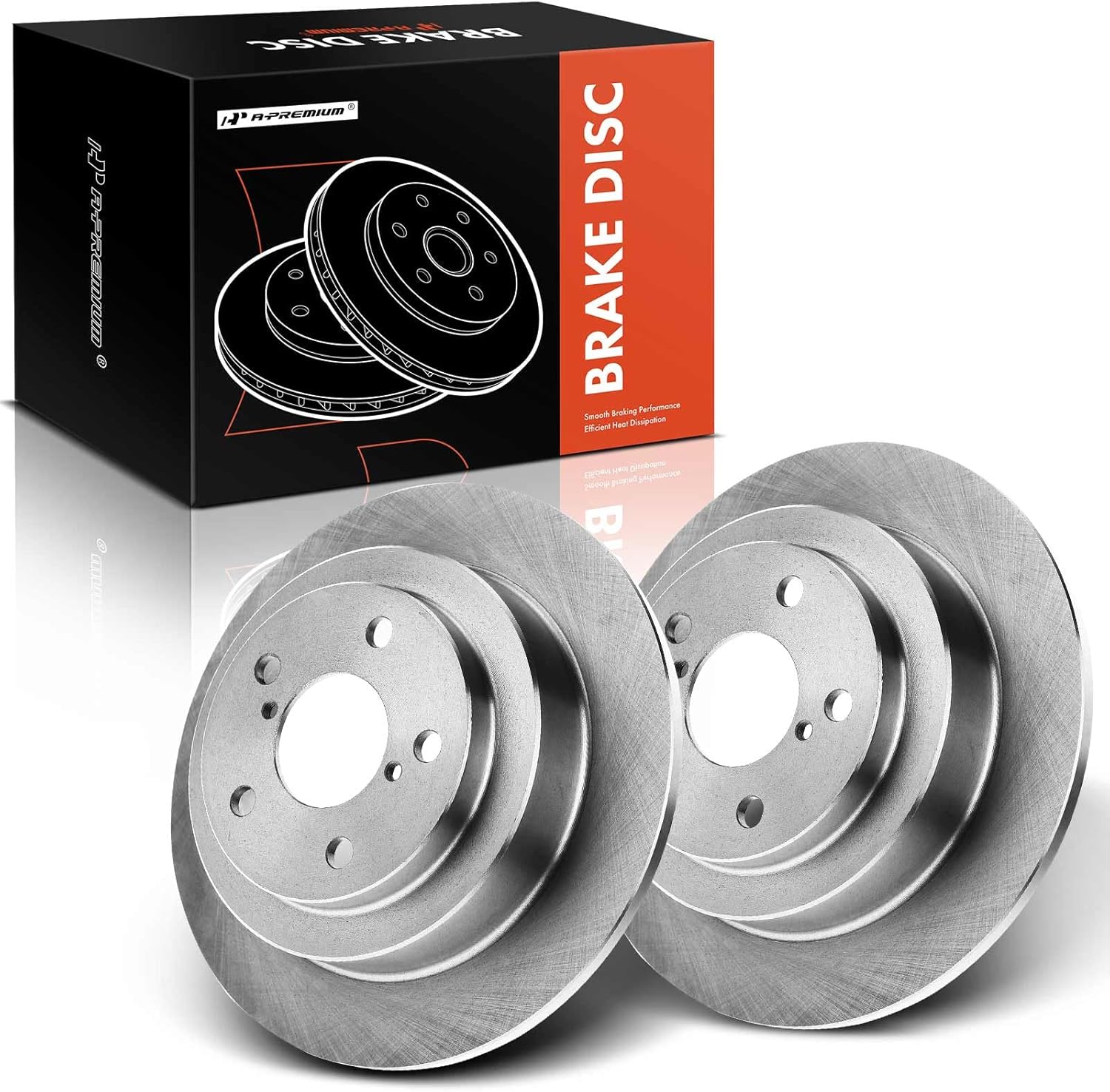
4. A-Premium 10.47" Rear Solid Disc Brake Rotors, 2‑pc Set
| Vehicle Fit | Subaru Forester (select years listed) |
|---|---|
| Mounting Bolt Quantity | 5 |
| Material | Cast Iron |
| Finish | Smooth |
These A-Premium rear solid rotors are a straightforward, budget-focused replacement for the Subaru Forester rear brakes. Sold as a two-piece set, they are cast-iron, smooth-finish rotors intended to directly replace the factory rear discs on Forester model years listed by the manufacturer. The listing highlights five-bolt fitment and claims low runout and DTV control, which should help deliver predictable pedal feel and minimal vibration after installation. A metallic coating is noted for corrosion resistance, though some buyers have raised concerns about plating in harsh winter climates. Use is typical: swap the worn rear rotors for these during a brake service or pad change; they work with standard brake pads and mounting hardware. The practical benefits are straightforward value and OEM-style fitment for owners who want an inexpensive factory-replacement option. Limitations are the basic design and finish compared with premium, zinc-plated, or slotted/drilled rotors, so long-term corrosion resistance and heat management will be inferior under heavy towing or aggressive driving.
Best for: Budget-conscious owners focused on restoring reliable, factory-style rear braking performance on a Subaru Forester without paying for premium or performance rotor features.
Less Ideal for: Drivers who routinely tow, carry heavy loads, or drive aggressively and need improved heat management or corrosion resistance should consider upgraded or coated performance rotors instead.
- Vehicle-specific fitment for Subaru Forester rear axle simplifies installation
- Sold as a 2-piece set so both rear rotors can be replaced at once
- Cast iron construction provides familiar braking feel and durability
- Manufacturer notes low runout and DTV control to reduce vibration after installation
- Basic smooth finish and limited plating may be more prone to surface rust in winter conditions
- Not designed for high-performance heat dissipation like slotted or drilled rotors
Verdict A practical, low-cost factory-style rear rotor set for Forester owners who want an affordable, direct-fit replacement rather than a performance upgrade.
5. PowerStop K8521 Z23 Front and Rear Brake Kit — Drilled & Slotted Rotors with Z23 Carbon-Fiber Ceramic Pads

| Vehicle fitment | 2019–2022 Subaru Forester (Limited, Premium, Sport, Touring, Wilderness) |
|---|---|
| Pad type | Z23 carbon-fiber ceramic |
| Rotor style | Drilled and slotted |
| Rotor coating | Zinc plated |
This PowerStop kit bundles upgraded Z23 carbon-fiber ceramic pads with drilled and slotted, zinc-plated rotors and the stainless steel hardware needed for a bolt-on install to 2019–22 Subaru Forester models. It is intended as a direct replacement and performance upgrade over factory brakes for daily driving and occasional spirited use. The Z23 pads are low-dust and engineered for quiet operation while providing stronger stopping power than many standard replacements. The rotors' drilled holes and rounded slots help dissipate heat and wipe away debris to reduce fade in demanding stops, and the zinc plating resists rust over time. The kit includes rubberized shims and hardware to simplify installation, but some buyers report fitment and quality-control issues with clips or casting debris, so inspect components before installation. This kit suits anyone who wants a noticeable braking upgrade and cleaner wheels without changing calipers, but those seeking track-only performance or perfect factory fit every time may prefer specialty parts or dealer-sourced replacements.
Best for: Risk-averse mainstream buyers who want a reliable, cleaner-looking upgrade for a Subaru Forester and prioritize quieter, low-dust brakes and improved everyday stopping performance without major modifications.
Less Ideal for: Drivers who need track-focused, high-temperature race compounds or who require absolute factory-perfect fitment and inspection-free parts should consider specialized racing rotors or dealer-sourced factory replacements instead.
- Complete front-and-rear kit includes pads, rotors, shims, and stainless steel installation hardware for a bolt-on replacement
- Z23 carbon-fiber ceramic pads are low-dust and designed to be quiet while improving stopping power over typical factory replacements
- Drilled and slotted, zinc-plated rotors improve cooling and resist corrosion to help prevent fade and rust
- Includes hardware and rubberized shims to simplify installation without modifications
- Some users report inconsistent quality control such as machining debris in castings or incorrect packaging of pad clips
- Aftermarket pad clip fitment may cause noise for some vehicles, requiring reuse of factory clips
Verdict A convenient bolt-on upgrade for Forester owners who want quieter, low-dust pads and rotors that resist rust and control heat, but check parts for fit and finish before installation.
6. Max Advanced Brakes Front Brake Kit with Ceramic Pads and Machined Rotors

| Vehicle compatibility | 2018, 2019, 2021, 2022, 2023 Subaru Forester w/11.57" Frt Rotor |
|---|---|
| Set name | ValueMAX Series Automotive Replacement Brake Kit |
| Pad type | Carbon-infused ceramic |
| Rotor finish | Machined |
This Max Advanced Brakes front kit supplies everything needed to replace the front rotors and pads on a Subaru Forester with 11.57" front rotors. The rotors are precision machined and double-disc ground for a smooth bedding process and reduced vibration, while the carbon-infused ceramic pads are formulated for lower dust and quieter stops in everyday driving. Installation is straightforward because the kit is vehicle-specific and includes basic hardware for a direct bolt-on fit. In use the setup favors commuter and family driving: stable pedal feel in stop-and-go traffic, noticeably less brake dust compared with organic pads, and minimal low-speed noise. Expect good value compared with dealer replacements, though these parts are targeted at daily driving rather than heavy towing or aggressive driving where high-performance or upgraded vented rotors and performance pads would be preferable. Buyers doing the work themselves should be comfortable with basic brake service or have it installed by a shop to ensure proper bedding and torque procedures.
Best for: Practical optimizers who want a cost-effective, factory-style front brake replacement for a Subaru Forester and prioritize clean, quiet daily driving and straightforward installation.
Less Ideal for: Drivers who regularly tow, carry heavy loads, or demand track-capable braking should choose a performance-oriented rotor and pad package instead.
- Complete front kit includes rotors, ceramic pads, and installation hardware for a direct fit to the specified Forester rotor size.
- Machined, double-disc ground rotors reduce vibration and help pads bed evenly for consistent pedal feel.
- Carbon-infused ceramic pads produce significantly less dust for cleaner wheels and lower rotor wear in normal driving.
- Vehicle-specific fit simplifies installation and reduces the chance of wrong parts.
- Quiet performance at low speeds suited to commuter and family use.
- Not engineered for heavy-duty or track use where higher-performance rotors and pads are preferable.
- Does not include performance-oriented features like drilled/slotted rotor faces for aggressive cooling.
- Assembly required and proper installation/bedding is needed to achieve advertised noise and dust benefits.
Verdict A complete, value-focused front brake kit that delivers quieter, lower-dust stopping for Subaru Forester daily drivers but is not intended for heavy-duty or track use.
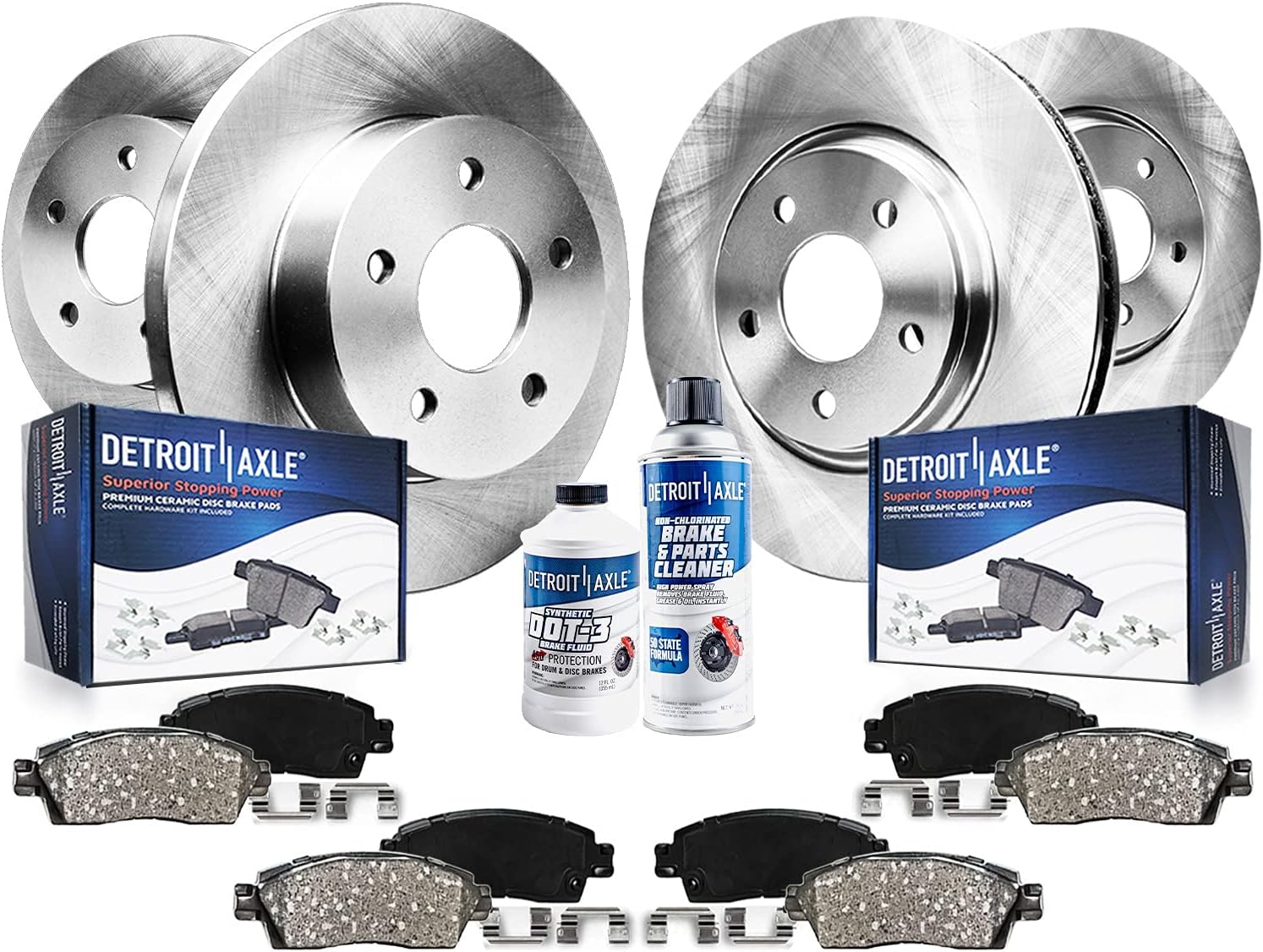
7. Detroit Axle Brake Kit for Subaru Forester (1998–2002) — Front and Rear Rotors with Ceramic Pads
| Fitment | 1998–2002 Subaru Forester (4‑Wheel Disc Brake Models) |
|---|---|
| Includes | Front and rear rotors, front and rear ceramic pads, hardware, brake cleaner, brake fluid |
| Pad Material | 100% ceramic |
| Rotor Type | Vented with ventilation slots |
| Finish | Zinc plated |
This Detroit Axle kit supplies everything needed to service all four corners on a 1998–2002 Subaru Forester with 4-wheel disc brakes. The package includes two front and two rear vented rotors plus matching ceramic front and rear pads, hardware, a can of brake cleaner and a bottle of brake fluid. Vented, slotted rotors and zinc plating help dissipate heat and resist surface corrosion, while the full ceramic pads aim to reduce noise and dust compared with metallic compounds. Fitment is machined for a direct, factory-style installation so the parts install without modification on compatible Foresters. The practical benefits are that you get a full system refresh in one purchase and fewer parts to source separately, which is handy for DIY installation or a single-shop job. Limitations to note are that the kit does not include rotor hub screws and the small packets of anti-seize are minimal, so expect to supply a few consumables during installation and follow a proper bedding-in procedure for the pads.
Best for: Balanced owners who want a single, reasonably priced kit to refresh the entire brake system on a Forester and who prefer to handle routine maintenance themselves or with a single shop visit.
Less Ideal for: Drivers seeking high‑performance or track-oriented rotors and pads should consider performance-grade drilled or directional rotors and higher‑temperature pad compounds instead.
- Complete four-wheel kit including front and rear rotors and matching ceramic pads
- Vented/slotted rotors and zinc plating improve heat dissipation and corrosion resistance
- Machined locating holes for direct fit to factory mounting points
- Includes brake cleaner and brake fluid so no immediate additional purchases required
- Does not include rotor mounting screws that some vehicles require
- Anti-seize supplied in very small packets that many installers will replace or supplement
Verdict A convenient, balanced full brake replacement kit for Forester owners who want factory-style fit and lower-dust ceramic pads without buying parts separately.
Choosing the Right Subaru Forester Brake Rotors: Key Factors to Consider
Fitment and Hub Compatibility
Correct fitment is foundational because rotors must match the Forester's hub diameter, bolt pattern, and offset to install without modification. A precise fit minimizes runout, reduces vibration, and helps preserve wheel bearings and caliper alignment.
If a rotor does not seat evenly on the hub, it can cause uneven pad contact and premature wear. When evaluating options, confirm the rotor's vehicle-specific fitment specs rather than relying on generic size labels.
Material and Coating
Rotors are commonly cast from different grades of iron with varying alloy additives that influence heat capacity and wear resistance. Higher-quality metallurgy often resists cracking and edge chipping better under repeated thermal cycling.
Protective coatings or plated surfaces slow corrosion and extend service life, especially in regions with road salt or frequent moisture. Consider coated rotors for longevity if you drive in wet or corrosive environments.
Thermal Management and Thickness
Rotor thickness and ventilation design determine how well heat is absorbed and dissipated during braking. Thicker or better-vented rotors generally handle repeated heavy stops without rapid temperature rise, which reduces the risk of warp and fade.
Maintain awareness of minimum allowable thickness for the Forester and how to measure rotor thickness accurately to know when replacement is necessary.
Surface Design: Plain, Slotted, or Drilled
Surface machining affects pad contact, dust removal, and gas evacuation. Slotted faces can help sweep debris and maintain pad bite in wet conditions, while drilled patterns can assist in gas escape but may encourage crack initiation under extreme thermal stress.
Match surface design to your driving: slotted or plain rotors suit everyday and towing use, while drilled designs are typically chosen for specific performance preferences, noting potential tradeoffs in longevity.
Manufacturing Tolerances and Runout
Tight manufacturing tolerances reduce lateral runout and thickness variation, both of which influence pedal pulsation and uneven pad wear. Rotors produced to consistent specs result in smoother braking feel and longer pad life.
Look for parts with published runout and thickness variation specifications when possible, because these numbers directly affect NVH and braking smoothness.
Serviceability and Resurfacing Options
Some rotors can be resurfaced within a limited tolerance, extending service life if they are within minimum thickness limits and free of deep damage. Others are designed as replacement-only items due to material or geometry.
Consider whether you prefer rotors that can be machined during scheduled brake jobs or whether replacing with new rotors is more practical based on minimum thickness, labor, and anticipated future wear.
FAQ
How do I know when my Subaru Forester rotors need replacement?
Common signs include consistent vibration or pulsation under braking, visible scoring or cracking on the rotor surface, and a drop below the vehicle's minimum thickness specification. A professional inspection can measure thickness and runout to confirm whether resurfacing or replacement is needed.
Can I resurface rotors instead of replacing them on a Subaru Forester?
Resurfacing is often possible if the rotor remains above the minimum thickness and is free of deep cracks. However, resurfacing removes material that reduces future service life, and repeated machining is not recommended. Many owners opt for replacement when the rotor approaches minimum spec or shows heat-related damage.
What is the difference between slotted and drilled rotors for everyday driving?
Slotted rotors help clear pad deposits, maintain pad bite in damp conditions, and tend to be more durable under repeated use. Drilled rotors can aid gas evacuation but may be more prone to stress concentration and potential cracking if subjected to heavy, repeated thermal loads. For routine driving, slotted or plain faces usually offer a balanced choice.
How should I measure rotor thickness on my Forester?
Use a micrometer or a calibrated caliper at multiple points on the braking surface to get an accurate average thickness. Compare measurements to the vehicle-specified minimum thickness. Measure after cleaning the surface and at positions away from any chamfers or slots for consistent readings.
Do all replacement rotors require different pads or hardware?
Not necessarily. Many replacement rotors are designed to work with the original pad shape and standard mounting hardware, but some performance-oriented or thicker rotors may need different pads, shims, or longer mounting bolts. Always verify compatibility with the Forester's caliper design and hardware dimensions.
What causes warped rotors and how can I reduce the risk?
Warp often results from uneven cooling after high-temperature stops, uneven torque on lug nuts, or mounting surface contamination. To reduce risk, use proper tightening sequence and torque, ensure hubs are clean and true, and choose rotors with good thermal characteristics and consistent manufacturing tolerances.
How We Chose the Best Subaru Forester Brake Rotors
We focused on components that deliver reliable braking performance on Subaru Forester models by evaluating concrete, vehicle-specific attributes. Key criteria included: fitment accuracy to factory mounting and hub dimensions, rotor metallurgy and coating for corrosion resistance, thermal stability and resistance to warping under repeated use, and manufacturing tolerances that affect runout and vibration. We also considered finish quality and protection against surface rust, as well as the availability of rotors that meet or exceed OEM thickness and dimensional specs. Exclusions included generic or non-vehicle-specific listings, rotors lacking verifiable technical specs, and parts intended solely for race use rather than everyday street driving. Our selections prioritize long-term durability and safe, consistent braking for typical driving and light towing scenarios.
Our full evaluation process is outlined in our review methodology.
Conclusion
Selecting the right rotors for a Subaru Forester means balancing fitment accuracy, material durability, and thermal performance against your driving habits. Prioritize rotors that match hub dimensions and meet thickness and runout tolerances to minimize vibration and premature wear.Consider surface design and coating based on climate and usage, and weigh the tradeoff between resurfacing and replacement as rotors near minimum thickness. Focusing on these core factors will help you maintain consistent braking feel and extend the life of related components.
Explore More:
- Check out all Subaru Forester parts & accessories
- Explore Brake Rotors Maintenance & Repair Guides
- Explore Brake System
- Browse all Auto Parts
