

Note: This article contains affiliate links. If you click on these links and make a purchase, I may earn a small commission at no extra cost to you. This helps support my research and content. Read my full affiliate disclosure here.
Repair Snapshot
Use a mechanic if your system uses R-1234yf, if the compressor will not engage, or if the system lost its charge quickly. A shop is also the safer choice if you suspect a major leak, need evacuation, or are unsure which refrigerant your vehicle uses.
This article is part of our HVAC Maintenance & Repair Guides.
A car AC refrigerant recharge can restore cold air if your system is only slightly low, but it is not a cure for every air conditioning problem. If the refrigerant level dropped, that usually means there is at least a small leak somewhere in the system.
Done carefully, a DIY recharge can help on older vehicles that use R-134a and have no major leaks or electrical faults. The keys are using the correct refrigerant, connecting only to the low-side port, adding refrigerant slowly, and stopping before the system becomes overcharged.
Before you start, check the under-hood label for refrigerant type and capacity. Many newer vehicles use R-1234yf, which is more expensive and less DIY-friendly. If you are not completely sure what your vehicle uses, do not guess.
How the Repair Works
Your air conditioning system cools the cabin by circulating refrigerant through a closed loop. The compressor pressurizes the refrigerant, the condenser sheds heat, the expansion device drops pressure, and the evaporator absorbs heat from cabin air.
When the refrigerant level gets low, system pressure drops and cooling performance falls off. You may notice warm air at idle, the compressor clutch cycling rapidly, or the AC working only a little on cooler days. A recharge adds refrigerant back into the low-pressure side so the system can operate in its normal pressure range again.
A recharge only helps if low refrigerant is the actual problem. It will not fix a failed compressor, clogged expansion valve, bad cooling fans, pressure sensor problems, blend door faults, or a large leak.
Confirm the System Is a Good DIY Candidate
Check Refrigerant Type First
Look for the AC information label under the hood. It usually lists the refrigerant type and total system capacity. If the label says R-134a, a basic DIY recharge is more realistic. If it says R-1234yf, a shop is usually the better option because the equipment, refrigerant, and procedures are less forgiving.
Signs a Recharge May Help
- Air is cool but not cold, especially in hot weather.
- The compressor clutch clicks on and off quickly.
- Cooling gradually worsened over weeks or months.
- No obvious grinding, smoke, or belt noise is present.
Signs You Should Stop and Diagnose First
- The AC stopped working suddenly.
- The compressor never engages at all.
- There is oily residue around hoses, the condenser, or compressor.
- You hear loud squealing, knocking, or rattling when the AC is switched on.
- The system was recently repaired and lost cooling again quickly.
If any of those red flags are present, a recharge can waste refrigerant and may make diagnosis harder. Major leaks and mechanical faults should be repaired before refrigerant is added.
Safety and Legal Basics Before You Begin
Refrigerant can cause frostbite-like skin injury and severe eye injury if it contacts you directly. Always wear safety glasses and gloves. Keep cans away from open flame or extreme heat, and work in a well-ventilated area.
Do not intentionally vent refrigerant to the atmosphere. In the U.S., venting automotive refrigerant is illegal. If the system is empty, contaminated, or overcharged, it should be evacuated with proper recovery equipment.
Never connect a DIY recharge hose to the high-side port. Most consumer hoses are designed only for the low side, and forcing a connection or using the wrong fitting can be dangerous.
What to Inspect Before Adding Refrigerant
Check the Obvious Cooling-related Items
- Make sure the engine cooling fan and condenser fan operate normally.
- Inspect the serpentine belt for slipping, cracking, or missing ribs.
- Verify the cabin air filter is not badly clogged.
- Set the climate controls to max AC, recirculate, and the coldest temperature setting.
Look for Leak Clues
AC oil often escapes with refrigerant, so greasy or dirty wet spots at hose crimps, condenser corners, compressor seals, and service ports can point to a leak. If you see clear evidence of leakage, repairing the leak first is the correct move.
Check Service Port Condition
Inspect the low-side service port cap and fitting. A damaged cap or leaking Schrader valve can slowly bleed refrigerant over time. Replace a cracked or missing cap because it helps seal out dirt and provides a secondary seal.
Tools That Make This Job Easier
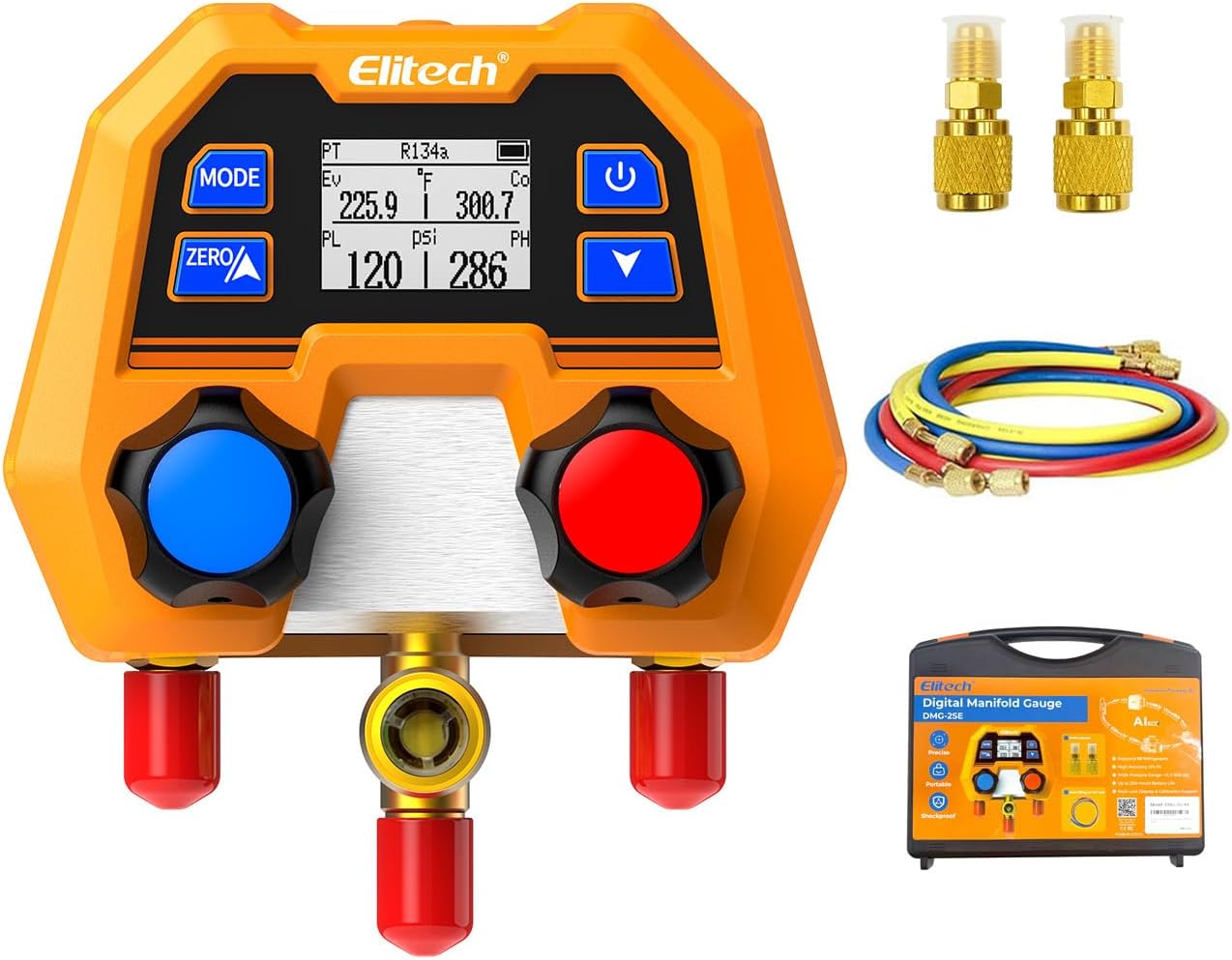


How to Identify the Low-side Service Port
The low-side port is located on the larger-diameter AC line between the evaporator and compressor. It often has a black or blue cap marked with an L. The high-side port is on the smaller line and may be marked H.
Do not rely only on cap color, since caps can be replaced. Follow the line size and port location carefully. If you are unsure which port is which, stop and check a service manual or under-hood diagram before connecting anything.
Step-by-step: How to Recharge the AC System
Prepare the Vehicle
Park on level ground, set the parking brake, and open the hood. Start the engine and let it idle. Turn the AC to max cold, blower on high, and recirculate on. Open the windows so the system stays loaded during testing.
Attach the Recharge Hose
Shake the can only if the recharge kit instructions say to do so. With the trigger or valve closed, connect the coupler to the low-side service port. It should snap on without force. If it does not fit easily, you may be on the wrong port.
Read the Starting Pressure
With the system running and AC on max, read the low-side gauge. Compare the reading to the recharge kit chart for the current outdoor temperature. The pressure should be interpreted with ambient temperature in mind, not by gauge color alone.
Add Refrigerant Slowly
Hold the can upright unless the kit specifically says otherwise. Open the valve or squeeze the trigger in short bursts. Add refrigerant slowly, pausing every few seconds so the pressure can stabilize. Lightly rotate or agitate the can only as directed on the product instructions.
As you add refrigerant, watch the gauge and feel the air from the center vent. Use a thermometer at the dash vent for a more accurate check. Cooling should improve gradually. The goal is to bring the low-side reading into the proper range for the ambient temperature without overshooting.
Stop Before Overcharging
When the gauge reaches the correct range and vent temperature improves, stop adding refrigerant. More is not better. Overcharging can reduce cooling, raise compressor load, and create excessive system pressure.
Disconnect and Recheck
Close the valve fully, disconnect the coupler from the low-side port, and reinstall the service cap. Let the system run for a few more minutes and check vent temperature again at idle and around 1,500 rpm if needed.
How to Judge Whether the Recharge Worked
A successful recharge should produce noticeably colder center-vent air, steadier compressor operation, and improved cooling at stops or in traffic. Vent temperature varies with humidity and ambient temperature, so focus on clear improvement rather than chasing one exact number.
- The low-side pressure falls within the charted range for the outdoor temperature.
- The compressor clutch no longer short-cycles as often.
- Center-vent air becomes significantly colder after a few minutes.
- The suction line may feel cool to cold, but should not ice up heavily.
If the gauge reading appears acceptable but vent air is still warm, the issue may be elsewhere. Common non-refrigerant causes include radiator or condenser fan problems, a blocked condenser, blend door issues, a weak compressor, or moisture and air contamination inside the system.
Recommended Tools for This Job


Common Mistakes to Avoid
- Using the wrong refrigerant type for the vehicle.
- Adding refrigerant without checking for visible leaks first.
- Relying only on green, red, or blue gauge zones instead of temperature-based guidance.
- Overcharging the system because cooling did not improve immediately.
- Using sealant products that can contaminate professional recovery equipment.
- Trying to recharge a system with a dead compressor, blown fuse, or electrical fault.
The biggest DIY error is assuming every weak AC system is simply low on refrigerant. If cooling performance does not respond normally as pressure rises, stop and diagnose the root cause instead of continuing to add more.
If the System Loses Cooling Again, Find the Leak
Small Leaks Usually Get Worse
A system that needs frequent recharging has a leak. Common leak points include condenser damage from road debris, service valves, hose crimps, compressor shaft seals, and O-rings at fittings.
Useful DIY Leak-check Methods
- Use UV dye and a UV light to trace fresh leaks around fittings and components.
- Spray soapy leak-detection solution around service ports and accessible fittings and look for bubbling.
- Inspect the condenser closely through the grille for oily spots or impact damage.
If the system is flat empty, leaked down very quickly, or you suspect internal contamination, the proper repair usually includes leak repair, evacuation with a vacuum pump, and recharging by weight. That is where a professional shop becomes the smart choice.
When Not to Do a Simple Recharge
Skip the simple recharge approach if the compressor will not turn on due to an electrical fault, if the system has been open to the atmosphere, if a component was recently replaced, or if the system is completely empty. In those cases, the system may contain air and moisture, and it needs proper evacuation before being recharged.
You should also avoid DIY topping-off if the vehicle uses R-1234yf and you do not have the right equipment or are unsure of the exact charge state. Modern systems can be sensitive to charge amount, and some require a precise fill by weight for best performance.
Final Checks After the Recharge
- Reinstall the low-side service cap securely.
- Listen for abnormal compressor noise with the AC engaged.
- Check that radiator and condenser fans cycle normally.
- Confirm idle cooling and highway-speed cooling are both improved.
- Look over the service port for any sign of leakage after disconnecting the hose.
Over the next few days, pay attention to how quickly cooling returns after startup and whether vent temperature changes noticeably in similar weather. If performance fades again soon, leak diagnosis should be your next step rather than another quick top-off.
Key Takeaways
- Verify the exact refrigerant type on the under-hood label before buying or adding anything.
- Only connect a DIY recharge hose to the low-side service port and add refrigerant in short, slow bursts.
- Stop charging once pressure matches the temperature chart and vent air improves, because overcharging can hurt cooling.
- If the system lost charge quickly or shows oily residue, find and repair the leak instead of repeatedly topping it off.
- Choose a professional repair if the vehicle uses R-1234yf, the compressor will not engage, or the system is completely empty.
FAQ
How Do I Know if My Car AC Is Low on Refrigerant?
Common clues include weak cooling, cold air that fades at idle, rapid compressor cycling, and a gradual decline in AC performance over time. These symptoms are suggestive, not conclusive, so it is still important to check system pressure and inspect for leaks.
Can I Recharge My Car AC Without a Gauge?
It is not a good idea. A gauge helps you compare low-side pressure to outdoor temperature and reduces the risk of overcharging. Charging blindly is one of the easiest ways to make AC performance worse.
What Happens if I Put Too Much Refrigerant in the System?
An overcharged system can cool poorly, create high operating pressures, stress the compressor, and potentially damage components. If you suspect overcharge, the safest fix is to have the system professionally recovered and recharged to the correct amount.
Can I Use Any Refrigerant Can That Fits the Hose?
No. You must use the exact refrigerant type specified for your vehicle. Mixing refrigerants or using the wrong type can damage the system and complicate future service.
Is a Recharge the Same as Fixing an AC Leak?
No. A recharge only restores refrigerant level temporarily if the system was low. If refrigerant escaped, there is a leak that should be located and repaired or the cooling problem will return.
Why Is My AC Still Warm After I Added Refrigerant?
Possible causes include overcharging, a bad compressor, cooling fan problems, a clogged condenser, air or moisture in the system, a failed pressure sensor, or a blend door issue inside the dash. If pressure looked normal but cooling did not improve, further diagnosis is needed.
Should I Use AC Stop-leak Products?
They are generally not recommended. Stop-leak products can create problems for recovery and recharge equipment and may complicate professional repairs. It is better to locate the leak and repair it correctly.
How Long Should a Recharge Last?
If the system is sealed and healthy, it should not need regular topping off. If cooling drops again within weeks or months, you likely have a leak that needs repair rather than another recharge.
Need Parts for This Repair?
The right parts and supplies vary by vehicle.
Select your make and model to find compatible parts and accessories for your car.
Exact Fit
Parts that fit your make and model
Quality You Can Trust
Top brands and OEM quality options
Fast Shipping
Get the parts you need, delivered fast