

Note: This article contains affiliate links. If you click on these links and make a purchase, I may earn a small commission at no extra cost to you. This helps support my research and content. Read my full affiliate disclosure here.
Repair Snapshot
Use a mechanic if the plugs are seized, access requires intake manifold removal, or you are unsure about torque specs and thread protection in an aluminum cylinder head.
This article is part of our Engine Maintenance & Repair Guides.
Replacing spark plugs is one of the most useful tune-up jobs a DIY car owner can do. Fresh plugs can restore smoother idle, easier starting, better throttle response, and reduced misfires, but the job has to be done carefully to avoid stripped threads, cracked plugs, or damaged ignition coils.
On many 4-cylinder engines, spark plug replacement is straightforward. On some V6, V8, turbocharged, or transverse-mounted engines, access can be tighter and the job can take much longer. The basics are the same either way: work on a cool engine, use the correct replacement plugs, keep dirt out of the plug wells, and tighten each plug to specification.
This guide walks through the full process from confirming the right plug and gap to removing coils, installing the new plugs, and checking your work before you start the engine.
Before You Start
Know What Varies by Vehicle
Spark plug replacement is not identical on every car. Some engines use individual coil-on-plug ignition coils, while older vehicles may use spark plug wires. Some engines require removing an engine cover, air intake tube, or even part of the intake manifold to reach the rear bank. Always check your owner’s manual or a repair manual for plug type, gap specification, torque value, and replacement interval.
Work Only on a Cool Engine
Do not remove spark plugs from a hot aluminum cylinder head. Heat increases the chance of damaging the threads. Let the engine cool fully before beginning, especially if you just drove the vehicle.
Confirm the Exact Replacement Plugs
Use the exact heat range and design specified for your vehicle. Do not assume any plug that threads in is acceptable. Modern engines can be sensitive to electrode design and resistor value. If the plugs come pre-gapped, still verify the gap against the vehicle specification unless the manufacturer specifically says not to adjust that plug style.
- Verify engine size, model year, and VIN before buying plugs.
- Check whether your vehicle uses iridium, platinum, or copper plugs.
- Look up the torque specification before loosening the first plug.
- If anti-seize is not recommended by the plug manufacturer, do not apply it.
Symptoms That Point to Worn Spark Plugs
Spark plugs wear gradually, so the symptoms can creep in over time. If your vehicle has high mileage on the current set, replacement may help even if the engine still runs.
- Rough idle or occasional shaking at stoplights
- Slow starting or hard cold starts
- Reduced fuel economy
- Misfire under load or during acceleration
- Check engine light with misfire-related trouble codes
- Noticeably weaker throttle response
Keep in mind that coils, injectors, vacuum leaks, and fuel or air issues can cause similar symptoms. Spark plug replacement is maintenance, not a guaranteed cure for every misfire.
How to Prepare the Vehicle
Set Up Your Work Area
Park on a level surface, set the parking brake, and open the hood. Good lighting matters because spark plug wells can be deep and narrow. If your engine has a decorative plastic cover, remove it first and set the fasteners aside in a tray so nothing gets lost.
Disconnect the Battery Only if Needed
On many vehicles, you can replace spark plugs without disconnecting the battery. However, if you need to unplug several ignition components in a crowded engine bay or remove intake components near the throttle body, disconnecting the negative battery cable can add a little safety and prevent accidental shorts.
Label Anything You Remove
If your engine uses plug wires instead of individual coils, label each wire before removal. Mixing up wire positions can cause a no-start or severe misfire. If your engine uses coil packs or coil-on-plug units, it is still smart to work on one cylinder at a time so parts go back exactly where they came from.
Removing the Old Spark Plugs
Remove the Ignition Coils or Plug Wires
For coil-on-plug systems, unplug the electrical connector from the coil, remove the coil retaining bolt if equipped, and gently twist the coil boot before pulling it straight up. For spark plug wires, grip the boot rather than the wire itself, twist slightly to break the seal, then pull it off.
Clean the Plug Wells First
Before loosening any spark plug, blow compressed air into the well or vacuum out dirt and debris. This step is critical. If sand, leaves, or grit fall into the cylinder when the plug comes out, you can create internal engine damage.
Loosen Each Plug Carefully
Use a spark plug socket with the correct extension length and loosen the plug slowly. If a plug feels stuck, do not force it aggressively. Tighten it slightly, then loosen again in small movements. On engines with long service intervals, old plugs may resist removal because of carbon buildup or corrosion on the threads.
Pull the Plug Out and Inspect It
Once the plug is free, lift it out with the socket and compare it to the new plug. Check the old plug’s electrode and insulator for clues. Heavy black soot may indicate a rich condition or weak ignition, oily deposits can point to oil consumption, and a white blistered appearance may indicate overheating. This inspection can help if the engine still has problems after replacement.
- Replace one plug at a time to reduce the chance of mixing up components.
- If a coil boot has oil in it, the valve cover tube seals may be leaking.
- If a plug is damaged or the porcelain cracks during removal, stop and inspect the well carefully for broken pieces.
Tools That Make This Job Easier


Preparing the New Spark Plugs
Check the Gap
Even if the box says the plugs are pre-gapped, verify the gap with a wire-style or blade-style gauge unless the plug manufacturer says adjustment can damage a fine-wire electrode. If adjustment is allowed, bend only the ground strap carefully. Do not pry against the center electrode.
Decide on Anti-seize Based on Manufacturer Guidance
This is where many DIYers make a mistake. Many modern spark plugs have plated threads and do not require anti-seize. Adding it when not recommended can alter torque readings and lead to overtightening. Follow the plug maker’s instructions and the vehicle service information rather than old general advice.
Use Dielectric Grease Only Where Appropriate
A small amount of dielectric grease inside the ignition coil boot or spark plug wire boot can help prevent moisture intrusion and make future removal easier. Do not smear it on the electrode or plug threads.
Installing the New Spark Plugs
Start the Threads by Hand
This is the most important part of the job. Lower the new plug into the well and thread it in by hand using the socket and extension only, or use a short piece of rubber hose on the plug as a hand-threading tool. If the plug does not turn smoothly, back it out and start again. Never use the ratchet to begin threading a spark plug into an aluminum head.
Tighten to Specification
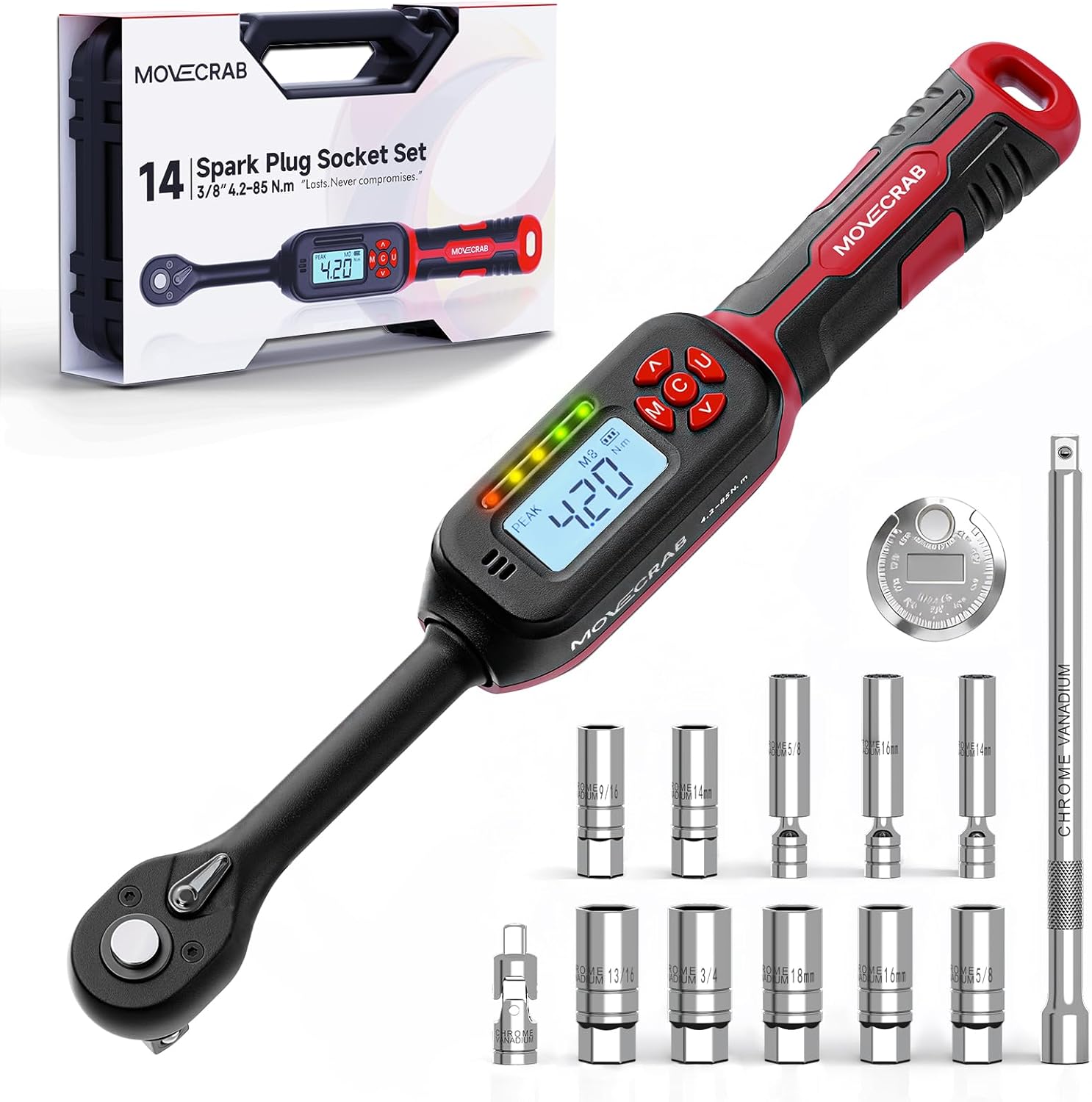
Once the plug is fully seated by hand, use a torque wrench and tighten it to the manufacturer’s specification. Spark plugs are easy to overtighten, and stripped threads in the cylinder head can turn a simple maintenance job into a major repair. If you do not have an exact spec, stop and look it up for your engine and plug type.
Reinstall the Coil or Plug Wire
Push the coil or wire boot straight down until it seats fully on the plug. Reinstall any coil bolts and electrical connectors. If the connector tab does not click into place, double-check alignment rather than forcing it.
Repeat for the Remaining Cylinders
Move cylinder by cylinder until all plugs are replaced. Keeping the process repetitive and slow helps prevent common errors like leaving a connector unplugged or forgetting a coil bolt.
Torque Notes and Common Fitment Mistakes
Spark plugs seal differently depending on design. Some use a crush washer gasket, while others use a tapered seat. Their torque values are not interchangeable. Thread diameter also matters. That is why generic tightening advice is a backup only, not a substitute for real service information.
- Do not assume all 14 mm spark plugs use the same torque.
- Do not install a plug with the wrong reach, even if the threads match.
- Do not reuse damaged coil boots or cracked plug wire ends.
- Do not over-gap a plug to try to improve performance.
- Do not install premium aftermarket plugs unless they cross-reference exactly for your engine.
If a plug will not thread easily by hand, remove it and inspect the threads on both the plug and the cylinder head opening. Cross-threading often starts with only slight resistance, so stop at the first sign of it.
Recommended Tools for This Job


Final Reassembly and First Start
After all plugs are installed, reinstall any intake tubes, engine covers, brackets, and trim pieces you removed for access. Reconnect the battery if you disconnected it earlier. Before starting the engine, do a slow visual check around the top of the engine bay.
- Every coil connector is plugged in
- All coil bolts are tightened
- No tools or rags are left in the engine bay
- Any vacuum hoses or air intake clamps are reconnected
- The engine cover is secured properly
Start the engine and listen for smooth idle. A brief roughness for a second can happen as the engine relearns, but persistent shaking, flashing check engine light, or obvious misfire means something needs to be rechecked immediately.
Do Spark Plugs Need Any Bleeding or Adjustment?
Spark plug replacement does not require bleeding like brakes or a clutch system. The only adjustment normally involved is confirming the plug gap if the plug design allows it. Once installed correctly, there is no additional tuning step on most modern vehicles.
If the engine uses a misfire monitor and a check engine light was already on, you may need to clear the codes with a scan tool after confirming the repair. If the light returns, the problem may involve an ignition coil, injector, wiring fault, vacuum leak, or compression issue rather than the plugs themselves.
Common Problems After Spark Plug Replacement
Engine Misfires Right Away
The most common causes are a loose coil connector, a boot not fully seated on the plug, mixed-up plug wires on older engines, or a cracked new plug. Recheck each cylinder carefully.
Ticking or Hissing Noise
A plug may not be fully seated, or an intake tube or vacuum hose may have been left loose during reassembly. Shut the engine off and inspect before driving.
Check Engine Light Still On
Pull the diagnostic codes if possible. A stored code may simply need to be cleared, but an active misfire code after plug replacement means the underlying issue is still present or something in the installation needs attention.
Plug Well Full of Oil
New spark plugs will not fix oil leaking into the plug tubes. The valve cover gasket or tube seals may need replacement. Oil contamination can also shorten ignition coil life.
When to Stop and Call a Professional
Spark plug replacement is a manageable DIY job on many vehicles, but there are times when a shop is the smarter option. If a plug feels seized, breaks during removal, or the threads in the cylinder head appear damaged, continuing can make the repair much more expensive.
- A spark plug snaps or the porcelain breaks apart in the head
- The plug hole threads are damaged or cross-threaded
- Rear-bank plugs require major intake manifold removal you are not comfortable with
- The engine still misfires after plugs and basic connector checks
- You suspect a bad coil, injector, or internal engine problem
Key Takeaways
- Replace spark plugs only on a fully cool engine and clean each plug well before removal.
- Always hand-thread new plugs first and torque them to the exact specification for your engine.
- Verify plug gap and manufacturer instructions before using anti-seize or making any adjustment.
- Work one cylinder at a time so coils, wires, and connectors go back in the correct positions.
- If a plug is seized, cross-threaded, or breaks during removal, stop and get professional help.
FAQ
How Often Should Spark Plugs Be Replaced?
It depends on the plug type and vehicle. Older copper plugs may need replacement around 30,000 miles, while many platinum or iridium plugs last 60,000 to 100,000 miles or more. Follow your owner’s manual for the correct interval.
Do New Spark Plugs Come Pre-gapped?
Many do, but you should still verify the gap unless the plug manufacturer specifically warns against adjusting that design. Shipping damage or handling can change the gap.
Can I Replace Just One Spark Plug?
You can, but it is usually better to replace the full set unless the plugs are nearly new. Mixing old and new plugs can leave performance uneven, and if one plug is worn, the others are usually close behind.
Should I Use Anti-seize on Spark Plug Threads?
Only if the spark plug manufacturer or vehicle service information recommends it. Many modern plugs use plated threads and should be installed dry. Using anti-seize when it is not recommended can lead to overtightening.
What Happens if I Overtighten a Spark Plug?
Overtightening can damage the spark plug shell, distort the seat, or strip the cylinder head threads, especially in aluminum heads. It can also make future removal much harder.
Can Bad Spark Plugs Cause a Check Engine Light?
Yes. Worn or fouled plugs can cause misfires, and repeated misfires often trigger the check engine light. However, coils, injectors, and air-fuel problems can trigger similar codes too.
Do I Need to Disconnect the Battery to Change Spark Plugs?
Not always. Many vehicles allow spark plug replacement without disconnecting the battery, but disconnecting the negative cable can be helpful if you are unplugging multiple ignition components or removing nearby intake parts.
Is It Safe to Drive if the Engine Misfires After Replacing Spark Plugs?
No. If the engine is actively misfiring, especially with a flashing check engine light, shut it off and recheck your work. Driving with a severe misfire can damage the catalytic converter.
Need Parts for This Repair?
The right parts and supplies vary by vehicle.
Select your make and model to find compatible parts and accessories for your car.
Exact Fit
Parts that fit your make and model
Quality You Can Trust
Top brands and OEM quality options
Fast Shipping
Get the parts you need, delivered fast