

Note: This article contains affiliate links. If you click on these links and make a purchase, I may earn a small commission at no extra cost to you. This helps support my research and content. Read my full affiliate disclosure here.
Repair Snapshot
Use a mechanic if the engine has severe overheating damage, the crack extends into a valve seat or cam bore, or you do not have the tools and specs to time and torque the engine correctly. A machine shop inspection is strongly recommended before spending money on parts.
This article is part of our Engine Maintenance & Repair Guides.
A cracked cylinder head can sometimes be repaired, but not every crack should be fixed. The right choice depends on where the crack is located, how badly the engine overheated, the value of the vehicle, and whether the head and engine block are still within spec.
For many DIY owners, the biggest mistake is treating every cylinder head crack like a simple head gasket job. Some cracks are minor and machine-shop repairable. Others lead to recurring coolant loss, compression problems, oil contamination, and repeat failure even after expensive work. The goal is to diagnose the damage correctly before ordering parts.
This guide explains how to evaluate a cracked cylinder head, when repair makes financial sense, when replacement is the smarter move, and what the basic removal and installation process looks like if you decide to move forward.
How a Cracked Cylinder Head Shows Up
Cylinder heads crack most often after severe overheating, freezing with inadequate coolant protection, or long-term thermal stress. Aluminum heads are especially prone to warping and cracking when overheated. Cast iron heads can crack too, but they react differently and may sometimes be more repair-friendly depending on crack location.
Common symptoms overlap with a blown head gasket, so you should not assume the head is cracked without testing. Typical warning signs include unexplained coolant loss, white exhaust smoke, repeated overheating, bubbles in the radiator or overflow tank, rough cold starts, low compression in one or more cylinders, or milky oil if coolant has mixed with engine oil.
- Persistent overheating even after replacing obvious cooling system parts.
- Coolant loss with no visible external leak.
- Combustion gases entering the cooling system.
- Oil contaminated with coolant or coolant contaminated with oil.
- Misfire on startup, especially after sitting overnight.
A head can also crack internally where you cannot see it with the naked eye. That is why a visual inspection alone is not enough before deciding to repair or replace.
Confirm the Problem Before Pulling the Head
Start with External Checks
Before tearing down the engine, check for simpler causes of the same symptoms. Inspect hoses, radiator tanks, the water pump, thermostat housing, heater core connections, and the radiator cap. A failed intake manifold gasket on some engines can also mimic head damage.
Pressure-test the Cooling System
Use a cooling system pressure tester on a cold engine. If pressure drops and no outside leak appears, coolant may be entering a cylinder, oil passage, or combustion chamber. Remove spark plugs and look for one that is unusually clean or damp with coolant.
Check Compression and Leak-down
A compression test can reveal weak cylinders, but a leak-down test is more useful for pinpointing where pressure escapes. If air bubbles appear in the radiator during a leak-down test, combustion pressure is likely entering the cooling system through a bad head gasket, a cracked head, or in worst cases a cracked block.
Test for Combustion Gases in Coolant
A block test fluid kit can help confirm exhaust gases in the cooling system. This does not prove the head itself is cracked, but it tells you the combustion seal has failed somewhere and teardown is justified.
If the engine badly overheated, plan on removing the cylinder head and having it professionally inspected. That is often the only reliable way to separate a repairable crack from a head gasket-only issue.
When a Cracked Cylinder Head Can Be Repaired
Repair is usually worth considering when the crack is small, isolated, and located in a non-critical area. Machine shops may use pressure testing, dye penetrant inspection, magnaflux testing for cast iron, or specialized welding and resurfacing procedures depending on the head material and crack type.
- The crack is limited to a repairable area, such as certain outer water jacket sections.
- The head is not severely warped beyond resurfacing limits.
- Cam journals, valve seats, and mating surfaces remain usable after inspection.
- A quality replacement head is expensive, unavailable, or backordered.
- The rest of the engine is in good enough shape to justify the labor.
Cast iron heads can sometimes be stitched, pinned, or welded successfully by a specialist. Aluminum heads may be weld-repaired in some cases, but success depends heavily on crack location, head casting design, and how much the overheating event affected hardness and shape. Even if a crack can technically be repaired, that does not always make it the best value.
Ask the machine shop for three specific answers before approving repair: whether the crack is permanently repairable, whether the head can be resurfaced within manufacturer limits, and whether valve guides, seats, and cam bores still check out. If any of those answers are uncertain, replacement is usually safer.
Tools That Make This Job Easier


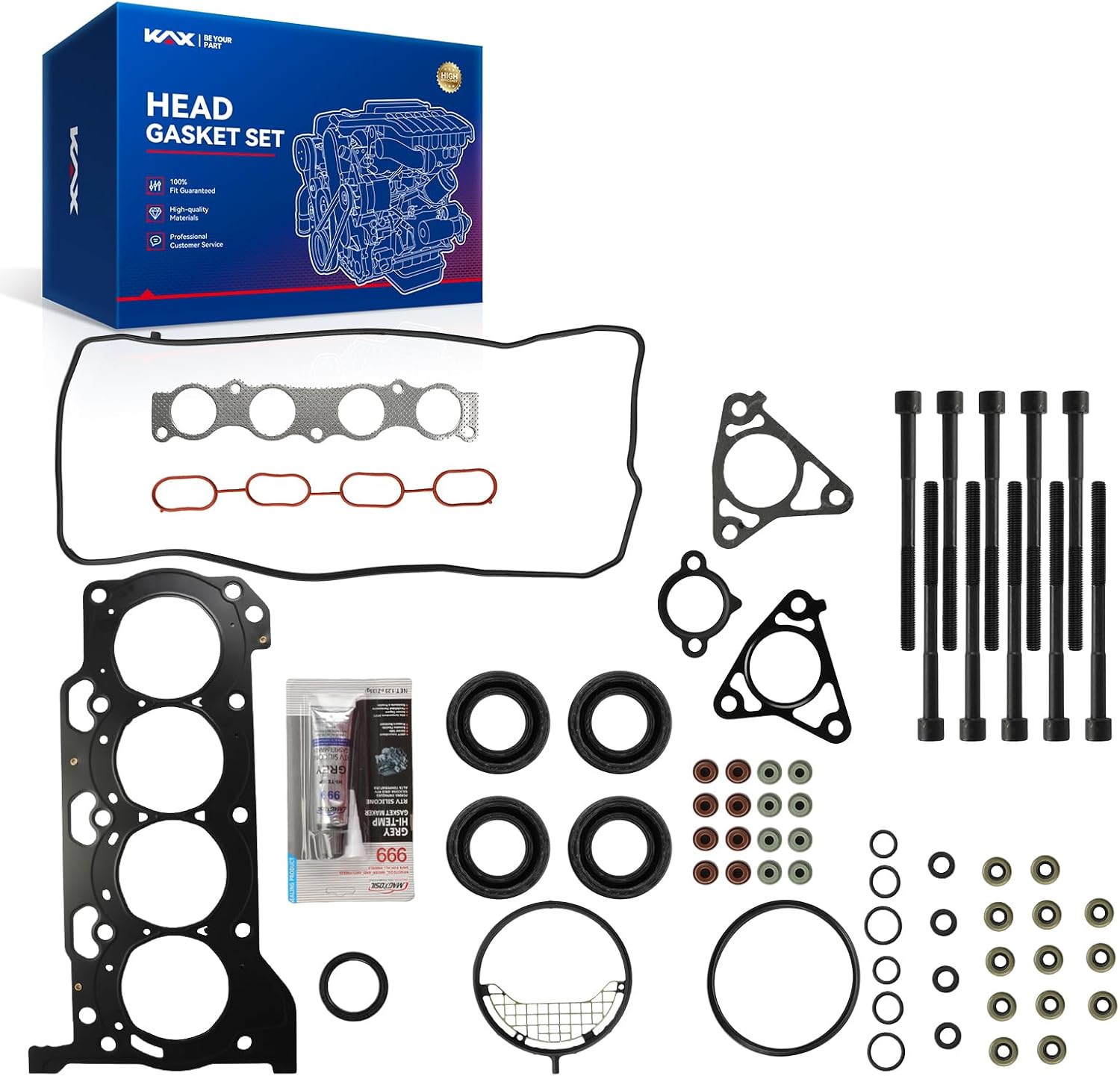
When Replacement Is the Smarter Choice
Replacement is the better option when the crack affects structural or sealing areas, or when the head has multiple problems at once. A crack around a valve seat, between valves, in a combustion chamber, through a cam bore, or in heavily stressed sections often makes repair risky or short-lived.
- The head is warped past machining limits.
- There are multiple cracks or the crack keeps spreading after cleaning and testing.
- The crack runs through a valve seat, combustion chamber, or cam bearing area.
- The engine overheated badly enough to damage pistons, rings, bearings, or the block deck.
- A complete remanufactured or new head costs only slightly more than machine work and parts.
Replacement is also the safer route if you need dependable daily-driver reliability. Even a well-repaired head carries more uncertainty than a good quality remanufactured casting. If the vehicle is worth keeping for several more years, replacement often provides better long-term value.
Do not ignore the condition of the engine block. If the block deck is warped or cracked, replacing the head alone will not solve the problem. At that point you may be choosing between a full engine rebuild, an engine replacement, or retiring the vehicle.
Cost Factors That Should Drive the Decision
A cracked cylinder head repair becomes expensive fast because the labor is similar whether you repair the old head or install a different one. The true comparison is not just weld repair versus replacement head price. You also need to include gaskets, bolts, fluids, machining, timing components if disturbed, and the risk of finding more damage after teardown.
DIY costs often start around a few hundred dollars for gasket sets, bolts, fluids, and basic testing, but climb quickly when machine work, a replacement head, timing parts, and unexpected damage are added. Professional repair bills commonly land between $1,500 and $5,500 depending on engine design. V engines, turbocharged engines, and overhead cam engines usually cost more.
Repair Tends to Make Sense When
- The vehicle is in good condition overall.
- Machine shop repair is clearly cheaper than replacement.
- The head passes all post-repair pressure and flatness checks.
- There is no evidence of lower-end engine damage.
Replacement Tends to Make Sense When
- The repair quote approaches the cost of a remanufactured head.
- You need reliability more than the lowest up-front bill.
- The engine has a history of overheating or prior head work.
- Parts availability makes a tested replacement head easier and faster.
Basic Removal and Inspection Procedure
If you decide to inspect or replace the head yourself, always use the factory service information for your engine. Bolt torque, tightening angle, timing setup, sealant locations, and surface prep rules vary a lot. The outline below is a general process, not a substitute for model-specific specs.
Prepare the Vehicle
- Disconnect the negative battery cable.
- Let the engine cool fully before opening the cooling system.
- Drain coolant and drain the engine oil if coolant contamination is present.
- Label connectors, vacuum lines, ignition parts, and brackets before removal.
- Take photos as you go to simplify reassembly.
Remove Top-end Components
Remove intake components, exhaust connections, ignition components, fuel rail where needed, valve cover, and timing components according to service manual procedure. Many modern engines require careful timing chain or belt locking before camshaft-related disassembly. If timing is lost, engine damage can occur on interference engines.
Loosen Head Bolts in Sequence
Head bolts must be loosened in the reverse order of the tightening pattern to reduce distortion. Lift the head carefully and avoid prying against sealing surfaces. If the head sticks, verify all fasteners and brackets are removed before using gentle persuasion.
Inspect the Head and Block
Once the head is off, inspect the head gasket for obvious breach points, inspect cylinders for steam cleaning or coolant intrusion, and check both the head and block deck for erosion or pitting. Use a precision straightedge and feeler gauge to check warpage against factory limits. If the head failed from overheating, check for melted plastic cooling components, scorched wiring, and signs of severe combustion chamber heat.
At this stage, the best move is usually to send the head to a machine shop for cleaning, crack testing, pressure testing, and flatness evaluation. That report should determine whether you repair, replace, or stop the project because deeper engine damage is present.
Recommended Tools for This Job


Installing a Repaired or Replacement Head Correctly
The quality of installation matters as much as the head choice. Many repeat failures happen because the mating surfaces were scratched, the wrong gasket orientation was used, old torque-to-yield bolts were reused, or bolt torque sequence and angle specs were not followed exactly.
- Clean gasket surfaces carefully without gouging aluminum.
- Blow out head bolt holes and confirm no oil or coolant is trapped where the manual requires dry threads.
- Verify the head, block, and locating dowels are clean and within flatness spec.
- Install the new head gasket in the correct orientation.
- Set the head in place without sliding it across the gasket.
- Use new head bolts if the engine calls for torque-to-yield fasteners.
- Torque bolts exactly in the specified sequence, stages, and angle steps.
- Reinstall cams, rockers, timing components, manifolds, and accessories to spec.
- Refill coolant with the correct type and bleed air from the system fully.
- Change contaminated oil and replace the oil filter before startup.
Before the first full heat cycle, crank the engine as instructed for your platform, verify oil pressure if possible, and watch for immediate coolant leaks or abnormal noises. After startup, monitor for white smoke, pressurized cooling hoses, misfire, or rising temperature. A cooling fan issue or trapped air pocket can undo the entire job.
Post-Repair Checks You Should Not Skip
After any cylinder head repair or replacement, confirm the original cause of failure has been corrected. If the engine overheated because of a bad radiator fan, clogged radiator, stuck thermostat, failing water pump, or low coolant from another leak, the new or repaired head can fail again.
- Verify stable operating temperature on a long test drive.
- Confirm the cooling fans cycle correctly.
- Pressure-test the cooling system again after repairs.
- Check for combustion gases in coolant if symptoms return.
- Inspect oil and coolant condition over the next several drive cycles.
- Retorque only if the manufacturer specifically calls for it.
If coolant and oil mixed before the repair, perform another oil change after a short break-in period to remove residual contamination. Also check the catalytic converter if the engine burned coolant for a long time, since prolonged contamination can shorten converter life.
Should You Fix It, Replace It, or Walk Away?
The best decision is usually based on three questions: Is the head truly repairable, is the rest of the engine healthy, and is the total bill justified by the vehicle’s value? If the answer to any one of those is no, replacement or even a different vehicle may be the smarter financial move.
Repair the existing head when a reputable machine shop confirms a limited crack, the head can be restored within spec, and the engine did not suffer broader overheating damage. Replace the head when the crack is in a critical area, the head is badly warped, or the repair cost comes too close to the price of a quality remanufactured unit.
Walk away from the repair or consider an engine replacement when you have a cracked head plus contaminated bearings, low oil pressure, cracked block damage, major cylinder wall scoring, or a vehicle whose value is lower than the likely repair bill. In those cases, fixing just the head usually turns into throwing good money after bad.
Key Takeaways
- Do not assume a cracked head until pressure, compression, leak-down, and machine-shop testing support that diagnosis.
- Repair is usually only worthwhile when the crack is isolated, the head is still within spec, and the engine did not suffer major overheating damage.
- Replace the head when cracks affect valve seats, combustion chambers, cam bores, or when machine work nearly matches remanufactured head cost.
- Always use new head bolts where required and follow the exact torque sequence, angle steps, and timing procedures for your engine.
- Fix the original overheating cause or the repaired engine can fail again in a very short time.
FAQ
Can You Drive with a Cracked Cylinder Head?
It is not recommended. A cracked head can cause overheating, coolant loss, oil contamination, and misfire. Continued driving can quickly turn a head repair into a full engine replacement.
Is a Cracked Cylinder Head the Same as a Blown Head Gasket?
No. The symptoms can be very similar, but a blown head gasket is a sealing failure between the block and head, while a cracked head is damage to the casting itself. Either condition can allow coolant, oil, and combustion gases to mix or leak.
How Much Does It Cost to Fix a Cracked Cylinder Head?
Typical shop costs run about $1,500 to $5,500 depending on the engine, extent of damage, and whether the head is repaired or replaced. DIY costs can still reach several hundred to a few thousand dollars once machining, gaskets, bolts, and fluids are included.
Can a Machine Shop Always Repair a Cracked Aluminum Head?
No. Some aluminum heads can be welded and resurfaced, but success depends on the crack location, how badly the head warped, and whether heat damage affected critical areas like cam bores or valve seats.
Should I Replace the Head Gasket if the Head Is Cracked?
Yes. If the head comes off, install a new head gasket and any other required top-end seals. Reusing the old gasket is not acceptable, and many engines also require new torque-to-yield head bolts.
What Usually Causes a Cylinder Head to Crack?
Severe overheating is the most common cause. Other causes include freezing with weak coolant, repeated thermal cycling, detonation, poor maintenance, and prior overheating events that weakened the casting.
How Do I Know if the Engine Block Is Damaged Too?
Signs include severe overheating history, coolant in multiple cylinders, deck warpage, visible cracks, low oil pressure after repair, or continued combustion gas intrusion even with a tested good head. A machine shop and careful measurement are the best ways to confirm block condition.
Need Parts for This Repair?
The right parts and supplies vary by vehicle.
Select your make and model to find compatible parts and accessories for your car.
Exact Fit
Parts that fit your make and model
Quality You Can Trust
Top brands and OEM quality options
Fast Shipping
Get the parts you need, delivered fast