

Note: This article contains affiliate links. If you click on these links and make a purchase, I may earn a small commission at no extra cost to you. This helps support my research and content. Read my full affiliate disclosure here.
What You’ll Need
A quick look at the tools and supplies commonly used for this job.
Tools
- Infrared thermometer
- OBD2 scan tool capable of reading coolant temperature
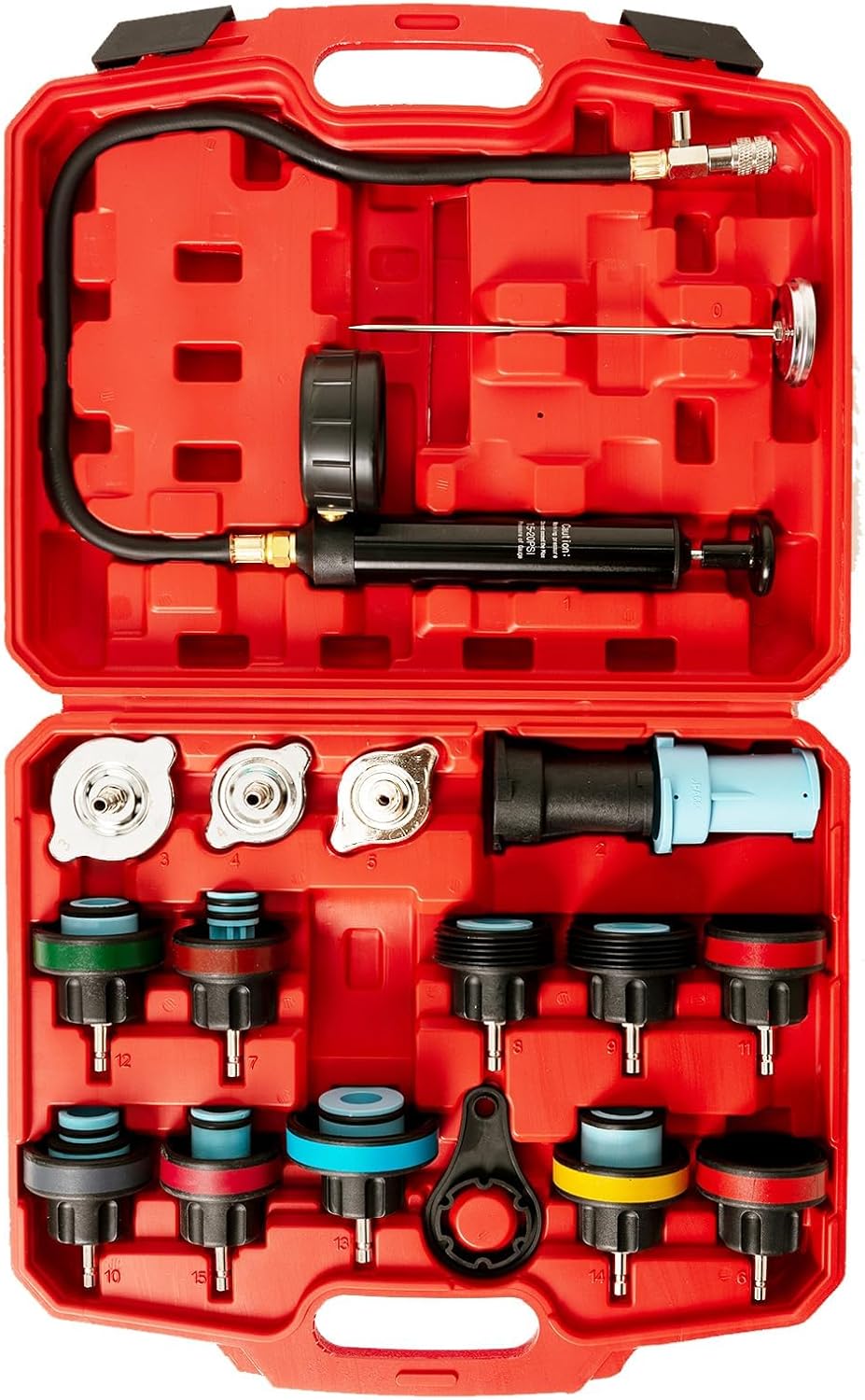
- Cooling system pressure tester
- Flashlight
- Mechanic’s gloves
- Safety glasses
- Drain pan
- Pliers or hose clamp pliers
- Basic socket and screwdriver set
Parts & Supplies
- Correct vehicle-specific coolant
- Replacement thermostat and gasket
- Replacement radiator hoses if needed
- Distilled water
- Replacement radiator cap if needed
- Coolant flush chemical if needed
- Shop towels
This article is part of our Cooling System Maintenance & Repair Guides.
Cooling system restrictions can cause overheating, weak cabin heat, temperature swings, and poor coolant circulation even when obvious parts like the fan or water pump seem fine.
A restriction means coolant is not moving freely through part of the system. The blockage may be inside the radiator, heater core, thermostat, hoses, engine passages, or even caused by collapsed hose liners, stop-leak contamination, rust, or mixed coolant sludge.
The goal of diagnosis is to confirm where flow is being limited before replacing parts. A careful temperature comparison, hose inspection, and coolant flow check will usually point you to the restriction much faster than guessing.
Common Signs of a Cooling System Restriction
Restrictions usually show up as uneven temperatures across the cooling system. Instead of coolant heating and cooling in a predictable pattern, one section stays much hotter or cooler than it should because flow has slowed down or stopped.
- Engine temperature rises above normal, especially at highway speed or under load.
- Cabin heater blows weak or inconsistent heat even after the engine is warm.
- Upper radiator hose is very hot while the lower hose stays much cooler than expected.
- Temperature gauge climbs, then drops suddenly, suggesting intermittent coolant movement.
- Radiator has cold spots across the core when checked with an infrared thermometer.
- Overflow bottle level changes abnormally or coolant pushes out after overheating.
- One heater hose is hot and the other is much cooler, suggesting restricted heater core flow.
A restriction is not the only cause of overheating, so keep an open mind. Low coolant level, a bad radiator fan, trapped air, a failing water pump, or combustion gases from a head gasket problem can mimic some of the same symptoms.
Safety Before You Start
Never remove a radiator cap on a hot engine. A pressurized cooling system can spray scalding coolant several feet. Let the engine cool fully before opening the system, disconnecting hoses, or installing a pressure tester.
- Work on a cool engine whenever possible.
- Wear gloves and safety glasses.
- Keep hands clear of belts and fans during warm-up checks.
- Catch drained coolant in a pan and dispose of it properly.
- Do not rely on hose squeeze tests alone when the engine is hot.
Understand Where Restrictions Usually Happen
Most restrictions happen at one of a few choke points. Knowing them helps you test in a logical order.
- Radiator core: internal scaling, rust, stop-leak products, or old coolant deposits block passages.
- Thermostat: stuck closed or opening only partially, reducing circulation.
- Heater core: sediment buildup blocks the narrow tubes and reduces cabin heat.
- Hoses: internal liner separation can collapse under suction, especially on the lower radiator hose.
- Engine coolant passages: corrosion, sludge, or severe contamination can limit flow inside the block or cylinder head.
- Radiator cap and recovery path: pressure or return-flow issues can worsen circulation and overheating.
The exact failure point matters because a flush may help with minor buildup, but severe internal blockage often means the affected component must be replaced.
Initial Visual Checks
Check Coolant Level and Condition
With the engine cold, remove the radiator cap if equipped and verify the radiator is full. Also inspect the overflow reservoir level. Coolant that looks rusty, muddy, oily, or full of floating debris is a strong clue that internal deposits may be restricting flow.
Inspect Hoses and External Components
Look for kinked hoses, flattened bends, soft hose sections, swelling near clamps, and signs that a hose has sucked inward before. Pay special attention to the lower radiator hose because it sees suction on many systems. If its internal spring is missing or the inner liner has failed, it can collapse and mimic a major blockage.
Look for Evidence of Contamination
Crusty deposits around the radiator neck, brown staining in the reservoir, and particles under the radiator cap point to neglected coolant or internal corrosion. Stop-leak products can leave gritty residue and often create partial blockages in the radiator or heater core.
Tools That Make This Job Easier


Warm-Up Test and Temperature Behavior
Start the engine cold and monitor coolant temperature with a scan tool if possible. Watch how the upper radiator hose, lower radiator hose, heater hoses, and radiator surface temperatures change as the engine warms up.
What Normal Warm-up Usually Looks Like
- The engine warms gradually while the thermostat remains closed.
- The upper radiator hose gets hot as engine outlet temperature rises.
- Once thermostat opening temperature is reached, the radiator begins heating more evenly.
- The lower radiator hose becomes warm after coolant starts flowing through the radiator.
- Heater hoses should both become hot when the heater circuit is flowing normally.
What Abnormal Behavior Suggests
- Upper hose extremely hot but lower hose stays relatively cool after full warm-up: likely thermostat restriction, radiator blockage, or poor flow.
- One heater hose hot and the other much cooler: likely heater core restriction.
- Temperature spikes followed by sudden drops: thermostat sticking or air pockets causing intermittent circulation.
- Radiator inlet tank very hot but large areas of the core stay cool: internal radiator blockage.
- Engine overheats at speed more than at idle: restricted radiator flow is more likely than a fan issue.
Use an Infrared Thermometer to Find Cold Spots
An infrared thermometer is one of the best DIY tools for finding restrictions. With the engine at operating temperature, compare temperatures across the radiator from side to side and top to bottom. Be careful around moving fans.
How to Check the Radiator
- Aim at the inlet tank or upper hose connection and note the temperature.
- Check several points across the radiator core.
- Measure near the outlet tank or lower hose connection.
- Look for sections that are significantly colder than neighboring areas.
A healthy radiator usually shows a gradual temperature drop across the core, not random cold islands. Multiple cold spots often mean blocked tubes. If only the top gets hot while the middle and bottom stay much cooler than expected, coolant may not be moving through enough of the radiator.
How to Check the Heater Core
Measure both heater hoses near the firewall. They should be close in temperature once the system is hot and the heater is on. A noticeable difference, especially with weak cabin heat, strongly suggests restricted heater core flow.
Pressure and Flow Checks
Cooling System Pressure Test
A pressure tester mainly finds leaks, but it also helps confirm whether the system can hold pressure. Low pressure lowers the coolant boiling point and can complicate diagnosis. If the cap is weak or the system leaks down, repair that first before judging restriction symptoms.
Observe Coolant Movement when Appropriate
On older vehicles with a radiator cap mounted directly on the radiator, you may be able to observe coolant circulation with the engine warming up from cold and the cap removed. Do this only if the coolant is cool and the setup allows it safely. Once the thermostat opens, you should see stronger movement across the neck. Little or no movement after opening temperature may point to a thermostat issue, pump problem, or major restriction.
Do Not Confuse Low Flow with Air in the System
Air pockets can create false signs of blockage, especially after recent repairs. If the system was recently opened, bleed it according to the vehicle procedure before concluding that the radiator or heater core is restricted.
How to Isolate the Restriction
Possible Thermostat Restriction
If the engine overheats quickly, the upper hose gets very hot, and the radiator stays relatively cool for too long, the thermostat may be stuck closed or only opening partially. Compare scan tool temperature to expected thermostat opening range. If the engine climbs well beyond normal before the radiator starts heating, the thermostat is a prime suspect.
Possible Radiator Restriction
A restricted radiator usually shows a hot inlet, cooler-than-normal outlet, and uneven temperature across the core. Overheating under load or at highway speed is common because the engine is generating heat, but the radiator cannot pass enough coolant through enough tubes to shed it.
Possible Heater Core Restriction
If the engine runs near normal but heater output is poor, check heater hose temperatures. One hot hose and one much cooler hose usually indicate the heater core is plugged. Some vehicles also use heater control valves, so confirm the valve is opening before condemning the core.
Possible Hose Collapse
A lower hose may look fine at rest but flatten while the engine is running and revved. Watch carefully, or inspect for a soft section after shutdown. Internal liner failure can act like a flap valve, restricting flow intermittently.
Possible Engine Passage Blockage
If coolant is heavily contaminated and multiple components show poor flow, blockage may extend into the engine block or cylinder head. This is more common on neglected systems with rust, mixed coolant types, or repeated use of stop-leak products.
Recommended Tools for This Job


When a Flush Helps and When It Will Not
A flush may improve minor sediment buildup, but it will not reliably fix severe internal plugging. If a radiator has many cold spots or a heater core has a major temperature drop between inlet and outlet, replacement is often the durable repair.
- Try a flush when coolant is dirty but flow restriction appears mild and there is no severe overheating damage.
- Replace the thermostat if there is any doubt about its operation during an overheating diagnosis.
- Replace hoses that are soft, collapsed, kinked, swollen, or internally delaminated.
- Replace the radiator if core blockage remains after flushing or cold spots are widespread.
- Replace the heater core if reverse flushing does not restore acceptable flow and heat output.
After any flush or component replacement, refill with the correct coolant and distilled water if required, then bleed the system thoroughly. Improper refill procedures can trap air and make a successful repair look like a new problem.
Diagnosis Pitfalls That Lead to Wrong Parts
Cooling system restrictions are often misdiagnosed because several problems create similar symptoms. Avoid replacing parts based on one clue alone.
- Do not condemn the radiator only because the lower hose is cooler than the upper; some drop is normal.
- Do not assume weak cabin heat means a bad heater core if coolant level is low or air is trapped.
- Do not overlook radiator cap problems that allow boiling and coolant loss.
- Do not assume the thermostat is good just because it is new; new parts can fail.
- Do not ignore possible water pump impeller damage if flow seems poor without obvious blockage.
- Do not continue driving an overheating vehicle, because repeated overheating can cause head gasket damage.
What to Do After You Find the Restriction
Once the restricted component is identified, repair the root cause rather than only addressing the symptom. If sludge or rust caused the blockage, the rest of the system likely needs cleaning and fresh coolant to prevent repeat failures.
- Replace or flush the restricted component as appropriate.
- Inspect related hoses, cap, and thermostat while the system is open.
- Clean the overflow reservoir if contaminated.
- Refill with the correct coolant type and proper mix ratio.
- Bleed all trapped air using the manufacturer’s procedure.
- Road test while monitoring coolant temperature and heater performance.
- Recheck coolant level after the engine cools completely.
If overheating continues after confirmed repairs, expand the diagnosis to include the water pump, cooling fans, head gasket integrity, and possible combustion gas intrusion.
Key Takeaways
- Use hose and radiator temperature differences to locate the restriction instead of replacing parts by guesswork.
- Cold spots across the radiator core usually point to internal blockage, especially when overheating happens under load.
- One hot heater hose and one much cooler hose is a strong sign of a restricted heater core or closed heater valve.
- A flush may help minor buildup, but severe radiator or heater core blockage usually requires replacement.
- Always bleed the system after repairs, because trapped air can mimic a restriction and cause repeat overheating.
FAQ
Can a Cooling System Restriction Cause Overheating Only at Highway Speeds?
Yes. A partially blocked radiator often shows up more at higher speeds or under load because the engine is producing more heat than the restricted system can move and shed.
How Much Temperature Difference Between Heater Hoses Is Too Much?
A small difference is normal, but if one hose is clearly hot and the other is much cooler while heater output is weak, restricted heater core flow is likely.
Will a Bad Thermostat Look Like a Radiator Blockage?
It can. A thermostat that stays closed or only opens partly can keep the radiator cool while the engine overheats, so thermostat behavior should always be checked before condemning the radiator.
Can Mixing Coolant Types Cause Restrictions?
Yes. Mixing incompatible coolants can create sludge or deposits that reduce flow through narrow passages in the radiator and heater core.
Is a Cold Lower Radiator Hose Always a Problem?
No. The lower hose is normally cooler than the upper hose because the radiator removes heat. It becomes suspicious when the difference is extreme and the engine is overheating.
Can I Fix a Restricted Radiator with a Flush?
Sometimes, but only if the buildup is minor. A radiator with widespread cold spots or severe internal scaling usually needs replacement for a reliable repair.
What Is the Fastest DIY Way to Check for a Restriction?
An infrared thermometer combined with a scan tool is usually the quickest method. Compare engine temperature, radiator inlet and outlet temperatures, and both heater hose temperatures.
Need Parts for This Repair?
The right parts and supplies vary by vehicle.
Select your make and model to find compatible parts and accessories for your car.
Exact Fit
Parts that fit your make and model
Quality You Can Trust
Top brands and OEM quality options
Fast Shipping
Get the parts you need, delivered fast