

Note: This article contains affiliate links. If you click on these links and make a purchase, I may earn a small commission at no extra cost to you. This helps support my research and content. Read my full affiliate disclosure here.
What You’ll Need
A quick look at the tools and supplies commonly used for this job.
Tools
Parts & Supplies
- Correct engine coolant
- UV dye for coolant leaks
- Brake cleaner for cleanup
- Distilled water
- Shop towels or rags
This article is part of our Cooling System Maintenance & Repair Guides.
A bad water pump can cause overheating, coolant loss, bearing noise, and severe engine damage if you keep driving. The trick is separating true water pump failure from problems that look similar, like a leaking hose, stuck thermostat, bad radiator cap, or a failing electric cooling fan.
Most DIY checks are straightforward if you work on a cold engine, inspect carefully, and follow a logical order. This guide walks you through the common symptoms, the tools that help, and the best tests to confirm whether the water pump is actually the problem before you replace parts.
What the Water Pump Does and Why It Fails
The water pump circulates coolant through the engine block, cylinder head, heater core, and radiator. Without steady coolant flow, hot spots develop quickly and engine temperature rises fast, especially at idle or under load.
Most failures fall into a few categories: a leaking shaft seal, worn internal bearings, a loose or damaged impeller, pulley wobble, or external damage around the housing and gasket surface. Some pumps are driven by the serpentine belt, while others are driven by the timing belt or timing chain, which changes how accessible the pump is and how risky replacement becomes.
- A worn seal often leaks coolant from the pump weep hole.
- Bad bearings usually create grinding, growling, or chirping noise and may allow pulley play.
- A damaged impeller can reduce coolant circulation even when no obvious external leak is present.
- A failed gasket or cracked housing can leak coolant around the pump body.
Common Symptoms of a Bad Water Pump
A bad water pump rarely fails silently. Usually the cooling system gives several clues before complete failure. Pay attention to when the engine overheats, how quickly coolant drops, and whether there is any noise from the front of the engine.
Symptoms That Point Toward the Water Pump
- Coolant dripping from the front of the engine or behind the pulley area.
- White, green, orange, pink, or crusty residue around the pump body or vent hole.
- Grinding, rumbling, or squealing noise that changes with engine speed.
- Engine overheating at idle, in traffic, or during highway driving.
- Heater output becoming inconsistent because coolant flow is weak.
- Visible pulley wobble or belt misalignment.
- Repeated low-coolant warnings without an obvious hose or radiator leak.
Symptoms That Can Be Caused by Something Else
Not every overheating problem is the water pump. A thermostat stuck closed can mimic poor coolant circulation. A bad radiator fan can cause overheating mostly at low speed or idle. A head gasket problem can also create coolant loss and overheating, sometimes with bubbling in the reservoir. That is why inspection and testing matter.
Safety Before You Start
Never remove the radiator cap or open the cooling system on a hot engine. Pressurized coolant can cause serious burns. Let the vehicle cool fully, wear gloves and eye protection, and keep hands, hair, and tools clear of moving belts and fans.
- Start all leak checks with the engine cold.
- Support the vehicle properly if access from below is required.
- Keep pets and children away from coolant because it is toxic.
- Clean up spills immediately and dispose of old coolant properly.
Initial Visual Inspection
Before you use any tools, perform a careful visual inspection. Many bad water pumps give themselves away with residue, dampness, or belt contamination.
Where to Look
- Around the water pump pulley and shaft area.
- At the underside of the pump housing.
- Near the weep hole, if visible.
- Along the pump-to-engine mounting surface.
- On nearby brackets, splash shields, and the inside of the hood for dried coolant spray.
- On the serpentine belt for signs of coolant contamination.
Use a flashlight and mirror to inspect hard-to-see areas. If the pump is leaking from the weep hole, you may find a thin trail of coolant or dried residue directly below the pump shaft. That usually indicates the internal seal has failed and replacement is the proper fix.
If you find coolant higher up above the pump, the pump may not be the source. Coolant can run down from a hose connection, thermostat housing, crossover pipe, or intake-related coolant fitting and make the pump area look guilty.
Tools That Make This Job Easier


Check for Bearing Noise and Pulley Play
A water pump bearing that is failing often becomes noisy before the seal leaks badly. The sound is typically a growl, whine, or rough metallic rumble from the front of the engine.
How to Listen for Pump Noise
With the engine running cold, listen near the belt drive area. A mechanic’s stethoscope can help isolate the sound, but use extreme caution around moving parts. Compare the pump area with other accessories like the alternator, idler pulley, belt tensioner, and A/C compressor, since those components can make similar noises.
How to Check Pulley Play
With the engine off, try moving the water pump pulley by hand. On many engines you can feel for side-to-side movement or wobble. Any noticeable play is a strong sign the bearing is worn. Spin the pulley if accessible; roughness or scraping is another bad sign.
If the serpentine belt is easy to remove, taking belt tension off the pulley can make this test more accurate. Just remember that idler pulleys and tensioners also fail regularly, so confirm you are checking the correct component.
Pressure Test the Cooling System
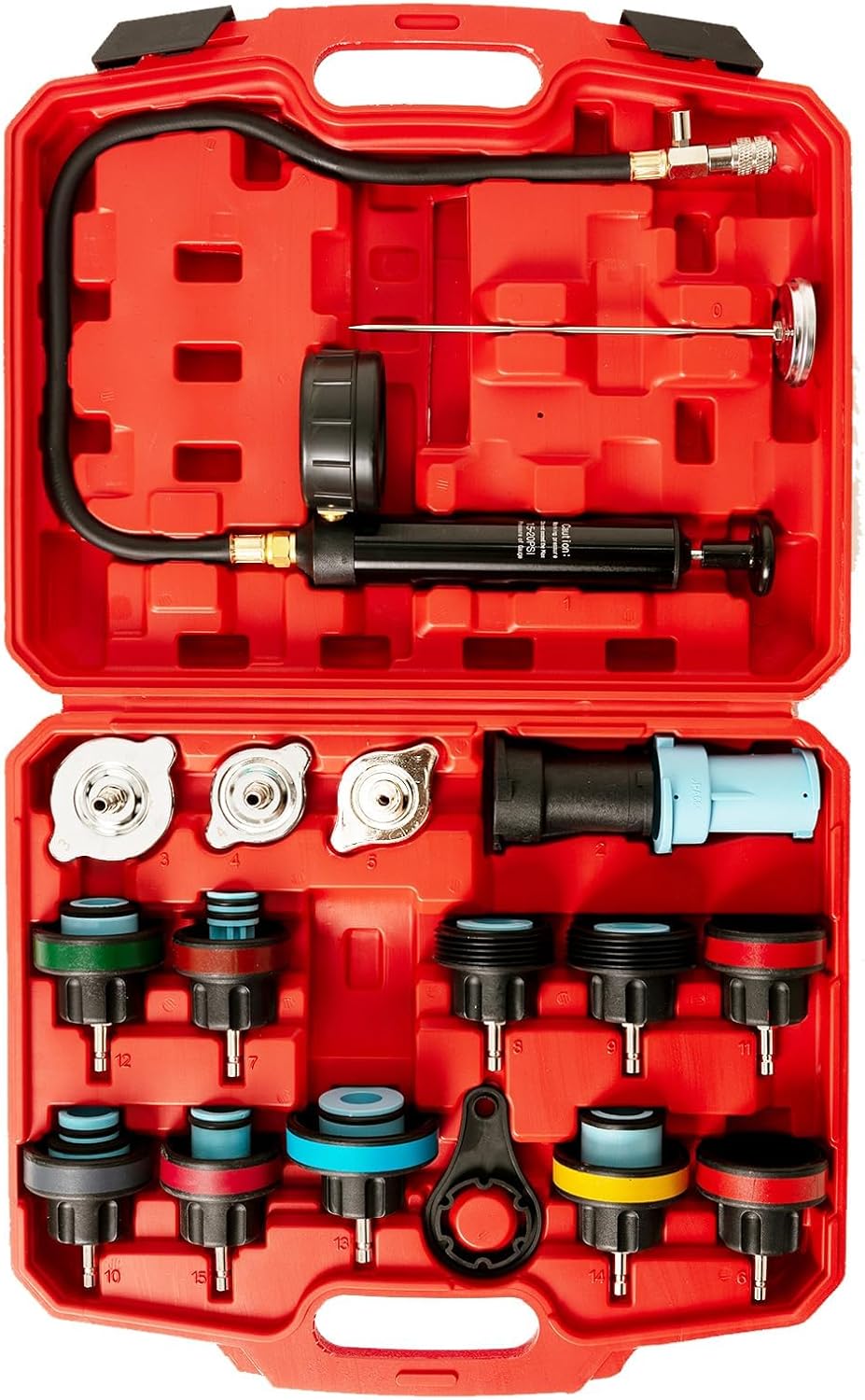
A cooling system pressure tester is one of the best ways to confirm an external water pump leak. It lets you pressurize the cooling system with the engine off, so leaks become easier to spot without dealing with heat and spinning parts.
How to Do the Test
- Make sure the engine is completely cold.
- Install the pressure tester in place of the radiator cap or reservoir cap, depending on system design.
- Pump the system to the pressure listed on the cap or service information; do not exceed the rated pressure.
- Watch the gauge and inspect the water pump area, hoses, radiator, thermostat housing, and heater hose connections.
- Look for fresh coolant around the weep hole, gasket seam, or pump housing.
If pressure drops and coolant appears at the water pump, the diagnosis is straightforward. If pressure drops but no leak is visible, check underneath splash shields, the passenger-side floor area for heater core issues, and the engine oil and exhaust for signs of internal coolant loss.
On some vehicles, the leak only shows after the pump has rotated and warmed up. In that case, a cold pressure test may not catch everything, but it still helps rule out easier-to-find leaks elsewhere.
Evaluate Overheating Patterns and Coolant Circulation
A failing water pump can cause overheating because coolant is not moving efficiently through the engine and radiator. The way the engine overheats can offer clues, although it is not a stand-alone confirmation.
Patterns That May Suggest a Pump Problem
- Temperature rises quickly after startup and continues climbing even when the radiator fan works.
- Cabin heat becomes weak or fluctuates as engine temperature rises.
- Upper and lower radiator hose temperatures seem unusually inconsistent after warm-up.
- The engine overheats under load and may cool only slightly at higher RPM.
An infrared thermometer can help you compare hose and radiator temperatures. If the thermostat is open but circulation still seems poor, the pump may have an impeller problem. Some modern pumps can have internal impeller erosion or separation that reduces flow without causing much external noise or leakage.
Be careful with old advice about removing the radiator cap and watching coolant movement. That can be unsafe on hot systems and is not reliable on all designs, especially vehicles with degas bottles, complex bleeding procedures, or electronically controlled thermostats.
Rule Out Problems That Mimic a Bad Water Pump
Good diagnostics save money. Before condemning the pump, rule out the common issues that create similar symptoms.
Common Look-alikes
- Thermostat stuck closed, causing overheating and poor heater performance.
- Radiator fan not operating correctly, especially if overheating happens mainly at idle.
- Leaking upper radiator hose, bypass hose, or thermostat housing above the pump.
- Loose or worn serpentine belt, failing tensioner, or slipping pulley reducing pump speed.
- Clogged radiator restricting heat transfer.
- Head gasket failure causing coolant loss, pressure buildup, or combustion gases in the cooling system.
If your scan tool shows overheating-related codes, compare live data with what the gauge is showing. An engine coolant temperature sensor problem can mislead the dash gauge, although it will not create an actual leak or bearing noise.
Recommended Tools for This Job


Special Cases: Timing Belt-Driven and Electric Water Pumps
Not all water pumps fail in the same way, and not all are easy to inspect. The pump design affects what you can verify at home.
Timing Belt-driven Water Pumps
If the water pump sits behind the timing cover, you may not be able to see leakage directly. In these cases, coolant dripping from the timing cover area, unexplained coolant loss, or noise behind the cover may be your main clues. Because replacement usually overlaps with timing belt service, many owners replace the pump, belt, tensioner, and idlers together.
Electric Water Pumps
Some newer vehicles use electric water pumps. These may fail electrically, mechanically, or intermittently. You might see overheating, stored trouble codes, reduced heater output, or pump command without actual coolant flow. In these cases, a scan tool and factory-style diagnostic steps become more important than pulley and belt inspection.
How to Confirm the Diagnosis
You can be reasonably confident the water pump is bad when you have one or more direct signs, not just a general overheating complaint.
- Coolant leaking directly from the weep hole or pump housing.
- Noticeable pulley wobble or bearing play.
- Grinding or growling localized to the pump bearing.
- Strong evidence of poor coolant circulation after ruling out thermostat, fan, belt, and radiator issues.
- Repeated pressure-test confirmation of leakage at the pump.
If all you have is overheating with no leak, no noise, and no play, avoid replacing the pump solely on suspicion. That usually means more diagnosis is needed.
What to Do Next if the Water Pump Is Bad
Once you confirm the pump is failing, limit driving until repairs are complete. A water pump can go from minor seepage to rapid coolant loss or seized bearing without much warning.
Repair Planning Tips
- Replace the pump gasket or seal with the pump; do not reuse old sealing material.
- Inspect or replace the serpentine belt if coolant has contaminated it.
- If the pump is timing belt-driven, consider doing the full timing service at the same time.
- Refill only with the correct coolant type and bleed air from the system properly.
- Verify operating temperature and leak-free operation after the repair.
If the engine overheated severely, keep an eye out afterward for signs of secondary damage such as persistent coolant loss, milky oil, rough running at startup, or continuous bubbling in the cooling system.
When a DIY Diagnosis Should Turn Into a Shop Visit
A shop diagnosis is smart if the pump is hidden behind timing covers, the vehicle has an electric pump strategy, the cooling system is difficult to bleed, or you suspect a head gasket issue. It is also worth getting professional help if you cannot confidently separate water pump noise from belt drive accessory noise.
Seek immediate help if the engine overheats repeatedly, the temperature gauge spikes into the red, steam is coming from the engine bay, or coolant pours out rapidly. Continuing to drive can warp cylinder heads, damage gaskets, and turn a moderate repair into a major engine bill.
Key Takeaways
- A visible leak from the weep hole, pulley wobble, or bearing growl are the strongest signs of a bad water pump.
- Pressure testing a cold cooling system is one of the best ways to confirm whether the pump is actually leaking.
- Do not blame the pump for every overheating problem until you also check the thermostat, fan operation, belt drive, and hoses.
- Stop driving the vehicle if coolant loss or overheating is severe, because engine damage can happen quickly.
- If the pump is timing belt-driven or electrically controlled, diagnosis and repair may be more complex than a simple visual check.
FAQ
Can a Water Pump Be Bad Without Leaking Coolant?
Yes. A water pump can fail from worn bearings or a damaged impeller without showing an obvious external leak. In those cases, you may notice noise, pulley play, overheating, or weak heater performance instead.
What Does a Bad Water Pump Sound Like?
Common sounds include a grinding, growling, rumbling, or sometimes chirping noise from the front of the engine. The sound usually changes with engine speed and can be confused with an idler pulley, tensioner, alternator, or A/C compressor.
How Do I Know if the Leak Is the Water Pump or Just a Hose Above It?
Clean the area first, then pressure test the cooling system on a cold engine and trace the freshest coolant to its highest point. If coolant starts above the pump and runs downward, the pump may not be the source.
Will a Bad Water Pump Always Make the Engine Overheat?
Not always at first. A pump with a small seal leak may lose coolant slowly before overheating becomes obvious. A pump with bearing or impeller damage is more likely to affect circulation and temperature control sooner.
Can I Drive with a Bad Water Pump?
It is risky. A leaking or noisy pump can fail suddenly, dump coolant, throw the belt off, or cause severe overheating. Short trips may turn into engine damage very quickly.
Does a Bad Thermostat Feel the Same as a Bad Water Pump?
They can overlap, but they are not identical. A stuck thermostat often causes overheating because coolant cannot flow through the radiator, while a bad pump may add leaks, bearing noise, wobble, or poor circulation even when the thermostat opens.
Should I Replace the Thermostat when Replacing the Water Pump?
Many owners do, especially if the cooling system is already being opened and the thermostat is inexpensive or due for service. It is not mandatory in every case, but it can be smart preventive maintenance.
How Accurate Is a Cooling System Pressure Test for Diagnosing a Bad Water Pump?
It is very useful for finding external leaks and often confirms pump seal or gasket failure. It is less helpful for diagnosing an internal impeller problem or a bearing issue that is not yet leaking.
Need Parts for This Repair?
The right parts and supplies vary by vehicle.
Select your make and model to find compatible parts and accessories for your car.
Exact Fit
Parts that fit your make and model
Quality You Can Trust
Top brands and OEM quality options
Fast Shipping
Get the parts you need, delivered fast