

Note: This article contains affiliate links. If you click on these links and make a purchase, I may earn a small commission at no extra cost to you. This helps support my research and content. Read my full affiliate disclosure here.
If you want a wider stance, improved wheel fitment, or to correct clearance issues on your Hyundai Sonata, the right wheel spacers matter. Choosing the correct spacer affects handling, wheel alignment, and wheel-to-body clearance in everyday driving.This guide covers our shortlisted top picks for Hyundai Sonata wheel spacers and explains the key factors we evaluated, such as bolt pattern compatibility and material strength. Read on to understand what to check before you install spacers on your Sonata and which features matter most.
Looking for other parts? See all Hyundai Sonata parts & accessories.
Top Picks at a Glance
| Best Overall The best all-around choice for most situations | Wheel Accessories Parts 20mm Hub-Centric Wheel Spacers (5×4.5 / 5×114.3) — Forged 6061 T6, M12x1.5 Studs (4-Pack) |  |
| Best quality Built to a higher standard if you want something more solid | Torchbeam 2" Hub-Centric 5×4.5 Wheel Spacer (4 pcs) |  |
| Best Value The sweet spot between price and what you get | Customadeonly 20mm Hub-Centric Wheel Spacers (5×114.3, 67.1mm, M12x1.5) — 4-Pack |  |
| Best budget The cheapest option that still gets the job done reliably | Customadeonly 5×114.3 3mm Hubcentric Wheel Spacers (67.1 to 73.1mm) – 2pcs |  |
| Highest Rated A top-rated pick with lots of positive feedback | StanceMagic 5mm Hubcentric 5×114.3 Wheel Spacers (67.1mm Bore) — 2 Pack |  |
| Most popular A crowd favorite that many people choose with confidence | KAX 5×4.5 2" Hub-Centric Wheel Spacers (4 pcs) with M12x1.5 Studs, 67.1mm Bore |  |
| Best Seller A high-volume bestseller chosen again and again | dynofit 1" (25mm) 5×4.5 Wheel Spacers, 67.1mm Hub, M12x1.5 Stud (4-pack) |  |
1. Wheel Accessories Parts 20mm Hub-Centric Wheel Spacers (5×4.5 / 5×114.3) — Forged 6061 T6, M12x1.5 Studs (4-Pack)

| Bolt pattern | 5×4.5 (5×114.3mm) |
|---|---|
| Thickness | 20mm |
| Hub bore | 67.1mm ID |
| Stud thread | M12x1.5 |
| Material | Forged 6061 T6 aluminum |
These 20mm hub-centric spacers are designed to push wheels outward for a wider stance and improved clearance while keeping a factory-like fit to the hub. Made from forged 6061 T6 aluminum and CNC-machined, they arrive anodized black with SAE 10.9 studs, which helps resist corrosion and keeps the installation tidy. Typical use is straightforward: center the spacer on the vehicle hub, run the supplied studs and nuts, then remount the wheel; the product claims hub-centric fit to reduce vibration risk. Benefits include added tire clearance for larger wheels or caliper clearance issues and a more planted look and handling feel from a wider track. Important limitations are that the set is specific to 5×4.5 (5×114.3) hubs with a 67.1mm bore and 20mm thickness so it will only suit Sonatas with that exact specification, and some users reported occasional fastener failures so torque carefully and inspect hardware after installation. Follow manufacturer torque and threadlocker recommendations for safety.
Best for: Balanced owners who want a reliable, factory-quality spacer to improve stance and clearance while keeping everyday drivability in mind.
Less Ideal for: Buyers seeking maximal wheel offset for aggressive stance, multi-vehicle fitment, or those unwilling to check torque and hardware after installation should consider other options.
- Forged 6061 T6 aluminum and CNC machining for precise, corrosion-resistant fit
- Hub-centric design and 67.1mm bore to minimize vibration when matched to the hub
- 20mm thickness provides noticeable increase in track width and extra tire or caliper clearance
- Anodized finish and SAE 10.9 studs for improved durability over untreated spacers
- Fits only vehicles with 5×4.5 (5×114.3) bolt pattern and 67.1mm hub bore, limiting compatibility
- Some customers reported stud or nut failures so hardware quality may be inconsistent
Verdict: A precision-machined 20mm hub-centric spacer that widens track and clears brakes for Hyundai Sonata owners with a 5×114.3 hub while aiming to preserve factory fit and drivability.
2. Torchbeam 2" Hub-Centric 5×4.5 Wheel Spacer (4 pcs)

| Bolt pattern | 5×4.5 (5×114.3mm) |
|---|---|
| Thickness | 2 inch (50.8mm) |
| Thread | M12x1.5 |
| Center bore | 67.1mm (with lip) |
These Torchbeam wheel spacers are a performance-focused, hub-centric adapter set intended to push wheels out by 2 inches to widen track and give a more aggressive stance. They are CNC-machined from 6061-T6 aluminum and use hardened 12.9-grade bolts, which the listing says improves strength versus cast spacers and resists corrosion. Typical use is swapping them between the hub and wheel during wheel installation to change offset, improve handling feel and clearance, or clear larger brake calipers. Practical benefits include a firmer lateral feel, improved anti-roll characteristics, and a bolt-on appearance upgrade without permanent wheel modification. Installation is straightforward for a competent DIYer but requires careful torqueing and use of proper threadlocker and a torque wrench; correct hub bore and stud/thread match must be confirmed before fitting a Sonata. Limitations are the added unsprung mass at the wheel edge and the need to monitor fastener torque regularly; incorrect fitment or improper installation can cause safety issues, so professional installation is recommended for critical performance use.
Best for: Performance-oriented buyers who prioritize sharper handling and a wider stance on their Sonata and are comfortable verifying fitment and maintaining fastener torque.
Less Ideal for: Buyers seeking a maintenance-free or purely cosmetic solution or those unwilling to confirm hub bore and bolt pattern compatibility with a Sonata should look elsewhere.
- Hub-centric design provides centered mounting for reduced vibration compared with generic spacers
- Billet 6061-T6 CNC-machined construction for higher yield strength than typical cast alternatives
- Uses hardened 12.9-grade bolts for improved clamping strength and corrosion resistance
- 2-inch offset significantly increases track width for improved lateral stability and a more aggressive stance
- Adds unsprung load at the wheel which can slightly affect ride quality and steering weight
- Requires precise fitment verification and regular torque checks to maintain safety
Verdict: A strong, billet aluminum 2-inch hub-centric spacer aimed at Sonata owners who want a noticeable handling and stance upgrade but who will confirm fitment and maintain proper torque.
3. Customadeonly 20mm Hub-Centric Wheel Spacers (5×114.3, 67.1mm, M12x1.5) — 4-Pack

| Bolt pattern | 5×114.3 |
|---|---|
| Thickness | 20mm |
| Center bore | 67.1mm |
| Stud thread | M12x1.5 |
These Customadeonly spacers are a straightforward bolt-on solution to push wheels outward by 20mm on vehicles that use a 5×114.3 bolt pattern and 67.1mm hub bore. Made from forged 6061-T6 aluminum and CNC machined, the kit is hub-centric and includes heat-treated class 10.9 studs to maintain wheel centering and resist shear. Installation is typical: remove wheels, fit the spacer to the hub, then reuse or replace studs and torque to spec. The practical benefits are an improved stance, more tire clearance for wider wheels or calipers, and a small handling feel improvement from a wider track. Common limitations to plan for are that factory studs can protrude past the spacer surface so trimming or swapping to shorter studs may be necessary, and the supplied lug nuts are reported by some users to be softer than ideal. For a buyer focused on maximizing function per dollar, these spacers deliver precise fit and durable construction, but budget-conscious installers should inspect or upgrade the hardware during installation.
Best for: Practical optimizers who want an affordable, effective way to widen the track and improve wheel fitment on a Hyundai Sonata without replacing wheels, prioritizing sensible upgrades over premium branding.
Less Ideal for: Drivers seeking a permanent performance overhaul or those who prefer factory-original fitment without any modifications should consider wheel or suspension options instead.
- Forged 6061-T6 construction with CNC machining for consistent hub-centric fit
- Includes heat-treated class 10.9 studs for strength and durability
- 20mm thickness gives noticeable outward offset for improved stance and clearance
- Hub-centric design reduces vibration risk and simplifies installation alignment
- Factory studs may protrude and require trimming or replacement for proper wheel seating
- Supplied nuts have been reported as softer than ideal and may be worth replacing
Verdict: A cost-effective, well-machined 20mm hub-centric spacer that gives Hyundai Sonata owners a reliable way to widen stance and clear wider wheels, with the caveat to check or upgrade the supplied hardware.
4. Customadeonly 5×114.3 3mm Hubcentric Wheel Spacers (67.1 to 73.1mm) – 2pcs

| Bolt pattern | 5×114.3 |
|---|---|
| Thickness | 3mm per side |
| Center bore adapter | 67.1mm hub to 73.1mm wheel |
| Material | 6061 T6 aluminum |
These Customadeonly spacers are a slim, budget-friendly option for widening track or correcting offset on a Hyundai Sonata that uses a 5×114.3 bolt pattern and a 67.1mm hub bore. They mount via bolt-on studs and provide a 3mm offset per side, which is typically used for subtle fitment corrections or to improve wheel clearance and stance without major handling changes. Machined from 6061 T6 aluminum and fitted with heat-treated class 10.9 studs, the spacers are designed for consistent concentricity and balanced installation. The hubcentric lip eliminates the need for separate hub rings when paired with wheels that have a 73.1mm bore. On the downside the 3mm thickness gives only a small visual or clearance change and they only work with wheels that have the specified bore, so compatibility must be verified before purchase. Installation is straightforward for a DIYer with basic tools, but torque sequencing and thread locking on studs are still recommended for safe use.
Best for: Budget-conscious Hyundai Sonata owners seeking an inexpensive, factory-quality way to correct minor wheel offset or gain a hair more clearance while keeping a near-stock look.
Less Ideal for: Drivers planning aggressive wheel fitment, large track widening, or who do not have wheels with a 73.1mm bore should look for thicker spacers or different hub specifications.
- Hubcentric design with lip matches hub to wheel and can eliminate the need for aftermarket hub rings
- CNC machined from 6061 T6 aluminum for consistent concentricity and reduced imbalance risk
- Includes heat-treated class 10.9 studs for secure bolt-on installation
- Thin 3mm thickness provides subtle offset correction useful for minor clearance or alignment tweaks
- Only 3mm per side so limited impact on stance or clearance compared with thicker spacers
- Requires wheels with a 73.1mm center bore to be compatible
- Not suitable when larger offsets or aggressive wheel fitment are needed
Verdict: A cost-effective, hubcentric 3mm spacer for Sonata owners who need a small offset correction and want factory-quality machining without a big change in stance.
5. StanceMagic 5mm Hubcentric 5×114.3 Wheel Spacers (67.1mm Bore) — 2 Pack

| Thickness | 5mm |
|---|---|
| Bolt Pattern | 5×114.3 |
| Hub Center Bore | 67.1mm |
| Material | Billet Aluminum (anodized) |
These StanceMagic wheel spacers are a simple, low-profile solution when you need a few millimeters of clearance on a Hyundai Sonata that uses a 5×114.3 bolt pattern and 67.1mm hub bore. Machined from billet aluminum and anodized, the spacers are hubcentric so they center on the hub to reduce wobble and vibration after installation. Typical uses include clearing brake calipers or suspension components, correcting minor fitment issues with aftermarket wheels, and giving a slightly wider track for a more planted look. Installation requires standard tools, torque to factory specs, and a re-torque check after 25–50 miles; extended lug bolts or studs may be needed but are not included. The 5mm thickness is subtle so handling changes are minimal while still increasing inner clearance. Limitations are that these spacers only add a small offset and will not solve major clearance problems, they require correct stud engagement and possibly different hardware, and they are vehicle-specific so fitment must be verified before purchase.
Best for: Reliability-focused buyers who prioritize a correct, low-risk fitment and want a modest, durable spacer to eliminate minor rubbing or clearance issues on their Hyundai Sonata.
Less Ideal for: Buyers seeking large track widening, major wheel fitment modification, or a spacer that replaces the need for properly sized lug hardware should look for thicker spacers or a different solution.
- Hubcentric 67.1mm bore centers wheels to reduce vibration
- CNC machined from billet aluminum and anodized for corrosion resistance
- Thin 5mm profile fixes minor rubbing and increases inner clearance without large offset changes
- Only adds 5mm of spacing so it will not address major clearance or fitment issues
- Extended lug bolts or studs are not included and may be necessary for safe installation
Verdict: A precisely machined, hubcentric 5mm spacer that reliably fixes small clearance problems while preserving factory-like behavior.
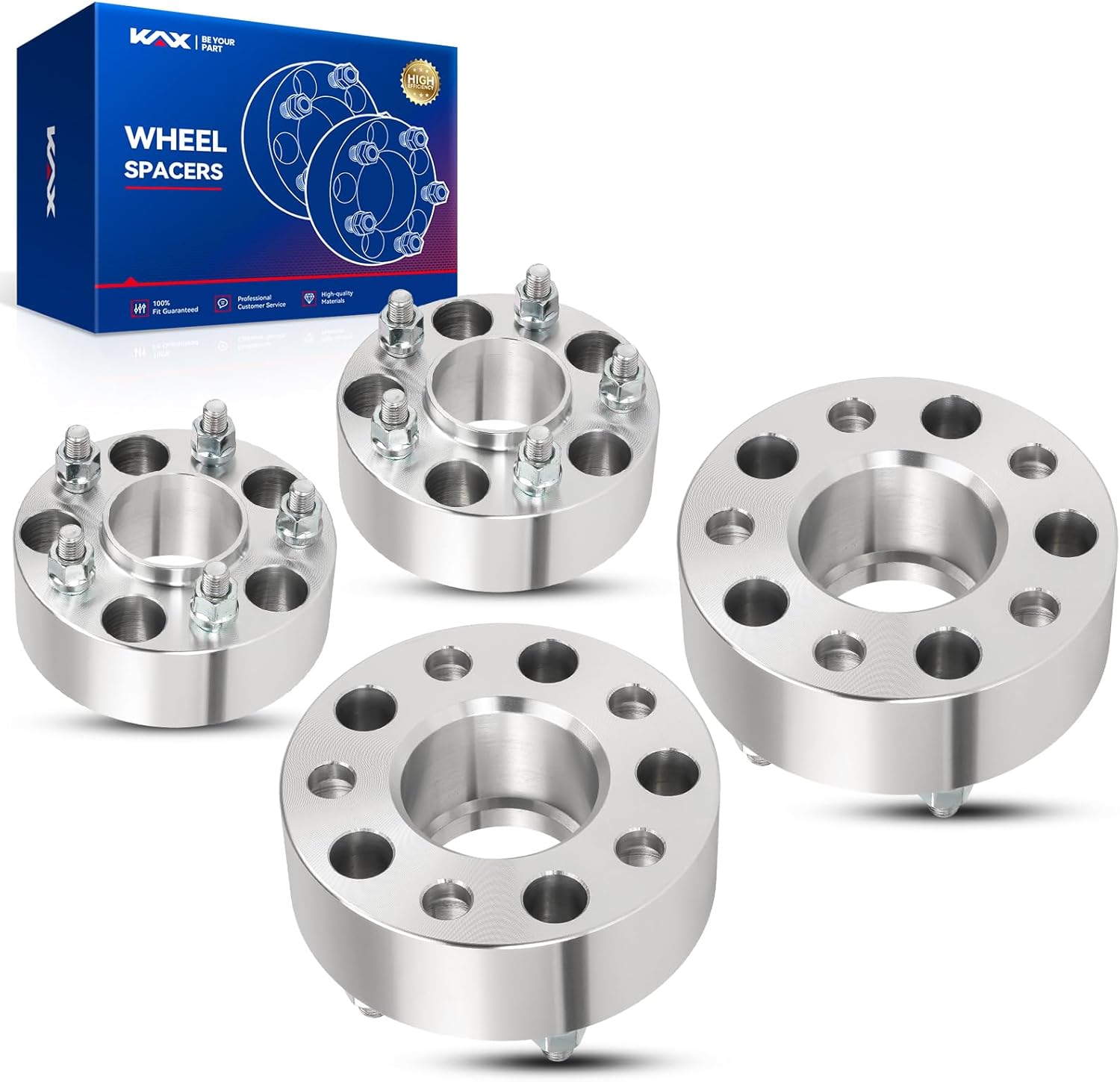
6. KAX 5×4.5 2" Hub-Centric Wheel Spacers (4 pcs) with M12x1.5 Studs, 67.1mm Bore
| Bolt pattern | 5×4.5 (5×114.3mm) |
|---|---|
| Thickness | 2 inch (50.8mm) |
| Stud thread | M12x1.5 |
| Center bore | 67.1mm |
| Material | Forged 6061-T6 Aluminum |
These KAX spacers push your wheels out 2 inches to correct clearance problems and give a wider stance on compatible vehicles. They are forged from 6061-T6 aluminum and CNC machined for a close fit, and come with hardened 12.9-grade nuts and studs sized M12x1.5. Typical use is to solve wheel-to-caliper or suspension clearance, reduce a tucked-in look, or fit wider wheels while keeping the wheel centered on the hub. The hub-centric 67.1mm bore and precise machining help minimize vibration when the spacer matches the vehicle hub. Strengthened hardware and heat-treatment reduce the chance of stud or bolt failure under normal road use. Limitations to note are fitment sensitivity and the need to verify hub bore and stud length before installation on a Sonata; spacers add load to studs and change scrub radius so professional installation and torque to the recommended 70-80 ft-lbs are important. If the factory studs are too short you may need extended studs or different spacers to reach safe engagement.
Best for: Convenience-driven buyers who want a straightforward bolt-on way to clear brakes or fit wider wheels on a Hyundai Sonata without major suspension changes.
Less Ideal for: Drivers seeking a permanent suspension or alignment modification solution or those unwilling to have a shop verify hub centering and stud engagement should consider other options.
- Forged 6061-T6 aluminum construction for improved strength and corrosion resistance
- CNC machined, hub-centric 67.1mm bore to promote accurate centering and reduce vibration when matched to the hub
- Includes hardened 12.9-grade studs and nuts for durable wheel retention
- 2-inch offset effectively resolves wheel-to-caliper and fender clearance issues and widens track for a more aggressive stance
- Requires careful fit verification of hub bore and stud length before installing on a Sonata
- Spacers alter vehicle scrub radius and load on wheel studs which may affect handling if not installed properly
Verdict: A convenient, hub-centric 2-inch spacer option for Sonata owners who need clearance or a wider stance provided you confirm hub and stud fitment before installation.
7. dynofit 1" (25mm) 5×4.5 Wheel Spacers, 67.1mm Hub, M12x1.5 Stud (4-pack)

| Bolt pattern | 5×114.3 (5×4.5) |
|---|---|
| Hub bore | 67.1mm |
| Thickness | 25.4mm (1 inch) |
| Stud thread pitch | M12x1.5 |
These dynofit spacers push the wheels out by 1 inch (25mm) to give a wider track and more aggressive fitment while maintaining a hub-centric connection to the vehicle. Made from forged 6061-T6 aluminum and CNC processed, they are lightweight yet strong and come with DACROMAT-treated bolts for improved corrosion resistance. Typical use is bolt-on installation between the hub and wheel to change wheel offset or clear aftermarket brakes and improve stance. Practical benefits include improved cornering feel and wheel poke for visual effect while keeping the assembly centered on the hub to reduce vibration. Important limitations: some applications may require shortening original studs or a re-torque after a few miles, and an alignment is recommended after installation. Buyers should also confirm the 67.1mm bore and 5×4.5 bolt pattern match their Sonata before fitting.
Best for: Risk-averse mainstream buyers who want a factory-quality, low-risk way to widen the stance or clear larger brakes while prioritizing dependable fitment and corrosion resistance.
Less Ideal for: Drivers seeking extreme track-width changes or heavy-duty off-road use should consider thicker spacers or wheel adapters designed for those applications.
- Forged 6061-T6 aluminum construction for high strength-to-weight ratio
- Hub-centric 67.1mm bore reduces vibration compared with generic spacers
- Corrosion-resistant DACROMAT-treated bolts for longer hardware life
- CNC processing for consistent fit and finish
- May require trimming or stud modification on some vehicles to achieve proper seat depth
Verdict: A forged, hub-centric 1" spacer set that gives a safer, factory-quality way to widen wheel stance and improve fitment on compatible vehicles.
Choosing the Right Hyundai Sonata Wheel Spacers: Key Factors to Consider
Bolt Pattern and Stud Fitment
Matching the vehicle bolt pattern is the basic requirement for safe installation. For Hyundai Sonata wheel spacers you must confirm the spacer's bolt pattern and stud diameter match the Sonata's wheel studs and lug nuts to prevent loose or uneven mounting.
Incorrect bolt pattern or stud fit can cause stud stress, uneven torque distribution, and potential wheel wobble. Always check both vehicle-side and wheel-side fitment specs to ensure the spacer seats correctly and does not alter stud engagement beyond safe limits.
Hubcentric Vs Lugcentric Design
Hubcentric spacers center on the vehicle hub and transfer load across the hub flange, which helps reduce runout and vibration. Lugcentric spacers rely on the lug nuts to locate the wheel and can leave small misalignments that may be noticeable at higher speeds.
If minimizing vibration and maintaining factory wheel alignment are priorities, favor hubcentric designs that match the Sonata hub diameter. If lugcentric spacers are used, expect to take extra care with torque sequence and wheel balancing.
Material and Build Quality
Spacer material determines strength and long-term durability. High-grade forged aluminum alloys or billet constructions offer better stiffness-to-weight ratios and resist cracking under load, while cheaper cast alloys are more prone to fatigue.
Pay attention to machining tolerances, chamfering around bolt holes, and whether the spacer has protective coatings to resist corrosion. Consistent manufacturing quality reduces the risk of uneven seating and helps maintain wheel balance.
Spacer Thickness and Clearance Needs
Thickness controls how far the wheel pushes outward and directly affects track width, fender clearance, and wheel offset. Small thicknesses can correct minor rubbing, while larger spacers create a more aggressive stance but can increase stress on wheel bearings and suspension components.
Consider how much clearance you need for tire sidewalls and brake calipers, and follow vehicle-specific limits for stud engagement. Use the minimum effective thickness to solve the clearance issue while keeping loads on suspension parts reasonable.
Fastening and Torque Specifications
Correct torque values and a proper tightening sequence are critical to safe spacer installation. Over- or under-tightening can cause stud stretch, thread damage, or loosening under load.
Verify that the spacer manufacturer provides clear torque specs and use a calibrated torque wrench during installation. Retorque after a short break-in distance and inspect studs and nuts regularly for signs of wear or loosening.
Compatibility With Wheel Hardware and Accessories
Some wheels use special hub-centric rings, longer studs, or require anti-seize where contact surfaces meet. Make sure the spacer is compatible with your wheel's backspacing and any center caps, sensors, or wheel-mounted accessories.
If a spacer alters the hub-to-wheel relationship, confirm that hub-centric rings and longer studs are available and that any required installation kit components are specified. Compatibility reduces installation time and helps avoid unexpected fitment issues.
How We Chose the Best Hyundai Sonata Wheel Spacers
Our selection process focused on features that directly affect fit, safety, and long-term durability for Hyundai Sonata wheel spacers. We prioritized correct bolt pattern and stud fitment for the Sonata, hubcentric design to minimize runout, and material grade and hardness to resist deformation. Corrosion resistance and reliable coatings were included to ensure longevity under road and weather exposure. We also weighed compatibility with common aftermarket wheels used on Sonata models, verified documented torque and mounting guidance, and considered spacer thickness options to cover typical stance and clearance needs.We excluded any spacers lacking clear fitment specifications, products without published torque recommendations, and spacers made from unknown or low-grade alloys. The final list emphasizes fitment accuracy, material integrity, secure mounting characteristics, and long-term reliability rather than marketing claims or unsupported performance assertions.
Our full evaluation process is outlined in our review methodology.
FAQ
Are wheel spacers safe to use on a Hyundai Sonata?
Wheel spacers can be safe when you choose the correct bolt pattern, material grade, and thickness for the Hyundai Sonata. Properly installed, hubcentric spacers that allow full stud engagement and follow specified torque values typically minimize vibration and mounting issues. Regular inspections and following manufacturer torque guidance help maintain safety.
How do I determine the right spacer thickness for my Sonata?
Determine spacer thickness by measuring the clearance issue you need to address, such as tire-to-fender or caliper to wheel contact. Use the smallest thickness that solves the problem to limit extra load on bearings and suspension. If unsure, consult fitment tables and ensure sufficient stud engagement remains after adding the spacer.
Do spacers cause vibration or handling problems?
Spacers can cause vibration if they are not hubcentric, if machining tolerances are poor, or if wheels are not rebalanced after installation. When spacers are well-made, properly centered, and installed with the correct torque sequence, most users do not experience new vibration. Balanced wheels and hub-centric fitment reduce the chance of handling changes.
What torque specs should I use when installing spacers?
Use the torque values provided by the spacer manufacturer or the vehicle's wheel torque recommendation if the spacer documentation defers to it. Tighten in a star pattern with a calibrated torque wrench and retorque after a short break-in distance. Accurate torque prevents stud damage and helps keep the spacer secure.
Will I need longer studs or an installation kit?
You may need longer studs or a spacer installation kit if the chosen spacer reduces stud engagement below safe levels or if the spacer uses a different mounting method. Check the spacer specifications to see whether extended studs or additional hardware are required and ensure any kit components are rated for your Sonata's load and bolt pattern.
Can wheel spacers affect alignment or tire wear?
Wider track from spacers can slightly change suspension geometry, which may affect tire wear or alignment in some cases. Small changes usually have minimal effect, but larger offsets can alter scrub radius and steering feel. After installing spacers, monitor tire wear and consider a wheel alignment if you notice uneven wear or steering issues.
Conclusion
When choosing Hyundai Sonata wheel spacers, prioritize correct bolt pattern match, hubcentric fitment, and material quality. Select the minimum thickness that resolves clearance or stance goals to limit added loads on bearings and suspension.Confirm manufacturer torque specs, verify compatibility with your wheel hardware, and plan for a short retorque and periodic inspections. Balancing these tradeoffs helps you achieve the look and clearance you want while maintaining safe, reliable operation.
Explore More:
- Check out all Hyundai Sonata parts & accessories
- Explore Wheel Spacers Maintenance & Repair Guides
- Explore Wheels & Tires
- Browse all Auto Parts
