

Note: This article contains affiliate links. If you click on these links and make a purchase, I may earn a small commission at no extra cost to you. This helps support my research and content. Read my full affiliate disclosure here.
If your 2006-2011 Honda Civic is showing cooling issues, choosing the right replacement water pump matters for engine longevity and day-to-day reliability. The Civic models from this period are commonly referenced with the FA and FG chassis designation, and pumps that fit correctly and maintain steady coolant flow reduce overheating risk and downstream damage.This guide presents seven shortlisted water pumps selected for fitment, durability, and ease of installation on 2006-2011 Honda Civic vehicles. It explains the symptoms that point to pump failure, the key specs to compare, and what to expect during installation so you can make a confident replacement choice.
Looking for other parts? See all Honda Civic parts & accessories.
Top Picks at a Glance
| Best Overall The best all-around choice for most situations | OAW HO6980 Engine Water Pump for 2006–2011 Honda Civic 1.8L |  |
| Best Quality Built to a higher standard if you want something more solid | Gates 41196 Premium Engine Water Pump |  |
| Best Value The sweet spot between price and what you get | ECCPP Engine Water Pump for 2006–2011 Honda Civic 1.8L |  |
| Best Budget The cheapest option that still gets the job done reliably | AULINK AW6056 Water Pump with Gasket for Honda Civic 1.8L (2006–2011) |  |
| Highest Rated A top-rated pick with lots of positive feedback | UNITHUB Engine Water Pump with Gasket for 2006–2011 Honda Civic 1.8L |  |
| Most Popular A crowd favorite that many people choose with confidence | TUCAREST AW9495 Water Pump with Gasket (Vehicle-Specific Fit) |  |
| Best Seller A high-volume bestseller chosen again and again | A-Premium Engine Water Pump with Seal for Honda Civic 1.8L SOHC (2006–2011) |  |
1. OAW HO6980 Engine Water Pump for 2006–2011 Honda Civic 1.8L

| Compatible Vehicle Type | Honda Civic |
|---|---|
| OEM Equivalent Part Number | 19200RNAA01, 19200RNAA02 |
| Material Type | Aluminum, Cast Iron |
The OAW HO6980 is a direct-fit replacement water pump for 2006–2011 Honda Civic 1.8L engines that replaces factory unit numbers 19200RNAA01 and 19200RNAA02. It arrives as a new, not remanufactured part and includes a gasket and a one-year limited warranty. In typical use it replaces a failed or leaking OEM pump to restore coolant flow and prevent overheating. The pump is constructed from aluminum and cast iron, which should provide acceptable durability for everyday driving. Several buyers report straightforward installation and good initial performance, though a handful encountered pulley alignment or premature leakage issues, so careful fit and inspection at install are recommended. Because it is sold as an interchangeable aftermarket part, expect minor variations in bolt alignment or finish compared with a factory unit; some DIYers needed slight modifications to the pulley mounting. For a balanced buyer who wants a cost-effective, ready-to-install replacement that matches OEM part numbers, this pump is a practical choice if installed carefully and inspected for proper pulley alignment and leaks after first run.
Best for: Buyers seeking a straightforward, budget-conscious replacement that restores cooling system function on a 2006–2011 Civic 1.8L and who are comfortable verifying pulley alignment at installation.
Less Ideal for: Those who demand factory-direct parts with guaranteed long-term durability or buyers who prefer a part with extended warranty and professional-fit assurance should consider dealer or premium-brand options.
- Direct replacement for 2006–2011 Honda Civic 1.8L with listed OEM equivalent part numbers
- Comes new with gasket included for a complete basic swap
- Aluminum and cast iron construction aimed at reasonable durability
- One-year limited parts warranty provides short-term protection
- Some users reported pulley fitment issues requiring minor drilling or alignment adjustments
- A few reviews mention early leakage or noise indicating variable long-term reliability
Verdict: A practical, cost-effective direct-replacement water pump for 2006–2011 Honda Civic 1.8L owners who want a ready-to-install swap that matches OEM part numbers.
2. Gates 41196 Premium Engine Water Pump

| Compatible with Vehicle Type | Car, Truck |
|---|---|
| Automotive Fit Type | Vehicle Specific Fit |
| Material Type | Metal |
| Included Components | Gates 41196 Premium Engine Water Pump |
The Gates 41196 is a vehicle-specific replacement water pump built from metal alloy and factory-quality components to restore cooling system operation on affected Civic models from 2006 to 2011. It is intended as a direct-fit, OEM-equivalent swap that installs in place of the original pump and is used to circulate coolant through the engine and radiator. Gates subjects each unit to 100 percent functional testing of seals and bearings plus leakage testing of castings and assembled pumps, which reduces the risk of early failure. For a performance-minded Civic owner this pump offers robust construction and a factory-quality fit that maintains coolant flow and thermal control under spirited driving. The pump is a standard replacement rather than a performance-upgrade unit, so buyers seeking higher-flow or billet designs for track use should look elsewhere. Installation is typical for a timing/belt-driven pump and may require routine gasket and pulley work during service.
Best for: Owners who want a durable, factory-quality replacement that restores proper cooling and reliability for regular street driving and occasional spirited use in a 2006–2011 Civic.
Less Ideal for: Drivers building a high-performance cooling system or those needing increased flow for modified engines should choose a performance-specific pump instead.
- Factory-quality fit and form for direct replacement on the specified Civic years
- 100 percent functional testing of seals and bearings plus leakage-tested castings
- Metal alloy construction aimed at durability under normal and spirited driving
- Listed OEM equivalent part numbers to simplify correct fitment
- Not a high-flow or performance-specific pump for dedicated track or forced-induction upgrades
Verdict: Choose the Gates 41196 when you want a thoroughly tested, factory-quality replacement water pump to reliably restore cooling performance on a 2006–2011 Honda Civic.
3. ECCPP Engine Water Pump for 2006–2011 Honda Civic 1.8L

| Compatible Vehicle | 2006–2011 Honda Civic 1.8L |
|---|---|
| OEM Equivalent Part Number | 1356980,571684,96190 |
| Material Type | Stainless Steel |
This ECCPP water pump is a direct replacement for the 2006–2011 Honda Civic 1.8L cooling system and is built to match factory fit and function. It installs in place of the original pump and circulates coolant through the engine to maintain operating temperature. Notable features include stainless steel components and coated seals intended to improve durability and reduce premature leakage. For a do-it-yourselfer the pump’s OEM-equivalent mounting points and supplied part numbers make it straightforward to verify fit before purchase. In practical use it restores coolant flow and eliminates overheating caused by a failed pump; buyers should plan for a full coolant system service when replacing the pump since belts, hoses, and thermostat are often easier to swap while the front cover is off. The pump is a budget-friendly aftermarket option but it lacks vehicle-specific installation hardware details and long-term durability claims from the manufacturer, so expect to follow standard inspection practices after installation.
Best for: A practical buyer who wants an economical, factory-fit replacement pump for routine repair or scheduled maintenance and prefers a straightforward DIY swap without chasing obscure part numbers.
Less Ideal for: Do not choose this if you need a guaranteed long-term performance warranty or if you prefer branded aftermarket parts with extended service records and documented testing.
- Designed to match factory fit for 2006–2011 Honda Civic 1.8L for straightforward replacement
- Stainless steel material and coated seals improve corrosion resistance and seal longevity
- Lists multiple OEM-equivalent part numbers for easier fit verification
- Reasonably lightweight and compact for simpler handling during DIY installation
- Manufacturer provides limited long-term performance data compared with name-brand replacement parts
Verdict: A budget-minded, factory-fit replacement that restores coolant circulation for 2006–2011 Civic 1.8L owners who want a practical DIY repair solution.
4. AULINK AW6056 Water Pump with Gasket for Honda Civic 1.8L (2006–2011)
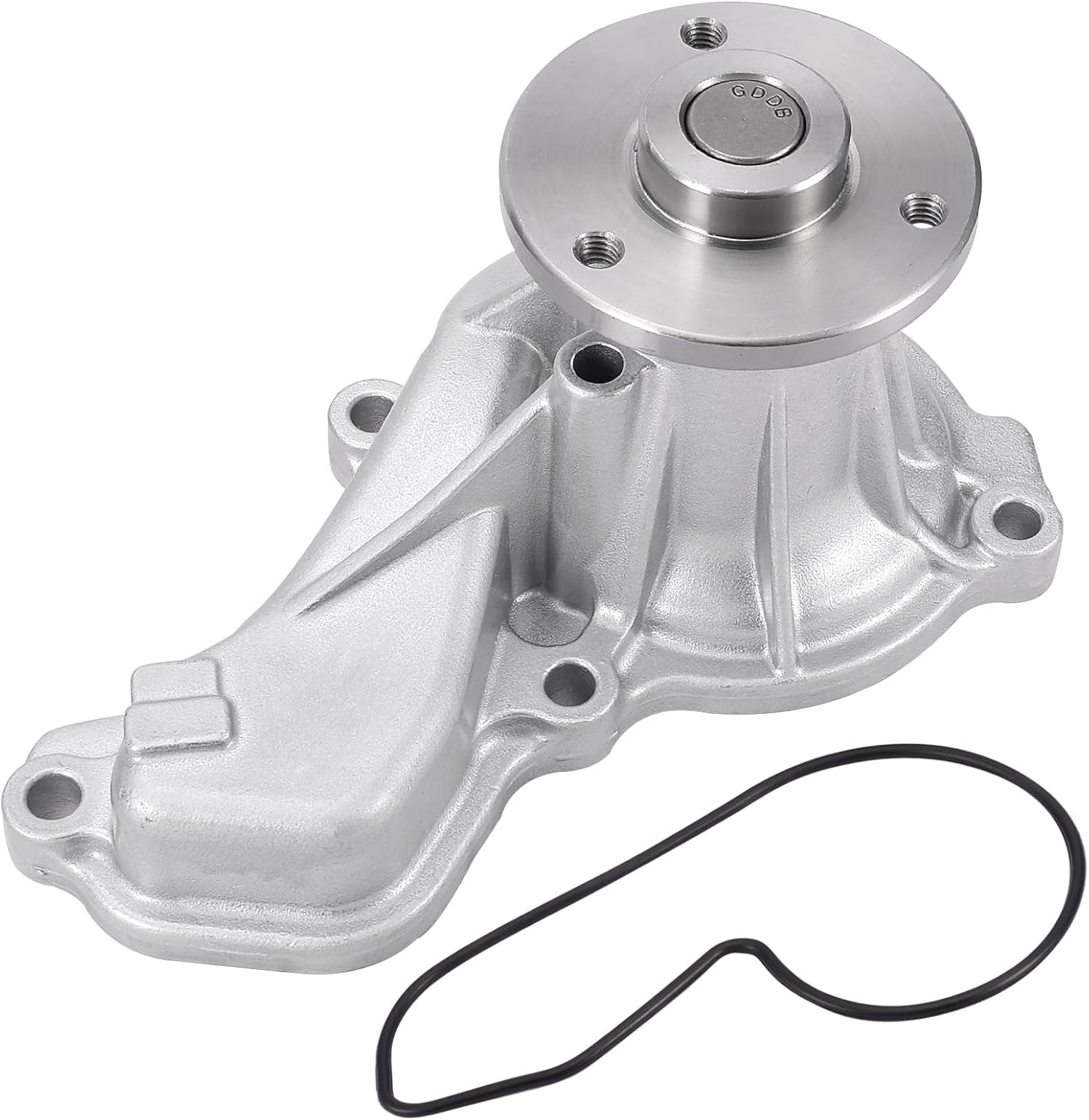
| Compatible vehicles | Honda Civic 1.8L 2006-2011 |
|---|---|
| Included components | With gasket |
| Material Type | Aluminum, Stainless Steel |
| Manufacturer Warranty Description | 1 Year or 50000 km. |
This AULINK AW6056 is a direct-replacement water pump intended for Honda Civic 1.8L engines from 2006 through 2011. It installs in place of the factory unit and circulates coolant through the engine using an aluminum housing and stainless steel internal components. The pump ships with a graphite-impregnated gasket to reduce the chance of leaks and the manufacturer says each unit is function and leakage tested. Case-hardened bearings are highlighted for durability and resistance to imbalance and vibration, which matters if you are replacing an old, noisy pump. Typical use is a routine replacement during a timing belt/service interval or when a pump shows leaks or wobble. The practical benefits are factory-style fitment, an included gasket to simplify installation, and a stated one-year/50,000 km warranty. Limitations include dependency on correct installation and that this is an aftermarket part rather than a direct factory unit, so buyers who need dealer-level proof of equivalence may prefer an OEM-sourced pump.
Best for: Buyers looking for an affordable, ready-to-install replacement water pump for a 2006–2011 Honda Civic 1.8L who prioritize fitment and a bundled gasket to simplify repair.
Less Ideal for: People who require dealership-sourced parts or certified OEM provenance for warranty or resale reasons should consider a factory-sourced alternative.
- Vehicle-specific fit for 2006–2011 Honda Civic 1.8L for straightforward replacement
- Includes graphite-impregnated gasket, reducing need to source a separate seal
- Case-hardened bearings for improved durability and resistance to vibration
- Manufactured in TS16949 certified facilities with function and leakage testing
- Aftermarket unit rather than factory-sourced part which may concern buyers seeking OEM provenance
Verdict: AULINK AW6056 is a budget-friendly, vehicle-specific replacement that makes a full water pump swap easier by including a gasket and using tested components.
5. UNITHUB Engine Water Pump with Gasket for 2006–2011 Honda Civic 1.8L

| Compatible vehicles | Honda Civic 2006–2011 1.8L (R18A1/R18A4) |
|---|---|
| Material Type | Aluminum |
| OEM Equivalent Part Number | AW6056 |
| Included components | Water pump and gasket/accessories |
This UNITHUB water pump is a direct replacement designed for 2006–2011 Honda Civic 1.8L R18A1/R18A4 engines and ships with the shown gasket and accessories for straightforward installation. The pump uses an aluminum die‑cast housing, heat‑treated shaft, precision bearings, and coated seals intended to resist higher temperatures and reduce the chance of leaks. In use it performs the same core job as a factory pump: circulating coolant to maintain stable engine temperature and restore normal heater/cooling performance. The listing highlights upgraded bearings and impeller design and claims a tested service life around 50,000 km, which should appeal to buyers who want longer wear between replacements. Practical benefits include vehicle‑specific fitment for easier installation and factory‑style materials for durability. Limitations are that lifespan will depend on installation quality and cooling system condition and that compatibility should be double‑checked against OEM part numbers before ordering to avoid fitment issues.
Best for: Drivers who prioritize a reliable, factory-style replacement to restore cooling performance on a 2006–2011 Civic 1.8L and want upgraded internal components for longer service between repairs.
Less Ideal for: Anyone seeking a high-performance or race-grade water pump or those who need a multi-vehicle universal part should look at other options.
- Vehicle-specific fit for 2006–2011 Honda Civic 1.8L simplifies installation
- Aluminum die-cast housing and heat-treated shaft aim to improve durability
- Precision bearings and coated seals reduce leak risk and improve temperature resistance
- Includes gasket and accessories for a more complete replacement
- Stated lifespan is a general figure and can vary widely with operating conditions
Verdict: A vehicle-specific, upgraded replacement water pump built to restore cooling reliability on 2006–2011 Civic 1.8L engines.
6. TUCAREST AW9495 Water Pump with Gasket (Vehicle-Specific Fit)

| Material Type | Aluminum |
|---|---|
| Compatible with Vehicle Type | Car, Truck |
| Automotive Fit Type | Vehicle Specific Fit |
| OEM Equivalent Part Number | 19200RBC013 and others listed |
This TUCAREST AW9495 water pump is a direct-fit replacement intended for the 2006–2011 Honda Civic Si with the 2.0L K20Z3 engine. It replaces the pump impeller and housing gasket, circulating coolant through the engine to prevent overheating. The pump is aluminum-bodied, comes with the gasket, and is manufactured in ISO/TS16949 facilities with factory pre-testing to reduce leak and performance issues. In practice it is used during routine cooling system repairs or when a failing pump shows leaks, noise, or overheating. The upgraded impeller and sealed, lubricated bearings are aimed at better flow and longer service life compared with worn stock units. Because it is a vehicle-specific fit, installation is straightforward for a competent DIYer or a shop using factory mounting points and hoses. Limitations include dependence on correct fitment for the specified engine code and that the listing is for the pump only without an external housing, so verify your application before ordering. The included gasket helps simplify installation and lowers the chance of leaks when fitted correctly.
Best for: Buyers who prioritize a reliable, factory-quality replacement for a Civic Si 2.0L and want a pre-tested pump with the gasket included to minimize installation risk.
Less Ideal for: Anyone who needs a complete housing assembly rather than the pump or who cannot confirm the engine design code should avoid this part until fitment is verified.
- Vehicle-specific fit for 2006–2011 Civic Si 2.0L K20Z3 reduces compatibility guesswork
- Includes gasket to simplify installation and help prevent leaks
- Manufactured in ISO/TS16949 facilities and pre-tested for leak-free performance
- Sealed, lubricated bearings and upgraded impeller for improved durability and coolant flow
- Listing is for pump only without external housing which may differ from some repair needs
Verdict: A pre-tested, vehicle-specific replacement pump with gasket that restores cooling reliability for 2006–2011 Honda Civic Si 2.0L owners seeking a factory-quality swap.
7. A-Premium Engine Water Pump with Seal for Honda Civic 1.8L SOHC (2006–2011)

| Vehicle fit | Honda Civic 2006–2011 1.8L SOHC 4-cylinder |
|---|---|
| Housing material | Aluminum |
| Impeller material | Steel |
| Impeller rotation | Reverse |
| Drive type | Serpentine belt |
This A-Premium water pump replaces the factory cooling pump on 2006–2011 Honda Civic models with the 1.8L SOHC engine. It is a bolt-on replacement that includes the seal and uses a reverse-rotation steel impeller driven by the serpentine belt, so installation follows the same routing as the factory unit. The housing is aluminum and the part is advertised as corrosion resistant with sealed bearings to reduce leakage risk. In use it restores coolant circulation and thermostat control to normal operating temperatures, which is the core need when an OEM pump fails. Customer reports are mixed but many users report correct fit and reliable operation for multiple years; a minority report fitment variance or rubbing on belt components, so careful comparison to the removed pump and belt clearance check at installation are wise. The pump comes with a one-year unlimited-mileage guarantee from the maker, which may reassure buyers who prefer lower risk from aftermarket parts. Expect a budget-friendly replacement that generally matches factory function but verify fitment before final installation.
Best for: Buyers seeking a lower-cost, factory-style replacement pump for routine repair who want a ready-to-install unit and a short manufacturer's guarantee for peace of mind.
Less Ideal for: Do not choose this if you require guaranteed perfect fitment for a modified engine bay or if you want OEM-authorized parts with dealer backing.
- Made for the 2006–2011 Civic 1.8L SOHC so it targets direct-fit replacement needs
- Aluminum housing and corrosion-resistant impeller materials intended for durability
- Includes seal and sealed bearings to help prevent leaks after installation
- Backed by a one-year unlimited-mileage guarantee from the manufacturer
- Some buyers reported fitment problems such as rubbing on belt tensioner or inconsistent sizing
Verdict: A practical, budget-focused direct-replacement water pump for 2006–2011 Civic 1.8L owners who want a factory-style fix with a one-year guarantee.
Choosing the Right 2006-2011 Honda Civic Water Pump: Key Factors to Consider
Fitment and Chassis Compatibility
Correct fitment is the most important factor for a 2006-2011 Honda Civic water pump. The pump housing must match the FA and FG chassis bolt pattern and mating surfaces so gaskets compress evenly and the pulley aligns with the accessory belt. An incorrectly sized flange or misaligned shaft can cause belt tracking problems, premature belt wear, or oil and coolant leaks.
Confirming bolt hole spacing, inlet/outlet orientations, and pulley offset prevents installation issues that add labor time and potential follow-up failures. For Civic owners, pay attention to any notes about specific engine subcodes or factory changes over the 2006-2011 range to ensure the pump is a direct replacement without adapter plates or machining.
Impeller Construction and Material
The impeller moves coolant through the engine and its design affects flow rate and cavitation resistance. Impellers made from reinforced plastic can offer weight and corrosion advantages, while metal impellers tend to be more resistant to damage from debris and long-term wear. The impeller profile and vane count influence flow at different engine speeds, which matters for maintaining adequate cooling under highway or high-load conditions.
Assess whether the impeller is press-fit or keyed to the shaft. A secure attachment minimizes the risk of slippage or catastrophic failure if bearings begin to degrade. For Civic engines, an impeller that resists corrosion from coolant additives and retains shape under thermal cycling improves long-term performance.
Bearing Type and Longevity
Bearings determine how smoothly the water pump shaft spins and how long the pump will last before noise or failure appears. Sealed ball bearings with appropriate internal lubrication provide consistent operation and resist contamination. Look for specifications on bearing grade, sealing design, and whether the pump uses a one-piece sealed cartridge or a pressed-in bearing assembly.
Bearing durability affects noise, wobble, and eventual seal stress. On a Civic used in stop-and-go urban driving or in areas with higher operating temperatures, stronger bearings with better seals will usually translate into longer service life and lower chance of premature replacement.
Seal and Gasket Quality
The mechanical seal prevents coolant from leaking along the shaft where it exits the housing. Seal failures are a common cause of coolant leaks, which can lead to overheating and contamination of accessory belts. Materials like fluoroelastomer or high-temperature nitrile and properly designed spring-loaded seals tend to resist swelling, hardening, and failure over repeated thermal cycles.
Gaskets and O-rings should match the mating surfaces and resist coolant chemistry. Proper compression, correct thickness, and corrosion-resistant mating surfaces reduce the likelihood of slow leaks that are hard to detect. For Civic owners, choosing a pump with proven seal materials lowers the chance of early coolant seepage and associated repair costs.
Cooling Performance and Flow Characteristics
While most replacement pumps aim to match OEM flow, small differences in flow rate at various RPM bands can affect engine temperature stability. Pumps that maintain steady flow at idle and under load help prevent hotspots and reduce thermostat cycling. Consider documented flow rates and impeller design features that promote consistent circulation without causing cavitation at high rpm.
If you drive in demanding conditions or tow occasionally, a pump with a slightly more robust flow profile can help keep temperatures in a safer range. However, overly aggressive aftermarket flow profiles can alter system dynamics, so matching the Civic's intended cooling balance is often the safest choice.
Ease of Installation and Serviceability
Water pump replacement on the 2006-2011 Civic can involve removing accessories or timing components depending on engine variant. Pumps designed as direct bolt-on replacements with complete gasket kits and pre-installed seals reduce complexity and installation time. Clear torque specifications, well-machined mating surfaces, and included fasteners or instructions all contribute to a smoother job.
For owners planning DIY replacement, pumps that require minimal ancillary work and include proper hardware and seals lower the risk of installation errors. Professional technicians also benefit from components that simplify reassembly and reduce the chance of follow-up leaks or misalignment.
Common Signs Your Civic Needs a New Water Pump
Early detection of a failing water pump avoids overheating and more costly engine damage. Typical symptoms include coolant leaks at the front of the engine, a high-pitched bearing whine, or inconsistent temperature gauge readings that fluctuate with engine speed.
Visible coolant pooling under the car or steam coming from the engine bay are clear indicators that immediate attention is required. Less obvious signs include unexplained coolant loss with no visible external leak, since internal seal failure can allow coolant to be drawn into the accessory belt area or combusted.
- Coolant puddles or wetness near the timing cover or lower front engine area
- Squealing or grinding noises that change with RPM, suggesting bearing wear
- Temperature gauge that spikes under load or idles hotter than normal
- Heater performance changes, such as reduced heat output from the cabin
Diagnosing a Leak or Bearing Noise
Start with a visual inspection: look for dried coolant residue, typically a chalky or crusted deposit, around the pump housing, weep hole, and gasket edges. An active leak often appears as fresh coolant or wetness that worsens after driving. Check the pulley for wobble by spinning it with the engine off and observing shaft play or rough rotation.
To isolate bearing noise, listen while the engine idles and then have an assistant change engine speed slightly. Bearing noise usually tracks engine rpm. Pressure testing the cooling system can help locate slow leaks that only appear under load, while dye tests can reveal internal seal breaches that leak when the system is pressurized.
- Inspect weep hole and surrounding areas for fresh coolant
- Check pulley for lateral play or rough rotation by hand
- Use a cooling system pressure test to reveal slow leaks
- Consider dye-based tests for internal seal failures
Timing Belt and Water Pump Service Intervals
On many Civic engines, the water pump is accessible during timing belt service, making coordinated replacement a cost-effective choice. If the engine in your 2006-2011 Civic uses a timing belt, replacing the water pump at the same interval reduces the risk of having to re-open the same assemblies later when the old pump fails.
Consulting the vehicle's maintenance history is useful; if the timing belt has been changed recently, the pump may still be original and due for replacement based on age or mileage. Replacing both components together is a common shop practice to avoid duplicated labor and to ensure the belt runs on a fresh, leak-free pump.
- Replace pump when servicing the timing belt when possible
- Factor labor savings into decision to replace pump proactively
- Verify service records to determine pump age and condition
Installation Tips to Prevent Future Leaks
Clean mating surfaces thoroughly before installing the new pump and use the correct gasket or sealant as specified for the component. Over-tightening fasteners can warp housings and compress gaskets unevenly, while under-tightening invites leaks, so follow specified torque values closely.
Bleed the cooling system per the vehicle procedure to remove trapped air pockets that can cause overheating or cavitation. After installation, monitor for leaks during a controlled warm-up and re-check torque after initial heat cycles to ensure gaskets settle properly.
- Use correct torque specs for all fasteners
- Ensure mating surfaces are clean and flat
- Bleed cooling system to remove air pockets
- Re-check for leaks after a few heat cycles
Maintenance Practices to Extend Pump Life
Regular coolant changes and using the correct coolant type for your Civic reduce corrosion and extend water pump life. Old or contaminated coolant accelerates seal deterioration and can lead to bearing contamination. Follow recommended coolant change intervals and top up with the specified coolant formulation.
Keep an eye on belt condition and tension. A loose or worn accessory belt increases shaft loads and can lead to premature bearing failure. Routine visual checks and scheduled maintenance will catch early signs of trouble before they become major repairs.
- Use manufacturer-recommended coolant and change at recommended intervals
- Inspect accessory belts for wear and correct tension
- Address small leaks promptly to avoid contaminating the pump internals
Still looking for the perfect fit?
Select your Honda Civic configuration to see the most relevant Water Pumps recommendations
How We Chose the Best 2006-2011 Honda Civic Water Pump
We focused on criteria that directly affect performance and long-term reliability for 2006-2011 Civic applications. Each candidate had to meet strict fitment and compatibility checks for the FA and FG chassis, including correct housing geometry, pulley alignment, and flange location. Material and manufacturing quality were weighed heavily: impeller construction, bearing type and lubrication method, and gasket/seal materials influence service life and leak resistance.Durability and failure modes were evaluated via available build specifications and documented owner reports, emphasizing resistance to seal failure and bearing wear. Ease of installation and parts availability mattered because some repairs require accessory removal; pumps that reduce labor complexity scored higher. Finally, we considered warranty coverage and documented quality control to gauge manufacturer confidence.We excluded units with ambiguous fitment data, non-replaceable internal components, or evidence of frequent early failures. The final list reflects pumps that balance correct FA and FG chassis fitment, robust internal components, and realistic service expectations for the Civic owner.
Our full evaluation process is outlined in our review methodology.
FAQ
How long does a typical water pump last on a 2006-2011 Civic?
It often depends on driving conditions and maintenance, but many water pumps last between 60,000 and 100,000 miles. Corroded coolant or worn belts can shorten life, so regular coolant changes and inspections influence longevity.
Can I drive with a small water pump leak?
Driving with an active coolant leak is risky because it can lead to overheating and engine damage. Small leaks may start slowly, but it is safer to inspect and address the leak promptly rather than continuing to drive for extended periods.
Is water pump bearing noise different from accessory belt noise?
They can sound similar, but bearing noise typically tracks engine speed even when the belt tension is correct and the belt is in good condition. A wobbling pulley or rough rotation when spun by hand points to a pump bearing issue.
Should I replace the water pump when changing the timing belt?
Yes, replacing the pump during timing belt service is common practice because the pump is accessible and this prevents duplicated labor. Coordinated replacement reduces the chance of having to redo the job if the pump fails later.
What causes a water pump seal failure?
Seal failures are often caused by bearing wear, contaminated coolant, or improper installation that stresses the seal. Heat cycles and chemical degradation over time also contribute, so using the right coolant and proper installation technique helps prevent premature failure.
Final Verdict
When selecting a replacement water pump for a 2006-2011 Honda Civic, prioritize correct FA and FG chassis fitment, robust bearing design, and durable seal materials. Those attributes reduce the risk of leaks, minimize downtime, and help the cooling system perform consistently under varied driving conditions.Balance ease of installation and warranty coverage against durability considerations. If you plan to keep the car long term or are doing timing belt service, opt for a pump that emphasizes internal component quality and proven sealing methods so you can avoid repeat repairs.
Explore More:
- Check out all Honda Civic parts & accessories
- Explore Water Pumps Maintenance & Repair Guides
- Explore Cooling System
- Browse all Auto Parts
