

Note: This article contains affiliate links. If you click on these links and make a purchase, I may earn a small commission at no extra cost to you. This helps support my research and content. Read my full affiliate disclosure here.
If your Subaru Legacy is showing slipping, harsh shifts, fluid leaks, or delayed engagement, a comprehensive transmission rebuild kit can bring the drivetrain back to reliable operation. Choosing the right Subaru Legacy transmission rebuild kit matters because kits vary in component coverage, fitment precision, and the technical skill required to install them. A properly matched kit reduces rework, limits downtime, and helps prevent repeat failures.This guide covers our seven shortlisted kits that offer the most useful combinations of gaskets, seals, friction components, and wear parts for Legacy transmissions. We explain the evaluation criteria and what to expect during installation so you can pick a kit that fits your mechanical comfort level and the specific symptoms your car is showing.
Looking for other parts? See all Subaru Legacy parts & accessories.
Top Picks at a Glance
| Best Overall The best all-around choice for most situations | HOMISIA 4EAT Transmission Rebuild Kit for Subaru 4EAT 1999–2004 |  |
| Best Quality Built to a higher standard if you want something more solid | HOMISIA 5EAT Transmission Rebuild Kit for Subaru Legacy & Outback 2005–2009 2.5L |  |
| Best Value The sweet spot between price and what you get | UOYETIB Transmission Master Rebuild Kit (4EAT D-AT-11584) |  |
| Best Budget The cheapest option that still gets the job done reliably | Bruce & Shark 4EAT/4AT Transmission Master Rebuild Kit |  |
| Highest Rated A top-rated pick with lots of positive feedback | INGKAN 4EAT Transmission Master Rebuild Kit (4-Speed) |  |
| Most Popular A crowd favorite that many people choose with confidence | cycwer 4EAT Transmission Master Rebuild Kit |  |
| Best Seller A high-volume bestseller chosen again and again | UOYETIB 4EAT Transmission Master Rebuild Kit for Subaru 4-Speed |  |
1. HOMISIA 4EAT Transmission Rebuild Kit for Subaru 4EAT 1999–2004

| Manufacturer | HOMISIA |
|---|---|
| Brand | HOMISIA |
| Manufacturer Part Number | 4EAT |
| Application | Subaru Forester, Impreza, Legacy 1999-2004 |
This HOMISIA 4EAT rebuild kit is offered as a parts set for the 4EAT automatic transmission used in Subaru Forester, Impreza, and Legacy model years 1999 through 2004. Installers will use it during a transmission overhaul to replace worn internal components and restore shifting consistency. The listing identifies the kit by part number and application fitment but does not list an itemized parts list on the product page, so expect a basic kit rather than an OEM-complete package. For a balanced buyer it can supply the common components needed to get a tired 4EAT back into service, reducing slipping or rough shifts when paired with correct installation and complementary items like seals and fluid. Practical benefits include targeted fitment for the 4EAT family and a straightforward replacement approach for a familiar Subaru transmission. Important limitations are the lack of detailed spec or contents disclosure on the page and the potential need to source additional seals or bearings separately to complete a full rebuild job.
Best for: Buyers who want a focused, vehicle-specific rebuild solution for a 1999–2004 Subaru 4EAT and are comfortable verifying or sourcing any missing ancillary parts before starting the job.
Less Ideal for: Those who expect a fully documented, factory-complete parts list in the box or buyers who prefer a professional shop to supply OEM-certified kits and all consumables without additional sourcing.
- Specifically labeled for Subaru 4EAT transmissions covering Forester, Impreza, and Legacy 1999–2004 fitment
- Provides core rebuild parts to address common automatic transmission wear and shifting issues
- Sold as a dedicated kit which can simplify parts sourcing for a rebuild project
- Product page does not list detailed contents or an itemized parts list
- May not include every seal, bearing, or specialty component required for a complete rebuild
Verdict: Choose this kit if you need a vehicle-specific 4EAT rebuild parts package to get a 1999–2004 Subaru transmission serviceable again while handling any missing consumables yourself.
2. HOMISIA 5EAT Transmission Rebuild Kit for Subaru Legacy & Outback 2005–2009 2.5L
| Manufacturer | HOMISIA |
|---|---|
| Manufacturer Part Number | 5EAT |
| Application | Subaru Legacy & Outback 05-09 2.5L |
| ASIN | B0CTK3XP65 |
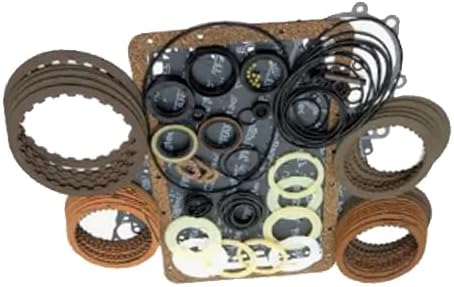
This HOMISIA 5EAT transmission rebuild kit is intended to restore internal components of the 5EAT automatic used in 2005–2009 Subaru Legacy and Outback 2.5L vehicles. Mechanics and experienced DIYers use a kit like this when a transmission shows slipping, rough shifts, delayed engagement, or when performing a comprehensive overhaul. The listing identifies direct fitment for the specified model years and engine, simplifying parts selection. For performance-focused drivers a proper rebuild can return crisp shift feel and reclaim lost drivability without replacing the entire transmission. The kit’s practical benefit is consolidating multiple replacement parts in one purchase so you can complete a teardown and reassembly in a single service. Limitations include the lack of detailed parts breakdown or explicit compatibility notes beyond the stated application, so confirm the 5EAT code and inspect your transmission before ordering. Installation requires transmission disassembly skills, specialty tools, and proper gaskets and fluids that may not be included.
Best for: Experienced home mechanics and professional technicians restoring or upgrading the 5EAT transmission in a 2005–2009 Subaru Legacy or Outback who prioritize restoring shift quality without replacing the entire unit.
Less Ideal for: Casual DIYers without transmission teardown experience or anyone who cannot confirm their unit is the 5EAT variant should consider a professional rebuild service or broader-scope kit with clearer contents.
- Specifically listed for Subaru Legacy and Outback 2005–2009 2.5L 5EAT transmissions, reducing fitment guesswork
- Bundles multiple internal components needed for a rebuild so you can complete the job in one service
- Targets common transmission symptoms like slipping and poor shift quality when used in a full overhaul
- Product page does not list a detailed parts list or confirm inclusion of gaskets, seals, or bearings
Verdict: Choose this kit if you need a model-specific parts bundle to rebuild a 5EAT transmission in a 2005–2009 Subaru Legacy or Outback and want to restore factory-quality shift performance.
3. UOYETIB Transmission Master Rebuild Kit (4EAT D-AT-11584)

| Manufacturer | UOYETIB |
|---|---|
| Item model number | 4EAT, D-AT-11584, K135900A |
| Part name | Transmission Master Rebuild Kit |
| Application note | Fitment listed for multiple Subaru models; VIN confirmation requested |
This master rebuild kit supplies the internal parts needed to overhaul select Subaru 4AT/4EAT transmissions used across many Legacy and other Subaru models. It is sold as a complete rebuild kit so a mechanic can replace seals, gaskets, clutches, and other internal wear items during a teardown and rebuild. The product description emphasizes broad model fitment for Legacy, Outback, Forester, Impreza and related vehicles from the 1990s through early 2010s and asks for your VIN to confirm fitment. For a vehicle with a failing or slipping automatic transmission, the kit saves time sourcing individual parts and supports a full rebuild rather than a partial fix. Important limitations are that fitment must be verified by part number or VIN and professional installation is required; the listing does not include installation instructions or specify every component, so expect your shop to confirm completeness before starting the job.
Best for: Buyers who want a practical, parts-complete option to restore a Subaru automatic transmission and prefer providing VIN details to ensure correct fitment before committing to a rebuild.
Less Ideal for: Do-it-yourselfers without transmission rebuild experience or buyers who need a guaranteed drop-in replacement without shop verification should consider alternatives.
- Includes a wide set of internal components for a full transmission rebuild to reduce repeat disassembly
- Covers many Subaru models and years commonly paired with 4EAT/4AT transmissions
- Saves time compared with sourcing individual seals and clutch packs separately
- Made from specified materials with manufacturer guidance to match exact part numbers
- Listing requires VIN or part-number confirmation so compatibility is not guaranteed without verification
- Does not list an itemized component breakdown or include installation guidance
Verdict: For a practical, time-saving rebuild of compatible Subaru automatic transmissions, this master kit provides the parts coverage a shop needs when VIN-confirmed fitment is available.
4. Bruce & Shark 4EAT/4AT Transmission Master Rebuild Kit

| Manufacturer | Bruce & Shark |
|---|---|
| Type | Transmission Master Rebuild Kit |
| Fitment Type | Direct Replacement |
| OEM Part Number | 4AT 4EAT |
This Bruce & Shark master rebuild kit supplies the common internal components needed to refresh a 4AT/4EAT automatic transmission in older Subaru models. Designed as a direct replacement, the kit ships as a single package and is intended for use during a full transmission overhaul by a mechanic. Its metal components and factory-replacement fitment approach make it suitable for restoring worn clutches, seals, and internal parts without sourcing multiple separate pieces. Practical benefits include consolidated parts packaging and broad compatibility across many Subaru AWD models from the 1990s through the 2010s, which can reduce parts-sourcing time for a budget rebuild. Important limitations are that the listing does not detail every included part or materials beyond "metal," so installers should confirm the exact contents against the vehicle repair manual, and professional installation is recommended since rebuilds require tooling and transmission-specific adjustments.
Best for: Buyers repairing an older Subaru transmission on a tight budget who prioritize getting a bundled replacement kit to avoid sourcing many separate parts.
Less Ideal for: People who expect factory-detailed parts documentation, or DIYers without transmission rebuild experience and specialty tools should look for pre-assembled remanufactured units or professional services instead.
- Marketed as a direct replacement kit for 4AT/4EAT Subaru transmissions, simplifying compatibility checks
- Consolidates multiple transmission components into one package to streamline a full rebuild
- Metal construction noted for core components which is appropriate for transmission internals
- Covers a wide range of Subaru AWD models and years, useful when servicing older vehicles
- Product listing lacks a detailed parts list and material specifications for each component
- Professional installation and specific transmission tooling are required to complete a rebuild
Verdict: A cost-focused, all-in-one rebuild kit that helps budget-minded Subaru owners consolidate parts for a 4AT/4EAT transmission overhaul.
5. INGKAN 4EAT Transmission Master Rebuild Kit (4-Speed)

| Fitment | Subaru 4EAT 4-speed (listed Forester, Impreza, Legacy, Outback, Tribeca years) |
|---|---|
| Condition | Brand New |
| Fitment Type | Direct Replacement |
| Manufacturer | INGKAN |
This INGKAN 4EAT Transmission Master Rebuild Kit supplies a full set of internal transmission components intended to restore shifting performance in compatible Subaru 4-speed automatic units. The kit is marketed as a direct replacement and includes clutch plates and related parts so you can overhaul the transmission without sourcing individual pieces. In practice this type of kit is used during a tear-down and rebuild to replace worn friction and steel plates and other internal wear items, which can return shifting firmness and reduce slipping or delayed engagement. The listing highlights high-temperature resistance and metal construction for durability, and the complete accessory set simplifies repair planning. Important limitations are that fitment is limited to specific Subaru model years and 4EAT transmissions, so correct vehicle verification is required, and a rebuild still demands mechanical skill, proper tooling, and inspection of machined surfaces and seals that are not addressed by friction parts alone.
Best for: Buyers seeking a reliability-first repair solution to restore shifting and stop slip in an affected Subaru 4EAT transmission who are prepared to have a professional or experienced DIY perform a full rebuild.
Less Ideal for: Do not choose this kit if you want a plug-and-play external repair or if you plan to avoid transmission disassembly; it is not a replacement for a remanufactured or new transmission.
- Complete coverage of common internal wear items so you avoid buying parts separately
- Designed as direct replacement to match factory specs for the 4EAT 4-speed transmission
- Materials and high-temperature resistant components aimed at long service life
- Includes steel and friction plates needed to restore clutch function
- Does not replace machined components like drums, shafts, or valve body that may also need attention
- Requires transmission disassembly, specialized tools, and mechanic experience to install correctly
Verdict: If you need a reliability-focused, complete parts set to rebuild a Subaru 4EAT 4-speed transmission and plan a proper mechanical overhaul, this kit gives the core components to restore factory-like shifting.
6. cycwer 4EAT Transmission Master Rebuild Kit

| Brand | cycwer |
|---|---|
| Model | 4EATTransmission Master Rebuild |
| Fitment Type | Direct Replacement |
This cycwer 4EAT Transmission Master Rebuild Kit supplies the internal clutches, seals, gaskets, and steel plates needed to overhaul a 4EAT transmission in covered Subaru models. It is intended as a direct replacement package for technicians or experienced DIYers rebuilding the unit: plates are made to nominal dimensions, clutch materials aim for smooth shifting and reduced wear, and the kit includes the common gaskets and O-rings required to reseal the case. In practice the kit speeds a rebuild by providing the wear items in one set and can reduce post-repair shudder when components match factory fitment. Expect to still need proper tools, cleaning, and measurement during installation because the kit does not include machining services or additional hard parts that may be worn on a heavily damaged transmission. Choose this kit when you need a ready set of internal components for a complete clutch-and-seal refresh in a compatible 4EAT transmission rebuild.
Best for: Buyers who prioritize replacing all internal wear items in one kit and want a supplier-backed rebuild option with supporting fitment for Subaru 4EAT transmissions.
Less Ideal for: People seeking a full rebuilt exchange unit or those without transmission rebuild experience and tools should consider a professional remanufactured unit or shop service instead.
- Complete set of clutch plates, gaskets, seals and O-rings to support a full internal refresh
- Clutch materials and steel plates designed for smooth shifting and high wear resistance
- Sold as a direct-replacement fitment for specified 4EAT Subaru transmissions to simplify sourcing
- Does not include machining, bearings, or other hard wear parts that may require replacement during a heavy rebuild
Verdict: If you need a one-package set of clutch plates and sealing components to rebuild a Subaru 4EAT transmission, this kit delivers the core internal parts to get the job done.
7. UOYETIB 4EAT Transmission Master Rebuild Kit for Subaru 4-Speed

| Part Number | 4EAT |
|---|---|
| Application | Compatible with select Forester, Impreza, Legacy, Outback, Tribeca models |
| Engine Coverage | 2.0/2.5/3.0/3.6L (model-dependent) |
| Transmission Type | 4-speed automatic (4EAT) |
This master rebuild kit supplies the internal components needed to refresh a 4EAT 4-speed automatic transmission on compatible Subaru models. It is intended for use during a transmission overhaul to replace worn clutches, seals, and related parts so the transmission can regain reliable shifting and leak-free operation. The listing highlights wide model coverage across multiple years and engine sizes, and the vendor states the kit is made from high-quality materials for stable performance and fast response. For a risk-averse buyer the practical benefit is avoiding a full replacement transmission by addressing wear items in one service package. Limitations include the need to confirm exact part numbers and vehicle fitment before purchase and the usual requirement that a knowledgeable mechanic performs the rebuild; the kit alone does not guarantee diagnostic, machining, or labor work required to resolve deeper transmission damage.
Best for: Buyers who want a factory-style rebuild pathway to restore a 4-speed Subaru transmission and who prefer replacing worn internal components rather than swapping the entire unit.
Less Ideal for: People without access to a skilled transmission technician or those who need a plug-and-play replacement transmission ready to install.
- Comprehensive master kit intended to replace major wear items during a rebuild
- Covers a broad range of Subaru models and engine sizes for the 4EAT 4-speed transmission
- Manufacturer states high-quality materials aimed at stable performance and responsiveness
- Helps avoid costlier swap of a complete transmission when wear is limited to internal components
- Compatibility is broad but must be verified against exact part numbers for safe fitment
- Does not include services such as diagnostics, machining, or professional installation
Verdict: A practical master rebuild kit for owners who want a conservative, component-level repair to restore a 4EAT 4-speed Subaru transmission rather than replace it.
Choosing the Right Subaru Legacy Transmission Rebuild Kit: Key Factors to Consider
Component Coverage
A full rebuild kit should include all seals, gaskets, O-rings, bearings, and any friction components necessary for a teardown and reassembly. Missing items force you to source additional parts mid-job, which adds time and increases the chance of mismatched materials.
For the Subaru Legacy, pay attention to items specific to its transmission design such as input and output shaft seals, differential seals where applicable, and the full set of internal gaskets. Comprehensive coverage reduces repeat disassembly and helps ensure you address both the cause and the symptoms of failure.
Fitment and Tolerances
Correct fitment means the parts match the Legacy's transmission dimensions and tolerances. Even small deviations in gasket thickness or seal lip geometry can lead to leaks or improper gear engagement. Kits that specify vehicle years, transmission type, and clear part numbers reduce guesswork and the risk of returns.
Look for kits that describe compatibility with either automatic or manual Legacy transmissions and note any sub-configurations. If a kit does not clearly state fitment for your Legacy model, plan on verifying dimensions against the old parts before assembly.
Material Quality and Durability
Seals, gaskets, and friction parts face heat, pressure, and fluid exposure. Higher-grade elastomers resist hardening and cracking, while properly formulated friction materials maintain consistent engagement characteristics. Low-quality materials may temporarily stop a leak but fail prematurely under real-world driving loads.
For rebuilds, prefer kits that use automotive-grade rubber compounds, coated gaskets where applicable, and bearings from established manufacturers. Durable materials reduce the chance of a secondary failure after a time-intensive rebuild.
Included Documentation and Parts Identification
Clear packing lists, labeled bags, and assembly diagrams save many hours during a rebuild. Kits that include a parts map or reference guide help you confirm everything is present before you begin and allow helpers to hand you the right piece on demand.
Documentation is especially helpful when a kit contains many small seals and O-rings that look similar. It also helps ensure you do not accidentally reuse a worn component that should be replaced during the rebuild process.
Compatibility With Transmission Type
Subaru Legacy models may come with manual or automatic transmissions that require different components and procedures. Automatic transmission rebuild kits should include valve body gaskets, piston seals, and relevant friction elements if applicable. Manual kits should focus on synchronizer-friendly parts, bearings, and shift-related seals.
Choosing a kit aligned with the specific transmission type streamlines the rebuild and avoids incompatible parts that could compromise shifting or durability.
Ease of Installation and Serviceability
Some kits include subassembly parts such as snap rings, bearings, or preassembled seals that reduce bench work. Others provide replacement hardware that makes reassembly faster. Consider whether you have access to the specialized tools a complete rebuild requires and whether the kit content reduces the need for press work or machining.
Kits that are organized and designed for straightforward installation lower labor time and the likelihood of errors, which matters when balancing do-it-yourself effort versus professional service.
Common Transmission Symptoms That Point to a Rebuild
Knowing the symptoms helps determine whether you need a full rebuild kit or a more limited repair. For the Subaru Legacy, typical signs include slipping between gears, delayed engagement when shifting from park or neutral, whining noises under load, and visible transmission fluid leaks beneath the car.
Intermittent harsh shifts or consistent shuddering under acceleration often indicate internal wear of friction components or degraded seals. Visible contamination or burnt-smelling fluid points to overheating and internal clutch degradation, which a rebuild kit that includes friction elements and full sealing components can address.
- Slipping or delayed engagement
- Harsh or erratic shifting
- Transmission fluid leaks
- Unusual whining or growling noises
- Burnt-smelling or heavily contaminated fluid
Manual Vs Automatic: What Changes in a Rebuild
The rebuild approach differs by transmission type. Manual gearbox rebuilds emphasize synchronizers, bearings, and shift fork wear. You will also inspect the clutch and related components even if those parts are not supplied in the kit because clutch condition directly affects gearbox performance.
Automatic transmission rebuilds focus more on valve body components, piston seals, band and clutch friction elements, and torque converter condition. Kits for automatics often include more intricate sealing components and sometimes friction packs designed to restore shift quality.
- Manual rebuilds target synchronizers and bearings
- Automatic rebuilds target seals, piston rings, and valve body gaskets
- Diagnose related systems such as clutch or torque converter when applicable
Preparing Your Workshop and Tools
A transmission rebuild is a medium- to high-complexity job. Prepare a clean, well-lit workspace with a sturdy engine hoist or transmission jack, an organized parts tray, and a torque wrench set. Specialty tools such as bearing drivers, snap-ring pliers, and seal installers can prevent damage to delicate components.
Plan for adequate time to clean all mating surfaces and to inspect housings for scoring or warping. Cleanliness prevents contamination of new seals and gaskets and greatly reduces the chance of leaks after reassembly.
- Essential tools: torque wrench, snap-ring pliers, bearing drivers
- Use a transmission jack or hoist for safe removal and installation
- Label parts and take photos for reassembly reference
Inspecting Related Systems Before Reassembly
Before committing to reassembly, inspect the clutch assembly, flywheel or flexplate, torque converter (for automatics), and driveline yokes. Problems in those areas can mimic transmission issues or compromise the longevity of a rebuild.
Also verify the condition of transmission mounts, linkage, and fluid cooling lines. Replacing worn mounts and corroded lines at the same time reduces vibration and the risk of external leaks that could undermine a fresh rebuild.
- Check clutch and flywheel condition on manual cars
- Inspect torque converter for autos
- Replace worn mounts and damaged fluid lines
Post-Rebuild Break-In and Fluid Selection
After reassembly, correct fluid selection and a controlled break-in procedure help seating of new seals and friction materials. Follow the vehicle specifications for transmission fluid type and capacity to ensure proper lubrication and hydraulic function.
Drive the Legacy gently during the initial break-in period to allow friction elements to bed in and to detect leaks or unusual noises early. Recheck fluid levels after the initial warm-up cycles and again after a few hundred miles to account for any fluid migration or settling.
- Use manufacturer-specified transmission fluid
- Perform gentle break-in driving and monitor for leaks
- Recheck fluid level after warm-up and after several hundred miles
How We Chose the Best Subaru Legacy Transmission Rebuild Kit
We focused on criteria that matter specifically for Subaru Legacy owners rebuilding a transmission rather than on brand reputation alone. First, component coverage was critical: we prioritized kits that include comprehensive sealing parts, gaskets, and wear components needed for a complete teardown and reassembly. Second, fitment precision and correct OEM-style dimensions were evaluated because tight tolerances are essential for shift quality and leak-free sealing in Subaru transmissions. Third, technical documentation and clarity of contents were considered so installers can verify parts and reduce guesswork during rebuilds. Fourth, material and manufacturing quality for friction materials, seals, and gaskets were weighed to favor durable replacements that tolerate Subaru transmission operating conditions. Fifth, compatibility with manual or automatic variants and inclusion of specific components for those systems influenced selection.We excluded partial kits that only address a single symptom, such as a single seal or filter, because they often lead to incomplete repairs. Also excluded were kits lacking clear part lists or fitment references. The result is a set of rebuild kits that balance completeness, fit accuracy, and serviceability for Subaru Legacy transmissions.
Our full evaluation process is outlined in our review methodology.
FAQ
How do I know if my Legacy needs a full transmission rebuild or just a seal replacement?
It often depends on symptoms. Isolated fluid leaks with otherwise normal shifting typically point to seal or gasket replacement. If you experience slipping, harsh shifts, or internal noises, those indicate internal wear and usually justify a full rebuild kit.
Can I use a rebuild kit if I plan to reuse my original torque converter or clutch?
You can, but it requires careful inspection. Reusing the torque converter or clutch is acceptable if they show minimal wear and no damage. If those components are worn, they will shorten the life of the rebuild and may necessitate further disassembly later.
How long does a transmission rebuild typically take for a DIYer working on a Legacy?
For an experienced DIYer with proper tools, a full rebuild can take several days to a week including disassembly, cleaning, inspection, reassembly, and break-in. If you are less experienced or lack specialized tools, plan for additional time.
Will a rebuild kit fix shift firmness and hesitation issues?
A comprehensive rebuild kit that includes friction components and correct valve body seals can address many firmness and hesitation problems. However, electronic controls, solenoids, or related driveline issues can also cause symptoms, so diagnose those systems if shifts do not improve.
Do I need to replace transmission mounts when rebuilding the gearbox?
Replacing worn mounts is recommended because mounts that allow excess movement can stress seals and cause misalignment. New mounts help maintain proper driveline geometry and reduce vibration that might otherwise affect the rebuild.
Is it necessary to machine or replace the transmission housing during a rebuild?
Most rebuilds do not require housing machining if the casing is not cracked or severely scored. You should inspect mating surfaces for flatness and damage; machining or replacement is only necessary when repairs are beyond acceptable tolerances.
Final Verdict
Prioritize kits that provide complete sealing and wear-component coverage, match the Legacy transmission type, and use durable materials. Balance the content and clarity of the kit against your mechanical ability and the tools you have available.A well-chosen rebuild kit reduces the chance of repeat disassembly and returns the Subaru Legacy to consistent shifting and leak-free operation. Focus on fitment, component quality, and documentation to make a confident selection that addresses the symptoms you documented earlier.
Explore More:
- Check out all Subaru Legacy parts & accessories
- Explore Transmission Rebuild Kits Maintenance & Repair Guides
- Explore Transmission & Drivetrain
- Browse all Auto Parts
