

Note: This article contains affiliate links. If you click on these links and make a purchase, I may earn a small commission at no extra cost to you. This helps support my research and content. Read my full affiliate disclosure here.
If you own a 1995-2001 Ford Explorer, choosing the right transmission fluid matters for shift quality, longevity, and reliability. Older Explorers often show age-related wear in the transmission and driveline, and the wrong fluid can aggravate issues like hard shifts, slipping, or noisy operation. This guide gathers the top fluids suited to the Explorer's factory specifications and common service needs.We shortlisted seven transmission fluids that meet the design and service demands for these model years and evaluated them on compatibility, friction characteristics, protection at operating temperatures, and service life. Use the guidance here to narrow options before you undertake a fluid change or consult a technician.
Looking for other parts? See all Ford Explorer parts & accessories.
Top Picks at a Glance
| Best Overall Transmission Fluid The best all-around fluid balancing performance and broad compatibility | Ford Motorcraft MERCON V Automatic Transmission Fluid, 5 Quart |  |
| Best Synthetic Transmission Fluid A full-synthetic formula for improved thermal stability and wear protection | Valvoline MaxLife Multi-Vehicle Full Synthetic ATF, 1 Gallon |  |
| Best High-Mileage Transmission Fluid Formulated to condition seals and reduce wear in older units | Castrol Transmax High Mileage Automatic Transmission Fluid, 1 Gallon |  |
| Best Multi-Vehicle Transmission Fluid A versatile formula compatible with many manufacturer specifications | Castrol Transmax ATF/CVT Universal Full Synthetic Transmission Fluid, 1 Gallon |  |
| Best ATF Transmission Fluid An automatic-transmission-specific fluid meeting common ATF specifications | MAG 1 Mercon V Automatic Transmission Fluid, 1 Quart |  |
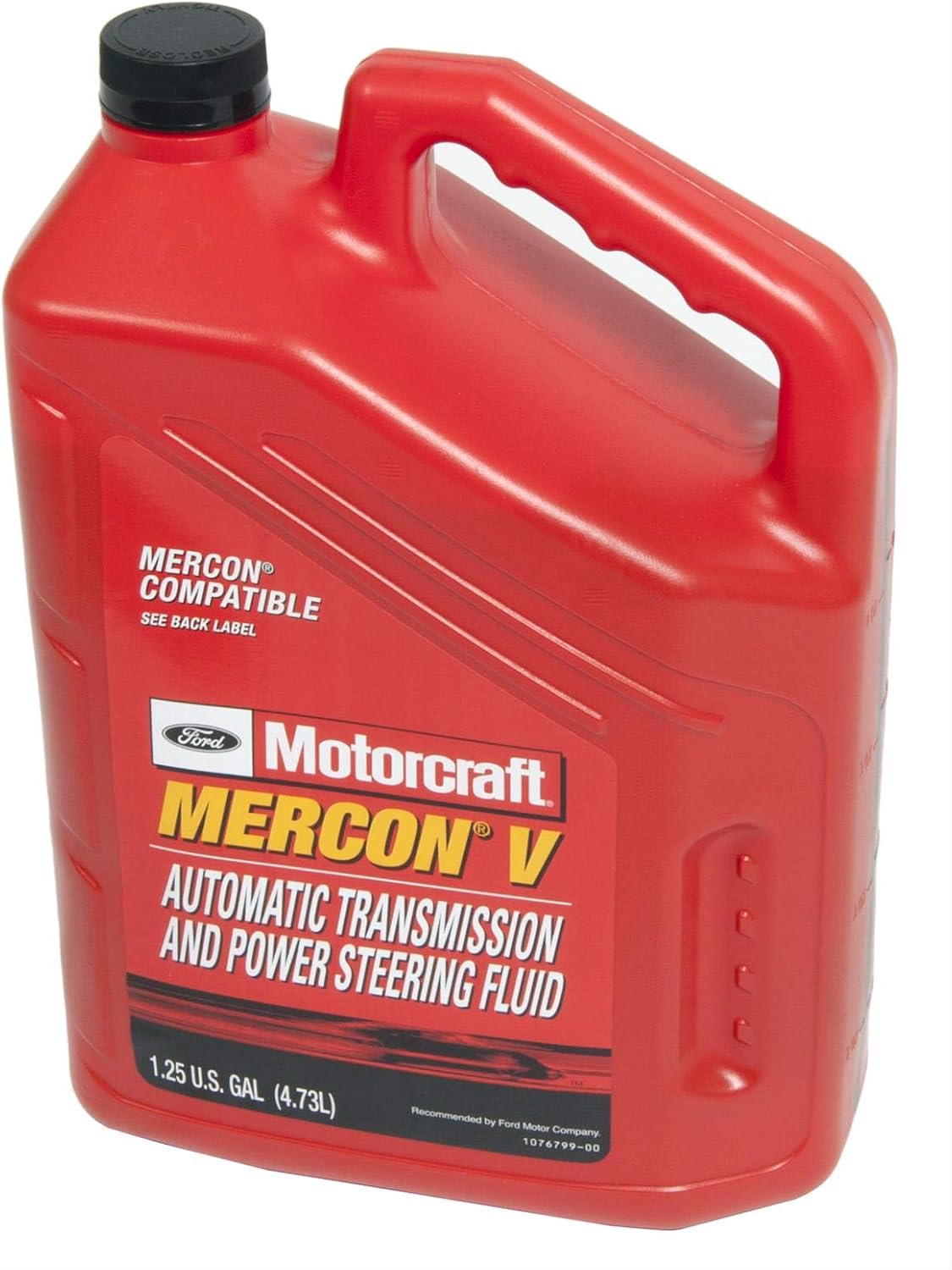
1. Ford Motorcraft MERCON V Automatic Transmission Fluid, 5 Quart
Best Overall Transmission Fluid
| Material | Synthetic |
|---|---|
| Liquid Volume | 5 Liters |
| Viscosity | 5w |
| Unit Count | 160.0 Fluid Ounces |
This 5-quart jug of Motorcraft MERCON V is designed to provide consistent shift feel and protection in transmissions that specify MERCON V or MERCON fluid. It is a hydroprocessed synthetic blend with additives that improve thermal and oxidation resistance, reduce foam, and inhibit gum, sludge, and corrosion. In practice that means smoother gear changes across a wide temperature range and longer fluid life compared with straight mineral oils. The product is dyed red to make leak detection easier and is also suitable for some hydraulic and industrial applications calling for an ISO 46 or SAE 20W grade. Important limits to note are compatibility: do not use it where MERCON SP, MERCON LV, Type-F, CVT chain-type, or certain specialty Ford fluids are required, and it is not intended for transfer cases that call for other ATF types. For DIY work on mid 1990s to early 2000s Ford vehicles specifying MERCON V, this is a straightforward factory-replacement fluid that balances protection and shift quality without special handling.
Best for: DIY mechanics seeking a reliable, factory-replacement transmission fluid that delivers consistent shifting and protection for Ford vehicles requiring MERCON V.
Less Ideal for: Drivers whose transmissions require MERCON SP, MERCON LV, CVT chain-type fluid, Type-F, or other specialized Ford fluids should choose the specific fluid recommended for their application.
- Factory-recommended formulation for vehicles specifying MERCON V or MERCON
- Synthetic hydroprocessed base oils for improved thermal and oxidation resistance
- Additive package that reduces foam and inhibits gum, sludge, lacquer and corrosion
- Dyed red for easier leak detection
- Not compatible with MERCON SP, MERCON LV, Type-F, CVT chain-type fluids or some other Ford-specific ATFs
Verdict: The best all-around transmission fluid for DIY mechanics who want reliable shifting, good protection, and wide compatibility without special-case tradeoffs.
2. Valvoline MaxLife Multi-Vehicle Full Synthetic ATF, 1 Gallon
Best Synthetic Transmission Fluid

| Material | Synthetic |
|---|---|
| Liquid Volume | 1 Gallons |
| Viscosity | 1 |
| Flash Point | 394 Degrees Fahrenheit |
Valvoline MaxLife Multi-Vehicle Full Synthetic ATF is a single‑gallon, factory‑quality transmission fluid aimed at prolonging transmission life and improving shift quality. It is formulated with advanced anti‑wear additives and seal conditioners that help prevent leaks and reduce internal wear, and it offers improved thermal and viscosity stability for consistent operation in a wide range of temperatures. Typical use is routine fluid replacement or top‑ups in light‑duty automatic transmissions; the formula lists compatibility with many manufacturer specifications and several CVT applications. For mechanics working on older or heavily used units, its conditioning agents can restore seal elasticity and help reduce slips caused by degraded fluid. Limitations include that it is a multi‑vehicle product rather than a vehicle‑specific fluid, so for Ford transmissions with rare factory specifications you should confirm manufacturer requirements before use. It is intended for light‑duty passenger vehicle applications and not formulated for specialized racing or heavy commercial transmissions.
Best for: A mechanic who prioritizes long‑term transmission protection and consistent high‑temperature performance when servicing light‑duty passenger vehicles, especially units showing wear or minor sealing issues.
Less Ideal for: Technicians working on specialist or heavy commercial transmissions that require manufacturer‑specific or commercial‑grade fluids should choose a purpose‑built product instead.
- Full synthetic formula for improved oxidation and thermal stability
- Seal conditioning agents designed to prevent leaks and extend seal life
- Wide manufacturer compatibility covering most light‑duty automatics and many CVTs
- Anti‑wear additives aimed at reducing internal wear and prolonging transmission life
- Not a dedicated Ford transmission fluid so verify compatibility with specific Ford model specs before use
Verdict: The best synthetic transmission fluid for mechanics seeking superior oxidation resistance, temperature control, and long-term protection under heavier loads or hotter operating conditions.
3. Castrol Transmax High Mileage Automatic Transmission Fluid, 1 Gallon
Best High-Mileage Transmission Fluid

| Liquid Volume | 128 Fluid Ounces |
|---|---|
| Viscosity | 7.5 to 8.0 cSt at 100°C |
| Upper Temperature Rating | 175 Degrees Celsius |
| SAE J300 Viscosity Grade | 10W-30 |
Castrol Transmax High Mileage ATF is designed for older, higher-mileage transmissions and is used as a service fill to help address common wear issues like slipping, rough shifts, and small seal leaks. It contains extra seal conditioners to help swell and condition aging seals plus detergents that clean varnish and sludge from clutch packs and valve bodies. The fluid meets a broad set of manufacturer specifications, so it can be used where a conventional Dexron/Mercon-type fluid or equivalent is called for. In practice this means you can expect improved shift quality after a drain and fill or fluid change in a high-mileage Explorer, along with reduced minor seepage from worn gaskets and seals. The formulation is not a transmission rebuild fix and will not correct mechanical damage, so persistent leaks or major shift problems still need mechanical diagnosis. Also, while broadly compatible with many specs, always confirm the Ford Explorer 1995–2001 required spec before adding any fluid.
Best for: Buyers maintaining a 1995–2001 Ford Explorer with high miles who want a fluid that soothes rough shifts and helps condition aging seals to reduce minor leaks during routine service.
Less Ideal for: Drivers with transmissions showing major mechanical failure, heavy metal contamination, or large external leaks that require repair or overhaul rather than a fluid change.
- Formulated with seal conditioners to help reduce or prevent small leaks in aging transmissions
- Extra cleaning agents help remove varnish and sludge from clutch packs and valve bodies
- Engineered to meet many common ATF specifications used by older import and domestic vehicles
- Available in a 1 gallon jug suitable for multi-quart service jobs
- Higher upper temperature rating supports stability under heat
- Not a cure for major mechanical wear or damaged internal components
Verdict: The best high-mileage transmission fluid for vehicles with significant miles that need seal-conditioning additives and extra protection to reduce leaks and prolong transmission life.
4. Castrol Transmax ATF/CVT Universal Full Synthetic Transmission Fluid, 1 Gallon
Best Multi-Vehicle Transmission Fluid

| Unit Count | 128.0 Fluid Ounces |
|---|---|
| Viscosity | 32 centistokes |
| Container Type | Bottle |
| Item Form | Liquid |
Castrol Transmax ATF/CVT Universal is a full-synthetic ATF designed to serve as a single fluid for a wide range of stepped automatic and CVT gearboxes. It is typically used for drain-and-fill service in transmissions where a universal synthetic ATF is acceptable, and it is blended with Castrol Smooth Drive Technology to help maintain consistent friction behavior under changing pressures and speeds. Practical benefits include enhanced friction durability for smoother shifts, strong high-temperature oxidation resistance to reduce fluid breakdown, and protection against copper corrosion that helps preserve clutch and valve body components. Because it is formulated as a multi-vehicle fluid, it can simplify maintenance for a household or shop by reducing the number of fluids needed. Limitations are that not every transmission specification is covered by a single universal fluid, and some older Ford transmission service requirements for 1995–2001 vehicles may call for a specific Ford-compatible ATF; always confirm the Explorer's transmission spec before substituting a universal product.
Best for: Buyers who want one reliable fluid to cover multiple vehicles in a household or a small shop and prioritize simplicity over keeping a different fluid for every make.
Less Ideal for: Owners who must meet a specific manufacturer specification that disallows universal ATFs or those restoring a vehicle to strict factory service requirements.
- Full-synthetic formulation improves high-temperature stability and longevity
- Castrol Smooth Drive Technology helps maintain consistent friction for smoother shifts
- Marketed as suitable for both stepped automatics and CVTs, reducing fluid variety needs
- Provides protection against copper corrosion to protect internal transmission parts
- May not meet every OEM specification so some transmissions will still require a vehicle-specific ATF
Verdict: The best multi-vehicle transmission fluid for buyers who need one reliable product that meets multiple OEM specs and can be used across different vehicles in a household or shop.
5. MAG 1 Mercon V Automatic Transmission Fluid, 1 Quart
Best ATF Transmission Fluid

| Unit Count | 32.0 Fluid Ounces |
|---|---|
| Material | Synthetic |
| Specific Uses For Product | Ford automatic transmissions |
| Item Form | Liquid |
MAG 1 Mercon V ATF is a synthetic-based transmission fluid blended to meet Ford transmissions that call for MERCON V service. It is used as a direct replacement when topping off or refilling the transmission in Ford vehicles specified for MERCON V, and is intended to preserve smooth shift feel and torque-converter performance. The formulation emphasizes friction stability to reduce transmission shudder and resists thickening at high operating temperatures, which helps maintain consistent shifts under towing or heavier load conditions. The product comes in a one-quart bottle for DIY pours and contains MAG 1 FMX friction-management chemistry aimed at long-term durability. Limitations include availability only in single-quart packaging here and a viscosity listing that mirrors engine oil grades rather than traditional ATF viscosity specs, so careful confirmation against the vehicle owner manual for 1995-2001 Ford Explorer applications is recommended. This is a practical choice for someone replacing or topping up MERCON V fluid who wants a factory-replacement spec alternative with synthetic additives.
Best for: DIY mechanics who need a MERCON V–specified ATF to restore factory shift feel and protect against shudder in Ford transmissions and prioritize a synthetic-enhanced formula.
Less Ideal for: Those planning a bulk fleet service or who prefer fluids specified for non-Ford transmissions or alternative Mercon formulations should consider other package sizes or fluid types.
- Formulated to meet MERCON V requirements for Ford automatic transmissions
- Synthetic-based blend with additives to resist high-temperature thickening
- Designed for friction stability to reduce transmission shudder and maintain smooth shifts
- One-quart bottle format is convenient for DIY topping off or fluid changes
- Sold as single quart units rather than multi-quart packs which may require buying multiple bottles for a full service
Verdict: The best ATF transmission fluid for DIYers who need a fluid specifically formulated to meet automatic transmission friction, shift quality, and torque-converter requirements.
Choosing the Right 1995-2001 Ford Explorer Transmission Fluid: Key Factors to Consider
Factory Specification and ATF Type
Matching the fluid to Ford's factory specification is the single most important decision factor. The 1995-2001 Explorer commonly uses specific automatic transmission fluids with defined frictional properties and viscosity. Using a fluid that does not meet the recommended spec can change shift timing, increase wear, or create harsh engagements.
Check the owner's manual or a reliable service manual for the exact spec needed for your model year and transmission type. When in doubt, confirm whether the transmission is a standard automatic, a manual, or an electronically controlled unit, and pick a fluid labeled as compatible with that specification.
Friction Modifier and Shift Quality
Friction modifiers determine how the transmission engages and releases clutches and bands. Fluids with different friction characteristics can alter shift firmness, timing, and the likelihood of shudder or chatter during low-speed engagements. For the Explorer, smooth, predictable shifts are a priority to preserve driveline components and driver comfort.
Consider fluids described as having stable frictional properties for older Ford transmissions. If your Explorer already exhibits harsh shifts, choose a fluid formulated to reduce chatter and smooth clutch engagement, but be aware that severe mechanical issues may not be resolved by fluid choice alone.
Viscosity and Temperature Performance
Viscosity affects hydraulic pressures inside the transmission and the speed of fluid circulation. A fluid that is too thin at operating temperature can cause slippage and poor pressure, while a fluid that is too thick at cold start can delay engagement and make shifts harsh. For the 1995-2001 Explorer, pick a fluid with a viscosity range suited to your local climate and the transmission's design.
Look for products with good thermal stability so they do not thin excessively at high temperatures, and that resist thickening or gelling in colder climates. Thermal breakdown leads to varnish and deposits that impair valve operation and accelerate wear.
Seal Compatibility and Leak Risk
Many older vehicles develop soft seals and gaskets that can react poorly to incompatible fluid chemistries. Some modern formulations contain additives that swell or shrink seals, increasing the chance of leaks. Given the age of a 1995-2001 Explorer, selecting a fluid known to be compatible with OEM seals reduces leak risk.
When replacing fluid, inspect pan gasket and cooler lines for age and wear. If seals are brittle, plan to replace them when you refresh the fluid to prevent seepage and preserve fluid level and pressure.
Additives for Wear Protection and Oxidation Resistance
Additive packages in transmission fluids protect clutch surfaces, bearings, and gears from wear, and include antioxidants to slow fluid degradation. For an older Explorer, robust anti-wear additives help mitigate existing wear and reduce the rate of further damage. Oxidation resistance extends fluid life under high-heat conditions and minimizes deposit formation that can foul the valve body.
Select fluids with proven anti-wear chemistry and oxidation inhibitors. These properties are especially important if you tow, carry heavy loads, or do frequent stop-and-go driving that elevates transmission temperature.
Service Interval and Maintenance Practicality
Different fluids have different recommended service intervals and drain recommendations. Some high-performance fluids offer extended life and shear stability, while others are intended for routine 30,000- to 60,000-mile service intervals. For a vehicle in the 1995-2001 range, consider how easy it is to perform a fluid change, whether a filter replacement is required, and whether a pan drop or flush is recommended.
Plan fluid selection around your maintenance habits and budget for service. If the transmission shows signs of contamination, a conservative approach with a full pan drop and filter change is often better than a simple top-up.
Understanding Your Explorer's Transmission Types
The 1995-2001 Ford Explorer was built with a range of transmission types across years and configurations. Owners should identify whether their vehicle has an automatic or manual transmission before selecting a fluid. Automatic transmissions rely on specific ATF chemistries that control hydraulic pressure and friction behavior, while manual gearboxes use different gear oils or manual transmission fluids.
Confirm the transmission identification from the vehicle's service documentation or door placard. Knowing the type and any factory-recommended spec narrows the fluid choices to products that will not harm shift feel or internal components.
- Automatic transmissions require ATF with defined friction characteristics
- Manual transmissions typically use gear oil or a specific manual fluid
- Electronic control and overdrive gears change fluid needs compared with simple hydramatic units
When to Change the Fluid: Symptoms and Intervals
Regular fluid changes prevent accelerated wear and maintain shift quality. For older Explorers, check fluid color and smell as a quick indicator: dark, burned-smelling fluid signals oxidation and the need for service. Service intervals vary by fluid type and driving conditions, but heavy towing or frequent city traffic calls for more frequent changes.
Watch for symptoms that indicate it is time to change the fluid: delayed engagement from park to drive, slipping under load, hard or erratic shifts, and unusual noises. If these symptoms appear, have the fluid level and quality inspected before attempting other repairs.
- Inspect fluid every 12 months or 12,000 miles as a baseline
- Change intervals shorten under heavy load or high heat
- Address symptoms early to limit internal wear
Fluid Change Procedures and Best Practices
A correct fluid change goes beyond topping up. For the Explorer, a pan drop with filter replacement is often recommended to remove particulate contaminants and replenish the filter media. Flushing can move trapped deposits through the valve body and is best used cautiously, especially on higher-mileage units where dislodged deposits could cause blockages.
Always warm the transmission to normal operating temperature before draining to help remove suspended particles. Use the specified fluid capacity and refill method described in the service manual, and verify the fluid level with the engine running at the recommended temperature range.
- Perform a pan drop and filter change for a thorough service
- Avoid aggressive flushes on high-mileage transmissions unless recommended by a technician
- Top up only when addressing low level between scheduled services
Addressing Common Age-Related Issues
Older Explorers commonly show leaks, soft or worn seals, and valve body deposits that affect shifting. Choosing a fluid with seal-friendly chemistry can reduce leak risk, but replacing brittle seals and gaskets is often necessary to achieve a reliable level and pressure. Similarly, if shudder or chatter occurs at low speed, fluid selection that improves friction stability can reduce symptoms.
If mechanical wear is advanced, fluids alone will not restore factory shift behavior. Use fluid selection to slow further wear and improve drivability, but plan for repairs if symptoms persist after a proper service.
- Inspect seals and cooler lines when changing fluid
- Consider a fluid that addresses shudder if low-speed chatter is present
- Plan mechanical diagnostics if symptoms continue after a fluid service
Choosing Fluids for Different Operating Conditions
Your typical use of the Explorer should guide the fluid you select. For towing or heavy loads, prioritize fluids with stronger anti-wear properties and higher thermal stability. For milder, everyday driving in temperate climates, a fluid that matches factory viscosity and friction characteristics is usually sufficient.
In cold climates, look for fluids with good low-temperature flow to avoid harsh cold shifts. In hot climates or for towing, prioritize oxidation resistance and shear stability to maintain hydraulic pressure and performance.
- Towing: choose oxidation-resistant, high anti-wear fluids
- Cold climates: prioritize low-temperature flow and quick engagement
- Mixed-use: pick a balanced fluid that matches factory spec
Still looking for the perfect fit?
Select your Ford Explorer configuration to see the most relevant Transmission Fluids recommendations
How We Chose the Best 1995-2001 Ford Explorer Transmission Fluid
We focused on fluids that meet the factory specifications and service requirements typical for 1995-2001 Ford Explorer transmissions. Evaluation prioritized viscosity grade and spec compliance, friction and shift quality (important for smooth engagement and preventing chatter), thermal stability and oxidation resistance (to limit breakdown in hot-service conditions), wear protection and anti-wear additives, and seal compatibility to avoid leaks or degraded gaskets. We also considered service life indicators such as shear stability and recommended drain intervals, plus documented suitability for automatic or manual transmissions where relevant.Excluded from consideration were fluids formulated exclusively for unrelated drivetrain types or modern transmission technologies not fitted to this Explorer generation. We filtered out products without clear spec sheets or those lacking compatibility data for the Ranger/Explorer-era Ford transmissions. The final list reflects fluids that meet the vehicle's factory requirements and practical owner concerns like shift feel, leak risk, and maintenance interval.
Our full evaluation process is outlined in our review methodology.
FAQ
How do I identify which transmission fluid my 1995-2001 Explorer needs?
Check the owner's manual or the transmission fill plug area for the factory specification. If documentation is missing, a service manual or the transmission code on the vehicle can confirm the required ATF type. When unsure, consult a trusted technician who can verify the correct spec.
Can I switch to a modern ATF in an older Explorer?
Switching to modern ATF formulations is possible but depends on compatibility with the factory specification and seal materials. Some modern fluids change friction characteristics and can affect shift feel. Verify compatibility with the Explorer's transmission spec before switching, and consider a test change rather than a complete immediate swap.
Is a flush better than a pan drop for older Explorers?
A pan drop with filter replacement is generally safer for older units because it removes debris without forcing deposits through the valve body. Flushes can dislodge deposits that then clog narrow passages. Use a flush only if a technician recommends it after inspection.
How often should I change the transmission fluid on these Explorers?
Recommended intervals vary by use and fluid type, but inspecting fluid annually and changing it every 30,000 to 60,000 miles under normal conditions is common. Heavy towing or frequent city driving reduces the interval. Base your schedule on fluid condition and service history.
Will new fluid fix slipping or hard shifts in an older transmission?
New fluid can improve symptoms caused by degraded fluid, such as fade or poor friction characteristics, and may restore smoother shifts. However, if slipping or harsh shifts stem from internal wear, clutch burn, or mechanical failure, fluid alone will not fully correct the problem.
Should I replace the transmission filter when changing fluid?
Yes. Replacing the filter during a pan drop is recommended because it removes trapped contaminants and ensures proper fluid circulation. Neglecting the filter leaves abrasive particles in the system that continue to accelerate wear.
Final Verdict
When selecting transmission fluid for a 1995-2001 Ford Explorer, prioritize matching the factory specification and choosing a fluid with stable friction properties, good thermal resistance, and seal compatibility. Factor in your driving conditions—towing and hot climates demand stronger anti-wear and oxidation-resistant chemistries, while cold climates need good low-temperature flow.A careful fluid choice combined with proper service procedures, including filter replacement and seal inspection, will preserve shift quality and slow further transmission wear. Use the decision criteria outlined here to pick the right fluid for your Explorer and consult a technician for persistent symptoms.
Explore More:
- Check out all Ford Explorer parts & accessories
- Explore Fluids & Chemicals
- Browse all Accessories
