

Note: This article contains affiliate links. If you click on these links and make a purchase, I may earn a small commission at no extra cost to you. This helps support my research and content. Read my full affiliate disclosure here.
If you own a 1996-2000 Honda Civic, keeping the engine timing system in good condition is essential to avoid catastrophic damage and maintain daily reliability. The right timing belt replaces worn rubber, restores correct valve timing, and reduces the risk of a sudden failure that can strand you or require expensive repairs.This guide presents the top shortlisted timing belts suited to the 1996-2000 Civic (EJ, EK, and EM chassis code era). Each pick meets practical criteria for durability, fitment, and serviceability. Below you will find the key factors we evaluated and guidance to help choose the best timing belt solution for your Civic's condition and driving needs.
Looking for other parts? See all Honda Civic parts & accessories.
Top Picks at a Glance
| Best Overall The best all-around choice for most situations | DNJ TBK297WP Timing Belt Kit with Water Pump for 1996–2000 Honda Civic 1.6L |  |
| Best Quality Built to a higher standard if you want something more solid | Gates PowerGrip Timing Belt Kit with Water Pump compatible with Honda Civic 1.6L (1996–2000) |  |
| Best Value The sweet spot between price and what you get | Torchbeam Timing Belt Kit with Water Pump for Honda Civic 1996–2000 |  |
| Best Budget The cheapest option that still gets the job done reliably | ECCPP Timing Belt Kit for 1996–2000 Honda Civic 1.6L (SOHC) |  |
| Highest Rated A top-rated pick with lots of positive feedback | AISIN TKH-005 Timing Belt Kit with Water Pump |  |
| Most Popular A crowd favorite that many people choose with confidence | Gates PowerGrip Premium Timing Belt Component Kit with Water Pump |  |
1. DNJ TBK297WP Timing Belt Kit with Water Pump for 1996–2000 Honda Civic 1.6L

| Included Components | Cam Seal, Timing Belt, Timing Belt Tensioner, Timing Cover Seal, Water Pump |
|---|---|
| Compatible Vehicles | 1996–2000 Honda Civic 1.6L SOHC |
| Material Type | Aluminum, Cast Iron |
| Automotive Fit Type | Vehicle Specific Fit |
| Part Interchange Info | TB224LK2, WP224K1B, TCKWP224 |
This DNJ kit supplies the major components needed when replacing the timing belt on 1996–2000 Honda Civic 1.6L SOHC engines. It includes the timing belt, hydraulic tensioner bearings, cam and timing cover seals, and a water pump, which lets you address the full front-end service in one job rather than sourcing parts separately. For routine maintenance the factory-style components simplify installation and help restore correct timing synchronization and coolant circulation. Buyers report generally good fitment on decade-era Civics and DNJ’s inclusion of a water pump is convenient for reducing repeat labor. However customer feedback shows mixed longevity for the belt on some vehicles, so careful pre-install inspection and correct tensioning are important. This kit is best used as a scheduled service kit for owners who want a complete, vehicle-specific replacement rather than piecemeal parts; professional installation or solid DIY experience is recommended because timing system mistakes on an interference engine can be costly.
Best for: Buyers who want a complete, vehicle-matched timing service kit to replace the belt and water pump in a 1996–2000 Civic in a single job and prioritize convenience and correct fitment.
Less Ideal for: Drivers looking for an extended-life or performance timing solution or those unwilling to accept some variability in aftermarket belt longevity should consider other branded long-life options or dealer parts.
- Complete kit includes timing belt, hydraulic tensioner bearings, cam/timing cover seals, and water pump for one-stop service
- Vehicle-specific fit for 1996–2000 Honda Civic 1.6L reduces fitment guesswork
- Covers both timing and cooling service by including the water pump to avoid repeating labor
- Components listed as aluminum and cast iron where applicable for durable metal parts
- Some buyers report premature belt failures on certain units, indicating inconsistent longevity
- Limited warranty duration referenced in reviews may not cover long-term failures
Verdict: Choose this DNJ kit if you want a single, vehicle-specific package to handle timing belt and water-pump service on a 1996–2000 Civic without sourcing parts separately.
2. Gates PowerGrip Timing Belt Kit with Water Pump compatible with Honda Civic 1.6L (1996–2000)

| Compatible vehicles | Honda Civic 1996–2000 1.6L L4 (interference engine) |
|---|---|
| Includes | Timing belt kit with water pump and hardware |
| Brand | Gates (packaged by Sixity Auto) |
This Gates PowerGrip timing belt kit replaces the timing belt, associated hardware, and water pump for 1.6L Honda Civic engines from 1996 to 2000, providing a single-package solution when you service a high-mileage or performance-tuned motor. Installation follows the factory layout so it fits like a factory-quality replacement and simplifies the job compared with sourcing individual parts. Including the water pump avoids reusing an old pump that could fail soon after belt service, and the Gates belt is built for consistent tooth engagement which helps maintain valve timing under spirited driving. For someone upgrading or maintaining a lightly modified Civic, the kit balances reliability and convenience. Limitations are that this is a vehicle-specific, direct-replacement kit intended for the listed 1.6L interference engines only and it does not include upgraded performance components like heavy-duty tensioners or aftermarket high-temp belts for extreme racing use.
Best for: Buyers who want a reliable, single-package timing service for a 1996–2000 1.6L Civic and prioritize restoring dependable timing and coolant circulation with minimal parts sourcing.
Less Ideal for: Owners pursuing track-focused builds or extreme high-output modifications who need upgraded, race-spec timing components should look at specialty performance kits instead.
- Complete kit includes timing belt, hardware, and water pump to simplify a full timing service
- Designed to match factory fitment for straightforward installation
- Gates PowerGrip belt provides consistent tooth engagement for stable valve timing under spirited driving
- Not a performance-upgraded kit; lacks heavy-duty tensioner or high-temp specialty belt options
Verdict: Choose this kit when you want a convenient, factory-style timing belt replacement that includes a new water pump for 1996–2000 1.6L Honda Civics.
3. Torchbeam Timing Belt Kit with Water Pump for Honda Civic 1996–2000

| Fitment | Honda Civic 1996-2000 1.6L; Civic del Sol 1996-1997 1.6L |
|---|---|
| Timing Belt Teeth | 104 round teeth |
| Included Water Pump | Yes, with gasket |
| Tensioner | GMB timing belt roller/tensioner bearing |
| Manufacturer | Torchbeam |
This Torchbeam kit is designed as a one-box replacement for the timing system on 1996–2000 Honda Civic 1.6L and Civic del Sol 1.6L engines. It supplies the major wear items you would replace during a timing service: a 104-tooth timing belt, a GMB-brand timing belt roller/tensioner bearing, camshaft and crankshaft front seals, water pump with gasket, valve cover gasket, spark plug tube seals, and several grommets. In practice the kit streamlines a DIY job or a quick shop install because it groups OEM-matched parts and the water pump needed for a thorough service. The listing emphasizes heat-resistant, high-strength materials and claims testing beyond 100,000 miles, which implies good durability and reduced stretch or noise. Expect standard factory-fit performance and straightforward installation using factory procedures, though the tensioner spring is noted as not included so you may need to reuse the original or source one separately. The included water pump is a useful convenience, but professional installation or careful following of timing marks is still required to avoid engine damage.
Best for: Buyers who prioritize a practical, cost-effective timing service package for a 1996–2000 Civic and want a ready-made set of factory-quality replacement parts to simplify a DIY job or shop install.
Less Ideal for: Owners seeking performance upgrades, modified engines, or an all-new aftermarket tensioner design should consider specialty performance kits instead.
- Complete kit includes timing belt, tensioner roller, water pump with gasket, seals, gaskets, and spark plug tube seals in one box
- Parts specified to match OEM part numbers for direct-fit replacement on listed Civic engines
- Timing belt with 104 teeth and heat-resistant construction aimed at minimizing stretch and noise
- Includes a GMB tensioner bearing and a ready-to-install water pump to reduce separate sourcing and downtime
- Tensioner spring is not included so you may need to reuse the old spring or buy that component separately
Verdict: A practical, factory-style all-in-one timing belt kit that bundles the belt, water pump, seals, and tensioner roller to simplify a reliable timing service on 1996–2000 Honda Civics.
4. ECCPP Timing Belt Kit for 1996–2000 Honda Civic 1.6L (SOHC)

| Fitment | 1996-2000 Honda Civic 1.6L SOHC |
|---|---|
| Package included | Timing belt, roller tensioner, camshaft seal, crankshaft seal, water pump with gasket |
| Belt teeth | 104 round teeth |
| Brand | ECCPP |
This ECCPP kit supplies the core components needed when replacing the timing belt on 1996–2000 Honda Civic 1.6L SOHC engines. The package includes a 104-tooth timing belt, roller tensioner, camshaft and crankshaft seals, plus a water pump with gasket, so you can do a full service in one go. Users report generally good fitment and quieter, smoother operation compared with a worn belt, and the included water pump removes the need to source that part separately. Because it is an aftermarket kit, material and fitment vary slightly from factory parts which means careful installation and timing checks are important. For a DIYer or independent shop replacing the belt and pump on a budget, the kit covers the typical wear items and reduces time spent ordering multiple parts. Expect a lower price than dealer kits but allow for possible extra tuning or gasket parts not included in the package.
Best for: Buyers looking to replace the timing belt and related wear items on a 1996–2000 Civic with a single, budget-friendly kit and who are comfortable verifying timing during installation.
Less Ideal for: Those seeking exact factory-spec parts or installers who want a kit guaranteed to match OEM materials and tolerances without any adjustment.
- Complete kit includes timing belt, tensioner, cam and crank seals, and water pump with gasket
- Specifically listed to fit 1996–2000 Honda Civic 1.6L SOHC engines for straightforward compatibility
- Customers report reliable fit and improved engine smoothness after installation
- Lower cost than many OEM or dealer timing belt kits, good value for budget repairs
- Aftermarket parts can show slight fitment or material differences versus factory components
Verdict: A budget-friendly, all-in-one timing belt and water pump kit that gets a 1996–2000 Honda Civic 1.6L back to service without sourcing multiple parts.
5. AISIN TKH-005 Timing Belt Kit with Water Pump
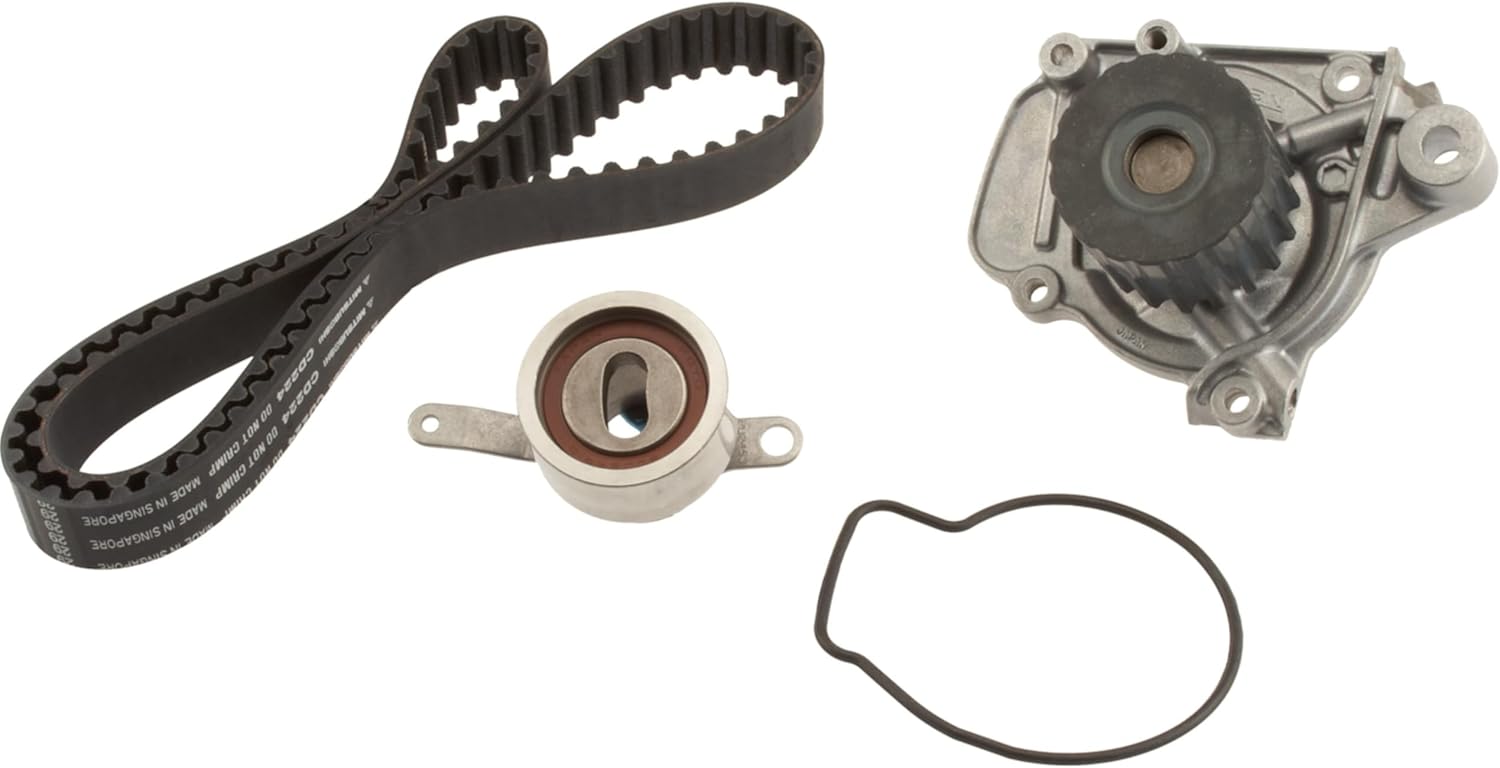
| Brand | AISIN |
|---|---|
| Model | TKH-005 |
| Includes | Water Pump, Timing Belt, Tensioner, Spring, Gasket |
| Compatible vehicles | Select 1996–2000 Honda Civic and 1997–2000 Acura EL (engine dependent) |
This AISIN TKH-005 kit bundles the parts you should replace together when doing a timing belt job: a timing belt, tensioner and spring, gasket, and an AISIN water pump. It is intended for the 1996–2000 Honda Civic and 1997–2000 Acura EL engine applications and is packaged to be a drop-in replacement for those fitments. The water pump uses a diecast aluminum housing and carbon ceramic-style seal components for longer life, while the belt and tensioner are supplied by reputable manufacturers commonly used by OEMs. For a reliability-minded owner this kit simplifies the job by matching factory-style parts and avoiding mismatched aftermarket components. Installation still requires the usual mechanical skills and tools such as a crank bolt tool to remove the harmonic balancer, and you should verify engine-specific fitment before ordering. The main limitation is that the kit is vehicle- and engine-specific so confirm compatibility with your exact Civic engine code before relying on it for a scheduled service.
Best for: Buyers who prioritize long-term reliability and want factory-quality replacement components for a timing belt service on late-1990s Civics, whether doing the job themselves or supplying parts to a trusted mechanic.
Less Ideal for: People who need a universal or multi-vehicle kit or who cannot verify their engine fitment should look for a different product or consult a parts specialist before purchasing.
- Complete service kit includes water pump, timing belt, tensioner, spring, and gasket so you replace all wear items at once
- Uses OE-matched components and branded parts known for quality rather than generic substitutes
- Water pump features diecast aluminum housing and premium seal design aimed at long service life
- Boxed kit and instructions make it convenient to supply parts for a DIY or shop install
- Fitment is specific to certain Civic/EL engines and must be verified for your engine code
- Does not include specialty tools required for crank bolt removal and some installations may need a shop for that step
Verdict: Pick this AISIN kit when you want a single, factory-matched timing belt and water pump package built for reliable, long-term service on late-1990s Civics.
6. Gates PowerGrip Premium Timing Belt Component Kit with Water Pump

| Brand | Gates |
|---|---|
| Automotive Fit Type | Vehicle Specific Fit |
| Manufacturer Part Number | TCKWP224 |
| Model | PowerGrip Premium Timing Belt Component Kit with Water Pump |
This Gates PowerGrip kit supplies everything needed when replacing a timing belt on compatible 1996–2000 Civic engines: the timing belt, idler(s), tensioner(s) and a timing‑belt driven water pump plus gaskets and hardware. It is designed as a one‑box repair to avoid repeating labor on the same system. In practice the kit simplifies the job for DIYers and shops by including hydraulic tensioners where required and a pump matched to timing‑belt removal, which reduces the risk of premature failure from leaving old components in service. Install instructions and troubleshooting notes are included to help set belt tension correctly. Most buyers report good fit and durable components, though a small number of shoppers have seen damage to the pump on arrival, so inspect parts before installation. If you want a single purchase that replaces all critical timing components and the pump at once, this kit covers the common maintenance items without hunting down separate parts.
Best for: Buyers who prioritize a thorough, low‑risk repair and value social proof from many verified installs; this is aimed at people who prefer replacing all critical timing components and the water pump in one service to avoid repeat labor.
Less Ideal for: People who only need a single replacement part or who want to source OEM branded pumps separately should look for individual components instead of a full kit.
- Complete kit includes belt, pulleys, tensioners, water pump, gasket and hardware so you can replace the whole timing drive at once.
- Includes hydraulic tensioners where applicable to simplify correct belt tensioning during install.
- Well regarded belt and pulley components with many users reporting reliable fit and operation.
- Detailed installation instructions and technical bulletins included to help avoid common installation mistakes.
- Occasional reports of damaged water pump on arrival, so parts should be inspected before installing.
Verdict: Choose this Gates kit to replace the timing belt and water pump together for a convenient, factory‑quality complete repair backed by broad user experience.
Choosing the Right 1996-2000 Honda Civic Timing Belt: Key Factors to Consider
Material Construction and Cord Type
The belt's base materials and internal cord determine how it resists stretching, heat, and contamination. A belt with a high-quality rubber compound and strong internal cords keeps valve timing stable over longer intervals, which matters for the 1996-2000 Civic engines that can be sensitive to slight timing changes.
Materials that resist oil absorption and heat degradation reduce premature cracking around the teeth and sidewalls. For buyers, this means fewer early replacements and more predictable maintenance intervals, especially if the car sees stop-and-go traffic or extended idling.
Fitment Accuracy and Tooth Profile
Exact fit to the Civic's pulley spacing, tooth pitch, and width is essential. A belt that is slightly off in tooth profile or thickness can cause improper engagement with the cam and crank sprockets, increasing wear or producing timing jumps.
Because the 1996-2000 Civic uses specific sprocket geometries, fitment accuracy affects both installation ease and long-term reliability. Confirming compatibility with the EJ, EK, and EM routing dimensions avoids surprises during service and reduces the chance of needing adjustments or rework.
Tensile Strength and Reinforcement
Tensile strength defines how well the belt resists the forces from the crank and camshafts, particularly under hard acceleration or higher RPM. Reinforcement design, such as fibrous cords or aramid fibers, helps prevent elongation that leads to timing offset.
For Civic owners, higher tensile strength translates to better retention of factory timing at extended intervals. It also provides a margin of safety if the engine is occasionally revved harder than normal or used with a mildly tuned setup.
Heat and Oil Resistance
The engine bay on a Civic can expose the timing belt to elevated temperatures and incidental oil or coolant contact during service. Belts designed with compounds that resist heat aging and oil contamination maintain flexibility and tooth integrity longer.
This matters when the car sees hotter climates, longer highway runs, or when seals and gaskets allow light contamination. A belt with better resistance reduces the chance of cracking or swollen teeth that could lead to premature failure.
Compatibility with Tensioners and Idlers
Timing belts should be evaluated as part of the whole drive system. Correct interaction with the Civic's tensioner and idler pulleys ensures consistent belt tension and alignment.
Choosing a belt that is known to work with factory or OEM-equivalent tensioners reduces installation time and the chance of re-tensioning after service. It also makes it easier to follow the manufacturer's recommended tensioning procedure during a timing belt replacement.
Availability and Service Support
Parts availability affects how quickly you can complete a belt job and whether you can source a matching kit that includes seals, tensioner, and idler components. Readily available belts with clear part numbers and support documentation simplify planning maintenance work.
For owners of 1996-2000 Civics, easy access to replacement belts and compatible kits helps maintain proper maintenance intervals without long delays, and it lowers the risk of using substandard or incorrectly sized parts in a pinch.
How to Diagnose Timing Belt Issues on a 1996-2000 Civic
Early diagnosis saves the engine from severe damage. Listen for high-pitched squeal or slapping noises from the timing cover area, vibration at idle, or rough running that appears suddenly. While some noises can come from accessory belts, persistent irregularities around the front of the engine often indicate timing system wear or tensioner problems.
If the engine exhibits intermittent misfires, loss of power, or a hesitant throttle response that is not fixed by ignition checks, consider inspecting the belt and tensioner. Visual inspection through the timing cover opening or during scheduled service can reveal cracking, missing teeth, or glazing that merit replacement.
- Listen for unusual noises near the timing cover.
- Check for oil contamination around the belt area during valve cover or seal service.
- Pay attention to sudden rough running or loss of power that does not match ignition or fuel issues.
Service Interval Guidance Specific to EJ, EK, and EM Civics
Honda published intervals for the 1996-2000 Civic era vary by engine and driving conditions, but most owners follow a conservative replacement window to avoid failure. Consider replacing the timing belt based on age as well as mileage, since belts degrade over time even with low usage.
If you cannot verify previous service, treat the belt as due if it is over the conservative interval or shows signs of wear. When performing a replacement, also inspect and consider replacing related components such as the tensioner, idler, and water pump, as their failure can compromise a new belt.
- Replace based on age as well as mileage if service history is unknown.
- Inspect and consider replacing tensioner, idler, and water pump during belt service.
What to Include in a Timing Belt Kit for a Complete Job
A complete kit reduces the need for multiple visits and ensures component compatibility. At a minimum, look to include the timing belt, a new tensioner, idler pulleys, and an oil seal where accessible. Replacing the water pump at the same time is often recommended since it shares labor access and its failure can damage the belt.
Including matching fasteners and seals prevents reuse of old hardware that may be corroded or stretched. Ensuring the kit covers the exact routing and hardware for the 1996-2000 Civic prevents improper installs and saves time during the service.
- Timing belt, tensioner, idlers, and seals.
- Water pump replacement considered during the same service.
- Matching fasteners and installation hardware included in the kit.
Expected Install Time and Shop Considerations
A timing belt job on a 1996-2000 Civic typically takes a few hours when performed by an experienced technician. Time varies with engine code, accessory removal, and whether the water pump and other ancillaries are also replaced. Plan for a longer window if the vehicle has rusted or seized fasteners.
When scheduling service, confirm the shop follows the correct tensioning procedure and verifies timing marks after installation. Ask whether they pre-check related components such as cam seals and the crank pulley condition to avoid rework.
- Allow additional time for simultaneous water pump replacement.
- Confirm shop uses factory tensioning procedures and verifies timing marks.
- Expect more labor if corrosion or seized hardware is present.
Signs of Imminent Timing Belt Failure to Watch For
Some symptoms appear suddenly, while others develop gradually. Watch for deep cracks in the belt sidewalls, missing or damaged teeth, glazing on the tooth faces, or slack in the belt path. Any of these signs indicate replacement is necessary to avoid a catastrophic break.
Operational signs include engine misfires that start abruptly, a sudden drop in driveability, or a loud snapping noise from the engine bay. If you notice any of these symptoms, stop driving the car and arrange inspection because a broken belt can cause severe engine damage.
- Deep sidewall cracks or missing teeth on visual inspection.
- Sudden misfires, loss of power, or loud snapping noises from the engine bay.
- Noticeable belt slack or oil-soaked belt surfaces.
Still looking for the perfect fit?
Select your Honda Civic configuration to see the most relevant Timing Belts recommendations
How We Chose the Best 1996-2000 Honda Civic Timing Belt
Our selection focused on timing belts that meet the specific demands of the 1996-2000 Honda Civic engine layout and service patterns. We evaluated candidate belts against measurable, vehicle-relevant criteria to identify options that balance longevity, fit, and ease of installation.Evaluation criteria included material durability and resistance to heat and oil, ensuring belts tolerate the Civic engine bay environment; exact fitment to factory pulleys and tensioner geometries to avoid timing drift; tensile strength and cord design for longer life under load; compatibility with common timing belt kits and replacement parts; availability of manufacturing quality documentation or OEM-equivalent specifications; and user feedback on real-world longevity in similar-year Civics.We excluded belts lacking clear part reference information, those without documented heat or wear testing, and options that required nonstandard modifications. The final list prioritizes belts that match factory routing and tensioning requirements, perform reliably across typical driving patterns, and integrate cleanly with standard replacement procedures for this Civic generation.
Our full evaluation process is outlined in our review methodology.
FAQ
How often should I replace the timing belt on a 1996-2000 Civic?
It often depends on mileage and the belt's age. If service history is unknown or the belt is over the conservative interval, replace it. Also inspect for visible wear, cracking, or contamination before deciding.
Can I drive my Civic if the timing belt shows minor cracks?
Minor surface cracking suggests the belt is aging and should be replaced soon. Driving with noticeable cracks increases the risk of sudden failure, so plan replacement rather than extending use.
Should I replace the water pump when changing the timing belt?
Usually yes. The water pump shares access with the belt and can be a point of failure that damages a new belt. Replacing it during the same service is a practical way to avoid additional labor later.
What are common timing belt symptoms on these Civics?
Common symptoms include unusual noises from the front of the engine, rough idling, intermittent misfires, and visible belt wear such as cracking, glazing, or missing teeth. These signs warrant immediate inspection.
How long does a timing belt install typically take?
A qualified technician usually completes the job within a few hours, though time increases if the water pump and other ancillaries are replaced or if there are corroded fasteners that require extra work.
Is an OEM timing belt necessary for reliable operation?
OEM-spec belts match the original fit and material specifications, which many owners prefer for peace of mind. Equivalent-quality aftermarket belts can also be suitable if they provide documented compatibility and meet material and strength criteria.
Final Verdict
For the 1996-2000 Honda Civic, prioritize a timing belt that delivers correct fitment, robust tensile strength, and resistance to heat and oil. These attributes reduce the risk of timing drift and help ensure predictable service intervals. When in doubt, replace the belt along with tensioners, idlers, and the water pump to minimize future labor and failure risk.Balance longevity against installation practicality: choose a belt and kit that fit the EJ, EK, and EM routing precisely and come with clear specification data. That approach gives the most reliable protection for your Civic's engine and the clearest long-term maintenance plan.
Explore More:
- Check out all Honda Civic parts & accessories
- Explore Timing Belts Maintenance & Repair Guides
- Explore Engine
- Browse all Auto Parts
