

Note: This article contains affiliate links. If you click on these links and make a purchase, I may earn a small commission at no extra cost to you. This helps support my research and content. Read my full affiliate disclosure here.
If your Honda Pilot shows loose steering or uneven tire wear, selecting the right tie rod end can restore stability and control. You want components that fit precisely, resist wear, and return predictable steering feedback over time. This guide highlights a shortlist of the top tie rod ends for the Honda Pilot, chosen for fitment accuracy and material durability. It also explains the key criteria we used, common symptoms to watch for, and what to expect during installation and alignment. Read on to see the top picks and practical buying considerations.
Looking for other parts? See all Honda Pilot parts & accessories.
Top Picks at a Glance
| Best overall The best all-around choice for most situations | Detroit Axle Front Inner and Outer Tie Rod Kit for 2009–2015 Honda Pilot |  |
| Best quality Built to a higher standard if you want something more solid | A-Premium Front Inner & Outer Tie Rod End Kit (Set of 4) |  |
| Best Value The sweet spot between price and what you get | Metrix Premium Chassis Parts Front Left Outer Tie Rod End (fits 2003–2008 Honda Pilot) |  |
| Best budget The cheapest option that still gets the job done reliably | MOOG EV800712 Inner Tie Rod End for Honda Pilot |  |
| Highest Rated A top-rated pick with lots of positive feedback | SCITOO Front Suspension Kit — Inner and Outer Tie Rod Ends (4pcs) |  |
| Most popular A crowd favorite that many people choose with confidence | Detroit Axle Front Inner Tie Rods Assembly for 2009–2015 Honda Pilot |  |
| Best Seller A high-volume bestseller chosen again and again | Detroit Axle Front Outer Tie Rod Ends Kit for Honda Pilot / Acura MDX (2-piece) |  |
1. Detroit Axle Front Inner and Outer Tie Rod Kit for 2009–2015 Honda Pilot

| Vehicle fit | 2009–2015 Honda Pilot |
|---|---|
| Kit contents | 2 inner and 2 outer front tie rod ends |
| Manufacturer | Detroit Axle |
| Manufacturer Part Number | 4S50359 |
This Detroit Axle kit supplies two inner and two outer front tie rod ends engineered as direct replacement steering components for 2009–2015 Honda Pilot vehicles. It is intended for a full front-end tie rod refresh during DIY repairs or professional steering work. The parts are manufactured and tested with fatigue and wear procedures that aim to match factory-quality performance, and several reviews report straightforward fitment and easy installation when rusted fasteners are addressed. Practical benefits include restoring steering precision and eliminating play that causes wandering or uneven tire wear. The kit includes grease fittings for serviceability, though one user reported a mismatched pre-tapped hole that required minor thread repair. Expect to need common steering tools and a post-install alignment. This is a sensible, value-oriented replacement for owners who want factory-like steering feel without an OEM price, but plan for basic mechanical work to remove old, corroded components during replacement.
Best for: A balanced buyer who wants a reliable, cost-effective factory-quality steering replacement for a Honda Pilot and values ease of installation and serviceability for routine repairs.
Less Ideal for: Not a good choice for owners wanting a performance upgrade or aftermarket steering with different geometry; also avoid if you need a plug-and-play solution that skips alignment or additional steering work.
- Complete front kit includes both inner and outer tie rod ends for a single-vehicle repair
- Designed and tested to meet factory-quality fit and durability expectations
- Grease fittings provided for future service and lubrication
- Multiple user reports of good fitment and straightforward installation
- One reported quality-control issue with a pre-tapped grease hole requiring thread repair
- Installation can be more difficult on vehicles with heavily rusted or seized steering components
Verdict: A practical, factory-quality front tie rod kit for 2009–2015 Honda Pilot owners who want reliable steering replacement at good value.
2. A-Premium Front Inner & Outer Tie Rod End Kit (Set of 4)

| Position | Front Inner, Front Outer |
|---|---|
| Exterior | Corrosion-Resistant Coating |
| Pre-Greased | Yes |
This A-Premium kit provides four front tie rod ends (inner and outer) intended as direct replacements for compatible Honda Pilot and related models. It is used to restore firm, accurate steering by replacing worn ball joints and tie rod connections that cause play, wandering, or uneven tire wear. Notable features include pre-greased ball studs and a corrosion-resistant exterior coating, which simplify installation and help resist rust in road-exposed conditions. The kit arrives with the four required pieces so you can service both sides at once, which is convenient for performance-oriented drivers who want consistent steering response. Limitations: grease fittings are not included so re-greasing during installation may require separate tools or grease packs, and fitment is specific to listed model years so confirmation against vehicle part numbers is necessary. For someone focused on steering precision, this kit offers a practical factory-quality replacement at a level suitable for spirited daily driving and routine road use.
Best for: Performance-oriented owners seeking firmer, more responsive steering and who prioritize direct-fit, factory-style replacements to restore handling precision.
Less Ideal for: Drivers wanting a maintenance-free or lifetime-greased aftermarket upgrade should consider alternatives with sealed or serviceable greasing systems.
- Complete four-piece kit covers front inner and outer tie rod ends for both sides
- Pre-greased ball studs reduce initial prep and ease installation
- Corrosion-resistant coating helps prolong service life in wet or salted conditions
- Matches factory replacement part numbers for direct-fit installation
- Grease fittings are not included which can complicate long-term maintenance
- Compatibility limited to specified model years so cross-checking part numbers is required
Verdict: A practical, factory-style four-piece tie rod end kit that restores steering precision for performance-minded Honda Pilot owners but requires separate greasing provisions for long-term service.
3. Metrix Premium Chassis Parts Front Left Outer Tie Rod End (fits 2003–2008 Honda Pilot)

| Position | Front Left Outer |
|---|---|
| Material | Steel |
| Compatible vehicles | 2003–2008 Honda Pilot |
| Interchange numbers | ES3717, 53560S3VA02, 534-726 |
This Metrix front left outer tie rod end is a direct replacement designed for the 2003–2008 Honda Pilot. It screws onto the inner tie rod and secures to the steering knuckle to restore correct steering linkage and reduce play. The unit is machined steel and ships with a cotter pin, so installation follows standard tie rod end replacement steps and is straightforward for a DIYer with basic tools. Metrix positions this part as factory-quality with IATF 16949 and ISO 9001 credentials, which translates to consistent thread fit and a durable ball joint for everyday driving. Buyers will appreciate the part matching OEM interchange numbers for correct fit and the included limited warranty that covers common early failures. Limitations are that this is a single-side replacement so you may need the other side or inner components if the front end has broader wear, and like any steering repair you should get a professional alignment after installation to prevent uneven tire wear and handling issues.
Best for: Practical optimizers looking for a reliable, budget-conscious factory-quality replacement for the left outer tie rod on a 2003–2008 Honda Pilot who want predictable fit and straightforward DIY installation.
Less Ideal for: Anyone seeking a full steering overhaul kit or immediate performance upgrades should consider a multi-piece suspension kit or upgraded performance parts instead of this single replacement tie rod end.
- Made to match factory fitment for 2003–2008 Honda Pilot, reducing fitment surprises
- Machined steel construction for durable threads and ball joint interface
- Includes cotter pin for correct safety installation practice
- Manufacturing certifications (IATF 16949, ISO 9001) signaling consistent quality control
- Sold as a single left outer unit so both sides or related steering parts may need separate purchase
- Does not eliminate the need for a professional wheel alignment after replacement
Verdict: A factory-quality, budget-friendly left outer tie rod end that delivers predictable fit and durable construction for 2003–2008 Honda Pilot owners looking to repair steering play.
4. MOOG EV800712 Inner Tie Rod End for Honda Pilot

| Compatible vehicles | 2009–2015 Honda Pilot |
|---|---|
| Position | Center |
| Exterior | Machined |
The MOOG EV800712 is an inner tie rod end made to replace the factory unit on 2009–2015 Honda Pilot vehicles. It connects the steering rack to the wheel assembly and is used when worn tie rods cause loose steering, uneven tire wear, or front-end alignment issues. MOOG builds in practical features like preloaded socket washers to reduce looseness, gusher-type bearings for improved grease flow, wrench flats for easier installation and alignment, and heat-treated ball studs for fatigue resistance. In real-world use it offers a direct-fit replacement that can restore a firmer, more precise steering feel and avoid the cost of replacing the entire steering rack. Installation requires access to the steering linkage and an alignment after removal of outer components, so expect standard labor and the usual need to replace boots or the outer tie rod at the same time. Some buyers have reported fit and quality consistency issues, so verify fitment for your Pilot and inspect the part before installation.
Best for: Budget-conscious Honda Pilot owners who want a cost-effective, factory-replacement style inner tie rod to restore steering feel without replacing the steering rack.
Less Ideal for: Drivers seeking a lifetime performance upgrade or heavy-duty off-road steering components should consider premium or heavy-duty aftermarket alternatives.
- Designed as a direct replacement for 2009–2015 Honda Pilot steering, restoring steering connection and feel
- Preloaded socket washer and gusher bearing design reduce looseness and improve grease circulation for longer life
- Wrench flats on the housing and stud simplify installation and alignment adjustments
- Heat-treated ball stud increases fatigue strength compared with untreated studs
- Some buyers reported occasional quality or fitment inconsistencies that may require inspection or return
- Replacing inner tie rod typically still requires removal of outer components and a professional alignment
Verdict: A cost-effective, direct-fit inner tie rod for 2009–2015 Honda Pilot owners who need a practical replacement to restore steering responsiveness.
5. SCITOO Front Suspension Kit — Inner and Outer Tie Rod Ends (4pcs)

| Fitment | 2003-2008 Honda Pilot; 2001-2006 Acura MDX |
|---|---|
| Quantity | 4 pieces (2 inner, 2 outer) |
| Position | Front |
This SCITOO suspension kit supplies two inner tie rod ends and two outer tie rod ends engineered for front steering assemblies on compatible Honda Pilot and Acura MDX years. It is typically used as a direct replacement when steering play, noise during turns, or rough feedback indicates worn tie rods. The parts arrive pregreased and the outer pieces match factory-style mounting points so installation is straightforward for a professional or experienced DIYer. High-strength steel construction aims to restore steering stability and reduce play, and multiple customer reports note good fitment and quiet operation after installation. Limitations include aftermarket variations in inner tie rod wall thickness compared with factory components and the kit covers only tie rod ends rather than a full control-arm suspension refresh, so adjacent worn suspension parts may still affect handling. Professional installation and an alignment after fitting are recommended to ensure correct steering geometry.
Best for: Reliability-focused buyers seeking an affordable steering repair that restores solid steering feel and reduces play, preferring a straightforward replacement for the front tie rod ends.
Less Ideal for: Anyone looking to fully overhaul the vehicle suspension or who wants factory-specified parts from an OEM supplier should consider a more comprehensive kit or factory-quality replacements.
- Includes both inner and outer front tie rod ends for a complete front-end tie rod refresh
- Parts are pregreased which reduces initial installation prep
- High-strength steel construction for improved durability over visibly cheaper components
- Reported consistent fit with factory mounting points for the listed Honda Pilot and Acura MDX years
- Does not include other suspension components like control arms or ball joints so further worn parts may still affect steering
- Inner tie rods may have slightly thinner wall sections than factory parts which could affect long-term durability
Verdict: A cost-conscious, reliability-focused replacement for the front tie rod ends that fits specified Honda Pilot and Acura MDX years and restores steering stability.
6. Detroit Axle Front Inner Tie Rods Assembly for 2009–2015 Honda Pilot

| Fitment | 2009–2015 Honda Pilot |
|---|---|
| Kit includes | 2x Front Inner Tie Rods Assembly |
| Manufacturer | Detroit Axle |
| Manufacturer Part Number | EV800712x2 |
These Detroit Axle front inner tie rod assemblies are a direct-replacement steering part for 2009–2015 Honda Pilot vehicles. The kit includes two inner tie rods and is intended to restore steering precision and eliminate play or vibration from worn rod ends. Notable features called out by the brand include factory-quality manufacturing, grease zerts for easier service, and durability testing for impact and fatigue. In practice these parts fit like the originals and simplify installation for DIYers or technicians because they are complete assemblies that don't require chasing threads. Practical benefits include improved steering feel after replacement and the ability to re-grease the joint through the supplied zerk fittings to extend service life. Limitations are typical of aftermarket tie rods: longevity depends on driving conditions and installation quality, and you may need the factory-style locking hardware or washers that some users supply separately to match the original fastening method.
Best for: Convenience-driven buyers who want a ready-to-install, serviceable replacement that restores steering feel quickly with minimal hassle.
Less Ideal for: Those seeking heavy-duty or performance steering upgrades for off-road use should consider specialty performance or reinforced tie rod options instead.
- Sold as complete inner tie rod assemblies for straightforward replacement
- Grease zerts included for periodic lubrication and easier maintenance
- Designed and tested to meet factory-quality fit and performance claims
- Widely reported to match OEM fitment for 2009–2015 Honda Pilot models
- Does not include vehicle-specific locking nut or washer that some installations expect
- Service life will vary with driving conditions and cannot be guaranteed despite testing
Verdict: A convenient, factory-quality replacement inner tie rod kit for 2009–2015 Honda Pilot owners who want an easy, serviceable fix to worn steering components.
7. Detroit Axle Front Outer Tie Rod Ends Kit for Honda Pilot / Acura MDX (2-piece)
| Fitment | 2003-2008 Honda Pilot; 2001-2006 Acura MDX |
|---|---|
| Quantity | 2 front outer tie rod ends |
| Grease fitting | Yes |
| Manufacturer | Detroit Axle |
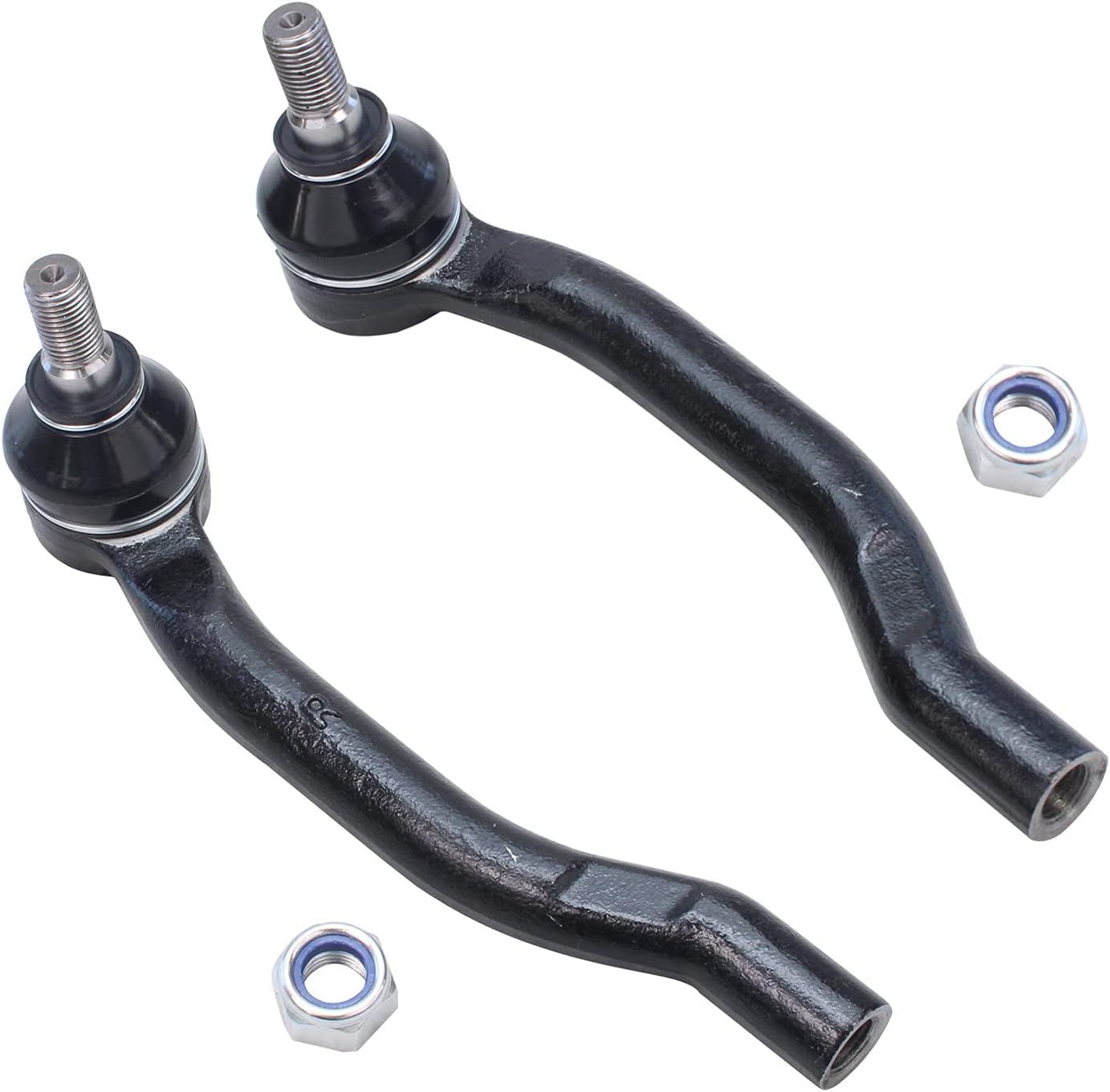
This Detroit Axle kit supplies two front outer tie rod ends intended as direct-fit replacements for 2003–2008 Honda Pilot and 2001–2006 Acura MDX. Each tie rod end is built from a premium alloy and includes a grease fitting for serviceability, which lets you re-grease the joint during maintenance to extend life and reduce noise. The parts are packaged as driver and passenger side pieces and are promoted as high-strength, corrosion-resistant replacements that match factory fit and function. Real-world benefits include easier installation for DIYers who follow vehicle-specific walkthroughs and lower cost compared with dealer parts while keeping steering feel consistent. Limitations are that jam nuts are not included so you may need to reuse the original nuts or source replacements, and like all suspension parts these require proper alignment after installation. Durability reports are generally positive but mixed reviews show occasional quality control issues, so inspection before install is wise.
Best for: Risk-averse mainstream buyers who prioritize a factory-quality, low-risk replacement at a reasonable cost and prefer parts that are easy to install and maintain.
Less Ideal for: Those who want a complete hardware refresh or prefer upgraded performance steering components should consider a fuller kit or aftermarket performance parts instead.
- Direct-fit replacement for specified Honda Pilot and Acura MDX model years
- Greaseable design with fittings to allow periodic lubrication and longer joint life
- Cast premium-alloy construction claimed for corrosion resistance and structural strength
- Does not include new jam nuts or some small hardware needed for reassembly
- Occasional reports of inconsistent quality control requiring inspection before installation
Verdict: A budget-friendly, greaseable direct-fit replacement that restores factory steering feel for Honda Pilot and Acura MDX owners.
Choosing the Right Honda Pilot Tie Rod End: Key Factors to Consider
Fitment and Vehicle-Specific Compatibility
Correct fitment ensures the tie rod end mounts to the steering knuckle and inner tie assembly with the same ball-joint angles used by the Honda Pilot. A precise fit reduces the need for extra shims or hardware changes and minimizes the risk of altering toe settings. Mismatched parts can create premature tire wear or inconsistent steering response.
When a part explicitly lists Pilot fitment, installation is more straightforward and alignment adjustments are predictable. Verify stud size, thread pitch, and overall length when comparing options to ensure the replacement will restore factory geometry.
Joint Design and Grease Retention
The internal ball-and-socket design affects steering smoothness and resistance to play. Quality joints use tight tolerances and robust internal races to limit movement that causes wandering or looseness. Grease retention features such as sealed boots, grease fittings, or captive seals help keep contaminants out and lubrication in, which prolongs service life.
Consider whether the design allows for re-greasing during routine maintenance or relies on a sealed lifetime lubricant. For vehicles exposed to road salt or off-road use, a well-sealed joint typically offers longer trouble-free operation.
Materials and Corrosion Protection
Materials and protective coatings dictate how well a tie rod end resists rust and fatigue. Hardened steel components and zinc or powder coatings reduce surface corrosion that can accelerate joint wear. Stainless or treated fastener hardware helps maintain clamping integrity over time.
If you drive in humid, coastal, or salted-road environments, prioritize parts with proven corrosion resistance and durable finishes to avoid seizure at the mounting points and maintain safe removal during future service.
Adjustability and Alignment Considerations
Some replacement tie rod ends provide built-in adjustability to fine-tune toe alignment without changing inner tie rod lengths. Threaded adjusters with clear turn counts make it easier to approximate factory toe before taking the vehicle for a final alignment. Lack of adjustability may require additional parts or more complex alignment work.
Because any tie rod replacement can affect toe settings, plan for a professional alignment after installation. Parts that offer easy, repeatable adjustments simplify the alignment process and reduce shop time.
Durability Under Load and Steering Feel
Tie rod ends transmit steering inputs and handle lateral loads from cornering. Components designed to withstand expected steering torque and vehicle weight deliver consistent feedback and reduce the tendency for play under load. A durable joint keeps steering feel predictable, which is important for driver confidence and safety.
Consider your typical driving conditions. If you frequently carry heavy loads or encounter rough roads, choose a part with a reinforced design and higher load ratings to preserve steering performance over a longer service interval.
Installation Ease and Hardware Quality
Ease of installation affects how quickly you can get the vehicle back on the road. Parts that include vehicle-specific nuts, cotter pins, or grease fittings cut down on additional trips to the parts store. Threaded connections that match OEM specifications reduce the risk of cross-threading or improper torque.
Good-quality fastening hardware and clear installation guidance reduce the chance of premature failure caused by incorrect installation. If you plan to DIY, look for parts that explicitly list included hardware and offer straightforward mounting steps.
How We Chose the Best Honda Pilot Tie Rod End
We focused specifically on tie rod ends designed for the Honda Pilot and evaluated candidates against four to six objective, category-specific criteria. Fitment accuracy was primary, meaning the part must match factory steering geometry and mounting points to avoid altering alignment. Durability was assessed through construction materials and protective finishes that resist corrosion and joint wear. Ball-joint design and grease retention informed expected service life and steering feel. Load handling and steering response were considered to ensure consistent feedback under normal driving and light towing conditions. Ease of installation, including threaded adjustability and common hardware compatibility, was also weighed.We excluded parts that did not specify compatibility with the Honda Pilot or that relied on universal fit claims without clear factory-matching specs. We also filtered out items lacking basic corrosion protection or with unclear warranty information. The resulting list reflects components that meet practical service expectations for fitment, longevity, steering performance, and straightforward installation.
Our full evaluation process is outlined in our review methodology.
FAQ
What are common symptoms of a failing tie rod end on a Honda Pilot?
Common symptoms often include wandering steering, uneven or accelerated tire wear, and vibration in the front end during driving. You may also hear clunking or knocking noises when turning or driving over bumps. These signs usually indicate joint looseness or loss of proper ball-stud engagement.
Can I replace a tie rod end myself, and how long does it usually take?
Replacement is often feasible for someone with basic mechanical skills and common tools. Typical removal and installation per side can take one to two hours, depending on rust, seized hardware, and whether the part includes OEM-style fittings. A professional alignment is usually required after replacement.
How does replacing a tie rod end affect wheel alignment?
Replacing a tie rod end can change toe settings because the tie rod controls the steering tie geometry. Even with an adjustable end, you should expect final toe adjustments at an alignment shop. Some parts let you pre-adjust toe roughly, which can speed up the alignment process.
How long do tie rod ends typically last on a Honda Pilot?
Service life varies with driving conditions, exposure to corrosion, and joint design. In routine driving with normal road conditions, a quality tie rod end can last many tens of thousands of miles. Severe road conditions or heavy loads can shorten that lifespan, so inspect the joints periodically for play and boot damage.
What should I inspect during a visual check for tie rod end wear signs?
Look for torn or missing dust boots, visible grease leakage, and play at the ball joint when the wheel is rocked. Uneven tire wear patterns and loose steering feel are functional signs to check. Any of these indicators suggest you should measure for play and consider replacement.
Does the outer tie rod end differ from the inner, and which one fails first?
Outer tie rod ends are the joints closest to the wheel and typically see more contamination and movement, so they often show wear before inner tie rods. However, failure patterns depend on design and driving conditions. Both are important to inspect and replace as needed to maintain steering accuracy.
Conclusion
Choosing the right tie rod end for a Honda Pilot means prioritizing correct fitment, solid joint design, and corrosion resistance. Those factors collectively preserve steering precision and reduce the chance of uneven tire wear or premature failure.Balance adjustability and ease of installation with durability for your typical driving conditions. After any replacement, plan on a professional alignment to restore proper toe and ensure predictable steering behavior.
Explore More:
- Check out all Honda Pilot parts & accessories
- Explore Tie Rod Ends Maintenance & Repair Guides
- Explore Suspension & Steering
- Browse all Auto Parts
