

Note: This article contains affiliate links. If you click on these links and make a purchase, I may earn a small commission at no extra cost to you. This helps support my research and content. Read my full affiliate disclosure here.
Steering performance and safety hinge on sound suspension components, and a worn tie rod end can cause play, uneven tire wear, and vague steering feel. If you drive a Ford F-150, picking the correct replacement parts matters because fitment, durability, and correct alignment are essential for safe handling. This guide highlights the top shortlisted tie rod ends chosen for their fit and construction, and explains the evaluation criteria we used. Read on to find parts that balance durability, steering precision, and ease of installation.
Looking for other parts? See all Ford F-150 parts & accessories.
Top Picks at a Glance
| Best Reviewed A top-rated pick with lots of positive feedback | MOOG DS1017T Steering Tie Rod End (Front Left) |  |
| Most Popular A crowd favorite that many people choose with confidence | Detroit Axle Front Outer Tie Rods (2-pack) for 2004–2008 Ford F-150 |  |
| Best Quality Built to a higher standard if you want something more solid | TRAONTU 2WD Front End 12pc Suspension Kit for 2005–2008 Ford F-150 / 2006–2008 Lincoln Mark LT |  |
| Best Budget The cheapest option that still gets the job done reliably | BOXI Front Inner Tie Rod Ends (pair) for Ford F-150 2004–2008 |  |
| Most Sold A high-volume bestseller chosen again and again | MOOG ES800514 Steering Tie Rod End for Ford F-150 |  |
| Best Value for Money The sweet spot between price and what you get | BOXI Front Outer Tie Rod Ends (pair) — for Ford F-150 2004–2008 |  |
| Best Overall The best all-around choice for most situations | SCITOO 10pc Front Suspension Kit with Tie Rod Ends and Ball Joints for 1987–1996 Ford F-150/Bronco |  |
1. MOOG DS1017T Steering Tie Rod End (Front Left)

| Fit Type | Vehicle Specific Fit |
|---|---|
| Auto Part Position | Front Left |
| Material | Rubber Bushings |
| Manufacturer | MOOG Chassis Products |
The MOOG DS1017T is an inner steering tie rod end built to replace worn factory components on supported Ford trucks. It connects the steering rack to the wheel knuckle and is typically installed when steering play, uneven tire wear, or front-end alignment issues appear. MOOG highlights features aimed at durability and serviceability including a preloaded Belleville washer to absorb shock loads, a gusher-style bearing for consistent grease flow, heat-treated ball studs for improved fatigue strength, and a press-in cover plate to keep debris out. Those details translate to reduced steering looseness, longer service life, and easier installation and alignment for DIYers and technicians. The part is greaseable which helps prevent rust and extends life when maintained. Limitations are that fitment is vehicle-specific so you must confirm it fits your exact F-150 year and trim, and like any mechanical replacement it may require professional alignment after installation to restore correct steering geometry.
Best for: Buyers who prioritize long-term steering reliability and want a factory-quality replacement that reduces the chance of repeat repairs and restores a firmer steering feel.
Less Ideal for: Drivers who need a universal or adjustable aftermarket tie rod for custom suspension setups or who prefer a lower-cost, short-term replacement should consider other options.
- Designed for direct, vehicle-specific fit to simplify installation and alignment
- Preloaded Belleville washer and gusher bearing improve durability and reduce steering looseness
- Heat-treated ball stud increases fatigue strength to resist premature failure
- Greaseable socket allows fresh lubricant to flush debris and inhibit rust
- Compatibility must be verified for specific F-150 year and trim before purchase
Verdict A durable, greaseable factory-quality inner tie rod end aimed at restoring tight, reliable steering on compatible Ford F-150 trucks.
2. Detroit Axle Front Outer Tie Rods (2-pack) for 2004–2008 Ford F-150

| Fitment | 2004–2008 Ford F-150 |
|---|---|
| Kit contents | 2x front outer tie rod ends |
| Manufacturer | Detroit Axle |
| Special feature | Grease fittings included |
This Detroit Axle kit supplies two front outer tie rod ends intended as direct replacements for 2004–2008 Ford F-150 trucks. Installers use them to replace worn outer tie rods that cause play, uneven tire wear, or steering vibration; the parts include grease fittings so they can be maintained with periodic greasing. The design follows factory-style fit and the kit arrives with cotter pins and threaded ends that match the original steering knuckle interface. In practice the parts simplify a common front-end repair for DIYers or quick shop jobs and can bring steering feel back to spec without replacing the entire steering rack. Limitations to note are that jam nuts are not supplied so you may need to reuse the factory jam nuts or buy replacements, and some users recommend cleaning threads and using thread locker during installation. These are a budget-friendly, serviceable replacement that balance acceptable durability with straightforward installation when matched to the specified F-150 model years.
Best for: Buyers prioritizing convenience and quick, maintenance-friendly repairs on a 2004–2008 Ford F-150 who prefer an easy direct-replacement part they can install or have installed with minimal fuss.
Less Ideal for: Those seeking heavy-duty upgraded steering components for frequent towing, severe off-road use, or a performance rebuild should consider reinforced aftermarket options instead.
- Sold as a 2-piece set to replace both front outer tie rods on the F-150 at once
- Grease fittings included for periodic lubrication and extended joint life
- Factory-style fitment designed for direct replacement on 2004–2008 Ford F-150s
- Includes cotter pins and matching threaded ends for the steering knuckle connection
- Jam nuts are not included so you may need to reuse old jam nuts or purchase replacements
- Installation may require basic tools and prep like cleaning threads and applying thread locker
Verdict A convenient, greaseable direct-replacement tie rod kit that restores steering feel on 2004–2008 Ford F-150s without major fuss.
3. TRAONTU 2WD Front End 12pc Suspension Kit for 2005–2008 Ford F-150 / 2006–2008 Lincoln Mark LT

| Fit Type | Vehicle Specific Fit |
|---|---|
| Auto Part Position | Front |
| Material | Alloy Steel |
| Model | 2WD Front End 12pc Suspension Kit |
| Manufacturer | TRAONTU |
This TRAONTU 12-piece front end suspension kit bundles the main wear items you would replace when refreshing a 2005–2008 2WD Ford F-150 front end: upper control arms with ball joints, lower ball joints, inner and outer tie rod ends, sway bar links, and rack boot covers. It is intended for direct fit replacement so you can address steering play, uneven tire wear, and degraded handling in one job rather than sourcing parts separately. Components are forged from alloy steel with a rust-resistant finish and the kit includes both inner and outer tie rods plus sway bar links to return steering response and cornering stability. Buyers should expect a straightforward install for someone with mechanical experience, but alignment after installation is required. The kit offers strong value versus buying OEM parts individually, though long-term durability will depend on driving conditions and maintenance of bushings and joints. It is a practical way to restore a tired front end quickly, but it does not replace upgrades for heavy-duty or performance suspension needs.
Best for: Performance-oriented owners who want a single, factory-replacement-quality kit to restore steering precision and handling on a 2005–2008 2WD Ford F-150 without buying parts separately.
Less Ideal for: Drivers looking for heavy-duty, lifted, or race-oriented suspension upgrades should seek reinforced or performance-specific components instead of this stock-replacement kit.
- Comprehensive 12-piece set covers control arms, tie rods, ball joints, sway bar links and rack boots for a single front-end refresh.
- Forged alloy steel construction with rust-resistant coating improves durability over time compared with uncoated replacements.
- Parts are vehicle-specific for 2005–2008 2WD F-150 and Lincoln Mark LT, simplifying fitment and reducing modification during install.
- Includes both inner and outer tie rod ends so steering play can be eliminated without sourcing additional components.
- Not a heavy-duty or performance upgrade; designed as a factory-quality replacement rather than a reinforced aftermarket performance part.
Verdict A cost-effective, vehicle-specific 12-piece front suspension kit that restores steering feel and alignment on 2005–2008 2WD Ford F-150s without offering heavy-duty performance upgrades.
4. BOXI Front Inner Tie Rod Ends (pair) for Ford F-150 2004–2008

| Fitment | Ford F-150 2004-2008 4×4; Lincoln Mark LT 2006-2008 |
|---|---|
| Position | Front inner tie rod ends |
| Manufacturer Part Number | BXM600110122-2 |
| OEM Part Reference | EV463 |
These BOXI front inner tie rod ends replace the factory inner tie rods on F-150 2004–2008 4×4 trucks and Lincoln Mark LT equivalents. Sold as a two-piece set, they install at the steering rack to restore steering alignment and reduce play. The parts are described as precision-machined for straightforward installation and include features aimed at durability for heavy-use trucks. In practice this means they should let a DIYer or independent shop swap worn inners without modifying steering geometry beyond a post-replacement alignment. The package is compact and intended to match the OEM fitment and EV463 part reference. Limitations to note are the modest product track record and limited customer feedback compared with long-established brands, and buyers should plan for a professional alignment after fitting. For budget-focused repairs on an older F-150, this set provides a practical, lower-cost path to fix steering looseness while keeping the truck on the road.
Best for: Budget-conscious owners who prioritize an affordable factory-replacement repair to eliminate steering play and extend the service life of an older F-150.
Less Ideal for: Drivers seeking premium aftermarket steering components with long proven durability records or performance upgrades should consider higher-end brands instead.
- Sold as a matched pair for both left and right front inner tie rod replacement.
- Designed to fit Ford F-150 2004–2008 4×4 models and Lincoln Mark LT 2006–2008, using the EV463 reference.
- Precision tolerances advertised to ease installation and fit with factory steering components.
- Compact package intended for straightforward DIY or shop installation.
- Limited review volume and brand track record compared with long-established aftermarket makers.
- No included alignment or installation hardware beyond the tie rod ends themselves.
Verdict A cost-effective, factory-fit replacement pair for restoring steering feel on 2004–2008 F-150 4x4s when you need a budget repair.
5. MOOG ES800514 Steering Tie Rod End for Ford F-150
| Compatible model | Ford F-150 (see fitment notes) |
|---|---|
| Bearing type | Ball Bearing |
| Greaseable | Yes |
| Manufacturer | MOOG Chassis Products |
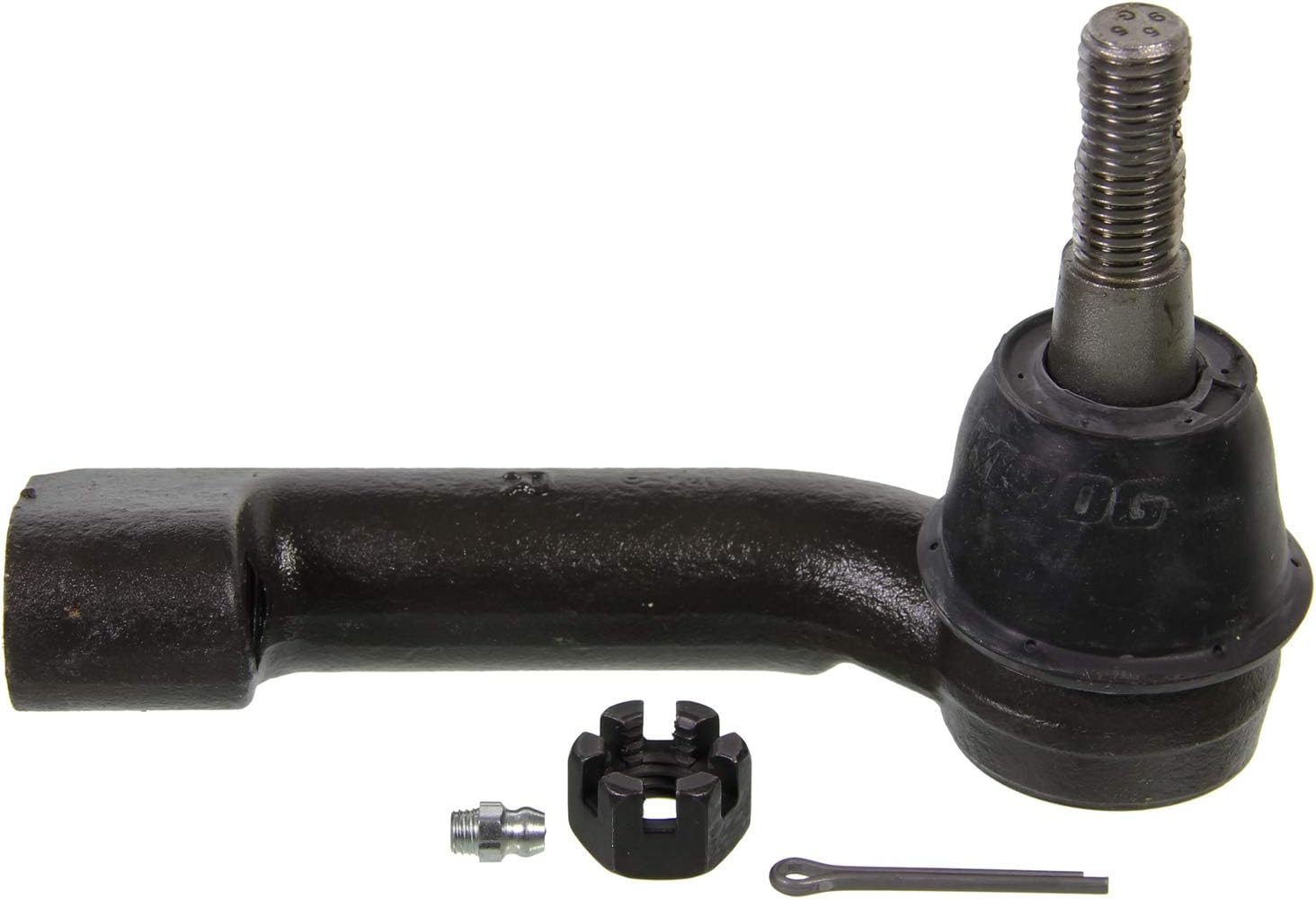
The MOOG ES800514 outer tie rod end replaces a worn steering linkage on Ford F-150 trucks to restore steering precision and reduce premature tire wear. It installs in the steering knuckle-to-steering-gear linkage and is built with heat-treated ball studs and a pressed-in cover plate to keep out debris and minimize looseness. The part is greasable, which allows fresh lubricant to flush contaminants and extend service life, and MOOG’s gusher bearing design promotes reduced friction and long-term durability. In practice this means easier alignment, firmer steering feel, and less chance of clunking or vibration from a loose joint. Some users report the threaded post is softer than factory and that threads can be tight when installing, so careful handling during installation is advisable. Fitment notes should be checked for specific model years and trims before purchase. For owners who want a tested, problem-solver replacement that leans toward longevity and serviceability, this is a sensible choice.
Best for: Risk-averse mainstream buyers who prioritize a proven, serviceable replacement that restores factory steering feel and reduces the likelihood of premature steering or tire issues.
Less Ideal for: Drivers seeking a custom performance steering upgrade or a cheaper short-term replacement should consider alternatives better matched to those goals.
- Designed with heat-treated ball studs for improved fatigue strength and durability
- Pressed-in cover plate seals out debris to reduce bearing wear and looseness
- Greasable socket and gusher bearing design allow lubrication to extend service life
- Precision tolerances intended for straightforward installation and proper steering alignment
- Some installers report tighter or softer-threaded studs compared with factory parts which can complicate installation
- Not a universal fit so vehicle information must be verified for correct year and trim compatibility
Verdict A reliable, serviceable tie rod end that restores factory steering feel on F-150s while offering greasability and durable bearing design.
6. BOXI Front Outer Tie Rod Ends (pair) — for Ford F-150 2004–2008
| Fitment | Ford F-150 2004-2008 |
|---|---|
| Position | Front outer, left and right |
| OEM Part Number | ES3691 |
| Brand | BOXI |
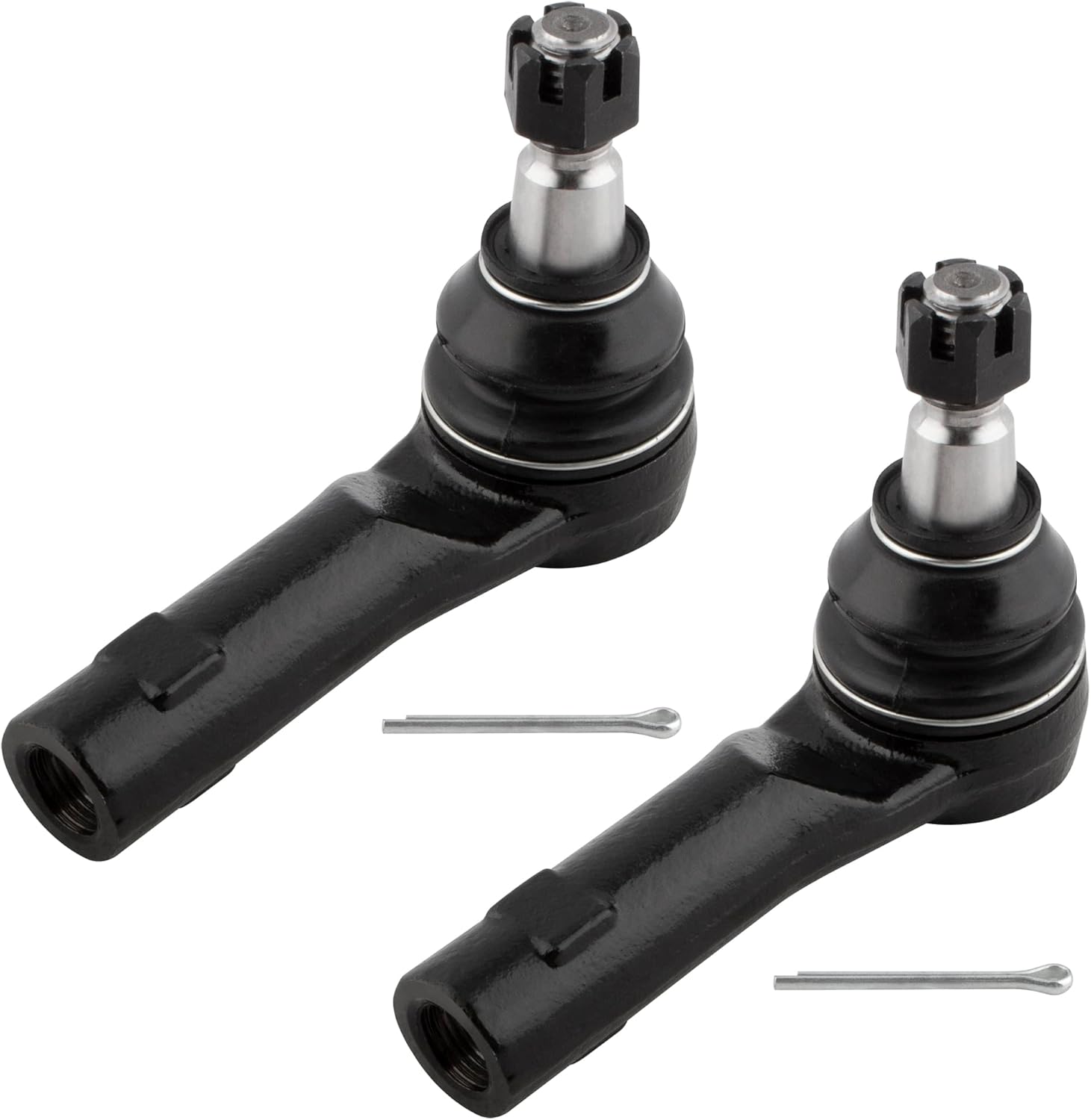
These BOXI front outer tie rod ends are sold as a two-piece set intended to replace the worn outer ends on a 2004–2008 Ford F-150. They install at the outer steering linkage and restore steering connection between the rack/drag link and the steering knuckle, returning proper toe alignment and helping reduce play or wandering. The parts are described as factory replacement tolerance with polished exteriors and are packaged for front left and right positions. Real-world benefits include straightforward fitment when matching the year and part number and claimed durability for trucks that see regular use. Installation typically requires basic suspension tools and an alignment after replacement. Limitations are that this listing covers only the outer tie rod ends and not inner tie rods or related steering components, and any time-saving claims depend on correct fitment to the F-150 sub-variants within the 2004–2008 range. Buyers should also plan for a professional alignment rather than assuming factory steering geometry on reinstallation.
Best for: Practical optimizers who want a cost-effective, direct-replacement steering part to restore steering feel on a 2004–2008 F-150 without overpaying for brand-name alternatives.
Less Ideal for: Drivers seeking a full steering overhaul, performance upgrades, or parts with extended manufacturer warranties should consider higher-end or comprehensive kits instead.
- Sold as a matched pair for both front outer positions, simplifying replacement.
- Made to fit Ford F-150 2004–2008 which reduces compatibility checks when year is confirmed.
- Described with precision tolerances for straightforward installation and consistent fit.
- Polished exterior finish resists corrosion and presents a clean appearance after installation.
- Only replaces the outer tie rod ends so inner tie rods or other steering parts may still require service.
- Fit depends on confirming exact sub-application and part number, so buyers must verify compatibility before installing.
Verdict A practical, budget-friendly pair of front outer tie rod ends for 2004–2008 Ford F-150s that restore steering connection but only replaces the outer ends.
7. SCITOO 10pc Front Suspension Kit with Tie Rod Ends and Ball Joints for 1987–1996 Ford F-150/Bronco

| Fitment years | 1987–1996 |
|---|---|
| Position | Front |
| Pre-greased | Yes |
| Manufacturer | SCITOO |
This SCITOO kit packages the common front-end wear items for 1987–1996 Ford F-150 and Bronco 4WD into a single 10-piece set so you can replace tie rod ends, ball joints, and adjusting sleeves together. It is typically used when steering feels loose, there is noise while turning, or multiple suspension parts are worn; the parts arrive pre-greased to simplify installation. The kit includes both inner and outer tie rods, upper and lower ball joints, and adjusting sleeves which helps ensure matched fitment across components and reduces trips to the parts store. Practical benefits include saving time by replacing multiple wear items at once and restoring steering feel on older trucks. Limitations are that fit and finish vary by part and some installers report minor fitting or missing-piece issues, so careful inventory on arrival and a professional alignment after install are advisable. This is a value-focused bundle rather than a premium OEM-grade replacement, so longevity may differ from factory-quality parts.
Best for: A balanced all-round buyer who wants a single, lower-cost kit to address multiple worn front suspension components at once and prefers convenience over sourcing individual factory parts.
Less Ideal for: Drivers who prioritize exact factory-grade replacements or who want to replace only one failed component without swapping the rest should consider individual, higher-spec parts instead.
- Comprehensive 10-piece kit—includes inner and outer tie rods, ball joints, and adjusting sleeves for a full front-end refresh.
- Parts are pre-greased which reduces prep work and speeds up installation.
- Targeted fitment for 1987–1996 Ford F-150 and Bronco 4WD simplifies parts selection for those models.
- Some customers report fitment gaps or the need to modify parts during installation.
- Occasional reports of missing pieces in the package require checking contents on receipt.
- Not positioned as factory-quality replacements so long-term durability may be lower than OEM parts.
Verdict A convenient, budget-friendly way to refresh the front tie rod and ball joint hardware on 1987–1996 Ford F-150/Bronco 4WDs, but expect variable fit and OEM-level longevity.
Choosing the Right Ford F-150 Tie Rod End: Key Factors to Consider
Fitment and Vehicle-specific Compatibility
Tie rod ends must match the specific suspension and steering geometry of your Ford F-150 to ensure safe, predictable handling. Confirming correct fitment avoids issues like uneven steering wheel position, premature wear, or interference with adjacent components. Manufacturers often list fitment by model year, trim, and steering configuration, so verifying those details before purchase reduces the need for returns or rework.
Vehicle-specific compatibility also matters for installation ease. A tie rod end that aligns with factory mounting points and thread sizes simplifies replacement and reduces the chance of needing special adapters or modifications. For buyers planning a DIY replacement, correct fitment minimizes time and additional tooling costs.
Inner Versus Outer Tie Rod Selection
Understanding whether you need an inner or outer tie rod affects part selection and labor expectations. Inner tie rods connect closer to the steering rack and often require different removal techniques and tools than outer tie rods, which attach near the wheel hub. Choosing the right component prevents wasted time and guarantees restoration of proper steering geometry.
Deciding between inner and outer also impacts inspection of related parts. If one component fails, the mating part may show wear as well, so assess both to avoid repeating the repair soon after. Buyers should factor in the additional time and potential alignment needs that arise when replacing inner components versus outer ones.
Durability and Material Quality
Tie rod ends are subjected to constant motion, loads, and exposure to road contaminants, so material quality directly affects longevity and safety. Robust materials and corrosion-resistant finishes reduce the risk of premature failure and help maintain precise steering feel over time. Consider parts that emphasize hardened ball studs, sealed joints, and protective coatings to withstand harsh conditions.
Higher-quality construction can also influence maintenance intervals and overall cost of ownership. While initial cost may be higher for durable components, longer service life and fewer unscheduled repairs deliver better value for owners who drive frequently or in challenging environments.
Joint Design and Sealing
The design of the ball joint and the effectiveness of its seals determine how well the tie rod end keeps contaminants out and lubrication in. A well-sealed joint reduces the rate of wear and helps maintain smooth steering action. Some designs feature grease fittings for scheduled lubrication, while others use permanently sealed joints; each approach has trade offs in maintenance requirements and expected lifespan.
Selecting the appropriate joint design depends on intended use and maintenance habits. If regular undercarriage maintenance is feasible, a serviceable joint can extend life through periodic greasing. For low-maintenance preferences, a high-quality sealed joint offers convenience and consistent performance without ongoing intervention.
Installation Complexity and Required Tools
The ease of installation influences whether a buyer can perform the replacement themselves or should plan for professional service. Some tie rod ends can be installed with common hand tools and a basic puller, while others require specialty tools or disassembly of connected components. Recognizing the required tools and estimated labor helps set realistic expectations for time and cost.
Installation complexity also affects alignment needs after replacement. Most tie rod work changes toe settings, so a post-replacement wheel alignment is typically necessary. Buyers should factor in access to alignment services or equipment when evaluating options to ensure proper steering and tire wear following installation.
Warranty and After-purchase Support
A clear warranty and accessible customer support provide protection against premature failures and manufacturing defects. Warranties that cover functional issues for a reasonable period can reduce financial risk and give buyers confidence in the component's reliability. Check what the warranty covers, whether it requires proof of installation or maintenance, and how warranty claims are handled.
After-purchase support matters when questions arise about fitment, installation guidance, or part replacement. Responsive technical support and clear return policies simplify resolving problems and help ensure the repair proceeds smoothly, which is especially valuable for buyers undertaking repairs on a vehicle like the Ford F-150.
FAQ
How do I know if my Ford F-150 tie rod end needs replacement?
Common signs include uneven or rapid tire wear, looseness or play in the steering wheel, and clunking or knocking noises when turning. Visual inspection may reveal torn boots or excessive rust, but internal play can be present without obvious external damage. If you notice any of these symptoms, a professional inspection can confirm whether the tie rod end is worn and needs replacement.
Can I replace a Ford F-150 tie rod end myself?
Many mechanically inclined owners can replace an outer tie rod end with basic tools and a tie rod puller, but inner tie rod replacement can be more involved. The job usually requires wheel removal, proper torqueing, and a post-repair alignment to ensure correct steering geometry. If you are not comfortable with suspension work, it is often safer to have a qualified technician perform the replacement.
What is the difference between inner tie rod and outer tie rod on a Ford F-150?
The inner tie rod connects to the steering rack and transfers motion inward, while the outer tie rod connects the inner tie rod to the steering knuckle. Both work together to steer the front wheels, and wear in either component can cause steering play or misalignment. Replacing worn components promptly helps maintain safe steering response and extends tire life.
How long does a tie rod end typically last on a Ford F-150?
Tie rod end lifespan varies with driving conditions, exposure to road salt, and maintenance, but they often last tens of thousands of miles under normal use. Harsh driving, frequent off-road use, or damaged protective boots can accelerate wear. Regular inspections during routine service help catch wear early and prevent related steering issues.
Will replacing a steering tie rod fix steering pull or wandering?
Replacing a worn steering tie rod can correct excessive play that contributes to steering pull or wandering, but it may not fix alignment issues caused by other suspension wear or bent components. After replacing tie rods, a professional alignment is usually needed to ensure the vehicle tracks straight. If problems persist, further inspection of the steering and suspension system is advisable.
How We Chose the Best Ford F-150 Tie Rod End
We focused on components that restore steering geometry and deliver reliable, long-term performance for Ford F-150 applications. Our selection criteria emphasized fitment accuracy to factory mounting points, durable materials and corrosion resistance, joint design and lubrication method for longevity, and compatibility with common alignment specs to minimize shop time. We also considered ease of installation for DIY repairs, and the availability of replacement hardware or grease fittings where applicable. Items were excluded if they lacked clear compatibility information for Ford F-150 model years or used ambiguous mounting specifications. The final list favors products that address the dimensions and load demands of full-size pickup steering systems while offering proven construction and serviceability.
Our full evaluation process is outlined in our review methodology.
Conclusion
When choosing tie rod ends for a Ford F-150, prioritize correct fitment, durable materials, and a joint design that matches your maintenance approach. Consider whether you need a greasable or sealed unit, confirm inner versus outer compatibility, and account for the need for a follow-up alignment. Balancing longevity, serviceability, and accurate fit will deliver the safest steering feel and reduce the chance of premature wear.
Explore More:
- Check out all Ford F-150 parts & accessories
- Explore Tie Rod Ends Maintenance & Repair Guides
- Explore Suspension & Steering
- Browse all Auto Parts
