

Note: This article contains affiliate links. If you click on these links and make a purchase, I may earn a small commission at no extra cost to you. This helps support my research and content. Read my full affiliate disclosure here.
If your 2000-2006 Chevrolet Tahoe is showing loose steering, uneven tire wear, or vibration at speed, the tie rod ends could be the cause. Choosing the right tie rod ends matters because fitment, build quality, and sealing directly affect steering feel and long-term safety. This guide covers the top shortlisted tie rod ends suited to this Tahoe model range and explains the practical criteria used to evaluate them.You will find straightforward information on fitment, expected durability, and installation considerations so you can pick a part that restores steering precision. The following picks represent the leading options for this vehicle scope and are followed by buying factors and practical guidance.
Looking for other parts? See all Chevrolet Tahoe parts & accessories.
Top Picks at a Glance
| Best Overall The best all-around choice for most situations | Detroit Axle Front 6‑Piece Tie Rods Kit (includes idler and pitman arm) |  |
| Best Quality Built to a higher standard if you want something more solid | MOOG QuickSteer Steering Tie Rod End ES3488 |  |
| Best Value The sweet spot between price and what you get | A-Premium Front Inner and Outer Tie Rod Ends Kit (4 pcs) |  |
| Best Budget The cheapest option that still gets the job done reliably | BDFHYK Front Outer Tie Rod End ES3493T for Chevrolet/GMC/Cadillac Trucks |  |
| Highest Rated A top-rated pick with lots of positive feedback | MOOG ES3493T Steering Tie Rod End |  |
| Most Popular A crowd favorite that many people choose with confidence | Detroit Axle Front Outer Tie Rod Ends, 2-Pack |  |
| Best Seller A high-volume bestseller chosen again and again | Detroit Axle Front Inner and Outer Tie Rod End Kit (4-piece) |  |
1. Detroit Axle Front 6‑Piece Tie Rods Kit (includes idler and pitman arm)

| Fitment note | Fits 4‑groove pitman arm only; 0.71 inch (18mm) thread at centerlink |
|---|---|
| Kit contents | 2 inner tie rod ends, 2 outer tie rod ends, 1 idler arm, 1 pitman arm (4 groove) |
| Manufacturer | Detroit Axle |
| Manufacturer part number | 80017-6B-DA |
This Detroit Axle 6‑piece front tie rod kit supplies both inner and outer tie rod ends plus an idler arm and a 4‑groove pitman arm to restore steering linkage on compatible Chevy and GMC full‑size trucks and SUVs. It is intended as a direct‑fit replacement for vehicles with gear steering and the specified 4‑groove pitman arm and centerlink thread. In practice it simplifies a multi‑component steering job because you get all four tie rod ends and the two steering arm pieces in one package, which helps ensure even wear and easier alignment after installation. Components are described as premium alloy with enhanced structural strength and corrosion resistance, so the parts should hold up under typical road use. Limitations are that fitment is specific to certain models and the kit only fits the 4‑groove pitman arm configuration, so verify steering type and thread before buying. Buyers should also plan for a professional alignment after installation to correct toe and tracking.
Best for: Drivers repairing or refreshing the full front steering linkage on 2000–2006 GM full‑size trucks and SUVs who want a bundled, factory‑style replacement that reduces parts sourcing and ensures matched components.
Less Ideal for: Anyone whose vehicle uses a different pitman arm or steering configuration or who only needs a single replacement tie rod end rather than a full kit.
- Complete kit bundles inner and outer tie rod ends with idler and pitman arms to cover the full front steering linkage
- Direct‑fit design aimed at straightforward installation for listed Chevy/GMC models with gear steering
- Premium alloy construction and reinforced structure for improved wear resistance and durability
- Includes the correct 4‑groove pitman arm for compatible centerlink thread to avoid part mismatch
- Only fits vehicles with the 4‑groove pitman arm and the specified centerlink thread, so it is not universal
Verdict: Choose this kit when you need a single, matched replacement set to rebuild the entire front steering linkage on compatible 2000–2006 Chevy/GMC trucks and SUVs.
2. MOOG QuickSteer Steering Tie Rod End ES3488

| Material Type | Alloy Steel |
|---|---|
| Thread Size | M14 |
| Included Components | Tie Rod End Inner Chevy/GMC/Cadillac |
| Model | ES3488 |
The MOOG QuickSteer ES3488 is an inner tie rod end built to replace a worn steering link and bring back precise steering feel. It is typically used when play or looseness appears at the steering wheel or during alignment after replacing outer components. MOOG uses forged alloy steel for strength, a powdered-metal bearing that helps grease reach the stud, and a premium boot to keep contaminants out for longer service life. The part includes a Belleville washer design to resist shock loads and provides an easy-access wrench flat for straightforward installation with common tools. In practical use this delivers stable steering response and predictable handling on road and highway driving, and it should hold up better than cheaper stamped replacements. Limitations to note are that this is a direct replacement inner tie rod for specific Chevy/GMC/Cadillac fitments and does not address outer tie rod or rack issues, so proper diagnosis and alignment are still required after installation.
Best for: Drivers who prioritize restoring tight, responsive steering and want a durable, factory-replacement–quality inner tie rod for highway and performance-oriented driving on 2000–2006 Chevrolet Tahoes.
Less Ideal for: If you are looking to upgrade steering geometry or need an adjustable performance rod or an outer tie rod, choose a dedicated performance or adjustable kit instead.
- Forged alloy steel construction for improved strength and durability
- Powdered-metal gusher bearing enables grease flow to reduce friction
- Premium boot protects internals from dirt and moisture
- Belleville washer design resists spring bind and shock load failure
- Wrench flat simplifies installation with common sockets
- Fits specific inner tie rod applications only and will not replace outer tie rod or rack components
Verdict: Choose the MOOG ES3488 when you want a durable, factory-quality inner tie rod that restores tight, confidence-inspiring steering on a 2000–2006 Chevrolet Tahoe.
3. A-Premium Front Inner and Outer Tie Rod Ends Kit (4 pcs)

| Fit Type | Vehicle Specific Fit |
|---|---|
| Position | Front Inner and Outer |
| Threads Pitch | M18 x 1.5 (inner) & M14 x 1.5 (bottom) |
| Greased Fitting | Yes |
| Exterior | Corrosion-Resistant Coating |
This four-piece A-Premium kit replaces both front inner and outer tie rod ends and is intended for 1999–2006 Tahoe models that use a power steering gearbox and the listed thread pitches. Installation is typical for steering-end replacement: remove the old tie rods, transfer alignment-conscious measurements, and fit the new inner and outer units using the supplied castle nuts and cotter pins. The parts come pre-greased, include grease fittings, and have a corrosion-resistant coating, which reduces initial break-in noise and simplifies lubrication during service. Because the kit covers both inner and outer joints it streamlines steering repairs and helps correct loose steering, uneven tire wear, and steering drift when worn components are the cause. Limitations include vehicle-specific fitment because it uses M18 x 1.5 inner threads and M14 x 1.5 lower threads and it requires a proper post-install alignment; this is not a universal or adjustable aftermarket upgrade but a direct replacement set for the listed models.
Best for: Buyers looking to restore tight, predictable steering on a 2000–2006 Tahoe who prioritize a complete, vehicle-specific replacement that simplifies repair and maintenance.
Less Ideal for: Do not choose this kit if you have a modified steering rack, non-power-steering setup, or need an adjustable performance steering component.
- Complete four-piece kit covers both front inner and outer tie rod positions
- Parts arrive pre-greased and include grease fittings for easier maintenance
- Includes castle nuts and cotter pins so hardware needed for installation is provided
- Corrosion-resistant coating helps longevity in road salt and wet conditions
- Fitment is specific to models with the listed thread pitches and power steering gearbox so it will not fit other steering configurations
Verdict: A convenient, ready-to-install four-piece replacement kit that restores steering feel on 2000–2006 Tahoe models using the factory power steering gearbox.
4. BDFHYK Front Outer Tie Rod End ES3493T for Chevrolet/GMC/Cadillac Trucks

| Compatible models | Chevrolet Silverado/Sierra/Tahoe/Suburban, GMC Yukon, Cadillac Escalade (listed years) |
|---|---|
| Material | AISI 1045 medium-carbon steel |
| Part type | Front outer tie rod end |
| Included quantity | Set of 1 |
This BDFHYK front outer tie rod end is a direct-replacement steering component built to fit 1999–2007 Silverado/Sierra and 2000–2006 Tahoe/Suburban platforms including Cadillac Escalade models in the listed years. It is forged from medium-carbon 1045 steel with heat-treated joints, so it feels sturdy during installation and should withstand typical road debris and daily driving stresses. The part is offered as a single outer tie rod end and matches factory interchange numbers for a bolt-on swap, which simplifies DIY or shop replacement. In real-world use it restores steering precision and removes slack and clunking that cause uneven tire wear, though you must plan for a mandatory four-wheel alignment after installation. Limitations are that this listing is a single side unit rather than a pair and it does not include install hardware or alignment service, so buyers replacing both sides or doing a full steering job should budget accordingly.
Best for: Buyers looking to restore steering feel on a 2000–2006 Tahoe who prioritize an affordable, factory-style replacement part and are comfortable handling a bolt-on swap or hiring a mechanic for installation.
Less Ideal for: Anyone wanting a complete steering overhaul with both sides and new hardware included out of the box or those who need a premium, lifetime-warranty performance upgrade.
- Direct-fit design referencing factory interchange numbers for straightforward bolt-on replacement
- Forged 1045 medium-carbon steel with induction heat treatment for improved durability
- Restores steering responsiveness and reduces clunking and uneven tire wear
- Sold as a single outer tie rod end so replacing both sides requires buying two units
Verdict: A sturdy, budget-minded direct-replacement outer tie rod end that restores steering feel on 2000–2006 Tahoe platforms when you need a factory-style fix.
5. MOOG ES3493T Steering Tie Rod End

| Material | Alloy Steel, Metal |
|---|---|
| Bearing Type | Ball Bearing |
| Compatible Lubricant | Grease |
| Manufacturer Part Number | ES3493T |
The MOOG ES3493T is an outer tie rod end built to replace a worn steering linkage on compatible 2000–2006 Chevrolet Tahoe and similar trucks and SUVs. It uses a greaseable socket and a sealed bearing package with a pressed-in cover plate to keep out dirt and reduce looseness as bearings age. The included Belleville preload washer and MOOG's gusher-type bearing let grease flow across the bearing surface, which lowers friction and helps extend service life. Heat-processed ball studs aim to match or exceed factory strength for better fatigue resistance. Installation is straightforward thanks to precise tolerances, and the greasable design makes periodic maintenance possible to prolong life. The main limitations are that it is a single replacement part requiring correct fit confirmation for year and trim, and longevity still depends on regular lubrication and road conditions. For owners prioritizing a durable, serviceable steering joint that restores like-new steering feel, this part is a practical factory-quality replacement.
Best for: Buyers who want a durable, serviceable steering tie rod end that restores steering precision and can be maintained over time, especially for routine-use full-size trucks and SUVs.
Less Ideal for: If you want a maintenance-free or lifetime-sealed replacement or are replacing multiple steering components at once, consider a sealed or matched-kit's alternative.
- Greaseable socket allows periodic lubrication to flush contaminants and extend life
- Pressed-in cover plate and sealed bearing reduce dirt ingress and limit looseness
- Gusher-style bearing and preload washer promote lower friction and sustained bearing preload
- Heat-treated ball stud improves fatigue strength compared with generic replacements
- Requires regular greasing to realize longevity benefits and resist wear
Verdict: Choose the MOOG ES3493T when you want a factory-quality, greasable tie rod end that restores steering feel and is built for long-term service with regular maintenance.
6. Detroit Axle Front Outer Tie Rod Ends, 2-Pack

| Manufacturer | Detroit Axle |
|---|---|
| Manufacturer Part Number | ES3493 x2 |
| Special Features | Replacement for 2000–2006 Chevy/GMC models listed |
| Kit Includes | 2x Front Outer Tie Rod Ends |
These Detroit Axle front outer tie rod ends replace worn outer tie rods on 2000–2006 Chevrolet Tahoe and compatible GM trucks and SUVs. The kit includes two outer tie rod ends intended for direct replacement of the factory parts and is typically used when steering play, uneven tire wear, or a loose front end indicate worn tie rods. Detroit Axle positions these as OE-quality aftermarket components manufactured under ISO-certified processes and backed by a long-term warranty. In practice the parts fit steering gear setups covered in the fitment list, install like stock components, and restore tighter steering feel when properly adjusted and aligned. Buyers should expect standard aftermarket finish and hardware rather than upgraded heavy-duty materials; careful pre- and post-install alignment is required to avoid uneven tire wear. This is a practical, budget-conscious replacement for restoration of factory steering feel on the specified Chevy Tahoe model years and similar GM vehicles covered by the fitment guide.
Best for: Buyers who want a straightforward, factory-quality replacement to eliminate steering play on their 2000–2006 Tahoe and prefer parts with broad user endorsement and manufacturer support.
Less Ideal for: Drivers seeking heavy-duty or performance steering components for off-road or commercial use should consider upgraded aftermarket options instead.
- Sold as a two-piece set to replace both front outer tie rods at once
- Designed for direct fit to the listed 2000–2006 Chevrolet Tahoe and compatible GM steering gear types
- Made in ISO-certified facilities and marketed to meet factory-quality replacement standards
- Restores steering tightness and reduces play when paired with a proper alignment
- No performance or heavy-duty upgrade over factory-spec components
Verdict: A reliable, factory-style two-piece replacement that restores steering feel on 2000–2006 Chevrolet Tahoe models with proven user acceptance.
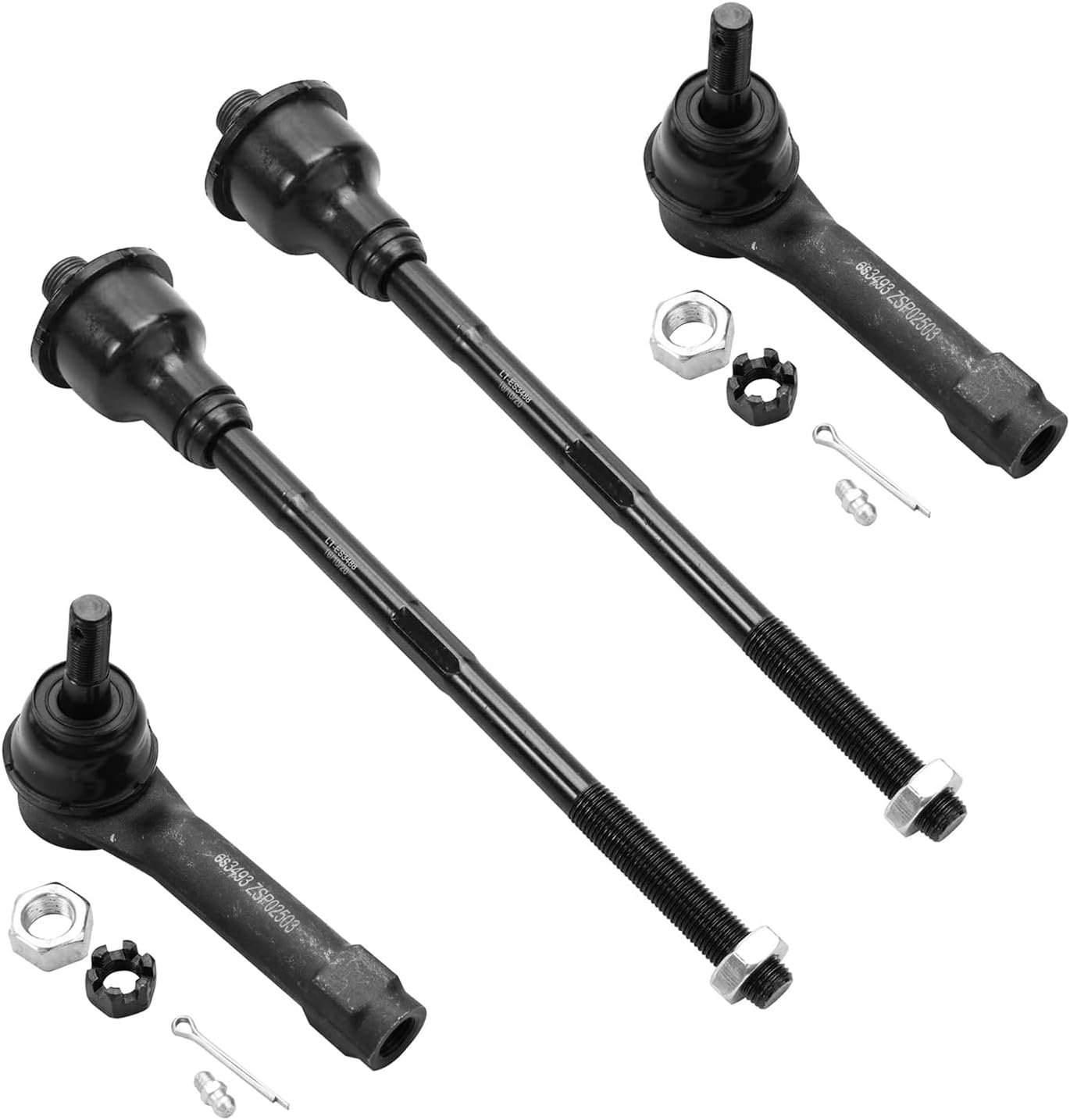
7. Detroit Axle Front Inner and Outer Tie Rod End Kit (4-piece)
| Material | Alloy Steel |
|---|---|
| Finish Type | Powder Coated |
| Vehicle Service Type | Car, Sport-Utility-Vehicles, Truck |
| Kit Contents | 2 inner and 2 outer tie rod ends |
| Thread Size | 0.71 inch (18mm) centerlink thread |
This Detroit Axle kit includes two inner and two outer front tie rod ends intended as a direct-fit replacement for select 1999–2006 Chevrolet, GMC, and Cadillac trucks and SUVs. It is typically used to restore steering precision and eliminate play or vibration caused by worn tie rod ends. The parts are made from alloy steel with a powder-coated finish for corrosion resistance and are described as vehicle-specific for easier installation. Practical benefits include full steering linkage coverage in one kit, higher structural strength to handle repeated impact loads, and factory-quality fit and function that simplifies alignment and service. Limitations to consider are that fitment is vehicle-specific so you must confirm thread size and steering type before purchase, and this is an aftermarket replacement rather than a factory-branded part which may have minor surface finish differences. Installation may require alignment after fitting and basic steering tools for safe removal and replacement.
Best for: Buyers who prioritize a reliable, ready-to-install steering repair and want a full front tie rod rebuild kit that reduces return visits and extra parts sourcing.
Less Ideal for: Shoppers looking specifically for original factory-branded parts or those who need multi-vehicle universal fitment should consider other options.
- Complete front kit with both inner and outer tie rod ends so both sides of the steering linkage are renewed at once
- Alloy steel construction with powder-coated finish improves corrosion resistance and durability
- Designed as a vehicle-specific direct-fit replacement to simplify installation and reduce modification
- Manufacturer states enhanced structural strength to withstand repeated impact loads
- Fitment is limited to specific model years and steering types so you must verify compatibility before ordering
- Aftermarket part may have minor cosmetic or finish differences compared with factory-brand components
Verdict: A complete, vehicle-specific four-piece tie rod end kit that gives a practical, corrosion-resistant replacement to restore steering feel on supported 2000–2006 Tahoe and similar GM trucks.
Choosing the Right 2000-2006 Chevrolet Tahoe Tie Rod End: Key Factors to Consider
Correct Fitment and Threading
Correct fitment is the most important factor because the tie rod end must match the Tahoe's steering linkage dimensions exactly. An incorrect thread pitch or stud length can prevent proper installation, change toe settings, or introduce binding that degrades steering response.
Verify whether the replacement is designed for the specified 2000-2006 Tahoe front end and whether it is an inner or outer tie rod end where applicable. Differences in steering knuckle designs and rack end threads across model years mean you should confirm part numbers or fitment listings before buying. Properly matched parts avoid installation headaches and minimize the chance of premature wear.
Ball-Stud and Socket Construction
The ball-stud materials and internal socket design directly affect steering precision and wear life. Heat-treated steel studs resist deformation and galling, while tightly toleranced sockets reduce play that leads to vague steering feel.
Look for designs with hardened bearing surfaces and controlled clearances. A well-engineered socket provides consistent resistance through the steering range, helping maintain toe alignment and predictable handling over time.
Boot and Seal Quality
A durable dust boot and reliable seal are critical to keep contaminants out and lubrication in. Road salt, water, and grit are common threats that accelerate wear if the protective boot fails.
Consider boots made from thick, abrasion-resistant synthetic rubber and secure clamping methods that prevent splitting. A well-sealed tie rod end keeps grease where it belongs and significantly extends service life, especially on vehicles driven in harsh winter conditions or off-road.
Greaseability and Maintenance
Whether a tie rod end accepts a grease fitting affects long-term serviceability. Greaseable tie rod ends let you replenish lubricant and potentially extend component life, which is valuable for Tahoework that sees heavy-use or rough roads.
Non-greasable sealed units simplify installation and are often maintenance-free, but they rely entirely on the initial factory lubrication and boot integrity. Decide based on how you service the vehicle and whether you prefer scheduled lubrication versus a sealed, maintenance-free approach.
Corrosion Resistance and Finish
Corrosion protection matters for longevity, especially if the Tahoe is exposed to road salt or moisture. Zinc plating, e-coating, or other rust-resistant finishes on the stud and housing slow corrosion that can seize nuts or compromise the joint.
Pay attention to the quality of plated surfaces and whether exposed threads are protected. Better finishes reduce the likelihood of frozen hardware during future servicing and help preserve the mechanical integrity of the joint.
Impact on Alignment and Handling
Tie rod end geometry affects toe settings and steering response. Even with a correct physical fit, a mismatched taper, stud length, or adjustable sleeve length can alter alignment range and change handling characteristics.
Choose parts that maintain the factory geometry or provide clearly documented adjustability compatible with the Tahoe. After installation, a professional alignment is typically required to restore proper toe and to ensure predictable handling and tire wear.
Outer Vs Inner Tie Rod Ends: What Tahoe Owners Should Know
On the 2000-2006 Chevrolet Tahoe, steering linkage uses both inner and outer tie rod ends in the front assembly. Outer tie rod ends connect to the steering knuckle and typically bear the majority of lateral loads encountered during turning. Inner tie rod ends link to the steering rack and influence toe adjustment range.
When choosing replacement parts, confirm whether the vehicle needs outer or inner units. Outer replacements tend to show wear symptoms earlier because they handle more steering angle and road impact. Inner components can affect steering feel subtly and may be replaced when excessive play is present or during rack service.
- Outer tie rod end: more exposed to road forces and often first to wear
- Inner tie rod end: affects toe range and is critical for proper alignment
- Replacing both sides at once helps maintain symmetric steering behavior
Common Symptoms of Tie Rod End Wear on a Tahoe
Symptoms of bad tie rod end often include uneven tire wear, a loose or wandering steering feel, and clicking or clunking noises when turning. You may also notice increased play at the steering wheel or a vibration at highway speeds that changes with steering input.
Physical inspection reveals torn boots, excessive side-to-side play at the ball stud, or visible corrosion around the joint. These signs indicate the joint has lost lubrication or sealing integrity and should be addressed promptly to avoid sudden steering failure.
- Uneven inner or outer tire wear patterns
- Loose steering or delayed return to center
- Knocking or clunking during steering inputs
- Visible boot damage, grease loss, or corrosion
Installation Tips and Alignment Considerations
Proper installation of tie rod ends on the Tahoe requires correct torque values, thread engagement, and, when applicable, reuse of cotter pins or replacement hardware. Always torque the castle nut to the manufacturer specification and confirm the stud seat is fully engaged in the knuckle taper.
Because tie rod replacement changes toe geometry, a professional alignment is recommended after installation. If you need to preserve the pre-replacement toe, mark the old sleeve position or measure the turns required to remove the old tie rod end so the new part can be adjusted close to the prior setting before final alignment.
- Use a torque wrench and follow factory torque specs
- Replace seized or corroded hardware rather than reusing when necessary
- Always perform a full front-end alignment after replacement
Maintenance and Longevity for Tahoe Tie Rod Ends
Routine inspection of tie rod ends can catch wear early. Check boots for cracks or splits, and use a pry test to detect play in the joint. For greaseable units, periodic greasing as part of suspension service can extend life span significantly.
If you drive in salty or off-road conditions, plan for more frequent inspections. Protect exposed threads and connection points with anti-seize when reassembling to make future service easier.
- Inspect boots and joints during oil changes or suspension checks
- Grease greasable joints at service intervals recommended for your driving conditions
- Use anti-seize on threads to prevent future corrosion
DIY Replacement: Practical Advice
Replacing a tie rod end on a 2000-2006 Tahoe is feasible for a competent DIYer with basic tools, jack stands, and an alignment plan. You will typically need a ball joint separator or pickle fork, the correct wrenches and sockets, and a torque wrench. If the replacement part uses a grease fitting, have a grease gun ready to lube the joint after installation.
Plan for a post-replacement wheel alignment. If you lack access to alignment equipment, take careful measurements and mark the old tie rod position before removal. For stubborn corroded hardware, apply penetrating lubricant and allow time for it to work before attempting removal.
- Required tools: jack stands, torque wrench, ball joint separator, sockets
- Always secure the vehicle and never work solely on a jack
- Expect to perform or arrange a proper alignment after replacement
Still looking for the perfect fit?
Select your Chevrolet Tahoe configuration to see the most relevant Tie Rod Ends recommendations
How We Chose the Best 2000-2006 Chevrolet Tahoe Tie Rod End
We focused on fitment, durability, and serviceability when narrowing candidates for the 2000-2006 Chevrolet Tahoe. Fitment was treated as a primary gate: parts had to match the factory ball-stud, thread direction, and length spec appropriate to the Tahoe front steering geometry. Durability criteria included ball-stud material and heat treatment, boot and seal quality, and corrosion-resistant finishes that affect service life in varied climates.Performance and steering feel were judged by design attributes such as ball-stud tolerance and taper fit, which influence play and return-to-center behavior. Ease of installation was considered, favoring parts that use OE-style hardware or include replacement nuts and grease fittings. We also evaluated maintenance aspects, including whether the part accepts a grease fitting and the robustness of the dust boot.Excluded items included generic universal tie rod adapters and assemblies without explicit Tahoe fitment data. We prioritized components with clear specifications relevant to steering geometry, documented load ratings, and materials information.
Our full evaluation process is outlined in our review methodology.
FAQ
How can I tell if a tie rod end on my Tahoe needs replacement?
Common indicators include uneven tire wear, loose steering, knocking when turning, or visible boot damage. A physical check for side-to-side play at the ball stud also helps confirm wear.
Is it necessary to replace both tie rod ends at the same time?
It is not strictly necessary but is often recommended because both sides typically experience similar wear. Replacing both helps maintain balanced steering feel and alignment range.
Will replacing a tie rod end fix steering vibration or pull?
If vibration or pull is caused by a worn tie rod end, replacing it can restore proper steering response. However, those symptoms can also come from other suspension or alignment issues, so a full inspection is advised.
Can I replace a tie rod end on the Tahoe myself?
Yes, a competent DIYer with proper tools can replace a tie rod end. You should follow safe lifting practices and be prepared to have a professional alignment afterward.
Do tie rod ends come greased or do I need to service them after installation?
Many sealed tie rod ends come pre-greased and maintenance-free, while greaseable units require periodic lubrication. Check the part type and plan maintenance accordingly.
How soon should I get an alignment after replacing a tie rod end?
An alignment should be performed immediately after replacement or before driving significant miles. Replacing a tie rod end changes toe geometry and affects tire wear and handling.
Final Verdict
For the 2000-2006 Chevrolet Tahoe, prioritize tie rod ends that match factory fitment and preserve steering geometry. Focus on durable ball-stud construction, reliable boots, and appropriate corrosion protection to minimize future service needs.If you regularly drive in harsh conditions, favor greaseable or higher-grade sealed units with proven sealing. After installation, always get a professional alignment to restore handling and tire life so you can drive with confidence.
Explore More:
- Check out all Chevrolet Tahoe parts & accessories
- Explore Tie Rod Ends Maintenance & Repair Guides
- Explore Suspension & Steering
- Browse all Auto Parts
