

Note: This article contains affiliate links. If you click on these links and make a purchase, I may earn a small commission at no extra cost to you. This helps support my research and content. Read my full affiliate disclosure here.
If your Chevrolet Tahoe feels loose through the steering, or you notice uneven tire wear, the inner tie rod end is often a likely cause. Selecting the right inner tie rod end matters because it directly affects steering precision, alignment stability, and long-term suspension wear on this truck-based SUV. This guide shortlists the seven best inner tie rod ends matched to Tahoe fitment and driving demands.We evaluated candidates for proper fitment, robust construction, and resistance to common wear modes so you can pick a unit that restores steering response and holds alignment. Read on to see the selection and the factors you should weigh when replacing an inner tie rod end.
Looking for other parts? See all Chevrolet Tahoe parts & accessories.
Top Picks at a Glance
| Best Overall The best all-around choice for most situations | Detroit Axle Front 6‑Piece Tie Rods Kit (Inner & Outer) with Boots for Chevy/GMC Trucks and SUVs |  |
| Best Quality Built to a higher standard if you want something more solid | MOOG EV800938 Inner Steering Tie Rod End |  |
| Best Value The sweet spot between price and what you get | TRQ Front Inner Tie Rod Ends Pair Kit |  |
| Best Budget The cheapest option that still gets the job done reliably | A-Premium Front Inner Tie Rod Ends for Silverado/Tahoe/Sierra/Yukon/Escalade |  |
| Most Popular A crowd favorite that many people choose with confidence | Detroit Axle Front Inner and Outer Tie Rods Replacement Kit (4-piece) |  |
| Best Seller A high-volume bestseller chosen again and again | Detroit Axle Front Inner Tie Rods (2) for 2007–2014 Chevrolet/GMC Full-Size Trucks and SUVs |  |
1. Detroit Axle Front 6‑Piece Tie Rods Kit (Inner & Outer) with Boots for Chevy/GMC Trucks and SUVs

| Material | Alloy Steel |
|---|---|
| Finish Type | Powder Coated |
| Automotive Fit Type | Vehicle Specific Fit |
| Kit Contents | 2 inner + 2 outer tie rod ends + 2 boots |
This Detroit Axle kit supplies all front steering tie rod components needed to replace worn inner and outer ends and the rack boots on compatible Chevy and GMC full‑size trucks and SUVs. It is sold as a vehicle-specific kit that includes two inner tie rod ends, two outer tie rod ends and two rack-and-pinion boots, which simplifies a coordinated front-end refresh during a steering or alignment repair. The parts are alloy steel with a powder-coated finish and Detroit Axle states they are manufactured under ISO processes and tested for durability. In practice the kit makes steering feel tighter and removes play when original tie rod joints are loose, and including boots reduces the chance of premature contamination. Limitations are that fitment targets a specific range of model years and body styles so you must confirm exact vehicle application, and installers should expect to perform a professional alignment after replacement. The kit is a straightforward, value-oriented choice for routine front-end repairs on the listed Chevy/GMC models.
Best for: Buyers seeking a coordinated, cost-effective front-end steering refresh for late‑2000s to early‑2010s Chevy or GMC full-size trucks and SUVs who prioritize restoring steering feel and eliminating play.
Less Ideal for: Do not choose this if you need a one-off outer or inner piece for a different vehicle family or if you prefer premium OEM-branded parts; also avoid if you cannot get a post-replacement wheel alignment.
- Complete kit includes both inner and outer tie rod ends plus rack boots so multiple components are replaced at once
- Alloy steel construction with powder-coated finish for corrosion resistance
- Vehicle-specific fit reduces fitment guesswork for compatible Chevy/GMC models
- Includes boots to protect the rack ends from dirt and extend part life
- Fitment covers a specific set of model years and body configurations so it is not universal
Verdict: A complete, vehicle-specific front tie rod kit that restores steering precision and protects the rack ends, making it a practical value choice for Chevy/GMC full-size trucks and SUVs in need of front-end repair.
2. MOOG EV800938 Inner Steering Tie Rod End

| Thread Size | M12x1.75 |
|---|---|
| Fastener Type | Hardened full-ball metal stud |
| Material Type | Alloy Steel, Carbon Steel |
| Washer Type | Conical Spring |
| Grade Rating | Standard |
The MOOG EV800938 is an inner tie rod end designed to restore steering precision and long-term durability on full-size GM trucks and SUVs. It links the steering rack to the wheel assembly and is typically installed when steering feel is loose, alignment drifts, or inner tie rod wear is evident. MOOG builds the part with heat-treated ball studs, gusher-style bearings where applicable, and a preloaded washer to reduce socket looseness and extend service life. Wrench flats simplify installation and alignment adjustments for a faster job at the rack. Protective finishes and seals help resist road debris and moisture so the steering stays consistent over time. This is a factory-replacement style component aimed at returning handling to near-original behavior; it is not a performance upgrade for increased steering response beyond stock, and replacing inner and outer tie rods together is recommended to avoid repeat labor.
Best for: Buyers who prioritize restoring factory steering feel and long-term reliability on Chevrolet Tahoe and similar GM full-size SUVs and trucks and who want a straightforward, serviceable replacement part.
Less Ideal for: Drivers seeking a high-performance steering upgrade or significant handling improvements should consider aftermarket performance steering components instead.
- Factory-style design with heat-treated ball stud for durability
- Preloaded washer and gusher bearing design reduce looseness and friction
- Wrench flats make installation and alignment adjustments easier
- Protective finish and seals help resist contaminants and extend service life
- Designed to restore factory steering feel rather than enhance performance beyond stock
- Compatibility limited to specific GM full-size truck and SUV models
Verdict: Choose this MOOG inner tie rod end when you want a durable, factory-style replacement that reliably restores steering feel on Chevrolet Tahoe and related GM full-size vehicles.
3. TRQ Front Inner Tie Rod Ends Pair Kit

| Position | Front Inner |
|---|---|
| Manufacturer Part Number | PSA54790 |
| OEM Part Number | 15295861, 26059210 |
| Model | TRQ PSA54790 2 Piece Tie Rod Set |
This TRQ kit supplies both front inner tie rods as direct-replacement parts for compatible Chevrolet and GMC trucks and SUVs. It is intended for steering system repair or refresh when inner tie rod wear causes looseness, uneven tire wear, or steering play. TRQ emphasizes factory-style fit and pre-assembled components to simplify installation and reduce time in the garage. Notable features include machined exterior finish, matched pair packaging, and vehicle-specific part numbers for fit confirmation. In practice the parts let you restore steering feel without modifying the steering rack and are suitable for a DIY mount or professional install; TRQ also provides installation videos to guide the job. Limitations are that this is a front inner tie rod set only and does not include outer tie rods, boots, or additional hardware, so further parts or an alignment will typically be required after replacement. Buyers should confirm exact year and steering configuration before ordering to ensure compatibility.
Best for: Buyers aiming to make a cost-effective, practical steering repair who prefer parts that simplify installation and restore steering feel without extensive modification.
Less Ideal for: Those who want a complete steering overhaul in one purchase or need upgraded performance steering components should look elsewhere.
- Direct-fit replacement designed to match factory steering geometry
- Sold as a matched pair for both driver and passenger inner tie rods
- Machined exterior and pre-assembled components speed installation
- Extensive installation video library to support DIY repairs
- Does not include outer tie rods, boots, or alignment service which are often needed after replacement
Verdict: A straightforward matched-pair, direct-fit inner tie rod kit that lets practical DIYers quickly restore steering feel on compatible Chevy and GMC trucks and SUVs.
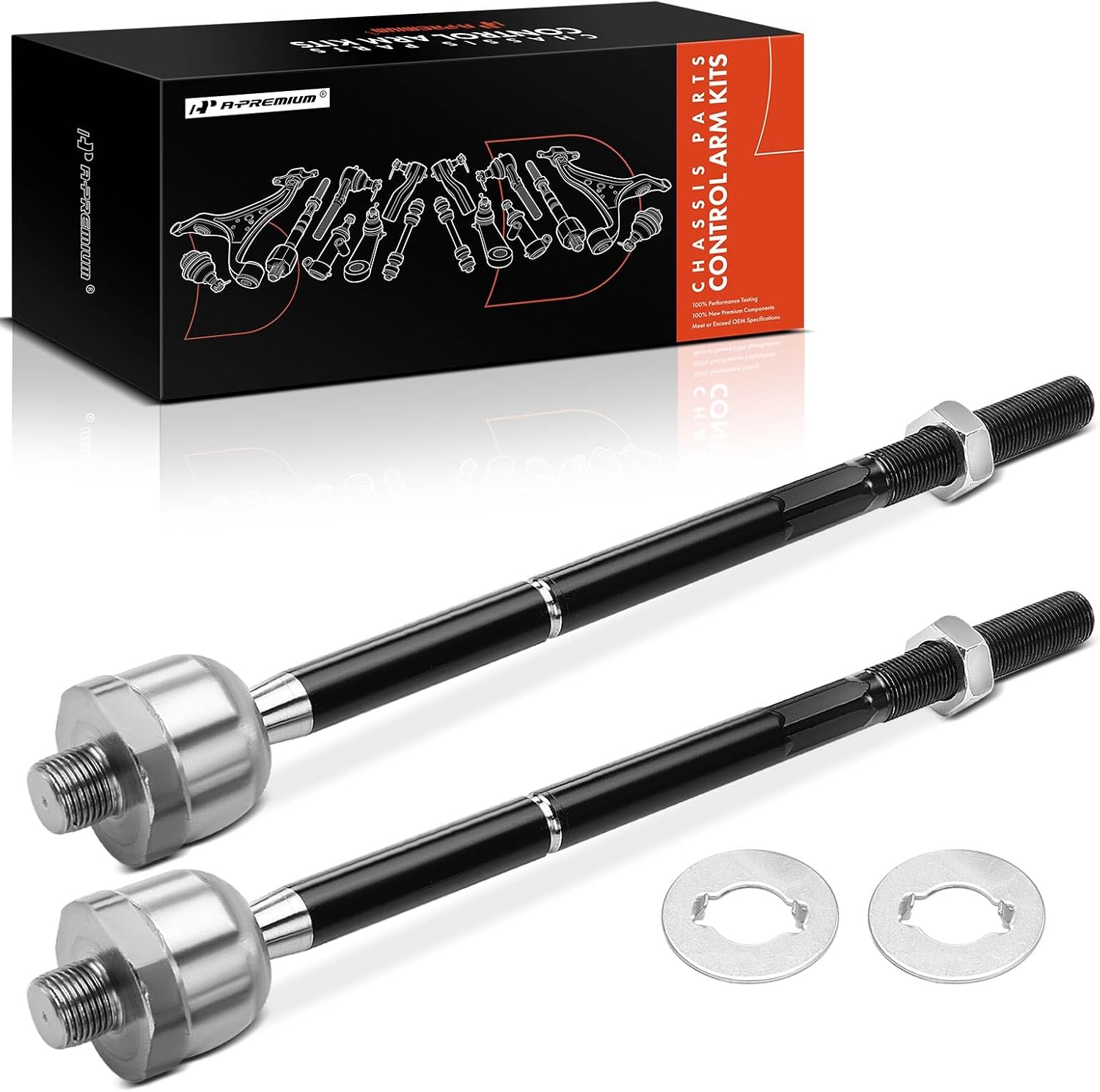
4. A-Premium Front Inner Tie Rod Ends for Silverado/Tahoe/Sierra/Yukon/Escalade
| Position | Front Inner |
|---|---|
| Exterior | Corrosion-Resistant Coating |
| Ball Stud Material | Steel |
| Pre-Greased | Yes |
These A-Premium front inner tie rod ends are a set of direct-fit replacements intended for late-model full-size GM trucks and SUVs. They install in the front inner position on compatible Silverado, Sierra, Tahoe, Suburban, Yukon, and Escalade models and are meant to address loose steering, uneven tire wear, and suspension noise. The parts come pre-greased and feature a corrosion-resistant coating and steel ball stud for durability in everyday driving. Fitment is OEM-style which simplifies installation for a mechanically inclined DIYer or a shop doing a budget steering repair. The practical benefits are straightforward: restored steering responsiveness and reduced pull or play without needing upgraded components. Limitations are that these are economy aftermarket parts rather than upgraded performance pieces, and they do not include a grease fitting so long-term maintenance may require replacement rather than re-greasing in place. Expect good value for routine repairs on common GM trucks and SUVs where cost is a primary concern.
Best for: Buyers looking to restore tight steering and correct suspension-related tire wear on a budget who want a straightforward, direct-fit replacement for late-model GM full-size trucks and SUVs.
Less Ideal for: Drivers seeking upgraded performance steering components or parts designed for heavy-duty or off-road use should consider higher-end alternatives.
- Pre-greased and ready to install, reducing initial prep time
- Corrosion-resistant coating for improved longevity in road conditions
- Steel ball stud provides durable steering connection under normal use
- Direct-fit design simplifies replacement on specified GM models
- No grease fitting included, limiting on-vehicle re-lubrication options
Verdict: A practical, budget-focused direct-fit inner tie rod end set that restores steering feel and fixes common suspension play on late-model GM full-size trucks and SUVs.
5. Detroit Axle Front Inner and Outer Tie Rods Replacement Kit (4-piece)

| Manufacturer | Detroit Axle |
|---|---|
| Manufacturer Part Number | 4S1300702 |
| Special Features | Replacement for 2014–2019 Chevy/GMC/Cadillac full-size models |
| Item Weight | 7.28 pounds |
This Detroit Axle kit supplies two front inner tie rods and two front outer tie rods to replace worn steering end components on compatible full-size Chevrolet, GMC and Cadillac vehicles. Installation is the typical steering-end replacement workflow: remove the wheel, separate the old tie rod ends, transfer or set the correct alignment settings, then torque the new studs and jam nuts. The parts are offered as a matched kit, which simplifies sourcing both inner and outer pieces at once and reduces return trips to the parts store. Detroit Axle says the components undergo fatigue and wear testing and the company backs them with a long warranty, which offers extra reassurance for buyers concerned about longevity. Expect factory-style fitment and handling similar to a direct replacement, though a professional alignment after install remains necessary. Fitment is limited to the model years listed, so confirm vehicle compatibility before purchase.
Best for: Buyers who prioritize confirmed fitment and documented durability and who want a matched inner/outer tie rod kit to restore steering feel without hunting multiple parts.
Less Ideal for: Anyone who needs universal or cross-model fitment or who prefers upgraded performance steering components rather than factory-style replacements.
- Complete matched kit includes both inner and outer front tie rods for one side of the vehicle pair, simplifying replacement
- Manufactured and tested for wear and fatigue to support reliable steering performance
- Targeted fitment for specific 2014–2019 Chevrolet, GMC and Cadillac models reduces guesswork on compatibility
- Backed by a long warranty for added peace of mind
- Requires professional or DIY alignment after installation to ensure proper steering and tire wear
Verdict: Choose this matched inner and outer tie rod kit when you want a verified, warranty-backed factory-style replacement to restore steering performance on compatible Chevy and GMC full-size SUVs and trucks.
6. Detroit Axle Front Inner Tie Rods (2) for 2007–2014 Chevrolet/GMC Full-Size Trucks and SUVs

| Manufacturer | Detroit Axle |
|---|---|
| Kit Includes | 2x Front Inner Tie Rod Ends |
| Compatible Years | 2007-2014 |
| Vehicle Applications | Chevrolet/GMC full-size trucks and SUVs |
These Detroit Axle front inner tie rods replace the factory inner tie rod ends on 2007–2014 Chevrolet and GMC full-size trucks and SUVs. Sold as a two-piece set for the driver and passenger sides, they are built and tested to meet typical steering and suspension demands and include corrosion protection and fatigue-tested construction. Installation is the same as a standard tie rod swap and is commonly done during a wheel alignment service; the parts are intended to restore steering feel and correct play without modifying other steering components. Strengths are the vehicle-specific fitment, the set including both inner tie rods, and Detroit Axle's stated testing processes which suit maintenance-minded buyers. Limitations are that you still need a professional alignment after install and these are direct replacements rather than upgraded performance pieces, so drivers seeking heavy-duty or performance steering components should look elsewhere. For a straightforward, factory-style replacement to eliminate looseness and return proper steering geometry, these perform as expected.
Best for: Buyers who want a reliable, factory-style steering repair to eliminate play and restore proper steering geometry on late-2000s to early-2010s full-size Chevy/GMC trucks and SUVs.
Less Ideal for: Drivers looking for heavy-duty, performance, or motorsport steering upgrades or those who prefer parts with documented aftermarket performance enhancements.
- Vehicle-specific fitment for 2007–2014 Chevrolet and GMC full-size trucks and SUVs
- Sold as a matched pair to replace both front inner tie rods at once
- Manufactured with impact, wear, and fatigue testing for durability
- Designed to restore steering tightness and correct play without additional modifications
- Direct replacement only and not an upgraded heavy-duty or performance part
- Requires professional alignment after installation
Verdict: A practical, tested factory-style replacement set that reliably restores steering feel and fitment on 2007–2014 Chevy and GMC full-size trucks and SUVs.
Choosing the Right Chevrolet Tahoe Inner Tie Rod End: Key Factors to Consider
Fitment and Thread Compatibility
Correct fitment is essential because inner tie rod ends differ in overall length, stud thread pitch, and connection type to the steering rack. On a Chevrolet Tahoe, a mismatch can make installation impossible or leave the steering geometry out of specification even if the part threads on. Always confirm the inner tie rod end matches the Tahoe steering rack interface and any associated retaining hardware.
Beyond the basic thread match, attention to taper, stud diameter, and boot clearance matters. A part that fits but sits slightly off can change toe and thrust angles after installation. Proper fitment reduces the risk of premature wear on connected outer tie rod ends and steering components, and it simplifies alignment after replacement.
Durability and Materials
Inner tie rod ends take high steering loads and are exposed to road debris, moisture, and salt, so construction quality matters. Look for heavy-gauge steel or forged components with robust plating to resist corrosion. The ball stud and housing should be machined to tight tolerances to limit play over time.
Sealing and boot materials also drive longevity. A durable elastomer boot with an effective seal and a greaseable fitting where applicable helps keep contaminants out. Durability choices affect service intervals and can reduce the chance of repeat replacement if you tow frequently or use the Tahoe off-road.
Steering Feel and Play
Inner tie rod condition directly influences steering precision. A loose or worn inner tie rod will create notable free play in the steering wheel, vague turn-in, and uneven steering return-to-center. When choosing a replacement, prefer designs with tight manufacturing tolerances and minimal rotational slop to restore crisp steering response.
Some aftermarket units are preloaded or use improved ball surfaces to reduce break-in play. While tighter components can slightly change steering effort, the benefit is more direct steering feedback and better alignment retention, which are especially important for towing or highway driving with a Tahoe.
Boot Design and Sealing
The protective boot keeps grease in and contaminants out; therefore boot design directly impacts service life. On a Tahoe, where underbody exposure is common, look for boots made from resistant elastomers that resist cracking from heat and chemicals. A secure clamp system and a well-shaped boot that resists flex fatigue will limit moisture intrusion.
Poorly sealed boots let dirt and water enter, accelerating wear of the ball stud and causing earlier failure. Good sealing reduces maintenance frequency and helps maintain consistent steering behavior over time.
Ease of Installation and Serviceability
Replacing an inner tie rod on a Tahoe can require rack access or the use of a tie rod tool, so installation complexity matters. Units that include replacement hardware, clear instructions, or grease fittings make the job faster and reduce the chance of installation error. Threaded ends with clear torque specs and factory-style retaining clips help ensure a proper installation.
Consider whether the part allows reuse of existing hardware or requires additional components. A design that simplifies removal and reinstallation saves time and minimizes the need for extra parts during a routine tie rod end replacement.
Corrosion Resistance and Finish
Because Chevrolet Tahoes are often driven in climates with road salt and wet conditions, corrosion resistance is a key longevity factor. Plating, zinc coatings, or other protective finishes slow down rust formation on the ball stud and housing. Corrosion can seize threads and degrade the ball surface, leading to steering play and difficult future servicing.
Assess the quality of welds and the uniformity of protective coatings. Better finishes translate to lower long-term maintenance and less chance of unexpected failures from rust-related degradation.
Signs You Need a New Inner Tie Rod End
Inner tie rod end wear shows up as steering looseness, a wandering vehicle, or uneven tire wear. On a Chevrolet Tahoe, these symptoms can be more pronounced due to the vehicle's size and weight, especially when towing or carrying heavy loads.
Listen for excessive steering wheel play and watch for a delayed return to center after cornering. Visual inspection may reveal a torn boot, grease leakage, or noticeable play when the wheel is moved by hand with the vehicle lifted.
- Loose or vague steering feel at low speeds
- Uneven or accelerated tire wear on the front axle
- Torn or missing protective boot with visible grease loss
- Vibration or shimmy through the steering wheel at certain speeds
How Inner Tie Rod Wear Affects Alignment
Inner tie rod end wear alters toe settings because play at the rack translates into inconsistent wheel angles. Even if you have a recent alignment, a worn inner tie rod can let toe drift during driving, causing uneven tire wear and reduced directional stability on the Tahoe.
After replacing an inner tie rod end, expect an alignment check. Proper installation that restores tight steering geometry helps the alignment remain within spec longer, especially when paired with good-quality outer tie rod components.
- Play at the inner tie rod can cause toe change under load
- Alignment after replacement ensures predictable handling
- Replacing the inner and inspecting outer tie rods helps stabilize settings
Maintenance Tips to Extend Service Life
Regular visual inspections help catch early boot damage or grease loss. If the inner tie rod end on your Tahoe has a grease fitting, periodic lubrication can extend life by flushing out contaminants and maintaining proper lubrication on the ball stud.
Avoid prolonged exposure to corrosive environments when possible and clean the underbody after winter driving. Addressing early symptoms such as small amounts of play or a cracked boot can prevent full failure and more costly suspension repairs.
- Inspect tie rod boots during oil changes or tire rotations
- Grease fittings, when present, should be serviced per the vehicle maintenance schedule
- Clean undercarriage after exposure to road salt
Tools and Preparation for Replacing an Inner Tie Rod End
Replacing an inner tie rod end on a Chevrolet Tahoe typically requires a tie rod puller or inner tie rod tool, a rack nut socket if applicable, and proper torque tools. Jack stands and a secure lift point are necessary because you will need stable access to the steering rack and tie rod assemblies.
Plan for an alignment after replacement and have the necessary hardware ready, such as new lock nuts or clips if the original components are corroded. Following torque specifications and using the correct tool reduces the chance of damaging threads or the steering rack seal.
- Tie rod end tool or inner tie rod socket
- Torque wrench and breaker bar
- Jack stands and wheel chocks
- Replacement lock nuts or retaining clips
When to Replace Inner and Outer Tie Rod Ends Together
If the inner tie rod end shows significant wear, the outer tie rod end may also be near the end of its service life because wear often progresses across the entire tie rod assembly. Replacing both at the same time ensures consistent steering feel and simplifies alignment.
Replacing both components is especially sensible if you notice play at multiple pivot points, if boots on either end are torn, or if the vehicle has high mileage and has seen heavy duty cycles. Doing both together reduces the chance of redoing work shortly after an alignment.
- Multiple worn components cause compounded steering play
- Simultaneous replacement helps maintain correct toe settings
- Saves labor time versus staggered replacements
Still looking for the perfect fit?
Select your Chevrolet Tahoe configuration to see the most relevant Tie Rod Ends recommendations
How We Chose the Best Chevrolet Tahoe Inner Tie Rod End
We focused on fitment, durability, steering performance, corrosion resistance, and ease of installation specific to the Chevrolet Tahoe when selecting inner tie rod ends for this list. Fitment was the first filter: only units that match the Tahoe's steering geometry and provide correct thread pitch and length were considered. Durability measures included material and plating, boot quality, and expected service life under towing and off-road conditions.Steering performance assessments prioritized units engineered to minimize slop and maintain consistent steering center feel. Corrosion resistance and sealing were judged because Tahoes are often exposed to road salt and moisture. Ease of installation and availability of replacement hardware or grease fittings were also factors so owners could replace the part without unnecessary suspension disassembly. We excluded products lacking clear fitment data, substandard construction, or those with frequent failure reports under heavy use. The final list balances long-term durability with realistic installation effort and alignment stability.
Our full evaluation process is outlined in our review methodology.
FAQ
How do I know if the inner tie rod end on my Tahoe is bad?
Common indicators include excessive steering wheel play, a wandering feel at highway speeds, uneven front tire wear, and a torn boot with grease leakage. A visual inspection and a hands-on check for play with the front wheels lifted usually confirm the diagnosis.
Can I replace just the inner tie rod end or should I do the outer one too?
You can replace only the inner tie rod end if the outer is in good condition. However, if the outer tie rod shows wear or the boots are damaged, replacing both together ensures consistent steering feel and reduces the chance of needing another alignment soon after.
Will replacing the inner tie rod end fix my alignment issues?
Replacing a worn inner tie rod end can restore the steering geometry that was causing toe variation, but you should always get a wheel alignment after replacement. The new part restores stability, but alignment settings need verification and final adjustment.
Is an inner tie rod end replacement difficult to do at home on a Tahoe?
Difficulty depends on your tools and experience. You will need an inner tie rod tool or appropriate sockets, jack stands, and a torque wrench. Some access to the steering rack is required, and doing the job carefully prevents damage to the rack boot or threads.
How long do inner tie rod ends typically last on a Chevrolet Tahoe?
Service life varies with driving conditions, but under normal road use they often last many tens of thousands of miles. Harsh environments, heavy towing, or off-road use accelerate wear, so inspection intervals should be more frequent in those cases.
Does a torn boot mean the inner tie rod end must be replaced?
A torn boot is a concern because it allows contaminants to enter and accelerates wear. If the ball stud shows no play and there is minimal contamination, you may be able to replace the boot or grease the joint. Often, technicians recommend replacement when a boot has failed to avoid future issues.
Final Verdict
When replacing inner tie rod ends on a Chevrolet Tahoe, prioritize correct fitment, robust sealing, and tight manufacturing tolerances to restore steering precision and preserve alignment. Consider replacing worn outer tie rod ends at the same time if they show signs of wear to avoid compounding steering play.Weigh the tradeoffs between an easy-install, serviceable design and higher-grade materials that resist corrosion and wear. After installation, schedule a professional alignment to lock in steering geometry and get the most reliable handling from your Tahoe.
Explore More:
- Check out all Chevrolet Tahoe parts & accessories
- Explore Tie Rod Ends Maintenance & Repair Guides
- Explore Suspension & Steering
- Browse all Auto Parts
