

Note: This article contains affiliate links. If you click on these links and make a purchase, I may earn a small commission at no extra cost to you. This helps support my research and content. Read my full affiliate disclosure here.
Upgrading the suspension on a 1998-2002 Honda Accord can dramatically change how the car rides, handles, and responds to everyday driving. Whether you want a firmer setup for spirited cornering or a more compliant arrangement for comfort, choosing the right suspension kit matters because fit, spring rates, and damping interact closely with the Accord's chassis and typical loads.This guide covers our shortlisted top suspension kits for the 1998-2002 Accord, explains the key tradeoffs between comfort, handling, and durability, and summarizes the features we prioritized in selection. Read on to understand which type of kit matches your driving goals and how the options differ in setup and intended use.
Looking for other parts? See all Honda Accord parts & accessories.
Top Picks at a Glance


1. Detroit Axle Front 14‑Piece Suspension Control Arm Kit for 1998–2002 Honda Accord / 1999–2003 Acura TL/2001–2003 Acura CL

| Fit Type | Vehicle Specific Fit |
|---|---|
| Auto Part Position | Front |
| Material Type | Alloy Steel, Cast Iron |
| Unit Count | 14.0 Count |
This Detroit Axle 14‑piece front end kit is built to replace worn suspension components on 1998–2002 Honda Accord (and compatible Acura TL/CL) models in one purchase. It includes preassembled upper control arms with ball joints, lower control arms, lower ball joints, inner and outer tie rod ends, sway bar links, and tie rod boots so you can renew the whole front suspension without sourcing parts individually. The parts are made from alloy steel and cast iron and are described as vehicle-specific direct-fit pieces intended for straightforward installation and improved serviceability. For everyday driving the kit restores steering feel, reduces play, and addresses uneven tire wear caused by aging components. Because it is a full kit, it saves time when doing a coordinated front suspension rebuild. Limitations to note are that these are aftermarket replacement parts rather than upgraded performance components, so drivers seeking firmer handling or track use should consider performance-specific options; installation still requires basic suspension tools and alignment after fitment.
Best for: Buyers who want a practical, all-in-one front suspension refresh for a late 90s to early 2000s Accord or compatible Acura and prioritize restoring factory ride quality and eliminating play.
Less Ideal for: Drivers looking for sportier or performance-tuned suspension components or those who prefer to replace or upgrade individual parts piecemeal rather than a full kit.
- Complete kit covers all major front suspension pieces so you can replace related wear items in one job
- Preassembled upper control arms with ball joints reduce installation steps
- Vehicle-specific direct-fit design simplifies installation compared with mixed aftermarket parts
- Made from alloy steel and cast iron for corrosion resistance and structural strength
- Not intended as a performance upgrade; tuned handling improvements are limited
- Installation requires suspension tools and a professional alignment after replacement
Verdict: A convenient, vehicle-specific front suspension kit that restores factory steering feel and eliminates worn-component play in one comprehensive purchase.
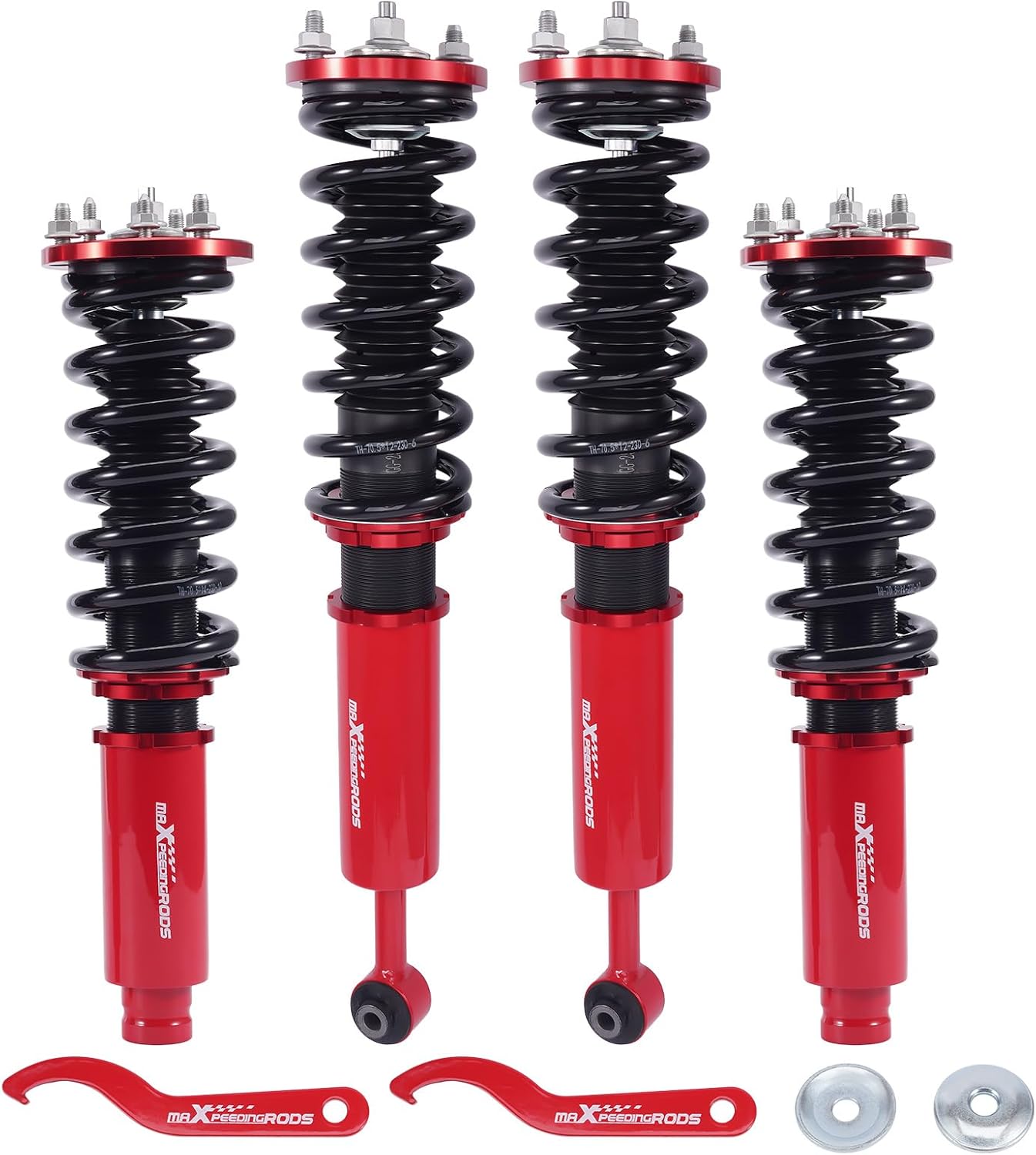
2. maXpeedingrods Height-Adjustable Coilovers for 1998–2002 Honda Accord
| Auto Part Position | Front |
|---|---|
| Compatible with Vehicle Type | Car |
| Automotive Fit Type | Vehicle Specific Fit |
| Material Type | Alloy Steel, Aluminum |
These maXpeedingrods coilovers replace the factory front and rear suspension with a fully height-adjustable kit aimed at drivers who want a lower, firmer ride and sharper handling on a 1998–2002 Honda Accord. Installation provides 1 to 3 inches of drop to achieve an aggressive stance and improved steering response. The kit uses twin-tube dampers and steel springs rated front 10 kg/mm and rear 6 kg/mm to balance comfort and control for street driving; the twin-tube design gives more stroke and softer joint loads than a typical monotube setup. Components use 6061-T6 aluminum and alloy steel for strength and corrosion resistance. Notable practical benefits are the preset damping that simplifies setup and the durable surface treatments on springs to reduce distortion over long-term use. Limitations include that these are not a direct match to factory ride height so expect a firmer, lower ride and potential need for alignment and corner balancing after fitting. Owners seeking full motorsport adjustability may find the preset damping less flexible than multi-click dampers.
Best for: Drivers who prioritize sharper street handling and a lowered stance on a 1998–2002 Accord and want a mostly turn-key coilover that improves steering response without complex damping setup.
Less Ideal for: Buyers seeking a soft, OEM-like daily ride or full race-spec adjustability should consider touring shocks or fully adjustable performance coilovers instead.
- Height adjustable 1–3 inches for a lower stance and improved steering feel
- Twin-tube damper design provides longer stroke and a more compliant ride than many monotube kits
- Front and rear spring rates specified to tune handling balance (10 kg/mm front, 6 kg/mm rear)
- 6061-T6 aluminum and alloy steel construction for strength and corrosion resistance
- Preset damping simplifies setup for street-focused drivers
- Damping is factory preset rather than multi-click adjustable for fine-tuning
- Does not retain original factory ride height so ride becomes noticeably firmer
Verdict: Choose these coilovers if you want a durable, height-adjustable kit that sharpens handling and gives a lower, more aggressive stance on a 1998–2002 Honda Accord.
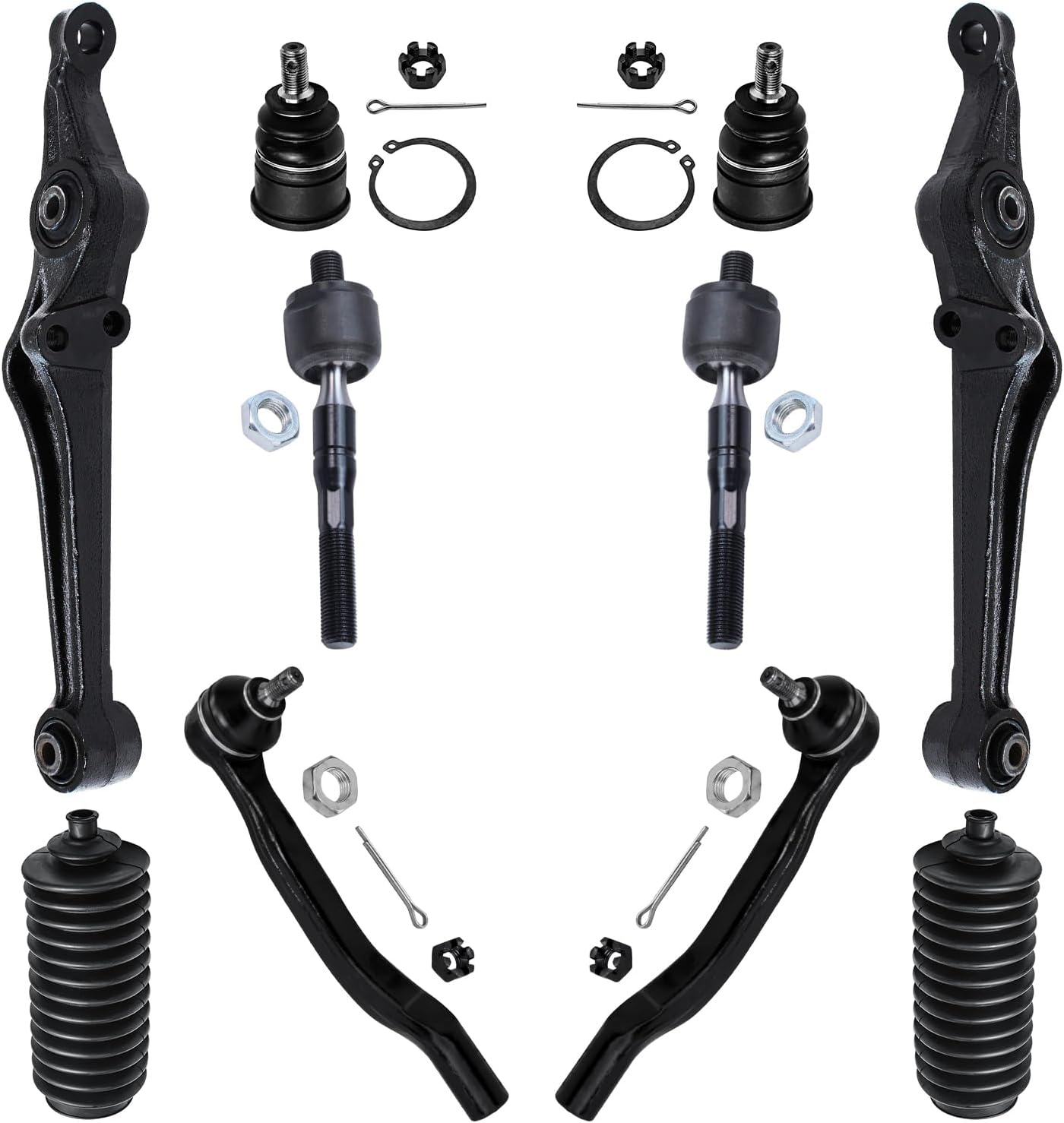
3. Detroit Axle 10pc Front Suspension Kit for 1998–2002 Honda Accord (Lower Control Arms, Ball Joints, Tie Rods)
| Included Components | Front Lower Control Arms, Lower Ball Joints, Tie Rods, Boots |
|---|---|
| Fit Type | Vehicle Specific Fit |
| Auto Part Position | Front Lower |
| Manufacturer Warranty Description | 10-Year Warranty |
This Detroit Axle 10-piece front suspension kit bundles the common front-end wear items for 1998–2002 Honda Accord V6 sedans and coupes into a single purchase. It replaces both front lower control arms, two lower ball joints, four inner and outer tie rod ends, and two tie rod boots so you can refresh steering feel and suspension geometry at once. The components are marketed as vehicle-specific fit and bench-tested for impact and fatigue, which helps simplify installation and reduces the need to source individual parts. For DIY mechanics and independent shops this kit speeds up a multi-component job and ensures matched front-end parts. The parts are aftermarket items, so finish and long-term refinement may differ from factory components, and some installers prefer to grease or torque hardware to factory specs during installation. The included 10-year warranty provides extra confidence, but proper alignment after installation is required to restore steering and tire wear to factory-like behavior.
Best for: Buyers who want a practical, all-in-one front-end refresh for a 1998–2002 Honda Accord and prefer replacing matched suspension components in one job to save time and avoid multiple part orders.
Less Ideal for: Those seeking exact factory-spec replacement parts for concours restoration or users who only need a single component rather than a full kit.
- Comprehensive kit replaces both front lower control arms, lower ball joints, inner and outer tie rod ends and boots in one purchase
- Vehicle-specific fit for 1998–2002 Honda Accord to simplify installation and reduce fitment guesswork
- Components undergo impact and fatigue testing for improved durability over untested aftermarket parts
- Includes tie rod boots and C-clamps so small finishing items are not left out
- Aftermarket construction may differ from factory-quality feel and long-term refinement
- Installer should still perform alignment and may need to re-torque or service components during fitment
Verdict: A convenient vehicle-specific kit that lets practical owners replace the common front suspension wear items on a 1998–2002 Honda Accord in one go.
4. SCITOO 10-piece Front Suspension Kit with Ball Joints, Tie Rod Ends, and Sway Bar Links

| Fitment | 1998-2002 Honda Accord; 1999-2003 Acura TL; 2001-2003 Acura CL |
|---|---|
| Contents | 2 lower ball joints, 2 inner tie rod ends, 2 outer tie rod ends, 4 sway bar end links |
| Pregreased | Yes |
| Brand | SCITOO |
This SCITOO 10-piece front suspension kit bundles the common wear items you would replace when refreshing an older Accord front end. It includes two lower ball joints, inner and outer tie rod ends for the 4-cylinder, and four sway bar end links so you can address steering play, clunking, and excessive vibration in one job. Parts come pregreased, which speeds installation and reduces initial break-in fuss, and the set is aimed at DIYers and independent shops doing a coordinated refresh rather than piecemeal fixes. The practical benefit is a consistent handling feel and restored steering response without hunting down individual parts. Expect factory-style function but be prepared to use standard replacement procedures and alignment afterward. This kit is focused on basic suspension components and does not include control arms or struts, so it is not a complete overhaul for cars with extensive wear; fitment must be confirmed for year and trim before purchase and professional installation is recommended if you are not experienced with suspension work.
Best for: Buyers who want an affordable, consolidated parts kit to fix steering noise, play, or vibration on a 1998–2002 Accord and prefer replacing several front-end components at once to save time and effort.
Less Ideal for: Drivers seeking a full suspension overhaul that includes control arms, bushings, or struts should look for a more comprehensive kit or individual factory-quality replacements.
- Covers multiple common front-end wear parts in one purchase to simplify repairs
- Parts are pregreased for quicker installation and reduced initial maintenance
- Includes both inner and outer tie rod ends plus ball joints and sway bar links for consistent steering restoration
- Does not include control arms or struts so additional parts may be needed for a full front-end rebuild
Verdict: A budget-friendly all-in-one front suspension parts kit that restores steering feel and eliminates common front-end noises on 1998–2002 Honda Accords.
5. SCITOO 8‑Piece Front Suspension Kit for Honda Accord/Acura TL/CL (1998–2003)

| Fit Type | Vehicle Specific Fit |
|---|---|
| Auto Part Position | Front Upper |
| Material Type | Alloy Steel |
| Manufacturer Warranty Description | 1 Year |
This SCITOO eight-piece front suspension kit supplies the main wear items you need to refresh a tired front end on compatible 1998–2003 Accord and Acura TL/CL models. The kit bundles upper control arms with integrated ball joints, lower ball joints, outer tie rod ends, and sway bar end links so you can replace multiple components at once instead of sourcing parts individually. Components are made from alloy steel and arrive pre-greased to simplify installation and reduce initial break-in wear. In practical use the kit restores steering feel and reduces noise from worn joints, and replacing matched components together helps maintain proper alignment and suspension geometry. Installation will typically require basic to intermediate mechanical skill and alignment after fitment. The kit is vehicle specific so confirm year and trim before buying, and professional installation is recommended for safety and correct torqueing; buyer support and a one year replacement promise are provided by the brand.
Best for: Buyers who prioritize dependable, like-for-like replacement of worn front suspension parts on 1998–2002 Accord-family vehicles and want a matched set to restore steering feel and stability.
Less Ideal for: Those looking for upgraded performance components or longer factory-backed warranties should consider aftermarket performance or OEM-sourced alternatives.
- Comprehensive eight-piece set replaces multiple worn front suspension components at once
- Includes upper control arms with ball joints and pre-greased parts to reduce initial maintenance
- Alloy steel construction aimed at durability for road use
- Vehicle specific fit reduces guesswork when ordering for listed model years
- Requires post-installation wheel alignment and likely professional tools for safe installation
- One year replacement coverage is limited compared with longer warranties some brands offer
Verdict: A practical, full front suspension refresh kit that restores steering feel and longevity by replacing all the common wear items in one matched set.
6. Detroit Axle Front End Suspension Kit for 1998–2002 Honda Accord (V6 3.0L Sedan)

| Fitment | 1998–2002 Honda Accord V6 3.0L Sedan |
|---|---|
| Kit contents | 2 upper control arms w/ ball joints, 2 lower control arms, 4 tie rod ends, 2 sway bar links, 2 tie rod boots |
| Position | Front |
| Manufacturer | Detroit Axle |
This Detroit Axle front end kit supplies everything needed to refresh the Accord front suspension: two upper control arms with ball joints, two lower control arms, four inner and outer tie rod ends, two sway bar links, and two tie rod boots with clamps. It is intended for DIY mechanics or independent shops doing a comprehensive front-end rebuild and is typically used to remove play, fix steering wander, and restore proper alignment. Notable features include preassembled ball joints on the uppers and included hardware to fit directly in place, plus parts that undergo basic impact and fatigue testing. In real use the kit offers strong value because it replaces multiple wear items at once and can save time sourcing parts individually. Expect to need basic press or puller tools, grease fittings to be installed or serviced, and a post-install alignment. Some buyers report variable long-term durability compared with higher-end brands, so plan to inspect fasteners and greasable fittings after initial miles. This kit is a practical, cost-conscious way to get a worn Accord back to stable steering and ride quality when paired with a professional alignment.
Best for: Buyers seeking a budget-conscious, single-purchase solution to replace worn front suspension components on an earlier Accord who value a complete kit and supporting user feedback when weighing risk.
Less Ideal for: Drivers who prioritize maximum longevity and heavy-duty use should consider higher-end branded components or replacing individual parts with premium replacements instead.
- Complete kit replaces multiple front suspension wear items in one purchase
- Includes upper control arms with ball joints for straightforward swap
- Parts designed and tested for impact, wear, and fatigue to meet aftermarket durability expectations
- Saves time and cost compared with buying each part separately
- Some users report inconsistent long-term durability compared with premium brands
- Installation may require specialty tools (presses, pullers) and re-greasing of fittings
Verdict: If you want an affordable, all-in-one front suspension refresh for a 1998–2002 Accord V6 that replaces every common wear item at once, this kit delivers clear value.
7. Detroit Axle 12‑Piece Front Suspension Kit for 1998–2002 Honda Accord / 1999–2003 Acura TL & 2001–2003 Acura CL

| Fitment | 1998–2002 Honda Accord (2.3L Sedan) 1998–2002; 2001–2002 Accord Coupe; 1999–2003 Acura TL; 2001–2003 Acura CL |
|---|---|
| Kit contents | 4 upper/lower control arms, 2 lower ball joints, 4 tie rod ends, 2 sway bar links |
| Material Type | Alloy Steel |
| Fit Type | Vehicle Specific Fit |
| Manufacturer Part Number | 80022-12A |
This Detroit Axle suspension kit supplies the major front steering and control arm components needed to rebuild the front suspension on compatible 1998–2002 Honda Accord variants and related Acura TL and CL models. The kit bundles four upper and lower control arms (two with ball joints), two lower ball joints, four inner and outer tie rod ends, and two sway bar links so you can refresh steering geometry and suspension links in one job. Parts are made from alloy steel and sold as direct-fit replacements intended to match factory fit and function, which simplifies installation for a DIYer or independent shop. The practical benefit is improved steering feel and reduced play compared with worn factory parts, and replacing multiple wear items at once avoids repeat labor. Limits: this is a vehicle-specific replacement set so it must match the exact model and engine/coupe or sedan configuration listed, and it does not include struts, bearings, or hardware beyond the listed pieces. Also heavier crash or performance use may call for upgraded aftermarket heavy‑duty components instead of a factory-style kit.
Best for: Buyers looking for a reliable, factory‑style refresh of the front suspension on qualifying 1998–2002 Honda Accord and matching Acura TL/CL models who prioritize minimizing repeat shop labor and maintaining factory handling.
Less Ideal for: Drivers seeking heavy‑duty performance upgrades, race use, or those needing suspension components for different vehicle models or years not listed in the fitment.
- Complete front kit consolidates control arms, ball joints, tie rod ends, and sway bar links for one‑time installation
- Alloy steel construction and reinforced structure aimed at resistance to wear and corrosion
- Designed as direct-fit replacements to match factory fit and simplify installation
- Does not include struts, wheel bearings, or miscellaneous fasteners beyond the listed components
Verdict: If you need a complete, factory‑style front suspension refresh for the specified 1998–2002 Accord and related Acura models, this all‑in‑one Detroit Axle kit simplifies the job and restores steering and link tightness.
Choosing the Right 1998-2002 Honda Accord Suspension Kit: Key Factors to Consider
Fitment and Mounting Compatibility
Correct fitment to the 1998-2002 Accord chassis is the baseline requirement. Differences in front strut top mounts and rear shock attachments mean a kit built for this generation should include or specify compatible plates, studs, and bushings. Incorrect or incomplete mounting hardware increases install time and can compromise alignment settings.
Confirming that the kit references the 1998-2002 Accord mounting points reduces risk of needing additional parts. If a kit offers multiple top-mount options, that flexibility can help owners match factory geometry or adopt slight camber adjustments without aftermarket machining.
Spring Rates and Ride Height
Spring rate determines how the car reacts to bumps and cornering loads, while ride height affects suspension travel and steering geometry. For an Accord of this era, choose spring rates that suit your typical load and driving style: softer rates for daily comfort, firmer rates for sharper response and reduced body roll.
Lowering height should be modest if you want to retain safe suspension travel and avoid bottoming on street conditions. Conversely, overly soft springs with a lot of drop will increase the chance of rubbing, premature wear, or reduced rebound control.
Damping Control and Adjustability
Damping controls how the vehicle settles after a bump and how it resists body motions during braking and cornering. Adjustable damping lets you tune for comfort or a sportier feel without changing springs. For Accord owners who use the car for both commuting and occasional spirited driving, damping adjustability offers the best compromise.
Non-adjustable monotube or twin-tube shocks can still be adequate if matched to appropriate spring rates, but they limit the ability to fine-tune ride balance between front and rear. Look for kits that allow stepwise or continuous damping adjustments if on-road tuning matters to you.
Durability and Corrosion Resistance
Components on a 1998-2002 Accord will see years of exposure, so corrosion-resistant finishes and robust mounts matter for long-term performance. Zinc plating, powder coating, and stainless fasteners extend service life and maintain predictable suspension behavior.
Bushing materials also impact longevity; durable elastomers or polyurethane inserts can resist deformation but may slightly increase noise and vibration compared with softer bushings. Consider the local climate and exposure to road salt when prioritizing corrosion protection.
Installation Complexity and Included Hardware
Some kits are near-direct replacements while others require additional parts or alignment corrections after fitment. Kits that include top mounts, sway bar links, and replacement hardware reduce installation time and cost for most owners. For the 1998-2002 Accord, confirm whether the rear shock mounts and strut towers are addressed by the kit to avoid surprises.
If you plan to install at home, check whether the kit requires spring compressors, special sockets, or alignment services afterward. Clear instructions and labeled components simplify the process and lower the risk of improper installation.
Intended Use and Tuning Flexibility
Decide whether the goal is daily comfort, occasional track days, or show-level stance, because each use case favors different kit characteristics. Coilover-style kits provide the most tuning flexibility with adjustable preload and ride height, making them better suited for mixed-use owners who want to tune handling. Fixed strut-and-spring kits are usually cheaper and simpler but limit tuning options.
Choosing a kit that aligns with intended use reduces the likelihood of unpleasant compromises such as a harsh daily ride from a track-focused setup or insufficient control from a comfort-oriented kit during spirited driving.
Choosing Between Coilovers and Strut-and-Spring Packages
Coilovers combine shock and spring into an integrated unit and often allow ride-height and damping adjustments. For the 1998-2002 Accord, coilovers give the most control over stance and handling balance but require careful setup to avoid negative effects on alignment and suspension travel.
Strut-and-spring packages replace the shock absorber and springs separately and usually maintain factory mounting geometry. These kits generally preserve a more comfortable ride and are simpler to install for owners prioritizing day-to-day usability.
- Coilovers: greater adjustability, potential for better handling, increased setup complexity
- Strut-and-spring: simpler fitment, more factory-like ride, less tuning flexibility
Alignment Considerations After Suspension Changes
Any change to ride height or spring rates affects camber, toe, and sometimes caster. After installing a suspension kit on a 1998-2002 Accord, a full alignment is necessary to restore correct tire wear and steering feel. Adjustable components on some kits allow you to dial in alignment without additional aftermarket arms.
When lowering the car, be mindful of negative camber gain and the potential for inside tire wear. If a kit lacks camber-adjusting features, consider alignment settings that balance wear and handling.
- Always get a post-installation alignment
- Check caster and camber after significant height changes
- Consider adjustable top mounts or camber kits if you lower extensively
Common Installation Pitfalls and How to Avoid Them
Older Accords can have seized bolts, corroded strut towers, or worn hatch and trunk load paths that complicate installation. Inspect mounting points and replace rusted fasteners before starting to avoid breakage during disassembly. Use penetrating lubricant and the correct-size tools to minimize damage.
Compressing springs and handling strut assemblies requires proper tools and safety precautions. If you lack a spring compressor or the experience, professional installation reduces risk. Verify torque specs and follow the kit's instructions for preload and damper setup to ensure the intended performance.
- Inspect and replace corroded hardware before install
- Use proper tools for spring compression
- Follow torque specifications and initial damper settings
How Different Spring Materials and Bushing Types Affect Feel
Steel springs remain standard and provide predictable behavior; some aftermarket springs use higher-grade steel for reduced sag and consistent rates over time. Polyurethane bushings increase steering precision and part longevity but can transmit more NVH compared with rubber.
Understanding material tradeoffs helps set expectations. If you prioritize a quiet, comfortable cabin, softer bushings and factory-style springs may be preferable. If crisp steering response is the focus, stiffer materials and firmer bushings support that goal.
- Standard steel springs: predictable, durable
- Higher-grade steel: reduced sag over time
- Polyurethane bushings: improved responsiveness, more NVH
Maintaining Your Suspension After Installation
Regular inspection extends the life of any suspension kit. Check for leaks, bushing deterioration, and fastener looseness after the first few hundred miles and at regular intervals thereafter. Early detection of wear helps avoid secondary damage to tires or alignment.
If your kit has adjustable components, mark preferred settings once dialed in so you can return to them after maintenance. Clean exposed threads and apply anti-seize to adjustable collars to prevent them from locking in place over time.
- Inspect for leaks and worn bushings regularly
- Re-torque mounting hardware after initial break-in
- Protect adjustable collars with anti-seize and periodic cleaning
Still looking for the perfect fit?
Select your Honda Accord configuration to see the most relevant Suspension Kits recommendations
How We Chose the Best 1998-2002 Honda Accord Suspension Kit
We focused on criteria that directly affect how a suspension kit will perform on a 1998-2002 Honda Accord and how easy it is for an owner to fit and enjoy the upgrade. Primary evaluation dimensions included fitment accuracy and hardware completeness, ensuring the kit accommodates the Accord front and rear mounting points and any vehicle-specific top mounts or strut housings. Ride quality and damping range were assessed next, with an emphasis on whether the kit offers a usable adjustment window or factory-like comfort depending on the intent.Durability and corrosion resistance were included because older Accord chassis can be harsh on suspension hardware; we prioritized kits using thicker mounting plates, zinc or powder coatings, and replaceable bushings. Installation aspects factored heavily: we favored kits that include key components such as top mounts, sway bar links, and clear instructions to reduce modification time. Tuning flexibility and adjustability rounded out the list, looking for height or damping tunability where appropriate for owners who fine-tune handling.We excluded partial or component-only listings that lacked necessary mounting hardware or clear Accord fitment. Kits meant exclusively for motorsport use that require extensive chassis modification were also filtered out to keep recommendations practical for typical owners.
Our full evaluation process is outlined in our review methodology.
FAQ
Will a suspension upgrade kit change my Accord's alignment needs?
Yes. Any change in ride height or spring rate affects camber and toe. Expect to get a full alignment after installation to prevent uneven tire wear and ensure predictable steering.
Can I install a suspension kit at home on a 1998-2002 Accord?
Many kits are designed for home installation, but work on struts requires a spring compressor and proper tools. If you lack experience with spring compression or alignment, professional installation is recommended to ensure safety and correct setup.
How much drop is safe for daily driving on this Accord generation?
A modest drop of one to two inches is generally safe for daily driving, preserving suspension travel and minimizing rubbing. Larger drops increase the chance of clearance issues and may require additional modifications or alignment adjustments.
Do adjustable damping settings make a big difference on street roads?
Adjustable damping lets you tune between comfort and sport settings, and it often produces noticeable changes in body control and ride firmness. Even a few clicks can help tailor the Accord's behavior to your driving preferences.
What maintenance should I do after installing a new suspension kit?
Check for leaks, inspect bushings, and re-torque fasteners after the initial break-in miles. Periodic visual inspections and cleaning of adjustable parts will help maintain performance and prevent corrosion-related failures.
Final Verdict
Choosing the right suspension kit for a 1998-2002 Honda Accord comes down to matching intended use with the kit's characteristics. Prioritize fitment that addresses the Accord's mounting points, sensible spring rates for your driving, and damping adjustability if you anticipate varying driving conditions. Be realistic about tradeoffs: sharper handling often comes with a firmer ride and potential increases in NVH.When you balance these factors and plan for proper installation and alignment, you can select a kit that improves control, maintains comfort for daily driving, and lasts through years of use on the Accord chassis.
Explore More:
- Check out all Honda Accord parts & accessories
- Explore Suspension Kits Maintenance & Repair Guides
- Explore Suspension & Steering
- Browse all Auto Parts
