

Note: This article contains affiliate links. If you click on these links and make a purchase, I may earn a small commission at no extra cost to you. This helps support my research and content. Read my full affiliate disclosure here.
If you own a 2009-2013 Subaru Forester, the right spark plugs can make a big difference in drivability, fuel economy, and engine starting. Worn or incorrect plugs commonly cause rough idle, harder cold starts, and occasional misfires. This guide covers six top spark plug options shortlisted for this Forester generation and explains the practical tradeoffs between longevity, ignition performance, and heat range.We evaluated candidates based on longevity, ignition consistency, compatibility with Subaru engine tolerances, and how they affect symptoms like rough idle and cold-start misfire. Read on to understand what to prioritize for your driving style and maintenance plan before you decide on a replacement set.
Looking for other parts? See all Subaru Forester parts & accessories.
Top Picks at a Glance
| Best Overall The best all-around choice for most situations | PHILTOP UF625 Ignition Coil Pack and Iridium Spark Plug Kit |  |
| Best Value The sweet spot between price and what you get | WJAUTO Iridium Spark Plugs 4-Pack, Pre-Gapped OEM Replacement for Subaru 2.5L H4 |  |
| Best Budget The cheapest option that still gets the job done reliably | NGK 5464 Iridium Spark Plug (IX Series) |  |
| Highest Rated A top-rated pick with lots of positive feedback | Genuine Subaru Spark Plugs 22401AA781 — Set of 4 |  |
| Most Popular A crowd favorite that many people choose with confidence | NGK BKR5EGP G-Power Nickel Spark Plug, 4-pack |  |
| Best Seller A high-volume bestseller chosen again and again | NGK BKR5E-11 Copper Spark Plug — Set of 4 |  |
1. PHILTOP UF625 Ignition Coil Pack and Iridium Spark Plug Kit

| Included components | 1x Ignition Coil UF625, 4x Spark Plug 7090 |
|---|---|
| Automotive fit type | Vehicle Specific Fit |
| Manufacturer warranty description | 2 YEARS |
This PHILTOP kit pairs one UF625 ignition coil pack with four iridium 7090 spark plugs to replace worn ignition components on compatible Subaru 2.5L engines. It is designed as a direct factory-quality replacement to restore spark energy, reduce misfires, and improve idle stability and throttle response. Typical use is a routine tune-up or targeted repair when a misfire or hard start points to ignition failure. The iridium plugs offer longer service life and more consistent firing than basic copper plugs, while the matched coil helps ensure correct fit and connector alignment. Practical benefits include easier installation by matching OEM fitment and a bundled approach that avoids mixing new plugs with an old coil. Limitations are that the kit includes only one coil pack, so vehicles needing multiple coil replacements must buy additional coils, and fitment is limited to the listed Subaru models and years so verification before purchase is required.
Best for: Buyers who want a balanced, practical tune-up solution that replaces ignition hardware with factory-quality equivalents and values reliability and straightforward installation for everyday driving.
Less Ideal for: Drivers who need a full set of coil packs for multiple failed coils or those who require high-performance or race-oriented ignition components.
- Includes both ignition coil and four iridium spark plugs for a coordinated tune-up
- Designed to match factory fit and connector layout for straightforward installation
- Iridium spark plugs provide longer life and more consistent spark than standard plugs
- Restores ignition performance to reduce misfires, rough idle, and hesitation
- Kit contains only one ignition coil pack, so additional coils must be purchased if multiple cylinders need replacement
Verdict: A convenient, factory-style tune-up bundle that restores ignition reliability for compatible Subaru 2.5L models by pairing a matched coil with iridium plugs.
2. WJAUTO Iridium Spark Plugs 4-Pack, Pre-Gapped OEM Replacement for Subaru 2.5L H4

| Brand | WJAUTO |
|---|---|
| Compatibility | Subaru 2.5L H4 (select years) |
| Pack quantity | 4 |
| Center electrode | Iridium |
These WJAUTO iridium spark plugs are a direct-replacement option for Subaru 2.5L H4 engines and come as a four-pack pre-gapped to factory specifications. In daily use they deliver quicker ignition and crisper throttle response compared with standard copper plugs thanks to the fine iridium center electrode, and the manufacturer claims up to 80,000 km service life which reduces how often you need to replace plugs. The pre-gapped fit makes them convenient for DIY tune-ups or professional installs, and the package and imagery suggest they are intended to match factory fit and reach. Practical benefits include improved combustion efficiency, reduced carbon buildup, and longer intervals between changes. Limitations are that claimed lifespan depends on driving conditions and proper installation, and buyers should verify exact year/engine fitment before ordering since compatibility is limited to specific Subaru 2.5L H4 model years.
Best for: Buyers who want a durable, maintenance-minimizing factory-style replacement that improves ignition response and reduces how often plugs need changing, especially those who do their own tune-ups or prefer straightforward installs.
Less Ideal for: Drivers seeking specialty performance or racing plugs with different heat ranges or electrode designs should look at dedicated performance options instead.
- Iridium center electrode for faster ignition and improved throttle response
- Pre-gapped to factory specifications for plug-and-play installation
- Designed for long service life with claimed durability up to 80,000 km
- Sold as a four-pack to replace all cylinders at once
- Longevity claim depends on operating conditions and is not guaranteed in all use cases
Verdict: A practical, long-life iridium replacement that simplifies maintenance with pre-gapped, factory-fit spark plugs for Subaru 2.5L H4 engines.
3. NGK 5464 Iridium Spark Plug (IX Series)

| Core Material | Iridium |
|---|---|
| Thread Size | 14mm x 1.25mm |
| Gap Size | 0.05 millimeters |
| Compatible with Vehicle Type | Car, Truck |
The NGK 5464 is a single Iridium IX-series spark plug intended as a direct replacement for vehicle-specific applications. It uses a fine iridium center electrode and a metal top for reliable ignition and longer service life compared with standard plugs. Installation is typical for spark plug swaps: remove the old plug, check gap, and torque the new unit to factory specs. The fine-wire iridium tip improves ignitability and can help maintain steady combustion and smoother idle, while the ceramic insulator aids heat management. Because this listing is for one plug, buyers replacing all cylinders should purchase the correct quantity. The unit is threaded 14mm x 1.25mm and comes pre-gapped to 0.05 mm, which reduces initial setup time but still benefits from a quick gap verification during install. Expect better longevity and consistent spark performance versus basic copper plugs, though the iridium construction means a higher per-plug cost compared with entry-level options.
Best for: A buyer who wants a durable, longer-lasting replacement plug for routine maintenance and prioritizes improved ignition reliability over the lowest upfront cost.
Less Ideal for: People seeking the cheapest possible temporary fix or those who prefer multi-pack convenience without ordering multiple single units.
- Fine iridium center electrode for improved ignitability and longer life
- Pre-set 0.05 mm gap reduces initial tuning time
- Vehicle-specific fit and 14mm x 1.25mm thread for straightforward replacement
- Sold as a single plug so multiple purchases are needed to service all cylinders
Verdict: Choose this NGK iridium plug if you want a durable, vehicle-specific replacement that delivers better ignition performance and longer life than basic plugs.
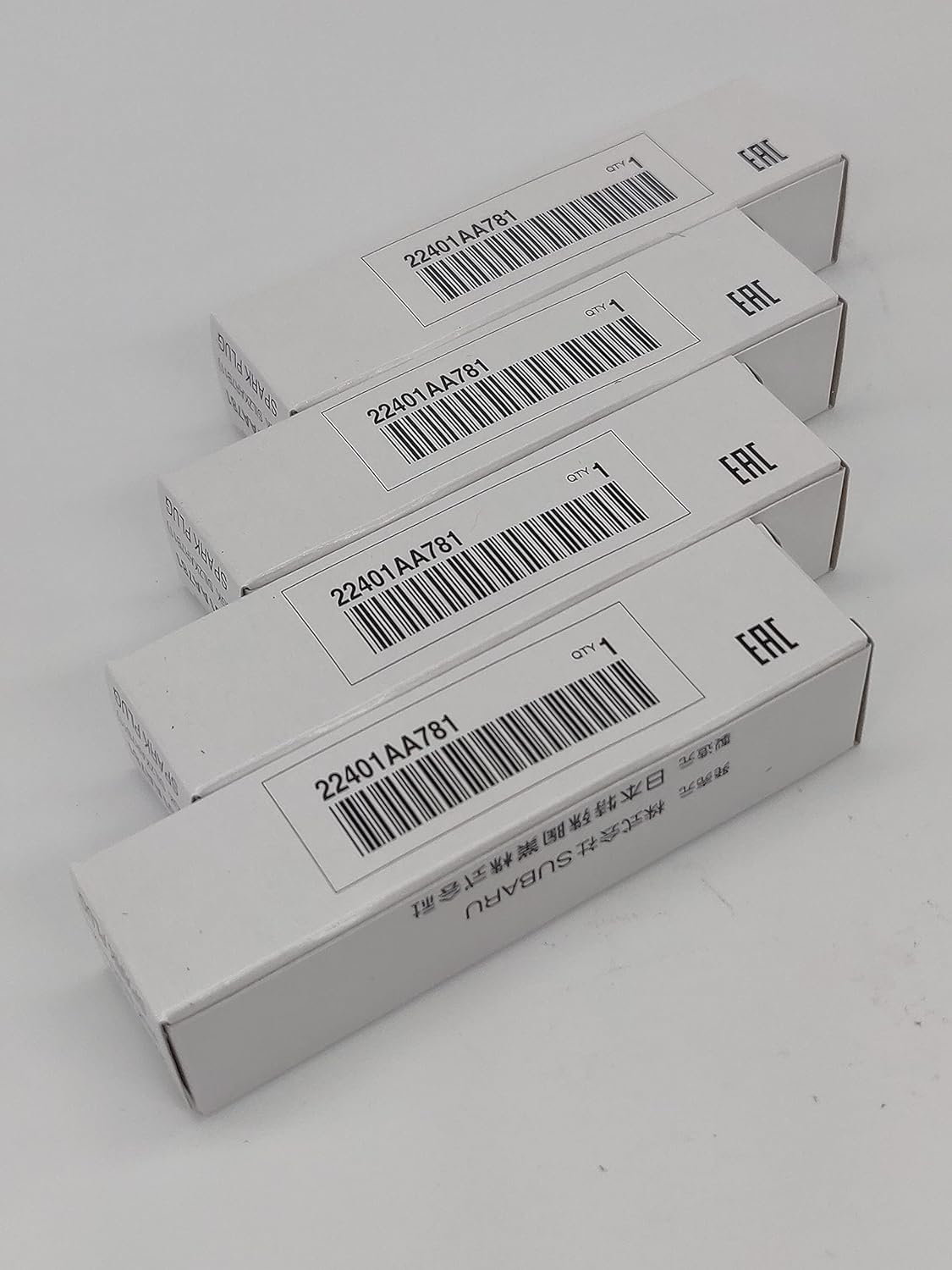
4. Genuine Subaru Spark Plugs 22401AA781 — Set of 4
| Manufacturer | SUBARU |
|---|---|
| Brand | GENUINE SUBARU |
| Manufacturer Part Number | SUBARU22401AA781 |
| Fits Vehicles | 2011-2017 Forester; 2012-2016 Impreza; 2013-2017 Legacy/Outback; 2013-2016 Crosstrek |
These are factory-quality Subaru spark plugs packaged as a set of four and intended for non-turbo Subaru EJ25B and EJ20B DOHC engines from model years listed. They replace the original spark plugs in affected Forester, Impreza, Legacy, Outback, and Crosstrek applications and are installed the same way as factory plugs during routine tuneups. The main advantage is exact fitment and materials matched to Subaru specifications, which helps maintain engine smoothness, reliable starts, and consistent combustion without worrying about mismatched threads or heat range. Because they are genuine parts they arrive sealed and ready to install. The limitation is that they are made for specific non-turbo engines only, so they are not a universal replacement and will not suit turbocharged variants. Also you get four plugs per kit, so multi-engine purchases are needed for other vehicles. For a reliability-first maintenance job on covered Subaru engines these plugs simplify sourcing and restore factory ignition performance.
Best for: Buyers who prioritize long-term engine reliability and want parts that match factory specifications for routine maintenance on covered Subaru non-turbo models.
Less Ideal for: Shoppers with turbocharged Subaru engines, owners seeking universal or aftermarket performance plugs, or those needing single-plug purchases.
- Factory specified fit and construction for the listed Subaru non-turbo engines
- Sold as a sealed set of four ready for immediate installation
- Matches factory ignition characteristics to preserve drivability and start-up consistency
- Compatible only with the specified non-turbo Subaru engine codes and model years
Verdict: Choose these genuine Subaru spark plugs to keep covered non-turbo Subaru engines running with factory-matched reliability.
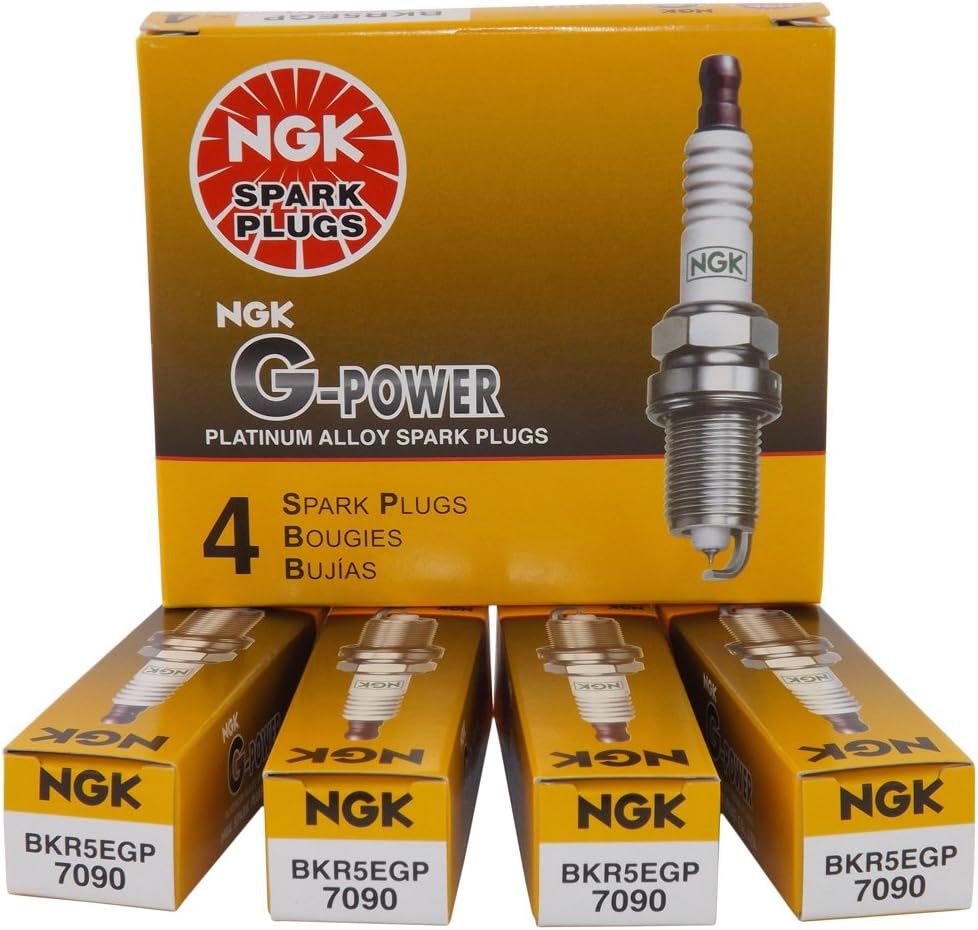
5. NGK BKR5EGP G-Power Nickel Spark Plug, 4-pack
| Core Material | Platinum |
|---|---|
| Thread Size | 14 millimeters |
| Top Material Type | Nickel |
| Automotive Fit Type | Vehicle Specific Fit |
| Position | Center |
The NGK BKR5EGP G-Power spark plugs are a set of nickel-center-electrode plugs intended as a factory-style replacement for vehicles that specify this heat range and thread size. They use a v-groove center electrode with a copper core to improve ignitability and heat dissipation, and cold-rolled threads plus trivalent plating to reduce cross-threading and eliminate the need for anti-seize. In everyday use these plugs offer easy starting, predictable combustion, and solid longevity for routine driving; the platinum tip description suggests improved spark precision over plain nickel tips. Installation is straightforward for a DIYer with the correct socket and torque, and the vehicle-specific fit reduces the risk of mismatch. Limitations are that these are nickel-based rather than iridium or ruthenium, so they typically do not deliver the extended service life or marginal performance gains of higher-end precious-metal plugs, and they must match your engine's required heat range and gap for best results.
Best for: Buyers who prioritize a reliable, vehicle-matched replacement with proven performance and want reassurance from a well-known brand and wide real-world use.
Less Ideal for: Drivers seeking maximum service life or small performance gains who prefer iridium or ruthenium spark plugs for longer intervals or high-performance tuning.
- Vehicle-specific fit reduces compatibility guesswork for supported engines
- V-groove center electrode and copper core improve ignitability and heat dissipation
- Cold-rolled threads and trivalent plating help prevent cross-threading and remove need for anti-seize
- Nickel construction is less durable and long-lived than iridium or ruthenium alternatives
Verdict: A dependable, vehicle-specific nickel-plug replacement from a trusted ignition specialist that delivers predictable starts and dependable day-to-day performance.
6. NGK BKR5E-11 Copper Spark Plug — Set of 4

| Thread Size | 14mm |
|---|---|
| Compatible with Vehicle Type | Car |
| Automotive Fit Type | Vehicle Specific Fit |
| Core Material | Copper |
These NGK BKR5E-11 spark plugs are copper-core, factory-style replacements intended to restore reliable ignition performance in vehicles that specify this part. Sold as a set of four, they are typically used when replacing worn plugs during routine maintenance or tune-ups. The copper core and metal top provide dependable conductivity and consistent spark delivery, which helps maintain smooth idling, steady throttle response, and predictable fuel burn. NGK positions this plug as an OEM-equivalent option, so fitment tends to be straightforward when you confirm the application for your engine. Practical benefits include broad availability, a well-known manufacturer pedigree, and the simplicity of a direct replacement with no extra tuning needed. Limitations are that copper plugs have shorter service life than iridium or platinum options, so they require more frequent replacement under high-mileage or demanding driving conditions. Double-check engine-specific compatibility before purchase to ensure the correct heat range and thread size for your Forester.
Best for: Buyers who prioritize a factory-style, proven replacement to restore original ignition behavior with minimal fuss and who prefer parts from an established supplier.
Less Ideal for: Drivers seeking maximum longevity or extended service intervals should consider platinum or iridium plugs instead.
- Copper core offers strong conductivity for consistent spark delivery
- Made by a widely recognized OEM supplier with reliable manufacturing quality
- Sold as a set of four for complete cylinder coverage during a routine tune-up
- Vehicle-specific fit reduces the chance of incorrect thread size or reach
- Copper construction wears faster than iridium or platinum alternatives
Verdict: Choose these NGK copper spark plugs if you want a reliable, factory-style replacement that restores original ignition performance with straightforward fitment.
Choosing the Right 2009-2013 Subaru Forester Spark Plug: Key Factors to Consider
Electrode Material and Service Life
Electrode material directly affects how long the plug will last and how consistently it sparks. Iridium and platinum alloys maintain a sharper electrode profile longer than standard copper, which helps sustain proper spark intensity over extended mileages.
For the 2009-2013 Forester, choosing a longer-lived electrode can reduce the frequency of replacements and keep ignition timing behavior stable between services. However, longer-life plugs may cost more up front and can be more fragile during installation, so careful handling and correct torque are important to avoid damage.
Heat Range and Engine Compatibility
Heat range determines how quickly a plug sheds combustion heat and affects resistance to fouling or pre-ignition. A plug that runs too cold can foul under short-trip city driving, causing misfires. One that runs too hot risks pre-ignition under heavy load.
Selecting the correct heat range for Subaru Forester engines in the 2009-2013 range ensures stable combustion across normal driving conditions. Consider your typical driving mix—highway cruising versus frequent short trips—when choosing a heat grade to minimize cold-start misfire and maintain consistent performance.
Gap Stability and Tolerance
The spark plug gap affects the voltage required to fire the spark and influences combustion quality. Some replacement plugs come pre-gapped, but gap settings can shift slightly during use. Choosing plugs with materials and construction that keep the gap stable helps maintain reliable ignition and prevents lean or rich misfire symptoms.
For the Forester, follow the manufacturer's recommended gap tolerance during installation, and recheck gaps if plugs have been stored for a while. Plugs that resist electrode wear will preserve the gap longer and help the engine run smoothly between services.
Fitment and Physical Specifications
Correct thread length, reach, and seating are nonnegotiable for safe installation. A plug with the wrong reach can damage the combustion chamber or not form a proper seal, while incorrect thread diameter or pitch will not fit the cylinder head.
Always confirm that replacement plugs match the 2009-2013 Forester's factory dimensions. Choosing plugs designed for this engine avoids installation complications and prevents issues such as compression leaks or broken threads that can be costly to repair.
Ignition Consistency and Misfire Resistance
Consistent spark delivery across cylinders is key to preventing engine misfires and maintaining smooth idle. Plugs that preserve electrode geometry and resist fouling help the Forester avoid intermittent misfires, especially during cold starts or under partial throttle.
When evaluating options, consider reports of how plugs perform across a range of operating conditions. Parts that reduce hesitations and stabilize idle contribute to better driveability and can improve perceived engine responsiveness.
Ease of Installation and Maintenance
Some plug designs require more delicate handling or specific torque procedures to avoid damage. Features such as corrosion-resistant threads, protective seal designs, and clear pre-gap settings make installation easier and reduce the chance of installation-related failures.
For DIY owners of a 2009-2013 Forester, choose plugs that allow straightforward installation with common tools and that tolerate routine inspection and gap checking without special equipment. Proper torque and anti-seize practices ensure long-term reliability.
Common Spark Plug Symptoms in the 2009-2013 Forester
Owners of 2009-2013 Forester models often notice symptoms that point to spark plug wear or incorrect plugs. Typical signs include a rough idle, hesitation under acceleration, reduced fuel economy, and a rougher-than-normal cold start. These symptoms arise because worn electrodes or incorrect heat range can compromise combustion.
Intermittent misfires during light throttle or at idle are commonly linked to spark plug degradation. Addressing spark plugs early can prevent secondary issues such as fouled catalytic converters or increased emissions.
- Rough idle or engine vibration at low speed
- Hesitation or stumbling on acceleration
- Hard cold starts or cold-start misfire
- Decreased fuel economy over time
How Often to Replace Spark Plugs on a 2009-2013 Forester
Replacement intervals depend on electrode material and driving habits. Copper plugs typically require replacement more frequently, while iridium or platinum types are rated for longer service life. For Forester owners who do a lot of short trips, consider more frequent inspection to avoid fouling-related misfires.
When changing plugs, inspect ignition boots and wires or coils for wear because aged ignition components can mask as plug failure. Follow torque specifications and gap checks during each service to ensure consistent results.
- Inspect plugs at regular service intervals or when symptoms appear
- Adjust replacement frequency based on driving patterns
Gapping and Installation Tips Specific to This Forester
Correct gap and proper installation technique are essential. Always verify the recommended gap before installation and use a reliable gap tool if adjustment is needed. Over-gapping or under-gapping can cause misfires or increased voltage demand on the ignition coils.
When tightening plugs, use a torque wrench and follow thread engagement guidance to avoid over-torquing the aluminum head. If reusing coil-on-plug boots, ensure they seat properly to prevent arcing and misfire diagnosis confusion.
- Check and set gaps to manufacturer tolerances before installation
- Use a torque wrench and follow specified torque values
- Inspect boots and sealing washers for damage during service
Choosing Between Iridium and Platinum for the Forester
Iridium and platinum both offer longer life than conventional copper electrodes, but they have different cost and performance profiles. Iridium tends to provide superior longevity and a finer electrode that can improve ignition under lean conditions. Platinum offers improved life over copper with good durability at a lower price point than iridium.
For a 2009-2013 Forester used in mixed driving, iridium can reduce replacement frequency, while platinum may be a good compromise for owners who prefer lower initial cost but still want longer service intervals than copper.
- Iridium: longer life, finer electrode, potentially better cold-start performance
- Platinum: improved life over copper, durable under varied driving
Diagnosing Cold-Start Misfire and Related Issues
Cold-start misfire can result from fouled plugs, incorrect heat range, or weakened ignition coils. Check plugs for carbon deposits and electrode wear to determine if replacement will likely resolve the issue. If plugs appear in good condition, inspect coils and fuel delivery for further diagnosis.
Addressing cold-start issues often begins with selecting plugs that resist fouling and match the Forester's thermal demands. Proper gap and correct heat range minimize the chance of misfire when the engine is cold.
- Inspect plugs for carbon fouling and electrode erosion
- Swap in known-good coils or test coil resistance if misfire persists
- Verify fuel delivery and intake air systems for contributing issues
When to Consult a Technician
If replacing plugs does not clear misfires or if you encounter cross-threading, broken plugs, or persistent rough running, consult a qualified technician. Complex issues like head damage or ignition system faults require professional tools and expertise.
Also seek assistance when engine diagnostics show persistent misfire codes tied to multiple cylinders or when you are unsure about correct torque or plug reach. Professional inspection can prevent costly repairs related to improper installation.
- Persistent misfires after plug replacement
- Signs of thread damage or seized plugs
- Multiple-cylinder misfire codes on the diagnostic scanner
Still looking for the perfect fit?
Select your Subaru Forester configuration to see the most relevant Spark Plugs recommendations
How We Chose the Best 2009-2013 Subaru Forester Spark Plug
We focused on criteria that matter specifically to 2009-2013 Subaru Forester engines and typical owner needs. Primary evaluation factors included electrode material and expected service life, heat range compatibility with Subaru tuning, and how well the plug maintains a stable gap over time. We also considered ignition consistency under varied load, resistance to fouling in mixed driving conditions, and plug design features that ease installation and torque control.Only plugs that meet factory thread, reach, and seating specifications for the 2009-2013 Forester were considered. We excluded any options that require nonstandard installation procedures or modifications to the ignition system. Our selection prioritized parts that reduce symptoms such as rough idle, hesitation, and cold-start misfire while offering a balance between service interval and ignition performance.Excluded items included plugs that do not meet OEM physical fitment or those recommended only for heavily modified engines outside typical owner use. The final shortlist reflects parts that align with Subaru tolerances and everyday driving realities.
Our full evaluation process is outlined in our review methodology.
FAQ
How can I tell if my Forester needs new spark plugs?
Common signs include rough idle, hesitation on acceleration, reduced fuel economy, and harder-than-normal cold starts. Visual inspection of the plugs for electrode wear or carbon fouling also helps confirm the need for replacement.
What spark plug gap should I set for a 2009-2013 Forester?
The correct gap follows Subaru specifications for your engine variant. Typically you should verify the recommended gap in the owner or service manual and set the plugs to that tolerance before installation.
Will upgrading to iridium plugs fix a cold-start misfire?
Upgrading to iridium can reduce fouling and maintain a sharper electrode, which often helps cold-start issues. However, if misfires persist after replacing plugs, further diagnosis of coils, fuel delivery, or intake systems may be needed.
Can I change spark plugs myself on a 2009-2013 Forester?
Yes, many owners can perform the swap with basic tools and a torque wrench. Be careful with plug reach and torque to avoid thread damage. If you are uncomfortable with access or torque procedures, have a technician handle the job.
How does driving style affect spark plug life in my Forester?
Frequent short trips and idling increase the likelihood of carbon fouling and can shorten plug life. Regular highway driving tends to keep plugs cleaner and can extend service intervals for longer-life electrode plugs.
Should I replace ignition coils when I change spark plugs?
Not always. Inspect coils for cracking, corrosion, or electrical faults. If coils show signs of wear or you experience persistent misfires after new plugs, replacing faulty coils at the same time can be prudent.
Final Verdict
When selecting spark plugs for a 2009-2013 Subaru Forester, prioritize correct fitment, appropriate heat range, and an electrode material that suits your driving habits. Heat range affects cold-start and fouling behavior, while electrode material and gap stability influence longevity and ignition consistency.Balance the tradeoff between longer service life and upfront cost based on how you drive and maintain your Forester. Follow correct gap and torque procedures during installation, and inspect coils and boots to ensure the new plugs deliver the expected improvements.
Explore More:
- Check out all Subaru Forester parts & accessories
- Explore Spark Plugs Maintenance & Repair Guides
- Explore Engine
- Browse all Auto Parts
