

Note: This article contains affiliate links. If you click on these links and make a purchase, I may earn a small commission at no extra cost to you. This helps support my research and content. Read my full affiliate disclosure here.
If your Honda Accord feels loose in corners or you hear clunks over bumps, worn rear sway bar links may be the cause. Choosing the right rear sway bar link matters because the correct part restores roll control, prevents premature tire wear, and removes suspension noise without introducing harshness.This guide covers seven shortlisted rear sway bar links suitable for Accord owners, with attention to fitment, joint durability, and installation practicality. Below you will find a concise evaluation of features that affect everyday driving, plus what to expect during replacement and maintenance.
Looking for other parts? See all Honda Accord parts & accessories.
Top Picks at a Glance
| Best Overall The best all-around choice for most situations | Metrix Premium Chassis Parts Rear Stabilizer Sway Bar Link Pair (K90342 & K90343) |  |
| Best Quality Built to a higher standard if you want something more solid | MOOG K90343 Suspension Stabilizer Bar Link |  |
| Best Value The sweet spot between price and what you get | BOXI Rear Sway Bar End Link Kit (Set of 2) |  |
| Best Budget The cheapest option that still gets the job done reliably | DYZJKWJW Rear Stabilizer Sway Bar End Link Set (Zinc-Nickel Alloy) |  |
| Highest Rated A top-rated pick with lots of positive feedback | ADIGARAUTO Rear Sway Bar Link Pair (K90342/K90343) for Honda Accord, Acura TL/CL/TSX |  |
| Most Popular A crowd favorite that many people choose with confidence | Detroit Axle Rear Sway Bar End Link Kit (2 pc) |  |
| Best Seller A high-volume bestseller chosen again and again | TCHENPART Rear Sway Bar Link Kit (K90342 & K90343) |  |
1. Metrix Premium Chassis Parts Rear Stabilizer Sway Bar Link Pair (K90342 & K90343)

| Auto Part Position | Rear |
|---|---|
| Compatible with Vehicle Type | Car |
| Automotive Fit Type | Vehicle Specific Fit |
| Material Type | Carbon Steel |
| Manufacturer Warranty Description | 3 Year / 36,000 miles Limited Warranty |
These Metrix rear stabilizer links replace the stock rear sway bar end links to reconnect the rear sway bar to the control arms and reduce body roll during cornering. Sold as a left and right pair, the kit arrives pre-greased with correct bolts and bushings for a straightforward installation that most mechanically comfortable owners can complete with basic tools. The parts are made from carbon steel with a machined finish and the design is greasable for maintenance, which helps extend service life. Metrix advertises manufacturing certifications and a corrosion-resistant coating, and the kit is backed by a three year / 36,000 mile limited warranty. Practical benefits include firmer handling, quieter rear suspension (replacing worn links eliminates clunks), and a more factory-like fit. Limitations to note are that fitment is vehicle specific so you must confirm compatibility for your Accord model year, and some buyers prefer polyurethane bushings for a firmer feel since the kit uses rubber bushings out of the box.
Best for: Buyers who want a durable, factory-style rear sway bar link replacement to restore handling and eliminate rear suspension noise while keeping a balanced ride quality.
Less Ideal for: Drivers seeking a performance-oriented stiffness upgrade or those who want aftermarket polyurethane bushings should look at sport or performance-focused link kits instead.
- Vehicle-specific pair with left and right links included for a full rear replacement
- Pre-greased, greasable design that simplifies maintenance and can extend service life
- Carbon steel construction and machined finish aimed at durability and corrosion resistance
- Includes correct hardware and bushings for straightforward installation
- Uses rubber bushings rather than polyurethane which some drivers prefer for a firmer response
Verdict: A durable, vehicle-specific rear sway bar link pair that restores factory handling and quiets rear suspension for balanced everyday driving.
2. MOOG K90343 Suspension Stabilizer Bar Link

| Item Type Name | SWAY BAR LINK KIT |
|---|---|
| Auto Part Position | Upper |
| Compatible with Vehicle Type | Car, Truck |
| Automotive Fit Type | Vehicle Specific Fit |
| Material Type | Rubber |
The MOOG K90343 is a direct-fit upper sway bar link kit intended to restore steering feel and reduce clunks on 1998–2008 Honda Accord and compatible Acura models. It replaces worn factory links with a heavier-duty metal body and greaseable ball joint socket so you can refresh lubrication during service instead of discarding the link. Typical use is a rear or front upper link replacement when you hear creaks or notice loose steering; installation is straightforward for a home mechanic or shop and reviews indicate good fitment and ease of installation. Notable features include a grease fitting, corrosion-resistant finishes, and a design that allows a wrench to hold the stud during installation which eases removal and reassembly on rusty hardware. The benefits are firmer handling, quieter operation, and a longer service life compared with softer factory links. The main compromise is the need for periodic greasing to maintain the joint, and in tight rusted assemblies extra effort may still be required to remove old fasteners.
Best for: Drivers who want a firmer, more responsive ride and a durable replacement for worn sway bar links on the specified Honda/Acura models and who are willing to perform or accept maintenance like periodic greasing.
Less Ideal for: Buyers looking for zero-maintenance sealed links or those unwilling to tackle rusted fasteners during replacement should consider other options or professional installation.
- Greaseable ball joint socket allows on-vehicle lubrication to extend joint life
- Heavier metal construction and metal ball joint deliver firmer, more durable performance than many factory links
- Vehicle-specific fit for the listed Honda and Acura models improves installation accuracy
- Design includes a wrench flat to hold the stud during installation, simplifying removal and reassembly
- Requires routine greasing to retain advantage over sealed links
Verdict: Choose the MOOG K90343 if you want a firmer, longer-lasting replacement sway bar link with greaseable joints for improved handling on the specified Honda and Acura models.
3. BOXI Rear Sway Bar End Link Kit (Set of 2)

| Compatible models | 2001-2003 Acura CL; 1999-2008 Acura TL; 2004-2008 Acura TSX; 1998-2007 Honda Accord |
|---|---|
| Set contents | 1 rear left and 1 rear right sway bar end link |
| Manufacturer | ShangHai BOXI Auto Parts Co., Ltd. |
| Material Type | Metal |
This BOXI kit supplies a rear left and right sway bar end link as direct replacement parts for compatible Acura and Honda vehicles. Installed between the stabilizer bar and suspension, these metal end links restore the connection that controls body roll and helps the car feel more stable through turns. The parts arrive as a two-piece set and are described as vehicle-specific fit replacements for late 1990s to mid 2000s Accord and several Acura models, using common OEM interchange numbers for confirmation. In practice the kit is straightforward to fit with basic hand tools and should reduce rear-end wobble, improve steering feel, and protect tires from uneven wear when worn originals are swapped out. The product is claimed to be tested at the factory and finished in black for a clean replacement look. Expect a utilitarian, budget-oriented solution rather than an upgrade with premium bushings or adjustable hardware; installers may notice slightly different stiffness compared with higher-end aftermarket options.
Best for: Buyers who want a practical, cost-conscious replacement to restore rear anti-roll control and steering confidence on older Honda and Acura sedans without upgrades or customization.
Less Ideal for: Drivers looking for adjustable, performance-tuned links or premium noise-isolating bushings should consider higher-end aftermarket options instead.
- Sold as a matched pair to replace both left and right rear links at once
- Vehicle-specific fit with OEM interchange numbers for easier compatibility checks
- Metal construction aimed at restoring original sway bar connection and steering stability
- Simple installation that can be done with common wrenches by a DIYer or mechanic
- No adjustable ends or premium vibration-isolating bushings compared with performance links
Verdict: A practical, vehicle-specific pair of rear sway bar end links that restore factory-style anti-roll control for older Honda and Acura sedans.
4. DYZJKWJW Rear Stabilizer Sway Bar End Link Set (Zinc-Nickel Alloy)

| Auto Part Position | Rear |
|---|---|
| Compatible with Vehicle Type | Car |
| Automotive Fit Type | Vehicle Specific Fit |
| Material Type | Zinc-Nickel Alloy |
This rear sway bar end link set replaces worn rear stabilizer links to restore handling and reduce body roll on cornering. Designed as a direct, vehicle-specific swap for late 1990s to mid 2000s Accords and compatible Acura models, the kit includes two links and is built from a zinc-nickel alloy with multi-layer anti-corrosion coating for improved durability in wet and salty conditions. Installation is straightforward for a mechanically minded DIYer or a shop; the parts are intended to fit without modification and meet factory-quality fit expectations. In use the links firm up rear roll control, cut down on uneven tire wear tied to loose links, and reduce steering vibrations caused by worn components. Limitations are that this is a basic replacement link set without upgraded bushings or performance articulations, so drivers seeking performance-tuned handling or motorsport use should look at purpose-built aftermarket options instead. For routine street driving and economical maintenance, these links offer a cost-effective, durable factory-style replacement.
Best for: Buyers focused on an affordable, reliable repair who want a direct-fit replacement to restore factory handling and avoid frequent rework.
Less Ideal for: Drivers looking for performance-tuned sway bar links or adjustable hardware for track use should consider dedicated aftermarket options instead.
- Vehicle-specific fit for Honda Accord and compatible Acura models simplifies installation
- Zinc-nickel alloy construction with anti-corrosion coating improves resistance to rust and road salt
- Includes two rear links so both sides are replaced at once for balanced handling restoration
- Not a performance-oriented design; lacks upgraded bushings or adjustable features for tuning
Verdict: A budget-friendly, corrosion-resistant direct replacement that restores rear handling on compatible Accords and Acuras without modification.
5. ADIGARAUTO Rear Sway Bar Link Pair (K90342/K90343) for Honda Accord, Acura TL/CL/TSX

| Compatible vehicles | 1998-2007 Honda Accord; 1999-2008 Acura TL; 2001-2003 Acura CL; 2004-2008 Acura TSX |
|---|---|
| Package contents | Driver and passenger rear sway bar links with installation hardware |
| Manufacturer part number | A2SLK903423 |
| OEM part numbers | K90343, K90342, 06523S84A00, 52320/52321 series |
These ADIGARAUTO rear sway bar links are a plug-and-play replacement pair for the rear stabilizer on late 1990s and 2000s Honda Accord and compatible Acura models. Supplied as a driver and passenger link with installation hardware, they attach between the rear sway bar and suspension to reduce body roll and restore the factory handling balance. The listing emphasizes a precision fit to the OEM part numbers and corrosion-resistant construction, which helps the links hold up in wet or salted-road conditions. For routine repair or preventive maintenance they work the same as factory parts and are suitable for DIY installation or a quick shop job. Important limitations are that this is a like-for-like replacement rather than an upgraded performance link and longevity will depend on installation torque and road exposure; buyers replacing severely worn or aftermarket suspension may want reinforced options. Fitment is limited to the listed model years and factory configurations only.
Best for: Buyers who prioritize a reliable, factory-quality rear stabilizer repair to restore original handling and reduce body roll on the listed Accord and Acura models.
Less Ideal for: Drivers seeking a heavy-duty or performance sway bar link for track use or for heavily modified suspension setups should consider reinforced aftermarket options instead.
- Direct replacement pair that matches multiple OEM part numbers for straightforward fitment
- Includes both driver and passenger links plus installation hardware for a complete rear-side repair
- Seller claims corrosion-resistant materials and precision fit to reduce vibration and noise
- Suitable for DIY installation or fast shop replacement to restore handling quickly
- Not positioned as a heavy-duty or performance upgrade compared with reinforced aftermarket links
Verdict: A straightforward, factory-style rear sway bar link pair that restores original rear stability and fitment for the specified Accord and Acura models.
6. Detroit Axle Rear Sway Bar End Link Kit (2 pc)
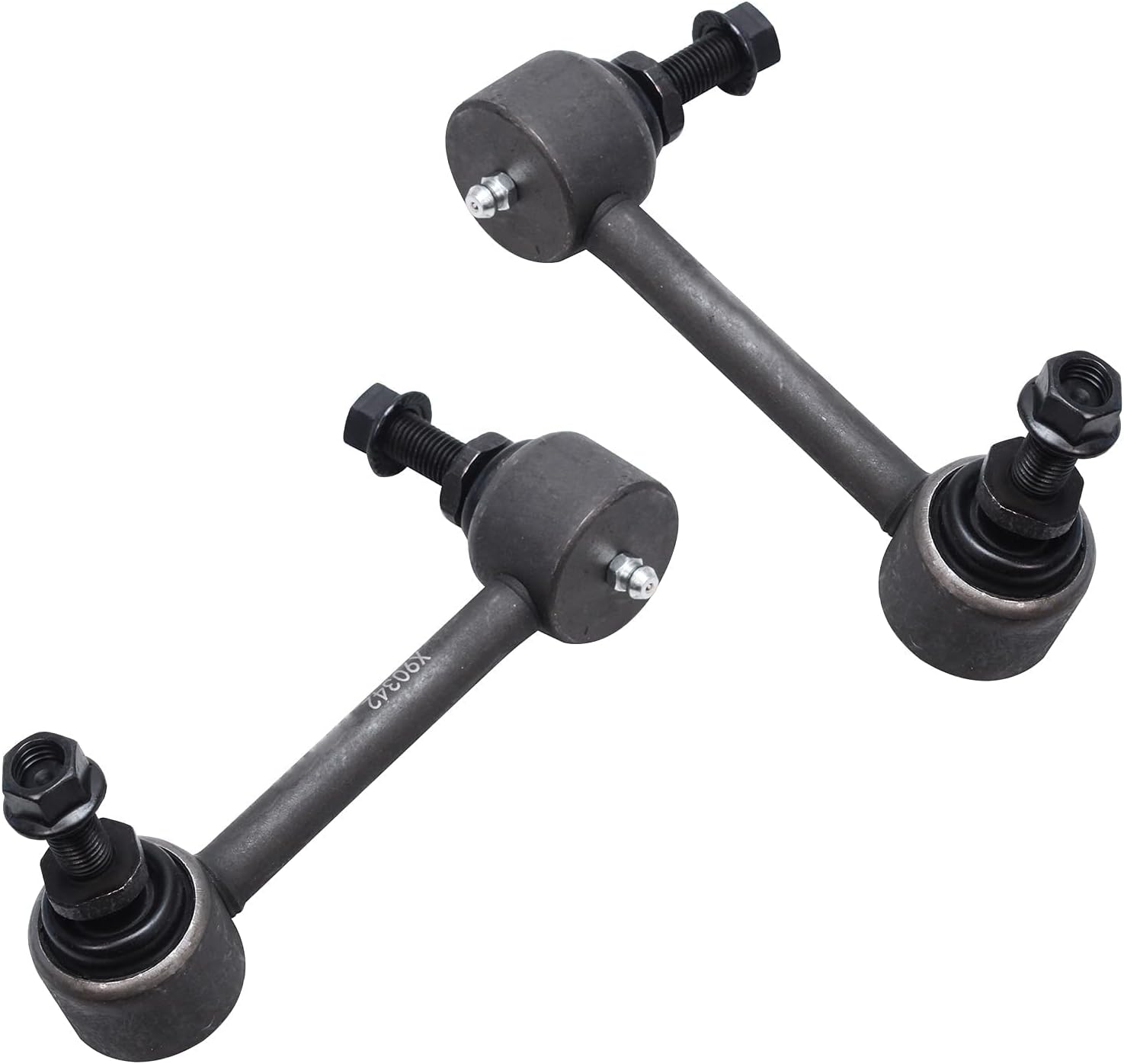
| Auto Part Position | Rear |
|---|---|
| Compatible with Vehicle Type | Car |
| Automotive Fit Type | Vehicle Specific Fit |
| Material Type | Metal |
This Detroit Axle rear sway bar end link kit replaces the factory rear stabilizer links on compatible Acura and Honda models and is intended as a direct-fit replacement. The kit includes left and right rear links built from metal alloy with a black finish and is positioned as a vehicle-specific suspension part. In everyday use these links restore the connection between the sway bar and suspension, reducing body roll and restoring steering stability after worn original links start to clunk or loosen. Installation is straightforward for a mechanically inclined DIYer because the parts are made to match OE mounting points. The premium alloy construction and reinforced structure increase resistance to rust and wear, which helps longevity on salted roads. Limitations are that this is a basic replacement link set without upgraded bushings or heavy-duty performance features, and fitment is limited to the listed Acura TL, CL, TSX and Honda Accord model years so you must confirm year and submodel before buying.
Best for: A cautious buyer who values proven parts and social proof and needs a straightforward, factory-style replacement to stop clunking rear suspension links and restore handling.
Less Ideal for: Drivers seeking motorsport or heavy-load performance upgrades or owners of vehicles outside the specified Acura and Honda year ranges should look for heavy-duty or adjustable alternatives.
- Direct-fit vehicle-specific design simplifies installation and alignment
- Premium alloy construction improves corrosion resistance and durability
- Restores rear sway bar function to reduce body roll and suspension noise
- Includes both driver and passenger rear links in one kit
- Not a performance upgrade; no heavy-duty bushings or adjustable ends
Verdict: A dependable, direct-fit rear sway bar link kit that restores factory-style rear stability for the listed Acura and Honda models.
7. TCHENPART Rear Sway Bar Link Kit (K90342 & K90343)
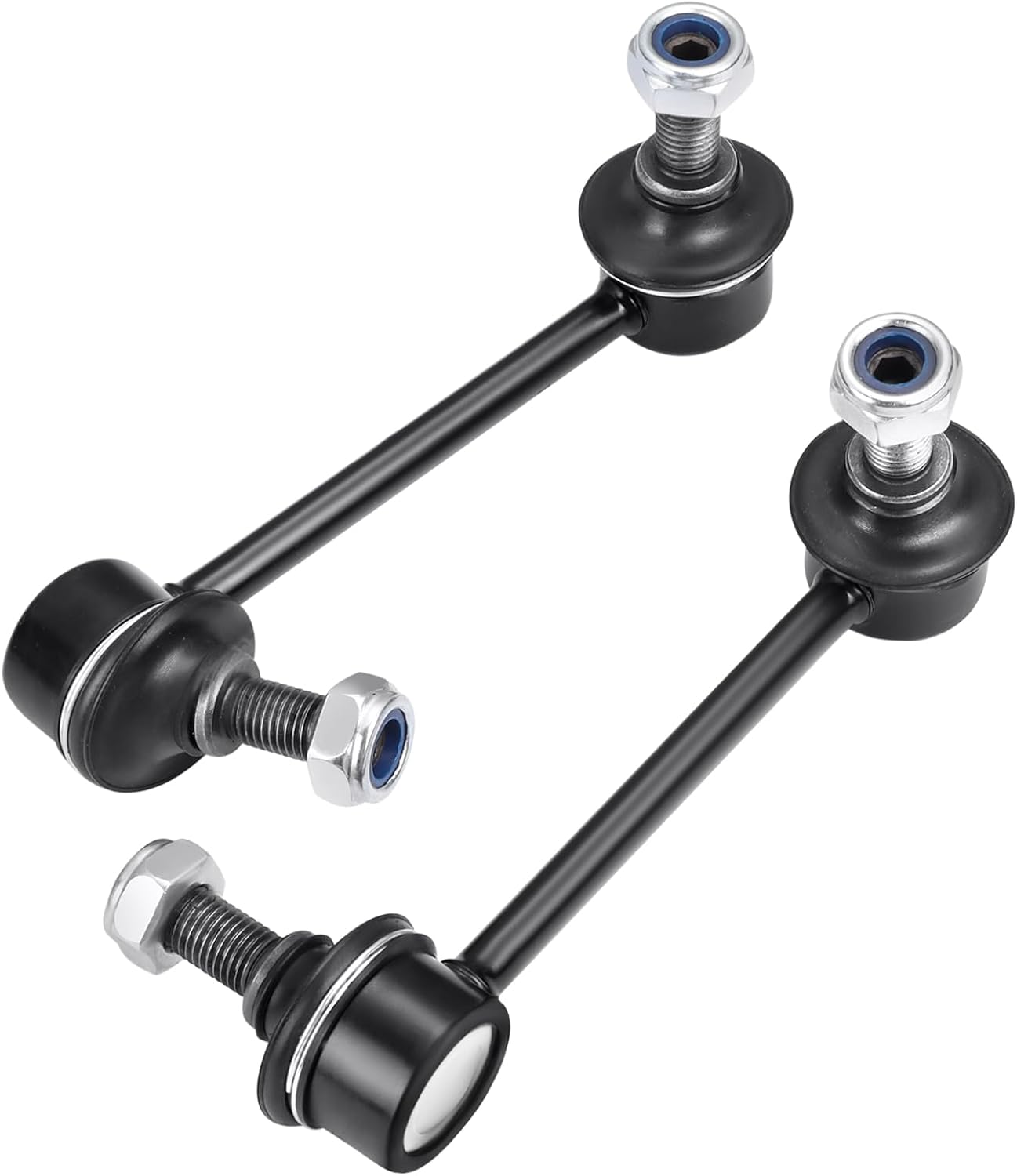
| Brand | TCHENPART |
|---|---|
| Model | K90342 & K90343 Sway Bar Links |
| Position | Rear |
| Manufacturer Part Number | TC-PHG28 |
This TCHENPART kit supplies the two rear sway bar end links needed to restore anti-roll control and eliminate suspension knock on compatible Honda and Acura models. Designed as a direct replacement, the links attach between the stabilizer bar and rear suspension to reduce body roll, dampen vibration, and remove the clunking noises worn links cause. Buyers report straightforward installation with common hand tools and that the links fit like factory parts, which makes this a practical DIY fix or a quick shop replacement. The kit is sold as polished assemblies and includes OEM part number cross-references for correct fitment; several reviewers note the parts arrive without pre-applied grease and require installing grease fittings and greasing before use. Construction appears solid for the price, but long-term durability is unknown compared with higher-end aftermarket heavy‑duty links. Expect improved steering stability and a quieter rear end once installed, but plan to add grease and follow correct torque and installation steps for best life.
Best for: Buyers who want a straightforward, factory-style rear sway bar link replacement to stop clunks and restore normal handling without buying premium performance parts.
Less Ideal for: Drivers seeking heavy-duty or performance-upgraded links for aggressive driving or modified suspension setups should consider reinforced aftermarket options instead.
- Direct replacement fit for specified Honda and Acura rear suspensions based on OEM part numbers
- Reduces rear end noise and body roll, restoring steering stability
- Easy installation reported by users using common tools for a DIY or shop job
- Polished finish and solid-looking construction appropriate for routine driving
- Parts may arrive without grease installed so buyer must fit and grease the joints before use
Verdict: A practical, factory-style rear sway bar link kit that fixes clunking and restores rear stability for compatible Honda and Acura models.
Choosing the Right Honda Accord Rear Sway Bar Link: Key Factors to Consider
Correct Fitment and Geometry
Correct fitment is critical because sway bar links must align with the factory sway bar and control-arm mounting points to preserve suspension geometry. Even small differences in stud length or offset can change roll-center behavior, cause binding, or introduce uneven forces that accelerate wear.
When selecting a rear sway bar link for the Accord, confirm the part matches the model year and any specific suspension variation. Proper geometry avoids the need for modifications during installation and ensures the link operates through the correct range of motion under compression and rebound.
Joint Type and Durability
The joint connects the sway bar to the suspension and determines how the link articulates. Common designs include rubber-bushed studs, polyurethane bushings, and sealed ball joints. Each has different durability and NVH characteristics.
Sealed ball joints and heavy-duty bushings typically last longer under road contamination and repeated loading. For Accord owners who drive in wet or salty conditions, prioritize joints with protective boots or corrosion-resistant materials to reduce the chance of noisy failure or premature replacement.
Material and Corrosion Resistance
Materials determine how well a link survives exposure to road chemicals, water, and physical impacts. Look for high-strength steel components, plated finishes such as zinc or similar coatings, and stainless or plated fasteners to resist rust.
Corrosion can seize threads and accelerate joint deterioration, making removal difficult and shortening service life. For longevity on an Accord, links with robust coatings and replaceable hardware provide better value and reliability in varied climates.
Installation Ease and Required Tools
Ease of installation affects how practical a replacement is for DIYers and technicians alike. Links that use factory-style nuts and bolts with common hex sizes reduce the need for specialty tools. Threaded studs that match factory torque specs allow a direct swap without modifying other suspension components.
Consider whether the link requires press-fit procedures or additional service steps. Simpler installs lower labor time and reduce the chance of assembly errors that could affect handling or safety.
Effect on Ride Quality and Noise
Different link designs can subtly change how the suspension communicates with the chassis. Stiffer materials or tight ball joints can transmit more road noise and harshness, while softer bushings may slightly reduce steering precision.
For the Accord, prioritize a balance that restores firm roll control without introducing excessive clunking or vibration. Links designed with vibration-damping bushings or smooth joint articulation help maintain cabin comfort while addressing sway performance.
Serviceability and Replaceable Components
Serviceability matters because sway bar links are wear items subject to eventual replacement. Links that use replaceable nuts, bolts, or bushings simplify repairs and lower long-term ownership costs. If a joint fails, being able to replace hardware rather than the entire link can be advantageous.
Also consider whether the product includes new mounting hardware or requires reusing factory pieces. New hardware often improves reliability and reduces the risk of seized fasteners during future service on the Accord.
Common Symptoms of Worn Rear Sway Bar Links
Worn rear sway bar links produce distinctive symptoms that affect handling and comfort. Most often you will notice a clunking or knocking noise from the rear when hitting bumps or during directional changes, especially at low speeds.
Other signs include increased body roll in corners, a loose feeling in the rear end during lane changes, and occasional uneven tire wear if the suspension geometry is affected. Checking the links for play by lifting the rear and grabbing the sway bar near the links can reveal excessive movement.
Addressing symptoms early prevents secondary wear to stabilizer bushings and end mounts, and it helps restore the expected steering and stability characteristics of the Accord.
- Clunking or knocking from the rear over bumps
- Increased body roll during cornering
- Loose rear-end feel during lane changes
- Visible play or degraded boots on inspection
DIY Replacement: What To Expect
Replacing rear sway bar links on many Accord model years is a straightforward job for a competent DIYer with basic hand tools. Typical steps include supporting the vehicle safely, removing the wheel for access, unfastening the upper and lower link fasteners, and fitting the replacement while following torque specifications.
Anticipate using a torque wrench for final fasteners to match factory torque specs and possibly a penetrating lubricant if the old hardware is corroded. Some links have studs that must be held with an Allen key or held by a secondary wrench while the nut is removed, so verify the fastener type before starting.
Allow a reasonable block of time and work on one side at a time to avoid alignment surprises. After installation, check for proper clearance during suspension travel to ensure the new links are free of binding.
- Safely support the vehicle and remove the rear wheel for access
- Use penetrating oil on corroded fasteners
- Hold studs steady if required and torque to spec on reassembly
- Inspect bushings and boots as part of the job
When To Replace Vs. Inspect Other Components
A failed rear sway bar link often coexists with worn stabilizer bushings or isolators. If you find play in the link, inspect the sway bar mounts and adjacent control-arm bushings. Replacing a single link while ignoring degraded mounts may leave residual noise or handling issues.
If the noise is intermittent or you detect binding, remove the link to confirm whether the joint or the mounting point is the source. In many cases replacing both links on the axle at the same time ensures even handling characteristics and avoids repeating the job shortly after.
- Inspect stabilizer bushings and mounts when replacing links
- Consider replacing both sides for consistent handling
- Investigate intermittent noises by isolating components
Torque And Tightening Considerations
Correct torque prevents fastener loosening and component distortion. Use a calibrated torque wrench and follow the Accord service data for the specific rear sway bar link fasteners. Tightening in the correct sequence and with the suspension at the recommended ride height prevents preloading the joints.
If factory torque specs are not available during a DIY job, tighten to a firm value that matches similar suspension fasteners and avoid over-torquing. Recheck torque after a short break-in period or a few hundred miles to ensure nothing has settled loose.
- Use a calibrated torque wrench for final tightening
- Avoid over-torquing which can damage threads or joints
- Recheck torque after initial break-in miles
Upgrades and Stiffer Options: Tradeoffs
Some owners consider stiffer or performance-focused sway bar links to reduce body roll further. While a stiffer link can marginally improve roll response, it also transmits more vibration and can amplify road noise if the joint is tight or uses hard bushings.
For everyday driving in the Accord, focus on links that balance durability with smooth articulation. If you pursue a stiffer option, be prepared for a firmer ride and verify compatibility with the existing sway bar and suspension geometry to avoid binding.
- Stiffer links increase response but may raise NVH
- Confirm geometry compatibility to avoid binding
- Consider daily driving needs before choosing extreme stiffness
Maintenance Tips To Extend Link Life
Regular visual inspections during oil changes or tire rotations can catch early signs of stabilizer link wear. Look for torn boots, rusted hardware, or looseness at the joints. Keeping the undercarriage reasonably clean reduces exposure to corrosive materials.
If your Accord is driven in regions with heavy road salt, consider periodic application of corrosion inhibitors to fasteners and check torque more frequently. Promptly replace a single failed link to avoid secondary damage to the sway bar or mounts.
- Inspect links during routine service intervals
- Clean undercarriage and apply corrosion inhibitor if needed
- Replace failed links promptly to avoid secondary wear
Still looking for the perfect fit?
Select your Honda Accord configuration to see the most relevant Sway Bar Links recommendations
How We Chose the Best Honda Accord Rear Sway Bar Link
We selected the seven rear sway bar links on this list using criteria focused on real-world fitment and longevity for the Honda Accord. Primary filters included confirmed vehicle fit across common Accord model years and specific fitment notes where applicable, ensuring the link geometry and stud orientation match the factory mounting points.We evaluated joint type and materials, favoring links with corrosion-resistant hardware and heavy-duty bushings or ball-joint designs that resist wear. Durability was assessed by looking at construction—metal thickness, plated finishes, and protective boots—because these factors reduce failure from road salts and debris.Installation practicality was another key filter: we prioritized links that use standard fastener sizes and replacement procedures that match factory service practices, reducing the need for specialist tools. Ride effect and NVH were judged by whether the link design minimizes added stiffness or noise when new.Excluded items included non-specific universal links that require modification, links with unclear fitment data, and parts lacking basic protective features. The final selections balance fitment accuracy, long-term joint durability, corrosion protection, and ease of install for the Honda Accord owner.
Our full evaluation process is outlined in our review methodology.
FAQ
How do I tell if the rear sway bar link on my Accord is bad?
Common indicators include a clunking noise from the rear over bumps, excessive body roll, or visible play when you manipulate the sway bar by hand. Inspect the joint boots and look for corrosion or looseness to confirm the diagnosis.
Can I replace a rear sway bar link myself on an Accord?
Yes, many Accord owners can perform the swap with basic tools and a torque wrench. Ensure the vehicle is safely supported, have penetrating oil for corroded fasteners, and follow the correct torque specs for reassembly.
Should I replace both rear sway bar links at the same time?
It often makes sense to replace both sides to maintain even handling and avoid repeating the labor. If only one side shows wear, inspect the opposite link and mounts to decide whether a paired replacement is warranted.
Will replacing a rear sway bar link affect wheel alignment?
Replacing the sway bar link itself does not directly change wheel alignment settings. However, if worn links have allowed unusual suspension movement, you may notice handling changes. A full alignment is usually unnecessary unless other suspension components were disturbed.
What tools do I need to replace a rear sway bar link?
Typical tools include a jack and stands, socket set, wrenches to hold studs, penetrating oil for rusty fasteners, and a torque wrench for final tightening. An Allen key or Torx bit may be required on some link studs.
How long do rear sway bar links usually last on an Accord?
Lifespan varies with driving conditions but they often last several years under normal use. Exposure to salt, rough roads, or heavy loads can shorten service life, so regular inspections help catch wear early.
Final Verdict
When choosing a rear sway bar link for your Honda Accord, prioritize correct fitment and durable joint design to restore handling and eliminate rear-end clunks. Corrosion-resistant materials and replaceable hardware improve long-term reliability, while ease of installation reduces labor time and prevents service complications.Balance expected ride comfort against the desire for firmer roll control. For most Accord owners, a link that matches factory geometry, uses sealed or well-protected joints, and comes with appropriate hardware provides the best combination of performance and longevity.
Explore More:
- Check out all Honda Accord parts & accessories
- Explore Sway Bar Links Maintenance & Repair Guides
- Explore Suspension & Steering
- Browse all Auto Parts
