

Note: This article contains affiliate links. If you click on these links and make a purchase, I may earn a small commission at no extra cost to you. This helps support my research and content. Read my full affiliate disclosure here.
If you own a Jeep Grand Cherokee Laredo and are facing coolant loss, overheating, or reduced heater performance, swapping the radiator is often the most direct fix. The right radiator restores proper engine temperature control, reduces the risk of overheating on long trips, and helps maintain cabin heat in cold weather. This guide covers seven carefully shortlisted radiators chosen for fitment and cooling effectiveness specific to the Grand Cherokee Laredo.We evaluate each option for fitment, cooling capacity, materials, and durability so you can pick a replacement that suits your driving style and service goals. Read on for practical guidance on installation, common failure signs, and maintenance to keep your cooling system dependable.
Looking for other parts? See all Jeep Grand Cherokee parts & accessories.
Top Picks at a Glance


Readair Engine Coolant Radiator Assembly with Transmission Oil Cooler for Jeep Grand Cherokee 2001–2004 V8 4.7L

| Vehicle fit | Jeep Grand Cherokee 2001-2004 V8 4.7L Automatic |
|---|---|
| Transmission oil cooler | Included |
| Core width | 20 inch |
| Core height | 23.1 inch |
| Core thickness | 1 inch |
This Readair radiator is a direct replacement for 2001–2004 Jeep Grand Cherokee 4.7L V8s with an automatic transmission and includes an integrated transmission oil cooler. The aluminum core with TIG-welded joints and PA66 GF30 inlet/outlet tanks aims to deliver durable heat transfer and leak resistance, while the brass oil cooler and treated coating help combat corrosion. In practice it installs like a factory-style unit and reviewers report straightforward fitment and simple DIY installation when following basic instructions. Expect it to restore proper engine cooling and protect transmission temperatures on stock vehicles, and the included leak testing during production reduces the chance of early failures. Limitations to note are that this is built as a vehicle-specific OEM-style replacement, so performance gains over a factory radiator are minimal and compatibility must be confirmed for your exact model and hose connections before purchase. Professional installation is recommended if you are not comfortable with coolant and transmission line work.
Best for: Buyers who want a dependable, factory-style replacement that restores cooling and transmission oil cooling without chasing performance upgrades.
Less Ideal for: Drivers seeking a high-performance or heavy-duty cooling upgrade for towing or modified engines should look at purpose-built performance radiators instead.
- Direct-fit design with integrated transmission oil cooler for one-step replacement.
- Aluminum core with TIG-welded construction for reliable heat transfer and durability.
- Brass oil cooler and protective coating to resist corrosion and leaks.
- Several customer reports of accurate fitment and straightforward DIY install.
- Not a performance-upgrade radiator—primarily a factory-style replacement.
- Fitment depends on exact hose and mounting details so confirmation is required before purchase.
Verdict: A practical, direct-fit radiator assembly with a built-in transmission oil cooler that restores factory cooling reliability for 2001–2004 Grand Cherokee 4.7L owners.
EGINCOOLER 3-Row Full Aluminum Radiator for 1999–2004 Jeep Grand Cherokee 4.0L (Includes Fan, Shroud, Relay)

| Vehicle fitment | 1999–2004 Jeep Grand Cherokee 4.0L L6 |
|---|---|
| Core type | 3-row crossflow aluminum |
| Material | AA5052 aluminum |
| Transmission cooler | Built-in |
This full-aluminum 3-row radiator is designed as a direct replacement for 1999–2004 Jeep Grand Cherokee 4.0L vehicles and aims to improve cooling capacity over the factory unit. It uses an AA5052 aluminum core and tanks with TIG welds, includes a built-in transmission oil cooler, CNC-machined filler neck, radiator cap, and an electric fan and shroud assembly with relay and thermostat switch. In practice the larger three-row core and higher coolant volume deliver noticeably lower operating temperatures under normal and heavy load driving, which helps with engine longevity and prevents overheating. Fitment is intended to be bolt-in, but several owners report tight clearances and occasional trimming or wiring adjustments for a smooth installation. The supplied relay wiring and thermos switch may not match every vehicle setup so expect to reuse factory wiring or swap the switch to tune fan on/off temperatures. This unit is a solid performance upgrade for drivers who want better heat management than the stock radiator, provided you allow for potential minor fitment and wiring work during installation.
Best for: Drivers seeking a performance-focused cooling upgrade for a 1999–2004 Jeep Grand Cherokee 4.0L who prioritize lower engine temperatures and durability over a completely effortless swap.
Less Ideal for: Buyers who want a guaranteed no-modification, factory-identical replacement and those unwilling to handle minor wiring or body trimming during installation.
- Full AA5052 aluminum core and tanks with TIG welding for improved strength and leak resistance
- Three-row core increases coolant capacity and flow for lower operating temperatures
- Includes built-in transmission oil cooler and CNC-machined filler neck for maintenance convenience
- Comes with fan, shroud, relay and thermostat switch for a mostly complete cooling assembly
- May require trim or wiring changes on some vehicles due to tight clearances and non‑perfect plug‑and‑play fit
- Included relay wiring and thermostat switch may not match factory fan control preferences
Verdict: Choose this full-aluminum 3-row radiator if you want a robust, performance-oriented cooling upgrade for a 1999–2004 Jeep Grand Cherokee 4.0L that significantly lowers operating temperatures.
PHILTOP CU13656 Aluminum Engine Radiator for Grand Cherokee and Durango (3.6L / select 3.0T)

| Vehicle fitment | 2016–2022 Grand Cherokee 3.6L; 2016–2022 Durango 3.6L; select 2016–2019 Grand Cherokee 3.0T |
|---|---|
| Core thickness | 1 In. |
| Inlet/outlet diameter | 1-1/2 In. |
| Certification | IATF17111 |
| Manufacturer | PHILTOP |
This PHILTOP CU13656 is a bolt-in style aluminum radiator intended as a factory-replacement cooling core for Grand Cherokee and Durango 3.6L applications and some 3.0T years. It uses a high-density, multi-louvered fin design to increase surface area and improve heat dissipation, and the machined exterior and aluminum construction keep the unit lightweight while resisting corrosion. Typical use is a condenser-to-radiator swap when the original unit has failed or is leaking; the listing and customer feedback show many owners achieved a good fit with only minor bracket adjustments. Practical benefits include improved cooling capacity over older, clogged cores and lower cost compared with dealer assemblies. Important limitations are occasional fitment variance around mounting holes and fittings that may require minor modification or re-flaring of trans cooler fittings, so expect basic mechanical skill or a shop install. Overall this radiator is a value-focused replacement that delivers solid cooling performance if you verify fitment and prepare for small adjustments.
Best for: Buyers who want an affordable, practical replacement radiator that restores cooling performance with a near-factory fit and are comfortable doing or overseeing minor adjustments during installation.
Less Ideal for: Drivers who need a guaranteed drop-in, zero-modification radiator or who prefer dealer-sourced assemblies and full factory parts traceability.
- High-density multi-louvered fins for increased cooling efficiency
- Aluminum construction resists corrosion and reduces weight
- Machined exterior finish and factory-style mounting produce a near-stock appearance
- Listed fitment for 2016–2022 Grand Cherokee 3.6L and 2016–2022 Durango 3.6L simplifies selection
- Some units may require minor bracket or hole enlargement to align mounting points
- Lower-cost fittings have produced leaks in a few reports and may need re-flaring or replacement
Verdict: A cost-conscious, performance-minded replacement radiator that restores cooling for Grand Cherokee Laredo drivers who accept minor installation tweaks to save money over dealer parts.
Generic Aluminum Core Radiator for 1999–2004 Jeep Grand Cherokee 4.0L

| Core Material | Aluminum |
|---|---|
| Tank Material | Plastic |
| Oil Cooler | Included |
| Transmission Type | Automatic |
This radiator is a straightforward direct-replacement unit for 1999–2004 Jeep Grand Cherokee models with the 4.0L inline-six. It pairs an aluminum core with plastic tanks and ships with an integrated oil cooler and automatic-transmission compatibility. The maker reports a 100% leak test before shipping and upgraded packaging to reduce transit damage, which matters for a fragile part like a radiator. Installation follows factory mounting points so it is suitable for DIY swap or a quick shop replacement. Expect standard single-row cooling capacity appropriate for stock engines rather than heavy-duty towing or high-performance upgrades. The plastic tanks save cost but can be less durable over long high-heat use compared with all-metal designs. For budget-focused repairs this radiator covers the essentials and restores cooling system function without extra features or performance headroom.
Best for: Buyers seeking an affordable, factory-fit replacement to restore cooling on a stock 1999–2004 Grand Cherokee 4.0L, especially those who prefer a straightforward DIY or shop swap to get the vehicle back on the road.
Less Ideal for: Owners who run heavy towing, high-performance modifications, or who want a long-term heavy-duty all-metal radiator should consider higher-capacity or premium alternatives.
- Aluminum core improves heat dissipation compared with plain copper-brass cores.
- Direct replacement fit for 1999–2004 Grand Cherokee 4.0L which simplifies installation.
- Includes oil cooler and is matched for automatic transmission applications.
- Manufactured with leak testing and upgraded packaging to reduce delivery damage.
- Plastic tanks may be less durable under sustained high-heat or heavy-duty use.
- Single-row core limits cooling capacity for heavy towing or modified engines.
Verdict: A cost-conscious, direct-fit replacement that restores cooling for stock 1999–2004 Jeep Grand Cherokee 4.0L models without unnecessary extras.
SCITOO Aluminum Replacement Radiator for 1999–2004 Jeep Grand Cherokee 4.0L
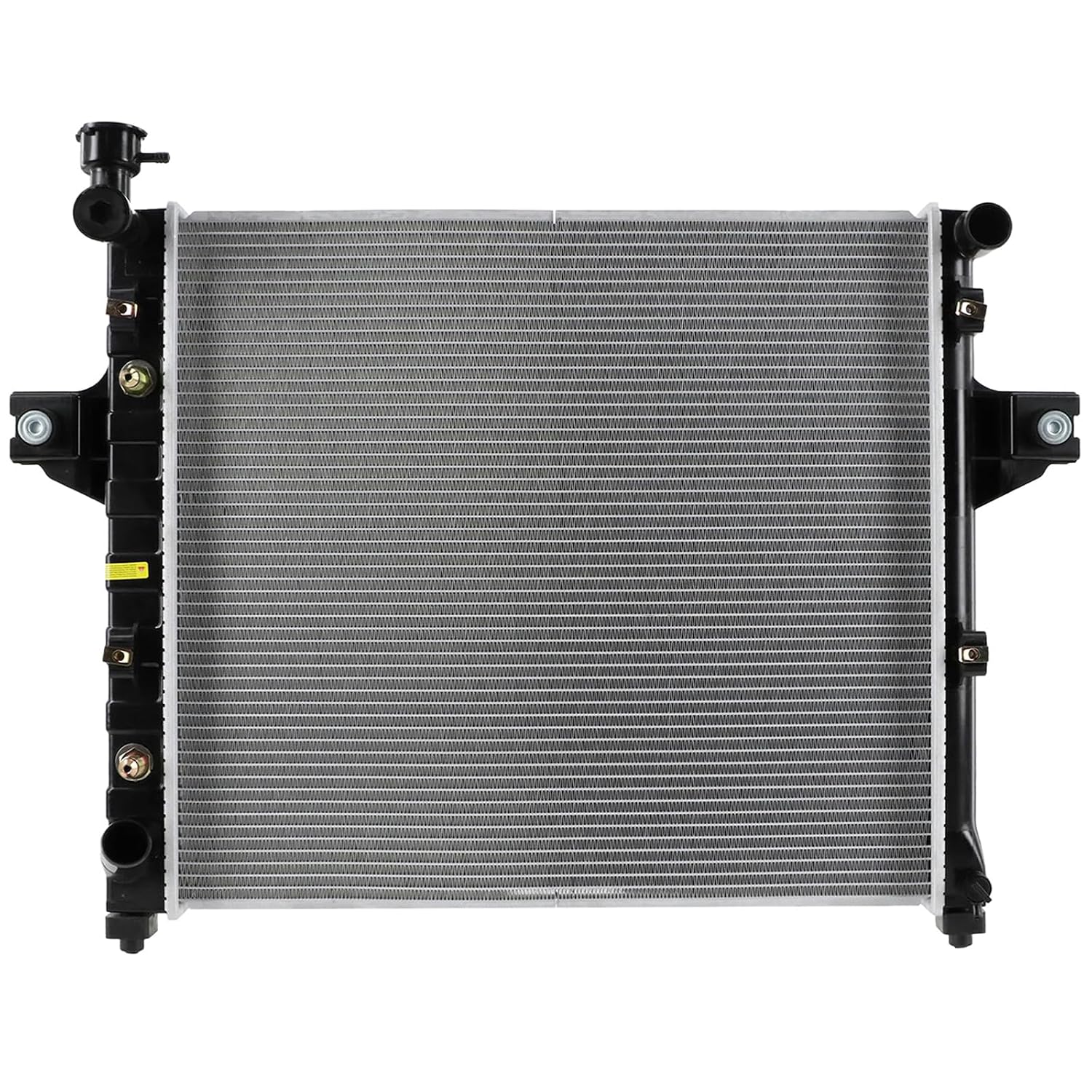
| Vehicle fitment | 1999–2004 Jeep Grand Cherokee 4.0L |
|---|---|
| Transmission oil cooler | Included |
| Engine oil cooler | Not included |
| Inlet diameter | 1.5in |
| Outlet diameter | 1.5in |
This SCITOO aluminum radiator replaces the factory unit for 1999–2004 Jeep Grand Cherokee 4.0L and includes a built-in transmission oil cooler. It is intended as a like-for-like cooling assembly for owners facing a leaking or clogged original radiator. Typical use is straightforward: swap the old radiator for this unit, reconnect hoses and the transmission cooler lines, then pressure-test the system. The aluminum core and brazed construction aim to restore cooling performance and help maintain engine temperature under normal driving and light towing. Buyers will appreciate the vehicle-specific fitment and that the product ships as a single ready-to-install assembly. Limitations to note are that it does not include an engine oil cooler and some buyers report occasional alignment or minor fitment adjustments may be required during installation. Also the finish and bracketing are serviceable rather than premium, so it is best suited to owners prioritizing reliable cooling function over cosmetic perfection.
Best for: Jeep owners who want a dependable, vehicle-specific replacement radiator to restore original cooling function and keep their engine running at safe temperatures.
Less Ideal for: Drivers seeking a premium finish, upgraded high-capacity performance radiator, or integrated engine oil cooling should consider other options.
- Direct-fit design for 1999–2004 Grand Cherokee 4.0L to simplify replacement
- Aluminum construction with brazed core restores cooling capacity
- Includes transmission oil cooler so no separate cooler is required
- Ships as a complete radiator assembly ready for installation
- Does not include an engine oil cooler
- Some installations may need minor bracket or alignment adjustments
Verdict: A practical, direct-fit aluminum radiator that restores reliable cooling and includes a transmission oil cooler for 1999–2004 Grand Cherokee 4.0L owners.
DWVO Complete Radiator for 1999–2004 Jeep Grand Cherokee 4.0L L6

| Compatible vehicle | 1999–2004 Jeep Grand Cherokee 4.0L L6 |
|---|---|
| OEM part numbers | 52079428AB, 52079428AD, 52079428AC |
| Core material | Aluminum |
| Tanks | PA66 GF30 inlet/outlet tanks |
This DWVO complete radiator is built as a direct replacement for 1999–2004 Jeep Grand Cherokee 4.0L L6 models and is intended to restore or improve cooling performance. It uses a high-density fin core and TIG-welded construction with PA66 GF30 inlet/outlet tanks and a treated coating to resist corrosion and leaks. Typical use is a full radiator swap during maintenance or after a leak; the package includes the radiator and a user manual but does not include a radiator cap or new rubber mounting bushings. Installers report it fits well but may require minor trimming or careful maneuvering during installation on some model years, and it can lack replacement bushings so you may reuse parts from the old radiator. Real-world benefits include improved temperature control thanks to the multi-louvered fins and a petcock drain tube for tidy coolant draining, while mixed long-term durability reports suggest checking seams and fittings after installation and keeping manufacturer contact expectations realistic.
Best for: Buyers who want an economical, direct-replacement radiator that restores cooling performance and are comfortable reusing some small parts from the old unit or doing minor fitment adjustments during installation.
Less Ideal for: Buyers who expect a fully plug-and-play package with all new mounting hardware and immediate manufacturer support should consider sourcing parts or a different vendor before purchasing.
- Direct-fit design for 1999–2004 Jeep Grand Cherokee 4.0L L6 for straightforward replacement
- Aluminum core with high-density multi-louvered fins for strong cooling performance
- TIG-welded construction and treated coating aimed at durability and leak resistance
- Included petcock with tube connection for cleaner coolant draining during service
- Does not include radiator cap or new rubber mounting bushings so some reuse of old parts is required
- Some installs need minor trimming or careful alignment on certain model years
- Customer support and warranty responsiveness reported as limited in some negative reviews
Verdict: A practical, budget-friendly direct replacement radiator that improves cooling for 1999–2004 Grand Cherokee 4.0L owners who prioritize performance and value.
autoexact Aluminum Radiator for 2011–2022 Jeep Grand Cherokee / 2011–2024 Dodge Durango

| Position | Front |
|---|---|
| Material | Aluminum core |
| Tanks | PA66 GF30 |
| Core type | Dense parallel flow |
| Compatibility | 2011–2022 Grand Cherokee, 2011–2024 Durango (listed engines) |
This autoexact radiator is built as a direct replacement for compatible Grand Cherokee and Durango models, offering an aluminum core, extruded tanks, and multi-louvered fins intended to speed heat transfer. Typical use is drop-in replacement for a failed or underperforming factory radiator or as an upgrade for heavier-duty cooling needs; it lines up with factory mounting points and connections so installation requires no modification. Notable features include a dense parallel-flow core with folded fins, precision welding and seals that the manufacturer says are pressure tested to prevent leaks, and corrosion-resistant coatings for long-term durability. In practice you can expect improved thermal control in stop-and-go traffic and towing compared with older, corroded radiators, while the lighter aluminum construction makes handling and installation easier. Limitations to consider are that it is an aftermarket part rather than a factory unit and the listing’s warranty is limited to one year, so buyers seeking extended factory-style coverage should weigh that when deciding.
Best for: Buyers who prioritize a reliable, drop-in replacement that restores or improves cooling without modification and prefer parts that install like the original.
Less Ideal for: Drivers who need extended manufacturer-backed warranties or who prefer only factory-sourced replacement parts should consider other options.
- Direct-fit design that aligns with factory mounting points and hose connections for straightforward installation
- Aluminum parallel-flow core with folded fins for efficient heat dissipation
- Precision-welded tanks and premium seals subjected to leak and pressure testing
- Corrosion-resistant coating and reinforced construction for longer service life
- One-year warranty may be shorter than factory or extended aftermarket coverage
Verdict: Choose this autoexact radiator if you want a proven direct-fit aluminum replacement that restores factory-style cooling with minimal fuss.
Choosing the Right Jeep Grand Cherokee Laredo Radiator: Key Factors to Consider
Fitment and Mounting
Correct fitment is the single most important factor for a radiator on the Grand Cherokee Laredo. The radiator must align with factory mounting points, hose connections, sensor ports, and any transmission cooler lines to avoid extra brackets or hose adapters. Poor fitment increases installation time and the risk of leaks or stress on hoses and fittings.
Check core height, width, and thickness relative to the vehicle's radiator support and fan shroud. Also confirm the position and thread size of drain plugs and bleed ports. For owners who want a straightforward swap, a radiator that mirrors OEM attachment points reduces labor and prevents clearance issues with the AC condenser, intercooler plumbing if present, and the hood latch area.
Cooling Capacity and Core Design
Cooling capacity determines how effectively the radiator dissipates heat during highway cruising, towing, or stop-and-go traffic. Core design—tube-and-fin density, number of rows, and fin type—affects airflow resistance and thermal transfer. A thicker core or multi-row design improves heat rejection but can require more space and may change fan effectiveness.
Consider the vehicle's typical load and climate when evaluating core design. For hotter climates or frequent towing, prioritize a higher-capacity core that maintains lower coolant temperatures under sustained load. For light-duty driving in temperate areas, a standard core that matches factory flow characteristics is often sufficient and easier to fit without additional cooling modifications.
Material and Corrosion Resistance
Materials drive lifespan and serviceability. Aluminum cores with welded or brazed joints are common because they balance weight, thermal conductivity, and corrosion resistance. Plastic tanks reduce cost and weight but can become brittle over time and may be more prone to cracking, especially after multiple heat cycles or exposure to road chemicals.
Inspect whether the unit uses corrosion-resistant coatings and quality brazing at joints. For owners planning to keep the Grand Cherokee Laredo longer term, prioritize radiators with robust metal tanks or replaceable end tanks and good corrosion protection to minimize the chance of premature leakage.
Transmission Cooler Integration
Many Grand Cherokee Laredo models route the transmission cooler through or alongside the radiator. Proper integration prevents transmission overheating and reduces external plumbing complexity. A replacement radiator should provide factory-style transmission cooler ports or include fittings that match original line sizes.
If the radiator does not include a built-in transmission cooler, owners must account for separate cooler installation and potential hose routing. Incorrect transmission cooler sizing or poor placement can lead to elevated transmission fluid temperatures, which accelerates fluid breakdown and increases wear.
Ease of Installation and Service Access
Ease of installation affects both DIY owners and professional technicians. Radiators that retain OE sensor bosses, provide clear drain plugs, and match hose and mount locations reduce labor time and the chance of installation errors. Also look for designs that permit easy access to bleed valves and thermostat housings.
Consider whether the radiator requires removal of additional components like the bumper or AC condenser for access. Models that allow reuse of factory hoses and clamps minimize parts purchases and simplify future service. Good documentation and clear port labeling also speed up maintenance tasks like coolant draining and refilling.
Warranty and Expected Longevity
Warranty length and terms reflect expected product lifespan and manufacturer confidence. A longer warranty can provide peace of mind against early failure, while clear coverage on corrosion and leakage is particularly useful for vehicles operated in harsh climates or where road salt is common.
Look for warranties that cover both core and tanks and that specify remedies for leaks. Consider the expected longevity based on construction quality and whether replacement parts, such as end tanks or mounting brackets, are available separately. Balancing initial cost against a reasonable warranty period helps predict total ownership expense over time.
Common Radiator Failure Symptoms
Radiator issues often show as overheating under normal load, frequent need to top off coolant, or a visible coolant puddle under the vehicle. Other signs include low heater output, steam from the engine bay, or fluctuating temperature gauge readings during idle and driving.
Small leaks from seams or end tanks can start as slow drips that accelerate under thermal cycling. Pressure testing the cooling system and inspecting hose connections, clamps, and the radiator core can help locate the leak source before more severe engine damage occurs.
- Visible coolant leakage at radiator seams or hose connections
- Engine temperature climbing during city driving or towing
- Sweet-smelling steam or a sweet odor in the engine bay
- Dirty or discolored coolant that may indicate internal corrosion
Preparing for Radiator Replacement
Before replacing the radiator on a Grand Cherokee Laredo, gather the necessary tools and parts: new coolant, OEM-style hose clamps, a refill funnel with a bleed port, and any replacement hoses or thermostat if they show wear. Park on level ground and allow the engine to cool completely before starting work.
Drain the coolant into a suitable container for proper disposal or recycling. Label hoses and electrical connectors as you remove them to simplify reassembly. Inspect surrounding components such as the radiator support, fan shroud, and AC condenser for damage that might need attention during the replacement process.
- Confirm correct part fitment and included fittings
- Have new clamp hardware and coolant on hand
- Check for damaged hoses, sensors, and fan components
Bleeding and Refilling the Cooling System
Proper bleeding prevents air pockets that cause hot spots and erratic temperature readings. Use the vehicle's specified coolant type and follow the recommended coolant mixture. Warm the engine with the radiator cap off and the heater set to max to allow trapped air to escape through the bleeder valves or reservoir.
After refilling, run the engine to operating temperature and recheck coolant level. Reinspect for leaks at hose fittings and the drain plug. A follow-up check after a short test drive ensures the system has fully circulated and that levels remain stable.
- Use the correct coolant type and mixture
- Open bleed valves or use the heater circuit to purge air
- Recheck levels after the engine reaches operating temperature
When to Repair Versus Replace
Minor leaks at hose connections or a damaged drain plug can sometimes be repaired, but compromised cores, large cracks in end tanks, or widespread corrosion generally indicate replacement is the safer long-term choice. Repairs may be a temporary fix but can mask underlying degradation.
Consider the vehicle's age, mileage, and overall cooling system condition. If other components such as hoses, water pump, or thermostat are near end of life, replacing the radiator as part of a broader cooling system refresh can improve reliability and reduce future labor costs.
- Small hose or clamp leaks can be repaired quickly
- Core damage and extensive corrosion usually require replacement
- Bundle replacements with related cooling parts when practical
Maintaining Your New Radiator
Regular maintenance extends radiator life. Periodic coolant inspections and scheduled coolant flushes according to vehicle recommendations help prevent internal corrosion and debris buildup. Inspect hoses and clamps at least annually and after any repair that disturbs the cooling system.
Keep external fins clear of debris and avoid high-pressure washing directed at the core, which can deform fins and reduce airflow. If you drive in harsh climates or on salted roads, more frequent inspections and flushes help prevent premature corrosion.
- Follow factory coolant flush intervals or more often in harsh conditions
- Inspect hoses, clamps, and fins during routine service
- Avoid pressure washing the radiator core directly
Still looking for the perfect fit?
Select your Jeep Grand Cherokee configuration to see the most relevant Radiators recommendations
How We Chose the Best Jeep Grand Cherokee Laredo Radiator
We focused on selection criteria that matter specifically for the Jeep Grand Cherokee Laredo and for owners who need a reliable radiator replacement. Key evaluation points included fitment accuracy and mounting alignment to avoid modification during installation, thermal performance measured by core design and coolant flow, and construction materials such as aluminum cores and tanks that influence corrosion resistance and service life. We also assessed durability factors like reinforced end tanks and quality brazing for seam strength, plus ease of installation in stock engine bays.Serviceability and coolant routing were considered to minimize hose and sensor relocation, and we prioritized radiators that work with factory fan and shroud arrangements. Weight and overall dimensions were checked to avoid clearance issues with the radiator support and AC condenser. Exclusions included any unit that required extensive chassis or bumper trimming, or that lacked provisions for OE sensor ports and transmission cooler lines when applicable. The final list balances practical fitment, cooling efficiency, and expected longevity for typical Grand Cherokee Laredo driving conditions.
Our full evaluation process is outlined in our review methodology.
FAQ
What causes a radiator to leak on a Grand Cherokee Laredo?
Leaks often come from corroded cores, cracked end tanks, or failed joints where the core meets the tanks. Vibrations, road debris, and age-related material fatigue can also create hairline fractures that worsen over time.
How long does a typical replacement radiator last?
Lifespan varies with materials and care, but a well-made radiator with proper maintenance often lasts several years. Exposure to road salt and infrequent coolant changes can shorten service life, while regular inspections and timely coolant service extend it.
Do I need to replace hoses when replacing the radiator?
Not always, but it is wise to inspect upper and lower radiator hoses and clamps during replacement. Hoses showing soft spots, bulges, or cracking should be replaced to avoid future leaks and to ensure a reliable seal on the new radiator.
Can I install a radiator myself on the Grand Cherokee Laredo?
Many mechanically inclined owners can complete the swap with standard tools, proper safety precautions, and time. Confirm fitment, follow bleeding procedures, and allow for possible removal of auxiliary components. Complex cases or uncertain fitment are best handled by a professional.
How do I know if my transmission cooler needs attention when replacing the radiator?
If the vehicle has built-in transmission cooler ports in the radiator, inspect the fittings and lines for leaks or corrosion. If the radiator lacks integrated cooler support or the lines are damaged, plan for replacement or a separate cooler to maintain transmission operating temperatures.
Will switching to a higher-capacity radiator affect my heater performance?
A higher-capacity radiator generally improves overall cooling and does not reduce heater output. However, changes in flow dynamics could slightly alter warm-up times. For most owners, a properly matched radiator maintains or improves cabin heat during cold conditions.
Final Verdict
Choose a radiator that matches factory fitment and provides the cooling capacity you need for your typical driving conditions. Prioritize secure mounting, good corrosion resistance, and proper transmission cooler integration where applicable. Remember that thorough bleeding and using the correct coolant are essential after installation.Balance long-term durability against ease of installation and available warranty coverage. With careful selection and routine maintenance, you can restore reliable temperature control to your Jeep Grand Cherokee Laredo and reduce the risk of repeat cooling system failures.
Explore More:
- Check out all Jeep Grand Cherokee parts & accessories
- Explore Radiators Maintenance & Repair Guides
- Explore Cooling System
- Browse all Auto Parts
