

Note: This article contains affiliate links. If you click on these links and make a purchase, I may earn a small commission at no extra cost to you. This helps support my research and content. Read my full affiliate disclosure here.
If your Jeep Grand Cherokee 5.2L V8 is running hotter than usual, a proper radiator replacement makes an outsized difference in engine longevity and day-to-day reliability. You need a radiator that fits the 5.2L V8 configuration, clears surrounding components, and provides consistent cooling under load. This guide covers the top shortlisted radiators for this V8 application, explaining why each type is appropriate and how they perform against common failure symptoms like leaks and overheating. We evaluate options based on cooling capacity, fitment accuracy, durability, and ease of installation so you can pick the right radiator for highway driving, towing, or everyday use. Read on for practical guidance before you inspect product listings or begin a replacement job.
Looking for other parts? See all Jeep Grand Cherokee parts & accessories.
Top Picks at a Glance
| Best Overall The best all-around choice for most situations | AM Autoparts Aluminum Core Radiator with Plastic Tanks for 1993–1997 Jeep Grand Cherokee 5.2L |  |
| Best Quality Built to a higher standard if you want something more solid | EGINCOOLER 3-Row Aluminum Radiator with Shroud & Relay Kit for 1993-1997 Jeep Grand Cherokee 5.2L V8 |  |
| Best Value The sweet spot between price and what you get | BESUTO Aluminum Radiator for Jeep Grand Cherokee 5.2L V8 (1993–1997) |  |
| Best Budget The cheapest option that still gets the job done reliably | DNA Motoring Aluminum Cooling Radiator for 1993–1997 Jeep Grand Cherokee 5.2L AT |  |
| Highest Rated A top-rated pick with lots of positive feedback | Readair Engine Coolant Radiator Assembly with Transmission Oil Cooler for Jeep Grand Cherokee 5.2L (1993–1997) |  |
| Most Popular A crowd favorite that many people choose with confidence | TRQ Radiator Assembly with Aluminum Core and Plastic Tanks for 1993–1997 Jeep Grand Cherokee 5.2L |  |
AM Autoparts Aluminum Core Radiator with Plastic Tanks for 1993–1997 Jeep Grand Cherokee 5.2L

| Core Material | Aluminum |
|---|---|
| Tank Material | Plastic |
| Flow Type | Cross Flow |
| Core Row Quantity | 1 |
| Inlet Location | Top Left |
This AM Autoparts radiator replaces the factory unit for the 5.2L V8 Grand Cherokee and Wagoneer and is built with an aluminum crossflow core and plastic tanks. It is intended as a direct-fit, preassembled replacement so installation follows the original mounting points and hose locations, which simplifies swapping it into a vehicle during routine cooling system repairs. The single-row aluminum core should provide adequate heat rejection for normal street driving and towing within typical limits, while the plated transmission oil cooler lines add compatibility for automatic transmission models. Notable practical features include factory-style inlet and outlet placements and a crossflow design that matches the original cooling layout. Limitations are that it does not include a radiator cap or an internal engine oil cooler and its single core row may run hotter under heavy-duty continuous towing compared with multi-row high-performance radiators. For owners seeking a straightforward, factory-replacement radiator for everyday driving and light towing, this is a sensible choice.
Best for: Buyers who want a reliable, factory-style replacement radiator that installs with minimal fuss and restores original cooling performance for daily driving and occasional towing.
Less Ideal for: Drivers who regularly subject their vehicle to heavy-duty towing, racing, or extreme operating conditions should consider a multi-row or performance-oriented cooler instead.
- Direct-fit preassembled design for straightforward installation
- Aluminum crossflow core offers good standard heat dissipation
- Plated transmission oil cooler lines included for automatic transmission compatibility
- Inlet and outlet locations match factory positions to avoid hose modifications
- Single-row core may be less effective than multi-row radiators under sustained heavy towing or high-load conditions
- Radiator cap and engine oil cooler are not included
Verdict: Choose this radiator if you need a straightforward, direct-fit factory-style replacement for a 1993–1997 Jeep Grand Cherokee 5.2L that gets your cooling system back to stock performance.
EGINCOOLER 3-Row Aluminum Radiator with Shroud & Relay Kit for 1993-1997 Jeep Grand Cherokee 5.2L V8
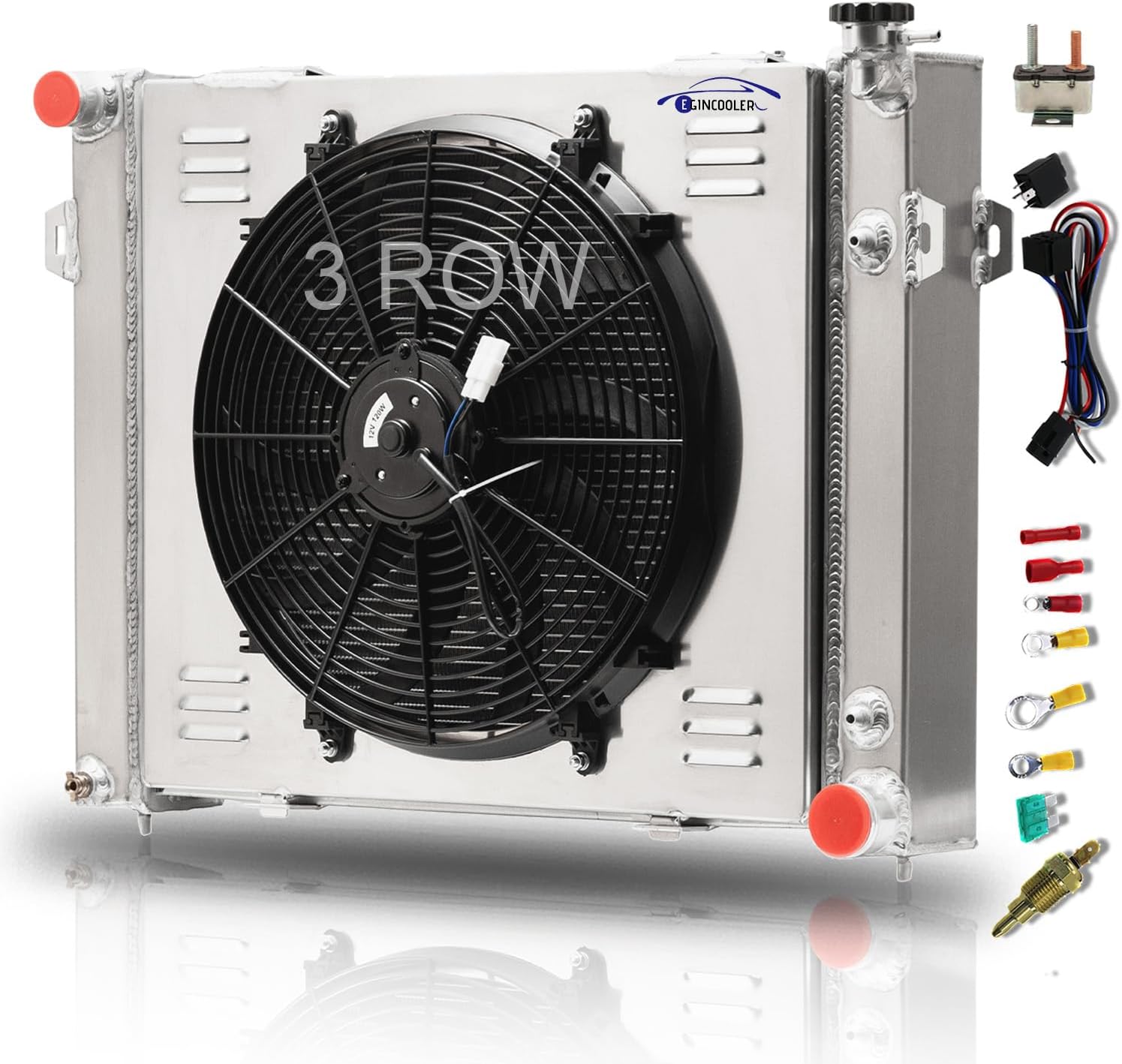
| Vehicle Fitment | 1993–1997 Jeep Grand Cherokee 5.2L V8 |
|---|---|
| Core | 3-Row aluminum crossflow |
| Includes | 16" electric shroud fan, relay kit, radiator cap |
| Material | AA5052 aircraft grade aluminum |
| Transmission | Built-in cooler; fits AT & MT |
This EGINCOOLER 3-row aluminum radiator is a direct bolt-on replacement built specifically for 1993–1997 Jeep Grand Cherokee 5.2L V8 models and comes as a complete kit with a 16" electric shroud fan and relay. The full AA5052 aluminum core and tanks eliminate plastic end tanks and improve heat rejection; the seller claims a 30%–45% efficiency gain over stock units, which makes this a good upgrade for towing, off-road, or high-load driving. It includes a factory-style brass drain, CNC-machined filler neck, radiator cap, and a built-in transmission oil cooler so you do not need separate components for automatic transmissions. Installation is straightforward because it is a direct bolt-on and fan mounts with included tabs and relay hardware. Be aware this is a performance-oriented aftermarket radiator so finish is raw aluminum and fit may require careful verification against OEM part numbers; buyers should also confirm radiator core dimensions and inlet/outlet sizes before purchasing. For drivers who push cooling hard, the all-aluminum 3-row core and included fan give a tangible cooling advantage over aging stock radiators.
Best for: Buyers who prioritize stronger cooling performance for heavy use like towing, off-road, or spirited driving on a 1993–1997 Jeep Grand Cherokee 5.2L V8 and want a complete, bolt-on aluminum radiator upgrade.
Less Ideal for: Owners who prefer an exact factory appearance, painted finish, or who are looking for a basic, economy replacement rather than a performance-focused cooling upgrade.
- Full AA5052 aluminum core and tanks for improved heat dissipation and durability
- 3-row crossflow design claimed to provide significantly better cooling than stock radiators
- Includes 16" electric shroud fan and relay kit so no separate fan purchase is needed
- Built-in transmission oil cooler compatible with both automatic and manual transmissions
- Direct bolt-on fitment for 1993–1997 Jeep Grand Cherokee 5.2L V8 to simplify installation
- Raw aluminum finish may not match the appearance of factory parts and could require sealing to prevent corrosion in some environments
- Performance claims are manufacturer-stated and may vary under real-world conditions
Verdict: If you need a bolt-on cooling upgrade for a 1993–1997 Jeep Grand Cherokee 5.2L V8 that improves heat rejection and includes fan and relay hardware, this full-aluminum 3-row radiator kit is a strong choice.
BESUTO Aluminum Radiator for Jeep Grand Cherokee 5.2L V8 (1993–1997)

| Core thickness | 32mm |
|---|---|
| Fitment | Jeep Grand Cherokee 5.2 V8 1993-1997 |
| Manufacturer | Besuto |
This BESUTO radiator is a direct-fit replacement intended for Jeep Grand Cherokee 5.2L V8 models (1993–1997). It uses an aluminum core with plastic headers and a 32mm thick core to provide cooling capacity comparable to factory units while saving weight. Installation is typical of bolt-in radiators and most buyers report straightforward fit and straightforward bolt-on installation when matching the correct application. The aluminum core and fin design aim to improve heat dissipation and resist corrosion compared with older steel cores. Practical benefits include reduced mass, compatibility with stock hoses and mounting points, and a design that meets factory-spec performance claims. Limitations to note are the mixed user feedback on long-term durability—some users report early leaks—so careful inspection and proper installation are important. Also the unit relies on plastic end tanks which are common in aftermarket radiators but can be more vulnerable to heat-related stress than full-metal constructions. For anyone replacing an aging radiator on these Jeeps, it is a cost-effective, generally reliable option if installed correctly and checked for leaks after break-in.
Best for: Buyers who want a practical, vehicle-specific replacement radiator that restores cooling performance and reduces weight without requiring modifications and who prioritize direct-fit convenience.
Less Ideal for: Drivers seeking a heavy-duty or all-metal performance radiator for high-stress or track use should consider purpose-built performance radiators instead.
- Direct-fit design for Jeep Grand Cherokee 5.2L V8 (1993–1997) for easier replacement
- Aluminum core with 32mm thickness for improved heat dissipation and lighter weight
- Fits factory mounting points and hose connections for straightforward installation
- Meets or claims to meet factory-spec cooling performance
- Plastic end tanks instead of full metal which can be more susceptible to heat stress over long term
- Some customer reports of premature leaks indicating variable long-term reliability
Verdict: A practical, direct-fit aluminum replacement that restores factory-level cooling for 5.2L Grand Cherokee V8s while saving weight and simplifying installation.
DNA Motoring Aluminum Cooling Radiator for 1993–1997 Jeep Grand Cherokee 5.2L AT
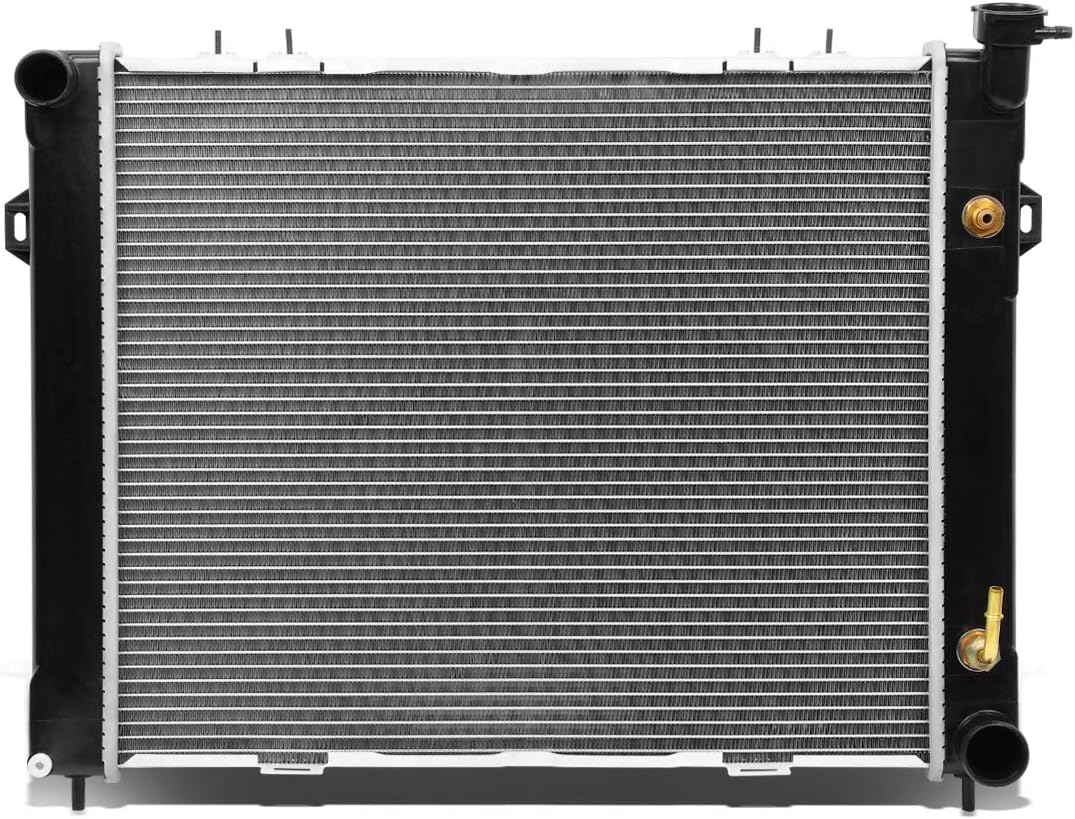
| Compatibility | 1993–1997 Jeep Grand Cherokee 5.2L AT |
|---|---|
| Core material | T-6061 aluminum |
| Tank material | Reinforced PVC |
| Fitment type | Direct bolt-on replacement |
| Rows | 2-row (OEM style) |
This DNA Motoring radiator is a full T-6061 aluminum core designed as a direct bolt-on replacement for 1993–1997 Jeep Grand Cherokee 5.2L automatic transmission models. It replaces the factory unit and improves heat dissipation with a tube-and-fin design intended to increase surface area and cooling efficiency. Typical installation is straightforward for experienced DIYers or a professional mechanic since the unit is described as a direct fit and comes with mounting hardware packaged to prevent loss during shipping. The radiator uses reinforced PVC tanks and supports models with or without a transmission oil cooler, though some buyers reported needing to change or plug fittings depending on vehicle configuration. Practical benefits include lighter weight than stock and noticeably improved cooling potential over older or failing radiators, which can help avoid overheating. Limitations to keep in mind are that installation instructions are not included and a few users reported leaks or incorrect fittings on certain vehicles, so inspect connections and consider professional installation if unsure.
Best for: Buyers looking to replace a failing radiator on a Grand Cherokee V8 who prioritize low cost and improved cooling over OEM-branded parts and are comfortable verifying fitment or hiring a mechanic.
Less Ideal for: People seeking a factory-branded radiator with full documentation and guaranteed exact fittings out of the box or those unwilling to address minor fitment adjustments during installation.
- Full T-6061 aluminum core for higher heat transfer and lighter weight than many stock radiators
- Tube-and-fin design increases surface area for more efficient cooling
- Direct bolt-on fitment for 1993–1997 Jeep Grand Cherokee 5.2L AT minimizes modification
- Includes mounting hardware packaged with the radiator to reduce missing parts risk
- No installation instructions included so novice installers may need professional help
- Some buyers reported leaks or incorrect transmission cooler fittings on certain vehicles
Verdict: A budget-friendly, full-aluminum direct-replacement radiator that restores cooling for 1993–1997 Grand Cherokee 5.2L automatics without the premium price.
Readair Engine Coolant Radiator Assembly with Transmission Oil Cooler for Jeep Grand Cherokee 5.2L (1993–1997)

| Compatibility | Jeep Grand Cherokee 5.2L 1993-1997; Grand Wagoneer 5.2L 1993 |
|---|---|
| Transmission oil cooler | Included (brass) |
| Core thickness | 1-3/10 inch |
| Inlet diameter | 1-1/2 inch |
| Outlet diameter | 1-7/10 inch |
This Readair radiator is a direct-fit replacement designed for 5.2L V8 Jeep Grand Cherokee and Grand Wagoneer models from the mid 1990s. It combines an aluminum core with TIG-welded end tanks and a built-in brass transmission oil cooler, so you replace both cooling systems at once instead of fitting separate components. Typical use is as a factory-style replacement when the original radiator is leaking, clogged, or the transmission cooler has failed. The treated coating and leak-tested construction aim to improve longevity, and reviewers report consistent fitment and straightforward installation for DIYers. Practical benefits include integrated transmission cooling, a solid aluminum core, and factory-style mounting that keeps fan and hose alignments unchanged. Important limitations are that fit depends on correct vehicle match and hose inlet/outlet diameters, so verify your model numbers and hose sizes before purchase; some users noted hose fitment issues on non-matching vehicles. Expect a multi-hour installation if doing it yourself and plan to refill and bleed the cooling system properly after install.
Best for: Buyers seeking a dependable, factory-style replacement radiator that also restores transmission cooling on a mid-1990s 5.2L Jeep and who prioritize long-term reliability over cosmetic upgrades.
Less Ideal for: People looking for performance or high-capacity aftermarket radiators for racing, or those who need a universal fit part for multiple vehicle makes and years.
- Direct-fit design for Jeep Grand Cherokee 5.2L 1993–1997 and 1993 Grand Wagoneer V8 simplifies installation
- Aluminum core with TIG-welded tanks and treated coating for corrosion resistance
- Built-in brass transmission oil cooler replaces two components in one unit
- Leak-tested at the factory to reduce early failures
- Hose inlet/outlet diameters may differ from some vehicle setups, requiring adapter or hose changes
- Replacement requires coolant and transmission fluid handling and several hours to install for DIY users
Verdict: If you need a reliable, direct-fit replacement that restores both engine and transmission cooling on a 5.2L Jeep Grand Cherokee, this radiator delivers a factory-style solution.
TRQ Radiator Assembly with Aluminum Core and Plastic Tanks for 1993–1997 Jeep Grand Cherokee 5.2L

| Fitment | 1993–1997 Jeep Grand Cherokee V8 5.2L; 1993 Grand Wagoneer V8 5.2L |
|---|---|
| Core Material | Aluminum |
| Core Thickness | 1.25 in |
| Transmission Oil Cooler | Included, plated |
| Flow Type | Cross Flow |
This TRQ radiator is a direct-fit replacement for 1993–1997 Jeep Grand Cherokee and 1993 Grand Wagoneer 5.2L V8 engines, built with an aluminum core and plastic end tanks. It installs like a factory-style unit and includes a plated transmission oil cooler and pre-assembled mounting points to simplify a DIY swap. The crossflow core and single core row provide standard cooling capacity for the 5.2L V8, and multiple customer reports note straightforward bolt-in fitment when original mounting hardware and bumpers are transferred over. Practical benefits include factory-replacement orientation of inlet and outlet locations, included transmission cooler plates, and compatibility guidance from the seller’s fitment chart and videos to reduce installation uncertainty. Limitations to be aware of are potential fitment variance with fan panels or auxiliary mounting tabs on some chassis and the plastic tanks versus full-metal construction, which may affect long-term durability in high-heat or off-road conditions. Expect a mostly hassle-free replacement if you confirm vehicle fit and retain needed small fasteners from your old radiator.
Best for: Buyers who want a replacement that closely matches factory fit and performance and who prioritize social proof and low installation risk by following verified fitment guidance and DIY resources.
Less Ideal for: Those wanting a heavy-duty all-metal radiator for extreme off-road or high-performance cooling needs should consider performance-grade alternatives rather than this direct-fit unit.
- Direct-fit design speeds DIY installation and avoids modifications
- Aluminum core with tight fins for effective heat transfer
- Includes plated transmission oil cooler plates for automatic transmissions
- Pre-assembled mounting points and supported inlet/outlet locations match factory layout
- Plastic end tanks instead of full metal which can be less robust over many years
- Some buyers reported small fitment mismatches with fan panels or mount tab locations
Verdict: A near-factory direct-fit radiator with an aluminum core and included transmission cooler that minimizes installation risk for Jeep Grand Cherokee 5.2L owners.
Choosing the Right Jeep Grand Cherokee 5.2L V8 Radiator: Key Factors to Consider
Cooling Capacity and Core Design
Cooling capacity determines how effectively the radiator removes heat from the 5.2L V8, which runs hotter under load than smaller engines. Look for a core design that matches the engine's heat output. Multi-row cores, larger surface area, and efficient fin density increase heat rejection, which helps keep thermostat and fan cycles within normal ranges.
Core thickness and tube configuration also affect airflow and thermal transfer. Thicker cores can offer better cooling but may require verification of clearance within the engine bay. Consider how the core design interacts with the vehicle's fan shroud and airflow paths so the radiator can perform optimally at both cruising and idle conditions.
Fitment and Mounting Accuracy
Correct fitment is critical for a direct radiator replacement on the Jeep Grand Cherokee 5.2L V8. Mounting tab locations, inlet and outlet positions, and overall height and width must align with the factory layout to avoid interference with hoses, transmission coolers, and the fan assembly. A radiator that requires trimming or adapter hoses increases installation time and risk of leaks.
Check that the radiator matches existing transmission cooler lines if applicable, and confirm the position of any sensor ports or provision for OEM fittings. Accurate fitment also reduces vibration and stress on hoses, which lowers the chance of premature leakage.
Materials and Corrosion Resistance
Material selection affects longevity and resistance to typical engine-bay conditions. Aluminum cores with welded or brazed joints offer a good balance of heat transfer and weight. End tanks may be stamped aluminum or reinforced plastic; each has tradeoffs in durability and repairability. For the 5.2L V8 application, choose materials that resist electrochemical corrosion and can withstand the higher thermal cycling of a V8.
Protective coatings, proper sealing at joints, and high-quality brazing help prevent early failure. Consider the local climate and coolant chemistry when evaluating corrosion resistance, since road salts and hard water can accelerate degradation.
Leak Prevention and Serviceability
Radiator leaks are a common failure mode and a primary cause of overheating symptoms. Look for manufacturing and design features that reduce leak risk, such as reinforced hose nipples, quality welds at the core joints, and pressure-tested assemblies. Radiators that allow easy access for pressure testing make diagnostics simpler when symptoms arise.
Serviceability also covers whether the radiator supports standard maintenance tasks like coolant replacement and radiator coolant flush procedures. Units that allow removal and reinstallation without altering other cooling system components reduce labor and make future repairs less costly.
Compatibility with Cooling System Components
A radiator does not operate alone. For dependable cooling on the 5.2L V8, verify compatibility with the water pump flow rate, thermostat temperature rating, and fan design. Mismatched flow paths or port sizes can create turbulence or reduce coolant circulation efficiency. Ensure the radiator accommodates any transmission oil cooler connections if the vehicle has an integrated cooler.
A well-matched radiator works with the rest of the cooling system to maintain consistent engine temperatures across driving scenarios, from towing to stop-and-go traffic.
Installation Complexity and Required Tools
Installation difficulty affects cost and how soon you can return the vehicle to service. Radiators that require special adapters, cutting of bodywork, or relocation of ancillary components increase time and complexity. Evaluate whether standard hand tools suffice or if specialized tools are needed for hose clamps, pressure testing, or bleeding the cooling system after a radiator replacement.
Clear installation guides, included mounting hardware, and a design that aligns with factory attachment points simplify the job. If you plan to perform the work yourself on the Jeep Grand Cherokee 5.2L V8, prioritize radiators rated for straightforward swap-ins to reduce the chance of installation-related leaks.
Common Radiator Symptoms and How to Diagnose Them
Overheating, visible coolant puddles, low coolant level, and steam from the engine bay are common signs of radiator issues on the 5.2L V8. Diagnosing the root cause quickly helps prevent serious engine damage. Start with a visual inspection for obvious leaks at hose connections, seams, and the bottom of the radiator.
Pressure testing the cooling system while cold will often reveal slow leaks that are not apparent during a short drive. Check the radiator cap for proper sealing, inspect hoses for soft spots or bulges, and verify coolant condition. Discolored or sludgy coolant can indicate internal corrosion or contamination that reduces heat transfer.
- Look for coolant stains on the radiator face and engine bay floor
- Use a cooling system pressure tester to pinpoint leaks
- Inspect hose clamps and connections for corrosion or looseness
- Check coolant color and for oily residue that suggests cross-contamination
Preparing for a Radiator Replacement on the 5.2L V8
Before removing the old radiator, gather the appropriate tools and replacement parts. This includes correct-size hose clamps, the proper coolant type, and any O-rings or small fittings specified for the 5.2L V8. Make sure to have a drain pan and rags to contain spilled coolant.
Follow safe procedures: let the engine cool completely, relieve system pressure, and drain coolant into an approved container. Label or photograph hose routing and electrical connections to ensure correct reassembly. If the vehicle has an integrated transmission cooler, note connection points to avoid fluid mixing.
- Wear gloves and eye protection when handling coolant
- Verify replacement radiator matches mounting points and inlet/outlet locations
- Have a torque wrench and recommended fastener torque values on hand
- Plan for a proper radiator coolant flush before filling the new radiator
Maintenance Tips to Extend Radiator Life
Regular maintenance reduces the chance of unexpected failure. Periodically check coolant level and condition, inspect hoses and clamps, and verify the radiator cap holds rated pressure. Flushing the cooling system at manufacturer-recommended intervals helps remove deposits that decrease heat transfer efficiency.
Address small leaks and corrosion spots early. Even minor external corrosion can become a point of structural weakening over time. Keeping the engine bay free of debris and ensuring proper airflow through the radiator face will help maintain consistent cooling performance for the 5.2L V8.
- Schedule coolant changes according to the vehicle's maintenance plan
- Use the correct coolant type and maintain proper concentration
- Clean the radiator fins gently to avoid bending or blocking airflow
- Inspect and replace worn hoses and clamps proactively
When to Repair Versus Replace a Radiator
Small localized leaks at hose fittings or repairable cracks in metal tanks can sometimes be fixed, especially if the leak is near an accessible joint. However, repairs are less reliable when corrosion is widespread, multiple seams are compromised, or the core has extensive blockages. For the 5.2L V8, sustained cooling performance is crucial, so repairs should be evaluated for longevity under V8 operating stresses.
Consider replacement if pressure tests reveal multiple leak points, if the core is internally fouled, or if repair would require removal of structural sections that compromise integrity. A full replacement restores design cooling capacity and eliminates uncertainty about long-term reliability.
- Repair minor hose-connection leaks and replace clamps if the core is otherwise healthy
- Replace if corrosion affects multiple areas or if the core is plugged
- Pressure-test after any repair to confirm the fix holds under rated system pressure
Bleeding and Filling After Installation
Properly bleeding the cooling system prevents air pockets that can cause hot spots and inaccurate temperature readings. After installing the new radiator, follow a radiator coolant flush and fill procedure appropriate for the Jeep Grand Cherokee 5.2L V8. Use the correct coolant concentration and fill to the specified level while rotating the engine at idle to allow trapped air to escape.
Some systems benefit from a vacuum fill tool or a specific bleed port to simplify air removal. Confirm heater hoses warm up and that the coolant level stabilizes after a short driven cycle. Recheck for leaks and coolant level after the first cool-down and again after a few hundred miles.
- Start with the engine cold and the radiator cap off during the initial fill
- Open bleed ports or run the heater on high to help circulate coolant
- Top off coolant after the first heat cycle and recheck for leaks
Still looking for the perfect fit?
Select your Jeep Grand Cherokee configuration to see the most relevant Radiators recommendations
How We Chose the Best Jeep Grand Cherokee 5.2L V8 Radiator
We prioritized radiators that deliver reliable cooling for the thermal demand of the Jeep Grand Cherokee 5.2L V8, focusing on engineering features and real-world fitment reliability. Key evaluation criteria included core construction and cooling capacity, measured by tube-and-fin or multi-pass design and overall heat rejection potential; inlet/outlet placement and mounting points to ensure proper car radiator fitment without modification; material durability such as aluminum cores and reinforced end tanks for resistance to corrosion and vibration; leak prevention features, including quality brazing or TIG welding and robust hose connections; and serviceability factors like availability of replacement parts, compatibility with standard radiator coolant flush procedures, and straightforward installation steps. We also examined expected maintenance considerations, such as susceptibility to clogging and ease of pressure testing during diagnostics. Excluded from consideration were units lacking clear dimensional data or mounting diagrams, radiators intended for different engine configurations, and any product listings without verifiable construction details. The result is a focused list of radiators that balance cooling performance, longevity, and fitment for this Jeep Grand Cherokee V8.
Our full evaluation process is outlined in our review methodology.
FAQ
How do I tell if my radiator is leaking or if the leak is from another cooling component?
Visual inspection is the first step. Look for coolant trails or stains on the radiator face and check hose connections and the water pump area. A pressure test of the cooling system helps isolate the leak by pressurizing the system and revealing the exact source without engine heat masking slow drips.
Can I replace the radiator myself on the Jeep Grand Cherokee 5.2L V8?
Many owners with moderate mechanical experience can perform a radiator replacement, provided they have the right tools and follow safety procedures. Pay close attention to correct fitment, hose routing, and bleeding the system. If the job requires removing structural components or transmission cooler lines that you are unsure about, professional help is advised.
How often should I flush the cooling system on this V8?
Frequency depends on coolant type and vehicle use, but flushing at regular intervals recommended by the vehicle maintenance schedule or if the coolant appears discolored helps prevent build-up. Heavy-duty use or towing may justify more frequent flushing to preserve heat transfer efficiency.
Will upgrading to a higher-capacity radiator eliminate overheating issues?
A higher-capacity radiator can improve thermal margin, but it is only one part of the cooling system. Overheating can also stem from thermostat issues, fan operation, low coolant, or restricted flow. Verify the whole cooling system during diagnosis rather than relying solely on a radiator upgrade.
What should I check if the new radiator still shows overheating symptoms?
Confirm the system was bled properly and that the coolant level is correct. Check fan operation, thermostat function, and water pump performance. Also inspect for internal blockages in hoses or the heater core and verify there are no air pockets causing localized hot spots.
Is it important to match the radiator inlet and outlet orientation exactly?
Yes. Matching inlet and outlet orientation and port size ensures correct hose routing and proper flow. Mismatched orientations may force the use of adapter hoses that can increase leak risk and complicate installation.
Final Verdict
Prioritize core cooling capacity, accurate fitment, and durable construction when selecting a radiator for the Jeep Grand Cherokee 5.2L V8. Addressing common failure points such as hose connections, welded joints, and corrosion resistance will reduce the chance of leaks and overheating. Balance the benefits of increased cooling capacity against any fitment or installation complexities. Ultimately, choose the radiator that best aligns with your driving demands and maintenance preferences, and follow proper installation and bleeding procedures to ensure reliable performance under V8 operating conditions.
Explore More:
- Check out all Jeep Grand Cherokee parts & accessories
- Explore Radiators Maintenance & Repair Guides
- Explore Cooling System
- Browse all Auto Parts
