

Note: This article contains affiliate links. If you click on these links and make a purchase, I may earn a small commission at no extra cost to you. This helps support my research and content. Read my full affiliate disclosure here.
If your 2005-2009 Dodge Dakota is showing overheating, low coolant, or visible leakage, replacing the radiator can restore reliable cooling and protect the engine. Picking the right radiator matters because fitment, cooling capacity, and construction directly affect how well the truck runs under load and in stop-and-go traffic.This guide covers the top six radiator options shortlisted for the 2005-2009 Dodge Dakota. We evaluate candidates on cooling performance, materials and build quality, and installation practicality so you can select a radiator that addresses common failure modes and fits your use and maintenance plans. Read on for the decision criteria and practical considerations before you swap the core component.
Looking for other parts? See all Dodge Dakota parts & accessories.
Top Picks at a Glance
| Best Overall The best all-around choice for most situations | Readair Complete Engine Radiator with Transmission Oil Cooler for Dodge Dakota and Mitsubishi Raider |  |
| Best Quality Built to a higher standard if you want something more solid | TRQ Radiator Aluminum Core, 1-Row Direct Fit for 2005–10 Dodge Dakota / 2006–09 Mitsubishi Raider / 2011 Ram Dakota |  |
| Best Value The sweet spot between price and what you get | DWVO Complete Radiator Compatible with 2005-2012 Dodge Dakota (CU2847) |  |
| Best Budget The cheapest option that still gets the job done reliably | ECCPP Replacement Radiator CU2883 for 2005–2011 Dodge Dakota / 2006–2009 Mitsubishi Raider |  |
| Highest Rated A top-rated pick with lots of positive feedback | AParts Engine Cooling Radiator Replacement for Dodge Dakota / Mitsubishi Raider |  |
| Most Popular A crowd favorite that many people choose with confidence | AUTOSAVER88 Radiator for 2005–2012 Dodge Dakota / 2006–2009 Mitsubishi Raider |  |
1. Readair Complete Engine Radiator with Transmission Oil Cooler for Dodge Dakota and Mitsubishi Raider

| Compatible engines | 3.7L and 4.7L |
|---|---|
| Fitment years | Dakota 2005-2012, Raider 2006-2009 |
| Core material | Aluminum |
| Transmission cooler | Brass, integrated |
This Readair radiator is a direct-fit replacement designed for Dodge Dakota (3.7L and 4.7L) and Mitsubishi Raider engines across the listed years and includes a built-in brass transmission oil cooler. It installs like a factory-style assembly and is intended as a one-piece swap for cooling system repairs or refreshed cooling performance. The aluminum core with multi-louvered fins and TIG-welded construction improves heat dissipation compared with older, clogged radiators, while the reinforced plastic tanks and treated coating aim to resist corrosion and leaks. The integrated transmission cooler simplifies installation for automatics because you do not need a separate unit. Expect solid durability for everyday driving and towing within the truck's normal use, though full performance depends on proper installation and maintaining compatible hoses and fittings. Buyers should note this is a direct-fit part for the listed years and engines only and does not address other drivetrain or cooling upgrades.
Best for: Buyers who want a reliable, factory-style radiator swap for a Dodge Dakota or Mitsubishi Raider and prioritize a straightforward installation and long-term leak resistance.
Less Ideal for: Drivers looking for performance-oriented cooling upgrades, custom plumbing, or fitment outside the specified years and engine configurations should consider other options.
- Direct replacement fit for specified Dodge Dakota and Mitsubishi Raider model years so installation follows factory mounting points
- Aluminum core with high-density multi-louvered fins for improved heat dissipation over aged radiators
- Integrated brass transmission oil cooler removes need for a separate unit on automatic models
- TIG-welded construction and treated coating designed to resist leaks and corrosion during normal use
- Compatibility limited to the listed model years and engine configurations only
Verdict: Choose this Readair complete radiator when you need a dependable, direct-fit replacement with an integrated transmission cooler for the listed Dakota and Raider years.
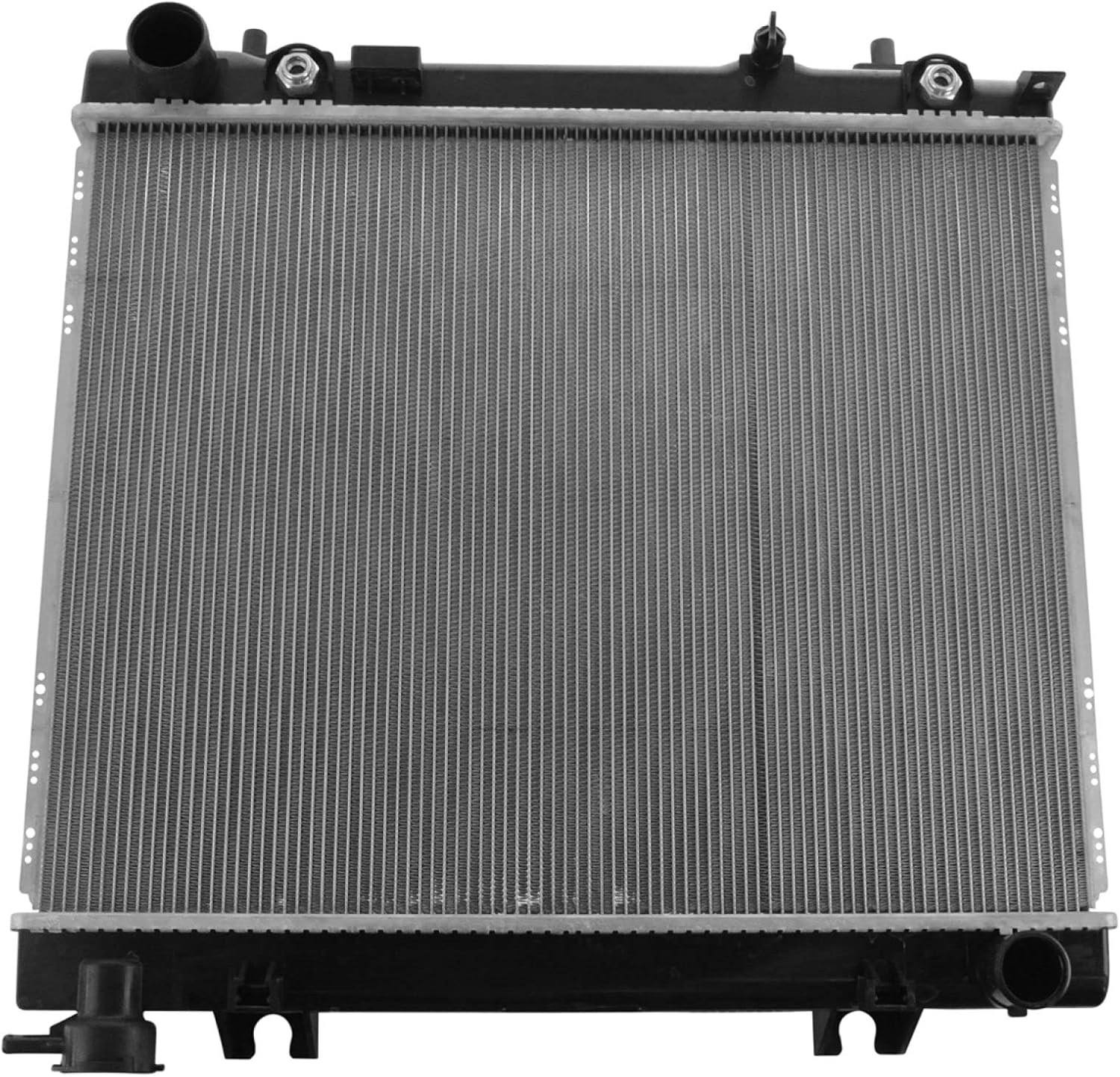
2. TRQ Radiator Aluminum Core, 1-Row Direct Fit for 2005–10 Dodge Dakota / 2006–09 Mitsubishi Raider / 2011 Ram Dakota
| Core Row Quantity | 1 |
|---|---|
| Core Thickness | 1 in |
| Core Material | Aluminum |
| Transmission Oil Cooler Included | Yes |
| Outlet Location | Bottom Right |
This TRQ radiator is a factory-replacement style cooling unit designed as a direct-fit swap for compatible 2005–10 Dodge Dakota, 2006–09 Mitsubishi Raider, and 2011 Ram Dakota applications. It uses a single-row aluminum core with a one-inch thickness and an integrated transmission oil cooler, so it handles engine cooling and automatic transmission fluid cooling without extra parts. Mounting points and inlet/outlet locations match the factory layout for a straightforward install and TRQ supplies installation videos to guide DIYers. The aluminum core and plated transmission cooler offer good thermal transfer for everyday and mildly spirited driving, while the plastic tanks keep weight and cost down. Limitations include the single-row core, which is less capable at high sustained heat loads than multi-row performance radiators, and the plastic tanks that are less durable than all-metal options. For owners wanting a like-for-like replacement that improves cooling modestly and simplifies installation, this is a practical choice; buyers seeking maximum track-level cooling should consider thicker, multi-row performance units instead.
Best for: A performance-minded owner who wants a reliable, direct-fit upgrade that improves cooling modestly while keeping installation simple and factory-like.
Less Ideal for: Drivers who need maximum sustained cooling for track use or heavy towing should look at thicker, multi-row radiators with all-metal tanks instead.
- Direct-fit design that matches factory mounting and inlet/outlet positions for easier installation
- Aluminum single-row core for improved thermal transfer over older or corroded stock units
- Integrated transmission oil cooler removes need for a separate cooler when replacing the radiator
- Pre-assembled components and online installation videos speed DIY replacement
- Single-row, 1-inch core provides less cooling capacity under heavy sustained loads compared with multi-row performance radiators
Verdict: Choose this TRQ radiator when you want a straightforward direct-fit replacement that modestly improves cooling and includes an integrated transmission cooler for compatible Dodge Dakota/Raider models.
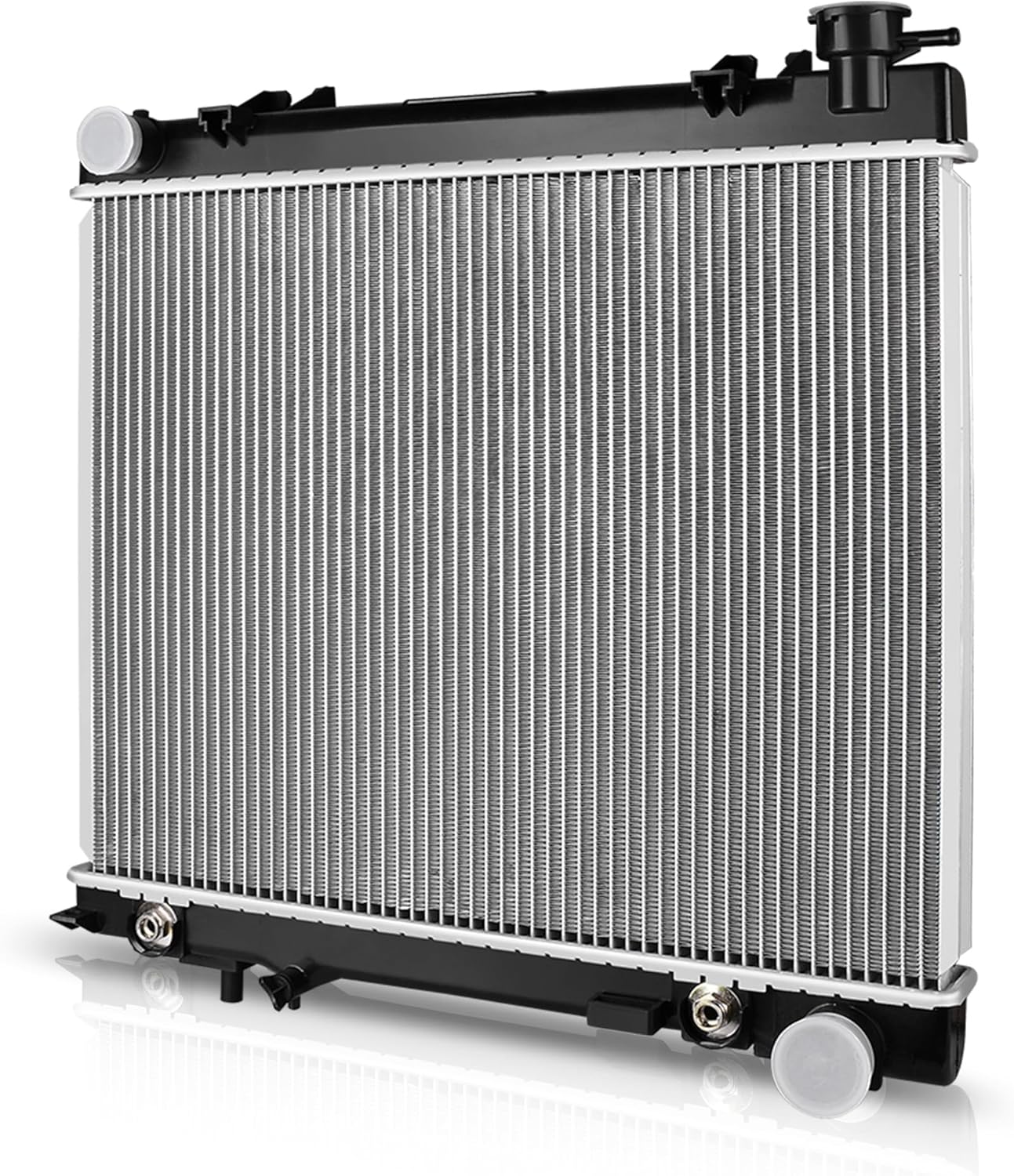
3. DWVO Complete Radiator Compatible with 2005-2012 Dodge Dakota (CU2847)
| Core size | 21.9" x 17.7" |
|---|---|
| OEM part number | 52029261AB / 52029261AC / 52029261AD / 52029262AB |
| Material | Aluminum core with PA66 GF30 tanks |
| Item weight | 9 pounds |
This DWVO complete radiator is a direct-fit replacement for 2005-2010 Dodge Dakota and related Ram/Raider models, built to restore cooling performance after a failing or leaking factory unit. It uses a TIG-welded aluminum core with multi-louvered fins to improve heat transfer and resist corrosion, and includes molded PA66 GF30 inlet/outlet tanks and an oil cooler connection for a straightforward swap. The unit ships with foam corner protection, two drain petcocks of different lengths to match fitment, and a user manual, though the radiator cap is not included. In practice the radiator should bolt in where the factory radiator did and provide solid cooling for daily driving, towing light loads, or regional climate extremes when paired with proper coolant and system maintenance. Installation is easier for experienced DIYers or shops; the seller recommends professional installation to ensure correct coolant fill and pressure cap function. The main limitations are the missing radiator cap and the need to confirm exact fitment and drain petcock selection for some model years.
Best for: Buyers who want a cost-effective, factory-matching replacement to restore cooling performance on a 2005–2009 Dodge Dakota and prefer a durable, ready-to-install unit.
Less Ideal for: Those seeking a performance-upgrade radiator for heavy towing, racing, or increased cooling capacity beyond factory specifications should consider purpose-built high-flow aftermarket options instead.
- Direct-fit design that matches factory part numbers for straightforward replacement
- Aluminum core with multi-louvered fins for improved heat dissipation
- TIG-welded construction and molded inlet/outlet tanks for durability and corrosion resistance
- Includes two drain petcocks and foam packaging to protect the radiator during shipping
- Radiator cap is not included so you must reuse the original or buy a replacement separately
Verdict: If you need a reliable, factory-matching replacement to restore cooling on a 2005–2009 Dodge Dakota, this DWVO radiator is a practical and durable choice.
4. ECCPP Replacement Radiator CU2883 for 2005–2011 Dodge Dakota / 2006–2009 Mitsubishi Raider

| Compatible vehicles | 2005-2011 Dodge Dakota; 2006-2009 Mitsubishi Raider (see listing) |
|---|---|
| Core material | Aluminum core |
| Manufacturer | ECCPP |
| Manufacturer part number | 128081-5373-1838346332 |
This ECCPP radiator is a direct-fit replacement built with an aluminum core and plastic end tanks to replace factory cooling units on compatible Dodge Dakota and Mitsubishi Raider models. It installs like a drop-in part and is intended for owners who need to restore the vehicle's cooling performance after a leak or failure. The full-aluminum core improves heat dissipation compared with older cores, and the manufacturer reports leak testing and premium-grade components. In practice the radiator functions as a straightforward OEM-style swap: remove the old unit, transfer any necessary brackets and sensors, and bolt in the ECCPP unit. The main benefits are improved cooling capacity and an affordable aftermarket price point that keeps repairs economical. Expect standard aftermarket caveats such as potential minor fitment adjustments and the need to confirm exact vehicle-year and engine match before ordering. This radiator is a practical, cost-focused replacement for getting a Dakota or Raider back on the road without upgrades beyond factory performance.
Best for: Owners seeking an affordable, straightforward replacement to return a 2005–2009 Dakota or similar vehicle to reliable cooling without paying for an upgraded performance radiator.
Less Ideal for: Buyers wanting a heavy-duty performance upgrade or an all-metal radiator for sustained high-heat towing and racing should consider aftermarket performance options instead.
- Full aluminum core improves heat dissipation over older designs
- Built to match factory-style fit for drop-in replacement installation
- Leak-tested units and premium-grade plastic tanks for durability
- Covers the relevant Dodge Dakota and Mitsubishi Raider model years for quick compatibility
- Plastic end tanks instead of full-metal construction may limit long-term durability under extreme heat or pressure
- Aftermarket fit can require minor adjustments or transfer of brackets and sensors during installation
Verdict: A budget-friendly, factory-style replacement radiator that restores cooling performance for compatible Dakota and Raider models without costly upgrades.
5. AParts Engine Cooling Radiator Replacement for Dodge Dakota / Mitsubishi Raider

| Vehicle Fitment | Dodge Dakota 3.7L/4.7L 2005-2012; Mitsubishi Raider 2006-2009 |
|---|---|
| OE Reference | Replacement for OE# 55029262AB |
| Core Size | 475 × 628 × 16 mm |
| Inlet/Outlet | 33.5 mm |
This AParts radiator is a direct-fit replacement intended to restore factory-quality cooling for specified Dodge Dakota and Mitsubishi Raider engines. It aligns with original mounting points so installation is straightforward for a competent DIYer or shop, and it replaces OE reference 55029262AB to match the vehicle's intended coolant flow and hose connections. The aluminum core dimensions and 33.5 mm inlet/outlet suggest conventional flow rates appropriate for the listed 3.7L and 4.7L engines, helping to address overheating and maintain stable operating temperature under normal driving. Because it is a straightforward replacement, this radiator simplifies repair after leaks or core damage without modifying mounts or hoses. Buyers should verify exact year and engine fitment before ordering, and professional installation is recommended if you lack experience with draining and refilling the cooling system. There is no explicit warranty detail in the listing, so keep that in mind when comparing long-term durability options.
Best for: Buyers who need a reliable, factory-style replacement radiator to restore proper cooling on the specified Dodge Dakota or Mitsubishi Raider models and prefer a part that installs without modifications.
Less Ideal for: Drivers seeking a performance-upgrade radiator with increased cooling capacity for racing or heavy towing should look at high-capacity aftermarket cores instead.
- Direct-fit design matches factory mounting points for simpler installation
- Listed as replacement for OE# 55029262AB to ensure compatibility with specified engines
- Core and inlet/outlet sizing suitable for the listed 3.7L and 4.7L engine applications
- Supports proper coolant circulation to help prevent overheating under normal use
- No explicit warranty information provided in the product listing
Verdict: A straightforward, direct-fit replacement radiator that restores factory cooling for the listed Dakota and Raider engines with minimal fuss.
6. AUTOSAVER88 Radiator for 2005–2012 Dodge Dakota / 2006–2009 Mitsubishi Raider

| Compatible engines | 3.7L V6, 4.7L V8 |
|---|---|
| Core material | Aluminum core |
| End tanks | Plastic tanks |
| Replacement OEM numbers | 52029261AB/AC/AD, 52029262AB |
This AUTOSAVER88 radiator is a direct-fit replacement for 2005–2012 Dodge Dakota and 2006–2009 Mitsubishi Raider models with 3.7L V6 or 4.7L V8 engines. It uses a high-density aluminum core with multi-louvered fins and plastic end tanks to maximize cooling efficiency while matching factory mounting points for straightforward installation. The unit is leak-tested at the factory and arrives packaged with foam and cardboard protection to reduce shipping damage. It does not include a radiator cap, so reuse or replace your existing cap during installation. Typical use is as a full radiator swap when the original unit is leaking, clogged, or no longer cooling effectively; professional installation is recommended to ensure correct bleeding of the cooling system and fitment. Practical benefits are improved heat dissipation compared with worn radiators and a direct-fit design that saves time on modifications. Limitations include plastic tanks rather than full aluminum construction and no cap included, which means buyers seeking all-aluminum durability or a complete parts refresh may need additional components.
Best for: Buyers who want a proven, direct-fit replacement to restore cooling performance quickly and prefer products with positive customer feedback and visible quality controls.
Less Ideal for: Drivers looking for a full-performance aftermarket upgrade with all-aluminum construction or those who want a complete replacement kit that includes every accessory part.
- Direct-fit design built to match factory mounting points for Dodge Dakota and Mitsubishi Raider applications.
- High-density aluminum core with multi-louvered fins for improved cooling efficiency.
- Factory leak testing and upgraded foam/cardboard packaging reduce arrival defects.
- Comes as a complete radiator unit ready to install (radiator cap not included).
- Plastic end tanks instead of full aluminum construction may be less durable under extreme heat or long-term stress.
- Radiator cap is not included, requiring reuse of the old cap or purchasing a new one separately.
Verdict: Choose this radiator if you need a direct-fit, leak-tested replacement to reliably restore cooling on specified Dakota and Raider engines with minimal fuss.
Choosing the Right 2005-2009 Dodge Dakota Radiator: Key Factors to Consider
Fitment and Mounting
Accurate fitment is the baseline for any radiator swap on the 2005-2009 Dodge Dakota. The radiator must align with the factory mounting points, fan shroud, and grille openings to avoid clearance issues. Mismatched inlet or outlet positions can require hose adapters or rerouting, increasing installation time and leak risk.
When you evaluate options, confirm the core height, width, and thickness match the Dakota's available space. Also check that the transmission cooler ports, if present on your truck, are in the expected location and thread type. Proper fitment minimizes the need for modifications and keeps installation straightforward, which is especially important if you plan to do the job yourself.
Cooling Capacity and Core Design
Cooling capacity determines how effectively the radiator removes heat from the engine coolant during high-load conditions like towing or extended idling in traffic. Core design factors such as tube count, fin density, and core thickness change how much surface area is available for heat transfer.
Thicker cores typically provide better heat rejection but may require more airflow or stronger fans to reach peak performance. High fin density increases surface area but can be more prone to clogging from road debris. Match core design to your typical use—towing and heavy loads benefit from a larger-capacity core, while drivers who prioritize airflow efficiency may prefer a standard-thickness, high-efficiency core.
Material Quality and Corrosion Resistance
Radiator tanks and cores are commonly made from aluminum, brass, or plastic-cooled aluminum combinations. Materials and assembly techniques influence long-term durability and resistance to corrosion, which is a frequent cause of leaks in older vehicles.
Look for units with treated aluminum cores, quality brazing, and corrosion-resistant coatings. Plastic tanks are common and economical, but pay attention to the tank design and reinforcement around mounting points because repeated thermal cycles can lead to cracking. For a truck that sees seasonal use or extended downtime, corrosion resistance should be a higher priority to avoid premature failure.
Transmission Cooler Integration
Many 2005-2009 Dodge Dakota models have automatic transmissions that rely on an integrated transmission cooler within the radiator. If your truck has an automatic transmission, ensure the replacement radiator includes the correct cooler passages and porting.
Incorrect or absent transmission ports will require a separate external cooler and additional lines, complicating installation and increasing leak points. Confirm the cooler port thread and orientation match factory lines to preserve the transmission cooling path and maintain reliable shifting temperatures under load.
Installation and Serviceability
Ease of installation affects labor time and the likelihood of a successful DIY replacement. Consider how the radiator interfaces with the fan assembly, shroud, and any attached sensors. Some radiators include pre-attached fittings or plug-and-play hose connections that simplify the job.
Serviceability also means thinking about future maintenance tasks such as flushing the cooling system or replacing hoses and the thermostat. Radiators that allow straightforward access to drain plugs, petcocks, and fittings reduce the hassle of routine service and lower the chance of causing incidental damage during installation.
Pressure Rating and Warranty
A radiator must tolerate the vehicle's cooling system pressure and thermal cycles without leaking. Pressure ratings and quality control during manufacturing affect how well a radiator seals at soldered or brazed joints and around tanks.
Check documented pressure tests or ratings when available, and consider warranty length as a proxy for manufacturer confidence. A reasonable warranty can offset long-term failure risk and indicates the maker stands behind the component. For a Dodge Dakota that sees heavy use, higher pressure tolerance and a solid warranty are important for long-term reliability.
Common Radiator Failure Signs on the Dakota
Knowing the typical symptoms helps you diagnose whether the radiator is the likely cause of overheating or coolant loss. Early signs include coolant puddles under the truck, visible seepage around seams, and a persistent low coolant level despite top-offs.
Overheating while idling or at low speeds often points to restricted airflow, clogged fins, or an internal blockage that reduces coolant flow. Steam or a sweet smell from the engine bay suggests active coolant leakage. Sensor-based alerts such as inconsistent temperature gauge readings or a check-engine light tied to engine temperature also warrant inspection of the radiator and associated hoses.
- Visible coolant on the ground or on components beneath the radiator
- Engine temperature rising quickly during traffic or towing
- Concentrated corrosion or deposits at tank seams and hose connections
- Steam or strong coolant odor from the front of the engine bay
Preparing for a Radiator Replacement
Before you remove the old radiator, drain the cooling system into a suitable container and dispose of used coolant responsibly. Label or photograph hose and sensor locations to ensure correct reassembly. If your Dakota has an automatic transmission, be prepared to catch transmission fluid when disconnecting cooler lines.
Inspect related components while the system is open. A failing thermostat, worn hoses, damaged fan clutch, or a weak water pump can mimic radiator failure or shorten the life of a new unit. Replacing worn ancillary parts during the radiator swap reduces the chance of repeat service visits.
- Have replacement hose clamps and new coolant ready
- Use OEM-spec coolant or an approved equivalent during refill
- Bring a torque wrench or proper fasteners for secure mounting
Flushing the Cooling System and Fluid Choices
A full coolant flush removes rust, scale, and oil contamination that can impair heat transfer and clog narrow passages in a new radiator. Use a recommended flush procedure and ensure all old coolant and debris are removed before installing the replacement core.
Select coolant that matches Dodge's specifications for the 2005-2009 Dakota and follow the correct mixing ratio if a concentrate is used. After installation, bleed the system to remove trapped air pockets, which can cause localized overheating and inaccurate temperature readings.
- Perform a system pressure test after installation to confirm there are no leaks
- Use clean distilled water for initial flushes if local water quality is poor
- Monitor coolant level and temperature closely for the first few hundred miles
DIY Vs Professional Installation Considerations
Many owners can complete a radiator swap with basic mechanical skills and common tools, but factors like transmission cooler line routing, radiator shroud alignment, and proper system bleeding can complicate the job. If you lack experience with cooling systems or do not have a lift, professional installation can ensure correct fitment and leak-free connections.
A professional installation also reduces the risk of missed details such as tiny coolant leaks, improperly torqued fasteners, or hidden damage to the fan assembly. Weigh the cost and convenience of shop labor against your confidence and available tools when deciding who should perform the work.
- DIY is feasible with the right tools, a service manual, and patience
- Professional shops can pressure-test and validate the system before returning the vehicle
- Consider professional help if transmission cooler integration is required
Maintaining Your New Radiator for Longevity
After installation, regular maintenance lengthens radiator life. Periodically inspect the core for bent fins, accumulated debris, and external corrosion. Keep the grille area clear of leaves and sticks that impede airflow.
Follow a scheduled coolant service interval and check hoses and clamps for signs of aging. Address small leaks quickly and avoid mixing incompatible coolant chemistries, which can lead to corrosion or reduced thermal performance.
- Check coolant level monthly and top off with the correct mixture
- Inspect hoses and clamps at oil-change intervals
- Clean the radiator fins gently with low-pressure water to remove debris
Still looking for the perfect fit?
Select your Dodge Dakota configuration to see the most relevant Radiators recommendations
How We Chose the Best 2005-2009 Dodge Dakota Radiator
Our shortlist reflects criteria that matter for replacing a radiator on a 2005-2009 Dodge Dakota. We prioritized core dimensions and fitment accuracy so the radiator mates correctly with the factory mounts, hoses, and shroud. Cooling capacity and flow characteristics were weighted heavily, with attention to tube-and-fin density and core thickness because these influence how quickly the system sheds heat under highway towing and city idling.Build materials and corrosion resistance were another major filter. We favored radiators with durable tanks and quality brazing or soldering practices that reduce the chance of seam failure or early leakage. Ease of installation and compatibility with factory fittings, transmission cooler lines where applicable, and inlet/outlet locations were included so owners can complete the swap without extensive modifications. Thermal efficiency and tested pressure ratings were also considered to ensure the replacement will stand up to operating pressures and temperature cycles.We excluded units that required significant bracket fabrication, nonstandard hose adapters, or lacked clear fitment documentation for the 2005-2009 Dodge Dakota. We did not include products with inconsistent quality control signals or those without basic corrosion protection. The final list balances practical fitment, cooling effectiveness, durability, and installation convenience.
Our full evaluation process is outlined in our review methodology.
FAQ
How do I know if the radiator is the cause of overheating?
Often overheating caused by a radiator shows visible signs such as low coolant levels, leaks at seams, or discolored deposits on the core. If the engine overheats more at idle or in traffic, it may indicate reduced airflow or clogged fins. A pressure test and inspection of hoses and the water pump help confirm the radiator is the primary issue.
Can I replace the radiator myself on a 2005-2009 Dodge Dakota?
Yes, many owners can perform the replacement with moderate mechanical skill, basic hand tools, and care when handling coolant and transmission lines. Ensure you have the correct replacement fitment, follow a bleeding procedure to remove air, and inspect related components during the swap. Seek professional help if you are unsure about transmission cooler integration or shroud alignment.
Should I be concerned about transmission cooler ports when buying a radiator?
If your Dakota has an automatic transmission, verify the replacement radiator includes correctly located transmission cooler ports. Missing or incorrectly placed ports will require external cooling solutions or line modifications, adding complexity and potential leak points.
How often should I flush the coolant after installing a new radiator?
Generally, follow Dodge's recommended interval for coolant service for your Dakota. After installing a new radiator, check coolant and inspect for contamination after the first few months, then adhere to regular service intervals. A proper initial flush before installation removes deposits that could harm the new core.
What immediate checks should I perform after a radiator swap?
After installation, do a pressure test, run the engine to operating temperature while monitoring for leaks, and verify the coolant level after the first cool-down cycle. Check for correct fan operation and ensure there are no unusual noises or vibrations around the shroud and mounting points.
How can I tell if a small leak is worth repairing versus replacing the radiator?
Small pinhole leaks in the core or persistent seepage at seams often indicate material fatigue or corrosion that may recur. Temporary patching can work short-term, but for long-term reliability on a 2005-2009 Dodge Dakota, a full replacement is usually the more dependable solution, especially if the radiator shows other signs of age.
Final Verdict
When replacing a radiator on a 2005-2009 Dodge Dakota, prioritize correct fitment, adequate cooling capacity, and durable construction. Confirm transmission cooler integration if applicable, and address worn hoses, the water pump, and thermostat while the system is open. Balancing performance needs and installation practicality will help you choose a radiator that restores reliable engine temperatures and minimizes the chance of repeat service.Ultimately, select the option that best matches how you use the truck and the level of durability you need. Proper installation and regular coolant maintenance are key to getting the full lifespan from the replacement radiator.
Explore More:
- Check out all Dodge Dakota parts & accessories
- Explore Radiators Maintenance & Repair Guides
- Explore Cooling System
- Browse all Auto Parts
