

Note: This article contains affiliate links. If you click on these links and make a purchase, I may earn a small commission at no extra cost to you. This helps support my research and content. Read my full affiliate disclosure here.
Getting the right Ford Explorer rack and pinion matters because steering feel, safety, and long-term drivetrain health all depend on smooth, reliable rack performance. A correctly matched unit reduces steering play, limits fluid leaks, and helps maintain consistent alignment so you can drive confidently.This guide covers seven shortlisted rack and pinion assemblies and reman units chosen for fitment, durability, and leak resistance. We evaluated each option against mounting compatibility, internal sealing, and overall build quality to help you narrow your choices before installation.
Looking for other parts? See all Ford Explorer parts & accessories.
Top Picks at a Glance


1. TGSOMEROXIE Power Steering Rack Compatible with Ford Explorer 2013-2015

| Manufacturer | TGSOMEROXIE |
|---|---|
| Model | Power Steering Rack |
| Manufacturer Part Number | EB533D070 |
| Vehicle Models | Ford Explorer 2013-2015 |
This complete power steering rack is a direct-replacement unit marketed for Ford Explorer 2013–2015 and ships with reference to several factory part numbers to help confirm fit. It is intended to replace a failed rack and pinion assembly and restore steering feel and alignment without needing to rebuild the original unit. Installation is described as a straightforward swap that a competent technician can complete in a couple of hours and the seller offers VIN verification to confirm compatibility. Notable features include machined exterior surfaces and a packaged unit that arrives ready to install, which simplifies repair downtime. Practical benefits are immediate: restored steering responsiveness and elimination of leaks or play from a worn rack. Limitations are that this is an aftermarket part from a lesser-known brand and long-term durability data is limited, so professional installation and post-installation alignment are recommended to ensure correct steering geometry and leak-free operation.
Best for: Balanced, practical buyers who want a ready-to-install replacement to return a 2013–2015 Ford Explorer to proper steering performance without rebuilding components.
Less Ideal for: Buyers seeking an OEM-branded part with documented long-term reliability or those who prefer to rebuild the original rack rather than replace it entirely.
- Sold as a complete rack and pinion unit for a quick replacement with no core return required
- Lists multiple matching factory part numbers to simplify fit verification
- Arrives preassembled and machined for straightforward installation by a technician
- Seller offers VIN check to confirm compatibility before purchase
- Aftermarket brand with limited public track record for long-term durability
- Limited customer review volume and mixed feedback on quality
Verdict: A ready-to-install complete steering rack aimed at returning steering performance on 2013–2015 Ford Explorer models with straightforward fit verification.
2. Detroit Axle Front End Rack & Pinion and Suspension Kit

| Manufacturer | Detroit Axle |
|---|---|
| Manufacturer Part Number | 9CKS49023 |
| Item Weight | 45 pounds |
| Fitment Note | 2-piece design with torsion bar suspension only |
This Detroit Axle kit combines a remanufactured power steering rack and pinion with front upper control arms, lower ball joints, outer tie rods and sway bar end links to provide a one-stop front-end refresh for compatible Ford Explorer models. The rack is pressure tested, fitted with new oil and lip seals, and designed to restore steering feel and eliminate play, while the included control arms and ball joints address worn pivot points that cause noise and wandering. Installation is typical of a front-end job and best tackled with alignment access afterward since steering geometry will change. Customers report mostly factory-like fit and immediate improvement in steering response and road holding. Be aware the kit is a 2-piece design for torsion-bar suspension variants, and some buyers have reported missing hardware in individual shipments which may require sourcing cam bolts or fasteners. For a performance-minded Explorer owner wanting a coordinated steering and suspension overhaul, this kit delivers substantial drivability gains but plan for professional installation and a follow-up alignment.
Best for: Performance-oriented buyers who prioritize precise steering feel and want a coordinated front-end rebuild for a Ford Explorer to restore handling and eliminate play.
Less Ideal for: Buyers wanting a simple bolt-on upgrade without later alignment or those who prefer to replace only a single component at a time.
- Complete kit that replaces the rack and common front suspension wear parts in a single purchase
- Remanufactured rack is pressure tested and fitted with new oil and lip seals to reduce leak risk
- Many buyers report factory-quality fit and noticeable improvement in steering response
- Includes components that eliminate common front-end noises and restore road holding
- Kit uses a 2-piece design limited to torsion-bar suspension configurations
- Some customers have received shipments missing specific fasteners or bolts
Verdict: A performance-focused, factory-quality front-end kit that restores steering precision on torsion-bar Ford Explorers but requires proper hardware and alignment after installation.
3. PartsFlow Complete Power Steering Rack & Pinion for 1998–2001 Ford Explorer and Compatible Trucks

| Brand | PartsFlow |
|---|---|
| Manufacturer Part Number | DAI-ZCC |
| Fitment Years | 1998-2001 |
This PartsFlow complete power steering rack and pinion is a ready-to-install replacement intended for 1998–2001 Ford Explorer and compatible trucks and SUVs. It arrives as a fully assembled unit so you can swap the old rack without transferring cores or rebuilding components, which makes it useful for DIY mechanics and independent shops. The product listing specifies fitment for Explorer, Explorer Sport Trac, Mercury Mountaineer and several Ford and Mazda pickup variants from 1998 to 2001, so it targets older vehicles where steering wear is common. Practical benefits include simplified installation, restored steering feel, and a lower-cost alternative to a rebuilt or dealer unit. Limitations to consider are that it is an aftermarket part rather than a factory-quality unit and availability of specific mounting or hose fittings can vary by submodel, so confirm exact vehicle match before purchase. The generally positive customer comments suggest fit and function are acceptable for routine replacement needs.
Best for: Practical optimizers who want a cost-effective, ready-to-install steering replacement for an older Explorer and value quick turnaround and straightforward repairs over OEM sourcing.
Less Ideal for: Buyers seeking a factory-spec steering unit or the absolute highest fit-and-finish should consider dealer or remanufactured options instead.
- Comes as a complete assembled unit for faster replacement without core exchange
- Explicit fitment listed for 1998–2001 Ford Explorer and closely related models
- Lower cost option compared with rebuilt or dealer steering racks
- Customer feedback reports straightforward installation and working steering
- Aftermarket unit so finish and tolerances may differ from factory-quality parts
- Fitment details for hose connections and mounting can vary by submodel and may require minor adjustments
Verdict: A practical, lower-cost complete rack and pinion replacement aimed at older Ford Explorer models for straightforward steering repair and quick installation.
4. Detroit Axle Steering Rack and Pinion Assembly for Ford Explorer/Ranger/Mountaineer

| Brand | Detroit Axle |
|---|---|
| Special Features | Power Steering Rack and Pinion, Replacement for specified Ford/Mazda/Mercury models |
| Manufacturer | Detroit Axle |
| Date First Available | January 12, 2020 |
This Detroit Axle rack and pinion is a remanufactured, complete power steering unit intended as a direct replacement for late 1990s and early 2000s Ford Explorer, Ranger and related Mazda and Mercury trucks and SUVs. It arrives with new oil and lip seals installed and is hydraulically pressure tested with road-simulated tie rod loading, so installation is mostly bolt-in for experienced DIYers and independent shops. The unit replaces the entire rack assembly, eliminating the need to rebuild in-car and simplifying steering repairs where a worn rack is the root cause of play or leaks. Common real-world benefits are lower upfront cost compared with dealer remanufactured racks and decent fitment for the specified models. Important limitations are variable quality between remanufactured units and reports of seal failures or leaks on some examples, so expect to verify seals and consider sourcing replacement valve or seal parts before installation if you want extra assurance.
Best for: Budget-conscious owners focused on an affordable, direct replacement that gets their Explorer back on the road without paying dealer prices or paying for a full shop rebuild.
Less Ideal for: If you need guaranteed long-term reliability or quick local warranty support, a dealer remanufactured or shop-exchanged rack with an unlimited local warranty is a better choice.
- Complete remanufactured unit reduces installation time compared with field rebuilding a rack
- Hydraulically pressure tested and road-simulated tie rod loading for functional verification
- Ships with new oil and lip seals installed to address common leak points
- Covers a broad list of late 1990s to early 2000s Ford Explorer, Ranger and related Mazda/Mercury fitments
- Quality control appears inconsistent across units with some customer-reported seal failures
- Manufacturer warranty support and returns can be difficult to execute in practice
Verdict: A cost-focused, remanufactured complete rack and pinion that offers a lower-cost route to repair steering on compatible Ford Explorer and Ranger-era vehicles.
5. Detroit Axle Electric Steering Rack and Pinion Assembly for 2016-2019 Ford Explorer

| Manufacturer | Detroit Axle |
|---|---|
| Manufacturer Part Number | 19012-DA |
| Item Weight | 20.6 pounds |
This Detroit Axle electric steering rack and pinion arrives as a complete plug-and-play replacement for 2016-2019 Ford Explorer models built after July 2016. It replaces the entire steering rack assembly so installation typically involves swapping the old unit for the new one and reconnecting the tie rods, steering shaft, and electrical connector. Notable features include new oil and lip seals, hydraulic pressure testing to verify internal bypass at high and low pressure, and a lifetime warranty that is activated by returning the core. In practice the rebuilt/new unit should restore steering feel and eliminate leaks or internal failures common to worn racks, and the pressure testing reduces the chance of early failure. The main trade-offs are that this is a vehicle-specific assembly so installation can be labor intensive and may require alignment after fitment, and the buyer must return the core to receive the lifetime coverage.
Best for: Reliability-focused buyers who prioritize a factory-style, long-term steering repair for a 2016–2019 Ford Explorer and want a tested, fully assembled unit to minimize repeat shop visits.
Less Ideal for: Drivers looking for a low-cost temporary fix or a universal part that fits multiple vehicle models should consider alternatives or a local remanufacturing shop.
- Complete plug-and-play replacement saves time versus rebuilding individual components
- New oil and lip seals help prevent leaks common with worn racks
- Hydraulically pressure tested for internal bypass at high and low pressure to improve reliability
- Includes lifetime warranty when core is returned
- Requires core return to activate lifetime warranty which adds a step after installation
- Installation can be labor intensive and requires wheel alignment afterwards
Verdict: A fully assembled, pressure-tested electric steering rack made to restore reliable factory-quality steering on 2016–2019 Ford Explorer models.
6. KAC Power Steering Rack and Pinion Assembly for Ford Explorer/Ranger/B-Series Trucks
| Brand | KAC |
|---|---|
| Material | Aluminum |
| Bearing Type | Ball Bearing |
| Compatible Lubricant | Oil |
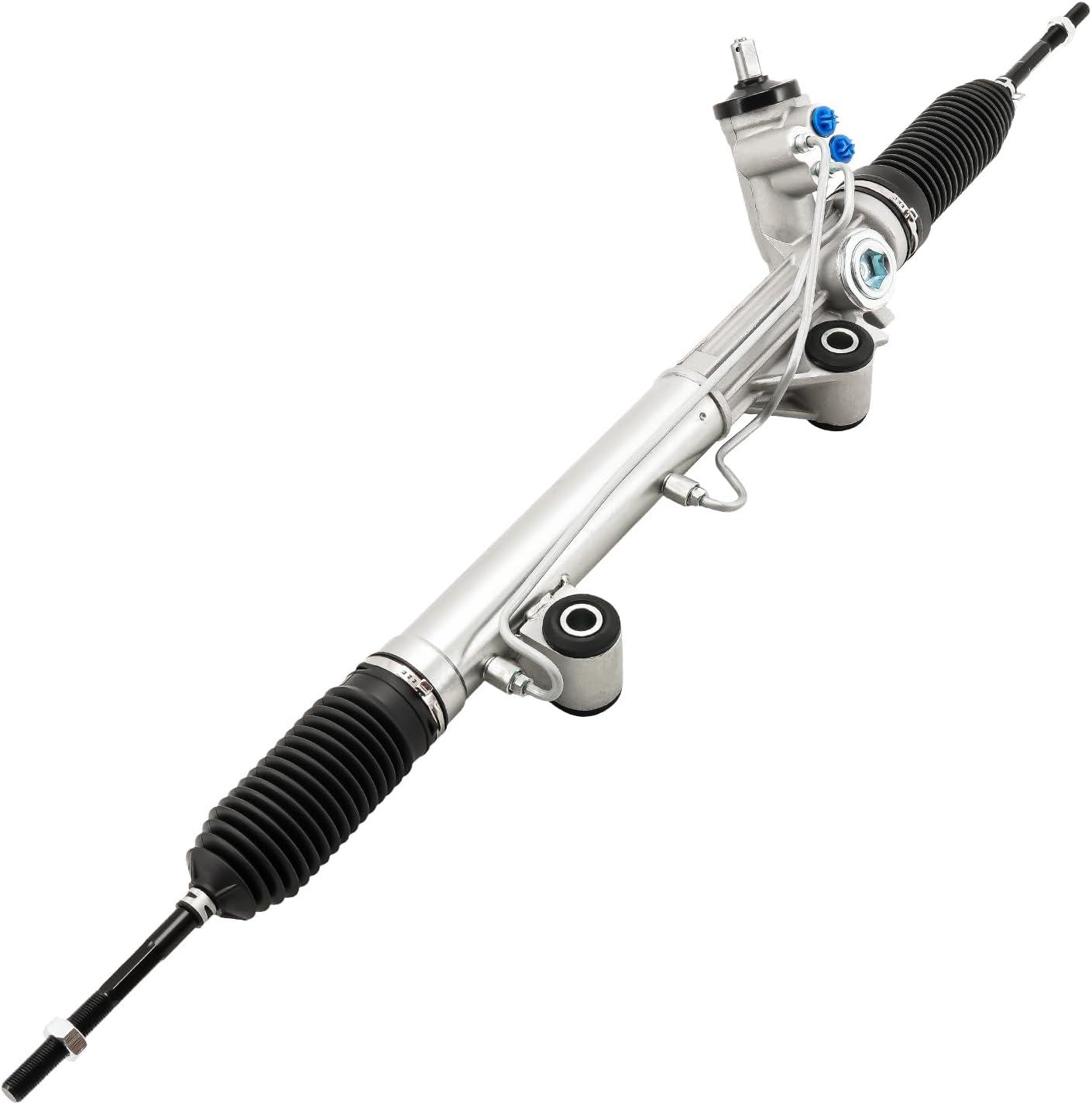
This KAC rack and pinion is a complete power steering gear intended as a factory-quality replacement for compatible Ford Explorers and related Ford models from the late 1990s to early 2000s. It arrives as a ready-to-install unit with inner tie rods included, so the typical use is a direct swap when the original steering gear leaks, shows play, or fails. The unit uses machined exterior finishes, ball bearings, and corrosion-resistant seals with dust boots to reduce contamination and help prevent leaks. Manufacturer claims of chrome-plated alloy steel and aviation aluminum components indicate a focus on durability, and reported fitment and easy installation make it convenient for DIYers or shops. Limitations to consider are that this is a vehicle-specific replacement so fitment must be confirmed before purchase, and while the listing mentions a service life estimate and a 12-month coverage, long-term durability depends on installation and maintenance. Some users noted minor steering feel differences after install, which can require alignment or steering column checks.
Best for: Convenience-driven buyers who want a ready-to-install, vehicle-specific steering gear replacement that minimizes shop time and avoids sourcing multiple parts.
Less Ideal for: Those seeking a universal or performance-upgraded steering rack or buyers who need a guaranteed match for non-Ford Explorer models should look elsewhere.
- Complete assembly includes inner tie rods for a one-piece replacement
- Corrosion-resistant seals and dust boots reduce risk of leaks and contamination
- Machined exterior and ball bearings for smoother operation and consistent steering feel
- Construction materials marketed as chrome-plated alloy steel and aluminum for enhanced durability
- Fitment is limited to specific Ford Explorer years and related models so verification is required
- Some buyers report slight differences in steering sweep that may need alignment or adjustments
Verdict: A convenient, complete replacement rack and pinion for late 1990s–2001 Ford Explorers that aims to restore steering function with minimal fuss but requires careful fitment confirmation.
7. Detroit Axle Complete Rack and Pinion Kit for Ford Explorer / Ranger / Mazda B-Series / Mercury Mountaineer

| Manufacturer | Detroit Axle |
|---|---|
| Manufacturer Part Number | 7KS1900749 |
| Fitment note | Replacement fit with press fit diameter width of 2.00 inch |
| Included components | Complete rack and pinion + 2 outer tie rods + 4 ball joints |
This Detroit Axle kit supplies a complete power steering rack and pinion assembly plus outer tie rods and front upper and lower ball joints intended as a one-stop replacement for compatible Ford Explorer and similar models. It arrives pressure tested with new oil and lip seals and includes hardware needed to refit the front steering components, which speeds installation for a shop or experienced DIYer. The listing notes a press-fit diameter specification and warns the kit will not fit factory control arms, so expect compatibility limits with original suspension components and plan for aftermarket control arms if required. Some buyers report mixed fitment for the included peripheral parts, so verify which items match your vehicle before installation. The unit carries a lifetime warranty that requires returning the core, which is useful for long-term reassurance but adds an extra step to activate coverage. For drivers replacing a failing steering rack, this kit bundles most necessary parts and offers a practical replacement path at a lower cost than a dealer rebuild.
Best for: Risk-averse mainstream buyers who want a bundled replacement that minimizes repeat purchases and provides a warranty-backed steering repair for older Ford Explorer-era vehicles.
Less Ideal for: Owners who require exact factory-fit parts or who prefer dealership remanufactured steering racks should consider alternatives that match original control-arm compatibility and factory specifications.
- Complete kit includes rack and pinion plus outer tie rods and four front ball joints for a consolidated repair
- Hydraulically pressure tested with new oil and lip seals to reduce risk of internal leaks
- Lifetime warranty available when core return is completed for long-term coverage
- Does not fit factory control arms and may require aftermarket control arms for proper installation
- Some included peripheral parts have inconsistent fitment across reported vehicles
Verdict: A bundled, pressure-tested replacement rack and pinion kit that gives risk-averse buyers a warranty-backed way to repair steering on compatible Ford Explorer-era vehicles.
Looking for the perfect fit?
Select your Ford Explorer configuration to see the most relevant Rack and Pinion Steering Systems recommendations
Choosing the Right Ford Explorer Rack and Pinion: Key Factors to Consider
Fitment and Mounting Compatibility
Correct fitment is essential because the rack must align with the vehicle's mounting points, steering column, and tie rod ends. An exact fit reduces installation time and avoids the need for aftermarket brackets or modifications.
Poor fitment can alter steering geometry and produce uneven tire wear or vague steering. Always verify spline counts, input shaft length, and mounting hole patterns to match the Explorer's factory specifications. Fitment also affects alignment settings; a correctly shaped rack simplifies returning toe and caster to manufacturer tolerances.
Sealing and Leak Resistance
Seals, boots, and precision-fit housings determine how well a rack resists fluid leakage. Leaks reduce power assist effectiveness and can introduce air that makes steering feel inconsistent.
High-quality sealing materials and robust boot clamps maintain fluid pressure and keep contaminants out. Inspect reported seal types and whether the unit includes replacement boots or clamps. Good sealing extends service intervals and reduces the chance of premature failure due to contamination or fluid loss.
Internal Build Quality
The rack's internal components—pinion gear, rack teeth, piston, and valve assembly—govern steering response and longevity. Precision machining and hardened surfaces reduce backlash and wear over time.
Units with better machining tolerances typically exhibit crisper steering and less free play. Also consider whether components are balanced and surface-treated to resist corrosion. A well-built internals package tends to require fewer repairs and maintains consistent steering feedback across many miles.
Power-Assist Compatibility
If your Explorer uses hydraulic power assist, the rack must match the vehicle's pressure, porting, and hose routing. For electronic assist hybrids, torque and input characteristics need to align with the vehicle's control strategy.
Mismatched assist characteristics can lead to heavy steering, erratic feedback, or failure under load. Confirm the rack's port sizes, direction of rotation for steering input, and whether it is designed for your Explorer's specific power-assist configuration. Proper compatibility ensures predictable steering assist and driver confidence.
Serviceability and Parts Availability
Consider how easy it will be to service the rack if boots, bushings, or seals wear out. Units that allow partial rebuilds or have common replacement parts simplify maintenance and reduce lifecycle costs.
Availability of replacement boots, inner tie rod ends, and seals matters if you prefer repair over full replacement. Serviceable designs also let technicians address issues like minor leaks or play without removing the entire assembly, which can save time and reduce downtime.
How We Chose the Best Ford Explorer Rack and Pinion
We focused on criteria that directly affect fit, function, and longevity for the Ford Explorer. Primary filters included correct vehicle fitment and mounting points to ensure the unit aligns with factory steering geometry, and sealing integrity to minimize fluid leaks that can cause steering issues. We also evaluated internal component quality, such as rack tooth machining and piston/valve condition, because these influence steering feel and wear characteristics.Additional criteria covered power-assist compatibility and input shaft interface to match steering column engagement, plus serviceability for common repair tasks like bushing or boot replacement. Units with clear quality control records and warranty coverage were rated higher. We excluded generic or one-size-fits-all assemblies lacking explicit Ford Explorer fit notes, and we omitted units with known fitment gaps or undocumented internal rebuilds. The result is a list focused on correct fitment, leak resistance, steering responsiveness, and long-term durability.
Our full evaluation process is outlined in our review methodology.
FAQ
What are common steering rack symptoms to watch for?
Common symptoms often include increased steering play, unusual steering effort, or a change in how the wheel recenters after turns. You may also notice fluid spots under the vehicle or a whine when turning if the rack or power-assist system is affected.
Can I drive with a leaking rack and pinion?
Driving with a leaking rack usually leads to progressively worse steering performance and can risk loss of power assist. Small leaks can sometimes be managed short term, but the issue often worsens and should be addressed to avoid safety concerns and further component damage.
How difficult is rack and pinion installation on a Ford Explorer?
Installation difficulty varies with experience and tools. The process typically involves disconnecting tie rods, removing steering shaft coupling, unmounting the rack, and reinstalling with proper torque and alignment. Many repairs require an alignment afterward and some mechanical skill to avoid damaging boots or seals.
When is a rebuild a good option versus replacement?
A rebuild can be appropriate if the housing and mounting points are sound and the issue is limited to seals, bushings, or worn internals. Rebuilding can restore function at lower waste but depends on the availability of quality rebuild kits and a competent technician. If structural damage or severe corrosion is present, full replacement is usually safer.
What causes steering rack noise and how can it be addressed?
Noise often stems from contaminated fluid, worn bushings, or degraded seals allowing air into the system. Addressing it starts with inspecting fluid condition and seals, tightening mounts, and checking for worn tie rod ends. If internal wear is advanced, rebuild or replacement may be necessary.
Conclusion
Choosing the right rack and pinion for a Ford Explorer means prioritizing correct fitment, robust sealing, and internal build quality. These factors most directly affect steering feel, leak resistance, and long-term reliability.Balance ease of service and power-assist compatibility against durability when making your decision. If you aim for a long-lasting repair, favor units with clear fit notes, strong seals, and replaceable service components to minimize future downtime and maintain predictable steering.
Explore More:
- Check out all Ford Explorer parts & accessories
- Explore Rack and Pinion Steering Systems Maintenance & Repair Guides
- Explore Suspension & Steering
- Browse all Auto Parts
