

Note: This article contains affiliate links. If you click on these links and make a purchase, I may earn a small commission at no extra cost to you. This helps support my research and content. Read my full affiliate disclosure here.
If your 2006-2011 Honda Civic feels loose, noisy, or leaks power steering fluid, replacing the rack and pinion is often the corrective step. For Civic owners in the FA and FG chassis range, picking the right rack and pinion affects steering precision, safety, and long-term wear. You want a unit that fits the 2006-2011 Civic mounting and steering geometry, resists leaks, and restores tight steering response without introducing noise or vagueness.This guide summarizes seven shortlisted rack and pinion options chosen for their compatibility with the 2006-2011 (FA and FG) Civic, durability, and ease of installation. Below we outline the evaluation criteria and practical considerations to help you choose the best replacement for routine repairs or a steering rebuild.
Looking for other parts? See all Honda Civic parts & accessories.
Top Picks at a Glance


1. KUIPERAUTO Complete Power Steering Rack and Pinion Assembly for 2006–2011 Honda Civic (Non-hybrid & Si)

| Compatible years | 2006–2011 |
|---|---|
| Vehicle fitment | Honda Civic non-hybrid & Si |
| Construction materials | Iron and aluminum |
| Item model number | K106HO018ABG |
This complete rack and pinion arrives preassembled so installation is straightforward for a competent DIYer or mechanic replacing a failed unit on a 2006–2011 Honda Civic non-hybrid or Si. Built from iron and aluminum, the unit is intended to resist corrosion and integrate with the vehicle hydraulic steering system to reduce steering effort and improve responsiveness compared with a worn rack. The assembled design saves time and avoids extra bench work or fluid-line reassembly, and the listing cites multiple OEM part numbers for direct-fit compatibility. In real-world use you can expect smoother steering, less steering shake and diminished fluid leakage when the rest of the steering system is in good condition. Limitations to note are that successful performance depends on correct fitment and proper installation and alignment; worn tie rods, pump issues, or old hoses will still cause handling or noise problems. If you need a simple, factory-style replacement rack ready to bolt in, this unit is a practical option for Civic owners.
Best for: Buyers who want a straightforward, factory-style replacement that saves installation time and restores hydraulic steering feel on a 2006–2011 Civic non-hybrid or Si.
Less Ideal for: If you plan to upgrade to performance steering components or need an electric power steering conversion this unit is not suitable; also avoid if you cannot get professional alignment after installation.
- Ships fully assembled for faster installation and less bench work
- Made from iron and aluminum for improved corrosion resistance
- Hydraulic design restores steering assist for smoother, more responsive steering
- Covers multiple OEM part numbers for direct-fit compatibility with specified Civic models
- Requires correct fitment verification and professional alignment after installation to perform as intended
Verdict: A ready-to-install, factory-style replacement rack that gets a 2006–2011 Civic back to smooth, responsive hydraulic steering with minimal installation hassle.
2. Detroit Axle Power Steering Rack & Pinion Kit with Outer Tie Rods for 2006–2010 Honda Civic
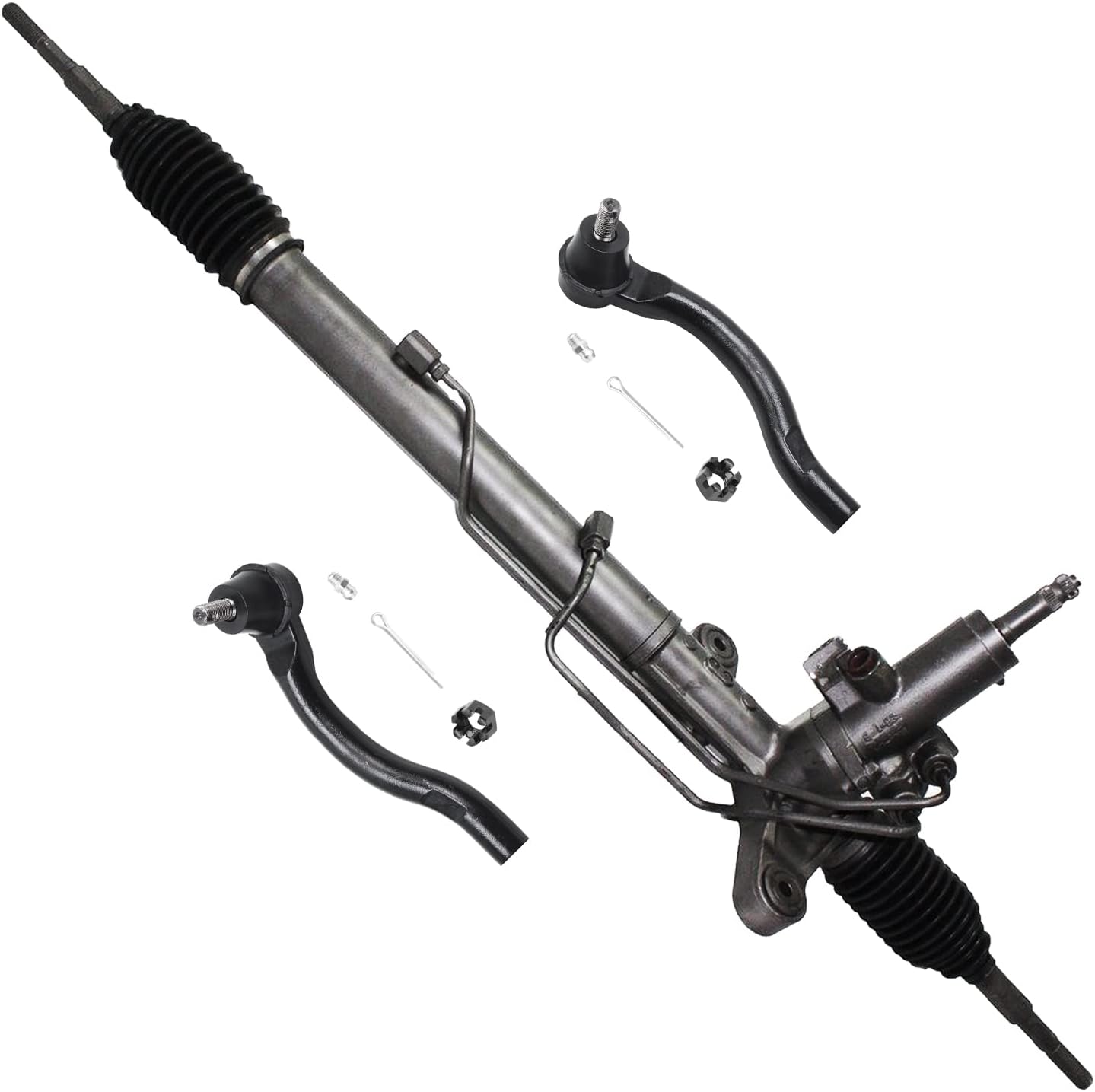
| Fitment | 2006–2010 Honda Civic 1.8L (excl. Hybrid & Si) |
|---|---|
| Includes | Complete power rack and pinion assembly + 2 outer tie rod ends |
| Testing | Hydraulically pressure tested |
| Seals | New oil and lip seals installed |
| Warranty | Lifetime (requires core return) |
This Detroit Axle kit replaces the entire power steering rack and pinion and includes two front outer tie rod ends so you can swap the whole front steering assembly in one job. The unit arrives prefilled with fluid, fitted with new oil and lip seals, and is hydraulically pressure tested to verify internal bypass operation, which helps reduce the chance of immediate failure after installation. Typical use is direct replacement on a 2006–2010 Civic 1.8L where worn steering, play, or leaks are present; a complete unit saves time over rebuilding the old rack. Buyers report good steering feel and secure fitment when installed correctly, and the included core return program activates a lifetime warranty. Known limitations are mixed long-term reliability reports from users citing occasional leaks or difficult flushing of shipping preservative; some installers may need to flush the system thoroughly and monitor boots after installation. Expect a few hours of labor plus an alignment after fitment.
Best for: Buyers who want a one-part replacement to restore tight steering and direct-fit handling on a 2006–2010 Civic and who prioritize getting the car back on the road with a factory-style steering feel.
Less Ideal for: Drivers looking for an upgraded performance rack with quicker steering ratios or motorsports tuning should consider dedicated performance units instead.
- Complete kit includes the rack assembly plus two outer tie rod ends for a single replacement job
- Units are rebuilt with new oil and lip seals and hydraulically pressure tested for internal bypass
- Fits 2006–2010 Honda Civic 1.8L models and is designed as a direct factory-quality replacement
- Includes a core-return lifetime warranty when the old unit is returned
- Some users report leaks developing after several thousand miles
- Preservative fluid used for shipping can be stubborn to flush, requiring extra flushing fluid and time
Verdict: A convenient complete replacement that restores factory-style steering and fitment on 2006–2010 Honda Civic 1.8L models, ideal if you want a direct-swap solution.
3. KAX Hydraulic Power Steering Rack and Pinion Assembly with Inner Tie Rods

| Vehicle Fitment | Honda Civic 2006-2010 1.8L |
|---|---|
| Steering Type | Hydraulic Power |
| Pressure Port Thread Size | M18 x 1.5 |
| Return Port Thread Size | M16 x 1.5 |
| Position | Front |
This KAX hydraulic rack and pinion is a complete front steering assembly supplied with inner tie rods for Honda Civic 2006–2010 1.8L applications. It is intended as a direct replacement and installs the same way a factory unit does, so typical use is swap-out repair for leaking or worn racks. Notable features include CNC-machined alloy steel internals aimed at tight gear alignment, pressure/return port threads sized to factory fittings, and included inner tie rods to simplify installation. In practice buyers report it bolts up and restores steering responsiveness and power assist, and several users describe OEM-like fit and finish. Expect the benefit of replacing the whole assembly at once to eliminate leaks and steering play without needing a rebuild. Downsides to be aware of: a few buyers needed to swap or adjust inner tie rods or slightly modify pre-bent lines for perfect clearance, so verify fit and brake/steering line routing during install. Also confirm port threads and flare type match your vehicle before final assembly.
Best for: Buyers who prioritize a cost-effective, ready-to-install replacement to restore steering performance and eliminate leaks will appreciate this assembly for routine Civic repairs.
Less Ideal for: If you prefer an exact factory-parts restoration without any possibility of minor fitment tweaks or need a custom performance steering solution, look for an alternative.
- Complete replacement assembly includes inner tie rods for a one-piece swap
- CNC-machined alloy steel worm gear designed for tight gear alignment and reduced play
- Factory-style pressure and return port thread sizes to match steering lines
- Market feedback indicates reliable steering feel and OEM-like fit for many Civic owners
- Some units required minor adjustment to inner tie rods or bending of pre-formed lines for perfect clearance
Verdict: A practical, ready-to-install hydraulic rack and pinion that restores steering function on 2006–2010 Civic 1.8L models with mostly factory-like fit and performance.
4. WsrrLun Power Steering Rack and Pinion Assembly for Honda Civic 1.8L 2006–2010

| Applicable Model | Honda Civic 1.8L 2006-2010 Except Hybrid & SI |
|---|---|
| Replace OEM Number | 26-2718 |
| Material | Aluminium, Iron |
| Position | Front |
This WsrrLun rack and pinion is a complete, front-mounted replacement intended to restore power steering assist on 2006–2010 Honda Civic 1.8L models. It arrives fully assembled and built from aluminum and iron with a painted finish and sandblasted surfaces to resist corrosion. Typical use is a direct swap when the original steering rack leaks, feels loose, or produces uneven steering effort; installation is intended for professional installation because alignment and hydraulic connections are required. The main benefits are having a ready-to-install unit that eliminates teardown of the old rack and a construction aimed at durability. Limitations include the need to confirm fitment against your OEM part number and the likely requirement for a shop to bleed the system and perform a wheel alignment after fitting. The listing does not include detailed performance specs or a manufacturer warranty statement, so expect to rely on the part itself and installer care for long-term outcomes.
Best for: Buyers looking to restore steering function on a 2006–2010 Civic 1.8L who prioritize a low-cost, ready-to-install replacement and plan to use a professional installer.
Less Ideal for: Do not choose this part if you want a documented manufacturer warranty, OEM-brand replacement, or prefer to rebuild only specific steering components yourself.
- Complete, front-mounted assembly ships ready to install so you avoid rebuilding components
- Constructed from aluminum and iron with protective painting and sandblasting for corrosion resistance
- Direct replacement for the listed Honda Civic 1.8L years, simplifying part matching
- Comes packaged with the full rack; reduces labor compared with replacing internal components only
- No explicit warranty or longevity guarantee is provided in the product details
- Fitment must be double-checked against the vehicle and OEM number before purchase
Verdict: A budget-friendly, fully assembled steering rack that provides a straightforward direct-replacement option to get a 2006–2010 Civic 1.8L back on the road quickly.
5. KAX Hydraulic Power Steering Rack and Pinion Assembly with Inner Tie Rods

| Position | Front |
|---|---|
| Compatible engines | 1.8L L4 (2006–2010 Civic) |
| Includes | Inner tie rods and dust boots |
| Testing | Hydraulic pressure and road simulation testing |
This KAX steering rack is a complete, direct-fit replacement for the front rack on compatible 2006–2010 Honda Civic 1.8L models and ships with preinstalled inner tie rods and dust boots to simplify installation. It is engineered with CNC-machined gears, high-strength metal components, corrosion-resistant coating, and leak-resistant seals, and each unit is hydraulically pressure tested and road simulated to check for leaks and steering performance. In practice that means the part is intended to eliminate steering play, reduce noise and vibration, and restore a stable, predictable steering feel without extra machining or modification. The assembly is best used as a like-for-like repair when the original rack is worn, leaking, or producing stiff steering; having the inner tie rods preinstalled cuts labor time. Limitations to expect are typical of aftermarket replacement racks: fit and long-term durability depend on correct installation and vehicle condition, and some buyers prefer OEM-branded units for factory matching rather than an aftermarket alternative.
Best for: Buyers prioritizing a reliable, like-for-like steering repair for a 2006–2010 Civic who want a ready-to-install unit that restores factory steering feel with minimal fuss.
Less Ideal for: Drivers looking specifically for an OEM-branded replacement or those who want a performance-tuned steering rack should consider other options.
- Direct-fit unit engineered to match factory steering performance for listed Civic models
- Comes with preinstalled inner tie rods and dust boots to reduce installation time
- CNC-machined gears and corrosion-resistant coating for improved durability
- Each unit is hydraulic pressure tested and road simulated to help prevent leaks and noisy operation
- Aftermarket part so long-term durability may vary compared with manufacturer-branded replacements
Verdict: Choose this fully tested, direct-fit rack-and-pinion assembly when you need a dependable, ready-to-install steering replacement that restores factory steering feel for 2006–2010 Honda Civic 1.8L models.
6. Torchbeam Hydraulic Power Steering Rack and Pinion for 2006–2010 Honda Civic 1.8L

| Vehicle fitment | 2006–2010 Honda Civic 1.8L |
|---|---|
| Reference numbers | 26-2718, 53601SNAA61, 53601SNAA12, 53601SNAA51, 53601SNAA02, 53010SNEA01, 262718 |
| Pressure port thread | M18 x 1.5 |
This Torchbeam hydraulic power steering rack and pinion is a complete replacement assembly sold with inner tie rods and built to match factory steering function for 2006–2010 Honda Civic 1.8L models. Installers will use it to restore hydraulic steering feel and eliminate play, leaks, or noise from a worn rack. Notable features called out by the maker include chrome-plated alloy steel and aerospace-grade aluminum components, corrosion-resistant seals, and a butyl rubber dust boot intended to keep contaminants out. The unit includes common pressure port threading and an input shaft sized to fit the vehicle it targets, and the package lists compatibility with several factory reference numbers to aid fitment verification. Practical benefits are straightforward: a ready-to-install complete unit that removes the need to rebuild the old rack, a construction aimed at longer service life, and a seller-backed guarantee period. Limitations are that buyers must confirm fit against their car s reference numbers before ordering and expect professional installation for proper alignment and leak-free hydraulic connections.
Best for: Buyers who want a ready-to-install, factory-replacement steering rack that restores original hydraulic steering feel and prioritizes durability and documented fitment, especially if they value verified reviews and reduced risk when replacing a critical steering component.
Less Ideal for: People looking for a rebuilt or remanufactured rack to save money or DIYers wanting to reuse existing inner tie rods and seals should consider other options.
- Complete assembly with inner tie rods included for a one-piece replacement
- Chrome-plated alloy steel and aerospace-grade aluminum construction for corrosion resistance
- Corrosion-resistant seals and butyl rubber dust boot to reduce leaks and contamination
- Matches factory reference numbers to simplify fitment verification
- Requires professional installation and wheel alignment for correct steering geometry
Verdict: Choose this ready-to-install hydraulic rack and pinion to restore factory steering feel on a 2006–2010 Civic 1.8L with confidence in documented fitment and durable construction.
7. HAYIAUTO 26-2718 Hydraulic Power Steering Rack and Pinion Assembly

| Model | 26-2718 Hydraulic Power Steering Rack and Pinion Assembly |
|---|---|
| Compatible years | 2006-2010 Honda Civic L4 1.8L (left-hand drive) |
| Total turns lock to lock | 2.69 |
| Casting material | Steel; Aluminum |
| Pressure port thread size | M18 x 1.5 |
This HAYIAUTO 26-2718 hydraulic rack and pinion is a complete, preassembled replacement meant to bolt into 2006–2010 Honda Civic 1.8L left-hand-drive cars with hydraulic power steering. It arrives with new inner tie rods, dust boots, and bushings so you can replace the entire steering unit in one job. The unit is pressure-tested and undergoes simulated driving cycles to reduce the chance of leaks and premature wear, and protective coatings plus sealed boots aim to keep out corrosion and road debris. In practice this should restore tighter steering response and consistent return-to-center for daily driving and highway use. Installation requires flushing the power steering system and likely professional fitment to avoid issues; the part does not fit Hybrid or Si submodels and is for hydraulic systems only. For a buyer focused on minimizing risk, the HAYIAUTO offers factory-style fitment and preassembled hardware, but expect to follow the recommended installation steps and verify part numbers before purchase.
Best for: Buyers who prioritize a low-risk, OEM-style replacement to restore factory steering feel on a 2006–2010 Honda Civic 1.8L and who prefer a preassembled unit to minimize installation variables.
Less Ideal for: Do not choose this if your Civic is a Hybrid or Si model or if you need an electric power steering rack or a universal/modified performance unit.
- Direct bolt-on replacement preassembled with inner tie rods and dust boots
- 100% hydraulic pressure testing and simulated driving cycles for leak resistance
- Protective anti-corrosion coatings and sealed boots to reduce contamination and corrosion
- Fits only left-hand-drive Civics with hydraulic steering and excludes Hybrid and Si submodels
Verdict: A factory-style, fully preassembled hydraulic rack that minimizes installation uncertainty for 2006–2010 Honda Civic 1.8L owners seeking a dependable steering rebuild.
Choosing the Right 2006-2011 Honda Civic Rack and Pinion: Key Factors to Consider
Fitment and Mounting Accuracy
Exact fitment matters because the 2006-2011 (FA and FG) Civic uses specific rack mounting points and input shaft dimensions. Even slight differences in mounting hole spacing or input spline can lead to misalignment, binding, or the need for aftermarket adapters. Ensuring the replacement matches factory mounting geometry reduces installation time and the risk of steering geometry changes that can alter toe and tracking.
Mounting accuracy also affects drivability. When a rack sits slightly off, tie rod end angles can change, increasing wear on joints and tires. Confirming correct bracket orientation and bolt patterns prevents surprises during installation and helps maintain the Civic's steering feel and safety margins.
Seal Design and Leak Resistance
Steering fluid leaks are a common failure mode on older racks. Choose a rack with robust seals, proper boot clamps, and a protective finish to minimize water and road salt intrusion. Good internal sealing prevents fluid loss that can cause steering assist failure and premature wear to internal racks and pinions.
Consider how the unit deals with hose ports and banjo fittings as well. Correctly placed and well-sealed ports reduce stress on hoses and fittings, lowering the chance of leak-induced failures. For a Civic in this year range, look for units specifying reinforced seals or upgraded boot materials to extend service life.
Steering Response and Free Play
Free play and responsiveness determine how immediately the car reacts to steering input. Excessive free play often indicates internal wear or loose mounting and can make the Civic feel vague at the steering wheel. A replacement rack should restore the factory level of centering and responsiveness without being overly stiff.
When evaluating options, check specifications or documentation about internal lash tolerances and whether the unit is remanufactured to match OEM steering feel. Minimizing play reduces driver effort for precise maneuvers and improves confidence at highway speeds and during cornering.
Noise and Vibration Characteristics
Rattles, knocking, or whining under load point to internal wear, poor lubrication, or misaligned components. Noise can also come from worn boots or loose mounting. A quality rack will have tight internal tolerances and well-secured boots to limit vibration transfer to the steering wheel.
For Civic owners concerned about steering rack noise, look for units that note reduced backlash, upgraded bushings, or improved dampening. Noise characteristics matter for daily driving comfort and for detecting future issues early since new unwanted noises can indicate installation problems or defective parts.
Compatibility With Existing Tie Rods and Components
Some replacement racks allow reuse of the original tie rod ends and inner joints, while others require replacing those components. Reusing OEM tie rods can save time and cost if they are in good condition, but pairing a new rack with worn outer tie rods may leave residual play in the steering system.
Check whether the replacement specifies inner/outer tie rod dimensions and whether the steering rack requires specific torque values or cotter pins for safe installation. Ensuring component compatibility simplifies installation and reduces the chance of leftover steering play.
Serviceability and Bleed Procedure
After install, proper bleeding of the power steering system is essential to remove air and prevent noise or inconsistent assist. Choose a rack that does not require complex adaptation procedures and that provides clear bleed instructions or ports accessible during service.
Consider also long-term support—availability of seals, boots, or rebuild kits matters if you plan to maintain the rack. A rack designed for straightforward rebuilds or with readily available service parts can extend the useful life of the steering assembly and lower future maintenance downtime.
Symptoms That Indicate a Worn Rack on the 2006-2011 Civic
Recognizing the early signs of rack wear helps avoid sudden steering failure. Common symptoms include increased steering play at the wheel, wandering or inconsistent return-to-center, and a persistent whining or groaning noise when turning. For the 2006-2011 (FA and FG) Civic, these symptoms often progress gradually, beginning with slight looseness and escalating to fluid leaks or erratic steering feel.
Another clear indicator is visible fluid leakage or torn bellows at the inner tie rod area. Driving with a leaking rack risks air ingestion and accelerated wear to internal components. If you experience any of these signs, inspect boots and mounting points before deciding whether repair or replacement is the appropriate next step.
- Excessive steering wheel free play or delayed response
- Whining, groaning, or knocking noises when turning
- Visible power steering fluid on subframe or under the engine bay
- Uneven tire wear from steering geometry changes
Remanufactured Vs New Racks: What to Consider
Remanufactured racks can offer a cost-effective way to get a like-new steering feel, but quality varies depending on remanufacture standards. For the FA and FG chassis, confirm that remanufactured units are rebuilt to match OEM travel and lash tolerances, use new seals, and have a corrosion-resistant finish. Well-done remanufactures often include upgraded seals and new boots that address common failure points.
New racks avoid the uncertainty of previous wear but may cost more. The primary considerations are documentation of fitment to the 2006-2011 Civic and whether the unit includes necessary hardware or requires you to reuse OEM components. Regardless of choice, prioritize documented fitment, solid sealing, and a clear warranty or return policy.
- Check whether inner tie rods are included or compatible
- Verify input shaft spline match and mounting bolt pattern
- Look for updated seals and protective coatings on reman units
Installation and Bleeding Tips Specific to the Civic FA and FG Chassis
Installation on the 2006-2011 Civic requires attention to steering column alignment and torque specs on mounting bolts to prevent rack binding. Before final torque, ensure the steering wheel is centered and the front wheels are pointed straight ahead. Tightening the rack with the steering off-center can create a constant steering bias.
After mechanical installation, bleed the power steering system by turning the wheel from lock to lock with the engine idling and the reservoir at the correct fluid level. Watch for persistent air bubbles. Proper bleeding prevents transient noise and inconsistent assist during initial driving. Recheck mounting torque and inspect for leaks after a short test drive.
- Center steering wheel before final rack bolt torque
- Use manufacturer-specified torque values for mounting hardware
- Bleed system by cycling wheel lock-to-lock with engine running
Common Causes of Rack Failure in Older Civics
Exposure to road salt, potholes, and worn boots are frequent contributors to rack failure. Torn boots allow water and debris into the rack, accelerating seal wear and internal corrosion. Additionally, repeated impacts or a bent tie rod can transmit abnormal loads into the rack assembly, hastening wear.
Neglecting routine inspection and fluid maintenance can hide slow leaks and allow the pump to ingest air, increasing cavitation and wear inside the rack. Regular visual checks of boots, hoses, and hose connections help catch problems early and can extend the life of the steering rack.
- Torn boots letting in water and grit
- Corrosion from road salt or moisture
- Impact damage from potholes or road debris
- Aging seals and deteriorated hoses
When to Rebuild Instead of Replace
Rebuilding the rack can be economical if the housing is straight, internal gears are in good condition, and only seals and bushings have failed. For the 2006-2011 Civic, a rebuild is viable when the rack shows no bent components and the mounting points remain solid. Rebuild kits that include seals, boots, and inner bushings can restore function while keeping original alignment characteristics.
However, if the housing is corroded, the input shaft is scored, or internal teeth show significant wear, replacement is usually safer and more reliable. Rebuilds require technical skill and proper tools to set lash and preload correctly. Choose rebuilding only if you have access to quality parts and expertise.
- Rebuild if housing is straight and internal wear is minimal
- Replace if internal teeth, input shaft, or housing are damaged
- Consider rebuild kits that include upgraded seals and boots
Aligning After Rack Service
A wheel alignment is essential after any rack replacement or rebuild. Even with factory-accurate fitment, minor differences in tie rod end length or initial toe settings during installation can change steering geometry. For the FA and FG Civic, correct toe and camber settings return predictable handling and prevent uneven tire wear.
Set alignment after the steering system has been bled and the vehicle has been driven briefly to settle components. Recheck that steering wheel centering remains correct and address any residual pull or wander with alignment adjustments rather than steering component tweaks.
- Always perform a toe alignment after installation
- Confirm steering wheel is centered during alignment
- Drive briefly before final alignment checks to settle components
Still looking for the perfect fit?
Select your Honda Civic configuration to see the most relevant Rack and Pinion Steering Systems recommendations
How We Chose the Best 2006-2011 Honda Civic Rack and Pinion
We focused on decision factors that matter to 2006-2011 Honda Civic owners and filtered out options that did not match the FA and FG chassis mounting and steering specifications. Primary evaluation criteria included fitment accuracy to the Civic steering knuckle and subframe, seal and hose port placement, and the correct input shaft spline and steering angle stop settings. We tested spec sheets and manufacturer fit guides for rack travel, tie rod compatibility, and mounting bolt pattern to ensure direct fit without modification.Durability was assessed by examining materials and seal design, looking for corrosion-resistant finishes and reinforced seals that reduce the likelihood of leaks. Functional performance criteria included steering responsiveness, measured as minimal free play and predictable centering, and noise characteristics under load. Serviceability was considered by checking whether the unit allows reuse of OEM tie rods or requires common replacements and how straightforward the installation and bleed procedure is.We excluded units that required custom fabrication, nonstandard steering column adapters, or those lacking clear fitment data for the 2006-2011 FA and FG Civic. We also deprioritized options with poor documentation or ambiguous warranty and support terms.
Our full evaluation process is outlined in our review methodology.
FAQ
What are the most common steering rack symptoms on a 2006-2011 Civic?
Owners often notice increased steering wheel free play, whining noises when turning, or visible fluid leaks around the rack. These signs usually indicate seal wear, internal lash, or boot damage and should be inspected promptly.
Can I reuse my existing tie rods when replacing the rack?
You can reuse tie rods if they show no play and the threads and ball joints are in good condition. However, pairing a new rack with worn outer tie rods can leave steering play, so inspect and replace worn components as needed.
How difficult is rack and pinion installation on the FA and FG chassis Civic?
Installation is moderate in difficulty. It requires correct steering centering, torqueing mounting bolts to spec, and a careful bleed procedure. Basic mechanical experience and common tools are typically sufficient, but torque specs and alignment are critical for safe operation.
Will a leaking rack always show fluid under the car?
Not always. Small leaks can be confined to boots or between seal surfaces and may only appear on the rack housing near hose fittings. Inspect boots, hoses, and mounting areas closely to find slow leaks that may not drip visibly.
Is a rebuild a reliable alternative to replacement for these Civics?
A rebuild can be reliable if the rack housing and internal gears are in good condition and only seals or bushings need replacement. If internal components are scored or the housing is corroded, a full replacement is a safer option.
How soon should I get an alignment after replacing the steering rack?
Arrange a wheel alignment shortly after installation and bleeding, ideally after a brief test drive to let components settle. This ensures correct toe settings and prevents premature tire wear.
Final Verdict
Prioritize fitment accuracy, seal integrity, and steering play when choosing a rack and pinion for a 2006-2011 Civic. The best option restores precise centering, resists leaks, and integrates cleanly with existing tie rods or specifies compatible replacements. Consider remanufactured units only if they meet strict rebuild standards and include upgraded seals; otherwise choose a unit with documented fitment to the FA and FG chassis.Balance durability, noise characteristics, and serviceability against installation complexity. After installation, follow proper bleed procedures and get a professional wheel alignment so the car returns to safe, predictable handling.
Explore More:
- Check out all Honda Civic parts & accessories
- Explore Rack and Pinion Steering Systems Maintenance & Repair Guides
- Explore Suspension & Steering
- Browse all Auto Parts
