

Note: This article contains affiliate links. If you click on these links and make a purchase, I may earn a small commission at no extra cost to you. This helps support my research and content. Read my full affiliate disclosure here.
If your 2000-2004 Subaru Outback has vague steering, uneven return-to-center, or fluid leaks, replacing the rack and pinion can dramatically improve drivability. The right rack restores steering precision, reduces noise, and prevents further damage to tie rods and associated components. This guide shortlists seven top options that fit the 2000-2004 Outback and compares them across the practical criteria that matter most to owners.We evaluate each option for fitment and steering performance, durability and construction, and ease of installation and serviceability. Read on to see which racks best address common steering rack symptoms, leak repair needs, and long-term reliability. The next section shows the selected products and what they offer at a glance.
Looking for other parts? See all Subaru Outback parts & accessories.
Top Picks at a Glance
| Best Overall The best all-around choice for most situations | BuyAutoParts Power Steering Rack and Pinion Assembly with Bushings and Inner Tie Rods |  |
| Best Quality Built to a higher standard if you want something more solid | KAC Rack and Pinion Steering Assembly for Subaru Outback 2000–2004 / Baja |  |
| Best Value The sweet spot between price and what you get | AULINK 26-2401 Hydraulic Power Steering Rack and Pinion for Subaru Outback / Baja |  |
| Best Budget The cheapest option that still gets the job done reliably | maXpeedingrods Hydraulic Power Steering Rack and Pinion for Subaru Outback/Baja (Left-Hand Drive) |  |
| Highest Rated A top-rated pick with lots of positive feedback | KAX Hydraulic Power Steering Rack and Pinion Assembly with Inner Tie Rods |  |
| Most Popular A crowd favorite that many people choose with confidence | KAC Hydraulic Power Steering Rack and Pinion Assembly w/ Inner Tie Rods | |
| Best Seller A high-volume bestseller chosen again and again | PHILTOP Steering Rack and Pinion Assembly with Inner Tie Rods |  |
1. BuyAutoParts Power Steering Rack and Pinion Assembly with Bushings and Inner Tie Rods

| Manufacturer | BuyAutoParts |
|---|---|
| Model | Rack and Pinion |
| Item model number | 80-00855AN |
| Exterior | Painted |
This BuyAutoParts steering rack and pinion is a complete replacement unit built to fit 2000-2004 Subaru Legacy and Outback models and 2003-2006 Baja non-turbo. It arrives fully assembled with inner tie rod ends, boots, and bushings so you can replace a worn or leaking rack without sourcing additional parts or a reman core. The painted finish and factory-style mounting points aim to simplify installation for DIYers and independent shops, and the included components reduce labor time compared with installing separate parts. Practical benefits include restoring steering feel, eliminating play from worn inner tie rods, and addressing fluid leaks from the original unit. Limitations to keep in mind are that it does not fit the smaller Impreza Outback Sport and buyers should check the listed OE part numbers for exact match to their vehicle. Expect a typical replacement experience rather than an upgraded performance unit.
Best for: Buyers seeking a straightforward, factory-quality replacement to restore steering feel on 2000–2004 Subaru Outback and Legacy or 2003–2006 Baja non-turbo, and who want the convenience of a single assembled unit to minimize install time.
Less Ideal for: Drivers looking for a performance-oriented steering upgrade or parts that fit different Subaru models should consider other options; this is focused on standard replacement fitment only.
- Complete assembly includes inner tie rod ends, boots, and bushings for a single replacement job
- Painted finish and factory-style mounting reduce prep and simplify installation
- Designed to match multiple Subaru OE part numbers for direct fitment to specified models
- No core charge required since the unit is brand new
- Not compatible with Impreza Outback Sport and requires verification against OE part numbers
Verdict: If you need a ready-to-install, factory-style replacement rack to quickly restore steering on supported 2000–2004 Subaru Outback and Legacy or 2003–2006 Baja non-turbo, this assembled unit is a practical choice.
2. KAC Rack and Pinion Steering Assembly for Subaru Outback 2000–2004 / Baja

| Fitment | Subaru Outback 2000-2004, Baja 2003-2006 2.5L |
|---|---|
| Position | Front |
| Type | Rack and Pinion Assembly |
| Manufacturer | KAC |
This KAC rack and pinion is a direct replacement steering assembly built for Subaru Outback 2000–2004 and Baja models. It arrives as a complete front unit with inner tie rods, chrome-plated alloy steel internals and corrosion-resistant seals intended to reduce wear and prevent leaks. Typical use is a full steering system swap when the factory rack is worn, leaking, or loose; because it is supplied as a ready-to-install assembly it can cut installation time compared with rebuilding the old rack. Notable features include dust boots and lip seals for better contamination protection and a pressure/return port spec that matches hydraulic steering lines. The practical benefits are restored steering feel, reduced play, and a potentially longer service life under normal and harsher conditions. Limitations are that it is a hydraulic rack only and requires correct steering line fittings and alignment after installation, and buyers seeking a performance-tuned or variable-ratio rack will need a specialty unit instead.
Best for: Buyers who prioritize restoring tight, reliable steering on a 2000–2004 Outback or Baja and want a ready-made replacement that minimizes time in the shop while improving longevity.
Less Ideal for: Drivers seeking an aftermarket performance steering rack, custom ratio tuning, or an electric conversion should look at specialty options instead.
- Complete front assembly with inner tie rods included simplifies replacement
- Chrome-plated alloy steel and aluminum construction resists wear and corrosion
- Corrosion-resistant oil seals and 360° dust boot protection reduce leak and contamination risk
- Built to match hydraulic steering port threads for direct line connection
- Designed as a factory-style hydraulic replacement, not a performance or variable-ratio rack
- Requires proper hydraulic fittings and professional alignment after installation
Verdict: A ready-to-install, durable hydraulic rack and pinion that restores factory steering feel and durability for 2000–2004 Outback and Baja owners seeking a performance-minded replacement.
3. AULINK 26-2401 Hydraulic Power Steering Rack and Pinion for Subaru Outback / Baja

| Manufacturer | AULINK |
|---|---|
| Model | 26-2401 steering rack |
| Item model number | AUSRZ973 |
| OEM Part Number | 34110AE12A, 34110AE12B, 34110AE20A |
This AULINK 26-2401 hydraulic power steering rack and pinion is a ready-to-install replacement for compatible Subaru Outback and Baja models. It installs as a complete unit so you do not need to transfer hoses or seals from the old rack, which speeds up labor and lowers the chance of installation errors. The listing stresses tuned internal clearances and gear engagement aimed at reducing steering chatter and vibration while keeping turn-in predictable, so you should notice steadier steering feel and less steering system noise during daily driving. Because it is a direct replacement for the listed OEM part numbers and built for left-hand-drive vehicles, fitment is straightforward when matched to the specified model years and engines. The product includes a one-year or 50,000 km support period. Expect the usual caveats for aftermarket steering assemblies: professional installation and an alignment are required, and long-term durability depends on proper installation and vehicle maintenance rather than being guaranteed by this part alone.
Best for: Buyers who prioritize a practical, low-hassle replacement that restores factory steering feel and reduces installation time while keeping maintenance predictable.
Less Ideal for: Those who want a performance-tuned or aftermarket steering response beyond factory characteristics or who need right-hand-drive compatibility should look elsewhere.
- Complete, ready-to-install rack and pinion reduces labor compared with rebuilding or piecing components together
- Designed to match listed OEM part numbers for straightforward fitment to specified Subaru Outback and Baja years
- Engineered internal clearances intended to reduce steering noise and vibration for a smoother cabin feel
- Includes one-year or 50,000 km service support
- Limited to left-hand-drive vehicles and the specific Subaru model years listed
Verdict: AULINK's fully assembled 26-2401 rack and pinion is the practical swap-in option to restore factory steering feel on the specified 2000–2004 Outback and compatible Baja models.
4. maXpeedingrods Hydraulic Power Steering Rack and Pinion for Subaru Outback/Baja (Left-Hand Drive)

| Application | Subaru Outback 2000-2004; Baja 2003-2006 (NA) |
|---|---|
| Included Parts | Inner tie rod ends included, outer tie rods not included |
| Input Shaft Diameter | 0.71" |
| Return/Pressure Port Thread Size | M16*1.5 / M14*1.5 |
| Total Turns Lock To Lock | 3.38 |
This complete rack and pinion replaces the hydraulic steering assembly on Subaru Outback 2000–2004 and Subaru Baja 2003–2006 (naturally aspirated) left-hand-drive models. It arrives as a ready-to-install unit with inner tie rod ends fitted so you can speed up replacement and avoid disassembling the old rack. The unit uses high-strength steel and aluminum construction, precision-machined gearing, rubber boots for contamination protection, and factory-style pressure and return port threads to match factory hydraulic lines. In practice that yields smooth, responsive steering feel and reduced resonance noise compared with a worn original. Important limitations are that outer tie rods are not included and professional installation is recommended to avoid alignment and hydraulic issues. Buyers should also confirm the part numbers listed against their vehicle before ordering since fitment is limited to the specified years and left-hand-drive configuration.
Best for: A buyer replacing a failing hydraulic rack on an early 2000s Subaru who wants a budget-friendly, ready-to-install complete unit to restore steering feel without rebuilding the old assembly.
Less Ideal for: Not a good choice for drivers needing a full steering overhaul that includes outer tie rods or for owners of right-hand-drive or other model-year Subarus outside the listed range.
- Complete assembled hydraulic rack speeds replacement by avoiding core rebuilds
- Precision-machined gear set for smooth, responsive steering feel
- Rubber boots and polished finish help protect internals and resist corrosion
- Factory-style port threads and input dimensions match hydraulic connections
- Outer tie rod ends are not included so additional parts may be required for full steering service
- Specified for left-hand-drive only and limited to listed Outback/Baja years
Verdict: If you need an affordable, ready-made replacement rack to restore hydraulic steering on a 2000–2004 Outback or 2003–2006 Baja LHD, this complete assembly gets you back on the road quickly.
5. KAX Hydraulic Power Steering Rack and Pinion Assembly with Inner Tie Rods

| Power Mode Type | Hydraulic |
|---|---|
| Inner Tie Rod Ends Included | Yes |
| Rack Pinion Boots Included | Yes |
| Position | Front |
This KAX hydraulic rack and pinion is a complete steering assembly intended to replace worn units on specified Subaru Outback and Baja applications. It arrives with inner tie rods and protective boots installed so installation is much closer to a drop-in replacement; the hydraulic ports are threaded to match factory-style fittings. KAX highlights precision-machined alloy internals and galvanized surfaces aimed at corrosion resistance, which should help maintain tight steering feel and reduce play over time. In practice this unit is used to restore steering responsiveness and eliminate noise or looseness from an aging rack, and it is suited to shop or experienced DIY installation where steering alignment and fluid bleeding follow the swap. The assembly is built to factory-style dimensions and includes common mounting features, but buyers should confirm year and engine fitment before ordering and expect an alignment after installation. While marketed for durability and long life, professional installation or careful pre-checks are recommended to ensure leak-free hydraulic connections and correct steering geometry.
Best for: Drivers who prioritize a durable, factory-style replacement to restore steering feel and long-term reliability on a 2000–2004 Outback or 2003–2006 Baja and who plan to have the unit installed and aligned professionally or by a competent DIYer.
Less Ideal for: People seeking a universal or performance-upgraded steering rack or those unwilling to arrange alignment and hydraulic hose work after replacement.
- Complete assembly includes inner tie rods and rack boots for faster installation
- Precision CNC-machined alloy worm gear aims to minimize play and keep steering tight
- Galvanized surface treatment for improved corrosion resistance
- Hydraulic ports use factory-style thread sizes for direct hose connections
- Requires professional or experienced DIY installation and post-swap alignment
- Fitment limited to specific Subaru Outback and Baja model years so verification is needed
Verdict: A factory-style, ready-to-install hydraulic rack and pinion that restores tight, reliable steering for the specified Subaru Outback and Baja models.
6. KAC Hydraulic Power Steering Rack and Pinion Assembly w/ Inner Tie Rods
| Vehicle fitment | Subaru Outback 2000-2004; Baja 2003-2006 (2.5L) |
|---|---|
| Package includes | Steering rack and pinion assembly with inner tie rods |
| Pressure port thread | M14 x 1.5 |
| Return port thread | M16 x 1.5 |
| Input shaft diameter | 0.71 Inch |
This KAC steering rack and pinion is a complete hydraulic power unit supplied with inner tie rods and sold as a direct replacement for Subaru Outback 2000–2004 and Baja 2003–2006 2.5L models. It is machined from high-strength alloy steel and finished to resist corrosion and wear, which aims to provide long service life and maintain steering feel comparable to factory components. Installation is intended to be plug-and-play with no drilling or modification, so a professional or experienced DIY mechanic can swap the unit using standard steering and power steering fluid procedures. Notable features include pressure and return port thread sizing that match factory hydraulic lines and a packaged design tested for shock and fatigue. Practical benefits are a ready-to-install complete assembly that replaces worn racks and restores steering responsiveness without rebuilding the original gear. Limitations to consider are that this is a hydraulic unit for specific Subaru years and trims only, so it will not fit vehicles outside the listed fitment, and buyers should confirm OE reference numbers and line thread sizes before purchase to avoid fitment issues.
Best for: Buyers who want a ready-made replacement to restore factory steering feel on their Subaru Outback or Baja and who prioritize proven fitment and durability backed by product reviews.
Less Ideal for: If you need a steering unit for a different vehicle, an electronic power steering conversion, or prefer rebuilding the original rack instead of full replacement, this part is not suitable.
- Complete assembly includes inner tie rods so you replace the whole steering gear at once
- Machined high-strength alloy steel construction for improved wear and corrosion resistance
- Plug-and-play design intended for direct swap with no drilling or modification
- Pressure and return port threads specified to match factory hydraulic lines
- Fitment limited to Subaru Outback 2000–2004 and Baja 2003–2006 2.5L, so not universal
- No detailed installation hardware list provided in the listing so verify included fittings before starting work
Verdict: A ready-to-install hydraulic rack and pinion that restores factory steering feel for 2000–2004 Subaru Outback and 2003–2006 Baja owners seeking a durable, reviewed replacement.
7. PHILTOP Steering Rack and Pinion Assembly with Inner Tie Rods
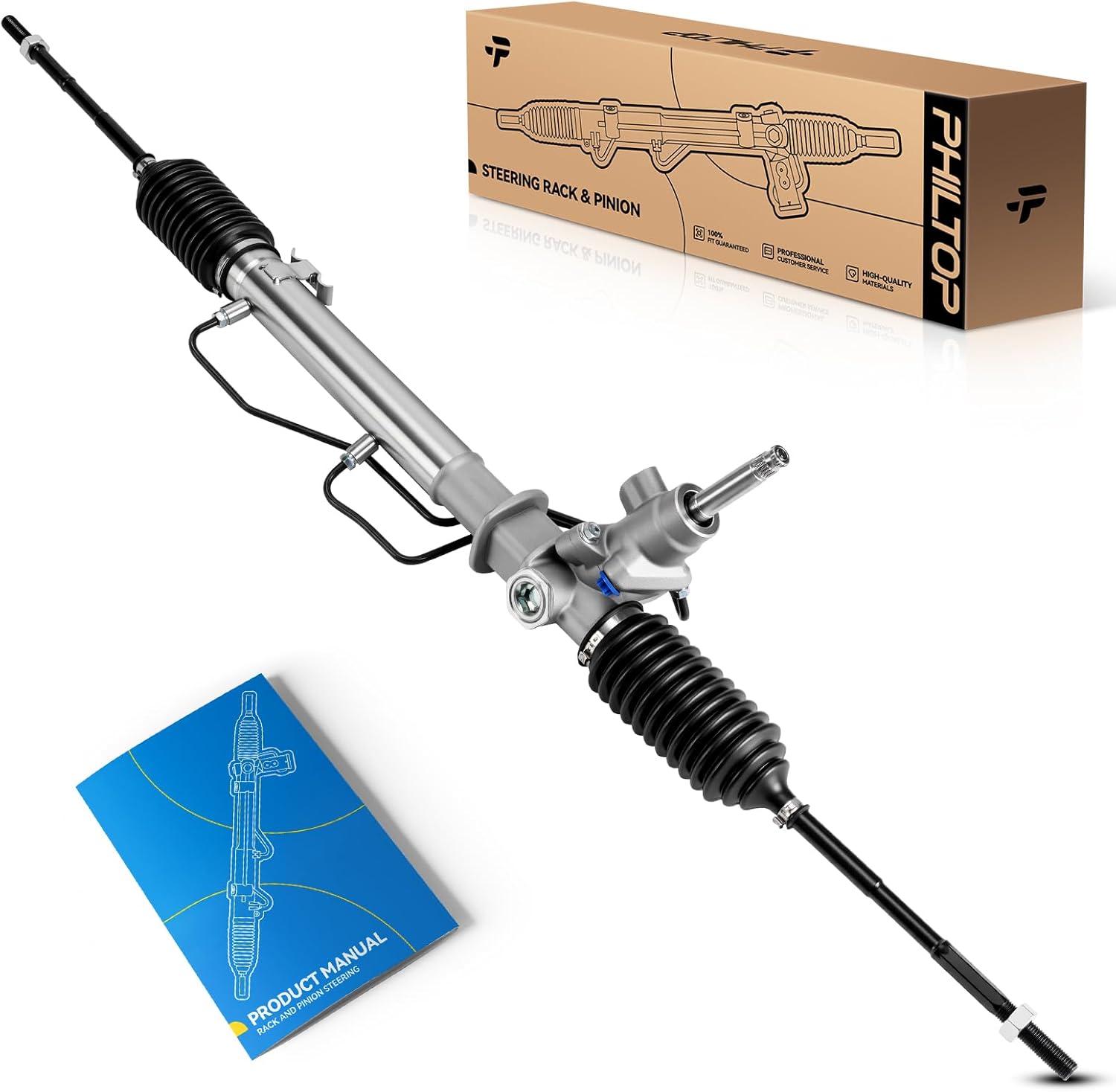
| Position | Front |
|---|---|
| Manufacturer | PHILTOP |
| Model | Steering Rack and Pinion Assembly w/Inner Tie Rods |
| OEM Part Number | TR34140AA040, 262401, 34110AE12B |
This PHILTOP steering rack and pinion is a complete replacement assembly sold with inner tie rods and built to fit 2000–2004 Subaru Outback and specified Baja applications. It installs in place of the factory unit to restore hydraulic power steering function after wear or damage. Notable features include CNC-machined alloy steel gears for tighter gear engagement, corrosion-resistant seals and a 360 degree dust cover intended to reduce contamination and leaks, and packaged inner tie rods to simplify installation. In practice the assembly should provide firmer, quieter steering feel compared with a worn original and reduce the chance of early fluid leaks when installed correctly. The unit comes packaged for transport and the listing points to a 12-month unlimited mileage guarantee, which helps a cautious buyer. Expect professional installation or an experienced DIYer for proper alignment and fluid bleeding; this is a full steering assembly rather than a simple service part and requires benching and vehicle setup to perform correctly.
Best for: Buyers who prioritize restoring factory steering performance and want a ready-to-install replacement assembly with seals and tie rods included, plus warranty protection for peace of mind.
Less Ideal for: People seeking a low-cost partial repair like replacing only boots or seals, or those who need a universal or adjustable aftermarket performance rack.
- Complete assembly includes inner tie rods for a one-piece replacement
- CNC-machined alloy steel rack and worm for tighter, stable steering engagement
- Corrosion-resistant seals and full dust cover to reduce leaks and contamination
- Manufacturer states a 12-month unlimited mileage guarantee for added assurance
- Requires professional installation and wheel alignment; not a simple bolt-on service item
Verdict: A full, factory-style replacement rack and pinion packaged with inner tie rods and robust seals for buyers who want a reliable, like-new steering repair for 2000–2004 Subaru Outback and specified Baja models.
Choosing the Right 2000-2004 Subaru Outback Rack and Pinion: Key Factors to Consider
Fitment and Steering Geometry
Accurate fitment is the first priority for the 2000-2004 Subaru Outback because incorrect mounting or input shaft length changes steering ratio and can introduce bump steer. Confirm that the replacement rack matches the Outback's steering input spline, mounting bolt pattern, and tie-rod end thread direction and length. Even small deviations can require additional linkage adjustments or modifications, increasing labor time and potentially affecting alignment.
A correctly fitting rack maintains the factory steering geometry, which preserves predictable handling, consistent toe settings, and proper return-to-center behavior. When shopping, look for documentation or photos showing the mounting points and shaft orientation to ensure the unit will bolt in without altering steering feel.
Seal Quality and Leak Resistance
Power steering fluid leaks are a common reason owners replace the rack and pinion, so seal design and material matter. High-quality synthetic seals resist swelling, hardening, and seepage across temperature cycles, which is important for the Outback's varied driving conditions. Consider whether the manufacturer specifies seal compound or pressure ratings, and whether the unit uses replaceable seal kits for future repairs.
Better seals reduce the chance of internal contamination and ensure consistent hydraulic pressure for predictable steering assist. If a rack has a history of early leaks or uses marginal sealing methods, expect earlier fluid loss, increased noise, or accelerated wear of internal components.
Internal Gear Tolerance and Steering Feel
The internal gear machining and clearance directly influence steering play and feedback. Tight, consistent tolerances yield precise steering input translation and minimal dead zone, which owners will notice as reduced steering play and crisper response. Excessive clearance or sloppy gear engagement produces vague steering, increased steering play, and may amplify steering rack noise over rough roads.
When evaluating options, prioritize units that describe tight tolerances, ground or honed rack teeth, and controlled backlash. These design aspects translate to a more direct steering feel and longer life under the loads typical for the Outback.
Mounting Hardware and Corrosion Protection
The Outback is often exposed to moisture and road salt, so corrosion-resistant mounting components and protective coatings on the rack housing extend service life. Zinc plating, powder coatings, or anodized finishes help prevent seized bolts and corrosion that can make future removal difficult. Also inspect whether necessary bushings, clamps, or mounts are included or require reuse of worn factory parts.
Hardware quality affects both initial installation and long-term maintenance. Corroded fasteners complicate repairs and raise labor costs, while a well-protected rack will maintain proper clamping and alignment throughout its service life.
Rebuildability and Parts Availability
Some owners prefer units that can be serviced rather than replaced. Rebuildable racks with available seal kits, boots, and replacement components give you repair options if a minor leak or wear occurs. For the 2000-2004 Outback, check whether common replacement parts like inner tie-rod ends and seals are readily available and whether the design allows for disassembly without specialized tooling.
Choosing a rebuildable unit can lower lifetime cost and reduce downtime, but it requires confidence that parts are affordable and that installation is practical for a shop or experienced DIYer.
Installation Complexity and Alignment Requirements
Installation difficulty varies by rack design and whether steering-angle sensors, bracketry, or line fittings differ from the factory component. Some racks are direct bolt-in replacements requiring minimal adjustments, while others may need line bending, different coupling adapters, or specific orientation checks. Factor in whether a professional alignment is required immediately after installation and whether the rack preserves factory steering stops and centering details.
Understanding installation complexity helps estimate labor effort and avoid surprises during swap-out. Prefer units that clearly document installation steps and preserve original steering geometry to simplify reassembly and alignment.
Common Steering Rack Symptoms on 2000-2004 Outback
Recognizing steering rack symptoms early can prevent more costly repairs. Typical signs on the 2000-2004 Outback include uneven or excessive steering play, grinding or clunking during lock-to-lock turns, persistent fluid puddles under the car, and a noticeable decline in steering return-to-center behavior.
Noise often signals internal wear or low fluid due to a leak. If you hear whining during low-speed turns or clunking over bumps, inspect the rack boots and fluid lines. Some symptoms overlap with tie-rod or suspension issues, so a focused steering inspection is important to isolate the rack as the source.
- Excessive steering play or vague center feel
- Fluid drips or wet steering rack bellows
- Whining or groaning during low-speed steering
- Clunking or knocking during turning or over bumps
Preparing Your Outback For A Rack Swap
Before ordering a replacement rack, measure steering input spline count, check mounting point condition, and document any ABS or steering angle sensor connections. Drain power steering fluid and support the vehicle safely before beginning removal. Have replacement hoses, clamps, and new fluids on hand to avoid prolonged downtime.
Also inspect ancillary components such as tie-rod ends, steering column couplers, and boots. Replacing worn outer components at the same time saves labor and ensures proper alignment after the rack is installed.
- Confirm spline count and shaft orientation
- Inspect mounts and tie-rod end threads
- Gather necessary tools and replacement fluids
- Plan for a post-installation alignment
Options: Rebuilt, Remanufactured, Or New Units
For the 2000-2004 Outback you will commonly find rebuilt, remanufactured, and new rack options. Rebuilt units reuse the original housing with replaced seals and components, which can be cost-effective if done to high standards. Remanufactured racks are typically factory-updated to meet specific tolerances, while new units offer the advantage of fresh components and modern coatings.
Your decision should weigh condition, warranty, and how long you plan to keep the vehicle. Rebuilt units with documented pressure testing and new seals can be reliable, but confirm whether the rebuild includes replacement of wear-prone internal parts.
- Rebuilt: cost-effective, depends on rebuild quality
- Remanufactured: often tested to factory specs
- New: clean supply, modern materials, often higher warranty
Fluid, Bleeding, And Steering Feel After Installation
After installing a replacement rack on the Outback, proper fluid selection and bleeding are essential to prevent air entrapment and ensure consistent assist. Use the manufacturer-recommended power steering fluid and follow a thorough bleeding procedure including cycling the steering from lock to lock with the engine running and checking fluid level after settling.
If air remains in the system you will notice spongy assist, erratic steering feel, or noise. Allow the system to settle and recheck fluid levels and for leaks before driving at speed. A correct bleed results in immediate, consistent steering response and quieter operation.
- Use correct power steering fluid
- Bleed the system by cycling lock-to-lock
- Check for leaks and re-torque fittings after initial drive
- Re-check alignment and steering centering
When To Rebuild Versus Replace On The Outback
Deciding whether to rebuild or replace depends on the extent of internal wear and your long-term plans for the vehicle. If the housing and gear teeth are in good condition and the issue is limited to seals or boots, a rebuild with high-quality seal kits can restore function at lower cost. However, if internal scoring, bent components, or significant play exists, full replacement is often the more reliable choice.
Consider the availability of skilled rebuilders and parts for the 2000-2004 Outback. For a daily-driven vehicle where reliability is paramount, many owners prefer a new or remanufactured unit that guarantees certain tolerances and reduces the chance of recurring issues.
- Rebuild when wear is limited to seals or minor components
- Replace when internal gear damage or excessive play exists
- Assess costs, parts availability, and intended vehicle lifespan
DIY Tips For Owners Replacing The Rack
If you plan a DIY rack replacement, gather the correct wrenches, a steering wheel lock or tape to prevent column rotation, new tie-rod end nuts, and an appropriately rated jack and stands. Photograph each step during disassembly to make reassembly straightforward. Label hydraulic lines to avoid cross-connection errors and cap lines to reduce fluid loss and contamination during the swap.
After installation, torque all mounting hardware to factory specs and perform a professional wheel alignment. Test-drive carefully in a low-traffic area to verify steering centering and to listen for any unusual noises before returning the vehicle to regular use.
- Use a steering wheel lock to prevent column damage
- Label and cap hydraulic lines during removal
- Torque to spec and get a professional alignment
- Start with a careful low-speed test drive
Still looking for the perfect fit?
Select your Subaru Outback configuration to see the most relevant Rack and Pinion Steering Systems recommendations
How We Chose the Best 2000-2004 Subaru Outback Rack and Pinion
We focused on criteria that reflect real-world ownership and the known failure modes for the 2000-2004 Subaru Outback steering system. Primary evaluation dimensions included fitment accuracy, steering feel and response, and seal and materials quality to reduce leak risk. We also scored rebuildability and serviceability, such as availability of replacement seals and tie-rod end compatibility, and considered whether units accept original steering input and output shaft dimensions. Durability factors like housing material, corrosion protection, and internal gear tolerance were weighed to estimate long-term life.Installation practicality was another filter: we favored options that preserve factory mounting points, steering linkage geometry, and that minimize additional adjustments during installation. Warranty and support coverage informed final choices as a proxy for manufacturer confidence. Exclusions: units lacking clear fitment for the 2000-2004 Outback, those without verifiable seal or pressure-spec information, or options that required unlisted modifications were not considered. The final shortlist comprises units that balance fit, steering performance, and serviceability for this vehicle.
Our full evaluation process is outlined in our review methodology.
FAQ
What are the most common steering rack symptoms on a 2000-2004 Outback?
Owners usually notice excessive steering play, persistent power steering fluid leaks, whining during low-speed turns, or clunking when turning. These symptoms often point to worn seals, internal wear, or failing boots and should be inspected promptly.
Can I repair a leaking rack and pinion on my 2000-2004 Outback instead of replacing it?
You can sometimes repair a leaking rack if the damage is limited to seals or boots and the internal gears are in good condition. Rebuild kits are available, but successful repair depends on part availability and the skill of the rebuilder.
How difficult is rack and pinion installation on the 2000-2004 Outback for a competent DIYer?
A competent DIYer with proper tools can replace the rack, but expect several hours of work and the need for an immediate professional alignment. Tasks like steering shaft coupling, line disconnection, and safe vehicle support require care and experience.
Will replacing the rack eliminate steering rack noise on my Outback?
Replacing a worn or leaking rack usually reduces whining and clunking caused by internal wear or low fluid. However, some noises can originate from tie-rod ends, bushings, or the pump, so check other steering components if noise persists.
Do I need to replace tie-rod ends when I install a new rack on the Outback?
It is advisable to inspect and often replace outer tie-rod ends when changing the rack because worn ends can compromise alignment and steering feel. Replacing them during the same service saves labor and helps ensure accurate toe settings.
How soon should I get an alignment after rack replacement?
Get a professional wheel alignment immediately after installation and before normal driving. Rack removal and reinstallation can alter toe and caster, so alignment ensures safe handling and even tire wear.
Final Verdict
For the 2000-2004 Subaru Outback, prioritize a replacement that matches factory fitment, uses durable seals, and maintains tight internal tolerances to restore precise steering and prevent leaks. Assess whether a rebuild makes sense based on internal condition and parts availability, but when in doubt choose an option that preserves steering geometry and reduces future service risk.Balance installation complexity, long-term durability, and rebuildability against your budget and how long you plan to keep the vehicle. With the right rack choice and a proper bleed and alignment, you can confidently restore quiet, predictable steering on your Outback.
Explore More:
- Check out all Subaru Outback parts & accessories
- Explore Rack and Pinion Steering Systems Maintenance & Repair Guides
- Explore Suspension & Steering
- Browse all Auto Parts
