

Note: This article contains affiliate links. If you click on these links and make a purchase, I may earn a small commission at no extra cost to you. This helps support my research and content. Read my full affiliate disclosure here.
If your 1997-2004 Dodge Dakota is showing loose steering, uneven tire wear, or fluid leaks, the rack and pinion is often the root cause. Picking the right rack and pinion matters because fitment, internal seal quality, and OEM-compatible steering geometry all affect handling and safety on the road. This guide shortlists the top options for the 1997-2004 Dakota and explains the practical tradeoffs you should weigh. We evaluate products based on fitment accuracy, build quality, seal and rack materials, and whether they are ready-to-install or require rebuilding. Read on to see the criteria we used and the features that make each pick suitable for Dakotas from 1997 through 2004.
Looking for other parts? See all Dodge Dakota parts & accessories.
Top Picks at a Glance
| Best Overall The best all-around choice for most situations | PHILTOP Steering Rack and Pinion Assembly with Inner Tie Rods |  |
| Best Quality Built to a higher standard if you want something more solid | Cardone 22-338 Remanufactured Hydraulic Rack and Pinion Complete Unit |  |
| Best Value The sweet spot between price and what you get | KAX Power Steering Rack and Pinion Assembly (Hydraulic) – Replacement 97-338 |  |
| Best Budget The cheapest option that still gets the job done reliably | Detroit Axle Complete Power Steering Rack and Pinion Assembly |  |
| Highest Rated A top-rated pick with lots of positive feedback | Gledewen Hydraulic Power Steering Rack and Pinion Assembly (Direct Fit) for 1997–2004 Dakota / 1999–2003 Durango RWD |  |
| Most Popular A crowd favorite that many people choose with confidence | Detroit Axle RWD Front Rack and Pinion Kit with Hubs, Tie Rods, and Sway Link Kit |  |
| Best Seller A high-volume bestseller chosen again and again | PHILTOP Power Steering Rack and Pinion Assembly (97-338) | |
1. PHILTOP Steering Rack and Pinion Assembly with Inner Tie Rods

| Position | Front |
|---|---|
| Manufacturer | PHILTOP |
| Model | Steering Rack and Pinion Assembly w/Inner Tie Rods |
| Manufacturer Part Number | 4028SGE0461US |
| OEM Part Number | 97-338, 97338, 52039207AC, 52106477AC, 52106477AF, 98338, 610121, 144025NEW, 6512146, 638843, 4711388, 2021596, 2021596AM |
This PHILTOP steering rack and pinion is a direct-replacement complete unit that swaps into the front of specified Dodge Dakota and Durango rear‑drive models. It ships with inner tie rods and is offered as a plug-and-play assembly intended to match factory mounting and hydraulic connections, so installation is straightforward for a competent DIYer or a shop. Key construction notes include CNC-machined alloy-steel rack and worm gears for tight gear engagement, corrosion-resistant seals and a 360° dust cover to reduce contamination and leakage, and factory-style hydraulic testing to guard against pressure leaks. That combination aims to restore steering precision and extend service life up to the manufacturer-stated mileage. Limitations are that fitment is restricted to listed RWD engines and years only, and while the unit is designed to be durable it does not include outer tie rods or steering pump/hoses, so inspect related components when replacing the rack.
Best for: Buyers who want a balanced, factory-style replacement that restores steering feel and reliability on the specified 1997–2004 Dodge Dakota and 1999–2003 Durango RWD models without major modification.
Less Ideal for: People seeking a universal or upgraded performance rack, or owners of non‑RWD models and unlisted engine/trim combinations should look elsewhere.
- Complete plug-and-play assembly including inner tie rods for easier install
- CNC-machined alloy gears for tight engagement and consistent steering feel
- Corrosion-resistant seals and full dust cover to reduce leaks and contamination
- Hydraulically pressure-tested to help ensure no fluid leaks out of the unit
- Only fits the specific RWD year and engine combinations listed, not a universal replacement
- Does not include outer tie rod ends or other steering peripherals, which may need separate replacement
Verdict: A ready-to-install, factory-style replacement rack that restores steering precision and leak-free operation for the listed Dodge Dakota and Durango RWD models.
2. Cardone 22-338 Remanufactured Hydraulic Rack and Pinion Complete Unit

| Item model number | 22-338 |
|---|---|
| Manufacturer Part Number | 22-338 |
| OEM Part Number | 52039207AC, 52106477AC, 52106477AF |
The Cardone 22-338 is a complete remanufactured hydraulic rack and pinion assembled to replace worn steering racks on Dodge Dakota and Durango model years listed. It arrives as a ready-to-install unit with rebuilt internal components, factory-grade seals, O-rings and boots to restore steering function without rebuilding the old rack. Cardone says its engineering addresses common failure points and the unit is tested to meet SAE standards; computerized spool valve balancing aims to deliver a predictable steering feel. The painted exterior and anti-rust coating on tie rods and lines help resist corrosion in typical road conditions. As a remanufactured part it provides a more direct replacement than patching an old rack, but it is not a performance aftermarket upgrade for track use; buyers seeking firmer or quicker steering response should consider performance-specific racks. Installation restores factory steering performance for street and light-duty towing, though professional alignment after fitment is recommended.
Best for: Drivers who want a dependable, direct replacement to restore factory steering response on a 1997–2004 Dodge Dakota or compatible Durango without rebuilding the original rack.
Less Ideal for: Enthusiasts seeking a performance-oriented or track-focused steering upgrade should look at purpose-built aftermarket racks instead.
- Complete ready-to-install unit includes seals, O-rings and boots for a full replacement
- Computerized spool valve balancing for consistent, factory-style steering feel
- Engineered improvements based on failure analysis to address common weak points
- Painted exterior and corrosion-resistant coating on tie rods and lines for longer life
- Remanufactured unit restores factory performance but is not designed for aggressive performance tuning
Verdict: If you need a dependable, ready-to-install replacement to restore factory steering performance on a 1997–2004 Dodge Dakota, this Cardone remanufactured rack and pinion is a practical choice.
3. KAX Power Steering Rack and Pinion Assembly (Hydraulic) – Replacement 97-338

| Vehicle fitment | 1997-2004 Dodge Dakota RWD; 1999-2003 Durango RWD |
|---|---|
| Steering type | Hydraulic |
| Position | Front |
| Item model number | 97-338 |
| Manufacturer | KAX |
This KAX hydraulic rack and pinion is a complete front steering assembly built to directly replace the factory unit on specified Dodge Dakota and Durango rear-drive models. It arrives with inner tie rods and a plug-and-play layout intended to simplify swap-in replacement with no drilling or modification. The unit is made from chrome-plated alloy steel and aluminum processed with CNC machining, which the manufacturer says improves corrosion and wear resistance for long service life. For everyday driving the assembly restores steering precision and power assist feel without rebuilding the original rack, and the integrated tie rods reduce parts sourcing. Installation is straightforward for a professional or a confident DIYer, though alignment after fitting is required. Expect the usual limitations of an aftermarket complete unit: fit depends on matching the listed vehicle years and RWD configuration, and buyers should verify steering hose and mounting bolt compatibility before starting the job.
Best for: Buyers who want a straightforward, long-lasting replacement steering rack that minimizes parts sourcing and installation complexity while restoring factory-style steering performance.
Less Ideal for: People who need a custom or heavy-duty aftermarket steering upgrade, electronic power steering conversions, or those unwilling to confirm exact fitment and related hose/mount compatibility before purchase.
- Complete assembly includes inner tie rods for fewer separate parts to buy
- Plug-and-play design aimed at direct replacement with no modification
- CNC-machined alloy steel and aluminum construction for improved wear and corrosion resistance
- Rated for long service life with manufacturer-stated durability testing
- Compatibility limited to specified RWD Dakota and Durango years and hydraulic steering systems
Verdict: Choose this KAX complete hydraulic rack and pinion if you want a plug-and-play, CNC-machined replacement that restores factory-style steering on the specified Dodge Dakota and Durango RWD models.
4. Detroit Axle Complete Power Steering Rack and Pinion Assembly

| Manufacturer | Detroit Axle |
|---|---|
| Fitment | 1997-2004 Dodge Dakota; 1999-2003 Durango RWD |
| Assembly Type | Complete hydraulic power steering rack and pinion |
| Remanufactured | Yes |
This Detroit Axle complete power steering rack and pinion is a remanufactured hydraulic assembly built to replace a failing unit on 1997–2004 Dodge Dakota and 1999–2003 Durango RWD applications. It arrives as a ready-to-install assembly with new inner tie rod ends, new oil and lip seals, and hydraulic pressure testing to help ensure internal bypass performance. Typical use is a direct replacement during a steering rebuild or repair to restore proper steering feel and eliminate leaks or play. The remanufacture process and ISO-factory procedures aim to match factory-quality fit and durability while keeping cost lower than a new OEM unit. Practical benefits include full assembly convenience for faster install and a lifetime warranty when you return your core. Limitations: as a remanufactured part it depends on a core exchange to activate the lifetime warranty and some buyers report variable long-term durability compared with brand-new units.
Best for: Buyers replacing a leaking or worn steering rack on an older Dodge Dakota or Durango who want a lower-cost, factory-quality replacement that installs quickly and restores steering function.
Less Ideal for: Anyone who prefers a brand-new aftermarket or dealer part for maximum long-term consistency or who cannot return a core for warranty activation should consider other options.
- Comes as a complete, ready-to-install hydraulic rack and pinion assembly
- New inner tie rod ends and new oil and lip seals included
- Hydraulically pressure tested during remanufacture to verify internal bypass
- Remanufactured to factory-quality standards in ISO-certified facilities
- Lifetime warranty requires returning your core unit to activate
- Remanufactured nature can lead to variable long-term durability compared with new parts
Verdict: A cost-conscious, factory-quality remanufactured complete rack and pinion that lets you replace a faulty steering unit quickly while keeping expense down.
5. Gledewen Hydraulic Power Steering Rack and Pinion Assembly (Direct Fit) for 1997–2004 Dakota / 1999–2003 Durango RWD

| Compatibility note | RWD 1997–2004 Dodge Dakota; 1999–2003 Dodge Durango |
|---|---|
| Material type | Alloy steel and aluminum |
| Bearing type | Pinion bearing |
| Unit count | 1 Count |
This Gledewen hydraulic power steering rack and pinion is a direct-replacement steering gear aimed at restoring tight, responsive steering on compatible Dodge Dakota and Durango RWD models. Sold as a complete assembly, it arrives ready to bolt in and replaces several factory part numbers so you do not need to transfer components from your old unit. The unit is built from quenched steel and cast aluminum with reinforced rubber seals and a thick dust boot to reduce leaks and resist corrosion from road debris. Installation is advertised as a straightforward one- to two-hour job for a mechanic, and because it is a full assembly it eliminates time spent rebuilding or hunting missing parts. Practical benefits include firmer low-speed steering, reduced play, and a sealed design that should limit fluid loss. Potential limitations are that this is a hydraulic, factory-style replacement only for rear-wheel-drive 1997–2004 Dakotas and specified Durangos, so it is not applicable to 4WD or non-listed model years, and you should check steering alignment and fluid condition after fitting.
Best for: Drivers who prioritize a dependable, factory-style steering replacement to get a worn Dakota or Durango back to responsive, leak-free operation with minimal fuss.
Less Ideal for: Anyone seeking a performance or aftermarket steering upgrade, or owners of four-wheel-drive or non-listed model years who need a different fitment.
- Direct-fit complete assembly replaces multiple factory part numbers so no core or extra parts are needed
- Reinforced rubber seals and thick dust boot help reduce leaks and block contaminants
- Constructed from hardened steel and cast aluminum for durability against potholes and heavy use
- Arrives preassembled to shorten installation time to about 1.5 hours for a professional
- Only fits rear-wheel-drive 1997–2004 Dakota and listed 1999–2003 Durango applications and not 4WD variants
Verdict: Choose this direct-fit hydraulic rack and pinion to get a durable, factory-style steering replacement that stops leaks and restores crisp steering on compatible Dakotas and Durangos.
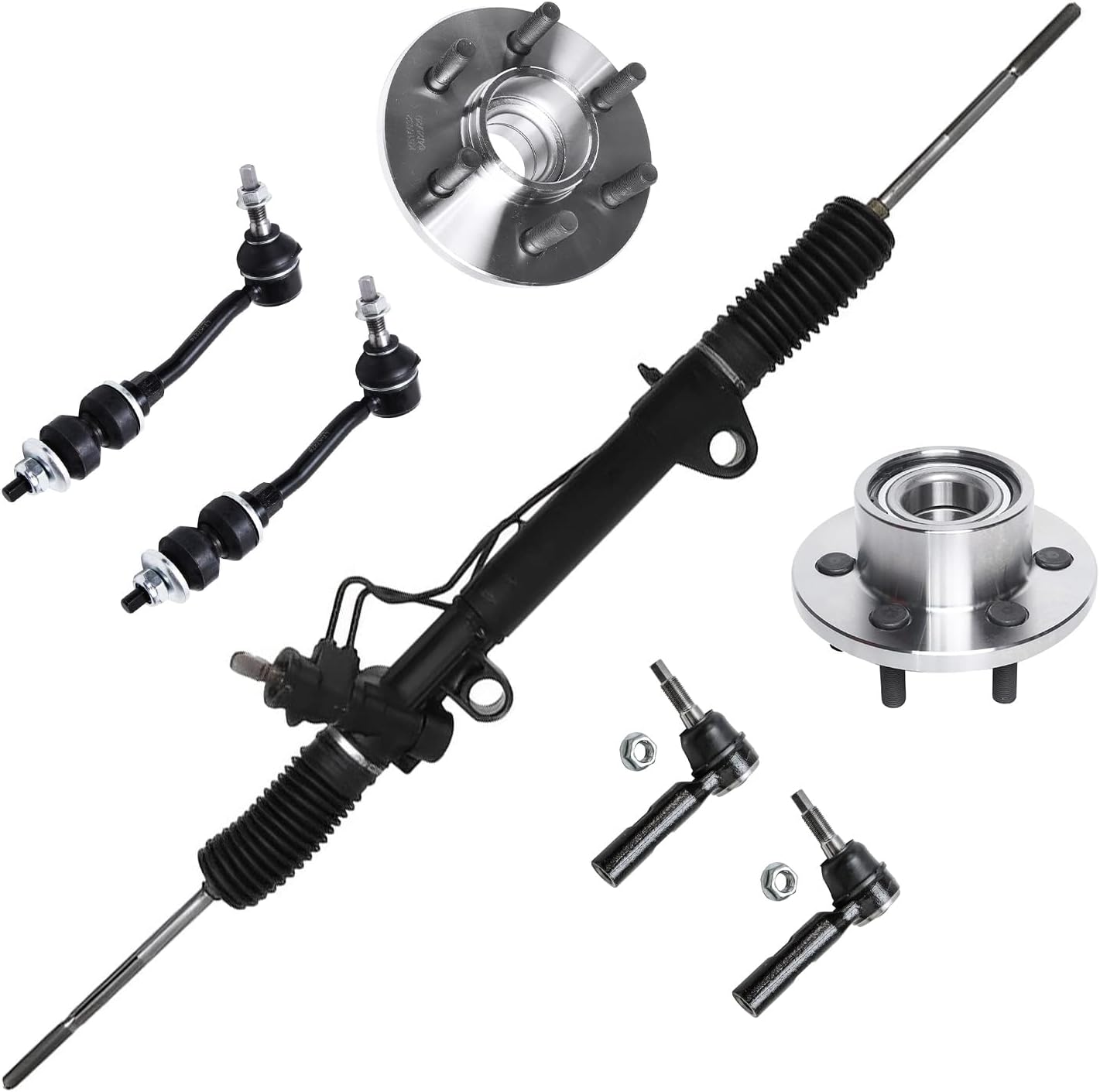
6. Detroit Axle RWD Front Rack and Pinion Kit with Hubs, Tie Rods, and Sway Link Kit
| Position | Front |
|---|---|
| Lugs | 6 Bolts |
| ABS Type | Non-ABS |
| Drive Type | 2WD |
This Detroit Axle kit supplies a complete front steering refresh for 2000–2004 Dodge Dakota RWD models by combining a remanufactured power steering rack and pinion with front wheel hubs, outer tie rod ends, and sway bar links. The rack is remanufactured in Detroit, fitted with new oil and lip seals, and hydraulically pressure tested to check internal bypass and ensure functional integrity. Including hubs and steering linkage makes it practical for doing a multi-part front-end service in one job and reduces parts-sourcing time. The hubs are non-ABS 6-bolt units for 2WD setups and the kit targets vehicles without four-wheel ABS. Detroit Axle offers a lifetime warranty on the remanufactured rack, though activation requires returning the core. Buyers should expect this to be a direct replacement for compatible Dakota RWD models, but installation is a multi-step job that may require alignment and professional tools if you are not a confident DIYer.
Best for: Buyers who want a single, verified kit to replace multiple front-end steering components at once and who value tested remanufactured parts backed by a warranty and store reputation.
Less Ideal for: Drivers with ABS-equipped or four-wheel-drive Dakotas or those looking for individual replacement parts rather than a full front-end kit.
- Complete kit includes remanufactured rack plus hubs, outer tie rods, and sway links for a coordinated front-end repair
- Rack remanufactured in Detroit with new oil and lip seals and hydraulic pressure testing for internal integrity
- Lifetime warranty on the remanufactured rack when core is returned and warranty activation steps are followed
- Targets RWD, 2WD Dodge Dakota fitment so parts match common front-end configurations for those models
- Hub assemblies are non-ABS and only fit 2WD/Non-ABS setups, limiting use on vehicles with ABS or 4WD
- Warranty requires returning the old core, adding an extra step to activate coverage
Verdict: Choose this kit if you want a tested, remanufactured Detroit Axle rack plus matching hubs and steering links to complete a coordinated front-end replacement on 2000–2004 Dodge Dakota RWD models.
7. PHILTOP Power Steering Rack and Pinion Assembly (97-338)
| Manufacturer | PHILTOP |
|---|---|
| Model | Power Steering Rack and Pinion Assembly w/Inner Tie Rods |
| Position | Front |
| OEM Part Number | 52039207AC,52106477AC,52106477AF,97338 |
| Item model number | 97-338 |
This PHILTOP rack and pinion is a complete hydraulic steering assembly supplied with inner tie rods and intended as a like‑for‑like replacement for 1997–2004 Dodge Dakota RWD and 1999–2003 Durango RWD. It is built from chrome‑plated alloy steel and aerospace aluminum with CNC‑machined gear components, corrosion‑resistant seals, and a full 360° dust cover to protect internal parts. In practice that means it should restore steering feel and reduce play without needing additional parts during installation, and the packaged unit limits time in the shop compared with rebuilding a worn rack. The listing emphasizes reinforced seals and protective packing to reduce transit damage and oil leaks. Expect factory‑style steering performance and quieter operation if your original unit was worn or leaking. Limitations to note are that it is a vehicle‑specific hydraulic unit so confirm fitment carefully before purchase, and professional installation is recommended to ensure correct steering alignment and safe operation.
Best for: Buyers who want a direct, factory‑style replacement that minimizes surprises and restores original steering feel with a ready‑to‑install unit.
Less Ideal for: Shoppers planning an electric power steering conversion or those looking for a custom performance steering upgrade should consider other options.
- Complete assembly with inner tie rods reduces installation time compared with rebuilding a rack
- CNC‑machined rack and worm gear for consistent steering engagement and reduced play
- Corrosion‑resistant seals and 360° dust cover help prevent leaks and contamination
- Chrome‑plated alloy steel and aerospace aluminum construction aimed at long service life
- Designed specifically for hydraulic steering; not compatible with electric steering conversions
Verdict: A ready‑to‑install, factory‑style hydraulic rack and pinion built to replace worn units on 1997–2004 Dodge Dakota RWD and similar Durango models for dependable, low‑risk steering restoration.
Choosing the Right 1997-2004 Dodge Dakota Rack and Pinion: Key Factors to Consider
Fitment and Steering Geometry
Correct fitment is the single most important factor for a rack and pinion on a 1997-2004 Dodge Dakota. The mounting points, input shaft spline count and length, and tie-rod end spacing must match factory dimensions so the steering alignment remains within service limits. An incorrect geometry can change toe and tracking, leading to uneven tire wear and compromised handling.
When evaluating fitment information, look for explicit vehicle-year coverage and any notes about cab or suspension sub-variants. Some replacement racks are direct bolt-in units while others may require adapter brackets or different hoses. Verify that the unit maintains the original steering ratio and center-to-center mounting distance to avoid altering steering response or requiring significant alignment corrections.
Seal Quality and Leak Resistance
Seals and internal packing determine how long a rack remains leak-free under pressure and temperature cycles. For Dakotas that have seen road salt or high-mileage service, robust nitrile or fluoroelastomer seals and well-machined gland areas reduce the chance of early leaks.
Leak resistance affects not only fluid loss but also steering feel. A leaking rack can introduce air into the system, producing inconsistent steering effort and noise. Look for units that are pressure-tested and specify seal materials and manufacturing tolerances to reduce the risk of rack and pinion leak repair shortly after installation.
Internal Gear Precision and Steering Play
The rack tooth profile and pinion gear machining tolerance influence steering smoothness and perceived play. Tight tolerances yield a firmer, more responsive feel, while looser tolerances can create dead spots or excessive steering rack steering play.
For vehicles used in towing or frequent highway driving, a rack with precise internal fitment maintains predictable steering under load. Consider whether the replacement is a new unit or a rebuild; rebuilds depend on the quality of components used during reconditioning and may show more variance in internal precision unless completed to high standards.
Mounting Hardware and Installation Readiness
Some racks arrive fully assembled with new boots, clamps, inner tie-rod ends, and pressure-tested seals, while others are sold as cores or partial assemblies that require additional parts. Choosing an installation-ready unit reduces labor time and the chance of leaks from reused components.
Also factor in whether the unit includes correct mounting bushings and whether the input shaft length and spline match the factory steering column. Units that closely match factory installation details shorten installation time and reduce the chance of fitment surprises during rack and pinion installation.
Corrosion Resistance and Housing Durability
The Dakota faces a range of climates, and rack housings exposed to road salt or moisture benefit from corrosion-resistant coatings or higher-grade materials. Surface treatment of the housing and fastener points help prevent rust that can freeze bushings and damage seals over time.
A durable housing reduces the likelihood of premature failure and simplifies future maintenance. For trucks used in areas with heavy exposure to salt or mud, prioritize units with protective finishes and robust mounting flange designs.
Power Steering Compatibility and Hose Ports
Ensure the rack matches the Dakota's power steering system in terms of pressure and return port locations, thread types, and hose orientation. Mismatched ports can complicate installation and lead to stressed hose routing, which increases leak risk.
Verify that the replacement will accept the factory pressure specifications and that any included adapters do not alter fluid flow characteristics. Compatibility with the original pump pressure and reservoir setup helps maintain consistent steering effort and prevents additional modifications to the power steering plumbing.
Common Steering Rack Symptoms to Watch For
Understanding symptoms helps you decide whether a rack replacement is necessary. Typical signs on a 1997-2004 Dodge Dakota include persistent steering wheel play, a pull to one side, grinding or clunking noises when steering, and visible power steering fluid leaks around the bellows or mounting area.
Not all symptoms mean the rack is the only issue. Worn tie-rod ends, bad alignment, or low power steering fluid can produce similar effects. Use symptom patterns to guide inspection: fluid leaks and noise under steering input more directly point to the rack, while loose front-end components often indicate tie-rod or suspension wear.
- Steering wheel has excessive free play before the wheels respond
- Fluid puddles or wetness beneath the steering rack bellows
- Grinding or metallic clunks when turning the steering wheel
- Steering effort varies or feels spongy at times
Inspection Checklist Before You Replace
Perform a methodical inspection to confirm the rack is the failure point. Check bellows for tears, probe tie-rod ends for play, and look for wetness at hose connections and the seal area. With the vehicle raised, have an assistant move the steering wheel while you watch the rack for lateral slop or leaking fluid.
Also check for loose mounting bolts and corrosion at mounting surfaces. Record whether steering symptoms are present at idle or only under load, as that helps distinguish pump issues from rack failures.
- Inspect boots and clamps for tears or missing clamps
- Check inner and outer tie-rod ends for axial or rotational play
- Look for wetness at hose connections and housing seams
- Observe rack movement during steering input with wheels off the ground
Rebuilds, Remanufactured Units, and New Racks Explained
Replacement options typically include new units, remanufactured racks, and rebuilt units. New units provide consistent factory-style components and are often the most straightforward option for ensuring correct geometry. Remanufactured and rebuilt racks can be cost-effective if they include pressure testing and new seals.
When considering a rebuild or remanufactured unit, verify whether internal wear parts and seals were replaced and whether the unit was pressure-tested. The success of a rebuild depends heavily on the quality of replacement internals and the thoroughness of the reconditioning process.
- New: factory-style internals and predictable fitment
- Remanufactured: factory cores reconditioned, look for pressure testing
- Rebuilt: depends on parts used and technician skill
Installation Tips for Dakota Owners
Prepare for installation by acquiring new tie-rod ends if the old ones show wear, fresh mounting hardware if bolts are corroded, and the correct power steering fluid specified for the vehicle. Bleeding the system after installation is critical to remove air and restore consistent steering effort.
Torque mounting bolts to factory specifications and double-check input shaft engagement with the steering column spline. After installation, perform a thorough alignment and test-drive at low speeds to confirm steering response and absence of leaks before resuming normal driving.
- Replace worn outer and inner tie-rod ends during rack swap
- Use new clamps and boots to ensure protection from dirt
- Bleed the power steering system thoroughly to remove air
- Perform alignment after installation to correct toe and tracking
When to Consider Professional Service
Complex steering issues, heavy corrosion, or the need to match precise steering geometry are reasons to involve a professional mechanic. Shops with rack-specific experience can verify column spline engagement, perform pressure checks, and ensure the replacement maintains factory steering ratios.
If the vehicle is used for towing or carries heavy loads, a professional installation helps ensure the steering system retains safe and predictable handling under varying loads.
- Extensive underbody rust or seized mounting bolts
- Unclear fitment or mismatched hose ports
- Need to ensure exact steering ratio and geometry
Still looking for the perfect fit?
Select your Dodge Dakota configuration to see the most relevant Rack and Pinion Steering Systems recommendations
How We Chose the Best 1997-2004 Dodge Dakota Rack and Pinion
We focused on selection criteria that matter to owners of 1997-2004 Dodge Dakotas and excluded items that did not directly impact steering performance or fitment. Key evaluation factors included: fitment accuracy and correct steering geometry to ensure the rack aligns with factory tie rod and steering column interfaces; seal and piston design, because durable seals reduce the chance of early fluid loss and steering looseness; rack housing material and finish, given that corrosion resistance affects service life in wet and salted-road conditions; internal gear machining tolerance and rack tooth profile, which influence steering feel and perceived play; whether the unit is fully assembled and pressure-tested or delivered as a core/rebuild requiring additional parts; and mounting and hose port configuration to match the Dakota power steering plumbing. We also prioritized units that maintain or improve steering response without altering the vehicle's intended steering ratio. Exclusions: units with ambiguous fitment information, products lacking pressure-testing documentation, and options that require extensive steering column or subframe modification. Our process emphasized measurable build attributes and fitment clarity over brand claims alone.
Our full evaluation process is outlined in our review methodology.
FAQ
What are common steering rack symptoms on a 1997-2004 Dodge Dakota?
Common symptoms include excessive steering wheel play, fluid leaks at the bellows or housing, grinding or clunking noises when turning, and inconsistent steering effort. These signs often indicate seal failure, internal wear, or mounting issues.
Can I drive my Dakota with a leaking rack and pinion?
You can drive short distances, but driving with a leaking rack risks steering failure and further damage to seals and the pump. Have the leak diagnosed promptly and avoid long trips until the problem is resolved.
Is a remanufactured rack as reliable as a new unit?
Remanufactured racks can be reliable if they are fully disassembled, inspected, fitted with new wear parts and seals, and pressure-tested. Reliability depends on the reconditioning standards and parts used during the rebuild.
How do I know if steering play is due to the rack or other components?
Raise the front wheels and have an assistant move the steering wheel while you observe the rack and tie-rods. If play is visible at the rack or the inner tie-rod, the rack may be the cause. If the outer tie-rod ends or ball joints show play, those components may be responsible.
Does replacing the rack require a wheel alignment?
Yes. Replacing the rack can change toe and tracking, so a full front-end alignment is necessary after installation to ensure proper tire wear and handling.
What maintenance helps extend rack life on a Dakota?
Keep power steering fluid at the correct level and use the specified fluid, inspect and replace torn boots promptly, and address any leaks quickly. Preventing corrosion at mounting points by cleaning and using protective coatings also helps extend service life.
Final Verdict
When choosing a rack and pinion for a 1997-2004 Dodge Dakota, prioritize fitment accuracy, seal quality, and internal gear precision to restore safe, predictable steering. Consider installation-ready units if you want to minimize labor and leak risk, or choose a remanufactured unit only if it includes documented pressure testing and new wear components. Balance the tradeoffs between a brand-new unit and a rebuilt option by focusing on durability, correct steering geometry, and corrosion resistance so you can return the truck to confident, consistent handling.
Explore More:
- Check out all Dodge Dakota parts & accessories
- Explore Rack and Pinion Steering Systems Maintenance & Repair Guides
- Explore Suspension & Steering
- Browse all Auto Parts
