

Note: This article contains affiliate links. If you click on these links and make a purchase, I may earn a small commission at no extra cost to you. This helps support my research and content. Read my full affiliate disclosure here.
If your 1997-2004 Dodge Dakota has steering wander, uneven tire wear, or looseness at the front end, replacing the tie rod ends can make a dramatic difference in driving feel and safety. The right tie rod ends restore precise steering geometry, reduce play in the steering linkage, and help maintain proper tire alignment for longer.This guide presents seven shortlisted tie rod ends chosen for fitment, durability, and serviceability specifically for the 1997-2004 Dodge Dakota. Below you will find the criteria we used to evaluate options, practical installation considerations, and common symptoms that indicate replacement. Read on to pick the right part for your driving needs and maintenance plan.
Looking for other parts? See all Dodge Dakota parts & accessories.
Top Picks at a Glance


1. Detroit Axle Front Inner and Outer Tie Rod End Kit for 2000–2004 Dodge Dakota / 2000–2003 Durango (RWD)
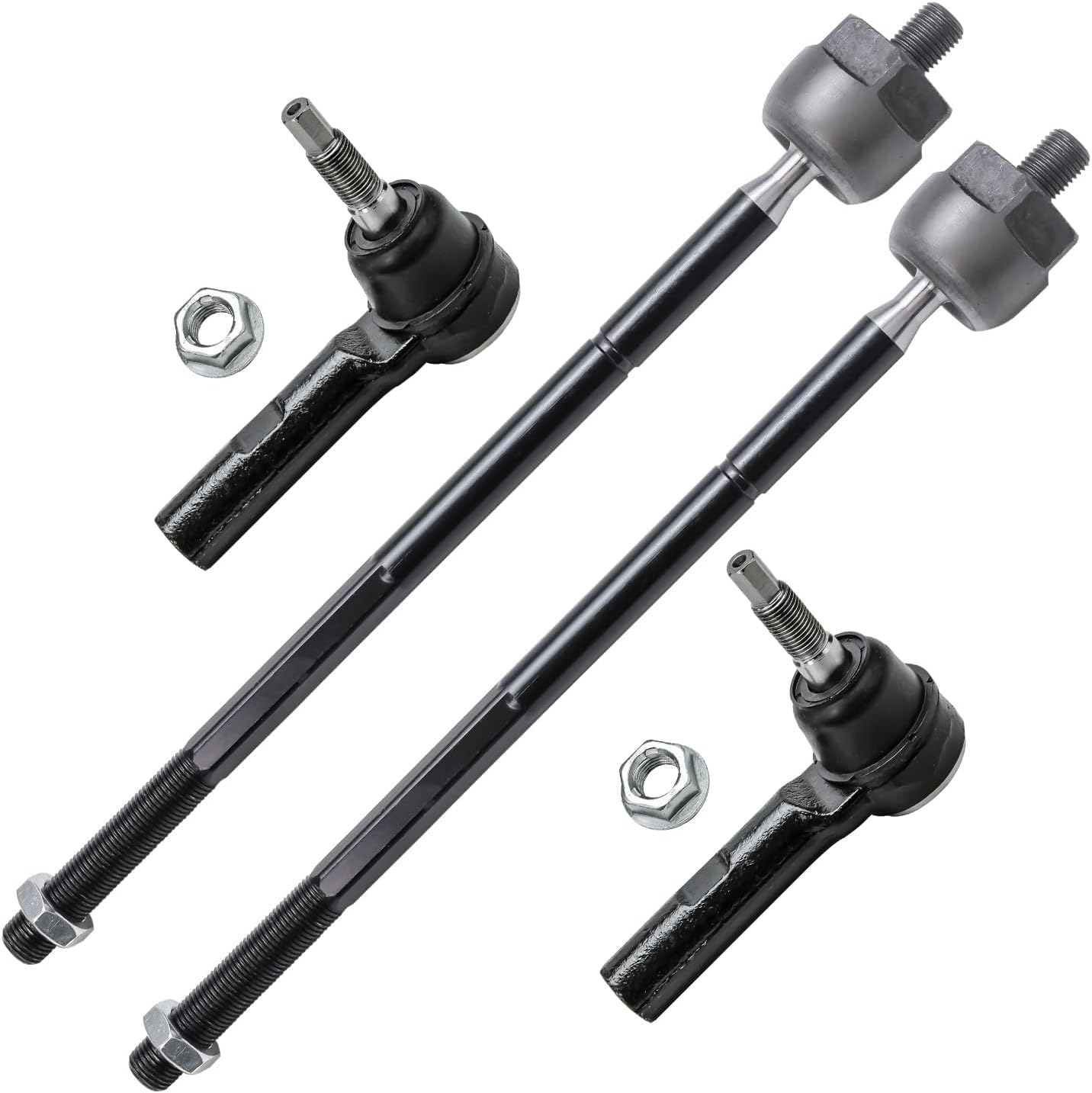
| Fitment | 2000–2004 Dodge Dakota (RWD); 2000–2003 Dodge Durango (RWD) |
|---|---|
| Kit contents | 2 front outer tie rod ends, 2 front inner tie rod ends |
| Material | Premium alloy |
| Testing | Impact, wear, and fatigue testing |
| Warranty | 10-Year Warranty |
This Detroit Axle kit provides both inner and outer front tie rod ends as a direct-fit replacement for RWD 2000–2004 Dodge Dakota and 2000–2003 Durango. It is intended for routine steering and suspension repairs where worn tie rods produce play, uneven tire wear, or sloppy steering. The parts are made from premium alloy with enhanced structural strength and rust-resistant treatment; Detroit Axle says the components undergo impact, wear, and fatigue testing to improve durability. Installation is straightforward for a mechanically competent DIYer or tech because the parts are built to match factory fitment. Practical benefits include restored steering precision and improved front-end stability after installation. Limitations are that this kit fits RWD models only and does not include alignment service or adjustment hardware, so a wheel alignment after installation is required to ensure correct toe settings and tire life.
Best for: Buyers who want a dependable, factory-replacement style steering repair that restores steering feel and front-end stability on their RWD Dakota or Durango without exotic upgrades.
Less Ideal for: Drivers looking for heavy-duty or performance steering upgrades, or owners of 4WD models and other vehicle years not listed should seek a different kit.
- Complete four-piece kit covers both inner and outer front tie rod ends so both sides of the steering linkage are renewed at once
- Direct-fit design sized for the specified RWD Dakota/Durango applications for easier installation
- Premium alloy construction with corrosion resistance and reinforced structure for improved durability
- Manufacturer states components undergo impact, wear, and fatigue testing to validate longevity
- Fitment limited to rear-wheel-drive models only, not compatible with 4WD or other years/models
Verdict: A straightforward, quality-minded four-piece front tie rod kit that restores steering precision on RWD 2000–2004 Dodge Dakota and 2000–2003 Durango models.
2. Metrix Premium Chassis Parts Front Outer Tie Rod End Kit (Left & Right)

| Position | Front Outer |
|---|---|
| Material | Steel |
| Quantity | 2 |
| Included hardware | Cotter pins |
| Warranty | 3 Year / 36,000 miles Limited Warranty |
This Metrix kit replaces both front outer tie rod ends and is built as a direct-fit replacement for specified Dodge Dakota and Durango 4WD years. The kit includes left and right steel tie rod ends with cotter pins and a machined exterior intended for a precise fit and straightforward installation. Metrix emphasizes a greasable design so you can service the joints to extend life, and the parts are produced to meet quality standards such as IATF 16949 and ISO 9001, which supports consistent manufacturing. In practice the kit is aimed at drivers who want a durable, OEM-style steering feel after replacing worn tie rods; expect restored steering responsiveness and better alignment retention when installed and followed by a wheel alignment. Limitations are that this is a front outer-only kit, so inner tie rods or other front suspension components are not included, and a professional alignment is required after installation. The parts carry a 3 year/36,000-mile limited warranty from installation.
Best for: Drivers who want a performance-minded, factory-style steering response after replacing worn outer tie rod ends on the specified 1997–2004 Dodge Dakota/Durango 4WD vehicles and who value serviceable parts.
Less Ideal for: If you need a complete steering overhaul or prefer lifetime-sealed, maintenance-free joints, this outer-only greasable kit is not the best single purchase.
- Direct-fit front outer replacement for listed Dodge Dakota and Durango 4WD years
- Greasable design allows periodic maintenance to extend joint life
- Machined exterior and steel construction for durable, OEM-like steering feel
- Manufactured to IATF 16949 and ISO 9001 quality standards
- Kit only includes outer tie rod ends so additional steering components may be required for a full repair
Verdict: Choose this Metrix outer tie rod end kit to restore direct, factory-style steering feel on the specified Dodge Dakota/Durango 4WD models while keeping the option to service the joints for longer life.
3. TRQ Front Outer 2-Piece Tie Rod Set (Front Outer)

| Position | Front Outer |
|---|---|
| Quantity | 2 Piece |
| Exterior | Machined |
| Manufacturer Part Number | PSA54905 |
This TRQ two-piece front outer tie rod set replaces both driver and passenger side outer tie rods for compatible Dodge Dakota and Durango trucks. It is supplied as a matched pair with machined exterior finish and pre-assembled components intended to drop into the steering linkage without modification. In practice the kit simplifies a timed DIY steering repair or a quick shop replacement: swapping both sides at once restores steering feel and allows a proper alignment afterward. The product lists multiple reference numbers for fit verification and comes from a brand that offers DIY install videos to guide bolt-on installs. Limitations to note are that the kit covers only the front outer tie rods so inner tie rods or related steering components must be inspected separately, and an alignment is required after installation. Expect routine hand and wrench tools for removal and installation; specialized presses are not typically needed for outer tie rod ends.
Best for: Buyers who want a practical, no-frills direct-fit replacement to restore steering feel on compatible 1997–2004 Dodge Dakota and similar trucks and who plan to perform or oversee a straightforward repair and alignment.
Less Ideal for: Drivers looking for a full steering overhaul or upgraded heavy-duty performance parts should consider kits that include inner tie rods or performance-grade components instead.
- Supplied as a matched pair so both front outer tie rods are replaced together
- Pre-assembled, machined components designed for direct-fit installation
- Includes multiple OEM reference numbers to confirm compatibility
- Manufacturer provides DIY install videos to assist with installation
- Only replaces front outer tie rods; inner tie rods and other steering parts are not included
Verdict: Choose this matched two-piece TRQ front outer tie rod set when you want a straightforward, direct-fit replacement to quickly restore steering control on compatible Dakotas.
4. YMAUGP Front Outer Tie Rod End Set (ES3572/ES3573) for Dodge Dakota/Durango 4WD

| Fits | Dodge Dakota 2000-2004 4WD; Dodge Durango 2000-2003 4WD |
|---|---|
| Replaces | OEM ES3572, ES3573 |
| Package | Front outer tie rod set, driver and passenger sides |
| Manufacturer | YMAUGP |
This YMAUGP front outer tie rod end set replaces the ES3572 and ES3573 on compatible 4WD Dodge Dakota and Durango models. It is a direct replacement for the driver and passenger outer tie rods and is intended to restore steering geometry and reduce play in the front end. The parts are described as made from high-strength steel with precision machining, grease, and dust boots to protect the joint, which should help longevity under typical road use. Installation is straightforward for a mechanic or experienced DIYer, but alignment after fitting is required to ensure correct steering and tire wear. The kit does not include installation instructions, so plan for professional installation if you are not comfortable with suspension work. For shoppers focused on value, the set offers basic OE-style functionality at a lower price than many branded replacements, though it may lack the extended testing data or brand recognition of higher-end options.
Best for: Buyers looking for an affordable, factory-style replacement to restore steering tightness on older Dodge 4WD Dakotas and Durangos who prioritize cost and functional parity with the original parts.
Less Ideal for: If you want premium branded performance parts, extended validation testing, or upgraded heavy-duty steering components, consider higher-end aftermarket options instead.
- Direct-fit replacement for front outer tie rods ES3572 and ES3573 for specified 4WD models
- High-strength steel construction with grease and protective boots to resist wear
- Sold as a two-piece set covering both driver and passenger sides
- No installation instructions included and professional installation is recommended
Verdict: A budget-friendly, direct-fit front outer tie rod end set for 4WD Dodge Dakota and Durango that restores steering feel without frills.
5. A-Premium Front Inner and Outer Tie Rod End Kit (Set of 4)

| Position | Front Inner, Front Outer |
|---|---|
| Condition | Brand New |
| Ball Stud Material | Steel |
| Pre-Greased | Yes |
| Fits | Dodge Dakota 2000-2004, Durango 2000-2003 RWD |
This A-Premium kit replaces both front inner and outer tie rod ends in a single set of four, letting you address loose steering and uneven tire wear in one job. It is intended as a direct replacement for specified Dodge Dakota and Durango RWD models and arrives pre-greased with steel ball studs and corrosion-resistant coating for longer life on road salt and grime. Installation is typical for suspension tie rod work: remove the worn ends, transfer or adjust the inner rods to match alignment, and torque to spec; having an alignment afterward is recommended. The included parts list and OEM reference numbers make it straightforward to confirm fitment before install. Limitations to note are that the kit is for RWD models only and does not include a grease fitting, which means you cannot re-lubricate the joints after installation. For drivers after a budget-friendly, full front tie rod refresh this kit covers all four positions and restores tighter steering feel when installed and aligned properly.
Best for: Drivers who prioritize restoring dependable steering and want a full front tie rod replacement in one purchase for model-matched Dodge trucks.
Less Ideal for: Do-it-yourselfers who want re-greasable joints or owners of 4WD or non-listed vehicle configurations should look at alternative parts.
- Complete four-piece kit replaces both inner and outer front tie rod ends for one-stop repair
- Pre-greased ball studs reduce initial maintenance and simplify installation
- Corrosion-resistant coating helps resist road salt and extends service life
- Includes OEM reference numbers to help confirm correct fitment
- No grease fittings provided so joints cannot be re-lubricated after installation
Verdict: Buy this kit if you want a complete, pre-greased front tie rod replacement that restores steering feel on compatible Dodge RWD trucks.
6. Detroit Axle Front Outer Tie Rod Ends Kit (2) for 2000-2004 Dodge Dakota, 2000-2003 Durango

| Fit Type | Vehicle Specific Fit |
|---|---|
| Auto Part Position | Front |
| Orientation | Passengers Side |
| Manufacturer | Detroit Axle |
These Detroit Axle front outer tie rod ends replace the factory passenger-side front outer tie rods on 4WD 2000–2004 Dodge Dakota and 2000–2003 Durango models. The kit includes two outer tie rod ends and is intended as a direct, vehicle-specific replacement for worn or damaged steering linkage. In real-world use the parts restore steering responsiveness and reduce play when installed and aligned, and Detroit Axle claims factory-quality manufacturing with ISO production standards. The parts arrive painted and appear ready for immediate installation with standard suspension tools, and the listing notes a 10-year warranty which can give extra confidence. Limitations are that this kit covers outer tie rods only and is labeled for 4WD models, so buyers needing inner tie rods, full steering kits, or products for 2WD vehicles should look elsewhere. Expect to perform a wheel alignment after installation to ensure proper toe and tire wear.
Best for: Buyers who want a direct, vehicle-specific replacement to remove steering play and restore handling confidence on 4WD Dodge Dakota and Durango models and who prioritize verified quality and warranty coverage.
Less Ideal for: People looking to refresh an entire steering linkage, owners of 2WD models, or those who prefer aftermarket performance or heavy-duty upgraded tie rod options.
- Vehicle-specific fit for 2000–2004 Dodge Dakota 4WD and 2000–2003 Durango 4WD, simplifying selection
- Includes two front outer tie rod ends so both sides can be replaced together
- Manufactured in ISO-certified facilities and marketed as meeting factory-quality specifications
- Painted finish helps resist corrosion out of the box
- 10-year warranty provides long-term assurance
- Only outer tie rod ends are included, not a complete steering or tie rod kit
Verdict: A straightforward, warranty-backed vehicle-specific replacement that restores steering feel on 4WD 2000–2004 Dodge Dakota and 2000–2003 Durango models.
7. BDFHYK 6‑Piece Front Tie Rod Kit with Boots and Clamps for Dodge Dakota (2000–2004) and Durango (2000–2003) 4×4
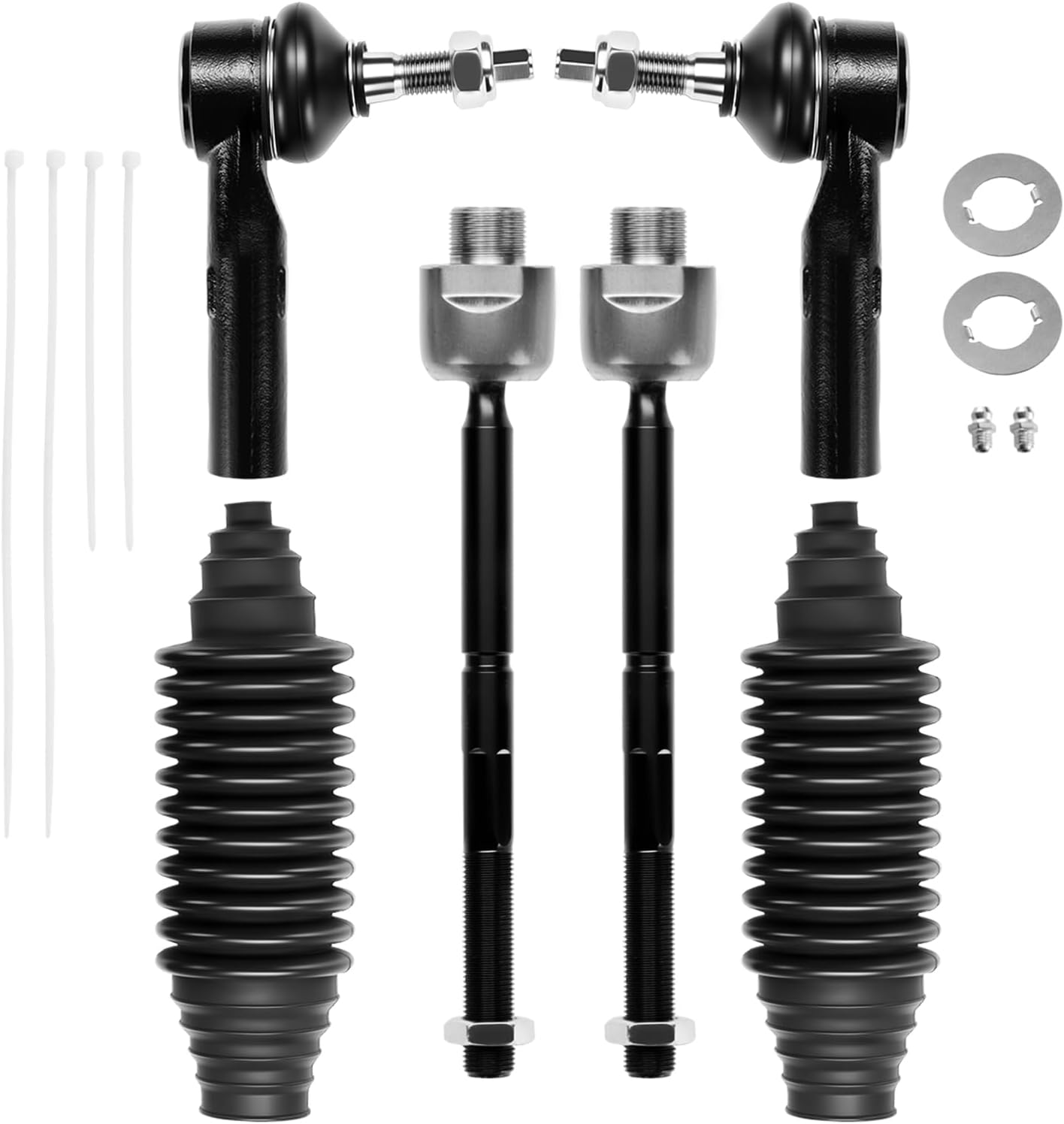
| Fitment | Dodge Dakota 2000–2004 4×4; Dodge Durango 2000–2003 4×4 |
|---|---|
| Kit contents | 2 inner tie rods, 2 outer tie rods, 2 rack boots, locking C-clamps |
| Material | AISI 1045 medium‑carbon steel |
| Part numbers referenced | Inner EV432; Outer ES3572 (passenger), ES3573 (driver) |
This BDFHYK 6-piece kit replaces the front inner and outer tie rods along with the rack boots and clamps to rebuild the steering linkage on 4×4 Dodge Dakota and Durango models. The kit is intended for direct fitment to the specified years and includes two inner tie rods, two outer tie rods (driver and passenger), and two steering rack boots with locking C-clamps. Built from 1045 medium-carbon steel with induction heat treatment, the parts aim to provide durable, stiff components that resist road debris and corrosion. For a driver, the practical benefits are restored steering responsiveness, reduced play and clunking, and more even tire wear once installed. Installation requires basic steering disassembly and a mandatory four-wheel alignment afterward. The kit does not include alignment or installation services and fitment is limited to 4×4 models in the stated year range, so verify your drivetrain before buying. For buyers who prefer low risk, this all-in-one kit reduces the chance of missing small components during a repair and matches common replacement part numbers for easier sourcing.
Best for: Buyers who want a low-risk, comprehensive steering linkage rebuild for the specified Dodge 4×4 models and value getting all required replacement pieces in one kit to avoid missing parts during a DIY repair or shop job.
Less Ideal for: Do not choose this if your vehicle is a 2WD Dakota or Durango or if you need a single part replacement rather than a full kit for the front linkage.
- Complete kit includes inner and outer tie rods plus rack boots and locking clamps so one purchase supplies all front steering linkage parts for the job
- Forged 1045 medium-carbon steel with induction heat treatment for stronger, more durable steering components
- Engineered for direct fit to Dodge Dakota 2000–2004 and Durango 2000–2003 4×4 models to simplify part selection
- Includes boots and clamps to reseal the rack and protect new joints from road contaminants
- Fitment is specific to 4×4 models in the listed years and will not fit 2WD vehicles
- No alignment or installation hardware beyond clamps is provided, and professional alignment is required after installation
Verdict: Choose this complete, forged-steel tie rod kit when you want a single, vehicle-specific package that restores steering precision on 2000–2004 Dakota and 2000–2003 Durango 4x4s.
Choosing the Right 1997-2004 Dodge Dakota Tie Rod End: Key Factors to Consider
Fitment and Thread Compatibility
Correct fitment is essential because mismatched threads or taper sizes can cause installation failure or unsafe steering behavior. Confirm thread pitch, stud taper type, and overall length relative to the original equipment part. Even small differences in thread engagement can lead to looseness or premature failure.
For the 1997-2004 Dodge Dakota, thread compatibility matters for both the steering knuckle connection and inner tie rod interface. Parts that match factory specifications let you maintain factory alignment settings and reduce the need for shims or adapters. When replacing either outer or inner tie rod ends, use parts that provide the same thread direction and engagement length to ensure secure clamping and predictable steering response.
Ball Stud and Joint Design
The internal joint design determines how much play the tie rod end develops over time. A well-machined ball stud with tight tolerances reduces initial lash and delays the onset of steering slop. Look for designs where the ball and socket are hardened and precisely fitted to maintain consistent steering effort and minimize vibration transfer to the steering wheel.
Joint geometry also affects steering feel; some designs favor smoother rotational movement while others prioritize load capacity. For a Dakota used on-road, prioritize smooth, low-play joints. For heavier-duty use, consider joints designed to handle higher lateral loads without excess deformation.
Sealing, Grease Retention, and Corrosion Resistance
Exposure to water, dirt, and road salt accelerates tie rod end wear. Quality sealing and grease retention extend service life by keeping contaminants out of the ball-and-socket. Look for robust rubber or polyurethane boots with secure clamps or molded flanges that resist splitting.
Corrosion-resistant finishes on the stud and housing, such as zinc plating or other protective coatings, help prevent thread and stud degradation. Greaseable fittings allow periodic lubrication and can dramatically increase longevity, especially if you drive in wet or salty environments. For Dakotas that see winter roads or off-highway use, prioritize sealing and corrosion resistance.
Durability and Load Capacity
Tie rod ends bear steering loads and react to impacts from potholes and uneven pavement. Materials and manufacturing processes that increase fatigue resistance will reduce the chance of unexpected failure. Evaluate claims or specifications about tensile strength, stud hardness, and housing construction when available.
Higher load capacity components are beneficial if you carry heavy loads, tow, or operate on rough roads. However, very stiff or oversized parts can transmit more NVH into the cabin, so balance load capacity with the intended use of your Dakota to avoid unnecessary harshness.
Serviceability and Maintenance
Parts that allow routine maintenance are easier to keep functional over many miles. Grease fittings, replaceable boots, and readily available replacement hardware simplify long-term upkeep. If a tie rod end is non-greasable and the boot fails, the entire assembly will likely need replacement sooner.
Also consider how the part affects alignment. Adjustable tie rod ends can speed pre-alignment adjustments during installation, while fixed-length replacements may require more steering column or inner tie rod adjustments. Ensure replacement parts do not impede normal alignment procedures for the Dakota.
Installation and Tool Requirements
Installation difficulty can influence overall cost and time. Some tie rod ends require a ball joint separator, impact tools, or specific pullers to remove the old unit without damaging the steering knuckle. Others provide tapered studs sized for straightforward press-fit installation.
Consider whether the replacement provides new nuts, washers, or locking hardware and if it requires re-using any factory parts. For do-it-yourselfers, choosing parts that match factory fit and include necessary hardware reduces the chance of extra trips to the shop and simplifies achieving proper fit and torque specifications.
Common Symptoms That Mean Replacement
Steering looseness, uneven tire wear on the front edges, or a clunking noise when driving over bumps are typical symptoms of worn tie rod ends on the 1997-2004 Dodge Dakota. You may also notice excessive free play at the steering wheel or wandering at highway speeds.
Visual inspection often reveals torn boots or noticeable play when the wheel is rocked back and forth while the vehicle is lifted. Addressing these symptoms early prevents accelerated wear of related steering and suspension parts and maintains safe handling.
- Steering wheel vibration or wandering at speed
- Uneven or cupped front tire wear
- Clunking or knocking noises from the front end
- Excessive free play when moving the steering wheel
Outer Vs Inner Tie Rod End Considerations
Outer tie rod ends connect directly to the steering knuckle and are typically the parts you inspect first for play. Inner tie rod ends attach to the steering rack and influence toe adjustments. When diagnosing a Dakota, check both; a loose outer end will often feel at the wheel, while inner end wear can cause subtle alignment drift.
Replacing only the outer end when the inner is worn can lead to repeated alignment issues. Consider inspecting the inner tie rod during service and replace both sides if there is any doubt about wear to ensure stable toe settings.
- Outer tie rod ends: easier to inspect, often greasable, critical for direct wheel control
- Inner tie rod ends: affect toe and alignment stability, may be harder to access
Alignment and Post-Installation Checks
Any tie rod end replacement will alter toe and steering geometry, so a professional alignment is necessary after installation. For the 1997-2004 Dodge Dakota, technicians will set toe and verify caster and camber are within tolerance to ensure the vehicle tracks straight and tires wear evenly.
If you install adjustable tie rod ends, perform a coarse alignment by matching the old part length before final tightening, then complete a professional alignment. Also check torque on all steering fasteners after a short test drive to ensure nothing has loosened.
- Always perform a full alignment after tie rod replacement
- Check torque on steering fasteners after initial road test
- Match replacement lengths to factory settings for quicker alignment
Tools and Prep for a DIY Replacement
DIY replacement of tie rod ends on a Dakota typically requires basic hand tools, a ball joint separator or pickle fork, torque wrench, and possibly a puller. A bench or shop press is rarely necessary for outer tie rod ends but may help when dealing with seized studs.
Prepare by measuring the existing tie rod length and marking the position to help preserve alignment. Have replacement hardware ready and a grease gun if the new units are greasable. Work safely with the vehicle securely supported on jack stands and follow torque specs for all fasteners.
- Essential tools: wrenches, ball joint separator, torque wrench, grease gun (if applicable)
- Measure and mark tie rod length before removal
- Support vehicle securely and follow torque specs
When to Choose Greasable Vs Sealed Units
Greasable tie rod ends allow periodic lubrication which can extend service life, especially if your Dakota sees wet or salty conditions. A grease zerk provides a maintenance interval you can control and can be worth the small extra effort during routine servicing.
Sealed units eliminate the need for periodic greasing and reduce the chance of over- or under-greasing, but when the boot fails the entire unit usually needs replacement. Choose greasable units if you perform regular under-vehicle maintenance; choose sealed units if you prefer a maintenance-free approach and expect moderate, non-corrosive conditions.
- Greasable: longer service life with regular maintenance
- Sealed: maintenance-free until boot failure, easier initial installation
Still looking for the perfect fit?
Select your Dodge Dakota configuration to see the most relevant Tie Rod Ends recommendations
How We Chose the Best 1997-2004 Dodge Dakota Tie Rod End
We selected candidates based on fitment accuracy for the 1997-2004 Dodge Dakota and on attributes that directly affect steering performance and longevity. Primary evaluation criteria included material quality and corrosion resistance, measured by housing and stud metallurgy and surface treatment; joint design and boot sealing for resistance to contamination and grease retention; measured tolerances and ball-stud fit to minimize play; and serviceability factors such as available replacement boots, adjustable vs fixed lengths, and compatibility with standard alignment procedures.We also weighed installation considerations like included hardware, thread pitch and taper compatibility with Dodge factory steering knuckles and inner tie rod assemblies, and whether the design required special tools. Longevity signals such as greaseable fittings and heavy-duty sealing scored higher. Exclusions applied to items that lacked clear fitment data for the 1997-2004 Dakota, parts intended only for off-road lift kits that alter steering geometry, or components that require additional modifications to the steering system.The end result is a list focused on steering tie rod ends that meet real-world durability and alignment needs for Dakota owners, emphasizing parts that reduce play and maintain factory steering geometry.
Our full evaluation process is outlined in our review methodology.
FAQ
How do I know if the outer tie rod end on my Dakota needs replacing?
Common signs include play at the steering wheel, clunking sounds when going over bumps, and uneven front tire wear. You can also safely lift the front end, grasp the tire at 3 and 9 o'clock, and rock it to feel for play that indicates a worn outer tie rod end.
Can I replace a tie rod end myself on a 1997-2004 Dodge Dakota?
Yes, many owners can perform the replacement with basic tools and a ball joint separator, provided they measure and match the length before removal and then get a professional alignment afterward. Ensure you follow safety procedures and torque specifications.
Will replacing tie rod ends fix steering wander on my Dakota?
If steering wander is caused by loose or worn tie rod ends, replacement will usually restore proper steering feel. However, wander can also result from worn wheel bearings, tires, or other suspension components, so inspect related parts as part of the diagnosis.
How soon should I get an alignment after installing new tie rod ends?
You should have a full alignment performed immediately after installation or at least before driving long distances. New tie rod ends change toe settings and a prompt alignment ensures stable tracking and prevents premature tire wear.
Are greasable tie rod ends better for Dakotas driven in winter?
Often yes. Greasable units allow you to add fresh lubricant after exposure to winter moisture and road salt, which can prolong service life compared with sealed units that may fail sooner if the boot is compromised.
What does a torn boot mean for a tie rod end's condition?
A torn boot allows dirt and water into the joint, accelerating wear and often signaling the need for replacement. If the boot is torn but the joint still has tight movement, replacing or repairing the boot can be a short-term fix, but most owners replace the entire tie rod end to ensure long-term reliability.
Final Verdict
When selecting tie rod ends for a 1997-2004 Dodge Dakota, prioritize correct fitment and a robust joint and sealing design. These elements most directly affect steering precision and service life. Balance greasable versus sealed designs based on your maintenance habits and local driving conditions.Ultimately, choose parts that preserve factory steering geometry and make post-installation alignment straightforward. That approach minimizes repeated service and keeps the Dakota tracking straight and safe for many miles.
Explore More:
- Check out all Dodge Dakota parts & accessories
- Explore Tie Rod Ends Maintenance & Repair Guides
- Explore Suspension & Steering
- Browse all Auto Parts
