

Note: This article contains affiliate links. If you click on these links and make a purchase, I may earn a small commission at no extra cost to you. This helps support my research and content. Read my full affiliate disclosure here.
If your Santa Cruz is showing rough idle, reduced fuel economy, or an illuminated check engine light, the oxygen sensor is a common culprit. Choosing the right Hyundai Santa Cruz oxygen sensor matters because the sensor directly impacts air-fuel control, emissions, and how the engine performs under load. The right replacement can restore driveability and prevent repeated trips to diagnostics.This guide shortlists five top options selected for compatibility with the Santa Cruz and evaluates them by fitment, sensor response, and long-term durability. Read on to understand the decision factors and practical steps for replacing or testing an O2 sensor on your vehicle.
Looking for other parts? See all Hyundai Santa Cruz parts & accessories.
Top Picks at a Glance
| Best Quality Built to a higher standard if you want something more solid | QIJIAUTO Downstream 4-Wire Oxygen Sensor for Genesis G70 (250-241276) |  |
| Best Budget The cheapest option that still gets the job done reliably | A-Premium Heated Oxygen Sensor (Threaded) |  |
| Highest Rated A top-rated pick with lots of positive feedback | A-Premium Downstream Heated O2 Oxygen Sensor (Threaded, 4-Wire) |  |
| Most Popular A crowd favorite that many people choose with confidence | DrCax 234-4238 Heated Downstream Oxygen O2 Sensor |  |
| Best Seller A high-volume bestseller chosen again and again | AZHZ Heated Oxygen Sensor 234-5714 (Replacement) |  |
1. QIJIAUTO Downstream 4-Wire Oxygen Sensor for Genesis G70 (250-241276)

| Measurement Accuracy | ±1% |
|---|---|
| Mounting Type | Threaded Mount |
| Output Type | electrical signal |
| Upper Temperature Rating | 140 °C |
| Material Type | Silver Alloy |
This QIJIAUTO downstream O2 sensor is a direct-replacement, 4-wire unit built to restore the vehicle's exhaust oxygen readings and help the engine control unit correct fueling. It uses a ceramic sensing element for fast response and a threaded mount for straightforward installation in the tailpipe location. The sensor's PTFE-insulated wiring and stainless external shield increase resistance to heat, corrosion, and vibration, which helps longevity in hot under-hood and exhaust conditions. Typical use is replacing a failed downstream sensor to clear check-engine lights, smooth idle behavior, and return fuel-trim behavior to expected ranges. Practical benefits include plug-and-play electrical compatibility when the OE reference matches and faster lambda feedback versus a degraded sensor. Limitations are that it is an aftermarket replacement rather than a factory part and correct fitment depends on matching year, engine code, and OE number before purchase. Also the product listing has limited long-term field data compared with established OE suppliers.
Best for: Drivers seeking a responsive downstream sensor to restore engine fueling and emissions control on a tuned or performance-focused Hyundai, prioritizing quick lambda feedback and durable construction.
Less Ideal for: People who want an OEM-made sensor with long-term manufacturer track record or those unwilling to verify exact OE match and vehicle engine code before installing.
- Direct-replacement 4-wire design intended to match factory electrical connector and mounting
- High-sensitivity dual-layer ceramic sensing element for rapid oxygen detection
- PTFE-insulated wiring and stainless external shield improve thermal and vibration durability
- Threaded mount simplifies installation in downstream/tailpipe location
- Aftermarket part rather than a factory-manufacturer sensor
- Fitment requires confirming OE reference and vehicle engine code before ordering
Verdict: Choose this downstream 4-wire sensor if you want a fast-responding, thermally durable aftermarket replacement to help a performance-focused Hyundai maintain accurate fuel trims and emissions control.
2. A-Premium Heated Oxygen Sensor (Threaded)

| Maximum Supply Voltage | 5 volts |
|---|---|
| Output Type | Analog |
| Mounting Type | Threaded |
| Upper Temperature Rating | 1200 °C |
| Wire Quantity | 4 |
This A-Premium heated oxygen sensor replaces a factory downstream or upstream unit depending on fitment and provides real-time analog output to the engine control system for air-fuel ratio correction. It is a four-wire, threaded sensor with a built-in heater for faster warm-up and stainless steel construction for corrosion resistance. Typical use is direct replacement during exhaust/service repairs to restore proper fuel trim and idle quality or to clear a check engine code related to oxygen sensors. The sensor supports a 5 volt supply and claims high measurement accuracy across a modest measuring range, and it is rated to withstand high exhaust temperatures up to 1200 C. Installation is straightforward for anyone comfortable with basic hand tools, though correct position (upstream vs downstream, front vs rear) must match the vehicle application. The product offers a practical, budget-focused alternative to factory parts, but buyers should verify exact vehicle fitment before purchase and expect basic packaging without dealer-grade support beyond the seller's one-year item-cost guarantee.
Best for: Buyers replacing a failed oxygen sensor on a Hyundai or Kia who want a low-cost, practical replacement that restores normal fuel control without paying for dealer parts.
Less Ideal for: Drivers seeking a factory-authorized part or extended vehicle-specific support should consider OEM sensors or dealer-sourced alternatives.
- Heated four-wire design for faster sensor warm-up and reliable closed-loop operation
- Stainless steel construction and high temperature rating for durability in exhaust conditions
- Threaded mounting and standard connector simplify direct replacement installs
- Analog output and documented supply voltage make it compatible with factory engine controls
- Fitment varies by model and position so you must confirm exact vehicle/location before installing
Verdict: A budget-minded, heated four-wire replacement sensor that restores proper closed-loop fuel control when matched to the correct Hyundai or Kia fitment.
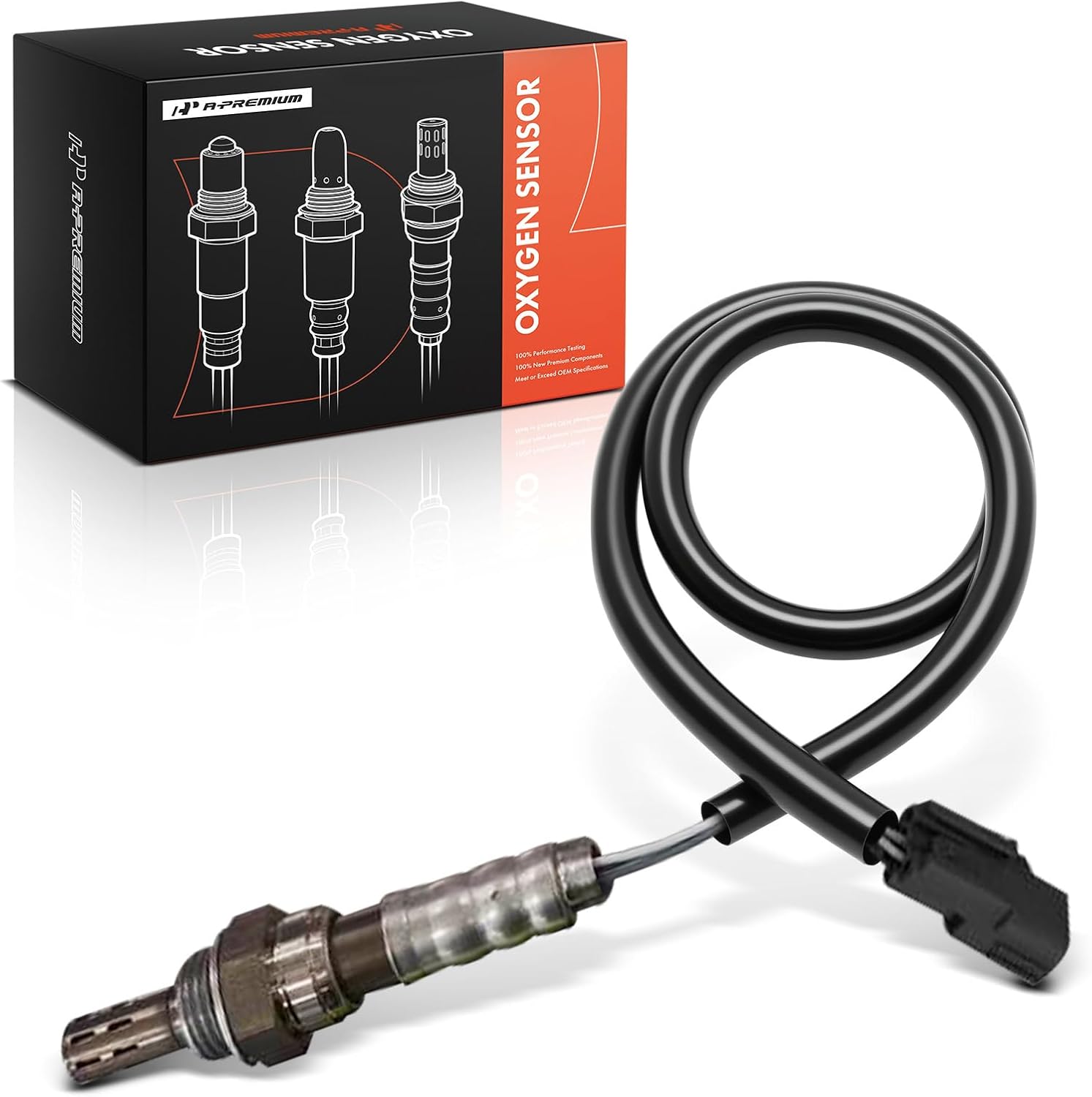
3. A-Premium Downstream Heated O2 Oxygen Sensor (Threaded, 4-Wire)
| Wire Quantity | 4 |
|---|---|
| Sensor Type | Heated |
| Mounting Type | Threaded |
| Connector Gender | Female |
This A-Premium downstream O2 sensor is a direct-fit replacement for select Hyundai and Kia 2.5L naturally aspirated models and installs in the exhaust after the catalytic converter. It is a heated, threaded 4-wire sensor that monitors post-cat oxygen levels so the engine control unit can adjust fuel trim and maintain emissions performance. Typical use is a one-for-one swap to cure a check engine light tied to a bad downstream sensor or to restore correct fuel control after sensor failure. Notable features include the heated element for faster warm-up, a female threaded connector that matches factory wiring, and a boxed single-sensor package for straightforward installation. In practice the sensor returns the vehicle to stable fuel trim and helps pass emissions testing when the original unit has failed. Limitations are that it fits only the listed 2.5L naturally aspirated Santa Cruz, Santa Fe, Tucson, Sorento, and Sportage model years and will not work on turbocharged or differently configured engines; buyers should verify the reference number and connector before ordering.
Best for: Buyers who prioritize restoring factory-level emissions control and dependable long-term operation on supported Hyundai Santa Cruz and related 2.5L naturally aspirated vehicles.
Less Ideal for: Drivers with turbocharged engines, different displacement or model years outside the listed range, or those needing an upstream/pre-cat sensor should look elsewhere.
- Direct-fit downstream replacement for specified Hyundai and Kia 2.5L naturally aspirated models
- Heated 4-wire design provides faster sensor warm-up and reliable oxygen readings
- Threaded mounting and matching female connector simplify installation with no special tools
- Packaged as a single boxed unit with a one-year unlimited-mileage guarantee
- Compatibility limited to listed naturally aspirated 2.5L applications and downstream position only
Verdict: If you need a reliable downstream replacement to restore proper emissions and fuel trim on supported 2.5L naturally aspirated Hyundai Santa Cruz models, this heated 4-wire sensor is a practical choice.
4. DrCax 234-4238 Heated Downstream Oxygen O2 Sensor

| Maximum Supply Voltage | 12 volts DC |
|---|---|
| Measurement Accuracy | ±1% |
| Mounting Type | Flange Mount |
| Output Type | NPN, PNP, Push-Pull |
| Upper Temperature Rating | 500 °C |
This DrCax heated downstream oxygen sensor measures exhaust oxygen and reports air-fuel ratio to the engine control system, helping the vehicle maintain proper combustion and emissions. It installs via a flange mount and offers NPN/PNP/push-pull output so it can interface with most engine management inputs that expect a standard downstream sensor. The stainless steel construction and 500 C temperature rating mean it is built to tolerate exhaust conditions, and the built-in heater shortens warm-up time for reliable readings after cold starts. In practice this part is used to replace a failing downstream sensor to restore fuel trim behavior and reduce emissions-related drivability issues. It follows common OEM equivalent part numbers and is reported to meet OE-level design, which simplifies installation and compatibility checks. Keep in mind this listing is a direct replacement component so electrical connector and exact fitment should be verified against your vehicle before purchase, and if your vehicle requires a different upstream/downstream position you must choose the correct sensor application.
Best for: Buyers who want a factory-style downstream oxygen sensor replacement that restores proper fuel trim and emissions behavior while relying on documented compatibility and community feedback.
Less Ideal for: People seeking a universal sensor for multiple vehicle types or a sensor with extended warranty and premium manufacturer support should consider other options.
- Heated element reduces warm-up time for accurate readings on cold starts
- Stainless steel construction with 500 C rating for durability in exhaust environments
- Outputs NPN, PNP, and push-pull signals to match common engine control inputs
- Built to match common OEM equivalent part numbers for straightforward replacement
- Fitment and connector compatibility must be verified for exact vehicle application
- One-year warranty is limited compared with longer coverage some brands offer
Verdict: Choose this DrCax heated downstream O2 sensor if you want a factory-style replacement that quickly restores correct air-fuel monitoring and emissions performance with proven compatibility references.
5. AZHZ Heated Oxygen Sensor 234-5714 (Replacement)

| Mounting Type | Threaded |
|---|---|
| Output Type | Push-Pull |
| Specific Uses For Product | automotive |
| Material Type | beaded |
| Wire Quantity | 5 Wires |
This AZHZ heated oxygen sensor is a direct-replacement style sensor for specific Hyundai and Kia 2.0L–2.4L and 1.6L applications and is sold as a single unit. It installs in a threaded bung and uses a five-wire connector with a built-in heater to bring the sensor up to operating temperature quickly, which helps the engine computer get accurate readings sooner after cold starts. Typical use is replacing a failed upstream or downstream O2 sensor to clear check engine lights, restore proper fuel trim behavior, and recover fuel economy and drivability. The sensor is marketed with heat-welded sealing and a preformed wiring harness; those features suggest reasonable resilience to exhaust heat and straightforward plug-in fitment when the connector matches. Limitations are that fitment must be confirmed against the plug and OEM part numbers because connector and wire lengths vary between models, and this is an aftermarket part so long-term durability may differ from a factory-quality sensor.
Best for: Buyers seeking a low-risk, practical replacement O2 sensor who prioritize restoring normal engine operation and fuel economy with a straightforward install and who will verify plug compatibility before fitting.
Less Ideal for: Shoppers wanting an exact factory-quality lifetime solution or those who cannot verify connector and harness match should consider OEM sensors or buying through a dealer to ensure perfect fitment.
- Heated element with five-wire design accelerates warm-up for accurate readings after cold starts.
- Threaded mounting and common connector style enable straightforward replacement when plug matches.
- Manufacturer notes improved sealing via high-heat welding for better resistance to exhaust conditions.
- Fitment requires careful comparison of the plug shape and wire lengths to the vehicle harness before purchase.
Verdict: A practical heated replacement oxygen sensor that brings fast warm-up and straightforward threaded installation for restoring proper engine performance when the connector and fitment are confirmed.
Choosing the Right Hyundai Santa Cruz Oxygen Sensor: Key Factors to Consider
Correct Fitment and Connector Type
A sensor that matches the Santa Cruz's exhaust flange, thread size, and electrical connector reduces installation time and avoids harness splices. Using the correct fitment ensures the sensor sits in the intended sampling location so the ECU receives accurate oxygen readings.
If the connector or thread differs, you risk poor sealing, water intrusion, or intermittent signals that can trigger check engine light oxygen sensor codes. Confirming OEM-style connector and thread pitch is a practical step that prevents common installation headaches and maintains the vehicle's emissions containment.
Upstream Vs Downstream Placement
Santa Cruz engines rely on one or more upstream sensors to control air-fuel ratio and downstream sensors to monitor catalytic converter performance. Choosing a sensor specified for the upstream position means it will have the appropriate response characteristics and often includes a heater element for quicker warm-up.
Downstream sensors can have different life expectations and signal behavior because they measure converter efficiency rather than direct combustion. Installing the wrong type in the opposite position can confuse long-term fuel trim data and lead to recurring oxygen sensor codes such as bank 1 sensor 1 alerts.
Heated Element and Warm-Up Time
A heated oxygen sensor reaches operating temperature faster, allowing the ECU to switch from open-loop to closed-loop fueling sooner after startup. Faster warm-up improves cold-start emissions control and reduces rough idle during the initial minutes of driving on the Santa Cruz.
Check for heater circuit reliability and connector design. If the Santa Cruz requires a heated unit in that position, choosing an unheated sensor will delay proper fueling adjustments and could trigger O2 sensor-related fault codes during diagnostics.
Response Time and Signal Stability
A sensor's ability to respond quickly to changes in exhaust oxygen content affects fuel trim and throttle response. Faster response time helps the Santa Cruz ECU make timely injection adjustments, preventing bogging or hesitation under load.
Stable voltage output under normal operating conditions makes diagnostics simpler and reduces the chance of intermittent drivability issues. Look for specifications or test data that indicate consistent response across a range of temperatures and exhaust conditions.
Durability and Environmental Protection
Sensors are exposed to heat cycles, road debris, and corrosive gases. A sensor with a corrosion-resistant housing, robust sealing, and strain-relieved wiring will last longer on a Santa Cruz that sees varied climates or rough roads.
Durable construction lowers the chance of wiring failures and poor ground paths that can mimic sensor failure. Consider units rated for high heat and salt exposure if you drive in winter or coastal areas.
Diagnostic Compatibility and Emission Standards
The replacement sensor must provide signals the Santa Cruz's ECU expects so emission monitoring routines operate correctly. A sensor that drifts, has slow response, or uses a different output characteristic can cause false codes such as oxygen sensor code P0135 or persistent check engine light oxygen sensor alerts.
Confirm the sensor supports the vehicle's on-board diagnostics and emission control strategies. Sensors that closely match OE electrical characteristics reduce the likelihood of repeated diagnostics after replacement.
Common O2 Sensor Symptoms on the Santa Cruz
Several telltale symptoms can point to a failing oxygen sensor in the Santa Cruz. Look for sustained rough idle, hesitant acceleration, or a sudden drop in fuel economy. These conditions often coincide with an illuminated check engine light and stored oxygen-related diagnostic trouble codes.
Other symptoms include persistent black smoke from the tailpipe, strong gasoline smell at idle, or difficulty maintaining cruise speed. Downstream sensor issues may not cause drivability problems immediately but can trigger catalytic converter monitoring faults over time.
- Rough idle or stalling shortly after startup
- Reduced fuel economy across typical drives
- Check engine light with oxygen-related codes
- Black exhaust or strong fuel odor
- Intermittent hesitation under throttle
How to Test an Oxygen Sensor on a Santa Cruz
Basic diagnostics start with reading freeze frame data and stored codes to identify whether the issue is bank 1 sensor 1 or a downstream monitor. For a hands-on check, you can monitor the sensor voltage at the connector with a multimeter while the engine is at operating temperature or use a scan tool to observe live PID data.
A functioning upstream sensor should switch rapidly between low and high voltage as the engine moves from richer to leaner conditions. Check the heater circuit for continuity and proper voltage at startup. If you observe slow switching, a stuck voltage, or an open heater circuit, replacement is typically warranted.
- Scan for P0xxx codes and identify bank/sensor numbers
- Check heater circuit continuity and voltage
- Monitor live voltage switching for upstream sensors
- Inspect wiring and connector for damage or corrosion
Installation Tips for Santa Cruz Owners
When you install a replacement sensor, work from a cool exhaust and use an oxygen-sensor socket or appropriate crowfoot to avoid damaging the sensor body. Apply anti-seize only where specified and avoid getting it on the sensor tip. Ensure the wiring is routed away from hot exhaust components and secured with OEM-style clips.
Torque the sensor to the manufacturer's specification and confirm the connector seats fully. After installation, clear codes and perform a short drive cycle to allow the ECU to relearn fuel trims and run readiness monitors. If the check engine light returns, re-scan to verify whether new codes appear.
- Use the correct socket and avoid contaminating the sensor tip
- Secure wiring away from heat and moving parts
- Torque to spec and reconnect the electrical connector
- Clear codes and run a drive cycle to verify repair
When to Replace Upstream Vs Downstream Sensors
Upstream sensors directly affect air-fuel control and typically show clear drivability symptoms when failing. Replace upstream units when you see unstable fuel trims, slow voltage switching, or persistent lean/rich running conditions.
Downstream sensors are primarily used to monitor catalytic converter performance. Replace downstream sensors if you have failed converter efficiency tests, persistent downstream voltage anomalies, or when the sensor's heater circuit fails and triggers emissions-related codes.
- Replace upstream sensors for drivability and fuel trim problems
- Replace downstream sensors for catalytic performance and emissions faults
- Address heater circuit failures regardless of apparent drivability symptoms
Preventive Maintenance and Longevity
Regular inspection of the exhaust system and wiring helps prolong sensor life. Fix exhaust leaks and oil or coolant consumption that can contaminate the sensor tip. Keep the underside of the Santa Cruz clean of road salt and debris to reduce corrosion of sensor threads and connectors.
If you do frequent short trips, consider sensors with robust heater circuits to reduce warm-up cycles and stress. Document maintenance and replacements so future diagnostics can consider the age of the sensor as part of troubleshooting.
- Repair exhaust leaks promptly
- Address oil or coolant leaks that can foul sensors
- Use sensors with strong heater circuits for frequent short-trip use
- Keep connector contacts clean and protected from moisture
How We Chose the Best Hyundai Santa Cruz Oxygen Sensor
We focused on criteria that matter specifically for the Hyundai Santa Cruz and oxygen-sensor replacement scenarios. Primary filters included exact fitment to the Santa Cruz exhaust layout and connector type, correct heated or unheated design per factory specification, and proper upstream or downstream placement where applicable. We prioritized sensors with solid longevity indicators such as robust heater circuits, corrosion-resistant housings, and vibration-resistant wiring that align with the Santa Cruz's underbody and exhaust routing.Performance-related criteria included sensor response time and voltage stability because these affect fuel trim and drivability. Emissions compliance and compatibility with the vehicle's ECU were considered to reduce the chance of lingering fault codes. Ease of installation and the availability of service information or OE-style connectors were also part of the evaluation. We excluded universal-fit units that require splicing, modified harnesses, or extensive fabrication. Units without clear specification of heated vs unheated or lacking long-term durability data were also omitted. The result is a curated list emphasizing correct fit, reliable operation, and straightforward installation for Santa Cruz owners.
Our full evaluation process is outlined in our review methodology.
FAQ
What does a failing oxygen sensor feel like when driving my Santa Cruz?
You may notice rough idle, hesitation during acceleration, or reduced fuel economy. Symptoms often appear gradually and are usually accompanied by a check engine light showing oxygen-related trouble codes.
Can I test the Santa Cruz oxygen sensor without special tools?
Basic checks like scanning for codes and visually inspecting wiring can be done with minimal tools. For accurate voltage response or heater circuit testing, a multimeter or OBD-II scan tool with live data is recommended.
Does a check engine light always mean the oxygen sensor needs replacement?
Not always. The check engine light can indicate wiring issues, connector corrosion, or exhaust leaks that affect sensor readings. Proper diagnosis should include verifying heater circuits and live sensor response before replacing parts.
How long does a typical O2 sensor last on a Santa Cruz?
Lifespan depends on driving habits and environment. Many sensors last several years under normal use, but exposure to contaminants, frequent short trips, or harsh road conditions can shorten service life.
Will replacing the oxygen sensor clear the bank 1 sensor 1 code immediately?
Replacing a faulty sensor often clears the condition, but you should clear the code and run a drive cycle to let the ECU relearn. If underlying issues like exhaust leaks remain, the code may return.
Is it necessary to use a heated sensor when the Santa Cruz originally had one?
Yes. If the original position includes a heater circuit, replacing it with an unheated sensor can delay proper closed-loop operation and trigger diagnostic faults. Match the original heated or unheated specification.
Final Verdict
Prioritize fitment, heater function, and response characteristics when selecting a replacement oxygen sensor for the Hyundai Santa Cruz. Correct upstream sensors restore fuel trim accuracy and drivability while proper downstream units ensure catalytic monitoring and emissions compliance. Consider environmental exposure and wiring condition to choose a sensor that will last in real-world Santa Cruz use.Focus on sensors that match the Santa Cruz's connector and thread specifications, have reliable heater circuits where required, and demonstrate stable signal behavior. That approach minimizes repeat diagnostics and gets your vehicle back to smooth, economical operation quickly.
Explore More:
- Check out all Hyundai Santa Cruz parts & accessories
- Explore Oxygen Sensors Maintenance & Repair Guides
- Explore Engine
- Browse all Auto Parts
