

Note: This article contains affiliate links. If you click on these links and make a purchase, I may earn a small commission at no extra cost to you. This helps support my research and content. Read my full affiliate disclosure here.
If your 2009-2013 Subaru Forester is showing rough idle, reduced fuel economy, or a persistent check engine light, a failing oxygen sensor is a common cause. Choosing the right oxygen sensor matters because the part affects engine management, emissions control, and how the fuel trim adapts to driving conditions. The right replacement can return throttle response and MPG to expected levels and prevent long-term damage to catalytic components.This guide covers our top shortlisted oxygen sensors compatible with the 2009-2013 Forester. We focus on fitment, sensor response and durability, and how each choice will influence engine diagnostics and daily driving. Read on for practical buying guidance and answers to common Forester-specific questions before you pick a replacement.
Looking for other parts? See all Subaru Forester parts & accessories.
Top Picks at a Glance
| Best Overall The best all-around choice for most situations | Automotive-leader 234-9109 Upstream Heated Oxygen (O2) Sensor |  |
| Best Quality Built to a higher standard if you want something more solid | Bosch 18080 Premium Fit Oxygen Sensor (Direct Fit) |  |
| Best Value The sweet spot between price and what you get | NTLTPYY Upstream & Downstream O2 Oxygen Sensor Set for Subaru Forester 2.5L (2011–2013) and Impreza/XV Crosstrek 2.0L (2012–2014) |  |
| Best Budget The cheapest option that still gets the job done reliably | A-Premium Downstream Heated O2 Oxygen Sensor (compatible with Subaru) |  |
| Highest Rated A top-rated pick with lots of positive feedback | Denso Air/Fuel Ratio Sensor 234-9109 |  |
| Most Popular A crowd favorite that many people choose with confidence | Denso 234-4445 Replacement Oxygen (O2) Sensor |  |
| Best Seller A high-volume bestseller chosen again and again | A-Premium Upstream & Downstream Heated O2 Oxygen Sensor 2-Pack |  |
1. Automotive-leader 234-9109 Upstream Heated Oxygen (O2) Sensor

| Placement on Vehicle | Upstream, Front, Pre-cat |
|---|---|
| Sensor Type | Heated |
| Wire Count | 4-Wire |
| Interchange Part Number | 234-9109 / 22641-AA610 |
This Automotive-leader 234-9109 upstream heated oxygen sensor is a direct-replacement part intended for the front (pre-cat) sensor location on specified Subaru Forester, Impreza, and XV Crosstrek engines. It uses a four-wire heated design and stainless steel construction to shorten light-off time and restore accurate oxygen readings for the engine control unit. In practice the sensor plugs into the factory wiring harness and is used to correct fuel trim, improve fuel economy, and reduce emissions when an original sensor fails. The listing notes OEM-style internal materials and a short harness for straightforward installation; buyers should still verify the exact part number and bank/sensor position before ordering. Limits include the specific fitment to certain model years and engine types and the short harness length that may complicate routing in some repairs. For routine replacement of a failing upstream O2 sensor on the covered Subaru models this unit provides a practical, affordable option that aims to match factory performance.
Best for: Buyers seeking an affordable, direct-fit upstream oxygen sensor to restore proper fuel control and emissions performance on covered Subaru Forester, Impreza, and XV Crosstrek models.
Less Ideal for: People who need universal fitment, long-harness replacements, or sensors for vehicles outside the specified Subaru model years should look for alternatives tailored to their application.
- Direct plug-in replacement for listed Subaru upstream sensor locations
- Heated 4-wire design reduces warm-up time and helps the ECU reach closed-loop operation faster
- Stainless steel construction and OEM-style sensor element aimed at stable, factory-like performance
- Supplied with a harness and explicit interchange numbers to verify fitment
- Wire harness length is relatively short which may limit routing options during some installations
Verdict: A practical, factory-style upstream heated O2 sensor replacement for Subaru owners who want an affordable direct-fit fix to restore fuel economy and emissions control.
2. Bosch 18080 Premium Fit Oxygen Sensor (Direct Fit)

| Mounting Type | Flange Mount |
|---|---|
| Output Type | NPN, PNP, Push-Pull |
| Material Type | Stainless Steel |
| Included Components | Oxygen Sensor |
This Bosch 18080 oxygen sensor is a direct-fit replacement intended to monitor exhaust oxygen and help the engine control unit maintain the correct air-fuel ratio. It installs using the factory-style flange and OE-style connector, so it is suitable for quick swaps without splicing or adapter harnesses. The stainless steel body and fast-acting heater mean the sensor reaches operating temperature quickly and resists exhaust corrosion for longer service life. In practice this improves fuel trim responsiveness and can prevent catalytic converter damage that stems from a failing sensor. Installation is simplified by pre-coated threads and a ready-to-plug harness, and the unit is fully tested at the factory. The main limitations are that fitment is specific to select Subaru Forester, Impreza, and WRX years and engine variants so you must confirm sensor location and engine compatibility, and some users may prefer multi-pack options if replacing multiple sensors at once.
Best for: Drivers focused on restoring or maintaining precise engine performance on a 2009–2013 Subaru Forester who want a factory-style replacement that plugs in without modifications.
Less Ideal for: If you need multiple sensors for a full system service and prefer bulk purchasing, single-unit retail packaging may be inconvenient; also not for users seeking universal or performance-tuned wideband sensors.
- Direct-fit flange and OEM-style connector for straightforward installation
- Fast-acting heater shortens warm-up time for accurate readings sooner
- Stainless steel, submersible body resists exhaust corrosion for longer life
- Pre-coated threads with anti-seize reduce installation hassle and thread damage
- Compatible only with specific Subaru models and engine configurations so fitment must be verified
Verdict: Choose this Bosch direct-fit oxygen sensor to quickly restore accurate air-fuel control on the specified Subaru models with a factory-style, ready-to-install replacement.
3. NTLTPYY Upstream & Downstream O2 Oxygen Sensor Set for Subaru Forester 2.5L (2011–2013) and Impreza/XV Crosstrek 2.0L (2012–2014)

| Fitment | Subaru Forester 2.5L 2011-2013; Impreza/XV Crosstrek 2.0L 2012-2014 |
|---|---|
| Replaces | Upstream 234-9109 / 22641-AA610; Downstream 234-4513 / 22690-AA96A |
| Brand | NTLTPYY |
| Manufacturer Part Number | GZLF-US-OS-38 |
This NTLTPYY sensor kit supplies both the upstream (pre-cat) and downstream (post-cat) oxygen sensors matched to Subaru applications, so you can replace both at once during a repair. The sensors are direct-fit replacements for the listed part numbers, plug into the factory harness without modification, and report oxygen levels to the engine control unit for accurate fuel trim adjustments. In practice the set is useful for clearing lean/rich drivability issues, resolving check engine codes tied to O2 sensor faults, and restoring fuel economy that can suffer with aging sensors. Packaging and images indicate OEM-style connectors and heat-shielded housings that should withstand typical under-hood temperatures. Buyers should note this is an aftermarket replacement rather than a dealer part and long-term durability can vary compared with higher-end branded sensors, so expect typical lifespan trade-offs versus premium options. Installation is straightforward for anyone comfortable with basic under-vehicle work or for a local shop to handle quickly.
Best for: Practical owners who want an affordable, do-it-yourself repair that restores factory-level sensor function and avoids needless dealer visits.
Less Ideal for: Drivers seeking the longest possible service life from a premium supplier or those who prefer factory-sourced parts for warranty-backed replacements.
- Includes both upstream and downstream sensors for a complete repair
- Direct-fit design that connects to factory wiring without modifications
- Replaces specific Subaru part numbers for straightforward vehicle matching
- Helps restore correct fuel trims, drivability, and engine efficiency
- Aftermarket unit so long-term durability may not match premium OEM-equivalent brands
Verdict: A budget-friendly direct-fit sensor pair that lets you replace both O2 sensors at once to quickly restore proper engine fueling on the specified Subaru models.
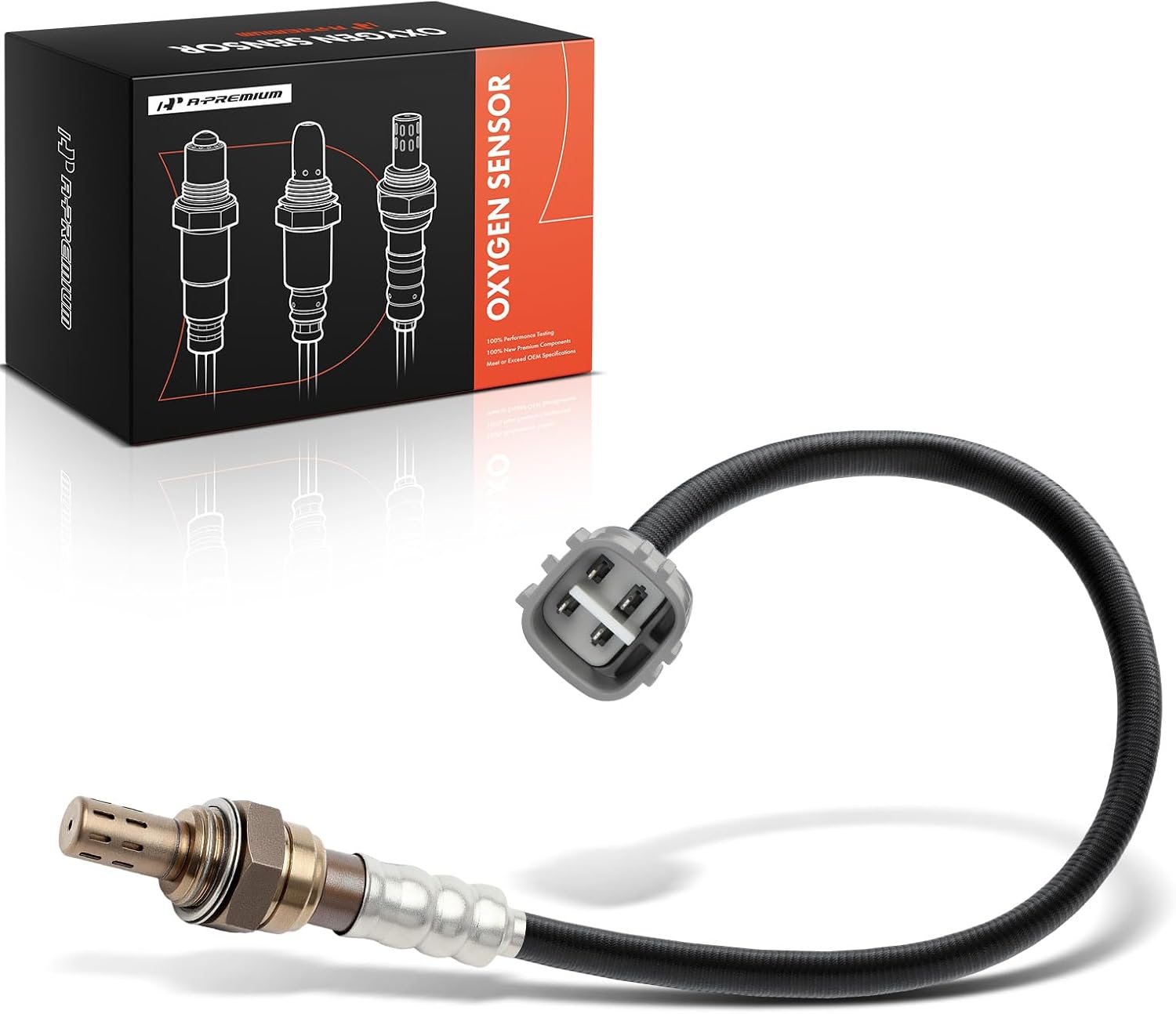
4. A-Premium Downstream Heated O2 Oxygen Sensor (compatible with Subaru)
| Measuring Range | -40°C to 800°C |
|---|---|
| Mounting Type | Threaded |
| Sensor Type | Heated |
| Output Type | Physical |
This downstream heated O2 sensor measures exhaust oxygen and sends that data to the vehicle’s engine management system to help the ECU adjust fuel trim and reduce emissions. It is a direct-fit style threaded sensor with a four-wire heated design and a factory-style male connector, so installation is the same basic process as replacing a factory downstream sensor. Buyers will appreciate the high temperature rating and stainless steel construction for corrosion resistance under exhaust conditions. Typical use is as a replacement sensor after a check-engine light or failed emissions test; it is intended for emission control and cruise/fuel-trim stabilization rather than primary combustion tuning. Expect straightforward bolt-in installation for compatible Forester years, but professional installation may still be needed if access or exhaust removal is required. The product comes with a one-year unlimited-mileage guarantee, but note that fitment is limited to the listed Subaru applications and this is an aftermarket alternative rather than a factory-branded part.
Best for: Drivers seeking an affordable, direct-replacement downstream oxygen sensor for emissions repair or to clear a check-engine code on compatible Forester years who prioritize cost-effective, reliable replacements.
Less Ideal for: Those who require factory-branded parts for warranty or long-term OEM parity or owners looking for performance tuning sensors with advanced calibration should look elsewhere.
- Heated four-wire design provides faster warm-up and stable sensor readings
- Threaded, direct-replacement form factor for straightforward installation
- Stainless steel and high temperature rating for durability in exhaust environments
- One-year unlimited-mileage guarantee for basic purchase protection
- Aftermarket part may vary slightly from factory sensor in long-term longevity
Verdict: A budget-friendly, heated downstream oxygen sensor that delivers straightforward fit-and-forget replacement performance for compatible Subaru Forester models.
5. Denso Air/Fuel Ratio Sensor 234-9109

| Measurement Accuracy | ±1% |
|---|---|
| Measuring Range | 12:1 – 18:1 |
| Mounting Type | Threaded Mount |
| Output Type | NPN |
| Material Type | Stainless Steel, Zirconium |
The Denso 234-9109 is a wide-band air/fuel ratio sensor built to replace the factory unit on compatible Subaru models. It measures air/fuel ratios across a 12:1 to 18:1 range with ±1% accuracy and uses a threaded mount and four-wire harness for a straightforward swap. In typical use it feeds precise mixture data to the engine control module so fuel trims, emissions control, and catalytic converter performance remain within design targets. Notable features include stainless steel and zirconium construction for durability and a factory-quality design intended for first-time fit. The practical benefits are improved fuel efficiency and more consistent engine performance compared with a degraded sensor, plus reduced risk of catalytic damage from long-term lean or rich conditions. Limitations are that this is a vehicle-specific replacement for the listed Subaru models and it requires correct installation and connector routing; it does not address upstream wiring or ECU issues that can mimic sensor failure.
Best for: Buyers who prioritize dependable, factory-quality replacement parts to restore accurate air/fuel monitoring and protect engine and emissions components on their Subaru.
Less Ideal for: People looking for a universal or multi-vehicle sensor or those who need to diagnose wiring or ECU faults rather than replace the sensor itself.
- Wide-band measurement with a 12:1 to 18:1 range and ±1% accuracy for reliable readings
- Manufactured from stainless steel and zirconium for corrosion resistance and longevity
- Threaded mount and four-wire harness designed for direct replacement and straightforward installation
- Designed and tested to factory-quality standards for a first-time fit
- Fitment is specific to the listed Subaru model years so it is not a universal sensor
Verdict: Choose this Denso wide-band sensor when you want a factory-quality, direct-fit replacement that restores accurate air/fuel readings and helps protect engine performance on the specified Subaru models.
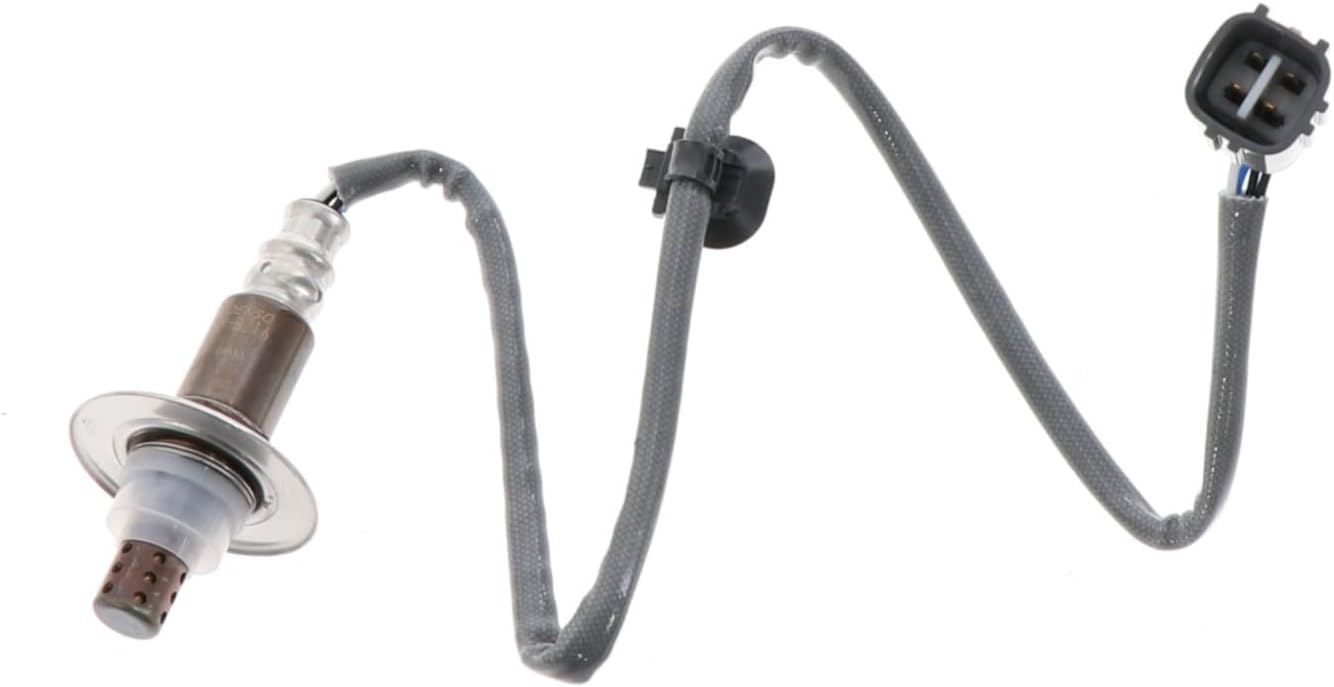
6. Denso 234-4445 Replacement Oxygen (O2) Sensor
| Material | Stainless Steel, Zirconium |
|---|---|
| Mounting Type | Thread-In |
| Output Type | NPN |
| Upper Temperature Rating | 800 Degrees Celsius |
This Denso 234-4445 is a threaded replacement oxygen sensor built to match factory fit and function for the specified Subaru and Saab applications. It measures exhaust oxygen content and feeds that signal to the engine control module to help the vehicle maintain correct air-fuel ratio and emissions performance. Typical use is direct swap-in where the original sensor has failed or is reporting out-of-range voltages; installation requires standard hand tools and a sensor socket for the thread-in mount. Notable features include a zirconium sensing element and an aluminum oxide trap layer intended to resist silicone and lead contamination, plus a machined stainless steel exterior for durability and an 800 C temperature rating. In practice this means reliable long-term sensing, improved fuel economy and stable idling compared with a degraded sensor. Limitations are that the part is vehicle-specific so you must confirm model year fitment, and installation in rusted exhaust systems can be difficult without penetrating lubricant or heat. Overall it is a straightforward, OEM-quality replacement for repairing emissions and drivability issues on supported Subaru Forester model years within the listed fitment range.
Best for: Buyers who want a reliable, factory-matching oxygen sensor to restore emissions performance and drivability on supported Subaru Forester years and who value proven brand reputation and long-term durability.
Less Ideal for: Anyone needing a universal or multi-vehicle sensor solution or those looking for an upgraded performance sensor beyond stock specifications.
- Factory-quality replacement fit for specified Subaru and Saab applications
- Zirconium sensing element with contamination trap for longer sensor life
- Thread-in mounting and standard NPN output for direct compatibility with stock wiring
- High upper temperature rating and machined stainless exterior for durability
- Fitment is vehicle-specific so wrong year/model selection will require return or replacement
Verdict: Choose this Denso sensor when you need a proven, factory-quality direct replacement to restore correct air-fuel control on the covered Subaru Forester model years.
7. A-Premium Upstream & Downstream Heated O2 Oxygen Sensor 2-Pack

| Measurement Accuracy | High |
|---|---|
| Mounting Type | Threaded Mount |
| Output Type | Analog |
| Material Type | Stainless Steel |
| Unit Count | 2 Count |
These A-Premium sensors come as a two-pack of threaded, heated O2 sensors intended to replace both upstream and downstream positions on compatible Subaru models. They provide analog output and use a four-wire connection with factory-style threaded mounting, so installation follows the same procedure as the original sensors and typically needs basic hand tools and a sensor socket. Built from stainless steel and described as high accuracy, the sensors feed real-time oxygen content back to the engine control unit to restore closed-loop air-fuel management and clear related check-engine codes. Practical benefits include replacing a failing sensor pair at once to avoid mismatched performance and the heated element which helps faster warm-up and reliable readings in colder conditions. Limitations are that this is an aftermarket part so fitment and connector wiring should be confirmed against your vehicle before buying, and installation may still require anti-seize care and a torque-appropriate thread engagement to avoid damage.
Best for: A cautious buyer looking to replace failing oxygen sensors on a 2009–2013 Subaru Forester who values restoring reliable fuel control with a cost-effective aftermarket pair.
Less Ideal for: Those who prefer dealer-sourced factory parts or want parts with vehicle-specific OEM part numbers should consider OEM replacements instead.
- Supplied as a two-pack to replace both upstream and downstream sensors at once
- Heated four-wire design for quicker warm-up and consistent sensor output
- Threaded mount and male connector match factory-style installation methods
- Stainless steel construction for corrosion resistance in exhaust environments
- Aftermarket unit so verify connector and wiring compatibility with your specific vehicle before installation
Verdict: Buy this two-pack if you want a straightforward aftermarket replacement to restore closed-loop fuel control on a 2009–2013 Subaru Forester without swapping only one sensor at a time.
Choosing the Right 2009-2013 Subaru Forester Oxygen Sensor: Key Factors to Consider
Fitment and Connector Compatibility
Correct fitment is essential because the 2009-2013 Forester uses specific thread sizes and connector types for upstream and downstream locations. A sensor that does not match the factory connector often requires splicing or adapter use, which can introduce failure points and compromise water and corrosion resistance.
Connector compatibility also affects the vehicle's heater circuit and signal wiring. If the replacement lacks the proper pins or wiring layout, the ECU may see erroneous readings or a heater-related fault. Always confirm whether the sensor is listed for the exact year range to avoid fitment surprises and extra labor during installation.
Upstream Versus Downstream Placement
The Forester uses oxygen sensors in upstream (pre-catalytic) and downstream (post-catalytic) positions that perform different roles. Upstream sensors provide fast-changing signals that the ECU uses to trim fuel delivery, so they need quick response and precise voltage swings. Downstream sensors monitor catalytic converter efficiency and generally require stable, noise-free outputs.
Choosing the correct placement-specific sensor matters because upstream and downstream units often have different internal designs, heater requirements, and response characteristics. Installing the wrong type can trigger incorrect codes or mask genuine catalytic issues.
Sensor Response Time and Accuracy
Response time determines how rapidly the oxygen sensor reflects changes in exhaust oxygen content. Faster response helps the ECU adjust fuel trims in real time, improving idle stability and transient throttle behavior on the Forester. Accuracy across a range of air-fuel ratios is also important to prevent chronic lean or rich conditions that harm fuel economy and emissions.
When assessing response and accuracy, consider reported signal latency and whether the sensor maintains consistent output across temperature ranges typical for the Forester. Sensors that degrade quickly or show noisy outputs can cause incorrect long-term fuel trim adjustments.
Heater Circuit Performance
A functioning heater circuit helps the oxygen sensor reach operating temperature quickly, which is particularly important for short trips and cold starts common in temperate climates. For the 2009-2013 Forester, a reliable heater reduces the time the ECU runs in open-loop mode, improving emissions and drivability.
Evaluate whether replacement sensors list tested heater resistance values or include design features that protect the heater element from frequent thermal cycling. A weak heater can cause delayed readiness monitors and persistent diagnostic trouble codes.
Durability and Corrosion Resistance
Foresters often encounter road salt and moisture, so sensors that resist corrosion at the threads and connectors increase service life. Materials and protective coatings that shield sensing elements and wiring from exhaust contaminants and abrasives will reduce premature failures.
Durability also includes resistance to thermal shock from repeated hot-cold cycles. Sensors built with robust internal seals and strain relief at the cable entry point tend to last longer in real-world Forester use.
Diagnostic Compatibility and Emissions Readiness
Replacement oxygen sensors must produce signals the ECU recognizes for readiness monitors and diagnostic trouble code evaluation. If the sensor's output characteristics differ significantly from OEM expectations, you can experience false codes or delayed readiness for emissions testing.
Check that the sensor supports the Forester's expected diagnostic behaviors and monitor patterns. Proper diagnostic compatibility helps ensure clean drive-cycle completion and accurate detection of catalytic or fuel system faults.
Understanding Oxygen Sensor Locations on the Forester
The 2009-2013 Subaru Forester uses distinct upstream and downstream oxygen sensor locations tied to each exhaust bank. Knowing whether you need the pre-catalyst sensor or the post-catalyst unit is the first step to ordering the correct part. Upstream sensors react quickly to changes and are critical for fuel trim control, while downstream sensors confirm catalytic converter performance.
Confirm the number of sensors on your vehicle and identify bank and sensor positions from your vehicle's service information or by visual inspection before purchasing. Wiring length and connector orientation vary by position, so a visual check reduces installation surprises.
- Upstream sensors affect fuel trim and idle quality
- Downstream sensors monitor catalytic efficiency
- Physical location influences wiring length and connector angle
Common Symptoms That Point to an Oxygen Sensor
Oxygen sensor issues on the Forester often present as a check engine light accompanied by drivability issues. Common signs include rough idle, hesitation on acceleration, decreased fuel economy, or difficulty passing emissions tests. Sometimes the vehicle will show a specific O2-related trouble code that narrows the fault to a sensor or its heater circuit.
Not every symptom means immediate replacement. Intermittent faults, wiring damage, or exhaust leaks can produce similar symptoms. Use a combination of diagnostic trouble codes, visual inspection, and signal testing to confirm the sensor is the root cause.
- Rough idle and hesitation
- Worse fuel economy over several tanks
- Illuminated check engine light with O2 codes
Basic Testing Steps Before Replacement
Before replacing a sensor, perform simple checks: inspect the harness and connector for corrosion or damage, look for exhaust leaks near sensor threads, and verify heater circuit continuity with a multimeter. These steps can save time and prevent unnecessary part swaps.
If you have access to a scan tool that shows live O2 sensor data, look for a rapidly switching upstream signal and a more stable downstream reading. Slow or no switching often indicates sensor degradation, while erratic values can point to wiring or grounding issues.
- Visually inspect wiring and connectors
- Check for exhaust leaks at flanges and gaskets
- Use a scan tool to view live sensor voltages and switching
Installation Considerations for Forester Owners
Installing an oxygen sensor on the Forester is generally straightforward but requires attention to thread sealants, torque, and connector mating. Use the correct anti-seize on sensor threads if recommended, but avoid contaminating the sensing tip. Apply correct torque to avoid thread damage in the exhaust flange.
Access can be easier from below with the vehicle safely elevated or from the engine bay depending on sensor location. After installation, clear any related codes and perform a drive cycle to confirm the ECU sees normal sensor behavior.
- Use correct torque and thread treatment
- Ensure connectors seat fully and clips engage
- Clear codes and complete a drive cycle after install
When to Replace Upstream Versus Downstream Sensors
Replace upstream sensors when you see persistent fuel trim issues, a sensor that no longer switches voltage, or O2 circuit heater failures. These sensors directly affect drivability and fuel economy, so faults are often noticeable in everyday driving.
Downstream sensors should be replaced when they fail to monitor catalytic efficiency or when specific post-catalyst codes appear. Because downstream units do not directly control fuel trims in the same way, you may see fewer immediate drivability symptoms but still risk emissions failures if the downstream sensor is out.
- Upstream: Replace when switching stops or fuel trims are abnormal
- Downstream: Replace when catalytic efficiency codes or readiness failures occur
Still looking for the perfect fit?
Select your Subaru Forester configuration to see the most relevant Oxygen Sensors recommendations
How We Chose the Best 2009-2013 Subaru Forester Oxygen Sensor
We started by narrowing selections to oxygen sensors that directly fit the 2009-2013 Subaru Forester and meet the vehicle's factory electrical and thread specifications. Priority criteria included sensor response time, heater circuit integrity, and connector compatibility because these directly affect how quickly the ECU corrects air-fuel ratios and whether the sensor will reach operating temperature promptly in cold conditions.Durability against road salts and heat cycling was another major filter since underhood exposure in Subaru vehicles demands resilient materials and corrosion-resistant connectors. We also evaluated electrical performance stability under common Forester operating ranges, including idle, highway cruising, and short-trip cold starts. Warranty coverage and documented fitment records were weighed as proxies for manufacturer confidence and expected lifespan.Excluded from consideration were universal sensors that require modification, sensors with incompatible wiring, and listings lacking clear fitment data for the 2009-2013 Forester. Final selections balanced dependable sensor operation, installation practicality, and components that preserve the vehicle's diagnostic accuracy.
Our full evaluation process is outlined in our review methodology.
FAQ
How do I know if my Forester needs an oxygen sensor replacement?
Common indicators include a persistent check engine light with O2-related codes, rough idle, reduced fuel economy, or a failing readiness monitor. Confirm with a scan tool and visual inspection of the sensor and wiring before replacing.
Can I drive my Forester with a faulty oxygen sensor?
You can usually drive short distances, but prolonged driving may reduce fuel economy and increase emissions. A faulty upstream sensor can also cause rough running, so it is best to address the issue promptly.
Should I replace both upstream and downstream sensors at the same time?
Not always. Replace the sensor that shows diagnostic failure or confirmed poor performance. However, if one sensor is old and the other is near the end of its expected life, replacing both can reduce repeat labor.
What does bank 1 sensor 1 mean on my Forester?
Bank 1 sensor 1 refers to the upstream oxygen sensor located before the catalytic converter on bank 1 of the engine. It is responsible for providing rapid feedback to the ECU for fuel trim adjustments.
Will a new oxygen sensor clear an oxygen sensor code like P0135?
Replacing a failed sensor often resolves heater circuit codes such as P0135, but only if the fault is in the sensor itself. If wiring, connectors, or power supply are compromised, the code may persist even after replacement.
How long should an oxygen sensor last on a Forester?
Oxygen sensor lifespan varies with driving conditions, but they commonly last many years. Exposure to contaminants, frequent short trips, or corrosion can shorten life, so inspect sensors if you notice worsening performance.
Final Verdict
Prioritize correct fitment and sensor function when replacing an oxygen sensor on a 2009-2013 Subaru Forester. For drivability and fuel economy, upstream sensor response and heater reliability are the most impactful factors. Downstream sensors matter for emissions monitoring and catalytic health, so replace them when diagnostics indicate poor conversion efficiency.Balance durability, diagnostic compatibility, and installation practicality when choosing a replacement. Addressing wiring or exhaust leaks before fitting a new sensor helps avoid repeat failures. With the right focus on fit and signal performance, you can restore normal engine management and pass emissions readiness checks confidently.
Explore More:
- Check out all Subaru Forester parts & accessories
- Explore Oxygen Sensors Maintenance & Repair Guides
- Explore Engine
- Browse all Auto Parts
