

Note: This article contains affiliate links. If you click on these links and make a purchase, I may earn a small commission at no extra cost to you. This helps support my research and content. Read my full affiliate disclosure here.
If you drive a Subaru Legacy GT hard, tow occasionally, or want extra protection during spirited driving, upgrading the oil cooler can make a measurable difference. The right Subaru Legacy GT oil cooler reduces oil temperatures, improves oil life, and helps maintain consistent engine performance when the car is under sustained load.This guide covers six shortlisted oil coolers that are good fits for the Legacy GT. We evaluate each option for cooling efficiency, fitment and mounting, installation complexity, and long-term durability so you can pick the solution that matches how you use the car.
Looking for other parts? See all Subaru Legacy parts & accessories.
Top Picks at a Glance
| Best Overall The best all-around choice for most situations | TORVIRON Oil Cooler 21311-AA051 Direct Replacement for Subaru 2.5L Engines |  |
| Best Value The sweet spot between price and what you get | Ytrica 21311-AA051 Engine Oil Cooler for 2002–2009 Subaru Legacy/Outback/STI/WRX |  |
| Best Budget The cheapest option that still gets the job done reliably | kelmado Engine Oil Cooler 21311AA120 compatible with Subaru 2.0L/2.5L |  |
| Highest Rated A top-rated pick with lots of positive feedback | Subaru Genuine Turbo Oil Cooler 21311AA051 |  |
| Most Popular A crowd favorite that many people choose with confidence | Setrab 6 Series ProLine 13-Row Engine Oil Cooler with M22 Ports |  |
| Best Seller A high-volume bestseller chosen again and again | EVIL ENERGY 16-Row Universal Aluminum Stacked-Plate Oil Cooler Kit |  |
1. TORVIRON Oil Cooler 21311-AA051 Direct Replacement for Subaru 2.5L Engines

| Compatible Vehicle Type | Car |
|---|---|
| Automotive Fit Type | Vehicle Specific Fit |
| Included Components | Oil Cooler |
| Manufacturer Warranty Description | 1 year |
This TORVIRON oil cooler is a vehicle-specific replacement built to directly replace Subaru part 21311-AA051 for compatible Legacy, Outback, Impreza, WRX and STI models. It installs where the factory unit sits and is intended for routine repairs or when the original cooler shows leaks or reduced cooling performance. The unit uses a fin-and-tube design and is described as made from corrosion-resistant materials to handle typical driving and heavier-load conditions. That means it should restore proper oil temperature control during spirited driving or towing and help prevent overheating-related oil breakdown. As a direct-replacement part it simplifies fitment and keeps plumbing and mounting the same as the factory piece. Limitations are typical of aftermarket replacements: long-term durability will depend on installation quality and operating conditions, and buyers should verify exact engine code and year before purchasing to ensure fitment. The product comes with one-year manufacturer support for post-sale issues.
Best for: Drivers seeking a balanced, reliable factory-style replacement to restore oil cooling on compatible Subaru models after a leak or failure, prioritizing straightforward fitment and dependable temperature control.
Less Ideal for: Drivers wanting an uprated performance oil cooler for sustained high-boost or motorsport use should consider purpose-built performance coolers instead.
- Direct replacement for Subaru part 21311-AA051 so no modification to mounts or hoses is normally required
- Fin-and-tube design for efficient oil-to-air heat transfer under load
- Constructed with corrosion-resistant materials intended for longer service life
- Vehicle-specific fit simplifies selection and installation for compatible models
- Limited long-term track record compared with OEM units since this is an aftermarket part
Verdict: A straightforward, vehicle-specific replacement that restores factory-style oil cooling and fitment for compatible Subaru models.
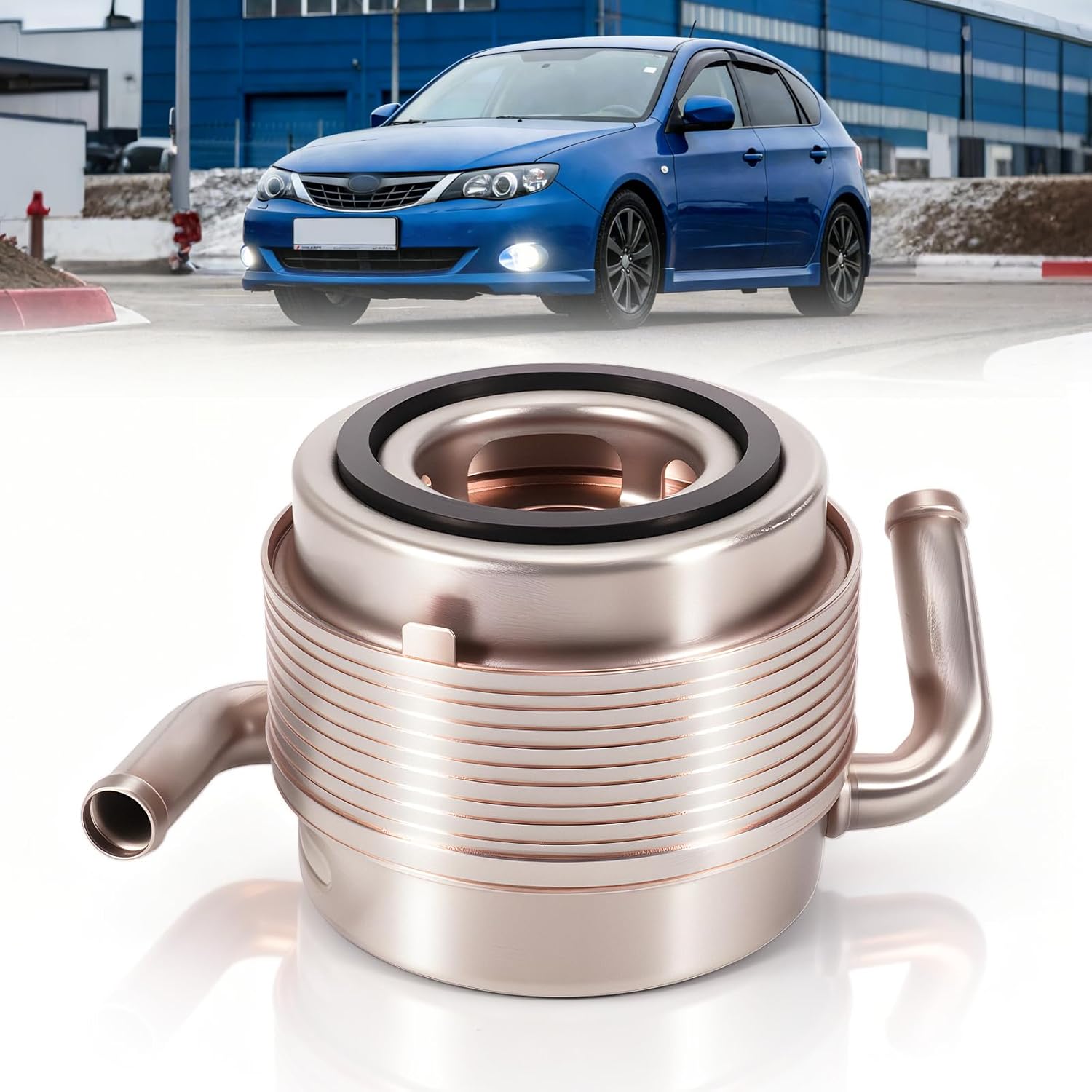
2. Ytrica 21311-AA051 Engine Oil Cooler for 2002–2009 Subaru Legacy/Outback/STI/WRX
| Compatible part number | 21311-AA051 / 21311AA051 |
|---|---|
| Fitment years | 2002-2009 |
| Applicable engines | EJ205, EJ255, EJ257 |
| Automotive fit type | Vehicle Specific Fit |
This Ytrica oil cooler is a vehicle-specific replacement for Subaru part 21311-AA051 and is intended for 2002–2009 Legacy, Outback, WRX, and STi models with EJ205, EJ255, or EJ257 engines. It works by routing engine oil through a finned core so heat transfers to ambient air, helping lower oil temps during spirited driving or towing. Typical use is as a factory-style swap when the original cooler is corroded, leaking, or underperforming; installation follows the factory location and mounting. The listing emphasizes durable construction and corrosion resistance and claims efficient heat dissipation from its engineered fins and tubes. For someone optimizing everyday reliability and engine longevity, this cooler offers a straightforward way to restore or maintain proper oil temperatures without modifying the cooling system. Limitations to consider are that fitment is specific to the listed Subaru engines and years so verification before purchase is required, and this is a direct replacement rather than a high-capacity aftermarket performance cooler for extreme track use.
Best for: Buyers who want a practical, vehicle-matching oil cooler to restore factory cooling performance and protect engine oil temperatures during regular spirited driving or towing.
Less Ideal for: Drivers seeking a larger-capacity or dedicated track racing oil cooler system should consider purpose-built performance options instead.
- Direct-fit replacement for Subaru part 21311-AA051 designed for listed 2002–2009 EJ-series engines
- Finned core construction aimed at efficient heat transfer to lower oil temperatures under load
- Manufacturer describes corrosion-resistant, durable materials for longer service life
- Vehicle-specific design simplifies installation as a factory-location swap
- Not marketed as a higher-capacity performance cooler for sustained track or competitive use
Verdict: A straightforward, vehicle-specific replacement that brings reliable oil temperature control back to the specified 2002–2009 Subaru EJ engines without requiring system upgrades.
3. kelmado Engine Oil Cooler 21311AA120 compatible with Subaru 2.0L/2.5L

| Manufacturer Part Number | 21311AA120 21311-AA120 |
|---|---|
| Material | Aluminum alloy |
| Compatible Engines | 2.0L / 2.5L (matches listed Subaru EJ variants) |
This kelmado oil cooler is a budget-minded replacement that installs in place of the factory unit using part number 21311-AA120. Made from high-strength aluminum alloy, it aims to improve heat dissipation and resist corrosion compared with older, worn coolers. In real-world use it keeps oil temperatures more stable under load, which helps preserve lubrication and reduce risk of overheating during spirited driving or towing. Fitment notes list Subaru Forester 2006 SOHC 2.5 and STI EJ257 2008–2021; when used on compatible Legacy GT engines with the same part number it functions as a straightforward factory-replacement-style component. Expect a straightforward bolt-in swap for mechanics familiar with Subaru oil-cooling plumbing. The main compromises are that this is an aftermarket unit from a lesser-known brand and it lacks extended warranty details, so buyers who want brand-name assurance or OEM-sourced parts may prefer other options.
Best for: Buyers seeking an affordable, functional replacement oil cooler for a Subaru Legacy GT who prioritize cost-effectiveness and a near-factory fitment.
Less Ideal for: Those who want an OEM-branded unit, extended manufacturer warranty, or an upgraded performance cooler with larger capacity should look elsewhere.
- Aluminum alloy construction for improved heat dissipation and corrosion resistance.
- Direct replacement for part number 21311-AA120 for straightforward installation.
- Designed to stabilize oil temperature under high load to protect engine lubrication.
- Sold by a lesser-known brand with limited published warranty information.
Verdict: A practical, budget-friendly aluminum replacement that restores oil temperature control for Legacy GT engines using part number 21311-AA120.
4. Subaru Genuine Turbo Oil Cooler 21311AA051

| Brand Name | Subaru |
|---|---|
| Part Number | 21311AA051 |
| Material Type | Alloy Steel |
| Unit Count | 1.0 Count |
This Subaru genuine turbo oil cooler is a factory replacement designed to maintain oil temperatures on turbocharged Subaru engines. It installs in place of the original cooler on specified Legacy, Outback, WRX, and STi models and is used to reduce oil temperatures under sustained boost or heavy driving. As a Subaru-manufactured part it matches factory fit and materials, helping ensure correct mounting and hose connections without modification. The alloy steel construction and OEM part number make it a durable option for routine maintenance or when replacing a failed cooler. Limitations are that it is a direct-fit OEM part for specific model years and engine codes only, so fitment must be confirmed before purchase, and it does not include hoses or fittings if those are worn and need replacement. For owners who prioritize factory compatibility and straightforward installation, this cooler is a practical, reliable choice.
Best for: Owners who want a reliable, factory-spec replacement to restore or maintain proper oil cooling on their turbo Subaru and who prioritize correct fit and long-term dependability.
Less Ideal for: Drivers looking to upgrade oil cooling capacity for high-horsepower builds or custom setups should consider performance aftermarket coolers instead.
- Factory-manufactured Subaru part for exact fit and mounting alignment
- Alloy steel construction for corrosion resistance and durability
- Direct replacement for specified Subaru turbo engines, simplifying installation
- Maintains oil temperatures under sustained boost and heavy driving
- Compatible only with specific model years and engine codes, not a universal cooler
- Does not include hoses or additional fittings that may be needed during replacement
Verdict: Choose this genuine Subaru turbo oil cooler if you want a direct-fit, factory-quality replacement to reliably control oil temperatures on supported Subaru turbo models.
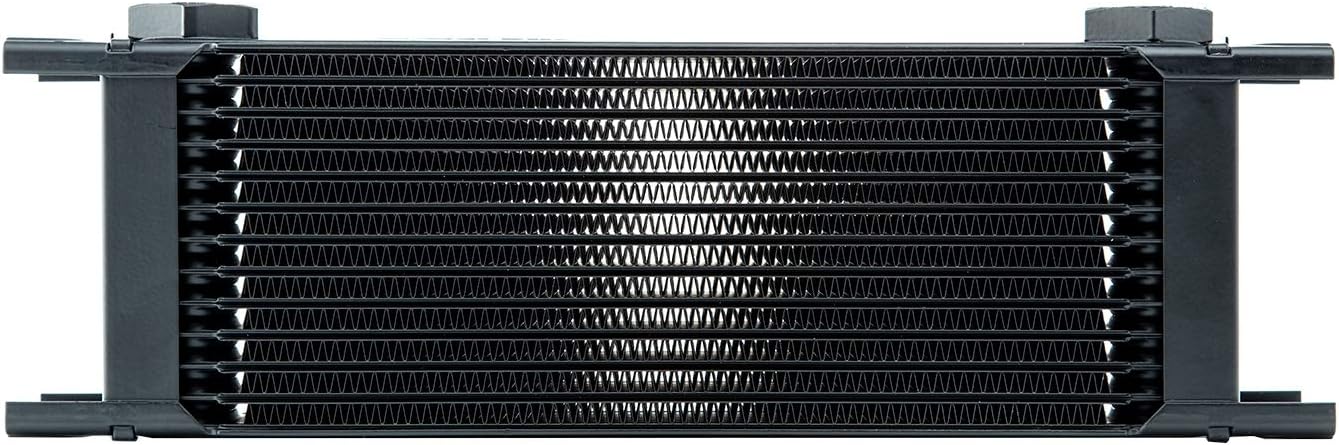
5. Setrab 6 Series ProLine 13-Row Engine Oil Cooler with M22 Ports
| Model | 50-613-7612 |
|---|---|
| Rows | 13 |
| Ports | M22 female |
| Exterior | Machined |
The Setrab 6 Series ProLine 13-row cooler is a bolt-on style oil cooler that increases oil heat capacity for performance or high-stress driving. It uses machined aluminum construction and 13 cooling rows to provide significantly more surface area than small sandwich-plate setups, and the M22 female ports make it easy to adapt to a variety of hose and adapter fittings. Typical use is for track days, towing, or spirited street driving where oil temperatures rise; it is mounted in a location with good airflow and plumbed into the engine oil circuit with compatible ProLine adapters. Practical benefits include robust construction, proven cooling capacity in a compact footprint, and straightforward plumbing flexibility thanks to standard M22 threads. Limitations are that it requires selection of the correct adapter fittings and mounting hardware for a Subaru Legacy GT application and some plumbing work to integrate into the factory oil feed/return lines; it is not a complete kit with hoses or brackets. Expect a professional or experienced DIY install for best results.
Best for: Buyers who prioritize verified performance and want a durable, high-capacity aftermarket cooler for spirited driving or track use on their Legacy GT and are comfortable sourcing the right adapters and doing a careful installation.
Less Ideal for: Drivers looking for a complete plug-and-play kit with hoses and brackets or those unwilling to perform or pay for custom plumbing and mounting work.
- Machined aluminum construction for durability and heat transfer
- 13-row design increases cooling surface area compared with compact coolers
- Standard M22 female ports provide broad adapter compatibility
- Compact dimensions allow installation in tight front-end spaces
- Sold as the cooler only with no hoses, fittings, or mounting brackets included
Verdict: Choose this Setrab 13-row ProLine cooler when you need a compact, proven aftermarket cooler with flexible M22 plumbing for improved oil temperature control on a Subaru Legacy GT.
6. EVIL ENERGY 16-Row Universal Aluminum Stacked-Plate Oil Cooler Kit

| Oil capacity | 0.39 L |
|---|---|
| Test pressure | 116 PSI |
| Burst pressure | 232 PSI |
| Hose working pressure | 500 PSI |
| Hose temperature range | -40F to 257F |
This EVIL ENERGY 16-row oil cooler kit is a universal stacked-plate cooler designed to lower oil temperatures for engines, transmissions, or differentials. It includes a compact machined aluminum cooler, two nylon-braided hoses with CPE inner layers, and installation instructions; the hoses are rated to 500 PSI and a wide temperature range for durable service. Typical use is front-mounted in a well-ventilated area or behind a bumper opening where airflow helps transfer heat; the kit notes some vehicles may need additional fittings and clearance checks before mounting. The cooler’s tested pressure and burst ratings indicate solid build strength for street and mild performance use, and the small oil capacity makes it a quick-exchange unit that responds fast to airflow changes. Limitations are the universal fit approach: it requires verifying physical clearance and may need extra fittings or brackets for a clean installation on a Subaru Legacy GT, and the kit’s compact size means it is better for moderate cooling needs rather than heavy-duty track abuse.
Best for: A cautious buyer who wants a proven, compact oil cooling upgrade to reduce operating temperatures on a daily-driven Subaru Legacy GT and is willing to verify fitment and do a measured installation.
Less Ideal for: People seeking a heavy-duty track or motorsport cooling solution or those who want a vehicle-specific bolt-on cooler with guaranteed plug-and-play fitment.
- 16-row stacked-plate design for higher heat transfer in a compact package
- Machined aluminum construction with tested pressure and burst ratings for durability
- Includes two nylon-braided hoses rated to 500 PSI and wide temperature range
- Compact footprint suitable for tighter installation areas where space is limited
- Universal kit may require additional fittings, brackets, or modifications for proper fit and routing
Verdict: Choose this compact, durable stacked-plate kit if you want a reliable, space-saving oil cooler upgrade to lower operating temperatures on a street-driven Legacy GT while accepting that minor fitment work may be needed.
Choosing the Right Subaru Legacy GT Oil Cooler: Key Factors to Consider
Cooling Capacity
How much heat the oil cooler can shed matters because oil temperature directly affects viscosity, lubrication, and engine wear. Higher cooling capacity is achieved by larger core area, denser fin packs, or multi-pass designs that increase fluid residence time. For the Legacy GT, consider models that reduce oil temperature under sustained high-load conditions, such as highway towing or track sessions.
Keep in mind that larger cores often require more airflow and may need relocation to a spot with good frontal air access. An overly large cooler mounted in a low-airflow area will not perform to its rating. Also consider whether the cooler design promotes turbulent flow within the core; some level of flow disruption improves heat transfer but must be balanced with the oil pump's ability to maintain pressure.
Fitment and Mounting
Compatibility with Legacy GT plumbing and available mounting points is essential to avoid major fabrication. Check whether the cooler is designed to use existing oil lines or requires custom adapter fittings and additional hose routing. Proper bracket geometry and vibration isolation help ensure the cooler survives road shocks and thermal cycling.
Plan for clearance around the radiator, intercooler, and steering components. Some installations relocate the cooler forward of the radiator or in front of the intercooler; these positions improve airflow but may require trimming or custom supports. Ease of access for future maintenance should factor into mounting decisions to avoid repeated removal of surrounding parts.
Materials and Construction
Materials determine corrosion resistance, longevity, and thermal performance. Aluminum cores and end tanks are common due to their favorable heat conduction and light weight, while brazed plate or welded constructions provide leak resistance. Look for quality soldering or brazing processes and corrosion-resistant finishes to withstand road salts and moisture.
Also consider the durability of fittings and hose connections. Threaded fittings, quick-connects, or O-ring interfaces should be robust and rated for oil and temperature exposure. Reinforced hose recommendations and stainless steel fittings can reduce the risk of leaks at high temperatures or after repeated service.
Installation Complexity
Installation varies from simple bolt-on units that reuse factory plumbing to systems requiring adapters, hose replacements, or minor trimming of body panels. Assess whether you can handle the job yourself with basic tools and a service manual or whether a shop visit is advised. Time, tools, and mechanical experience determine real-world cost beyond the cooler price.
Consider factors like the need to drain and refill oil, bleed or prime the oiling circuit, and torque specifications for fittings. Some kits come with comprehensive instructions and all necessary hoses and clamps, which reduces installation risk. If a kit requires cutting or permanent modifications, factor in the potential impact on resale and serviceability.
Maintenance and Serviceability
Regular inspection and occasional service preserve cooler performance. Think about how easy it will be to inspect hoses and adapters, check for leaks, and replace the cooler core or hoses if necessary. A modular design with replaceable cores or service ports makes long-term ownership simpler.
Also consider access for cleaning debris and bent fins after road use. Cooler cores exposed to frontal impacts are vulnerable, so assess whether protective screens or placement behind a grille are needed. Evaluate how straightforward it is to flush the oil circuit if contaminants enter the cooler.
Impact on Oil Pressure and Flow
Adding an auxiliary cooler or changing core size can alter flow resistance in the oil circuit. Ensure the cooler's internal passages and recommended hose diameters do not create excessive backpressure that could affect oil pressure at critical engine bearings. Some designs require external thermostatic control or pressure-balanced adapters to maintain optimal oil flow.
If the cooler increases circuit volume, account for additional fill volume and potential changes to warm-up behavior. Thermostatic adapters help maintain correct oil temperature by bypassing the cooler until the oil reaches operating temperature, preserving lubrication during cold starts.
Thermostatic Versus Non‑Thermostatic Systems
Thermostatic adapters regulate when oil is routed through the cooler to help maintain ideal operating temperature. For everyday driving in temperate climates, a thermostatic system prevents overcooling during short trips and cold starts, while still providing full cooling under sustained load.
Non-thermostatic setups route oil continuously through the cooler and can achieve lower peak temperatures, which benefits track or heavy towing use. However, continuous cooling can prolong warm-up times and may not be desirable for drivers who prioritize rapid engine warm-up.
- Thermostatic: better for mixed-use and cold climates.
- Non-thermostatic: maximum cooling under constant high load.
- Consider oil viscosity and typical driving patterns when choosing.
Placement Options on the Legacy GT
Common mounting locations include in front of the radiator, ahead of the intercooler, or tucked behind the bumper with ducting. Each spot balances airflow with protection; front-of-radiator positions offer the best airflow but expose the core to debris, while tucked placements reduce impact risk but need dedicated ducting.
When planning placement, account for existing cooling components and the Legacy GT's factory fog light or lower grille openings. Confirm that any chosen position does not impede A/C condenser clearance or steering components, and that there is room for secure mounting brackets.
- Front-of-radiator: highest airflow, higher impact risk.
- Ahead-of-intercooler: good compromise for turbocharged setups.
- Behind-bumper with ducts: protected but requires careful duct design.
Hose Routing and Line Quality
Hose selection and routing affect durability and leak resistance. Use high-temperature, oil-rated hoses sized to match factory diameters or the cooler's recommended fittings. Minimize sharp bends that can stress hose ends and avoid routing near hot exhaust components.
Secure hose runs with clamps and vibration-isolating mounts. For long runs or exposed areas, consider braided lines or stainless-steel braided hoses with proper end fittings to resist abrasion and heat.
- Match inner diameter to factory lines to preserve flow.
- Avoid contact with sharp edges; use grommets where hoses pass through panels.
- Replace old crimp clamps with OEM-style or screw clamps rated for oil use.
Protecting the Core From Road Debris
Because the Legacy GT often uses frontal cooling positions, protecting the core from stones and debris extends service life. Consider mesh guards or light screens that do not significantly impede airflow. Some installers add a sacrificial grille or a removable stone guard to simplify cleaning.
Inspection after winter months or gravel road use is important. Bent fins can often be straightened with fin combs, but severe damage may require core replacement. Designing mounts that allow quick removal simplifies repairs.
- Install a fine mesh guard with sufficient clearance to avoid restricting airflow.
- Check for leaks after any front-end impact.
- Design mounts for quick access to the cooler for cleaning or replacement.
Thermal Management for Towed Loads
If you tow with the Legacy GT, expect sustained oil temperature rise during long climbs or heavy loads. Select an oil cooler sized to handle increased heat input and consider pairing it with a higher-capacity engine oil recommended for sustained high temperatures.
Monitor oil temperature under typical towing conditions to validate performance. For frequent towing, prioritize coolers with larger core areas or multi-pass designs and ensure hose and fitting ratings match the added thermal and mechanical stress.
- Use a cooler with proven continuous-duty ratings for towing.
- Consider adding a temperature gauge to monitor real-world performance.
- Verify that hoses and fittings are rated for prolonged high-temperature service.
Still looking for the perfect fit?
Select your Subaru Legacy configuration to see the most relevant Oil Coolers recommendations
How We Chose the Best Subaru Legacy GT Oil Cooler
We selected candidates by focusing on attributes that matter for the Subaru Legacy GT and its typical use cases. Core evaluation criteria included cooling performance, measured by increased oil-to-air heat rejection or larger core surface area; fitment and compatibility with Legacy GT plumbing and available mounting locations; construction quality, including core type, plate and fin density, and corrosion-resistant materials; ease of installation, covering whether factory hoses can be reused, adapter or line modifications are needed, and typical labor steps; and durability under repeated thermal cycles and road debris exposure.We prioritized oil coolers that provide clear performance advantages for sustained high-load driving, towing, or track use while keeping installation feasible for experienced enthusiasts and professional shops. We excluded options that require extensive engine modifications, irreversible cutting of structural components, or systems that do not support customary oil pressure and flow rates for the GT. We also filtered out products lacking documented fitment or clear mounting guidance for the Legacy GT platform.
Our full evaluation process is outlined in our review methodology.
FAQ
How do I tell if my Legacy GT needs a new oil cooler?
Common signs include elevated oil temperatures under load, visible oil leakage around cooler fittings or hoses, and reduced oil pressure if the cooler has internal failures. Also watch for coolant or oil contamination if the cooler design interfaces with other fluid systems.
Can I install an oil cooler myself on the Legacy GT?
Many owners can handle a bolt-on cooler with basic mechanical skills, but installations requiring adapter fittings, hose routing through tight spaces, or bracket fabrication are best done by a shop. Be prepared to drain and refill oil and to follow torque and hose clamp recommendations.
Will adding an oil cooler affect warm-up time or oil pressure?
Yes. Adding cooling capacity and extra circuit volume can extend warm-up time and slightly alter oil pressure characteristics. Using a thermostatic adapter mitigates cold-start overcooling, and proper hose sizing helps maintain expected oil pressure.
What maintenance does an aftermarket oil cooler require?
Periodic inspections for leaks, bent fins, and secure hose connections are typically sufficient. Clean accumulated debris from the core, replace hoses showing wear, and check fittings after the first few heat cycles following installation.
Are there leak symptoms that indicate cooler failure?
Symptoms include oil spots under the vehicle, a drop in oil level without other visible causes, and oil smeared near cooler connections. Also watch for cross-contamination or signs of oil in areas it should not be present; those warrant immediate inspection.
Do I need special hoses or adapters for the Legacy GT?
It depends on the kit. Some oil coolers are designed to reuse factory lines with simple adapters, while others require replacement hoses or custom fittings. Confirm what is included and whether hoses are rated for oil and high temperatures before starting the job.
Final Verdict
For the Subaru Legacy GT, prioritize a balance between cooling capacity and practical fitment. If you use the car for towing or sustained high-load driving, favor larger or multi-pass coolers with robust hoses and secure mounting. For mixed daily and performance driving in cooler climates, a thermostatic setup offers temperature control without overcooling.Weigh installation complexity and serviceability against the cooling gains you need. Focus on core construction, reliable fittings, and mounting locations that provide airflow while protecting the core. With those priorities, you can select an oil cooler that delivers durable temperature control and peace of mind under demanding use.
Explore More:
- Check out all Subaru Legacy parts & accessories
- Explore Oil Coolers Maintenance & Repair Guides
- Explore Cooling System
- Browse all Auto Parts
